The AI-Empowered Educator
Navigating the Digital Age with Creativity, Ethics, and Innovation
In "The AI-Empowered Educator: Navigating the Digital Age with Creativity, Ethics, and Innovation," seasoned educators will find a comprehensive guide to revolutionizing their teaching methods in the era of artificial intelligence and digital technology.
269 pages13 chaptersEnglishNov 9, 2024EducationCreated by Amir
About this book
This book bridges the gap between traditional pedagogy and cutting-edge EdTech, offering practical strategies for integrating AI-assisted learning, developing digital literacy skills, and fostering student creativity in a tech-driven world. Readers will explore the nuances of personalized learning AI, adaptive learning systems, and AI teaching assistants, while gaining insights into the ethical considerations that come with these powerful tools. The book delves into effective online collaboration techniques and innovative teaching methods that harness the potential of technology without losing sight of the human element in education. With a focus on developing well-rounded digital citizens, this book provides educators with the knowledge and tools they need to prepare students for a future where technology and humanity intersect. By balancing the promise of AI with the irreplaceable value of human creativity and critical thinking, "The AI-Empowered Educator" empowers teachers to create dynamic, ethical, and forward-thinking learning environments that will shape the leaders of tomorrow.
Table of contents
- Introduction: The Digital Revolution in EducationThe AI and Education Landscape, Book Overview and How to Use It, The Evolving Role of Educators, Embracing Change in the Digital AgeRead below
- Chapter 1: Foundations of AI in EducationUnderstanding AI Basics for Educators, Current Applications of AI in Education, The Potential of AI to Transform Learning, Limitations and Challenges of AI in Education
- Chapter 2: Developing Digital Literacy SkillsDefining Digital Literacy in the AI Era, Fostering Critical Thinking in the Digital Realm, Evaluating Online Information and Sources, Promoting Responsible Digital Citizenship, Essential Digital Skills for Educators
- Chapter 3: Implementing AI-Assisted LearningAI Tutoring Systems: An Overview, Personalized Learning through AI, Adaptive Assessments and Feedback, AI-Powered Content Creation and Curation, Integrating AI Tools into the Curriculum
- Chapter 4: Navigating EdTech EthicsEnsuring Student Data Privacy and Security, Addressing AI Bias in Educational Tools, Promoting Transparency in AI-Driven Decisions, Developing an Ethical Framework for EdTech Use, Balancing Technology Use and Digital Wellbeing
- Chapter 5: Fostering Creativity in the Age of AIThe Importance of Creativity in the Digital Age, AI Tools for Enhancing Creative Expression, Balancing AI Assistance and Human Creativity, Nurturing Creative Problem-Solving Skills, Assessing and Evaluating Creativity
- Chapter 6: Mastering Online Collaboration ToolsOverview of Online Collaboration Platforms, Creating Effective Virtual Classrooms, Facilitating Project-Based Learning Online, Fostering Global Collaboration and Cultural Exchange, Collaborative Assessment Strategies
- Chapter 7: Leveraging Adaptive Learning SystemsIntroduction to Adaptive Learning Technologies, Creating Personalized Learning Pathways, Utilizing Real-Time Learning Analytics, Adaptive Content Delivery Strategies, Measuring the Effectiveness of Adaptive Systems
- Chapter 8: Integrating AI Teaching AssistantsTypes of AI Teaching Assistants, Educational Chatbots and Virtual Tutors, AI-Assisted Grading and Feedback Systems, Automating Administrative Tasks, Balancing Human and AI Collaboration in Teaching
- Chapter 9: Revolutionizing Assessment in the Digital AgeAI-Powered Assessment Tools, Continuous and Formative Assessment Strategies, Implementing Performance-Based Digital Assessments, Leveraging Data-Driven Insights for Improvement, Ethical Considerations in Digital Assessment
- Chapter 10: Designing Effective Blended Learning ExperiencesBlended Learning Models and Approaches, Balancing Online and Offline Learning Activities, Implementing the Flipped Classroom Model, Engaging Students in Hybrid Learning Environments, Assessment Strategies for Blended Learning
- Chapter 11: Preparing Students for the Future of WorkIdentifying Essential 21st Century Skills, Developing AI Literacy and Awareness, Fostering Adaptability and Resilience, Cultivating an Entrepreneurial Mindset, Instilling a Culture of Lifelong Learning
- Chapter 12: Promoting Inclusive Education with TechnologyLeveraging AI for Accessibility and Inclusion, Providing Personalized Support for Diverse Learners, Implementing Universal Design for Learning (UDL), AI-Powered Language Support and Translation, Enhancing Cultural Responsiveness through Technology
- Chapter 13: Continuous Professional Development in the AI EraStrategies for Staying Current with EdTech Trends, Leveraging Online Learning for Teacher Development, Building Professional Learning Networks, Conducting Action Research in AI-Enhanced Classrooms, Cultivating Reflective Practice in the Digital Age
- Conclusion: Embracing the Future of EducationKey Takeaways and Future Directions, A Call to Action for Educators
- Glossary of AI and EdTech Terms
- Further Reading and Resources
Introduction: The Digital Revolution in Education
The landscape of education is undergoing a profound transformation, driven by the rapid advancement of digital technologies and artificial intelligence (AI). As we stand on the cusp of a new era in teaching and learning, educators around the world are faced with both exciting opportunities and complex challenges. This digital revolution is reshaping not only the tools and methods we use to impart knowledge but also the very nature of what it means to be an educator in the 21st century.
In this introduction, we will explore the current state of AI and technology in education, provide an overview of the book's contents, examine the evolving role of educators, and discuss the importance of embracing change in this digital age. Our journey through these topics will set the stage for a deeper dive into the practical applications, ethical considerations, and innovative strategies that will empower educators to thrive in an AI-enhanced educational landscape.
As we embark on this exploration, it's crucial to recognize that the integration of AI and digital technologies in education is not about replacing human teachers or diminishing the importance of human interaction in the learning process. Rather, it's about augmenting and enhancing our capabilities as educators, allowing us to create more personalized, engaging, and effective learning experiences for our students. By understanding and harnessing the power of these new tools, we can better prepare our students for a future where digital literacy and adaptability will be key to success.
The AI and Education Landscape
The integration of AI in education has been gaining momentum over the past decade, with the global AI in education market expected to grow from $1.1 billion in 2019 to $25.7 billion by 2030, according to a report by Research and Markets[1]. This explosive growth is a testament to the transformative potential of AI in revolutionizing how we teach and learn. From adaptive learning platforms that tailor content to individual student needs, to intelligent tutoring systems that provide personalized feedback, AI is already making its mark in classrooms around the world.
One of the most significant impacts of AI in education is its ability to personalize learning at scale. Traditional education systems often struggle to cater to the diverse needs and learning styles of individual students within a classroom setting. AI-powered adaptive learning systems, however, can analyze vast amounts of data on student performance and behavior to create customized learning pathways. For example, platforms like Carnegie Learning's MATHia use AI to adjust the difficulty and pacing of math problems based on each student's progress, ensuring that learners are consistently challenged at an appropriate level[2].
Another area where AI is making significant inroads is in automating administrative tasks, freeing up valuable time for educators to focus on teaching and student interaction. AI-powered tools can assist with grading, scheduling, and even responding to common student queries. For instance, Georgia State University implemented an AI chatbot named Pounce to handle routine student inquiries about admissions and financial aid, resulting in a 22% reduction in "summer melt" (students who are accepted but fail to enroll) and freeing up staff to handle more complex issues[3].
The use of AI in content creation and curation is also transforming the way educational materials are developed and delivered. AI algorithms can analyze vast repositories of educational content to recommend relevant resources to students and teachers alike. Platforms like Knewton use AI to create dynamic course materials that adapt to student performance in real-time, ensuring that learners always have access to the most appropriate content for their current level of understanding[4].
Virtual and augmented reality (VR/AR) technologies, enhanced by AI, are opening up new possibilities for immersive learning experiences. For example, Google Expeditions allows students to take virtual field trips to places around the world, with AI-powered features that can provide contextual information and interactive elements based on what the student is viewing[5]. These technologies have the potential to make learning more engaging and memorable, particularly for abstract or complex subjects that are difficult to visualize through traditional means.
However, it's important to note that the integration of AI in education is not without its challenges. Issues such as data privacy, algorithmic bias, and the digital divide are significant concerns that need to be addressed as we move forward. For example, a study by the MIT Technology Review highlighted how AI-powered proctoring tools used during the COVID-19 pandemic disproportionately flagged students with darker skin tones for potential cheating, raising serious questions about bias in AI systems[6].
As we navigate this rapidly evolving landscape, it's crucial for educators to develop a nuanced understanding of AI's capabilities and limitations. By doing so, we can harness its potential to enhance learning outcomes while mitigating potential risks and ethical concerns. The AI and education landscape is vast and complex, but it offers tremendous opportunities for those willing to explore and innovate.
Book Overview and How to Use It
"The AI-Empowered Educator: Navigating the Digital Age with Creativity, Ethics, and Innovation" is designed to be a comprehensive guide for educators seeking to effectively integrate AI and digital technologies into their teaching practices. This book is structured to provide both theoretical understanding and practical strategies, allowing readers to gradually build their knowledge and skills in leveraging AI for education. Each chapter focuses on a specific aspect of AI in education, from foundational concepts to advanced applications, ethical considerations, and future trends.
The book is divided into thirteen chapters, each addressing a crucial aspect of AI-enhanced education. We begin with the foundations of AI in education, providing a solid grounding in the basic concepts and current applications of AI in the educational sphere. This foundational knowledge is essential for understanding the more complex topics discussed in later chapters. As we progress, we delve into specific areas such as developing digital literacy skills, implementing AI-assisted learning, navigating EdTech ethics, fostering creativity in the age of AI, and mastering online collaboration tools.
One of the key strengths of this book is its focus on practical application. Each chapter includes real-world examples, case studies, and actionable strategies that educators can implement in their own classrooms. For instance, in the chapter on "Leveraging Adaptive Learning Systems," we not only explain the theory behind adaptive learning but also provide step-by-step guidance on how to select, implement, and evaluate adaptive learning platforms in various educational contexts.
To make the most of this book, we recommend reading it sequentially, as each chapter builds upon the knowledge and concepts introduced in previous sections. However, each chapter is also designed to stand alone, allowing readers to focus on specific areas of interest or immediate need. Throughout the book, you'll find "Reflection Points" that encourage you to pause and consider how the concepts discussed apply to your own teaching practice. These moments of reflection are crucial for internalizing the information and considering how to adapt it to your unique educational context.
We've also included "Tech Spotlight" sections in each chapter, highlighting specific AI tools and platforms that exemplify the concepts being discussed. These spotlights provide a starting point for educators looking to experiment with AI in their classrooms. For example, in the chapter on "Integrating AI Teaching Assistants," we spotlight several leading AI chatbot platforms, discussing their features, strengths, and potential applications in education.
At the end of each chapter, you'll find a "Practical Application" section that outlines specific activities or projects you can undertake to apply what you've learned. These range from simple exercises to more complex, long-term projects. We encourage you to engage with these practical applications, as they provide valuable hands-on experience in implementing AI-enhanced teaching strategies.
Throughout the book, we've been careful to maintain a balanced perspective on the role of AI in education. While we explore the exciting possibilities that AI offers, we also address the potential pitfalls and ethical considerations. Our goal is to empower you to make informed decisions about how and when to integrate AI into your teaching practice, always keeping the best interests of your students at the forefront.
To further support your learning journey, we've included a comprehensive glossary of AI and EdTech terms at the end of the book. This resource will help you navigate the sometimes complex terminology associated with AI in education. Additionally, the "Further Reading and Resources" section provides a curated list of books, articles, websites, and online courses for those who wish to delve deeper into specific topics.
Remember, the integration of AI in education is an ongoing process, and the field is evolving rapidly. We encourage you to view this book as a starting point in your journey of AI-enhanced teaching. Stay curious, continue to explore new tools and techniques, and don't be afraid to experiment in your classroom. By embracing a mindset of continuous learning and adaptation, you'll be well-equipped to navigate the exciting future of education in the digital age.
The Evolving Role of Educators
As we navigate the digital revolution in education, the role of educators is undergoing a significant transformation. Far from being replaced by technology, teachers are finding their roles evolving to meet the demands of a rapidly changing educational landscape. This evolution is not about diminishing the importance of educators, but rather about enhancing their capabilities and redefining their impact on student learning. In this new paradigm, educators are becoming facilitators, curators, and guides in the learning process, leveraging technology to create more engaging, personalized, and effective educational experiences.
One of the most significant shifts in the educator's role is the move from being the primary source of information to becoming a facilitator of learning. In the past, teachers were often seen as the holders of knowledge, responsible for imparting that knowledge to their students. However, in today's information-rich world, where students have instant access to vast amounts of data at their fingertips, the educator's role has shifted towards helping students navigate this sea of information, develop critical thinking skills, and apply knowledge in meaningful ways. This shift is supported by research from the Organization for Economic Co-operation and Development (OECD), which emphasizes the importance of teachers as "activators" of learning rather than mere transmitters of information[7].
In this new role, educators are increasingly focusing on teaching students how to learn, rather than what to learn. This involves developing students' metacognitive skills, helping them understand their own learning processes, and equipping them with strategies for self-directed learning. For example, teachers might use AI-powered learning analytics tools to help students visualize their learning progress and identify areas for improvement. By fostering these skills, educators are preparing students for a future where the ability to adapt and learn continuously will be crucial.
Another key aspect of the evolving educator role is that of content curator. With the proliferation of online educational resources, educators are now tasked with selecting, organizing, and contextualizing high-quality content for their students. This curation process involves not only finding relevant materials but also ensuring their accuracy, appropriateness, and alignment with learning objectives. AI tools can assist in this process by analyzing and recommending content based on specific criteria, but the educator's expertise and judgment remain crucial in making final selections and adapting materials to meet the needs of their specific student population.
The integration of AI and digital technologies in education also requires educators to become adept at blending traditional teaching methods with new technological approaches. This blended learning approach allows teachers to leverage the strengths of both face-to-face instruction and digital tools to create more engaging and effective learning experiences. For instance, a teacher might use an AI-powered adaptive learning platform to provide personalized practice exercises for students, while using class time for collaborative problem-solving activities that build on the skills practiced online. This approach is supported by research showing that blended learning can lead to improved student outcomes compared to either fully online or fully face-to-face instruction[8].
As AI takes on more routine tasks such as grading multiple-choice assessments or providing basic feedback on writing, educators are freed up to focus on higher-order aspects of teaching. This includes designing more complex, project-based assessments, providing nuanced feedback on student work, and engaging in meaningful one-on-one interactions with students. For example, instead of spending hours grading routine assignments, a teacher might use that time to conduct individual conferences with students, discussing their progress and setting personalized learning goals.
The evolving role of educators also encompasses a greater emphasis on developing students' social-emotional skills and fostering a positive classroom culture. While AI can assist with cognitive aspects of learning, the human touch remains irreplaceable when it comes to nurturing students' emotional intelligence, empathy, and interpersonal skills. Educators are increasingly recognized as mentors and role models, helping students navigate not only academic challenges but also personal and social ones. This aspect of the educator's role is particularly crucial in preparing students for a future where uniquely human skills like emotional intelligence and creativity will be highly valued in the job market.
Furthermore, educators are taking on the role of "AI literacy" advocates, helping students understand the capabilities and limitations of AI technologies. As AI becomes more prevalent in various aspects of life, it's crucial for students to develop a critical understanding of these technologies. Educators are well-positioned to guide students in exploring ethical considerations surrounding AI, understanding potential biases in AI systems, and learning how to interact with AI tools effectively and responsibly.
Lastly, the evolving role of educators includes becoming lifelong learners themselves. The rapid pace of technological change means that educators must continuously update their skills and knowledge to stay relevant. This involves not only learning about new educational technologies but also staying informed about developments in their subject areas and in pedagogical research. Many educators are embracing this aspect of their role by participating in professional learning networks, attending conferences, and engaging in ongoing professional development opportunities.
In conclusion, while the integration of AI and digital technologies is changing the educational landscape, it is not diminishing the importance of educators. Rather, it is elevating their role to new levels of complexity and impact. By embracing these evolving roles – as facilitators, curators, blended learning experts, mentors, and lifelong learners – educators can harness the power of technology to create more engaging, personalized, and effective learning experiences for their students. As we move forward in this digital age, the human touch of skilled educators will remain an irreplaceable component in nurturing the next generation of learners.
Embracing Change in the Digital Age
The digital age has ushered in an era of unprecedented change in education, presenting both exciting opportunities and significant challenges for educators. Embracing this change is not just beneficial; it's essential for preparing students for a future where technological fluency and adaptability will be crucial skills. As we navigate this transformative period, it's important to understand why embracing change is so vital and how educators can effectively do so while maintaining the core values of education.
One of the primary reasons for embracing change in the digital age is the rapid evolution of the job market. According to a report by the World Economic Forum, 65% of children entering primary school today will ultimately end up working in completely new job types that don't yet exist[9]. This statistic underscores the need for an education system that is flexible, forward-thinking, and capable of equipping students with the skills they'll need to thrive in an uncertain future. By embracing technological change in education, we can better prepare our students for this dynamic future job market.
Embracing change also allows educators to tap into new and powerful tools for enhancing the learning experience. AI and digital technologies offer unprecedented opportunities for personalization, engagement, and accessibility in education. For instance, AI-powered adaptive learning systems can tailor content and pacing to individual student needs, potentially addressing the long-standing challenge of differentiated instruction in diverse classrooms. Virtual and augmented reality technologies can bring abstract concepts to life, making learning more immersive and memorable. By embracing these technologies, educators can create more engaging and effective learning experiences that cater to a wide range of learning styles and needs.
Moreover, embracing change in the digital age is crucial for bridging the digital divide and ensuring equitable access to quality education. As more aspects of society become digitized, digital literacy is becoming as fundamental as traditional literacy. By integrating digital technologies into education and helping students develop digital skills, we can help ensure that all students, regardless of their background, are prepared for full participation in the digital society. This is particularly important given the growing role of technology in civic engagement, healthcare, and other essential aspects of life.
However, embracing change doesn't mean blindly adopting every new technology or trend. It's about developing a mindset of openness, curiosity, and critical evaluation. Educators should approach new technologies and methodologies with a balanced perspective, considering both their potential benefits and possible drawbacks. This involves staying informed about educational research, engaging in professional development opportunities, and being willing to experiment with new approaches in the classroom.
One effective strategy for embracing change is to start small and scale up. Rather than attempting to overhaul an entire curriculum or teaching method at once, educators can begin by incorporating small, manageable changes. For example, a teacher might start by using a digital tool for formative assessments in one unit, evaluate its effectiveness, and then consider expanding its use if successful. This approach allows for gradual adaptation and reduces the risk of overwhelming both teachers and students.
Collaboration is another key aspect of embracing change in the digital age. Educators can benefit greatly from sharing experiences, best practices, and lessons learned with colleagues. Professional learning networks, both within schools and across broader educational communities, can provide valuable support and inspiration for educators navigating change. These networks can be facilitated by digital platforms, allowing educators to connect with peers around the world and stay abreast of global trends and innovations in education.
It's also important to involve students in the process of embracing change. Students often have valuable insights into how technology can enhance their learning experience. By soliciting student feedback and involving them in decision-making processes about technology integration, educators can create more student-centered learning environments and increase buy-in for new initiatives. This approach aligns with the growing emphasis on student agency in education and can help develop students' critical thinking skills about technology use.
As we embrace change, it's crucial to maintain a focus on the fundamental goals of education. While the tools and methods may evolve, the core mission of fostering critical thinking, creativity, and a love of learning remains constant. Technology should be seen as a means to enhance these goals, not as an end in itself. Educators should continually reflect on how technological changes align with and support broader educational objectives.
Finally, embracing change in the digital age requires resilience and a growth mindset. Not every new approach or technology will be successful, and there will inevitably be challenges and setbacks along the way. Educators who view these challenges as opportunities for learning and growth will be better equipped to navigate the evolving landscape of education. This resilience and adaptability are qualities that educators can model for their students, preparing them for a future where continuous learning and adaptation will be essential skills.
In conclusion, embracing change in the digital age is not just about keeping up with the latest technologies; it's about fostering a mindset of innovation, adaptability, and lifelong learning. By approaching change with openness, critical thinking, and a focus on core educational values, educators can harness the power of digital technologies to create more engaging, effective, and equitable learning experiences. As we move forward in this era of rapid technological advancement, the ability to embrace and navigate change will be a defining characteristic of successful educators and educational institutions.
Notes
Introduction: The Digital Revolution in Education
- 1. Markets Research, Global Artificial Intelligence in Education Market (2020 to 2030) - COVID-19 Growth and Change, 2020
- 2. Carnegie Learning, MATHia: The AI-powered 1-on-1 math learning software, 2021
- 3. L. C. Page and H. Gehlbach, "How an artificially intelligent virtual assistant helps students navigate the road to college," AERA Open, 2017
- 4. Knewton, Alta: Adaptive learning courseware, 2021
- 5. Google for Education, Google Expeditions, 2021
- 6. T. Feathers, "Proctorio Is Using Racist Algorithms to Detect Faces," MIT Technology Review, 2021
- 7. OECD, The future of education and skills: Education 2030, 2018
- 8. B. Means and others, "The effectiveness of online and blended learning," Teachers College Record, 2013
- 9. World Economic Forum, The Future of Jobs: Employment, Skills and Workforce Strategy for the Fourth Industrial Revolution, 2016
This is the end of the free sample. The full book has 13 chapters.
Want this book written for you?
Tell us your goals and background, and get your own version of this book, tailored by AI to you.


Benefits of AI-tailored books
- Read one book, not ten:
- all the Education knowledge you need, gathered into a single book.
- Save days of learning:
- tell us your goals, choose your topics, and the whole book is built around them.
- Learn effortlessly:
- Education book written for your specific background and expertise.
- Understand at a glance:
- includes charts, tables, timelines, checklists, decision trees, and more.
- Stay current:
- written the day you order it, not years ago.
- Trust what you read:
- every book is checked for accuracy, with real research when your subject needs it.
Create your unique book in 3 steps
- 1. Select your focus
Select the focus of your Education book and share your background
- 2. Personalize your book
Specify your goals and choose sub-topics to include
- 3. Get your tailored book
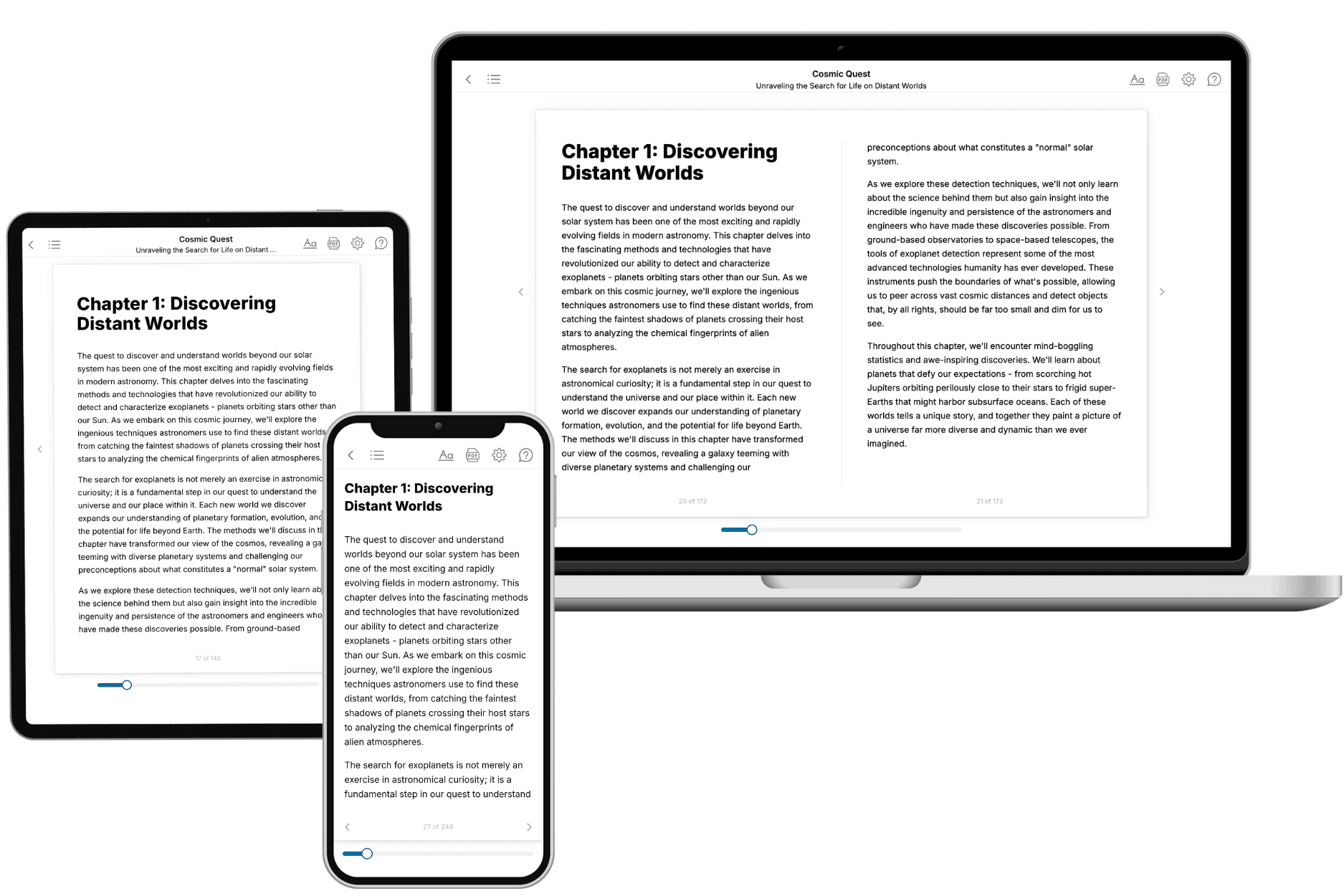
Your book is ready in 10 minutes. Read it online, download as EPUB or PDF, or send to Kindle.

Frequently asked questions
- What is TailoredRead?
TailoredRead creates complete, full-length nonfiction ebooks, written specifically for you. Tell us what you want to learn and why, and TailoredRead writes you a complete ebook on it, with charts, tables, and diagrams throughout. Read it online, on Kindle, or on any e-reader, or download it as a PDF or EPUB. Every book is written fresh the day you order it.
- How is the book tailored to me?
Before anything is written, you answer a few short questions about your goals, your background, and the topics you care about. Your book is then planned around your answers: written at your level, focused on your goals, and covering the topics you chose, instead of the one-size-fits-all book a store sells everyone.
- Will it read like generic AI content?
No. Your book isn't a chat transcript: it's planned chapter by chapter before a single word is written, told in a clear book voice, and explains ideas visually with charts, tables, and diagrams. After writing, every book goes through an editorial pass that polishes chapters so the book reads consistent from start to finish. Judge for yourself: browse thousands of sample books on our Explore Books page.
- How accurate is the content?
Our AI first checks whether your subject needs live research. Niche and fast-moving subjects are researched before writing, and the book plan and chapters are grounded in what it finds. After writing, every book goes through a quality pass that checks its facts and consistency, and researched books list their sources in a Notes section at the back.
- How long is the book?
You choose the length: Comprehensive (250-300 pages), Detailed (150-200 pages), Essential (70-100 pages), or Short (30-50 pages).
- Does the book include visuals?
Yes. Every book includes charts, tables, and diagrams: timelines, checklists, step-by-step guides, decision trees, comparison tables, matrices, and bar charts. A typical book includes dozens of these visual elements.
- Can I read it on Kindle? What formats can I download?
Yes. Every book can be read in our online reader or downloaded as a PDF or EPUB. The EPUB can be opened with Kindle, Apple Books, Kobo, and any e-reader. The Commercial and Author licenses also include an editable Word (DOCX) and Markdown download.
- How much does it cost?
About the price of a regular ebook. The exact price depends on your book's length and complexity, from $2 for the shortest books to $35 for the most comprehensive, and it's shown when you review your book, before you commit to anything. Each book is a one-time purchase, yours to keep, no subscription. Licenses that let you share, teach, or publish your book range from $35.99 to $49.99.
- Can I preview the book before purchasing?
Before you pay, you'll see what your book will cover: the title, a detailed description, the estimated length, and the complete chapter-by-chapter table of contents, so you know what you're getting before you decide. The full text itself is written after you purchase.
- How long does it take to create a book?
About 10 minutes. You can start reading the opening chapters while the rest is still being written.