Beyond the Stars
Exploring the Frontiers of Interstellar Travel and UFO Phenomena
Venture into the vast unknown of interstellar space travel and unravel the mysteries surrounding UFO phenomena.
253 pages12 chaptersMar 3, 2025UFO Studies
About this book
"Beyond the Stars" takes you on an exhilarating exploration of cutting-edge propulsion theories, potential alien civilizations, and the scientific principles that could make interstellar travel a reality. You'll delve into the fascinating world of advanced spacecraft designs, wormholes, and the possibility of faster-than-light travel. This book bridges the gap between science fiction and scientific fact, offering a balanced perspective on UFO sightings and their potential connection to interstellar visitors. Discover the challenges of long-distance space travel, from radiation protection to the psychological effects of extended missions. "Beyond the Stars" equips you with the knowledge to critically analyze claims of extraterrestrial encounters while inspiring your imagination with the incredible possibilities that lie ahead in humanity's quest to reach the stars.
Table of contents
- IntroductionThe Allure of Interstellar Travel, Bridging Science Fiction and Reality, UFO Studies: A Scientific Approach, Our Cosmic Journey BeginsRead below
- Chapter 1: Fundamentals of Space TravelBasic Physics of Space Travel, Our Solar System: The First Frontier, The Interstellar Medium, Comprehending Cosmic Distances
- Chapter 2: Current Propulsion TechnologiesChemical Rockets: Principles and Limitations, Ion Propulsion Systems, Nuclear Propulsion Concepts, Solar Sails and Light Propulsion
- Chapter 3: Advanced Propulsion TheoriesAntimatter Propulsion, Fusion Drives and Plasma Engines, The EmDrive Controversy, Project Breakthrough Starshot
- Chapter 4: Faster-Than-Light Travel ConceptsAlcubierre Warp Drives, Traversable Wormholes, Tachyons and Time Travel, Physical Limitations and Paradoxes
- Chapter 5: Interstellar Spacecraft DesignLong-Duration Mission Requirements, Advanced Life Support Systems, Radiation Shielding Technologies, AI and Autonomous Systems in Space
- Chapter 6: Human Factors in Interstellar TravelPsychological Challenges of Long-Term Space Travel, Suspended Animation and Hibernation Technologies, Generational Ships and Space Colonies, Human Adaptation to Space Environments
- Chapter 7: Exoplanets and Potential DestinationsMethods of Exoplanet Detection, Habitable Zones and Earth-like Planets, Proxima Centauri b: Our Nearest Hope?, Exotic Worlds and Their Potential for Life
- Chapter 8: The Search for Extraterrestrial IntelligenceRadio Astronomy and the SETI Project, The Drake Equation and Estimating Alien Civilizations, Detecting Technosignatures, The Fermi Paradox: Where Is Everybody?
- Chapter 9: UFO Phenomena: A Scientific PerspectiveHistorical Overview of UFO Sightings, Scientific Methods of UFO Investigation, Natural Phenomena Often Mistaken for UFOs, Notable Unexplained Cases
- Chapter 10: Theories of Alien VisitationAncient Astronaut Theory: Claims and Criticisms, Interdimensional Hypothesis, UFOs as Time Travelers, Scientific Skepticism and the Burden of Proof
- Chapter 11: Preparing for First ContactExisting Protocols for Alien Contact, Attempts at Interstellar Communication, Potential Cultural and Societal Impacts, Ethical Considerations in Alien Interactions
- Chapter 12: The Future of Space ExplorationNext-Generation Space Telescopes, Interstellar Probe Missions, AI and Robotic Exploration, Human Expansion Beyond the Solar System
- ConclusionThe Road Ahead: Future Possibilities, Gaining a Cosmic Perspective
- Glossary
- Further Reading
Introduction
As you gaze up at the night sky, a sense of wonder and curiosity washes over you. The twinkling stars and distant galaxies beckon, inviting you to ponder the mysteries of the cosmos and the potential for life beyond our planet. This introduction sets the stage for an extraordinary journey through the realms of interstellar travel and UFO phenomena, bridging the gap between science fiction and scientific reality. In the pages that follow, you'll explore cutting-edge propulsion theories, examine the search for extraterrestrial intelligence, and delve into the fascinating world of UFO studies from a scientific perspective.
The concept of interstellar travel has captivated human imagination for centuries, from ancient myths of celestial journeys to modern science fiction epics. Today, as our understanding of the universe expands and technology advances at an unprecedented rate, the possibility of venturing beyond our solar system is transitioning from the realm of fantasy to that of serious scientific inquiry. This book aims to provide you with a comprehensive overview of the current state of interstellar travel research, the challenges we face, and the innovative solutions being developed to overcome them.
Simultaneously, the study of Unidentified Flying Objects (UFOs) has long been a subject of both fascination and controversy. While often dismissed as the domain of conspiracy theorists and science fiction enthusiasts, recent developments have brought UFO research into the mainstream scientific discourse. This book will examine UFO phenomena through a rigorous scientific lens, separating fact from fiction and exploring the potential connections between UFO sightings and the possibility of advanced extraterrestrial civilizations capable of interstellar travel.
As we embark on this cosmic journey together, it's important to approach these topics with an open mind, tempered by critical thinking and scientific skepticism. The goal is not to convince you of any particular belief, but rather to equip you with the knowledge and analytical tools to form your own informed opinions about the possibilities and challenges of interstellar travel and the nature of UFO phenomena.
The Allure of Interstellar Travel
The concept of interstellar travel has been a cornerstone of human imagination and scientific aspiration for generations. It represents the ultimate frontier of exploration, promising to unlock the secrets of distant worlds and potentially answer some of humanity's most profound questions about our place in the universe. The allure of interstellar travel extends far beyond mere curiosity; it embodies our species' innate drive to explore, discover, and push the boundaries of what is possible.
Throughout history, humans have been driven by an insatiable wanderlust, venturing across oceans, scaling mountains, and traversing deserts in search of new horizons. The exploration of space represents the natural progression of this adventurous spirit, with interstellar travel serving as the ultimate expression of our desire to go where no one has gone before. This ambition is not merely about physical exploration, but also about expanding our knowledge, challenging our preconceptions, and potentially ensuring the long-term survival of our species.
The prospect of interstellar travel offers tantalizing possibilities for scientific discovery. Imagine the wealth of knowledge that could be gained from studying alien ecosystems, observing the formation of distant solar systems, or unraveling the mysteries of exotic cosmic phenomena up close. Such discoveries could revolutionize our understanding of physics, biology, and the fundamental nature of the universe itself. The potential for scientific breakthroughs in fields ranging from propulsion technology to astrobiology is immense, with each advance bringing us closer to realizing the dream of interstellar exploration.
Moreover, the pursuit of interstellar travel capabilities could have profound implications for the future of humanity. As we face growing challenges on Earth, from climate change to resource depletion, the ability to access and potentially colonize other worlds could provide a crucial safeguard for our species' long-term survival. The technologies developed in pursuit of interstellar travel could also have wide-ranging applications here on Earth, from advancing sustainable energy solutions to revolutionizing transportation and communication systems.
The allure of interstellar travel also taps into our deepest existential questions. Are we alone in the universe? What is the nature of life and consciousness? How did the universe begin, and how will it end? By venturing beyond our solar system, we may find answers to these questions or discover entirely new ones that reshape our understanding of reality. The possibility of encountering alien civilizations, whether through direct contact or by discovering evidence of their existence, could fundamentally alter our perspective on our place in the cosmos and the nature of intelligence itself.
However, the path to interstellar travel is fraught with immense challenges. The vast distances between stars, the limitations of our current propulsion technologies, and the harsh realities of space environments all present formidable obstacles. Overcoming these challenges will require not only technological innovation but also a collective commitment to long-term scientific endeavors that may span generations. The allure of interstellar travel thus also represents a test of human ingenuity, perseverance, and cooperation on a global scale.
As we delve deeper into the possibilities and challenges of interstellar travel in the chapters that follow, it's important to maintain a balance between optimism and realism. While the obstacles are significant, history has shown that human innovation and determination can overcome seemingly insurmountable barriers. The Wright brothers' first flight lasted a mere 12 seconds, yet within decades, humans were walking on the moon. Similarly, the journey from our first tentative steps into space to achieving interstellar travel may be long and arduous, but the potential rewards are immeasurable.
The allure of interstellar travel is not just about reaching distant stars; it's about expanding the horizons of human knowledge and capability. It challenges us to think beyond our immediate surroundings and consider our place in the vast cosmic tapestry. As you explore the concepts and technologies discussed in this book, allow yourself to be inspired by the possibilities while critically examining the challenges. The journey to the stars may be the greatest adventure humanity has ever undertaken, and understanding its allure is the first step in making that journey a reality.
Bridging Science Fiction and Reality
The realm of interstellar travel has long been a staple of science fiction, captivating audiences with visions of faster-than-light spaceships, exotic alien worlds, and advanced civilizations spanning the galaxy. However, as our scientific understanding and technological capabilities advance, the line between science fiction and reality is becoming increasingly blurred. This convergence of imagination and scientific progress is not only exciting but also crucial in driving innovation and pushing the boundaries of what we believe to be possible.
Science fiction has played a significant role in inspiring real-world scientific and technological advancements. Many concepts that were once considered purely fictional have become reality or are currently being developed. For instance, the communicators used in Star Trek bore a striking resemblance to modern smartphones, while the idea of space stations orbiting Earth was popularized in science fiction long before it became a reality. This symbiotic relationship between science fiction and scientific progress continues to shape our approach to interstellar travel and space exploration.
One of the most iconic elements of science fiction space travel is the concept of faster-than-light (FTL) propulsion, often depicted through technologies like warp drives or hyperspace jumps. While these ideas may seem fantastical, they have inspired serious scientific inquiry. Theoretical physicists have proposed concepts such as the Alcubierre drive, which suggests that space-time itself could be manipulated to achieve effective FTL travel without violating the laws of physics[1]. While still highly speculative and facing significant theoretical and practical challenges, such ideas demonstrate how science fiction can stimulate innovative scientific thinking.
Another area where science fiction and reality intersect is in the design and conceptualization of interstellar spacecraft. Science fiction has given us a rich tapestry of spacecraft designs, from sleek starships to massive generation ships capable of sustaining entire populations for centuries-long journeys. These fictional designs often grapple with real scientific challenges, such as propulsion, life support, and protection from cosmic radiation. In turn, actual spacecraft designers and engineers draw inspiration from these fictional concepts, adapting and refining them based on current technological capabilities and scientific understanding.
The search for extraterrestrial intelligence (SETI) is another field where science fiction has significantly influenced scientific endeavor. The idea of communicating with alien civilizations, a common trope in science fiction, has led to real-world projects like the use of radio telescopes to scan the cosmos for artificial signals. The development of message formats for potential extraterrestrial communication, such as the Arecibo message, draws on both scientific principles and the imaginative scenarios explored in science fiction literature and media.
However, it's crucial to maintain a clear distinction between speculative fiction and scientific reality. While science fiction can inspire and guide scientific inquiry, it often takes liberties with known physical laws for the sake of storytelling. As we explore the possibilities of interstellar travel, it's important to ground our expectations in current scientific understanding while remaining open to new discoveries that could expand the realm of the possible.
The process of bridging science fiction and reality involves a careful balance of imagination and rigorous scientific methodology. Concepts introduced in science fiction must be subjected to thorough scientific scrutiny, mathematical modeling, and experimental testing where possible. This approach has led to the development of serious scientific proposals for interstellar travel, such as Project Starshot, which aims to send tiny probes to Alpha Centauri using powerful lasers and light sails[2]. While still facing significant technical challenges, such projects demonstrate how ideas once confined to the pages of science fiction can evolve into tangible scientific endeavors.
The intersection of science fiction and reality also extends to the realm of UFO studies. Many of the concepts and scenarios explored in UFO-related science fiction have influenced how we approach the investigation of unidentified aerial phenomena. The scientific community's growing interest in studying UFOs, exemplified by projects like the Galileo Project led by Harvard astronomer Avi Loeb, demonstrates a shift towards applying rigorous scientific methodologies to phenomena once relegated to the fringes of scientific inquiry[3].
As we delve deeper into the possibilities of interstellar travel and the search for extraterrestrial intelligence, it's important to approach these topics with a combination of imagination and critical thinking. Science fiction serves as a valuable tool for exploring potential futures and considering the implications of advanced technologies. However, the real work of making interstellar travel a reality lies in the meticulous scientific research, technological development, and engineering challenges that must be overcome.
By bridging science fiction and reality, we create a fertile ground for innovation and discovery. The imaginative scenarios presented in science fiction can help identify potential challenges and solutions that might not be immediately apparent through traditional scientific approaches. Simultaneously, advances in scientific understanding can inspire new directions in science fiction, creating a positive feedback loop that drives both creative and scientific progress.
As you explore the concepts presented in this book, you're encouraged to embrace the spirit of wonder and possibility that science fiction instills while maintaining a grounding in scientific principles. The journey from science fiction to science fact is an ongoing process, filled with surprises, setbacks, and breakthroughs. By understanding this dynamic interplay, you'll be better equipped to critically evaluate new ideas and contribute to the ongoing dialogue about the future of space exploration and our place in the cosmos.
UFO Studies: A Scientific Approach
The study of Unidentified Flying Objects (UFOs) has long been a contentious subject, often relegated to the fringes of scientific inquiry. However, recent developments have brought UFO research into the mainstream, with governments, academic institutions, and respected scientists increasingly acknowledging the need for rigorous, scientific investigation of these phenomena. This shift in perspective offers an opportunity to examine UFO sightings and related events through the lens of scientific methodology, separating fact from fiction and potentially uncovering new insights about our world and the possibility of extraterrestrial visitation.
The scientific approach to UFO studies begins with the fundamental principle of empiricism - relying on observable, measurable evidence to form conclusions. This means moving beyond anecdotal accounts and speculative theories to focus on data that can be systematically collected, analyzed, and verified. Modern UFO research employs a wide range of scientific tools and techniques, including advanced imaging technologies, radar systems, spectral analysis, and machine learning algorithms for pattern recognition in large datasets.
One of the key challenges in UFO studies is the quality and reliability of data. Many UFO sightings are based on eyewitness accounts, which can be influenced by various factors such as perception biases, misidentification of natural phenomena, and the limitations of human memory. To address this, scientific UFO research emphasizes the importance of corroborating evidence from multiple sources, such as radar data, satellite imagery, and physical trace evidence where available. The development of standardized reporting protocols and the use of AI-assisted analysis tools are helping to improve the quality and consistency of UFO data collection.
Another crucial aspect of the scientific approach to UFO studies is the application of the scientific method. This involves formulating hypotheses about the nature and origin of UFO phenomena, designing experiments or observational studies to test these hypotheses, and subjecting the results to peer review and replication. For example, the Hessdalen lights phenomenon in Norway has been the subject of long-term scientific study, with researchers using a variety of instruments to measure and analyze the mysterious lights that appear in the valley[4]. Such systematic investigations help to build a body of reliable scientific knowledge about UFO phenomena.
The scientific study of UFOs also involves interdisciplinary collaboration, drawing on expertise from fields such as physics, astronomy, atmospheric science, psychology, and computer science. This multidisciplinary approach is essential for addressing the complex nature of UFO phenomena, which may involve a combination of physical, psychological, and sociological factors. For instance, the study of plasma physics has provided insights into potential natural explanations for some UFO sightings, while advances in cognitive psychology have improved our understanding of how witnesses perceive and interpret unusual aerial phenomena.
One of the most significant recent developments in scientific UFO studies is the increased involvement of government agencies and academic institutions. The U.S. Department of Defense's Unidentified Aerial Phenomena Task Force and its successor, the All-domain Anomaly Resolution Office (AARO), represent a shift towards more open, systematic investigation of UFO reports by military and intelligence agencies[5]. Similarly, academic projects like the previously mentioned Galileo Project at Harvard University are bringing rigorous scientific methodologies to the search for evidence of extraterrestrial technological artifacts.
The scientific approach to UFO studies also emphasizes the importance of skepticism and critical thinking. This means carefully evaluating claims and evidence, considering alternative explanations, and being willing to acknowledge when there is insufficient data to draw firm conclusions. Many UFO sightings can be explained by misidentified natural phenomena, human-made objects, or psychological factors. A scientific approach requires researchers to exhaust these prosaic explanations before considering more exotic hypotheses.
However, it's important to note that skepticism does not mean dismissal. The scientific approach to UFO studies acknowledges that there are genuinely puzzling cases that warrant further investigation. By maintaining an open mind while adhering to rigorous scientific standards, researchers can explore these anomalies without jumping to unfounded conclusions.
The use of advanced technology is playing an increasingly important role in scientific UFO studies. High-resolution cameras, infrared sensors, and machine learning algorithms for analyzing large datasets of sky observations are enhancing our ability to detect and study anomalous aerial phenomena. Projects like UFODATA aim to create a global network of automated surveillance stations to collect comprehensive, high-quality data on UFO events[6].
As we delve deeper into the scientific study of UFOs, it's crucial to maintain a balance between open-mindedness and scientific rigor. While the possibility of extraterrestrial visitation is an exciting prospect, it's important to approach the subject with caution and skepticism. The goal of scientific UFO studies is not to prove or disprove any particular theory, but to gather and analyze data systematically, formulate testable hypotheses, and gradually build a more comprehensive understanding of these phenomena.
By adopting a scientific approach to UFO studies, we open the door to potentially groundbreaking discoveries about our world and our place in the universe. Whether these investigations ultimately reveal new insights about atmospheric phenomena, advanced human technology, or evidence of extraterrestrial visitation, the process of scientific inquiry itself advances our knowledge and capabilities. As you explore the topics of interstellar travel and UFO phenomena in the following chapters, keep in mind the principles of scientific investigation and critical thinking that form the foundation of serious UFO research.
Our Cosmic Journey Begins
As we stand on the threshold of a new era in space exploration and scientific discovery, our cosmic journey is poised to take us further than ever before. The chapters that follow will guide you through the fascinating realms of interstellar travel concepts, cutting-edge propulsion technologies, the search for extraterrestrial intelligence, and the scientific investigation of UFO phenomena. This journey will challenge your perceptions, expand your understanding of the universe, and inspire you to think critically about humanity's place among the stars.
Our exploration begins with the fundamentals of space travel, providing you with a solid foundation in the physics and challenges of venturing beyond Earth's atmosphere. You'll gain insights into the vast scales and harsh conditions of interstellar space, understanding why traveling to even the nearest stars presents such a formidable challenge. This knowledge will serve as a crucial context for appreciating the innovative solutions being developed to overcome these obstacles.
From there, we'll delve into current propulsion technologies, examining the principles behind chemical rockets, ion engines, and other systems currently in use or advanced stages of development. You'll learn about their capabilities and limitations, understanding why our current methods of space travel are insufficient for true interstellar exploration. This sets the stage for our exploration of advanced propulsion theories, where you'll encounter concepts that push the boundaries of known physics, from antimatter drives to hypothetical faster-than-light propulsion systems.
The journey continues with an in-depth look at the design challenges of interstellar spacecraft. You'll explore the complex systems required to sustain human life on multi-year or even multi-generational voyages, as well as the potential role of artificial intelligence and robotics in long-duration space missions. This section will highlight the interdisciplinary nature of interstellar travel, showcasing how advances in fields ranging from materials science to psychology all contribute to making these ambitious journeys possible.
As we venture further, you'll explore the fascinating field of exoplanet research, learning about the methods used to detect planets around distant stars and the ongoing search for potentially habitable worlds. This naturally leads into our discussion of the Search for Extraterrestrial Intelligence (SETI), where you'll gain insights into the scientific approaches being used to scan the cosmos for signs of technological civilizations. You'll examine the Drake Equation, consider the implications of the Fermi Paradox, and explore how our understanding of life's potential in the universe is constantly evolving.
The latter part of our journey focuses on UFO phenomena and their potential connection to interstellar travel. You'll learn about the history of UFO sightings, the scientific methods used to investigate these reports, and the challenges of separating genuine anomalies from misidentified natural or human-made phenomena. This section will encourage you to think critically about extraordinary claims while remaining open to the possibility of truly unexplained events.
Throughout this cosmic journey, you'll encounter cutting-edge research, thought-provoking theories, and the passionate debates that drive scientific progress. You'll gain an appreciation for the immense challenges involved in interstellar travel and the ingenious solutions being developed to address them. Moreover, you'll develop a nuanced understanding of how scientists approach the study of phenomena at the fringes of our knowledge, balancing open-mindedness with rigorous skepticism.
As we embark on this exploration together, it's important to approach each topic with a combination of wonder and critical thinking. The concepts we'll discuss often challenge our intuitions and push the boundaries of what we consider possible. Yet, it's precisely this push beyond the known that has driven human progress and led to our greatest discoveries. By the end of this journey, you'll be equipped with the knowledge to engage in informed discussions about interstellar travel and UFO phenomena, and to critically evaluate new developments in these fields as they emerge.
Remember, the journey to the stars is not just about technological advancement; it's a testament to the human spirit of exploration and our unquenchable thirst for knowledge. As you read on, allow yourself to be inspired by the possibilities while maintaining a grounding in scientific principles. Whether we achieve interstellar travel in our lifetime or not, the pursuit itself advances our understanding of the universe and our place within it.
So, fasten your seatbelts and prepare for launch. Our cosmic journey is about to begin, taking you from the familiar confines of our solar system to the vast, unexplored frontiers of interstellar space. Along the way, we'll examine the evidence for extraterrestrial visitation, consider the implications of contact with alien civilizations, and ponder humanity's future among the stars. This journey promises to be enlightening, challenging, and ultimately transformative, offering a new perspective on our cosmic heritage and potential destiny.
Notes
Introduction
- 1. M. Alcubierre, "The warp drive," Classical and Quantum GravityL73, 1994
- 2. Breakthrough Initiatives, "Breakthrough Starshot," 2016
- 3. A. Loeb, "The Galileo Project," 2021
- 4. B. G. Hauge, Optical spectrum analysis of the Hessdalen phenomenon, 1st International Workshop on the Unconventional Atmospheric Lights Phenomena, Hessdalen, Norway, 2007
- 5. U.S. Department of Defense, "All-domain Anomaly Resolution Office (AARO)," 2022
- 6. R. Powell and others, "UFODATA: A New Approach to UFO Research," 2015
This is the end of the free sample. The full book has 12 chapters.
Want this book written for you?
Tell us your goals and background, and get your own version of this book, tailored by AI to you.


Benefits of AI-tailored books
- Read one book, not ten:
- all the UFO Studies knowledge you need, gathered into a single book.
- Save days of learning:
- tell us your goals, choose your topics, and the whole book is built around them.
- Learn effortlessly:
- UFO Studies book written for your specific background and expertise.
- Understand at a glance:
- includes charts, tables, timelines, checklists, decision trees, and more.
- Stay current:
- written the day you order it, not years ago.
- Trust what you read:
- every book is checked for accuracy, with real research when your subject needs it.
Create your unique book in 3 steps
- 1. Select your focus
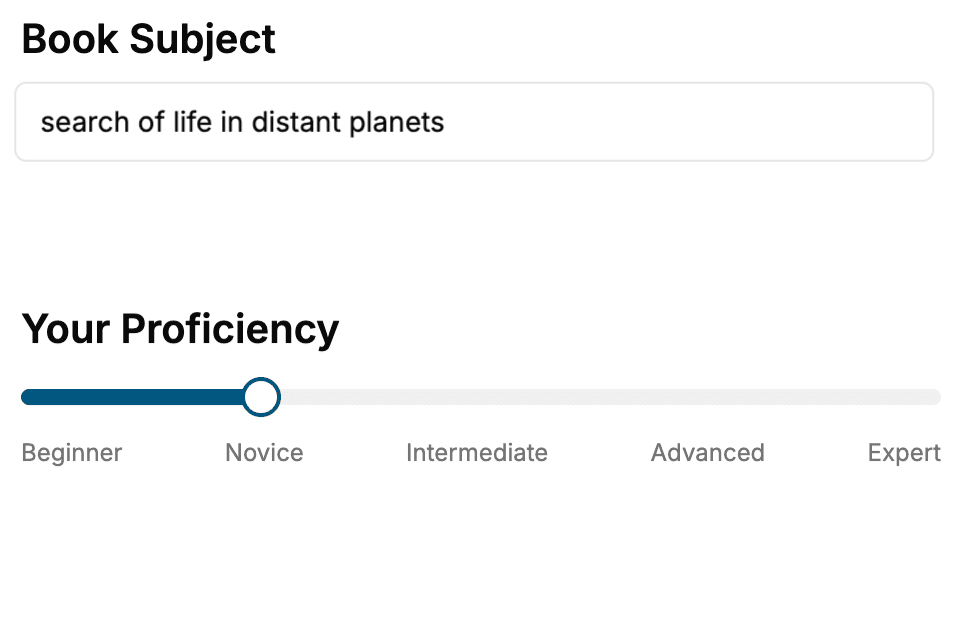
Select the focus of your UFO Studies book and share your background
- 2. Personalize your book
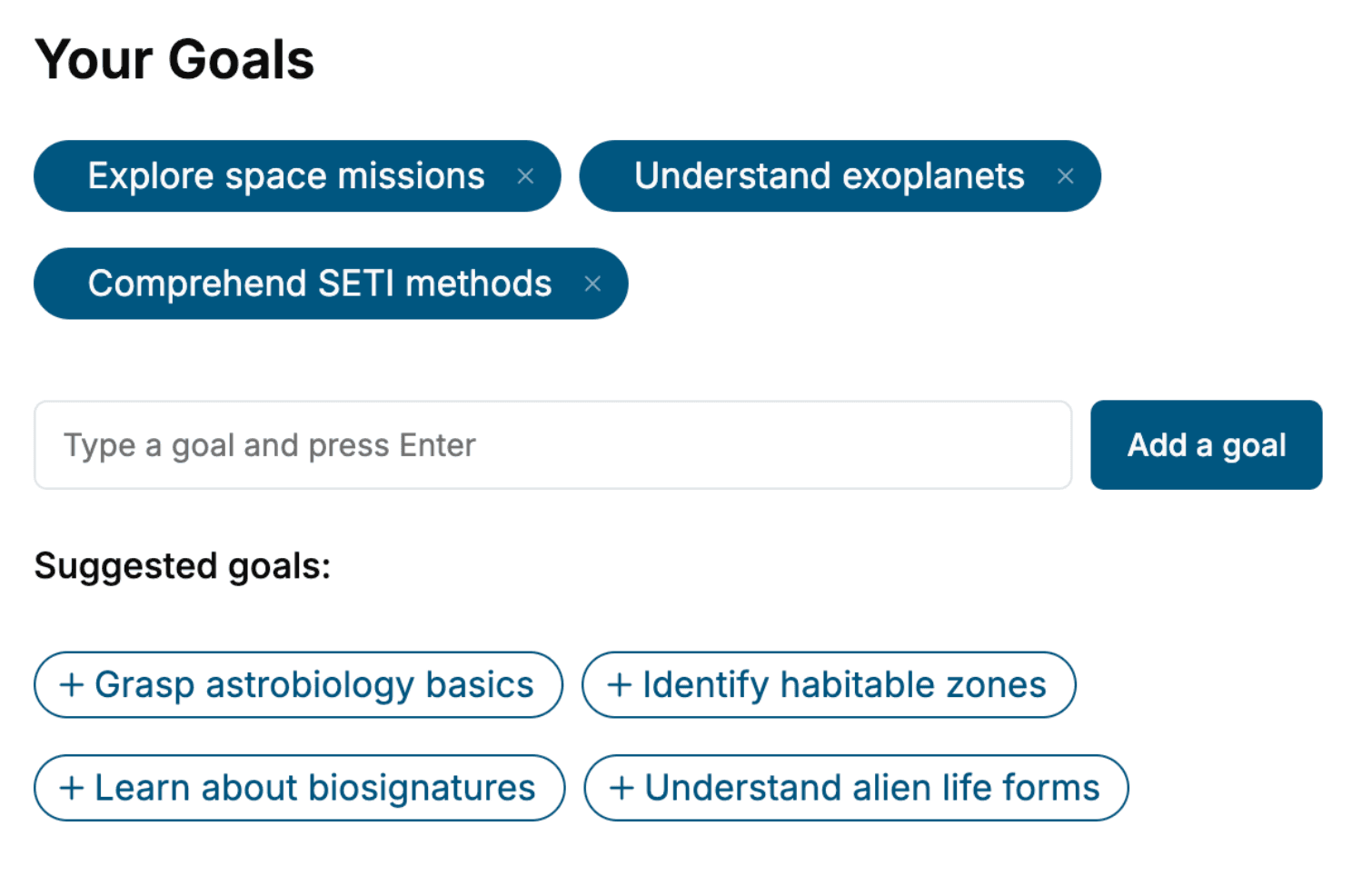
Specify your goals and choose sub-topics to include
- 3. Get your tailored book
Your book is ready in 10 minutes. Read it online, download as EPUB or PDF, or send to Kindle.

Frequently asked questions
- What is TailoredRead?
TailoredRead creates complete, full-length nonfiction ebooks, written specifically for you. Tell us what you want to learn and why, and TailoredRead writes you a complete ebook on it, with charts, tables, and diagrams throughout. Read it online, on Kindle, or on any e-reader, or download it as a PDF or EPUB. Every book is written fresh the day you order it.
- How is the book tailored to me?
Before anything is written, you answer a few short questions about your goals, your background, and the topics you care about. Your book is then planned around your answers: written at your level, focused on your goals, and covering the topics you chose, instead of the one-size-fits-all book a store sells everyone.
- Will it read like generic AI content?
No. Your book isn't a chat transcript: it's planned chapter by chapter before a single word is written, told in a clear book voice, and explains ideas visually with charts, tables, and diagrams. After writing, every book goes through an editorial pass that polishes chapters so the book reads consistent from start to finish. Judge for yourself: browse thousands of sample books on our Explore Books page.
- How accurate is the content?
Our AI first checks whether your subject needs live research. Niche and fast-moving subjects are researched before writing, and the book plan and chapters are grounded in what it finds. After writing, every book goes through a quality pass that checks its facts and consistency, and researched books list their sources in a Notes section at the back.
- How long is the book?
You choose the length: Comprehensive (250-300 pages), Detailed (150-200 pages), Essential (70-100 pages), or Short (30-50 pages).
- Does the book include visuals?
Yes. Every book includes visual elements such as timelines, checklists, step-by-step guides, decision trees, comparison tables, and matrices, and many include bar charts. A typical book includes dozens of these visual elements.
- Can I read it on Kindle? What formats can I download?
Yes. Every book can be read in our online reader or downloaded as a PDF or EPUB. The EPUB can be opened with Kindle, Apple Books, Kobo, and any e-reader. The Commercial and Author licenses also include an editable Word (DOCX) and Markdown download.
- How much does it cost?
About the price of a regular ebook. The exact price depends on your book's length and complexity, from $2 for the shortest books to $35 for the most comprehensive, and it's shown when you review your book, before you commit to anything. Each book is a one-time purchase, yours to keep, no subscription. Licenses that let you share, teach, or publish your book range from $35.99 to $49.99.
- Can I preview the book before purchasing?
Before you pay, you'll see what your book will cover: the title, a detailed description, the estimated length, and the complete chapter-by-chapter table of contents, so you know what you're getting before you decide. The full text itself is written after you purchase.
- How long does it take to create a book?
About 10 minutes. You can start reading the opening chapters while the rest is still being written.