The Chroniclers of Power
Inside the World of Presidential Historians
Unraveling the complex tapestry of American presidential history can be a daunting task.
300 pages15 chaptersJan 15, 2025Presidential History
About this book
How do we separate fact from myth, policy from personality, and lasting impact from fleeting headlines? Enter the world of presidential historians - the unsung heroes who dedicate their lives to piecing together the true stories of America's leaders. In "The Chroniclers of Power: Inside the World of Presidential Historians," you'll discover the fascinating methods, challenges, and revelations that shape our understanding of the American presidency. From painstaking research in dusty archives to interviews with key political figures, you'll gain insight into how these scholars reconstruct the past and interpret its relevance for our present and future. This book takes you behind the scenes of some of the most pivotal moments in American history, showing how presidential historians uncover hidden truths, challenge long-held assumptions, and provide crucial context to the decisions that have shaped our nation. You'll explore the delicate balance between objectivity and interpretation, and learn how these dedicated professionals navigate the often-murky waters of political legacy.
Table of contents
- IntroductionThe Importance of Presidential History, The Role of Presidential Historians, Book Overview and StructureRead below
- Chapter 1: Defining the Field of Presidential HistoryThe Evolution of Presidential History as a Discipline, Key Figures in Presidential Historical Studies, The Interdisciplinary Nature of Presidential History, Bridging Academic and Public History
- Chapter 2: Research Methods in Presidential HistoryWorking with Primary Sources, The Role of Oral History and Interviews, Navigating Presidential Libraries and Archives, Digital Tools and Resources for Historical Research
- Chapter 3: Analytical Frameworks in Presidential StudiesPolitical Science Approaches, Social and Cultural History Perspectives, Economic Analysis in Presidential History, Comparative Studies of Presidential Leadership
- Chapter 4: The Craft of Presidential BiographyNarrative Techniques in Historical Writing, Character Development and Psychological Insights, Contextualizing Presidential Lives, Balancing Personal and Political Narratives
- Chapter 5: Ethics and Objectivity in Presidential HistoryRecognizing and Addressing Personal Bias, Navigating Political Pressures and Expectations, Ethical Considerations in Historical Research, The Debate Over Historical Revisionism
- Chapter 6: Interpreting the Modern PresidencyThe Influence of Media on Presidential Image, Presidencies in a Global Context, The Impact of Technology on the Presidency, Changing Power Dynamics in American Politics
- Chapter 7: Analyzing Controversial PresidenciesStudying Presidential Scandal and Crisis Management, Examining Impeachment Processes, Debates Over Presidential Legacies, Providing Historical Perspective on Polarizing Figures
- Chapter 8: Presidential Policy AnalysisEvaluating Domestic Policy Initiatives, Assessing Foreign Policy and Diplomacy, Analyzing Presidential Economic Decisions, Tracing the Long-term Impacts of Presidential Policies
- Chapter 9: The Evolution of Presidential PowerThe Constitutional Framework of the Presidency, Executive Orders and Presidential Directives, War Powers and National Security, Checks and Balances in Practice
- Chapter 10: First Ladies in Presidential HistoryThe Evolving Roles of First Ladies, First Ladies' Influence on Policy and Public Opinion, Balancing Public and Private Lives, Assessing the Legacies of First Ladies
- Chapter 11: Presidential Media RelationsThe Evolution of Presidential Press Conferences, Analyzing Campaign Media Coverage, Presidents in the Social Media Era, Historical Perspectives on Presidential Media Strategies
- Chapter 12: Comparative Analysis of Presidential Leadership StylesDecision-making Processes Across Administrations, Communication Strategies of Different Presidents, Comparing Crisis Management Approaches, Cabinet and Team-building Strategies
- Chapter 13: Historiography of the American PresidencyChanging Interpretations Over Time, Major Schools of Thought in Presidential History, Influential Works and Their Impact, Future Directions in Presidential Historiography
- Chapter 14: Presidential Historians and Public EngagementProviding Historical Context in Media Commentary, Curating Museum Exhibitions and Public Programs, Educational Outreach and Curriculum Development, Public Speaking and Lectures on Presidential History
- Chapter 15: Presidential History in the Digital AgeUtilizing Online Archives and Databases, Digital Humanities Approaches to Presidential Studies, Social Media as a Source for Presidential History, Virtual and Augmented Reality in Historical Presentation
- ConclusionThe Future of Presidential Historical Studies, The Importance of Understanding Presidential History
- Glossary
- Further Reading
Introduction
The study of presidential history is a fascinating journey through the corridors of power, the complexities of leadership, and the evolution of a nation. As you embark on this exploration of the world of presidential historians, you'll discover the intricate tapestry of research, analysis, and interpretation that shapes our understanding of America's highest office. This introduction will set the stage for your deep dive into the methods, challenges, and significance of presidential historical studies, providing a foundation for the chapters that follow.
Throughout this book, you'll gain insight into the meticulous work that goes into reconstructing the past and interpreting its relevance for our present and future. From the painstaking examination of primary sources to the nuanced analysis of political decisions, you'll see how presidential historians piece together the complex narratives that define America's leadership legacy. This journey will not only enhance your knowledge of presidential history but also sharpen your critical thinking skills about leadership, governance, and the forces that shape our nation's trajectory.
The Importance of Presidential History
Presidential history serves as a crucial lens through which we understand the development of the United States as a nation. It provides context for the decisions that have shaped American policy, both domestic and foreign, and offers insights into the character and motivations of those who have held the nation's highest office. By studying presidential history, we gain a deeper appreciation for the complexities of leadership at the highest level and the far-reaching consequences of executive decisions.
One of the primary reasons presidential history holds such significance is its ability to illuminate the present through the lens of the past. As the philosopher George Santayana famously stated, "Those who cannot remember the past are condemned to repeat it."[1] This adage rings particularly true in the realm of presidential history, where patterns of leadership, decision-making, and policy implementation often echo across decades and even centuries. By understanding these patterns, we can better navigate current challenges and anticipate future ones.
Moreover, presidential history provides a framework for evaluating contemporary leadership. It offers benchmarks against which we can measure the actions and decisions of current presidents, helping us to contextualize their performance within the broader sweep of American history. This historical perspective is invaluable in fostering informed citizenship and promoting a more nuanced understanding of the presidency as an institution.
The study of presidential history also serves as a powerful tool for national self-reflection. It allows us to examine our collective past, acknowledging both our triumphs and our failures as a nation. Through this process, we can gain a more honest and comprehensive understanding of our national identity, values, and aspirations. Presidential historians play a crucial role in facilitating this reflection, offering interpretations that challenge us to think critically about our nation's trajectory and the leaders who have guided it.
Furthermore, presidential history provides essential context for understanding the evolution of American democracy. By tracing the expansion and contraction of presidential powers over time, we gain insight into the delicate balance of our system of checks and balances. This historical perspective is crucial for maintaining the health of our democratic institutions and ensuring that power remains accountable to the people.
The importance of presidential history extends beyond national borders as well. In an increasingly interconnected world, understanding the history of American leadership provides valuable insights into global dynamics and the United States' role on the international stage. It helps explain the origins of long-standing alliances, persistent conflicts, and the complex web of international relationships that define modern geopolitics.
Presidential history also serves as a source of national inspiration and cautionary tales. The stories of presidents who led the nation through times of crisis, championed transformative reforms, or embodied the highest ideals of public service can inspire future generations of leaders and citizens alike. Conversely, the study of presidential failures, ethical lapses, and abuses of power serves as a reminder of the vigilance required to maintain a healthy democracy.
In the realm of policy-making, presidential history provides an invaluable resource for current and future leaders. By examining the successes and failures of past administrations, policymakers can glean insights into effective governance strategies, avoid repeating historical mistakes, and build upon proven approaches to addressing national challenges. This historical knowledge base contributes to more informed and effective leadership at all levels of government.
Lastly, the study of presidential history contributes to the preservation of national memory and cultural heritage. Presidential libraries, museums, and historical sites serve as repositories of knowledge and artifacts that connect us to our shared past. These institutions, often curated and interpreted with the expertise of presidential historians, play a vital role in educating the public and fostering a sense of national continuity across generations.
As you delve deeper into the world of presidential historians in the following chapters, keep in mind the profound importance of their work. Their efforts to uncover, analyze, and interpret the actions and legacies of America's presidents contribute not only to our understanding of the past but also to our ability to shape a better future. The study of presidential history is, in essence, an ongoing dialogue between past and present, informing our collective decision-making and helping to guide the course of our nation.
The Role of Presidential Historians
Presidential historians play a multifaceted and crucial role in shaping our understanding of American leadership and the evolution of the presidency as an institution. These dedicated scholars serve as the bridge between the past and the present, interpreting the actions, decisions, and legacies of those who have held the nation's highest office. Their work goes far beyond mere chronicling of events; it involves deep analysis, critical interpretation, and the ability to contextualize presidential administrations within the broader sweep of American and world history.
At the core of a presidential historian's role is the commitment to rigorous research. This involves delving into a vast array of primary sources, including presidential papers, official documents, personal correspondence, and contemporary accounts. Historians must navigate through extensive archives, often spending years piecing together the puzzle of a president's life and tenure in office. This painstaking work requires not only patience and attention to detail but also the ability to discern the significance of individual documents within the larger historical narrative.
Interpretation is another key aspect of the presidential historian's role. Raw historical data must be analyzed, contextualized, and woven into a coherent narrative that explains not just what happened, but why it happened and what it means in the broader context of American history. This process involves making judgments about the relative importance of events, understanding the motivations behind presidential decisions, and assessing the short-term and long-term impacts of those decisions. As historian David McCullough noted, "History is not just about dates and quotations. It's about the human experience – what it's like to be a slave, or a soldier in the Civil War, or a president making decisions that affect the entire world."[2]
Presidential historians also serve as guardians of historical accuracy and objectivity. In an era of rapid information dissemination and often polarized political discourse, their role in providing factual, well-researched accounts of presidential administrations is more crucial than ever. They must navigate the delicate balance between presenting a compelling narrative and maintaining scholarly integrity, always striving to present a fair and balanced assessment of a president's tenure, regardless of personal or contemporary political biases.
Another vital aspect of the presidential historian's role is to provide context for contemporary events and decisions. By drawing parallels between current situations and historical precedents, historians help the public and policymakers alike understand the present through the lens of the past. This contextual understanding can inform better decision-making and provide a more nuanced perspective on current challenges. As historian Doris Kearns Goodwin explains, "The past is not simply the past, but a prism through which the present may be interpreted."[3]
Presidential historians also play a crucial role in shaping public understanding of the presidency. Through their books, articles, lectures, and media appearances, they bring historical insights to a broader audience, helping to foster a more informed citizenry. This public-facing aspect of their work is essential in maintaining a healthy democracy, as it encourages critical thinking about leadership and governance among the general public.
In addition to their scholarly and public education roles, presidential historians often serve as advisors to current political leaders and policymakers. Their deep knowledge of past presidencies and historical trends can provide valuable insights for those grappling with contemporary challenges. This advisory role underscores the practical applications of historical study and demonstrates how understanding the past can directly inform present-day decision-making.
Presidential historians also contribute to the preservation of national memory through their involvement in presidential libraries, museums, and historical sites. They often play key roles in curating exhibitions, developing educational programs, and ensuring that these institutions accurately represent the legacies of the presidents they commemorate. This work is crucial in maintaining a tangible connection to our nation's past and providing resources for future generations of scholars and citizens.
The role of presidential historians extends to the realm of comparative analysis as well. By studying multiple presidencies across different eras, they can identify patterns, trends, and evolving norms in executive leadership. This comparative approach provides valuable insights into the changing nature of the presidency as an institution and helps us understand how different leaders have interpreted and exercised their constitutional powers over time.
Furthermore, presidential historians play a critical role in reassessing and revising historical narratives as new information comes to light or as societal perspectives evolve. This process of historical revisionism is not about changing facts, but rather about reinterpreting events and legacies in light of new evidence or changing cultural contexts. As historian Eric Foner points out, "The past is never dead. It's not even past."[4] This ongoing reexamination ensures that our understanding of presidential history remains dynamic and relevant.
Lastly, presidential historians serve as custodians of the nation's ethical memory. By examining the moral and ethical dimensions of presidential decision-making, they help maintain a standard of accountability for those in power. Their work reminds us of the weighty responsibilities that come with the presidency and the enduring impact of a president's character and values on the nation's trajectory.
As you continue through this book, you'll gain a deeper appreciation for the multifaceted role of presidential historians. Their work not only illuminates the past but also shapes our understanding of the present and helps guide our vision for the future. The dedication, skill, and insight of these scholars contribute immeasurably to our national discourse and our collective understanding of American leadership.
Book Overview and Structure
"The Chroniclers of Power: Inside the World of Presidential Historians" is designed to provide you with a comprehensive understanding of the work, methods, and significance of presidential historians in shaping our understanding of American leadership and politics. This book is structured to take you on a journey through the various aspects of presidential historical studies, from the foundational elements of the discipline to the cutting-edge techniques and challenges faced by historians in the digital age.
The book is organized into fifteen chapters, each focusing on a specific aspect of presidential historical studies. This structure allows for a systematic exploration of the field, building your knowledge and understanding progressively as you move through the book. Each chapter is further divided into subsections, enabling a detailed examination of key topics within the broader themes.
Chapter 1, "Defining the Field of Presidential History," sets the stage by exploring the evolution of presidential history as a discipline. You'll learn about the key figures who have shaped the field and gain an understanding of the interdisciplinary nature of presidential studies. This chapter also examines how presidential historians bridge the gap between academic research and public history, making their work accessible and relevant to a broader audience.
In Chapter 2, "Research Methods in Presidential History," you'll delve into the practical aspects of how presidential historians conduct their work. This chapter covers the use of primary sources, the role of oral history and interviews, the intricacies of navigating presidential libraries and archives, and the increasing importance of digital tools in historical research. Understanding these methods will give you insight into the rigorous process behind the historical narratives you encounter.
Chapter 3, "Analytical Frameworks in Presidential Studies," introduces you to the various lenses through which historians examine presidencies. You'll explore political science approaches, social and cultural history perspectives, economic analysis, and comparative studies of presidential leadership. This chapter will enhance your ability to critically evaluate different interpretations of presidential history.
The art of crafting presidential biographies is the focus of Chapter 4, "The Craft of Presidential Biography." Here, you'll learn about narrative techniques in historical writing, character development, and the challenges of balancing personal and political narratives. This chapter offers insights into how historians bring historical figures to life while maintaining scholarly integrity.
Chapter 5, "Ethics and Objectivity in Presidential History," tackles the crucial issues of bias, political pressures, and ethical considerations in historical research. You'll explore the ongoing debate over historical revisionism and gain an understanding of how historians strive for objectivity in their work.
The following chapters delve into specific aspects of presidential history:
- Chapter 6 examines the challenges of interpreting the modern presidency in the context of media influence, globalization, and technological change.
- Chapter 7 focuses on the analysis of controversial presidencies, including the study of scandals, impeachment processes, and debates over presidential legacies.
- Chapter 8 explores presidential policy analysis, covering domestic and foreign policy initiatives, economic decisions, and their long-term impacts.
- Chapter 9 traces the evolution of presidential power, examining the constitutional framework, executive orders, war powers, and the system of checks and balances.
- Chapter 10 highlights the often-overlooked role of First Ladies in presidential history.
- Chapter 11 investigates the complex relationship between presidents and the media throughout history.
- Chapter 12 offers a comparative analysis of presidential leadership styles, examining decision-making processes, communication strategies, and team-building approaches across different administrations.
The book then shifts to broader considerations of the field:
- Chapter 13 provides an overview of the historiography of the American presidency, exploring how interpretations have changed over time and examining major schools of thought in presidential history.
- Chapter 14 focuses on how presidential historians engage with the public through media commentary, museum exhibitions, educational outreach, and public speaking.
- Chapter 15 looks to the future, examining how digital technologies are transforming the field of presidential history, from online archives to virtual reality presentations.
The book concludes with a reflection on the future of presidential historical studies and the enduring importance of understanding presidential history in shaping our nation's future. Additional resources, including a glossary of key terms and suggestions for further reading, are provided to support your continued exploration of this fascinating field.
Throughout the book, you'll find case studies, expert interviews, and practical examples that illustrate the concepts discussed. These real-world applications will help you connect theoretical knowledge to the actual practice of presidential historical studies. The book also includes thought-provoking questions and discussion points at the end of each chapter, encouraging you to reflect on the material and consider its implications for your understanding of American leadership and politics.
As you progress through "The Chroniclers of Power," you'll develop a nuanced understanding of how presidential historians work, the challenges they face, and the crucial role they play in shaping our national narrative. This knowledge will enhance your ability to critically evaluate historical accounts, understand the complexities of presidential leadership, and appreciate the ongoing relevance of presidential history to contemporary political discourse.
By the end of this book, you'll have gained not just knowledge about presidential historians and their work, but also valuable skills in critical thinking, historical analysis, and the interpretation of political leadership. These skills will serve you well, whether you're a student of history, a political enthusiast, or simply a citizen seeking a deeper understanding of American democracy and its highest office.
As you embark on this journey through the world of presidential historians, remember that history is not just about the past – it's a living, breathing discipline that continually informs our present and shapes our future. The insights you gain from this book will provide you with a richer, more nuanced understanding of American leadership and the ongoing story of our nation's highest office.
Notes
Introduction
- 1. George Santayana, The Life of Reason, Scribner's, 1905
- 2. David McCullough, The Course of Human Events, National Endowment for the Humanities, 2003
- 3. Doris Kearns Goodwin, Leadership: In Turbulent Times, Simon & Schuster, 2018
- 4. Eric Foner, Who Owns History?: Rethinking the Past in a Changing World, Hill and Wang, 2002
This is the end of the free sample. The full book has 15 chapters.
Want this book written for you?
Tell us your goals and background, and get your own version of this book, tailored by AI to you.


Benefits of AI-tailored books
- Read one book, not ten:
- all the Presidential History knowledge you need, gathered into a single book.
- Save days of learning:
- tell us your goals, choose your topics, and the whole book is built around them.
- Learn effortlessly:
- Presidential History book written for your specific background and expertise.
- Understand at a glance:
- includes charts, tables, timelines, checklists, decision trees, and more.
- Stay current:
- written the day you order it, not years ago.
- Trust what you read:
- every book is checked for accuracy, with real research when your subject needs it.
Create your unique book in 3 steps
- 1. Select your focus
Select the focus of your Presidential History book and share your background
- 2. Personalize your book
Specify your goals and choose sub-topics to include
- 3. Get your tailored book
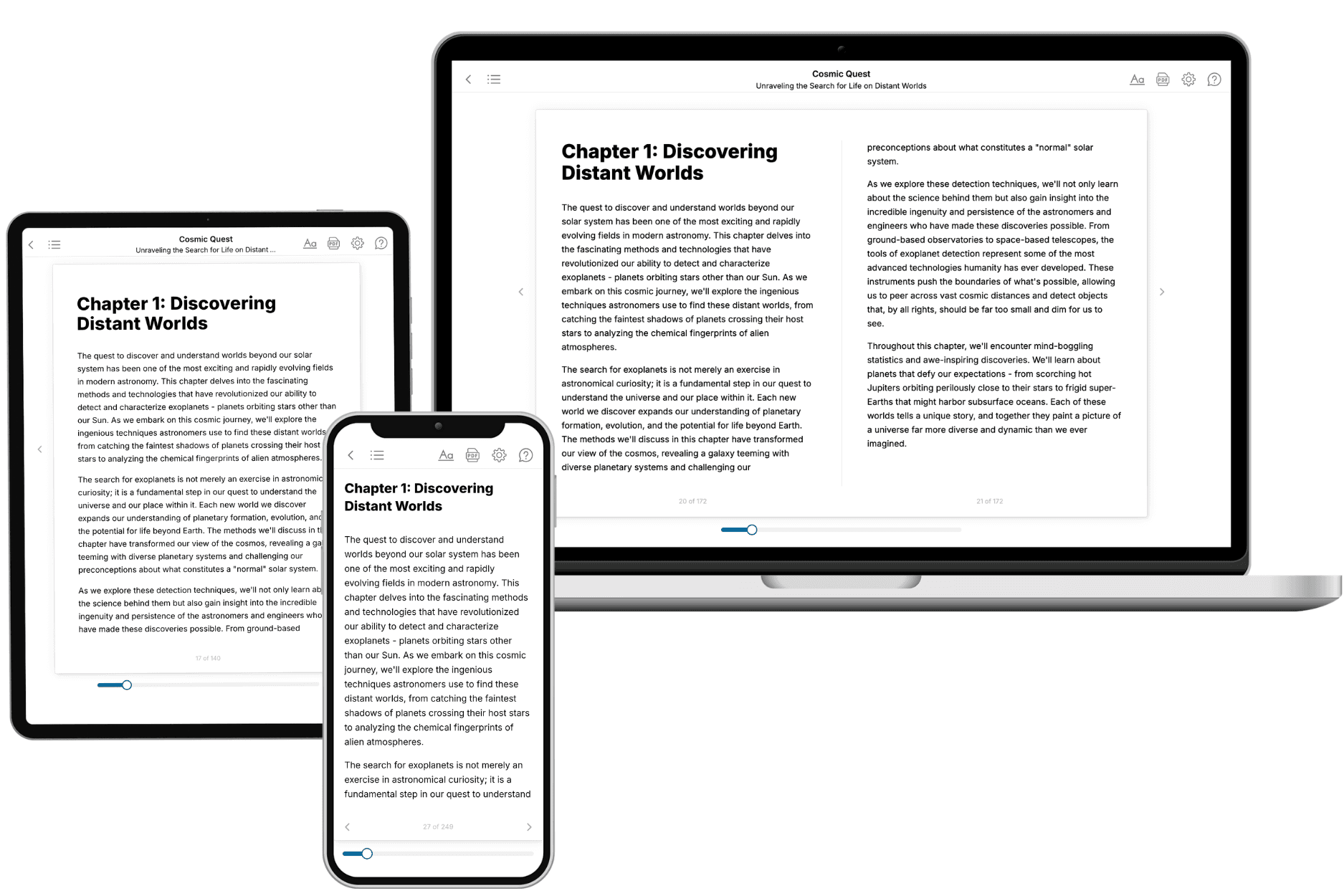
Your book is ready in 10 minutes. Read it online, download as EPUB or PDF, or send to Kindle.

Frequently asked questions
- What is TailoredRead?
TailoredRead creates complete, full-length nonfiction ebooks, written specifically for you. Tell us what you want to learn and why, and TailoredRead writes you a complete ebook on it, with charts, tables, and diagrams throughout. Read it online, on Kindle, or on any e-reader, or download it as a PDF or EPUB. Every book is written fresh the day you order it.
- How is the book tailored to me?
Before anything is written, you answer a few short questions about your goals, your background, and the topics you care about. Your book is then planned around your answers: written at your level, focused on your goals, and covering the topics you chose, instead of the one-size-fits-all book a store sells everyone.
- Will it read like generic AI content?
No. Your book isn't a chat transcript: it's planned chapter by chapter before a single word is written, told in a clear book voice, and explains ideas visually with charts, tables, and diagrams. After writing, every book goes through an editorial pass that polishes chapters so the book reads consistent from start to finish. Judge for yourself: browse thousands of sample books on our Explore Books page.
- How accurate is the content?
Our AI first checks whether your subject needs live research. Niche and fast-moving subjects are researched before writing, and the book plan and chapters are grounded in what it finds. After writing, every book goes through a quality pass that checks its facts and consistency, and researched books list their sources in a Notes section at the back.
- How long is the book?
You choose the length: Comprehensive (250-300 pages), Detailed (150-200 pages), Essential (70-100 pages), or Short (30-50 pages).
- Does the book include visuals?
Yes. Every book includes visual elements such as timelines, checklists, step-by-step guides, decision trees, comparison tables, and matrices, and many include bar charts. A typical book includes dozens of these visual elements.
- Can I read it on Kindle? What formats can I download?
Yes. Every book can be read in our online reader or downloaded as a PDF or EPUB. The EPUB can be opened with Kindle, Apple Books, Kobo, and any e-reader. The Commercial and Author licenses also include an editable Word (DOCX) and Markdown download.
- How much does it cost?
About the price of a regular ebook. The exact price depends on your book's length and complexity, from $2 for the shortest books to $35 for the most comprehensive, and it's shown when you review your book, before you commit to anything. Each book is a one-time purchase, yours to keep, no subscription. Licenses that let you share, teach, or publish your book range from $35.99 to $49.99.
- Can I preview the book before purchasing?
Before you pay, you'll see what your book will cover: the title, a detailed description, the estimated length, and the complete chapter-by-chapter table of contents, so you know what you're getting before you decide. The full text itself is written after you purchase.
- How long does it take to create a book?
About 10 minutes. You can start reading the opening chapters while the rest is still being written.