Compressing Reality
A Deep Dive into Data Compression Algorithms
Data is everywhere, but storage space isn't infinite.
269 pages13 chaptersFeb 5, 2025Data Compression
About this book
You might think that managing large datasets is an insurmountable challenge, but that's where you'd be wrong. Data compression algorithms are the unsung heroes of the digital age, making it possible to store and transmit vast amounts of information efficiently. In "Compressing Reality: A Deep Dive into Data Compression Algorithms," you'll discover the fascinating world of data reduction techniques. This book takes you beyond the surface-level understanding of compression and into the intricate workings of algorithms that make our digital world possible. From basic run-length encoding to advanced machine learning-based compression, you'll explore a wide range of algorithms, understanding not just how they work, but why they work. You'll gain insights into the trade-offs between compression ratio and computational complexity, and learn how to choose the right algorithm for different scenarios. Whether you're optimizing storage systems, developing multimedia applications, or simply curious about how your favorite file formats work, this book will equip you with the knowledge to compress data like a pro. Get ready to squeeze more out of your bits and bytes!
Table of contents
- IntroductionThe Importance of Data Compression, Book Overview and Structure, A Brief History of Data CompressionRead below
- Chapter 1: Fundamentals of Data CompressionWhat is Data Compression?, Lossless vs. Lossy Compression, Understanding Compression Ratio, Entropy and Data Redundancy
- Chapter 2: Information Theory and CompressionShannon's Entropy, Source Coding Theorem, Kolmogorov Complexity, Measuring Information Content
- Chapter 3: Run-Length EncodingBasic Concept of RLE, Implementing RLE, Applications of RLE, Limitations and Variations of RLE
- Chapter 4: Huffman CodingTheory Behind Huffman Coding, Building a Huffman Tree, Encoding Process, Decoding Huffman-Compressed Data
- Chapter 5: Arithmetic CodingBasic Principles of Arithmetic Coding, Encoding with Arithmetic Coding, Decoding Arithmetic-Coded Data, Arithmetic Coding vs. Huffman Coding
- Chapter 6: Dictionary-Based Compression MethodsLZ77 Algorithm, LZ78 Algorithm, LZW Compression, DEFLATE Algorithm
- Chapter 7: Transform Coding TechniquesDiscrete Cosine Transform (DCT), Discrete Wavelet Transform (DWT), Quantization in Transform Coding, Applications in Image and Video Compression
- Chapter 8: Image Compression AlgorithmsJPEG Compression, PNG Compression, WebP Format, Fractal Image Compression
- Chapter 9: Audio Compression TechniquesMP3 Compression, AAC Compression, FLAC Lossless Compression, Psychoacoustic Modeling in Audio Compression
- Chapter 10: Video Compression AlgorithmsMotion Compensation Techniques, H.264/AVC Compression, HEVC/H.265 Compression, VP9 and AV1 Codecs
- Chapter 11: Machine Learning in Data CompressionNeural Network-based Compression, Generative Models for Compression, Reinforcement Learning in Compression, Future Directions in ML-based Compression
- Chapter 12: Data Deduplication TechniquesBasics of Data Deduplication, File-level Deduplication, Block-level Deduplication, Applications in Storage Systems
- Chapter 13: Evaluating Compression PerformanceCompression Metrics and Benchmarks, Balancing Speed and Compression Ratio, Resource Usage Considerations, Choosing the Right Algorithm for Your Needs
- ConclusionFuture Trends in Data Compression, The Impact of Compression on Modern Computing
- Glossary
- Further Reading
Introduction
In the digital age, where information flows ceaselessly and data accumulates at an unprecedented rate, the ability to efficiently store, transmit, and process this vast sea of bits and bytes has become paramount. At the heart of this challenge lies a powerful set of techniques known collectively as data compression. These algorithms, often working silently in the background, are the unsung heroes that make our modern digital lives possible. They enable us to store thousands of songs on a small device, stream high-quality video over limited bandwidth connections, and transmit complex scientific data across vast distances in space.
As you embark on this journey through the fascinating world of data compression, you'll discover that these algorithms are not just mathematical curiosities or engineering marvels. They are the fundamental building blocks that underpin much of our digital infrastructure. From the images you see on your screen to the text messages you send, from the videos you stream to the backups of your important files, compression algorithms are working tirelessly to ensure that information is stored and transmitted as efficiently as possible.
This book, "Compressing Reality: A Deep Dive into Data Compression Algorithms," is designed to take you beyond a surface-level understanding of compression. It will guide you through the intricate workings of various algorithms, helping you understand not just how they work, but why they work. You'll gain insights into the trade-offs between compression ratio and computational complexity, and learn how to choose the right algorithm for different scenarios. Whether you're a computer science student looking to deepen your knowledge, a professional seeking to optimize systems, or simply a curious mind fascinated by the magic that happens behind the scenes in our digital world, this book will equip you with the knowledge to compress data like a pro.
As we delve into the world of data compression, we'll explore a wide range of algorithms, from the simplest run-length encoding to advanced machine learning-based compression techniques. We'll examine both lossless methods, which allow perfect reconstruction of the original data, and lossy methods, which sacrifice some fidelity for greater compression. Along the way, we'll encounter fundamental concepts from information theory, delve into the mathematics behind various compression techniques, and explore practical implementations and real-world applications.
By the end of this journey, you'll have a comprehensive understanding of data compression that goes far beyond simply knowing how to zip a file. You'll be able to analyze the efficiency of different compression methods, understand their strengths and limitations, and make informed decisions about which techniques to apply in various situations. More importantly, you'll gain a deeper appreciation for the elegant algorithms that work tirelessly to make our digital world more efficient and accessible.
So, are you ready to squeeze more out of your bits and bytes? Let's begin our exploration of the fascinating world of data compression algorithms.
The Importance of Data Compression
In today's digital landscape, data compression stands as a cornerstone technology, playing a crucial role in shaping the way we interact with and manage information. Its importance cannot be overstated, as it touches nearly every aspect of our digital lives, often in ways we may not even realize. At its core, data compression is about efficiency - doing more with less. It's about finding clever ways to represent information using fewer bits, without losing the essence of what that information conveys. This efficiency has far-reaching implications, affecting everything from the speed of our internet connections to the capacity of our storage devices.
One of the most immediate and tangible benefits of data compression is in storage optimization. As the amount of data we generate and consume continues to grow exponentially, the need for efficient storage solutions becomes increasingly critical. Data compression algorithms allow us to store significantly more information in the same amount of physical space. This is not just a matter of convenience; it has profound economic and environmental implications. By reducing the amount of storage hardware needed, compression helps lower costs, reduce energy consumption, and minimize the physical footprint of data centers. For instance, a study by the IEEE has shown that effective use of compression techniques can reduce storage requirements by up to 50% in typical enterprise environments, leading to substantial cost savings and reduced environmental impact[1].
In the realm of data transmission, compression plays an equally vital role. The ability to compress data before sending it over a network and decompress it at the receiving end has revolutionized digital communication. This is particularly evident in the world of streaming media. Without efficient compression algorithms, services like Netflix, YouTube, or Spotify would be practically impossible at their current scale. For example, video compression techniques allow high-definition movies to be streamed over relatively modest internet connections. The H.265/HEVC video compression standard, for instance, can reduce file sizes by up to 50% compared to its predecessor, H.264, while maintaining similar visual quality[2]. This efficiency not only improves the user experience by reducing buffering and enabling higher quality streams but also has significant implications for network infrastructure, allowing existing networks to handle much more data than would otherwise be possible.
Data compression also plays a critical role in mobile computing. With the limited storage and bandwidth of mobile devices, efficient compression becomes not just beneficial but essential. Mobile apps, operating systems, and even the process of app installation itself rely heavily on compression to function within the constraints of these devices. For instance, app stores often use compression to reduce the size of app downloads, saving both storage space on the device and reducing the amount of data transferred over potentially metered mobile connections. The Android operating system, for example, uses a technique called APK Compression to reduce the size of app packages, sometimes achieving compression ratios of 50% or more[3].
In the field of big data and analytics, compression takes on yet another crucial role. As organizations collect and analyze ever-larger datasets, the ability to efficiently store and process this data becomes a significant challenge. Compression algorithms tailored for big data scenarios can dramatically reduce storage requirements and improve processing speed by allowing more data to fit in fast memory. For example, Facebook's Gorilla time series database uses a custom compression algorithm that can compress time series data by up to 12x compared to traditional methods, allowing for much faster data ingestion and query processing[4].
The importance of compression extends even to fields like cryptography and security. Many encryption algorithms rely on the principle that properly encrypted data should be indistinguishable from random noise. This property is often tested by attempting to compress the encrypted data - if it can be compressed, it suggests that the encryption may have weaknesses. Conversely, compression is often used before encryption to remove patterns that could potentially be exploited by cryptanalysis attacks.
In scientific and research applications, compression enables the storage and transmission of massive datasets that would otherwise be unwieldy or impossible to work with. Fields like astronomy, particle physics, and climate science generate enormous amounts of data that must be stored, transmitted, and analyzed. For instance, the Square Kilometre Array (SKA) radio telescope project is expected to produce up to 1 exabyte (1 million terabytes) of data per day when fully operational. Efficient compression techniques are crucial for managing this data deluge[5].
Looking to the future, the importance of data compression is only set to grow. As we move towards technologies like 5G networks, Internet of Things (IoT) devices, and advanced AI systems, the amount of data being generated, transmitted, and processed will continue to increase exponentially. Compression will play a key role in making these technologies feasible and efficient. For example, in IoT scenarios where many small, low-power devices need to transmit data, efficient compression can significantly extend battery life and reduce network congestion.
Moreover, as we push the boundaries of what's possible with artificial intelligence and machine learning, new forms of compression are emerging. Neural network-based compression algorithms are showing promise in achieving higher compression ratios than traditional methods, particularly for specific types of data like images and video. These AI-driven compression techniques could lead to even more efficient data storage and transmission in the future.
In conclusion, data compression is not just a technical curiosity or a niche field of computer science. It is a fundamental enabling technology that underpins much of our modern digital infrastructure. From the smallest mobile app to the largest data centers, from streaming media to scientific research, compression algorithms work tirelessly to make our digital world more efficient, more accessible, and more capable. As we continue to generate and consume ever-increasing amounts of data, the importance of compression will only grow, making it an essential field of study for anyone looking to understand and shape the future of computing and information technology.
Book Overview and Structure
"Compressing Reality: A Deep Dive into Data Compression Algorithms" is designed to provide you with a comprehensive understanding of data compression techniques, their implementation, and practical applications in computer science. This book is structured to take you on a journey from the fundamental principles of compression to the cutting-edge techniques used in modern systems. Each chapter builds upon the knowledge from previous ones, allowing you to gradually develop a deep and nuanced understanding of this crucial field.
The book begins with an introduction to the basic concepts of data compression, setting the stage for the more complex topics to follow. Chapter 1, "Fundamentals of Data Compression," lays the groundwork by explaining what data compression is, the difference between lossless and lossy compression, and introducing key concepts like compression ratio. This chapter also delves into the idea of entropy and data redundancy, which are crucial for understanding why compression is possible in the first place.
Chapter 2, "Information Theory and Compression," takes a more theoretical approach, exploring the mathematical foundations that underpin all compression techniques. Here, you'll learn about Shannon's entropy, the source coding theorem, and Kolmogorov complexity. These concepts might seem abstract at first, but they provide the theoretical basis for understanding the limits and possibilities of data compression. By the end of this chapter, you'll have a solid grasp of how to measure information content and why some data is more compressible than others.
With this theoretical foundation in place, the book then moves on to explore specific compression algorithms, starting with some of the simplest and most fundamental techniques. Chapter 3 covers Run-Length Encoding (RLE), a basic but powerful method that forms the basis for many more complex algorithms. You'll learn how to implement RLE, understand its applications, and recognize its limitations. This chapter serves as a gentle introduction to the practical side of compression algorithms.
Chapters 4 and 5 delve into two of the most important lossless compression techniques: Huffman coding and Arithmetic coding. These chapters not only explain how these algorithms work but also guide you through their implementation, encoding and decoding processes, and compare their strengths and weaknesses. By the end of these chapters, you'll have a solid understanding of two of the most widely used compression techniques in computing.
Chapter 6 introduces dictionary-based compression methods, including the LZ family of algorithms (LZ77, LZ78, LZW) and the DEFLATE algorithm. These techniques form the basis of many popular compression formats like ZIP and GZIP. You'll learn how these algorithms exploit repetitive patterns in data to achieve impressive compression ratios, especially for text data.
Moving beyond purely lossless techniques, Chapter 7 explores transform coding techniques, focusing on the Discrete Cosine Transform (DCT) and Discrete Wavelet Transform (DWT). These methods are crucial for understanding modern image and video compression. This chapter also introduces the concept of quantization, which is key to many lossy compression techniques.
The next three chapters focus on compression techniques for specific types of data. Chapter 8 covers image compression algorithms, including JPEG, PNG, WebP, and even fractal image compression. Chapter 9 delves into audio compression techniques, explaining the principles behind formats like MP3, AAC, and FLAC. Chapter 10 tackles the complex world of video compression, covering motion compensation techniques and modern video codecs like H.264, HEVC, and AV1.
Chapter 11 looks to the future, exploring how machine learning is being applied to data compression. You'll learn about neural network-based compression, generative models for compression, and how reinforcement learning is being used to optimize compression algorithms. This chapter provides a glimpse into the cutting edge of compression research and what the future might hold.
Chapter 12 introduces data deduplication techniques, which are becoming increasingly important in large-scale storage systems. You'll learn about file-level and block-level deduplication and how these techniques are applied in modern storage systems.
The final chapter, Chapter 13, focuses on evaluating compression performance. Here, you'll learn about various compression metrics and benchmarks, how to balance speed and compression ratio, and how to choose the right algorithm for different needs. This chapter ties together all the knowledge from previous chapters, helping you understand how to apply compression techniques in real-world scenarios.
Throughout the book, you'll find practical examples, code snippets, and case studies that illustrate how these compression techniques are used in real-world applications. Each chapter also includes exercises and thought experiments to help reinforce your understanding of the concepts.
The book concludes with a look at future trends in data compression and a discussion of the impact of compression on modern computing. A comprehensive glossary is included to help you quickly reference key terms and concepts, and a curated list of further reading materials is provided for those who wish to explore certain topics in more depth.
By structuring the book in this way, the aim is to provide you with a comprehensive understanding of data compression that is both theoretically sound and practically applicable. Whether you're a student looking to deepen your knowledge, a professional seeking to optimize your systems, or simply a curious mind fascinated by the magic that happens behind the scenes in our digital world, this book will equip you with the knowledge to understand, implement, and optimize data compression techniques.
A Brief History of Data Compression
The history of data compression is a fascinating journey that parallels the development of information theory and computer science. While the digital age has brought data compression to the forefront, the concept of efficiently representing information has roots that stretch back centuries. Understanding this history not only provides context for modern compression techniques but also illustrates the evolution of our approach to managing and manipulating information.
The earliest forms of data compression can be traced back to ancient civilizations. One of the oldest known examples is the use of abbreviations in writing systems. In ancient Egypt, for instance, hieroglyphic writing often used shortened forms of common words or phrases, effectively "compressing" the written language. Similarly, in medieval Europe, monks developed complex systems of abbreviations to save space when copying manuscripts by hand. These early forms of compression were manual and specific to written language, but they demonstrate the long-standing human desire to represent information more efficiently.
The modern era of data compression began in the late 19th and early 20th centuries with the development of information theory. In 1838, Samuel Morse developed Morse code, which can be considered an early form of data compression. Morse code assigns shorter sequences to more common letters, a principle that would later be formalized in optimal prefix codes like Huffman coding. This idea of using shorter codes for more frequent symbols is a fundamental concept in many compression algorithms.
The theoretical foundations of data compression were laid in the mid-20th century with Claude Shannon's groundbreaking work on information theory. Shannon's 1948 paper "A Mathematical Theory of Communication" introduced the concept of entropy as a measure of information content[6]. This work provided a theoretical framework for understanding the limits of data compression and laid the groundwork for many of the compression techniques that would follow.
The 1950s and 1960s saw the development of some of the earliest computer-based compression algorithms. In 1949, Claude Shannon and Robert Fano developed the Shannon-Fano coding, an early attempt at creating optimal prefix codes for lossless data compression. This was followed in 1952 by David Huffman's development of Huffman coding, which improved upon Shannon-Fano coding and remains widely used today.
The 1970s and 1980s were a period of rapid advancement in compression techniques. In 1977, Abraham Lempel and Jacob Ziv published their work on the LZ77 algorithm, followed by LZ78 in 1978. These dictionary-based compression methods formed the basis for many subsequent algorithms and are still widely used. In 1984, Terry Welch modified LZ78 to create the LZW algorithm, which became popular for its efficiency and ease of implementation.
The late 1980s and early 1990s saw the development of many of the compression formats that are still in use today. In 1986, the JPEG (Joint Photographic Experts Group) was formed, leading to the development of the JPEG image compression standard. The following year, 1987, saw the creation of the GIF (Graphics Interchange Format) by CompuServe. In 1989, Phil Katz released the PKZIP program, implementing the DEFLATE algorithm, which combines LZ77 with Huffman coding and forms the basis of the popular ZIP file format.
The 1990s brought significant advancements in audio and video compression. The MP3 (MPEG-1 Audio Layer 3) format, developed by the Fraunhofer Society in Germany, was released in 1993 and revolutionized digital audio. It allowed music files to be compressed to about one-tenth of their original size while maintaining reasonable sound quality. In the realm of video compression, the H.262/MPEG-2 standard was developed in 1995, enabling digital television and DVD technology.
The turn of the millennium saw continued innovation in compression techniques. The JPEG 2000 standard was released in 2000, offering improved compression performance over the original JPEG, especially at low bit rates. In the world of video compression, H.264/AVC (Advanced Video Coding) was developed in 2003, providing significantly better compression than its predecessors and becoming the dominant video codec for over a decade.
In recent years, the focus has shifted towards more specialized and advanced compression techniques. The development of HEVC (High Efficiency Video Coding) in 2013 provided even better video compression than H.264, enabling 4K and 8K video streaming. In the realm of image compression, formats like WebP (2010) and AVIF (2019) have been developed to provide better compression than JPEG while maintaining high image quality.
The latest frontier in data compression involves the application of machine learning and artificial intelligence. Neural network-based compression techniques are showing promise in achieving higher compression ratios than traditional methods, particularly for specific types of data. For example, Google's Tensorflow Compression framework, released in 2018, allows for the development of machine learning models for data compression.
Looking back at this history, we can see several trends. First, there has been a continuous push towards more efficient compression, driven by the ever-increasing amounts of data we generate and consume. Second, we've seen a shift from general-purpose compression algorithms to more specialized techniques optimized for specific types of data (images, audio, video, etc.). Finally, there's been an increasing focus on balancing compression efficiency with computational complexity, as the speed of compression and decompression has become increasingly important in real-time applications.
As we stand on the cusp of new technological revolutions - 5G networks, Internet of Things, artificial intelligence - the importance of data compression is only set to grow. The challenges of managing and transmitting the vast amounts of data generated by these technologies will likely drive the next wave of innovations in compression techniques. Understanding the history of data compression not only gives us appreciation for the clever algorithms we use today, but also provides inspiration for the compression techniques of tomorrow.
Notes
Introduction
- 1. IEEE Transactions on Knowledge and Data Engineering, "Impact of Data Compression on Energy Consumption of Wireless Sensor Networks," 2019
- 2. Sullivan, G.J., et al. 'Overview of the High Efficiency Video Coding (HEVC) Standard' IEEE Transactions on Circuits and Systems for Video Technology (2012)
- 3. Android Developers Documentation, "APK Expansion Files," 2021
- 4. Pelkonen, T., et al. 'Gorilla: A Fast, Scalable, In-Memory Time Series Database' Proceedings of the VLDB Endowment (2015)
- 5. Square Kilometre Array Organisation, "SKA Data Challenges," 2020
- 6. C. E. Shannon, "A Mathematical Theory of Communication," Bell System Technical Journal (1948)
This is the end of the free sample. The full book has 13 chapters.
Want this book written for you?
Tell us your goals and background, and get your own version of this book, tailored by AI to you.


Benefits of AI-tailored books
- Read one book, not ten:
- all the Data Compression knowledge you need, gathered into a single book.
- Save days of learning:
- tell us your goals, choose your topics, and the whole book is built around them.
- Learn effortlessly:
- Data Compression book written for your specific background and expertise.
- Understand at a glance:
- includes charts, tables, timelines, checklists, decision trees, and more.
- Stay current:
- written the day you order it, not years ago.
- Trust what you read:
- every book is checked for accuracy, with real research when your subject needs it.
Create your unique book in 3 steps
- 1. Select your focus
Select the focus of your Data Compression book and share your background
- 2. Personalize your book
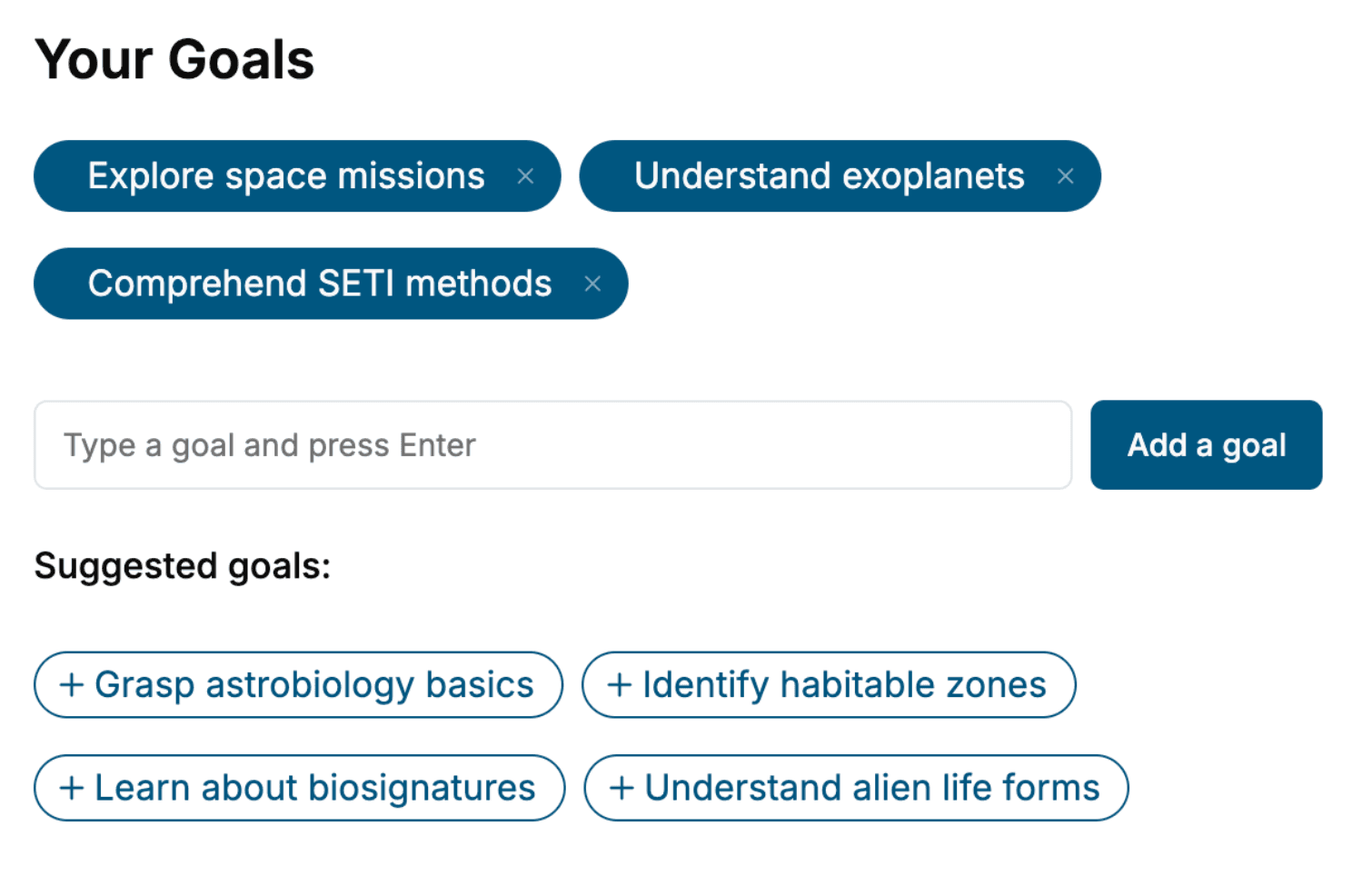
Specify your goals and choose sub-topics to include
- 3. Get your tailored book
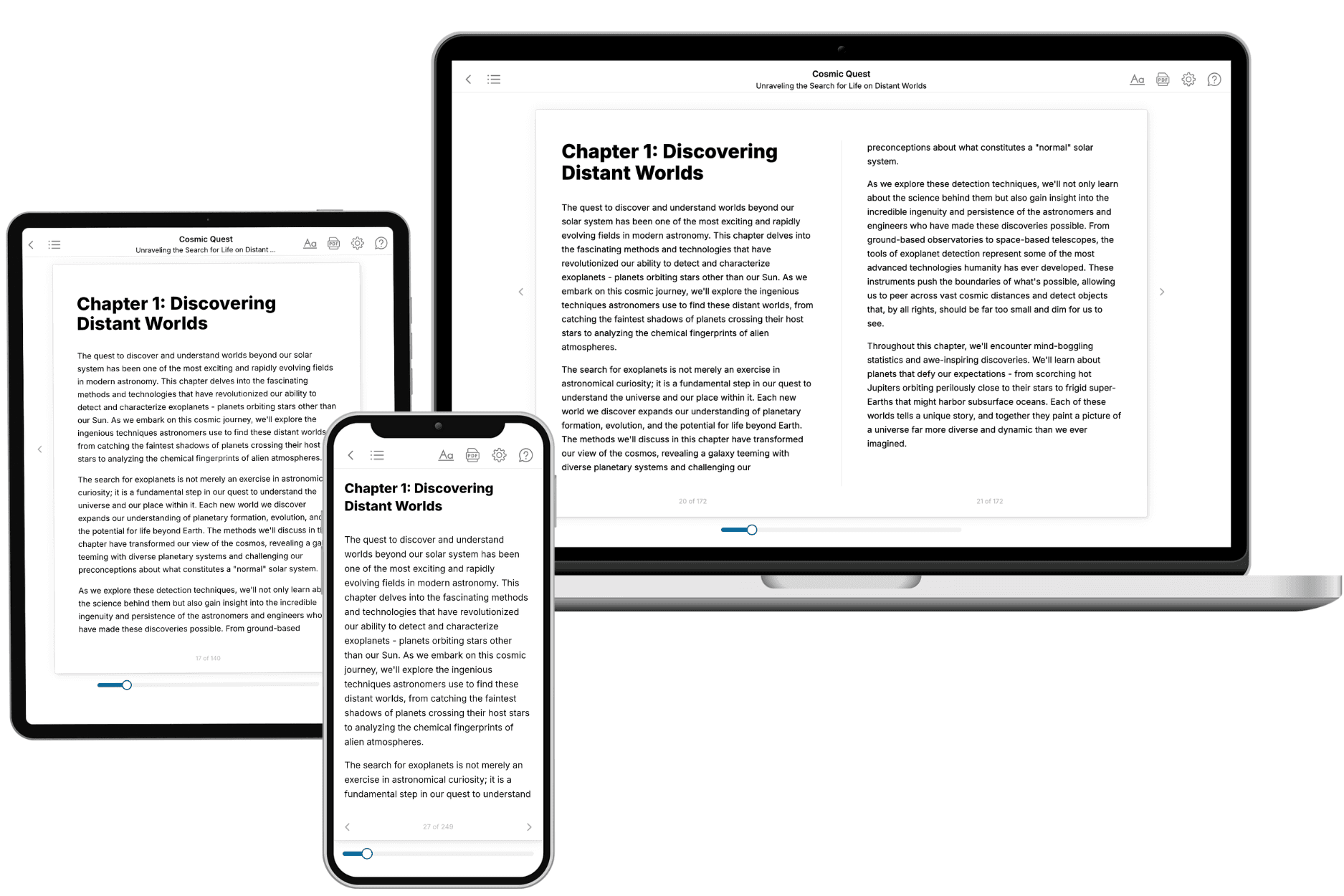
Your book is ready in 10 minutes. Read it online, download as EPUB or PDF, or send to Kindle.

Frequently asked questions
- What is TailoredRead?
TailoredRead creates complete, full-length nonfiction ebooks, written specifically for you. Tell us what you want to learn and why, and TailoredRead writes you a complete ebook on it, with charts, tables, and diagrams throughout. Read it online, on Kindle, or on any e-reader, or download it as a PDF or EPUB. Every book is written fresh the day you order it.
- How is the book tailored to me?
Before anything is written, you answer a few short questions about your goals, your background, and the topics you care about. Your book is then planned around your answers: written at your level, focused on your goals, and covering the topics you chose, instead of the one-size-fits-all book a store sells everyone.
- Will it read like generic AI content?
No. Your book isn't a chat transcript: it's planned chapter by chapter before a single word is written, told in a clear book voice, and explains ideas visually with charts, tables, and diagrams. After writing, every book goes through an editorial pass that polishes chapters so the book reads consistent from start to finish. Judge for yourself: browse thousands of sample books on our Explore Books page.
- How accurate is the content?
Our AI first checks whether your subject needs live research. Niche and fast-moving subjects are researched before writing, and the book plan and chapters are grounded in what it finds. After writing, every book goes through a quality pass that checks its facts and consistency, and researched books list their sources in a Notes section at the back.
- How long is the book?
You choose the length: Comprehensive (250-300 pages), Detailed (150-200 pages), Essential (70-100 pages), or Short (30-50 pages).
- Does the book include visuals?
Yes. Every book includes charts, tables, and diagrams: timelines, checklists, step-by-step guides, decision trees, comparison tables, matrices, and bar charts. A typical book includes dozens of these visual elements.
- Can I read it on Kindle? What formats can I download?
Yes. Every book can be read in our online reader or downloaded as a PDF or EPUB. The EPUB can be opened with Kindle, Apple Books, Kobo, and any e-reader. The Commercial and Author licenses also include an editable Word (DOCX) and Markdown download.
- How much does it cost?
About the price of a regular ebook. The exact price depends on your book's length and complexity, from $2 for the shortest books to $35 for the most comprehensive, and it's shown when you review your book, before you commit to anything. Each book is a one-time purchase, yours to keep, no subscription. Licenses that let you share, teach, or publish your book range from $35.99 to $49.99.
- Can I preview the book before purchasing?
Before you pay, you'll see what your book will cover: the title, a detailed description, the estimated length, and the complete chapter-by-chapter table of contents, so you know what you're getting before you decide. The full text itself is written after you purchase.
- How long does it take to create a book?
About 10 minutes. You can start reading the opening chapters while the rest is still being written.