The Integrated Safety Approach
A Manager's Guide to Blending Methodologies for Enhanced Workplace Safety
In "The Integrated Safety Approach," readers will discover a comprehensive guide to blending various safety methodologies into a cohesive and effective strategy.
300 pages15 chaptersOct 14, 2024Workplace SafetyCreated by Ken
About this book
This book is tailored for managers with a background in safety who are looking to take their organization's safety culture to the next level. Through a blend of theoretical knowledge and practical applications, the book covers essential topics such as Safety Leadership, Behavior-Based Safety, and Safety Data Analysis. It also delves into the nuances of Safety Culture Surveys, effective Safety Walk-throughs, and managing Contractor Safety. Readers will learn how to conduct engaging Toolbox Talks, improve Safety Communication, and implement Peer Safety Coaching programs. Each chapter provides actionable insights, real-world examples, and strategies that can be immediately applied in the workplace. Whether you're looking to enhance safety protocols, develop a stronger safety culture, boost employee engagement, or lead more effective safety initiatives, "The Integrated Safety Approach" provides the tools and knowledge needed to create a safer, more productive work environment. This book is an invaluable resource for any safety professional or manager committed to fostering teamwork and continuous improvement in workplace safety.
Table of contents
- IntroductionThe Current Safety Landscape, The Need for Integrated Safety Approaches, Book Overview and How to Use It, The Journey Ahead: Transforming Safety CultureRead below
- Chapter 1: Foundations of Integrated SafetyThe Evolution of Safety Methodologies, Benefits of Integrating Safety Approaches, Core Principles of an Integrated Safety System, Common Challenges and Solutions in Integration
- Chapter 2: Safety Leadership: The Cornerstone of SuccessUnderstanding the Role of Leadership in Safety, Developing a Safety Vision and Goals, Leading by Example: Walking the Safety Talk, Empowering Others to Take Ownership of Safety
- Chapter 3: Implementing Behavior-Based SafetyPrinciples of Behavior-Based Safety, Observation and Feedback Techniques, Positive Reinforcement Strategies, Integrating BBS with Other Safety Approaches
- Chapter 4: Leveraging Safety Data AnalysisEffective Data Collection Methods, Data Analysis Techniques for Safety Professionals, Predictive Analytics in Safety Management, Making Data-Driven Safety Decisions
- Chapter 5: Conducting Effective Safety Culture SurveysDesigning Comprehensive Safety Culture Surveys, Survey Implementation Strategies, Interpreting and Communicating Survey Results, Developing Action Plans Based on Survey Findings
- Chapter 6: Mastering Safety Walk-throughsPlanning Effective Safety Walk-throughs, Developing Keen Observation Skills, Engaging Employees During Walk-throughs, Follow-up Actions and Continuous Improvement
- Chapter 7: Managing Contractor SafetyContractor Selection and Pre-qualification, Setting Clear Safety Expectations, Monitoring and Evaluating Contractor Performance, Integrating Contractors into Your Safety Culture
- Chapter 8: Conducting Engaging Toolbox TalksPreparing Effective Toolbox Talks, Delivery Techniques for Maximum Impact, Selecting Relevant and Timely Topics, Encouraging Participation and Feedback
- Chapter 9: Enhancing Safety CommunicationDeveloping Effective Communication Strategies, Crafting Clear and Impactful Safety Messages, Utilizing a Multi-Channel Communication Approach, Implementing Feedback Mechanisms
- Chapter 10: Implementing Peer Safety CoachingDesigning a Peer Safety Coaching Program, Selecting and Training Peer Safety Coaches, Effective Coaching Techniques and Practices, Measuring the Success of Peer Coaching Initiatives
- Chapter 11: Advanced Risk Assessment TechniquesIdentifying and Categorizing Risks, Analyzing and Prioritizing Risks, Developing Effective Control Measures, Monitoring and Reviewing Risk Assessments
- Chapter 12: Effective Incident InvestigationThe Incident Investigation Process, Conducting Root Cause Analysis, Developing and Implementing Corrective Actions, Sharing Lessons Learned
- Chapter 13: Designing Effective Safety Training ProgramsConducting a Training Needs Assessment, Developing a Comprehensive Safety Curriculum, Choosing Appropriate Training Delivery Methods, Evaluating and Improving Training Effectiveness
- Chapter 14: Developing Meaningful Safety MetricsIdentifying and Tracking Leading Indicators, Balancing Leading and Lagging Indicators, Developing Key Performance Indicators (KPIs), Effective Reporting and Visualization of Safety Metrics
- Chapter 15: Fostering a Culture of Continuous ImprovementCultivating a Continuous Improvement Mindset, Encouraging Employee Involvement in Improvement Initiatives, Utilizing Continuous Improvement Tools and Techniques, Celebrating and Sharing Improvement Successes
- ConclusionKey Takeaways, Future Trends in Safety Management
- Glossary
- Further Reading
Introduction
Welcome to "The Integrated Safety Approach: A Manager's Guide to Blending Methodologies for Enhanced Workplace Safety." This comprehensive guide is designed to equip mid-level managers with the knowledge and practical strategies needed to create a robust, engaging, and effective safety culture in their organizations. As you embark on this journey to transform your workplace safety practices, you'll discover innovative ways to blend various safety methodologies, leading to a more comprehensive and impactful safety program.
In today's rapidly evolving industrial landscape, the importance of workplace safety cannot be overstated. Organizations across the globe are recognizing that a strong safety culture is not just a legal requirement or a moral obligation, but a critical factor in achieving operational excellence, enhancing productivity, and maintaining a competitive edge. However, creating and sustaining such a culture requires more than just implementing a single safety methodology or following a set of prescribed rules. It demands a holistic, integrated approach that draws from various safety philosophies and adapts to the unique needs of each organization.
Throughout this book, we will explore how to effectively combine different safety methodologies, leverage data-driven decision-making processes, enhance leadership skills in safety management, and foster a culture of continuous improvement. By the end of this journey, you will be equipped with the tools and knowledge to lead transformative safety initiatives in your workplace, engaging employees at all levels and creating a sustainable safety culture that goes beyond mere compliance.
The Current Safety Landscape
The field of workplace safety has undergone significant evolution over the past few decades. From the early days of reactive approaches focused primarily on compliance with regulations, we have progressed to more proactive and holistic strategies that emphasize prevention, engagement, and continuous improvement. This shift has been driven by a growing understanding of the complex interplay between human factors, organizational culture, and technological advancements in shaping workplace safety outcomes.
Today's safety landscape is characterized by a diverse array of methodologies and approaches, each offering unique insights and tools for managing workplace risks. Behavior-Based Safety (BBS) programs focus on identifying and reinforcing safe behaviors while addressing the root causes of unsafe actions. Systems-based approaches, such as ISO 45001, provide frameworks for integrating safety management into overall business processes. Human and Organizational Performance (HOP) principles emphasize the importance of understanding the context in which errors occur and designing systems that are resilient to human fallibility.
Technological advancements have also played a crucial role in reshaping the safety landscape. The rise of big data analytics, Internet of Things (IoT) devices, and artificial intelligence has opened up new possibilities for real-time risk monitoring, predictive analysis, and automated safety interventions. Virtual and augmented reality technologies are revolutionizing safety training, allowing for immersive, risk-free learning experiences. These technological tools, when integrated thoughtfully into a comprehensive safety strategy, can significantly enhance an organization's ability to identify, assess, and mitigate workplace hazards.
Despite these advancements, many organizations still struggle to achieve and maintain excellent safety performance. Common challenges include siloed safety initiatives that fail to address the interconnected nature of workplace risks, resistance to change among employees and management, and difficulties in measuring and demonstrating the value of safety investments. Moreover, the rapid pace of technological and organizational change in many industries introduces new and evolving risks that traditional safety approaches may not adequately address.
The COVID-19 pandemic has further underscored the need for adaptable and resilient safety systems. Organizations worldwide were forced to rapidly reassess and modify their safety protocols to address the unprecedented challenges posed by the virus. This global crisis has highlighted the importance of having flexible safety frameworks that can quickly respond to emerging threats while maintaining core safety principles.
In this complex and dynamic environment, safety professionals and managers are increasingly recognizing the limitations of relying on a single safety methodology or a one-size-fits-all approach. Instead, there is a growing trend towards integrating multiple safety approaches to create more comprehensive and effective safety programs. This integrated approach allows organizations to leverage the strengths of various methodologies while addressing their individual limitations, resulting in a more robust and adaptable safety culture.
As we delve deeper into the concept of integrated safety approaches in the following chapters, we will explore how to navigate this complex landscape, combining the best elements of various safety methodologies to create a tailored approach that meets the unique needs of your organization. By understanding the current safety landscape and its evolving nature, you will be better equipped to lead your organization towards a safer, more productive future.
The Need for Integrated Safety Approaches
As the complexity of modern workplaces continues to increase, so does the need for more sophisticated and comprehensive safety strategies. The traditional approach of implementing a single safety methodology or relying solely on compliance-driven measures is no longer sufficient to address the multifaceted challenges of today's work environments. This realization has led to a growing recognition of the need for integrated safety approaches that combine the strengths of various methodologies to create more effective and resilient safety systems.
One of the primary drivers for adopting an integrated approach is the recognition that workplace safety is influenced by a wide range of factors, including human behavior, organizational culture, technological systems, and environmental conditions. No single safety methodology can adequately address all these aspects in isolation. For instance, while Behavior-Based Safety programs are excellent at promoting safe behaviors and fostering employee engagement, they may not fully address systemic issues or technological hazards. Similarly, systems-based approaches like ISO 45001 provide a robust framework for safety management but may lack the specific tools needed to address human factors or cultural issues.
By integrating multiple safety approaches, organizations can create a more comprehensive safety strategy that addresses all aspects of workplace safety. This holistic approach allows for a more nuanced understanding of safety challenges and enables the development of more effective solutions. For example, combining elements of Behavior-Based Safety with Human and Organizational Performance principles can lead to a safety program that not only promotes safe behaviors but also considers the systemic and organizational factors that influence those behaviors.
Another compelling reason for adopting an integrated approach is the need for adaptability in the face of rapidly changing work environments. As industries evolve and new technologies emerge, organizations must be able to quickly identify and address new safety risks. An integrated safety approach, drawing from multiple methodologies, provides the flexibility and tools needed to respond effectively to these emerging challenges. It allows organizations to adapt their safety strategies to changing circumstances without having to completely overhaul their existing systems.
Furthermore, an integrated approach can help overcome the limitations and potential blind spots of individual safety methodologies. Each safety approach has its strengths and weaknesses, and by combining multiple approaches, organizations can mitigate these weaknesses while leveraging the strengths. For instance, while data-driven safety approaches provide valuable insights through analytics, they may overlook qualitative factors that are crucial for understanding safety culture. By integrating qualitative methods from other safety approaches, organizations can develop a more balanced and comprehensive understanding of their safety performance.
The need for integration is also driven by the growing recognition of the interconnected nature of workplace risks. Safety incidents often result from a complex interplay of factors rather than a single cause. An integrated approach allows for a more systemic view of safety, helping organizations identify and address these interconnected risks more effectively. This systemic perspective is particularly crucial in complex industries where safety incidents can have far-reaching consequences.
Moreover, an integrated safety approach can lead to more efficient use of resources and improved overall organizational performance. By aligning various safety initiatives and methodologies, organizations can reduce duplication of efforts, streamline processes, and create synergies between different aspects of their safety programs. This integration can also facilitate better communication and collaboration across different departments and levels of the organization, fostering a more cohesive safety culture.
The need for integrated safety approaches is further underscored by the evolving regulatory landscape. While compliance with safety regulations remains crucial, many regulatory bodies are moving towards more performance-based standards that focus on outcomes rather than prescriptive measures. This shift requires organizations to adopt more flexible and comprehensive safety strategies that can demonstrate continuous improvement and effective risk management. An integrated approach provides the framework needed to meet these evolving regulatory expectations while also driving genuine improvements in safety performance.
As we progress through this book, we will explore in detail how to effectively integrate various safety methodologies to create a robust and adaptable safety program. By understanding the need for integration and its potential benefits, you will be better positioned to lead your organization towards a more comprehensive and effective approach to workplace safety. The integrated safety approach we will develop together will not only enhance your organization's safety performance but also contribute to overall operational excellence and sustainable success.
Book Overview and How to Use It
"The Integrated Safety Approach" is designed to be a comprehensive guide for mid-level managers seeking to enhance their organization's safety culture through the integration of various safety methodologies. This book is structured to provide both theoretical knowledge and practical applications, allowing you to immediately implement the concepts and strategies in your workplace. Each chapter builds upon the previous ones, creating a logical progression from foundational concepts to advanced techniques in safety management.
The book is divided into fifteen chapters, each focusing on a crucial aspect of integrated safety management. We begin with an exploration of the foundations of integrated safety, providing a historical context and explaining the core principles that underpin this approach. From there, we delve into specific areas of safety management, including leadership, behavior-based safety, data analysis, culture surveys, and risk assessment. Each chapter is designed to stand alone as a comprehensive guide to its topic while also contributing to the overall framework of integrated safety management.
To make the most of this book, we recommend reading it in sequence, as each chapter builds upon the concepts introduced in previous sections. However, if you have a specific area of interest or an immediate need in your organization, you can also use the book as a reference guide, focusing on individual chapters as needed. The table of contents and index will help you quickly locate information on specific topics.
Throughout the book, you'll find a variety of features designed to enhance your learning and facilitate practical application:
- Case Studies: Real-world examples illustrating successful implementation of integrated safety approaches in various industries.
- Practical Tips: Actionable advice and best practices that you can immediately apply in your workplace.
- Reflection Questions: Thought-provoking queries to help you relate the content to your specific organizational context.
- Implementation Guides: Step-by-step instructions for implementing key strategies and tools.
- Key Takeaways: Summaries of the most important points from each chapter for quick reference.
We encourage you to engage actively with the material, taking notes, highlighting key points, and discussing the concepts with your colleagues. The reflection questions at the end of each chapter are particularly valuable for deepening your understanding and considering how to apply the concepts in your specific work environment. Consider forming a study group with other safety professionals in your organization to discuss the book's content and brainstorm implementation strategies.
As you progress through the book, you'll develop a comprehensive toolkit for integrated safety management. However, it's important to remember that the goal is not to implement every strategy or tool presented. Instead, focus on selecting and adapting the approaches that best fit your organization's unique needs, culture, and challenges. The integrated approach is about creating a tailored safety strategy that leverages the most effective elements of various methodologies to address your specific safety goals.
To maximize the value of this book, we recommend the following approach:
- Read through the entire book to gain a comprehensive understanding of integrated safety management.
- Conduct an assessment of your organization's current safety practices, identifying strengths and areas for improvement.
- Develop a plan for implementing integrated safety approaches, prioritizing areas that will have the most significant impact on your organization's safety performance.
- Use the book as a reference guide as you implement your plan, referring back to specific chapters for detailed guidance on particular strategies or tools.
- Regularly review and reflect on your progress, adjusting your approach as needed based on the outcomes and challenges you encounter.
Remember, creating an integrated safety approach is an ongoing process of learning, adaptation, and improvement. This book is designed to be a companion on that journey, providing guidance, inspiration, and practical tools to help you transform your organization's safety culture. As you apply the concepts and strategies presented here, you'll not only enhance safety performance but also contribute to overall organizational excellence and sustainability.
We encourage you to approach this book with an open mind and a willingness to challenge existing assumptions about safety management. The field of workplace safety is continually evolving, and the integrated approach presented here is designed to help you navigate this dynamic landscape effectively. By embracing the principles of integration, continuous improvement, and adaptability, you'll be well-equipped to lead your organization towards a safer, more productive future.
The Journey Ahead: Transforming Safety Culture
As we embark on this journey to transform your organization's safety culture through an integrated approach, it's important to understand that this is not a quick fix or a one-time initiative. Transforming a safety culture is a continuous process that requires commitment, persistence, and a willingness to challenge the status quo. The path ahead will be both challenging and rewarding, offering opportunities for significant improvements in safety performance, employee engagement, and overall organizational effectiveness.
The journey of safety culture transformation typically progresses through several stages, each with its own challenges and opportunities. Understanding these stages can help you navigate the process more effectively and set realistic expectations for your organization:
- Awareness and Assessment: This initial stage involves recognizing the need for change and conducting a thorough assessment of your current safety culture. You'll identify strengths to build upon and areas that require improvement.
- Planning and Preparation: Based on your assessment, you'll develop a comprehensive plan for implementing an integrated safety approach. This includes setting clear goals, identifying key strategies, and allocating necessary resources.
- Implementation: This stage involves putting your plan into action, introducing new safety practices, and beginning to integrate various safety methodologies. Expect some resistance and challenges during this phase as people adjust to new ways of thinking and working.
- Reinforcement and Refinement: As new practices take hold, you'll focus on reinforcing positive changes and refining your approach based on feedback and results. This stage often involves addressing unforeseen challenges and making necessary adjustments to your strategies.
- Integration and Normalization: In this stage, integrated safety practices become the norm rather than the exception. Safety considerations are naturally incorporated into all aspects of work and decision-making.
- Continuous Improvement: The final stage is an ongoing process of evaluation, learning, and improvement. Your safety culture continues to evolve and adapt to new challenges and opportunities.
Throughout this journey, leadership plays a crucial role in driving and sustaining change. As a manager, you'll need to consistently demonstrate your commitment to safety, communicate the vision for an integrated safety approach, and actively support the implementation of new practices. Your ability to inspire and engage others will be key to overcoming resistance and building momentum for change.
One of the most significant challenges you're likely to face is changing deeply ingrained attitudes and behaviors related to safety. Many employees and even managers may be comfortable with existing safety practices and resistant to change. Overcoming this inertia requires a combination of education, engagement, and positive reinforcement. You'll need to clearly communicate the benefits of an integrated safety approach, involve employees in the change process, and recognize and reward positive contributions to safety culture transformation.
Another important aspect of the journey ahead is the need for patience and persistence. Transforming a safety culture is not a linear process, and progress may sometimes seem slow or uneven. There may be setbacks or periods where change seems to plateau. During these times, it's important to maintain focus on your long-term goals, celebrate small wins, and continue to reinforce the importance of the integrated safety approach.
As you progress on this journey, you'll likely encounter several key milestones that indicate positive change in your safety culture:
- Increased employee engagement in safety initiatives and discussions
- More proactive reporting of safety concerns and near-misses
- Improved communication about safety across all levels of the organization
- Greater integration of safety considerations into operational decision-making
- Reduction in incident rates and severity
- Positive feedback from employees about the safety culture
- Recognition from industry peers or regulatory bodies for safety excellence
It's important to regularly assess your progress against these milestones and adjust your strategies as needed. Remember that the goal is not just to implement a set of safety practices, but to fundamentally change how safety is perceived and prioritized throughout your organization.
As you embark on this transformative journey, keep in mind that you're not just improving safety performance – you're contributing to the overall success and sustainability of your organization. A strong, integrated safety culture has far-reaching benefits, including improved employee morale, increased productivity, enhanced reputation, and better financial performance.
The journey ahead will require dedication, creativity, and resilience. There will be challenges to overcome and obstacles to navigate. However, with the knowledge and tools provided in this book, combined with your commitment to safety excellence, you are well-equipped to lead your organization through this transformative process. Remember that every step forward, no matter how small, is progress towards a safer, more productive workplace.
As we move forward into the core chapters of this book, we'll explore in detail the various components of an integrated safety approach and provide you with practical strategies for implementation. Each chapter will build upon the last, equipping you with the comprehensive toolkit you need to drive meaningful change in your organization's safety culture. Embrace this journey with enthusiasm and determination, knowing that your efforts will make a real difference in the lives of your employees and the success of your organization.
This is the end of the free sample. The full book has 15 chapters.
Want this book written for you?
Tell us your goals and background, and get your own version of this book, tailored by AI to you.


Benefits of AI-tailored books
- Read one book, not ten:
- all the Workplace Safety knowledge you need, gathered into a single book.
- Save days of learning:
- tell us your goals, choose your topics, and the whole book is built around them.
- Learn effortlessly:
- Workplace Safety book written for your specific background and expertise.
- Understand at a glance:
- includes charts, tables, timelines, checklists, decision trees, and more.
- Stay current:
- written the day you order it, not years ago.
- Trust what you read:
- every book is checked for accuracy, with real research when your subject needs it.
Create your unique book in 3 steps
- 1. Select your focus
Select the focus of your Workplace Safety book and share your background
- 2. Personalize your book
Specify your goals and choose sub-topics to include
- 3. Get your tailored book
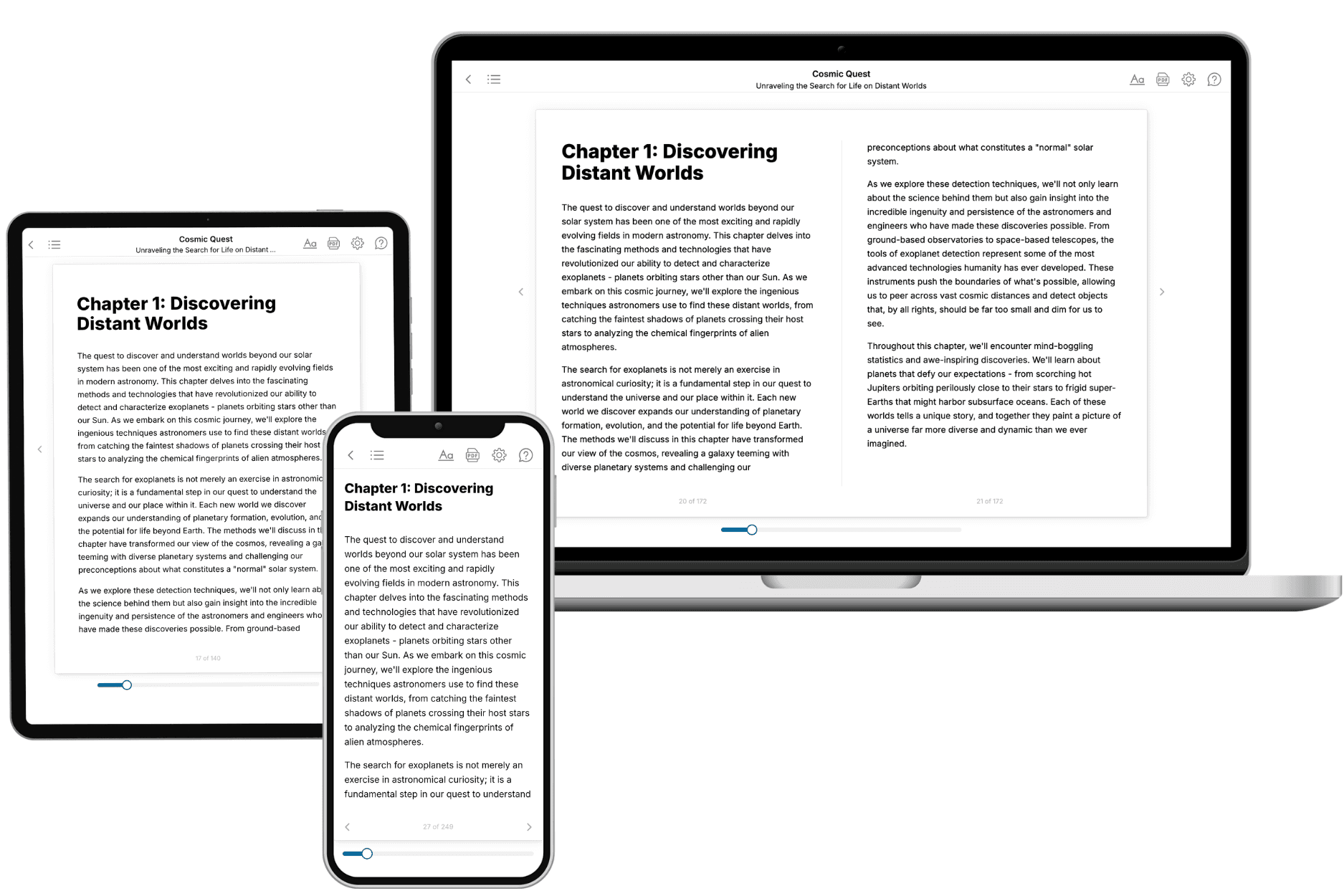
Your book is ready in 10 minutes. Read it online, download as EPUB or PDF, or send to Kindle.

Frequently asked questions
- What is TailoredRead?
TailoredRead creates complete, full-length nonfiction ebooks, written specifically for you. Tell us what you want to learn and why, and TailoredRead writes you a complete ebook on it, with charts, tables, and diagrams throughout. Read it online, on Kindle, or on any e-reader, or download it as a PDF or EPUB. Every book is written fresh the day you order it.
- How is the book tailored to me?
Before anything is written, you answer a few short questions about your goals, your background, and the topics you care about. Your book is then planned around your answers: written at your level, focused on your goals, and covering the topics you chose, instead of the one-size-fits-all book a store sells everyone.
- Will it read like generic AI content?
No. Your book isn't a chat transcript: it's planned chapter by chapter before a single word is written, told in a clear book voice, and explains ideas visually with charts, tables, and diagrams. After writing, every book goes through an editorial pass that polishes chapters so the book reads consistent from start to finish. Judge for yourself: browse thousands of sample books on our Explore Books page.
- How accurate is the content?
Our AI first checks whether your subject needs live research. Niche and fast-moving subjects are researched before writing, and the book plan and chapters are grounded in what it finds. After writing, every book goes through a quality pass that checks its facts and consistency, and researched books list their sources in a Notes section at the back.
- How long is the book?
You choose the length: Comprehensive (250-300 pages), Detailed (150-200 pages), Essential (70-100 pages), or Short (30-50 pages).
- Does the book include visuals?
Yes. Every book includes visual elements such as timelines, checklists, step-by-step guides, decision trees, comparison tables, and matrices, and many include bar charts. A typical book includes dozens of these visual elements.
- Can I read it on Kindle? What formats can I download?
Yes. Every book can be read in our online reader or downloaded as a PDF or EPUB. The EPUB can be opened with Kindle, Apple Books, Kobo, and any e-reader. The Commercial and Author licenses also include an editable Word (DOCX) and Markdown download.
- How much does it cost?
About the price of a regular ebook. The exact price depends on your book's length and complexity, from $2 for the shortest books to $35 for the most comprehensive, and it's shown when you review your book, before you commit to anything. Each book is a one-time purchase, yours to keep, no subscription. Licenses that let you share, teach, or publish your book range from $35.99 to $49.99.
- Can I preview the book before purchasing?
Before you pay, you'll see what your book will cover: the title, a detailed description, the estimated length, and the complete chapter-by-chapter table of contents, so you know what you're getting before you decide. The full text itself is written after you purchase.
- How long does it take to create a book?
About 10 minutes. You can start reading the opening chapters while the rest is still being written.