Lateral Leaps
Mastering Creative Problem-Solving with NLP-Inspired Techniques
Discover a new dimension of problem-solving that will revolutionize your approach to challenges.
253 pages13 chaptersDec 15, 2024Creative Thinking
About this book
"Lateral Leaps" introduces you to the powerful world of Lateral Thinking, seamlessly integrated with insights from Neuro-Linguistic Programming (NLP) and psychology. You'll learn to break free from conventional thought patterns, unlocking a wellspring of creativity you never knew you possessed. This book is your personal guide to developing a more flexible, innovative mind. Through practical exercises and real-world examples, you'll master techniques that will allow you to approach problems from unique angles, generating solutions that others might overlook. You'll learn to reframe challenges, challenge assumptions, and connect seemingly unrelated ideas to create breakthrough insights. By the time you finish "Lateral Leaps," you'll have a robust toolkit for creative problem-solving that you can apply to any aspect of your life. Whether you're looking to excel in your career, enhance your personal relationships, or simply enrich your daily thinking processes, this book will equip you with the mental agility to thrive in our rapidly changing world. Get ready to make cognitive leaps that will set you apart and open up a world of new possibilities.
Table of contents
- IntroductionWhat is Lateral Thinking?, The NLP Connection, Book Overview and How to Use ItRead below
- Chapter 1: Foundations of Lateral ThinkingVertical vs. Lateral Thinking, Understanding Brain Patterns, Debunking the Creativity Myth, NLP Basics for Lateral Thinking
- Chapter 2: Shifting Your MindsetCultivating an Open Mind, Nurturing Curiosity, Embracing Ambiguity, Challenging Assumptions
- Chapter 3: NLP Techniques for Enhanced Lateral ThinkingReframing Perspectives, Anchoring Creativity, Utilizing Submodalities, Leveraging Meta Programs
- Chapter 4: Core Lateral Thinking ToolsRandom Entry, Provocation Technique, Escape Method, Reversal Technique
- Chapter 5: Advanced Creative TechniquesUsing Analogies and Metaphors, Concept Extraction, Fractionation, Wishful Thinking
- Chapter 6: The Art of Problem RedefinitionCrafting Effective Problem Statements, Viewing Problems from Multiple Perspectives, Removing Artificial Constraints, Reframing Goals
- Chapter 7: Supercharging Idea GenerationBrainstorming 2.0, Mind Mapping for Lateral Thinking, Six Thinking Hats, SCAMPER Technique
- Chapter 8: Breaking Mental PatternsRecognizing Your Thought Patterns, Pattern Interruption Techniques, Seeking New Experiences, Cross-Pollination of Ideas
- Chapter 9: Developing Cognitive FlexibilityExercises for Mental Agility, Rapid Perspective Shifting, Improvisation and Adaptability, Overcoming Cognitive Biases
- Chapter 10: Overcoming Creativity BlocksConquering Fear of Failure, Dealing with Perfectionism, Building Creative Confidence, Creating an Environment for Creativity
- Chapter 11: Lateral Thinking in Decision MakingGenerating More Options, Mapping Consequences, Rethinking Decision Criteria, Balancing Intuition and Logic
- Chapter 12: Fostering Innovation with Lateral ThinkingCreating a Culture of Innovation, Disruptive Thinking Strategies, Envisioning Future Scenarios, From Idea to Implementation
- Chapter 13: Integrating Lateral Thinking into Daily LifeDaily Lateral Thinking Exercises, Forming Lateral Thinking Habits, Lateral Thinking Journaling, Applying Techniques in Real-World Situations
- ConclusionKey Takeaways, Continuing Your Lateral Thinking Journey
- AppendixAdditional Exercises and Activities, Recommended Resources
Introduction
Welcome to "Lateral Leaps: Mastering Creative Problem-Solving with NLP-Inspired Techniques." This book is your gateway to unlocking a world of innovative thinking and creative problem-solving. In an era where adaptability and innovative thinking are more crucial than ever, the ability to approach challenges from unique angles can be the difference between stagnation and breakthrough success. Lateral thinking, a term coined by Edward de Bono in 1967, is not just a skill reserved for the naturally creative - it's a powerful cognitive approach that can be learned, developed, and mastered by anyone willing to challenge their conventional thought patterns.
Throughout this book, you'll embark on a journey that will transform the way you perceive problems and generate solutions. By integrating the principles of lateral thinking with insights from Neuro-Linguistic Programming (NLP) and cognitive psychology, you'll develop a robust toolkit for creative problem-solving that you can apply to any aspect of your life. Whether you're an entrepreneur seeking innovative business solutions, a professional aiming to stand out in your field, or simply an individual looking to enrich your daily thinking processes, the techniques and strategies presented in this book will equip you with the mental agility to thrive in our rapidly changing world.
As you progress through the chapters, you'll discover that creativity is not a mystical talent bestowed upon a lucky few, but a skill that can be systematically cultivated and enhanced. You'll learn to break free from the constraints of linear thinking, challenge assumptions that limit your potential, and tap into a wellspring of creativity you may never have known you possessed. The integration of NLP techniques will provide you with powerful tools to reframe your perceptions, enhance your cognitive flexibility, and unlock new pathways of thought.
This introduction will lay the groundwork for your journey into lateral thinking. We'll explore the fundamental concepts of lateral thinking, its connection to NLP, and provide an overview of what you can expect from this book. By the time you reach the final chapter, you'll have not only a comprehensive understanding of lateral thinking but also a practical set of skills that will set you apart in both your personal and professional life. So, let's begin this exciting journey of cognitive exploration and creative empowerment.
What is Lateral Thinking?
Lateral thinking is a problem-solving approach that involves looking at challenges from unexpected angles and breaking away from traditional modes of thinking. Unlike vertical thinking, which follows a logical, step-by-step progression, lateral thinking encourages non-linear and creative approaches to problem-solving. It's about generating novel ideas and solutions by challenging existing assumptions and exploring unconventional paths of thought.
At its core, lateral thinking is about perception - how we view problems and the world around us. It's based on the understanding that our brains naturally create patterns and routines in our thinking processes. While these patterns are often useful for everyday tasks, they can also limit our ability to see new possibilities when faced with complex problems or when innovation is required. Lateral thinking techniques are designed to disrupt these established patterns, allowing for fresh perspectives and innovative solutions to emerge.
One of the key principles of lateral thinking is that it complements, rather than replaces, vertical thinking. While vertical thinking is essential for analyzing, verifying, and implementing ideas, lateral thinking is crucial for generating those ideas in the first place. It's about expanding the number of possible solutions before narrowing down to the most effective one. This approach is particularly valuable in situations where traditional problem-solving methods have failed or where entirely new approaches are needed.
Lateral thinking encompasses several key concepts and techniques. These include:
- Challenging assumptions: Questioning the premises and beliefs that underlie our current understanding of a problem.
- Reframing: Looking at a situation from different perspectives to reveal new insights.
- Random entry: Introducing unrelated ideas or stimuli to spark new connections and thought patterns.
- Provocation: Deliberately proposing outlandish ideas to break away from conventional thinking.
- Concept extraction: Identifying the fundamental principles behind ideas and applying them in new contexts.
These techniques, among others, form the foundation of lateral thinking and will be explored in depth throughout this book. By mastering these approaches, you'll develop the ability to generate a wider range of potential solutions to any given problem, increasing your chances of finding truly innovative and effective answers.
It's important to note that lateral thinking is not just about being creative for creativity's sake. It's a purposeful and systematic approach to problem-solving that can lead to practical and implementable solutions. In business, for example, lateral thinking has led to groundbreaking innovations, new product ideas, and novel marketing strategies. In personal development, it can help overcome limiting beliefs, improve relationships, and enhance decision-making skills.
The beauty of lateral thinking lies in its universality. It's not confined to any specific field or type of problem. Whether you're tackling a complex business challenge, working on a personal project, or simply trying to improve your daily life, lateral thinking can provide valuable insights and solutions. As you progress through this book, you'll see how lateral thinking can be applied to a wide range of scenarios, from the mundane to the extraordinary.
Moreover, lateral thinking is a skill that can be developed and improved with practice. Like any cognitive skill, the more you engage in lateral thinking exercises and apply its principles, the more natural and intuitive it becomes. This book is designed to guide you through this process, providing not just theoretical knowledge but also practical exercises and real-world applications to help you internalize these skills.
As we delve deeper into the world of lateral thinking, you'll discover that it's not just a problem-solving technique, but a way of approaching life with curiosity, openness, and innovation. It's about cultivating a mindset that sees possibilities where others see obstacles, that finds connections between seemingly unrelated ideas, and that isn't afraid to challenge the status quo. By embracing lateral thinking, you're opening yourself up to a world of creative potential and cognitive flexibility that can transform every aspect of your life.
The NLP Connection
Neuro-Linguistic Programming (NLP) is a powerful set of tools and techniques that focuses on understanding and influencing the connection between neurological processes, language, and behavioral patterns. While NLP and lateral thinking originated from different fields, they share a common goal: to enhance human potential and improve problem-solving abilities. In this book, we'll explore how NLP principles can be integrated with lateral thinking techniques to create a synergistic approach to creative problem-solving.
At its core, NLP is based on the idea that our neural pathways, the language we use, and our behaviors are interconnected and can be reprogrammed to achieve desired outcomes. This aligns perfectly with the goals of lateral thinking, which seeks to rewire our thought processes to generate innovative solutions. By combining these two approaches, we can create a powerful framework for enhancing creativity and cognitive flexibility.
One of the key areas where NLP complements lateral thinking is in the realm of perception. NLP teaches that "the map is not the territory," meaning that our perception of reality is not reality itself, but rather a mental representation based on our experiences, beliefs, and filters. This concept is crucial in lateral thinking, as it encourages us to challenge our assumptions and look at problems from multiple perspectives. NLP techniques such as reframing and perceptual positions can be powerful tools for shifting our viewpoint and uncovering new angles on a problem.
Another important NLP concept that enhances lateral thinking is the idea of "modeling excellence." In NLP, this involves studying and replicating the thought processes and behaviors of highly successful individuals. When applied to lateral thinking, this concept can help us understand and adopt the cognitive strategies of innovative thinkers and creative problem-solvers. By learning to model the mental patterns of lateral thinkers, we can more easily access our own creative potential.
NLP also provides valuable insights into the role of language in shaping our thoughts and perceptions. The way we frame problems and describe situations can significantly impact our ability to find creative solutions. NLP techniques for linguistic reframing and the use of metaphors can be powerful tools for lateral thinking, helping us to break free from limiting language patterns and explore new conceptual territories.
The NLP concept of "submodalities" - the sensory qualities of our internal representations - offers another valuable tool for lateral thinking. By manipulating these submodalities, we can change how we perceive and interact with problems, potentially unlocking new avenues of thought. For example, visualizing a problem as smaller or farther away can help reduce its perceived complexity, making it easier to approach creatively.
NLP's focus on state management is also highly relevant to lateral thinking. Creative problem-solving often requires us to access specific mental and emotional states conducive to innovative thinking. NLP techniques for anchoring positive states and accessing resourceful mindsets can be invaluable in cultivating the optimal conditions for lateral thinking.
Throughout this book, we'll explore specific NLP techniques that can enhance various aspects of lateral thinking:
- Reframing: Using NLP reframing techniques to shift perspectives on problems and generate new insights.
- Anchoring: Creating powerful mental triggers to access creative states on demand.
- Submodality shifts: Manipulating the sensory qualities of our internal representations to change how we perceive problems.
- Meta-programs: Understanding and leveraging our cognitive sorting patterns to enhance creative thinking.
- Milton Model language patterns: Using artfully vague language to bypass conscious resistance and stimulate creative thinking.
- Timeline techniques: Exploring problems across different time perspectives to generate novel solutions.
By integrating these NLP techniques with lateral thinking strategies, we create a powerful synergy that enhances both approaches. NLP provides the tools to access and modify our internal mental processes, while lateral thinking offers specific strategies for applying these tools to creative problem-solving. This combination allows for a more comprehensive and effective approach to innovation and creative thinking.
It's important to note that while NLP and lateral thinking are powerful tools, they are not magical solutions. Like any skill, they require practice and consistent application to yield results. Throughout this book, you'll be encouraged to engage in exercises and real-world applications that will help you internalize these techniques and make them a natural part of your cognitive toolkit.
As we progress through the chapters, you'll see how NLP concepts are woven into various lateral thinking techniques, enhancing their effectiveness and providing additional layers of insight. This integration will not only improve your problem-solving abilities but also offer a deeper understanding of your own thought processes and how to optimize them for creativity and innovation.
By the end of this book, you'll have a comprehensive understanding of how NLP and lateral thinking can work together to transform your approach to challenges and opportunities. You'll be equipped with a versatile set of tools that can be applied in various contexts, from personal development to professional problem-solving. The combination of NLP and lateral thinking will empower you to approach problems with greater flexibility, creativity, and confidence, opening up a world of new possibilities in both your personal and professional life.
Book Overview and How to Use It
"Lateral Leaps: Mastering Creative Problem-Solving with NLP-Inspired Techniques" is designed to be a comprehensive guide to developing and honing your lateral thinking skills. This book is structured to take you on a journey from the foundational concepts of lateral thinking and NLP to advanced techniques and real-world applications. Each chapter builds upon the previous ones, gradually expanding your toolkit and deepening your understanding of creative problem-solving.
The book is divided into several key sections, each focusing on different aspects of lateral thinking and its integration with NLP techniques:
- Foundations of Lateral Thinking: This section introduces the core concepts of lateral thinking and contrasts it with traditional vertical thinking. It also covers the basics of NLP and how it relates to creative problem-solving.
- Mindset Shift: Here, you'll learn how to cultivate the mental attitudes conducive to lateral thinking, including openness, curiosity, and the ability to challenge assumptions.
- NLP Techniques for Enhanced Lateral Thinking: This section delves into specific NLP tools and how they can be applied to boost your lateral thinking abilities.
- Core Lateral Thinking Tools: You'll explore fundamental lateral thinking techniques such as random entry, provocation, and the escape method.
- Advanced Creative Techniques: Building on the core tools, this section introduces more sophisticated approaches to creative problem-solving.
- Problem Redefinition: Learn how to reframe and redefine problems to uncover new solution spaces.
- Idea Generation: Discover powerful techniques for generating a wealth of creative ideas.
- Breaking Mental Patterns: Explore methods for disrupting habitual thought patterns to access fresh perspectives.
- Developing Cognitive Flexibility: This section focuses on exercises and techniques to enhance your mental agility and adaptability.
- Overcoming Creativity Blocks: Learn strategies for pushing past common obstacles to creative thinking.
- Lateral Thinking in Decision Making: Apply lateral thinking principles to improve your decision-making processes.
- Fostering Innovation: Discover how to use lateral thinking to drive innovation in various contexts.
- Integrating Lateral Thinking into Daily Life: Learn how to make lateral thinking a natural part of your everyday cognitive processes.
To get the most out of this book, it's recommended that you approach it as an active learning experience rather than a passive read. Here are some suggestions for how to use this book effectively:
1. Sequential Reading: While it's possible to jump to specific sections of interest, the book is designed to be read sequentially. Each chapter builds upon the concepts and techniques introduced in previous chapters, creating a comprehensive learning journey.
2. Practice Exercises: Throughout the book, you'll find numerous exercises and activities designed to help you practice and internalize the techniques being discussed. Don't skip these! Actively engaging with these exercises is crucial for developing your lateral thinking skills.
3. Reflection and Journaling: After each chapter or major concept, take some time to reflect on what you've learned. Consider how the techniques might apply to your own life or work. Keeping a journal of your thoughts, insights, and experiences can be a valuable tool for deepening your understanding and tracking your progress.
4. Real-World Application: Look for opportunities to apply the techniques you're learning in your daily life. The more you practice these skills in real-world situations, the more natural and effective they'll become.
5. Group Discussion: If possible, find a study partner or group to discuss the concepts and share experiences. Collaborative learning can provide new perspectives and insights that enrich your understanding of the material.
6. Revisit and Review: Don't hesitate to revisit earlier chapters or concepts as you progress through the book. As your understanding deepens, you may find new insights in material you've already covered.
7. Patience and Persistence: Remember that developing lateral thinking skills is a process that takes time and practice. Be patient with yourself and persistent in your efforts. Celebrate small successes along the way.
8. Personalization: As you explore different techniques, pay attention to which ones resonate most with you. While it's valuable to practice all the methods presented, you may find that certain approaches are particularly effective for your thinking style.
9. Create a Lateral Thinking Toolkit: As you progress through the book, consider creating a personal "toolkit" of your favorite techniques and insights. This can be a quick reference guide for future use.
10. Embrace Curiosity: Approach the material with an open and curious mind. The more you can cultivate a sense of wonder and exploration, the more you'll benefit from the techniques presented.
Remember, the goal of this book is not just to provide information, but to transform your thinking processes. By actively engaging with the material, practicing the techniques, and applying them in your life, you'll be embarking on a journey of cognitive transformation that can have far-reaching impacts on your personal and professional life.
As you progress through the book, you'll notice that many of the techniques and concepts are interconnected. This is intentional, as lateral thinking is not a linear process but a holistic approach to problem-solving. The integration of NLP techniques throughout the book adds another layer of depth, providing tools to access and modify your internal mental processes in support of lateral thinking.
Finally, it's worth noting that while this book provides a comprehensive guide to lateral thinking and NLP-inspired techniques, it's not meant to be an endpoint but rather a starting point for your journey into creative problem-solving. The world of lateral thinking is vast and ever-evolving, and there's always more to explore. Use this book as a foundation to build upon, and continue to seek out new ideas and approaches to expand your cognitive toolkit.
Now, as we embark on this journey together, prepare to challenge your assumptions, expand your perspectives, and unlock levels of creativity you may never have thought possible. Welcome to the world of lateral thinking - let's begin our leap into innovative problem-solving!
This is the end of the free sample. The full book has 13 chapters.
Want this book written for you?
Tell us your goals and background, and get your own version of this book, tailored by AI to you.


Benefits of AI-tailored books
- Read one book, not ten:
- all the Creative Thinking knowledge you need, gathered into a single book.
- Save days of learning:
- tell us your goals, choose your topics, and the whole book is built around them.
- Learn effortlessly:
- Creative Thinking book written for your specific background and expertise.
- Understand at a glance:
- includes charts, tables, timelines, checklists, decision trees, and more.
- Stay current:
- written the day you order it, not years ago.
- Trust what you read:
- every book is checked for accuracy, with real research when your subject needs it.
Create your unique book in 3 steps
- 1. Select your focus
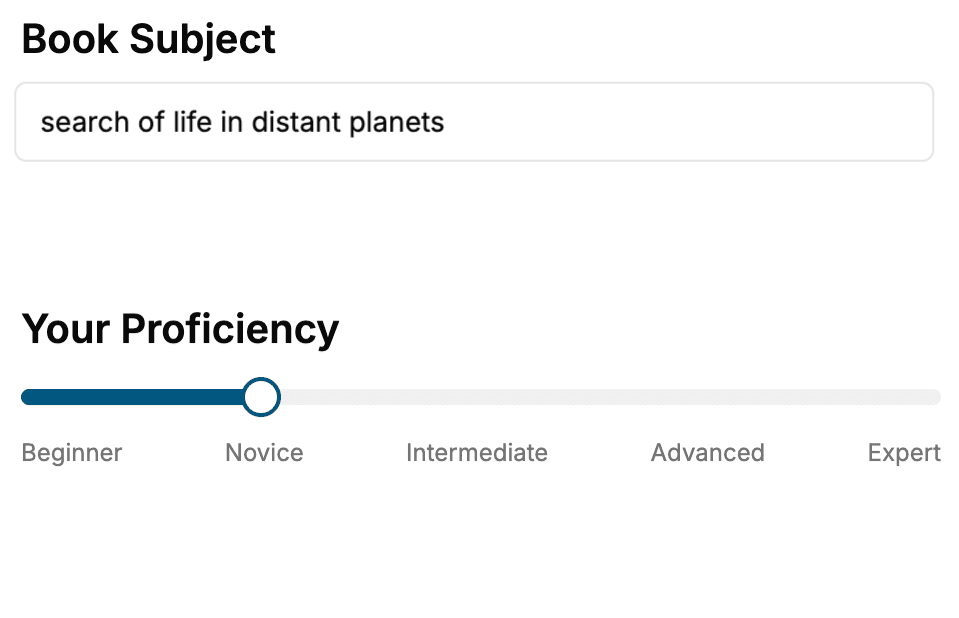
Select the focus of your Creative Thinking book and share your background
- 2. Personalize your book
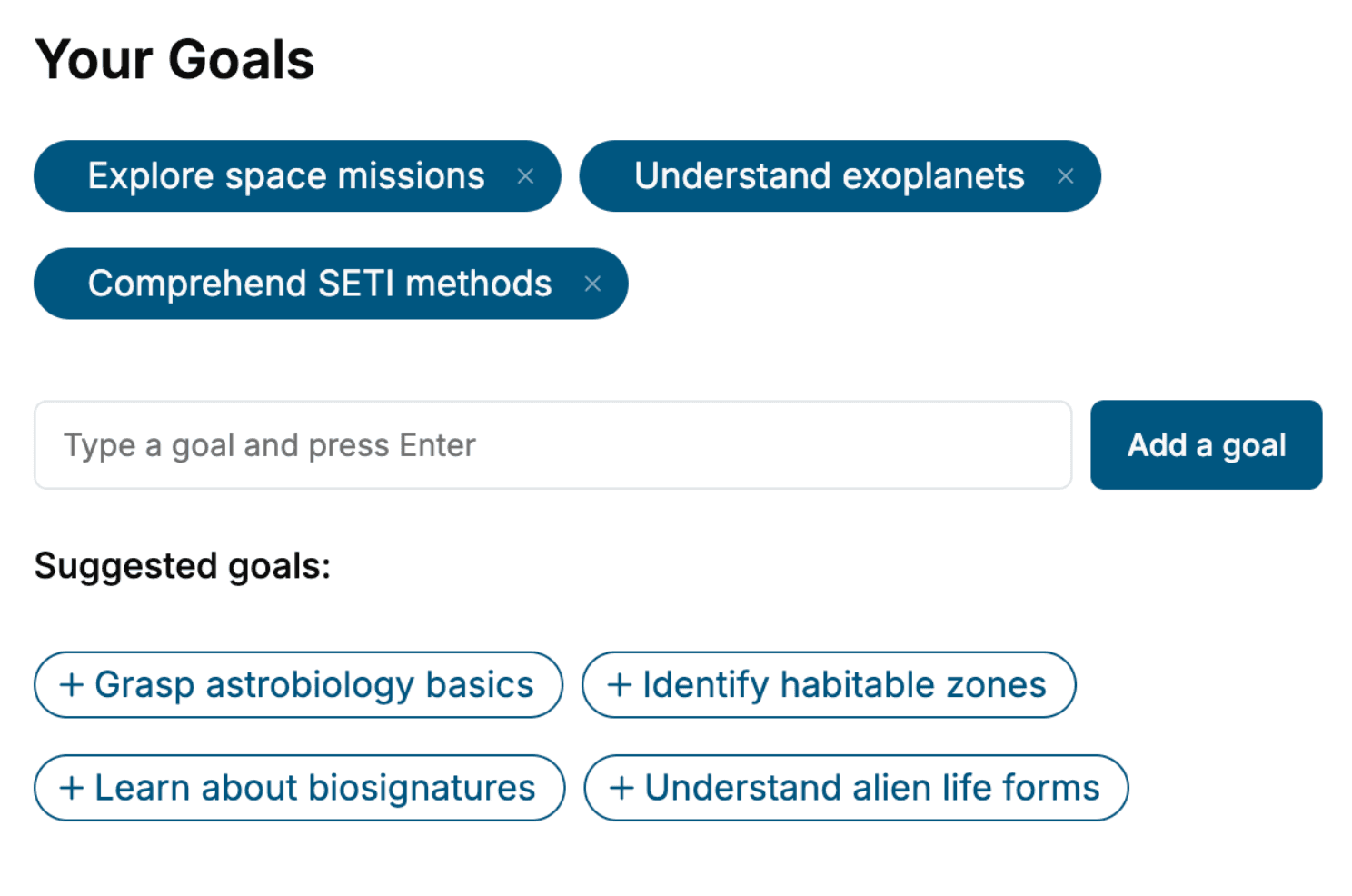
Specify your goals and choose sub-topics to include
- 3. Get your tailored book
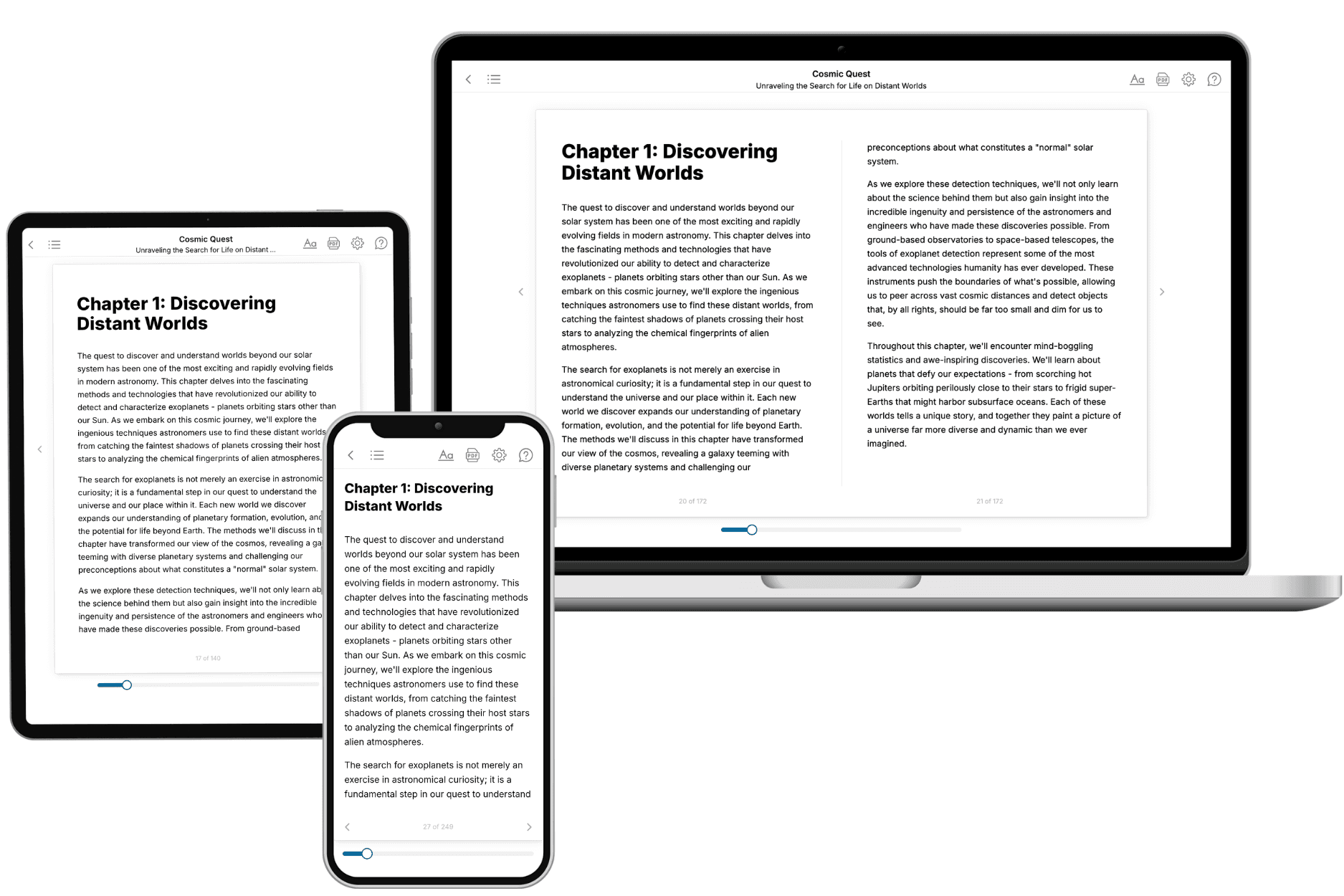
Your book is ready in 10 minutes. Read it online, download as EPUB or PDF, or send to Kindle.
Frequently asked questions
- What is TailoredRead?
TailoredRead creates complete, full-length nonfiction ebooks, written specifically for you. Tell us what you want to learn and why, and TailoredRead writes you a complete ebook on it, with charts, tables, and diagrams throughout. Read it online, on Kindle, or on any e-reader, or download it as a PDF or EPUB. Every book is written fresh the day you order it.
- How is the book tailored to me?
Before anything is written, you answer a few short questions about your goals, your background, and the topics you care about. Your book is then planned around your answers: written at your level, focused on your goals, and covering the topics you chose, instead of the one-size-fits-all book a store sells everyone.
- Will it read like generic AI content?
No. Your book isn't a chat transcript: it's planned chapter by chapter before a single word is written, told in a clear book voice, and explains ideas visually with charts, tables, and diagrams. After writing, every book goes through an editorial pass that polishes chapters so the book reads consistent from start to finish. Judge for yourself: browse thousands of sample books on our Explore Books page.
- How accurate is the content?
Our AI first checks whether your subject needs live research. Niche and fast-moving subjects are researched before writing, and the book plan and chapters are grounded in what it finds. After writing, every book goes through a quality pass that checks its facts and consistency, and researched books list their sources in a Notes section at the back.
- How long is the book?
You choose the length: Comprehensive (250-300 pages), Detailed (150-200 pages), Essential (70-100 pages), or Short (30-50 pages).
- Does the book include visuals?
Yes. Every book includes charts, tables, and diagrams: timelines, checklists, step-by-step guides, decision trees, comparison tables, matrices, and bar charts. A typical book includes dozens of these visual elements.
- Can I read it on Kindle? What formats can I download?
Yes. Every book can be read in our online reader or downloaded as a PDF or EPUB. The EPUB can be opened with Kindle, Apple Books, Kobo, and any e-reader. The Commercial and Author licenses also include an editable Word (DOCX) and Markdown download.
- How much does it cost?
About the price of a regular ebook. The exact price depends on your book's length and complexity, from $2 for the shortest books to $35 for the most comprehensive, and it's shown when you review your book, before you commit to anything. Each book is a one-time purchase, yours to keep, no subscription. Licenses that let you share, teach, or publish your book range from $35.99 to $49.99.
- Can I preview the book before purchasing?
Before you pay, you'll see what your book will cover: the title, a detailed description, the estimated length, and the complete chapter-by-chapter table of contents, so you know what you're getting before you decide. The full text itself is written after you purchase.
- How long does it take to create a book?
About 10 minutes. You can start reading the opening chapters while the rest is still being written.