Mastering Kalman Filters
A Practical Guide to Linear Estimation and Prediction
Discover the power of Kalman Filtering and revolutionize your approach to data estimation and prediction.
284 pages14 chaptersDec 8, 2024Signal Processing
About this book
This comprehensive guide takes you on a deep dive into the world of linear estimation, providing you with the tools and knowledge to tackle complex problems in signal processing, control systems, and beyond. You'll gain a solid foundation in the theoretical underpinnings of Kalman Filtering, starting from basic linear algebra concepts and progressing to advanced applications. Through clear explanations and practical examples, you'll learn how to implement Kalman Filters in various scenarios, from simple one-dimensional problems to multi-dimensional state estimation. By the end of this book, you'll have mastered the art of Kalman Filtering, enabling you to confidently apply these techniques to real-world problems. Whether you're an engineer, researcher, or data scientist, this guide will empower you to enhance your analytical skills and make more accurate predictions in your field.
Table of contents
- IntroductionOverview of Kalman Filtering, Historical Context and Development, Structure of the Book, Prerequisites and NotationRead below
- Chapter 1: Foundations of Linear AlgebraVector Spaces and Subspaces, Linear Transformations and Matrices, Eigenvalues and Eigenvectors, Inner Products and Orthogonality
- Chapter 2: Probability and Statistics ReviewRandom Variables and Distributions, Expectation and Variance, Multivariate Gaussian Distribution, Bayes' Theorem and Conditional Probability
- Chapter 3: State-Space ModelsIntroduction to State-Space Representation, Discrete-Time Linear Systems, Continuous-Time Linear Systems, State Transition Matrix
- Chapter 4: Least Squares EstimationOrdinary Least Squares, Weighted Least Squares, Recursive Least Squares, Maximum Likelihood Estimation
- Chapter 5: Kalman Filter BasicsIntroduction to Kalman Filtering, The Kalman Filter Algorithm, The Prediction Step, The Update Step, The Kalman Gain
- Chapter 6: Derivation of the Kalman FilterOptimal Estimation Theory, Minimum Mean Square Error Estimator, Recursive Bayesian Estimation, Optimality of the Kalman Filter
- Chapter 7: Discrete Kalman FilterDiscrete-Time System Model, Discrete Kalman Filter Algorithm, Example: Position Estimation, Implementation Considerations
- Chapter 8: Continuous Kalman FilterContinuous-Time System Model, Continuous Kalman Filter Algorithm, Example: Tracking a Moving Object, Discretization of Continuous Filters
- Chapter 9: Properties of Kalman FiltersStability and Convergence, Steady-State Behavior, Sensitivity Analysis, Observability and Controllability
- Chapter 10: Variations of Kalman FiltersExtended Kalman Filter, Unscented Kalman Filter, Ensemble Kalman Filter, Particle Filters
- Chapter 11: Kalman SmoothingFixed-Interval Smoothing, Fixed-Point Smoothing, Fixed-Lag Smoothing, Rauch-Tung-Striebel Smoother
- Chapter 12: Parameter Estimation and Adaptive FilteringEstimating Noise Covariances, Adaptive Kalman Filtering, Expectation-Maximization Algorithm, Dual Estimation of States and Parameters
- Chapter 13: Numerical ConsiderationsNumerical Stability Issues, Square Root Filtering, UD Factorization, Joseph Form of Covariance Update
- Chapter 14: Practical Applications of Kalman FilteringGPS and Inertial Navigation, Target Tracking and Sensor Fusion, Robotics and Autonomous Systems, Time Series Analysis and Forecasting
- ConclusionSummary of Key Concepts, Future Directions in Kalman Filtering
- AppendixMatrix Algebra Review, Probability Theory Review
- Glossary
Introduction
Welcome to the fascinating world of Kalman Filtering, a powerful mathematical tool that has revolutionized the field of estimation and prediction. This introduction will set the stage for your journey into mastering Kalman Filters, providing you with a solid foundation to build upon as you progress through the book. By the end of this chapter, you'll have a clear understanding of what Kalman Filtering is, its historical context, the structure of this book, and the prerequisites needed to make the most of your learning experience.
Overview of Kalman Filtering
Kalman Filtering is a recursive algorithm that provides optimal estimates of a system's state based on noisy measurements and a mathematical model of the system's behavior. Named after its inventor, Rudolf E. Kálmán, this technique has become an indispensable tool in various fields, including navigation, robotics, signal processing, and economics. The power of Kalman Filtering lies in its ability to combine predictions based on a system model with actual measurements, taking into account the uncertainties in both, to produce the best possible estimate of the system's current state.
At its core, the Kalman Filter operates on a simple yet profound principle: it maintains a probabilistic estimate of the system's state, continuously updating this estimate as new information becomes available. This process occurs in two main steps: prediction and update. In the prediction step, the filter uses the system model to project the current state estimate forward in time. In the update step, it incorporates new measurements to refine this prediction, weighing the relative uncertainties of the prediction and the measurement to determine how much to trust each[1].
One of the key strengths of the Kalman Filter is its ability to handle noisy and incomplete data effectively. In real-world applications, measurements are often corrupted by noise or may be missing altogether. The Kalman Filter's probabilistic approach allows it to gracefully handle these imperfections, providing robust estimates even in the face of uncertainty. This makes it particularly valuable in fields where precise measurements are difficult or expensive to obtain, such as in satellite navigation or autonomous vehicle control.
Another significant advantage of Kalman Filtering is its computational efficiency. Despite its sophisticated mathematical foundation, the algorithm is remarkably simple to implement and computationally lightweight. This is due to its recursive nature – the filter only needs to store the current state estimate and its uncertainty, rather than a complete history of all past measurements. This property makes Kalman Filters particularly well-suited for real-time applications and systems with limited computational resources.
The versatility of Kalman Filtering extends beyond linear systems. While the basic Kalman Filter is designed for linear systems, variations such as the Extended Kalman Filter (EKF) and Unscented Kalman Filter (UKF) have been developed to handle nonlinear systems. These extensions broaden the applicability of Kalman Filtering to a wide range of real-world problems that exhibit nonlinear behavior, from tracking the trajectory of a spacecraft to estimating the state of a complex chemical process.
As you delve deeper into this book, you'll discover that Kalman Filtering is not just a mathematical technique, but a powerful way of thinking about estimation and prediction problems. It provides a framework for systematically combining prior knowledge (in the form of a system model) with new observations, accounting for uncertainties in both. This approach has far-reaching implications, influencing fields as diverse as artificial intelligence, where similar principles are applied in Bayesian inference and probabilistic reasoning.
Throughout this book, you'll explore the theoretical foundations of Kalman Filtering, starting from the basics of linear algebra and probability theory. You'll learn how to derive the Kalman Filter equations, understand their properties, and apply them to various practical problems. By the end of your journey, you'll be equipped with the knowledge and skills to implement Kalman Filters in your own work, opening up new possibilities for data analysis, control systems, and predictive modeling.
As we proceed, remember that mastering Kalman Filtering is not just about memorizing equations or algorithms. It's about developing an intuition for how information from different sources can be optimally combined, how to balance between model predictions and measurements, and how to quantify and propagate uncertainty. These principles extend far beyond the specific technique of Kalman Filtering and will serve you well in many aspects of data analysis and decision-making under uncertainty.
So, prepare to embark on an exciting journey into the world of optimal estimation and prediction. Whether you're an engineer looking to improve your control systems, a data scientist seeking to enhance your time series analysis, or a researcher exploring new frontiers in signal processing, Kalman Filtering has something valuable to offer you. Let's begin our exploration of this powerful and elegant mathematical tool.
Historical Context and Development
The development of the Kalman Filter is a fascinating story that intertwines mathematical innovation with practical engineering challenges of the mid-20th century. To fully appreciate the significance of this powerful tool, it's essential to understand its historical context and the key figures who contributed to its development. The story of the Kalman Filter is not just about mathematical breakthroughs, but also about the technological and geopolitical landscape that spurred its creation and rapid adoption.
The roots of Kalman Filtering can be traced back to the early 20th century, with the development of statistical estimation theory. Pioneers like Ronald Fisher, who introduced the concept of maximum likelihood estimation in the 1920s, laid the groundwork for the statistical thinking that would eventually lead to Kalman's breakthrough. The work of Norbert Wiener in the 1940s on the prediction of time series was another crucial stepping stone. Wiener's approach to filtering and prediction problems, known as the Wiener filter, was groundbreaking but limited to stationary processes and required infinite past data[2].
The true genesis of the Kalman Filter came in the late 1950s and early 1960s, during the height of the Cold War and the Space Race. Rudolf Emil Kálmán, a Hungarian-American electrical engineer and mathematician, was working on control systems theory at the Research Institute for Advanced Study in Baltimore. In 1960, he published his seminal paper, "A New Approach to Linear Filtering and Prediction Problems," which introduced what we now know as the Kalman Filter. Kálmán's approach was revolutionary because it provided a recursive solution to the linear filtering problem for discrete-time processes, overcoming the limitations of the Wiener filter.
The timing of Kálmán's work was serendipitous. The United States was in the midst of the Space Race with the Soviet Union, and the need for accurate navigation and control systems for spacecraft was paramount. The Apollo program, which aimed to land humans on the Moon, faced significant challenges in trajectory estimation and navigation. The Kalman Filter provided an elegant solution to these problems, offering a way to optimally estimate the state of a spacecraft based on noisy sensor measurements and imperfect models of its motion.
The adoption of the Kalman Filter in the Apollo program was largely due to the efforts of Stanley F. Schmidt at the NASA Ames Research Center. Schmidt recognized the potential of Kálmán's work and adapted it for use in the Apollo navigation computer. This application was a resounding success, playing a crucial role in the guidance systems that ultimately led to the successful Moon landings. The Kalman Filter's ability to provide accurate estimates of position and velocity based on limited and noisy measurements from various sensors was invaluable in this context.
Following its success in the Apollo program, the Kalman Filter quickly found applications in a wide range of fields. In the realm of navigation, it became a cornerstone of inertial navigation systems for aircraft, ships, and submarines. The development of the Global Positioning System (GPS) in the 1970s and 1980s further expanded the use of Kalman Filtering, as it provided an ideal framework for combining GPS measurements with inertial sensor data to provide accurate and robust position estimates.
Beyond aerospace and navigation, the Kalman Filter found applications in fields as diverse as economics, where it was used for time series analysis and forecasting, and in control theory, where it became a fundamental tool for state estimation in feedback control systems. The flexibility and power of the Kalman Filter led to its adoption in areas such as weather forecasting, tracking systems, and even in financial markets for portfolio optimization.
As digital computing power increased in the latter part of the 20th century, the practical implementation of Kalman Filters became more feasible for a wider range of applications. This led to the development of variations and extensions of the original algorithm. The Extended Kalman Filter, introduced in the 1960s, allowed for the application of Kalman Filter principles to nonlinear systems through linearization. Later, the Unscented Kalman Filter, developed in the 1990s, provided a more accurate way of dealing with nonlinear systems without the need for explicit linearization.
The impact of Kalman's work extended beyond the specific algorithm that bears his name. The state-space approach to modeling dynamic systems, which is central to Kalman Filtering, has become a fundamental concept in control theory and signal processing. This approach has influenced the development of many other estimation and control techniques, including H-infinity filtering and model predictive control.
Today, more than six decades after its introduction, the Kalman Filter continues to be a subject of active research and development. Modern applications in robotics, computer vision, and autonomous systems have led to new variations and implementations of the filter. The advent of big data and machine learning has also opened up new avenues for combining Kalman Filter techniques with data-driven approaches, leading to hybrid algorithms that leverage the strengths of both statistical modeling and data-driven learning.
As you delve deeper into the world of Kalman Filtering throughout this book, it's important to keep this rich historical context in mind. The Kalman Filter is not just a mathematical technique, but a testament to the power of interdisciplinary thinking and the profound impact that theoretical innovations can have on practical engineering challenges. From its origins in the Space Race to its ubiquitous presence in modern technology, the story of the Kalman Filter is a compelling example of how mathematical ideas can shape our world in profound and lasting ways.
Structure of the Book
This book is designed to provide you with a comprehensive understanding of Kalman Filtering, from its fundamental principles to advanced applications. The structure of the book is carefully crafted to build your knowledge progressively, ensuring that each chapter lays a solid foundation for the concepts that follow. Whether you're a student, researcher, or practitioner, this systematic approach will guide you through the intricacies of Kalman Filtering, helping you develop both theoretical understanding and practical skills.
We begin with the essential mathematical foundations in Chapters 1 and 2. Chapter 1, "Foundations of Linear Algebra," covers key concepts such as vector spaces, linear transformations, eigenvalues, and inner products. This chapter ensures that you have a solid grasp of the linear algebraic tools that are fundamental to understanding Kalman Filters. Chapter 2, "Probability and Statistics Review," refreshes your knowledge of probability theory, focusing on random variables, distributions, expectation, and the crucial multivariate Gaussian distribution. These chapters lay the groundwork for the probabilistic approach that is central to Kalman Filtering.
Chapter 3, "State-Space Models," introduces you to the state-space representation of dynamic systems. This chapter bridges the gap between abstract mathematical concepts and practical system modeling. You'll learn how to represent both discrete-time and continuous-time systems in state-space form, a crucial skill for applying Kalman Filters to real-world problems. The concept of the state transition matrix is also introduced here, setting the stage for the prediction step in Kalman Filtering.
Chapter 4, "Least Squares Estimation," delves into the principles of estimation theory. Starting with ordinary least squares, you'll progress through weighted least squares and recursive least squares, culminating in an understanding of maximum likelihood estimation. This chapter provides the statistical foundation for understanding why the Kalman Filter is an optimal estimator under certain conditions.
The heart of the book begins with Chapter 5, "Kalman Filter Basics." Here, you'll be introduced to the fundamental concepts of Kalman Filtering, including the prediction and update steps, and the crucial Kalman gain. This chapter provides an intuitive understanding of how the Kalman Filter operates, balancing between model predictions and measurements.
Chapter 6, "Derivation of the Kalman Filter," takes a deeper dive into the mathematical foundations of the filter. You'll explore optimal estimation theory, the minimum mean square error estimator, and recursive Bayesian estimation. This chapter culminates in a rigorous derivation of the Kalman Filter equations, demonstrating why the filter is optimal for linear Gaussian systems.
Chapters 7 and 8 focus on the practical implementation of Kalman Filters in discrete and continuous time, respectively. These chapters include detailed examples and discuss important implementation considerations, bridging the gap between theory and practice. Chapter 9, "Properties of Kalman Filters," explores the theoretical properties of the filter, including stability, convergence, and the concepts of observability and controllability.
As you progress, Chapter 10 introduces variations of the Kalman Filter, including the Extended Kalman Filter, Unscented Kalman Filter, and Particle Filters. These advanced techniques allow you to apply Kalman Filtering principles to nonlinear systems, greatly expanding the range of potential applications.
Chapter 11 covers Kalman Smoothing, an important extension that allows for improved estimation using future measurements. This is followed by Chapter 12 on parameter estimation and adaptive filtering, which addresses the practical challenge of tuning Kalman Filters for optimal performance.
Chapter 13 delves into numerical considerations, discussing issues of numerical stability and techniques for improving the robustness of Kalman Filter implementations. This chapter is crucial for those implementing Kalman Filters in real-world systems where computational precision is a concern.
The book concludes with Chapter 14, which explores practical applications of Kalman Filtering across various domains, including GPS navigation, target tracking, robotics, and time series analysis. This chapter demonstrates the versatility of Kalman Filtering and provides inspiration for potential applications in your own work.
Throughout the book, you'll find numerous examples, illustrations, and code snippets to reinforce your understanding. Each chapter concludes with a set of exercises to test your knowledge and challenge you to apply the concepts you've learned. The appendices provide additional resources, including a review of matrix algebra and probability theory, to support your learning journey.
By structuring the book in this way, we aim to provide a comprehensive and coherent learning experience. As you progress through the chapters, you'll develop a deep understanding of Kalman Filtering, from its mathematical foundations to its practical applications. Whether you're looking to apply Kalman Filters in your work, research, or studies, this book will equip you with the knowledge and skills you need to master this powerful estimation technique.
Prerequisites and Notation
Before diving into the intricacies of Kalman Filtering, it's important to establish the prerequisites for this book and familiarize yourself with the notation that will be used throughout. While this book is designed to be as self-contained as possible, a certain level of mathematical background is assumed to ensure a smooth learning experience. This section will outline the key prerequisites and introduce the notation conventions, setting the stage for your journey into the world of Kalman Filtering.
The primary prerequisite for this book is a solid foundation in linear algebra. You should be comfortable with concepts such as vectors, matrices, linear transformations, eigenvalues, and eigenvectors. Familiarity with vector spaces, inner products, and matrix decompositions will also be beneficial. If you find that your linear algebra skills need refreshing, Chapter 1 provides a comprehensive review of these topics. Additionally, the appendix includes a more detailed reference guide for matrix algebra, which you can consult as needed throughout the book.
A basic understanding of probability theory and statistics is also essential. You should be familiar with concepts such as random variables, probability distributions (especially the Gaussian distribution), expectation, variance, and covariance. An understanding of basic statistical inference, including maximum likelihood estimation, will be helpful. Chapter 2 provides a review of these probabilistic concepts, and the appendix includes additional probability theory reference material.
Some familiarity with differential equations and dynamical systems will be beneficial, particularly when dealing with continuous-time systems and state-space models. However, these concepts will be introduced and explained as needed throughout the book. Basic programming skills are also recommended, as the book includes code examples and computational exercises. While no specific programming language is required, examples will be provided in a pseudocode format that can be easily adapted to common languages like Python, MATLAB, or Julia.
Now, let's turn our attention to the notation conventions used in this book. Consistency in notation is crucial for clear communication of mathematical ideas, so we'll adhere to the following conventions throughout:
- Scalars will be denoted by lowercase letters (e.g., x, y, z).
- Vectors will be denoted by lowercase bold letters (e.g., x, y, z).
- Matrices will be denoted by uppercase bold letters (e.g., A, B, C).
- Random variables will be denoted by uppercase letters (e.g., X, Y, Z).
- The transpose of a vector or matrix will be denoted by a superscript T (e.g., xT, AT).
- The inverse of a matrix will be denoted by a superscript -1 (e.g., A-1).
- Estimated values will be denoted by a hat (e.g., x̂, x̂).
- The expectation of a random variable will be denoted by E[X].
- The covariance of random variables X and Y will be denoted by Cov(X,Y).
- The identity matrix will be denoted by I.
- The zero matrix or vector will be denoted by 0.
In the context of Kalman Filtering, we'll use some specific notations:
- The state vector at time k will be denoted by xk.
- The measurement vector at time k will be denoted by zk.
- The state transition matrix will be denoted by F.
- The measurement matrix will be denoted by H.
- The process noise covariance matrix will be denoted by Q.
- The measurement noise covariance matrix will be denoted by R.
- The Kalman gain will be denoted by K.
- The state estimate covariance matrix will be denoted by P.
When dealing with continuous-time systems, we'll use similar notation but with time t as a continuous variable. For example, x(t) will represent the state vector at time t in a continuous-time system. Derivatives with respect to time will be denoted using dot notation, e.g., dx/dt = ẋ.
Throughout the book, we'll introduce additional notation as needed, always striving for clarity and consistency. If you encounter any notation that's unfamiliar or unclear, don't hesitate to refer back to this section or consult the glossary at the end of the book.
It's worth noting that while this book assumes a certain level of mathematical maturity, the concepts will be introduced gradually and with plenty of explanation. Each new idea builds upon previous ones, allowing you to develop a deep and intuitive understanding of Kalman Filtering. If you find certain sections challenging, don't be discouraged. Take your time, work through the examples, and attempt the exercises at the end of each chapter. Remember, mastering Kalman Filtering is a journey, and this book is designed to guide you every step of the way.
With these prerequisites in mind and armed with our notation conventions, you're now ready to embark on your exploration of Kalman Filtering. As you progress through the book, you'll find that your understanding of these fundamental concepts will deepen, and you'll develop the skills to apply Kalman Filtering to a wide range of real-world problems. Let's begin this exciting journey into the world of optimal estimation and prediction!
This is the end of the free sample. The full book has 14 chapters.
Want this book written for you?
Tell us your goals and background, and get your own version of this book, tailored by AI to you.


Benefits of AI-tailored books
- Read one book, not ten:
- all the Signal Processing knowledge you need, gathered into a single book.
- Save days of learning:
- tell us your goals, choose your topics, and the whole book is built around them.
- Learn effortlessly:
- Signal Processing book written for your specific background and expertise.
- Understand at a glance:
- includes charts, tables, timelines, checklists, decision trees, and more.
- Stay current:
- written the day you order it, not years ago.
- Trust what you read:
- every book is checked for accuracy, with real research when your subject needs it.
Create your unique book in 3 steps
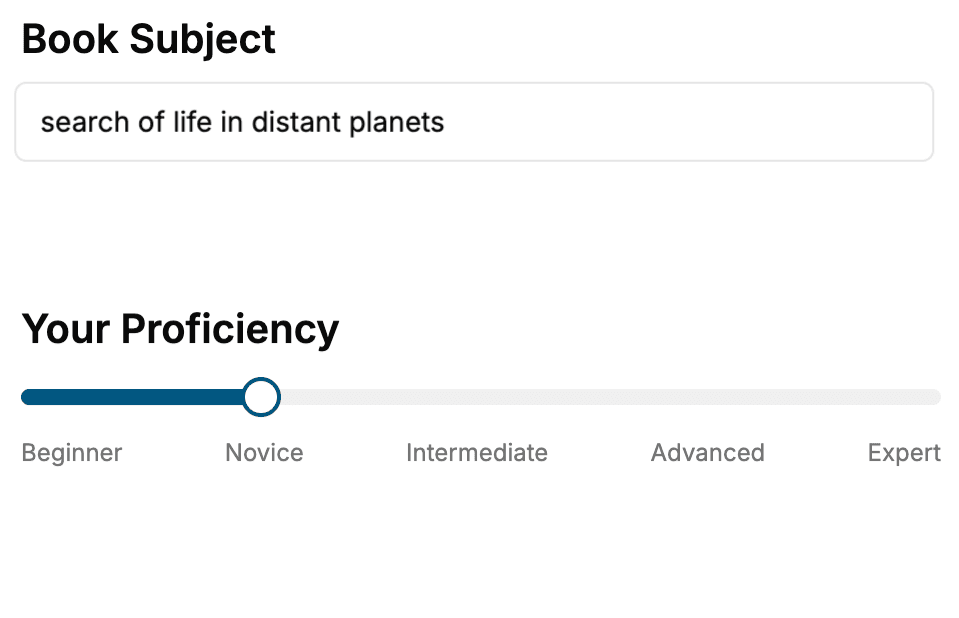
- 1. Select your focus
Select the focus of your Signal Processing book and share your background
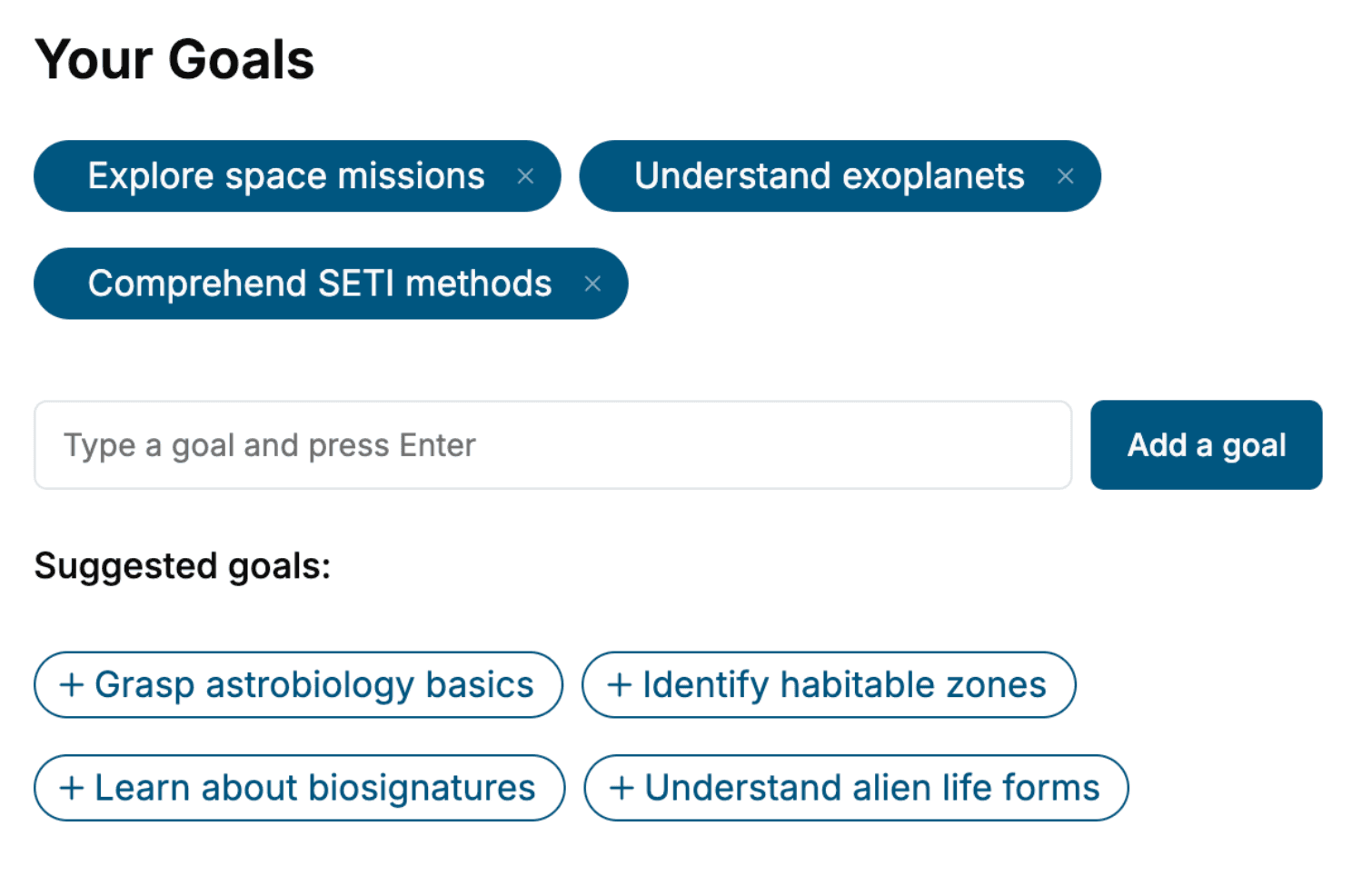
- 2. Personalize your book
Specify your goals and choose sub-topics to include
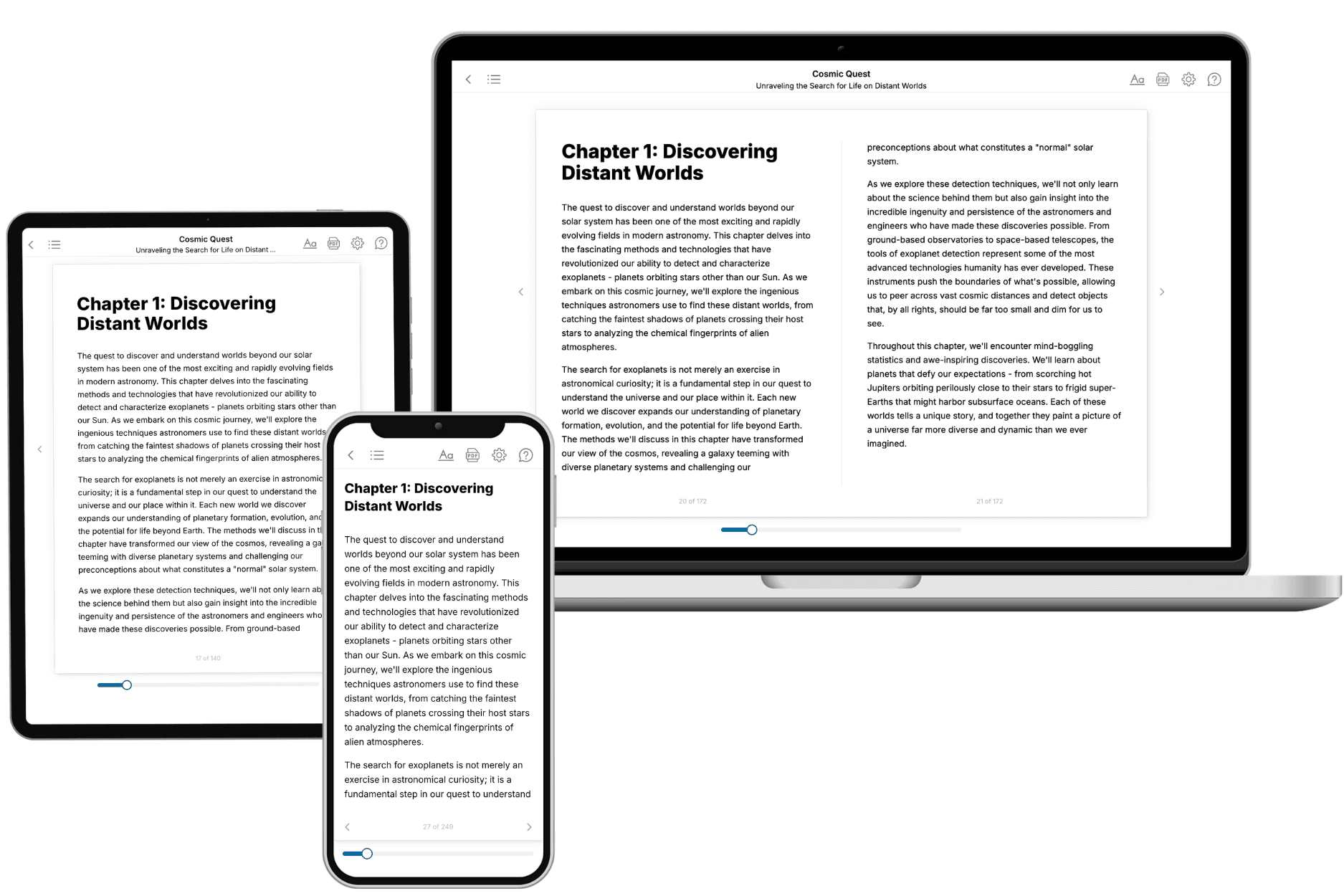
- 3. Get your tailored book
Your book is ready in 10 minutes. Read it online, download as EPUB or PDF, or send to Kindle.
Frequently asked questions
- What is TailoredRead?
TailoredRead creates complete, full-length nonfiction ebooks, written specifically for you. Tell us what you want to learn and why, and TailoredRead writes you a complete ebook on it, with charts, tables, and diagrams throughout. Read it online, on Kindle, or on any e-reader, or download it as a PDF or EPUB. Every book is written fresh the day you order it.
- How is the book tailored to me?
Before anything is written, you answer a few short questions about your goals, your background, and the topics you care about. Your book is then planned around your answers: written at your level, focused on your goals, and covering the topics you chose, instead of the one-size-fits-all book a store sells everyone.
- Will it read like generic AI content?
No. Your book isn't a chat transcript: it's planned chapter by chapter before a single word is written, told in a clear book voice, and explains ideas visually with charts, tables, and diagrams. After writing, every book goes through an editorial pass that polishes chapters so the book reads consistent from start to finish. Judge for yourself: browse thousands of sample books on our Explore Books page.
- How accurate is the content?
Our AI first checks whether your subject needs live research. Niche and fast-moving subjects are researched before writing, and the book plan and chapters are grounded in what it finds. After writing, every book goes through a quality pass that checks its facts and consistency, and researched books list their sources in a Notes section at the back.
- How long is the book?
You choose the length: Comprehensive (250-300 pages), Detailed (150-200 pages), Essential (70-100 pages), or Short (30-50 pages).
- Does the book include visuals?
Yes. Every book includes charts, tables, and diagrams: timelines, checklists, step-by-step guides, decision trees, comparison tables, matrices, and bar charts. A typical book includes dozens of these visual elements.
- Can I read it on Kindle? What formats can I download?
Yes. Every book can be read in our online reader or downloaded as a PDF or EPUB. The EPUB can be opened with Kindle, Apple Books, Kobo, and any e-reader. The Commercial and Author licenses also include an editable Word (DOCX) and Markdown download.
- How much does it cost?
About the price of a regular ebook. The exact price depends on your book's length and complexity, from $2 for the shortest books to $35 for the most comprehensive, and it's shown when you review your book, before you commit to anything. Each book is a one-time purchase, yours to keep, no subscription. Licenses that let you share, teach, or publish your book range from $35.99 to $49.99.
- Can I preview the book before purchasing?
Before you pay, you'll see what your book will cover: the title, a detailed description, the estimated length, and the complete chapter-by-chapter table of contents, so you know what you're getting before you decide. The full text itself is written after you purchase.
- How long does it take to create a book?
About 10 minutes. You can start reading the opening chapters while the rest is still being written.