Neoliberalism Unveiled
A Critical Exploration of Its Principles and Impact on Society
Embark on a thought-provoking journey through the landscape of neoliberalism with "Neoliberalism Unveiled: A Critical Exploration of Its Principles and Impact on Society." This comprehensive guide delves deep into the heart of one of the most influential political and economic philosophies of our time.
238 pages11 chaptersDec 3, 2024Economics Theory
About this book
You'll discover the historical roots of neoliberalism, tracing its evolution from classical liberalism to its modern incarnation. Unpack the core principles that define neoliberal thought, from free-market capitalism to limited government intervention, and examine how these ideas have shaped policies and institutions around the world. Through a balanced and analytical lens, you'll explore the far-reaching consequences of neoliberal policies on various aspects of society, including education, labor markets, and global trade. Gain insights into the critiques and controversies surrounding neoliberalism, and consider alternative perspectives that challenge its fundamental assumptions. Whether you're a student of political theory, a sociologist, or simply an engaged citizen seeking to understand the forces shaping our world, this book offers a clear, accessible, and engaging exploration of neoliberalism. Prepare to challenge your assumptions, broaden your perspective, and gain a nuanced understanding of this complex and influential ideology.
Table of contents
- IntroductionWhat is Neoliberalism?, The Importance of Understanding Neoliberalism, Book Overview and StructureRead below
- Chapter 1: The Historical Context of NeoliberalismClassical Liberalism: The Precursor, The Great Depression and Keynesian Economics, The Post-War Consensus and Its Challenges, The Emergence of Neoliberal Thought
- Chapter 2: Key Thinkers and Their ContributionsFriedrich Hayek and the Austrian School, Milton Friedman and Monetarism, The Chicago School of Economics, Public Choice Theory and James M. Buchanan
- Chapter 3: Core Principles of NeoliberalismFree Market Capitalism, Limited Government Intervention, Deregulation and Privatization, Individual Responsibility and Choice, Globalization and Free Trade
- Chapter 4: The Political Implementation of NeoliberalismThatcherism in the United Kingdom, Reaganomics in the United States, The Washington Consensus, The Global Spread of Neoliberal Policies
- Chapter 5: Economic Impacts of NeoliberalismMarket Efficiency and Economic Growth, Global Trade and Economic Integration, Income Inequality and Wealth Concentration, Labor Markets and Worker Rights, Financial Deregulation and Economic Crises
- Chapter 6: Social Impacts of NeoliberalismThe Transformation of the Welfare State, Education and Human Capital, Healthcare Systems under Neoliberalism, Social Mobility and Opportunity
- Chapter 7: Environmental Impacts of NeoliberalismResource Exploitation and Commodification, Climate Change and Market-Based Solutions, Sustainability and Economic Growth, Environmental Regulation in a Neoliberal Framework
- Chapter 8: Neoliberalism and Global GovernanceInternational Financial Institutions, Free Trade Agreements and Economic Blocs, Development Policies and Aid Conditionality, Neoliberalism and the Global South
- Chapter 9: Critiques of NeoliberalismMarket Failures and Externalities, Social Justice and Equity Concerns, Democracy and Political Representation, Cultural Impacts and Commodification, The 2008 Financial Crisis and Its Aftermath
- Chapter 10: Alternatives and Challenges to NeoliberalismSocial Democracy and the Nordic Model, Post-Keynesian Economics, Degrowth and Sustainable Economics, Participatory Economics and Democratic Planning
- Chapter 11: The Future of NeoliberalismPost-Crisis Adaptations and Reforms, The Rise of Populism and Anti-Establishment Movements, Technological Change and the Digital Economy, Global Challenges and Cooperative Solutions
- ConclusionRecapitulation of Key Points, Final Reflections on Neoliberalism, Directions for Future Research and Debate
- Glossary
- Further Reading
Introduction
In the complex tapestry of modern political and economic thought, few threads have been as influential and controversial as neoliberalism. This introduction serves as your gateway to understanding this pervasive ideology that has shaped policies, economies, and societies around the globe for decades. As you embark on this intellectual journey, you'll gain insights into the fundamental concepts of neoliberalism, explore its far-reaching implications, and prepare yourself for a deeper dive into its multifaceted nature in the chapters that follow.
Neoliberalism is not merely an abstract concept confined to academic discourse or policy debates. Its principles and practices have profoundly influenced the world you live in, from the way governments operate and economies function to the very fabric of social interactions. Whether you're aware of it or not, neoliberal ideas have likely played a role in shaping your educational experiences, job prospects, healthcare options, and even your understanding of individual rights and responsibilities. By delving into this subject, you're taking a crucial step towards comprehending the forces that have molded the contemporary world and continue to influence its trajectory.
As you progress through this book, you'll encounter a wealth of information, analysis, and critical perspectives on neoliberalism. This introduction aims to lay the groundwork for that exploration by providing you with a clear definition of neoliberalism, explaining why understanding this ideology is so important in today's world, and offering an overview of the book's structure and content. By the end of this chapter, you'll be well-equipped to navigate the complex terrain of neoliberal thought and its real-world manifestations.
What is Neoliberalism?
Neoliberalism is a political and economic philosophy that emphasizes free-market capitalism, deregulation, and limited government intervention in economic affairs. At its core, neoliberalism advocates for the primacy of market forces in allocating resources and determining social outcomes. This ideology posits that free markets, unfettered by excessive government regulation or intervention, are the most efficient and effective means of organizing economic activity and promoting individual freedom and prosperity.
The term "neoliberalism" itself can be somewhat misleading, as it doesn't refer to a new form of liberalism in the contemporary political sense. Instead, it harks back to the classical liberal ideas of the 18th and 19th centuries, particularly those of economists like Adam Smith, who championed free trade and limited government. The "neo" prefix indicates a revival and modification of these classical liberal principles in response to the economic challenges and political landscape of the 20th century.
Key principles of neoliberalism include:
- Free market capitalism: The belief that market forces of supply and demand should be the primary determinants of economic outcomes, with minimal government interference.
- Deregulation: The reduction or elimination of government regulations on businesses and economic activities, based on the premise that such regulations hinder economic growth and efficiency.
- Privatization: The transfer of state-owned enterprises and services to private ownership and control, often justified as a means of improving efficiency and reducing government expenditure.
- Fiscal austerity: The promotion of balanced budgets and reduced government spending, particularly on social welfare programs.
- Free trade: The advocacy for the removal of barriers to international trade and the free movement of capital across borders.
- Individual responsibility: An emphasis on personal accountability and self-reliance, often accompanied by a reduction in state-provided social safety nets.
It's important to note that neoliberalism is not a monolithic ideology, and its interpretation and implementation can vary significantly across different contexts and political systems. Some proponents of neoliberal ideas might not even use the term to describe themselves, preferring labels such as "free-market advocates" or "classical liberals." Nevertheless, the core tenets of neoliberalism have had a profound impact on global economic policies and political discourse since the late 20th century.
The roots of neoliberalism can be traced back to the 1930s and 1940s, when a group of economists and philosophers, including Friedrich Hayek and Milton Friedman, began to challenge the prevailing Keynesian economic orthodoxy and the expansion of state intervention in the economy. However, it wasn't until the 1970s and 1980s that neoliberal ideas gained significant political traction, particularly with the elections of Margaret Thatcher in the United Kingdom and Ronald Reagan in the United States.
These political leaders, along with others around the world, implemented policies that aligned with neoliberal principles, including deregulation of financial markets, privatization of state-owned industries, reduction of trade union power, and cuts to social welfare programs. The fall of the Soviet Union and the end of the Cold War further bolstered the spread of neoliberal ideas globally, as many countries transitioned from centrally planned economies to market-based systems.
Proponents of neoliberalism argue that its policies promote economic growth, innovation, and individual freedom. They contend that free markets are the most efficient means of allocating resources and that government intervention often leads to inefficiencies and unintended negative consequences. Supporters also emphasize the role of competition in driving progress and improving living standards.
Critics, on the other hand, argue that neoliberal policies have contributed to increased inequality, environmental degradation, and the erosion of social safety nets. They contend that the focus on market solutions and individual responsibility has led to the neglect of important social and environmental considerations. Some critics also argue that neoliberalism has resulted in the concentration of economic and political power in the hands of a small elite, undermining democratic processes and social cohesion.
As you progress through this book, you'll encounter more detailed explorations of these arguments and counterarguments, as well as in-depth analyses of the historical context, key thinkers, and real-world impacts of neoliberalism. This comprehensive approach will enable you to develop a nuanced understanding of this complex and influential ideology.
The Importance of Understanding Neoliberalism
Understanding neoliberalism is crucial for anyone seeking to comprehend the political, economic, and social dynamics of the contemporary world. The influence of neoliberal ideas extends far beyond academic debates or policy discussions; it permeates numerous aspects of everyday life and shapes the very structures within which societies operate. By gaining a deeper understanding of neoliberalism, you equip yourself with the tools to critically analyze and engage with the forces that shape your world.
One of the primary reasons for studying neoliberalism is its pervasive influence on global economic policies. Since the 1980s, neoliberal principles have guided the economic strategies of many governments and international institutions. The World Bank, International Monetary Fund (IMF), and World Trade Organization (WTO) have often promoted policies aligned with neoliberal thinking, such as trade liberalization, fiscal austerity, and structural adjustment programs. These policies have had far-reaching consequences for both developed and developing countries, affecting everything from employment patterns and income distribution to public services and environmental regulations[1].
Moreover, neoliberalism has profoundly impacted the relationship between the state and its citizens. The emphasis on individual responsibility and market-based solutions has led to significant changes in how public services are delivered and how social welfare is conceptualized. In many countries, there has been a shift away from universal welfare provision towards more targeted, means-tested approaches. Understanding neoliberalism helps you make sense of these changes and their implications for social cohesion, equality of opportunity, and the nature of citizenship itself.
The study of neoliberalism is also essential for comprehending contemporary political debates and movements. Many of the key political divisions and conflicts of recent decades can be understood, at least in part, as responses to or reactions against neoliberal policies. The rise of populist movements, both on the left and right of the political spectrum, can often be traced to discontent with the perceived failures or negative consequences of neoliberal globalization. By understanding neoliberalism, you gain insights into the roots of these political developments and the challenges facing modern democracies.
Furthermore, neoliberalism has had a significant impact on how we conceptualize and value different aspects of human activity. The extension of market logic to various spheres of life, including education, healthcare, and even personal relationships, has profound implications for how we understand ourselves and our place in society. Studying neoliberalism can help you critically examine these trends and their effects on social values, cultural norms, and individual identities.
Understanding neoliberalism is also crucial for addressing global challenges such as climate change, inequality, and sustainable development. The neoliberal emphasis on market-based solutions and economic growth has shaped approaches to these issues, often with controversial results. By critically examining neoliberal approaches to these challenges, you can better evaluate proposed solutions and contribute to discussions about alternative ways of addressing global problems.
For students of political science, economics, sociology, and related fields, a thorough understanding of neoliberalism is indispensable. It provides a framework for analyzing a wide range of contemporary issues and helps contextualize various theoretical approaches and policy debates. Even if you ultimately disagree with neoliberal ideas, understanding them is essential for engaging in informed discussions and developing well-reasoned critiques.
Beyond academic pursuits, understanding neoliberalism is valuable for anyone seeking to be an informed and engaged citizen. The policies and practices influenced by neoliberal thinking affect numerous aspects of daily life, from job security and working conditions to the cost and quality of public services. By understanding the underlying principles and assumptions of neoliberalism, you can more effectively participate in public debates, make informed decisions as a voter, and advocate for policies that align with your values and interests.
Moreover, as the world grapples with the aftermath of the 2008 financial crisis and the ongoing challenges posed by the COVID-19 pandemic, there is renewed debate about the merits and limitations of neoliberal approaches. Understanding neoliberalism is crucial for making sense of these debates and evaluating proposed alternatives. Whether it's discussions about the role of government in the economy, the future of globalization, or the need for new approaches to social welfare, a grasp of neoliberal concepts provides essential context.
Lastly, studying neoliberalism can contribute to personal intellectual growth and critical thinking skills. The subject touches on fundamental questions about the nature of freedom, the role of markets in society, and the balance between individual and collective responsibilities. Engaging with these ideas can challenge your assumptions, broaden your perspective, and enhance your ability to analyze complex social and economic phenomena.
In conclusion, understanding neoliberalism is not just an academic exercise; it's a key to making sense of the world you live in. As you delve deeper into this subject, you'll find that it provides a lens through which to view and interpret a wide range of contemporary issues. Whether your goal is to become a more informed citizen, to excel in your studies, or to contribute to debates about the future direction of society, a solid grasp of neoliberalism and its implications is an invaluable asset.
Book Overview and Structure
This book is designed to provide you with a comprehensive and nuanced understanding of neoliberalism, its historical development, core principles, real-world impacts, and ongoing debates. The structure of the book is carefully crafted to guide you through this complex subject matter in a logical and engaging manner, building your knowledge and critical thinking skills as you progress through each chapter. Here's an overview of what you can expect from the journey ahead:
The book begins with a thorough exploration of the historical context that gave rise to neoliberalism. Chapter 1, "The Historical Context of Neoliberalism," traces the intellectual and political lineage of neoliberal thought. You'll learn about the influence of classical liberalism, the challenges posed by the Great Depression and the rise of Keynesian economics, and the post-war consensus that neoliberalism would eventually challenge. This historical grounding is essential for understanding why neoliberal ideas gained traction and how they evolved over time.
Chapter 2, "Key Thinkers and Their Contributions," introduces you to the intellectual architects of neoliberalism. You'll delve into the ideas of influential figures such as Friedrich Hayek and Milton Friedman, exploring how their theories shaped the core tenets of neoliberal thought. This chapter also examines the role of institutions like the Chicago School of Economics in developing and propagating neoliberal ideas. By understanding the key thinkers, you'll gain insights into the theoretical foundations of neoliberalism and the diverse strands of thought within this broad intellectual tradition.
With this historical and theoretical background established, Chapter 3 focuses on the "Core Principles of Neoliberalism." Here, you'll explore in detail the fundamental concepts that define neoliberal thinking, including free market capitalism, limited government intervention, deregulation, individual responsibility, and globalization. This chapter provides a clear and comprehensive overview of what neoliberalism stands for, setting the stage for later discussions of how these principles have been applied in practice.
Chapter 4, "The Political Implementation of Neoliberalism," examines how neoliberal ideas have been translated into concrete policies and political programs. You'll learn about landmark political developments such as Thatcherism in the United Kingdom and Reaganomics in the United States, as well as the global spread of neoliberal policies through initiatives like the Washington Consensus. This chapter bridges the gap between theory and practice, showing how neoliberal principles have shaped governance and policy-making around the world.
The next three chapters delve into the multifaceted impacts of neoliberalism on various aspects of society. Chapter 5 explores the "Economic Impacts of Neoliberalism," examining issues such as market efficiency, global trade, income inequality, labor markets, and financial deregulation. Chapter 6 focuses on the "Social Impacts of Neoliberalism," covering topics like the transformation of the welfare state, changes in education and healthcare systems, and the effects on social mobility. Chapter 7 addresses the "Environmental Impacts of Neoliberalism," exploring how neoliberal policies have influenced resource exploitation, approaches to climate change, and concepts of sustainability.
Chapter 8, "Neoliberalism and Global Governance," expands the scope to examine how neoliberal principles have shaped international institutions, trade agreements, and development policies. This chapter provides crucial insights into the global dimensions of neoliberalism and its effects on relations between nations, particularly between the Global North and South.
As you progress through these chapters, you'll encounter a wealth of case studies, data, and real-world examples that illustrate the concrete manifestations of neoliberal policies and their consequences. These practical illustrations will help you connect theoretical concepts to tangible outcomes, enhancing your understanding of how neoliberalism operates in the real world.
Chapter 9, "Critiques of Neoliberalism," presents a balanced examination of the arguments against neoliberal policies and thinking. You'll explore critiques from various perspectives, including concerns about market failures, social justice, democratic representation, and cultural impacts. This chapter also includes a focused discussion on the 2008 financial crisis and its implications for neoliberal economic theories.
Building on these critiques, Chapter 10 introduces "Alternatives and Challenges to Neoliberalism." Here, you'll learn about different economic and political models that have been proposed as alternatives to neoliberalism, including social democracy, post-Keynesian economics, and participatory economics. This chapter encourages you to think critically about the possibilities for different ways of organizing economies and societies.
Chapter 11, "The Future of Neoliberalism," looks ahead to consider how neoliberal ideas and policies might evolve in response to contemporary challenges. Topics covered include post-crisis adaptations, the rise of populism, technological change, and global challenges that require cooperative solutions. This forward-looking chapter will help you consider the potential trajectories of political and economic thinking in the coming decades.
The book concludes with a comprehensive summary of key points, final reflections on the nature and impact of neoliberalism, and suggestions for further research and debate. This conclusion ties together the various threads explored throughout the book, providing you with a holistic understanding of neoliberalism and its place in contemporary thought and practice.
Throughout the book, you'll find that complex ideas are explained in clear, accessible language, making the subject matter approachable regardless of your prior knowledge. Each chapter builds on the previous ones, gradually deepening your understanding and encouraging critical thinking. The book also includes features such as key concept boxes, illustrative case studies, and thought-provoking discussion questions to enhance your learning experience.
By the time you reach the end of this book, you'll have gained a comprehensive understanding of neoliberalism, its historical development, core principles, real-world impacts, and the debates surrounding it. You'll be well-equipped to engage in informed discussions about contemporary political and economic issues, and to critically analyze policies and proposals through the lens of neoliberal thought and its alternatives.
As you embark on this intellectual journey, remember that the goal is not just to accumulate knowledge, but to develop your critical thinking skills and to form your own informed opinions about the complex issues surrounding neoliberalism. The ideas you'll encounter in this book have shaped the world we live in, and understanding them is a crucial step towards becoming an engaged and informed citizen in today's globalized society.
Notes
Introduction
- 1. Joseph E. Stiglitz, Globalization and Its Discontents, W. W. Norton & Company, 2002
This is the end of the free sample. The full book has 11 chapters.
Want this book written for you?
Tell us your goals and background, and get your own version of this book, tailored by AI to you.


Benefits of AI-tailored books
- Read one book, not ten:
- all the Economics Theory knowledge you need, gathered into a single book.
- Save days of learning:
- tell us your goals, choose your topics, and the whole book is built around them.
- Learn effortlessly:
- Economics Theory book written for your specific background and expertise.
- Understand at a glance:
- includes charts, tables, timelines, checklists, decision trees, and more.
- Stay current:
- written the day you order it, not years ago.
- Trust what you read:
- every book is checked for accuracy, with real research when your subject needs it.
Create your unique book in 3 steps
- 1. Select your focus
Select the focus of your Economics Theory book and share your background
- 2. Personalize your book
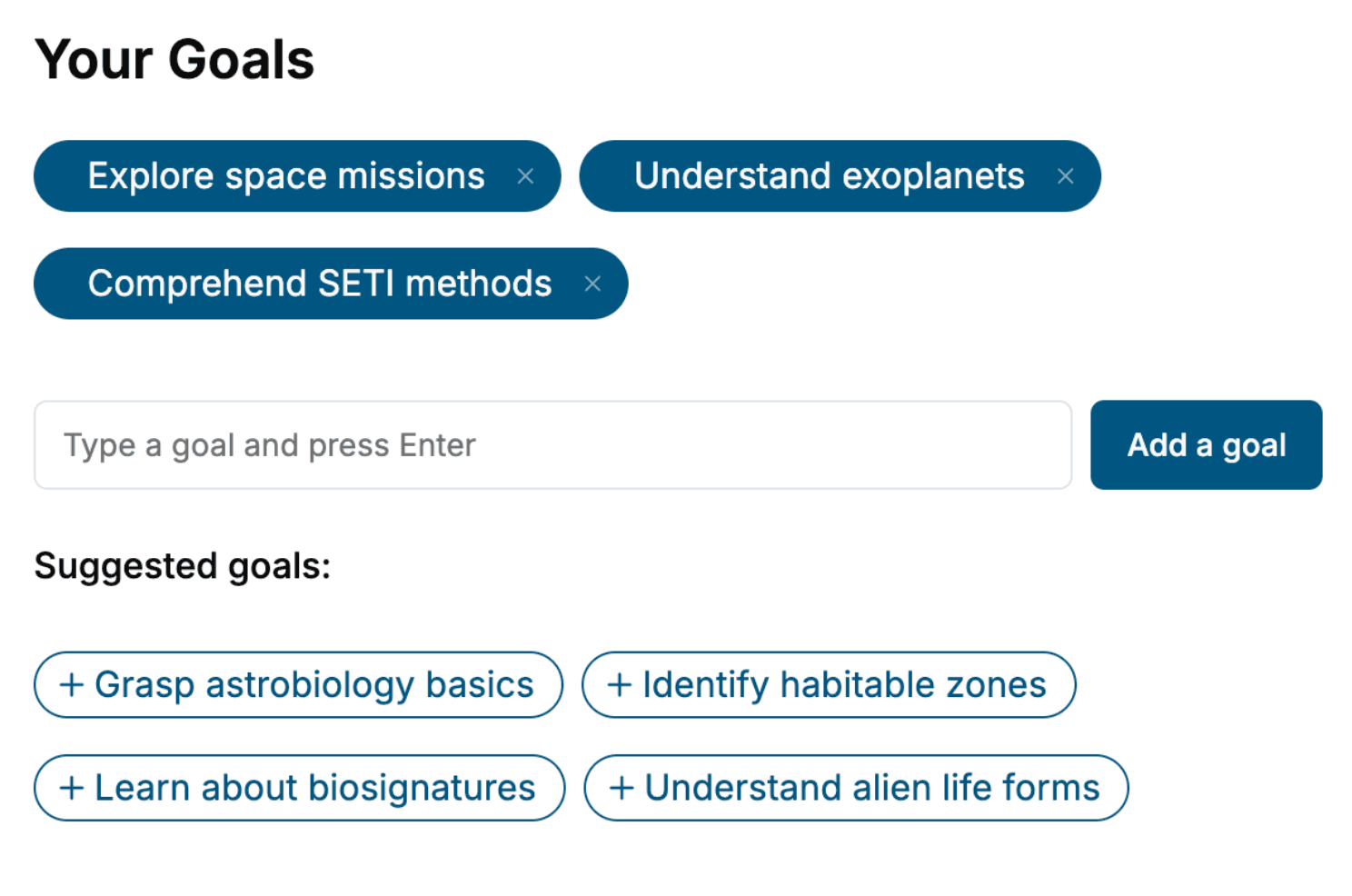
Specify your goals and choose sub-topics to include
- 3. Get your tailored book
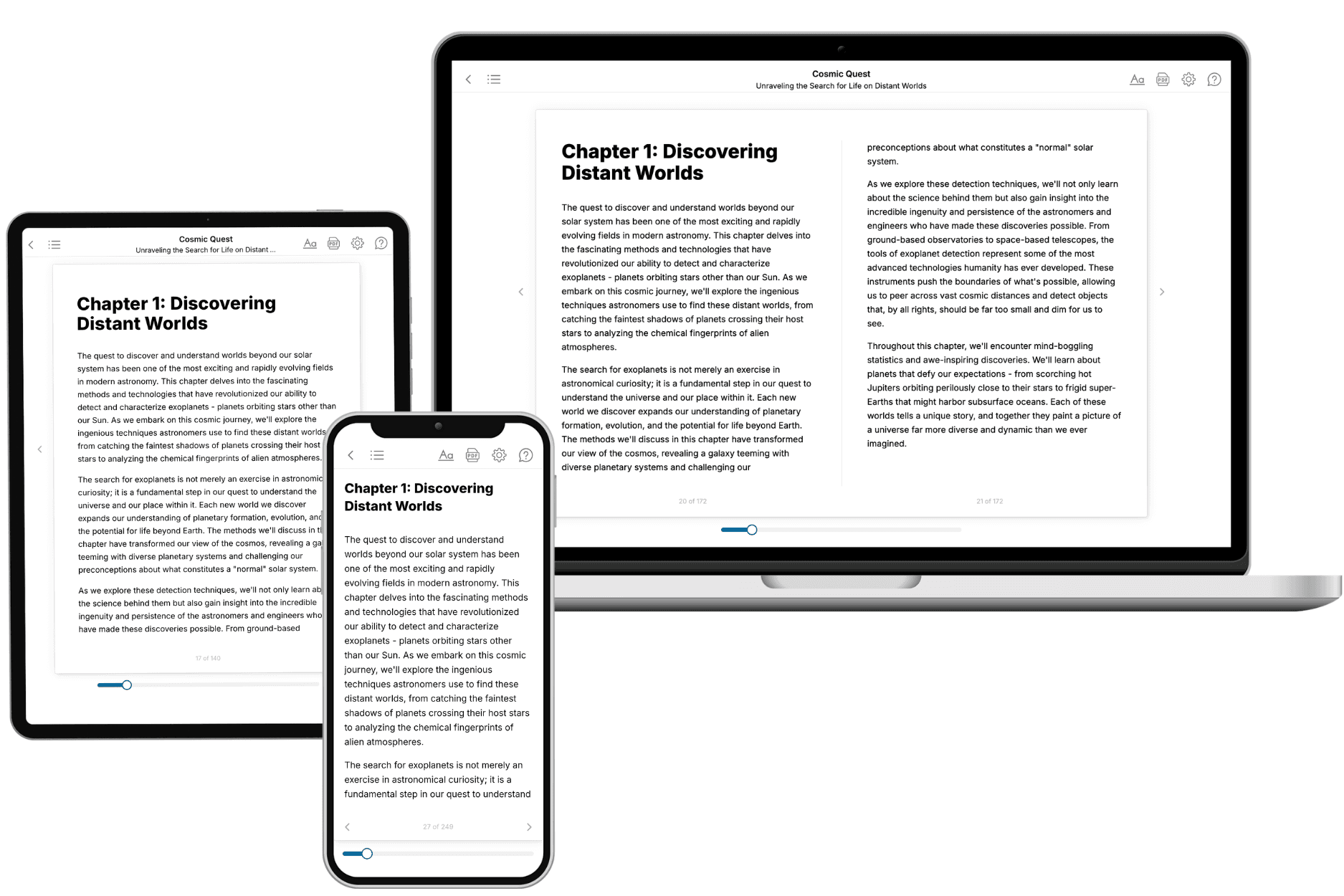
Your book is ready in 10 minutes. Read it online, download as EPUB or PDF, or send to Kindle.

Frequently asked questions
- What is TailoredRead?
TailoredRead creates complete, full-length nonfiction ebooks, written specifically for you. Tell us what you want to learn and why, and TailoredRead writes you a complete ebook on it, with charts, tables, and diagrams throughout. Read it online, on Kindle, or on any e-reader, or download it as a PDF or EPUB. Every book is written fresh the day you order it.
- How is the book tailored to me?
Before anything is written, you answer a few short questions about your goals, your background, and the topics you care about. Your book is then planned around your answers: written at your level, focused on your goals, and covering the topics you chose, instead of the one-size-fits-all book a store sells everyone.
- Will it read like generic AI content?
No. Your book isn't a chat transcript: it's planned chapter by chapter before a single word is written, told in a clear book voice, and explains ideas visually with charts, tables, and diagrams. After writing, every book goes through an editorial pass that polishes chapters so the book reads consistent from start to finish. Judge for yourself: browse thousands of sample books on our Explore Books page.
- How accurate is the content?
Our AI first checks whether your subject needs live research. Niche and fast-moving subjects are researched before writing, and the book plan and chapters are grounded in what it finds. After writing, every book goes through a quality pass that checks its facts and consistency, and researched books list their sources in a Notes section at the back.
- How long is the book?
You choose the length: Comprehensive (250-300 pages), Detailed (150-200 pages), Essential (70-100 pages), or Short (30-50 pages).
- Does the book include visuals?
Yes. Every book includes visual elements such as timelines, checklists, step-by-step guides, decision trees, comparison tables, and matrices, and many include bar charts. A typical book includes dozens of these visual elements.
- Can I read it on Kindle? What formats can I download?
Yes. Every book can be read in our online reader or downloaded as a PDF or EPUB. The EPUB can be opened with Kindle, Apple Books, Kobo, and any e-reader. The Commercial and Author licenses also include an editable Word (DOCX) and Markdown download.
- How much does it cost?
About the price of a regular ebook. The exact price depends on your book's length and complexity, from $2 for the shortest books to $35 for the most comprehensive, and it's shown when you review your book, before you commit to anything. Each book is a one-time purchase, yours to keep, no subscription. Licenses that let you share, teach, or publish your book range from $35.99 to $49.99.
- Can I preview the book before purchasing?
Before you pay, you'll see what your book will cover: the title, a detailed description, the estimated length, and the complete chapter-by-chapter table of contents, so you know what you're getting before you decide. The full text itself is written after you purchase.
- How long does it take to create a book?
About 10 minutes. You can start reading the opening chapters while the rest is still being written.