The Neuropsychology Toolkit
A Psychotherapist's Guide to Understanding and Applying Brain Science in Practice
Dive into the fascinating world of neuropsychology and discover how it can revolutionize your psychotherapy practice.
331 pages17 chaptersJan 25, 2025PsychologyCreated by C
About this book
This comprehensive guide takes you on an enlightening exploration of the human brain, unraveling its complexities and revealing powerful insights that will transform your approach to therapy. As you journey through the pages, you'll gain a deep understanding of cognitive neuroscience, neuroplasticity, and the intricate workings of neurotransmitters. You'll explore cutting-edge brain imaging techniques and delve into the nuances of emotion regulation, equipping you with the knowledge to develop more effective treatment plans. From the basics of neuroanatomy to the latest discoveries in neurogenesis, this book provides you with a solid foundation in brain science. You'll learn practical neuroplasticity exercises, understand the brain-gut connection, and discover how trauma impacts the brain. With each chapter, you'll gain valuable insights into executive functions, neuroendocrinology, and neurofeedback therapy, empowering you to analyze behavior patterns with newfound clarity and precision. Whether you're looking to enhance your therapy techniques, develop more targeted treatment plans, or simply satisfy your curiosity about the incredible human brain, this book is your ultimate companion. Get ready to elevate your practice and make a lasting impact on your clients' lives with the power of neuropsychology.
Table of contents
- IntroductionThe Importance of Neuropsychology in Psychotherapy, Overview of the Book, How to Use This Guide in Your PracticeRead below
- Chapter 1: Foundations of NeuropsychologyDefining Neuropsychology, Historical Perspective, Key Concepts in Neuropsychology, The Interdisciplinary Nature of Neuropsychology
- Chapter 2: Brain Basics: Neuroanatomy and FunctionBrain Structure and Organization, Neural Networks and Connectivity, The Four Lobes and Their Functions, Subcortical Structures and Their Roles
- Chapter 3: Cognitive Neuroscience: Bridging Mind and BrainCognitive Processes and Their Neural Bases, Attention and Memory Systems, Language and the Brain, Decision-Making and Problem-Solving
- Chapter 4: Neuroplasticity: The Adaptable BrainDefining Neuroplasticity, Types of Neuroplasticity, Factors Influencing Neuroplasticity, Implications for Therapy
- Chapter 5: Neurotransmitters: The Brain's Chemical MessengersNeurotransmitter Basics, Major Neurotransmitters and Their Functions, Neurotransmitter Imbalances and Mental Health, Modulating Neurotransmitters Through Therapy
- Chapter 6: Brain Imaging Techniques in NeuropsychologyStructural Imaging Techniques, Functional Imaging Techniques, Interpreting Brain Scans, Applications of Neuroimaging in Psychotherapy
- Chapter 7: Emotion Regulation: A Neuropsychological PerspectiveNeural Circuits of Emotion, Emotion Regulation Strategies, Developing Emotional Intelligence, Emotion Regulation in Therapy
- Chapter 8: Synaptic Plasticity and LearningMechanisms of Synaptic Plasticity, Hebbian Learning and Long-Term Potentiation, Synaptic Pruning and Brain Development, Enhancing Learning Through Neuroplasticity
- Chapter 9: Mindfulness and the BrainDefining Mindfulness from a Neurological Perspective, Brain Changes Associated with Mindfulness Practice, Mindfulness Techniques and Their Neural Correlates, Integrating Mindfulness into Therapy
- Chapter 10: The Brain-Gut ConnectionThe Enteric Nervous System: The Second Brain, The Gut Microbiome and Brain Function, Stress, Digestion, and Mental Health, Nutritional Neuropsychology
- Chapter 11: Trauma and the BrainThe Neurobiology of Trauma, PTSD and the Brain, Developmental Trauma and Brain Development, Trauma-Informed Therapy: A Neuropsychological Approach
- Chapter 12: Neuroplasticity Exercises for TherapyCognitive Training Exercises, Physical Exercise and Brain Health, Art and Music Therapy for Neural Stimulation, Sleep and Neuroplasticity
- Chapter 13: Neuroendocrinology: The Brain-Hormone ConnectionThe HPA Axis and Stress Response, Hormones and Behavior, Endocrine Disorders and Mental Health, Promoting Hormonal Balance in Therapy
- Chapter 14: Neuropsychological Tests and AssessmentsCognitive Assessments, Personality and Emotional Assessments, Interpreting Neuropsychological Test Results, Integrating Assessments into Therapy
- Chapter 15: Neurogenesis: Growing New Brain CellsAdult Neurogenesis: Myth vs. Reality, Factors Promoting Neurogenesis, Neurogenesis and Mental Health, Therapeutic Strategies to Enhance Neurogenesis
- Chapter 16: Neurofeedback TherapyPrinciples of Neurofeedback, Neurofeedback Techniques and Protocols, Applications of Neurofeedback in Mental Health, Integrating Neurofeedback into Your Practice
- Chapter 17: Executive Functions: The Brain's Control CenterComponents of Executive Functions, The Prefrontal Cortex and Executive Control, Executive Dysfunction and Mental Health, Strengthening Executive Functions in Therapy
- ConclusionThe Future of Neuropsychology in Psychotherapy, Continuing Education in Neuropsychology
- Glossary
- Further Reading
Introduction
Welcome to "The Neuropsychology Toolkit: A Psychotherapist's Guide to Understanding and Applying Brain Science in Practice." This comprehensive guide is designed to bridge the gap between neuroscience and psychotherapy, providing you with a robust foundation in neuropsychology that will transform your clinical practice. As a psychotherapist with a Bachelor's degree, you are about to embark on an enlightening journey that will deepen your understanding of the intricate workings of the human brain and how this knowledge can be applied to enhance your therapeutic techniques and treatment plans.
The field of neuropsychology has experienced exponential growth in recent years, offering unprecedented insights into the biological underpinnings of human behavior, cognition, and emotion. This book aims to distill complex neuroscientific concepts into accessible, practical knowledge that you can readily integrate into your psychotherapy practice. By understanding the neurological basis of mental processes and behaviors, you will be better equipped to develop targeted interventions, explain the mechanisms of change to your clients, and ultimately improve treatment outcomes.
Throughout this book, you will explore key concepts such as neuroplasticity, the role of neurotransmitters in mental health, the impact of trauma on brain function, and the intricate connections between the brain and other bodily systems. You will also gain insights into cutting-edge brain imaging techniques, learn about the neurobiology of emotion regulation, and discover how mindfulness practices can physically alter brain structure and function. This knowledge will not only enhance your professional expertise but also provide you with a new lens through which to view human psychology and behavior.
As you progress through the chapters, you will find that each topic is presented with a balance of theoretical background and practical applications. The goal is not just to impart knowledge but to equip you with tools and strategies that you can immediately implement in your clinical work. From neuroplasticity exercises to trauma-informed therapy techniques based on neuroscientific principles, this book offers a wealth of actionable insights that will elevate your practice to new heights.
Whether you are looking to specialize in neuropsychologically-informed therapy or simply wish to incorporate brain-based approaches into your existing practice, this book will serve as an invaluable resource. It is designed to be both a comprehensive introduction for those new to the field and a deep dive for practitioners seeking to refine their understanding and application of neuropsychological principles in therapy.
As we begin this exploration of the brain and its implications for psychotherapy, remember that the journey of learning in neuroscience is ongoing. The field is constantly evolving, with new discoveries and insights emerging regularly. This book will provide you with a solid foundation and the tools to continue your learning journey long after you've turned the last page. Let's embark on this fascinating exploration of the human brain and discover how neuropsychology can revolutionize your approach to mental health and well-being.
The Importance of Neuropsychology in Psychotherapy
Neuropsychology, the study of the relationship between brain function and behavior, has become an indispensable component of modern psychotherapy. Its importance lies in its ability to provide a biological framework for understanding mental health disorders, personality traits, and cognitive processes. By integrating neuropsychological knowledge into your practice, you can gain a more comprehensive understanding of your clients' challenges and develop more effective, targeted interventions.
One of the fundamental reasons why neuropsychology is crucial in psychotherapy is its ability to bridge the gap between mind and brain. Traditionally, psychology has focused on mental processes and behaviors without necessarily considering their biological underpinnings. Neuropsychology, however, allows us to understand how specific brain structures and functions contribute to psychological phenomena. This understanding can lead to more precise diagnoses and more effective treatment plans. For instance, knowing that depression is associated with reduced activity in the prefrontal cortex and hyperactivity in the amygdala can inform therapeutic approaches that specifically target these brain regions[1].
Another critical aspect of neuropsychology in psychotherapy is its role in explaining and facilitating change. The concept of neuroplasticity - the brain's ability to form new neural connections throughout life - provides a biological basis for the effectiveness of psychotherapy. Understanding that therapeutic interventions can literally change the structure and function of the brain not only validates the work of psychotherapists but also offers hope and motivation to clients. It demonstrates that change is not only possible but is rooted in tangible, physical processes within the brain.
Neuropsychology also offers valuable insights into the mechanisms of various mental health disorders. For example, understanding the neurobiology of anxiety disorders can help you explain to clients why they experience certain symptoms and how therapeutic techniques like exposure therapy work on a neural level. This knowledge can increase client engagement and compliance with treatment, as they gain a clearer understanding of their condition and the rationale behind the therapeutic approach.
Furthermore, neuropsychology provides a scientific foundation for many therapeutic techniques. Mindfulness-based interventions, for instance, have gained significant traction in recent years, partly due to neuroimaging studies that have demonstrated their positive effects on brain structure and function. Research has shown that regular mindfulness practice can lead to increased gray matter density in brain regions associated with learning, memory, emotion regulation, and perspective taking[2]. This scientific validation not only supports the use of such techniques but also helps in explaining their benefits to clients.
The importance of neuropsychology in psychotherapy extends to the realm of assessment as well. Neuropsychological assessments can provide objective measures of cognitive functions, helping to identify specific areas of strength and weakness in a client's cognitive profile. This information can be invaluable in tailoring treatment plans and setting realistic goals. For example, a client with executive function deficits might benefit from specific cognitive training exercises or environmental modifications, in addition to traditional talk therapy.
Moreover, neuropsychology offers a more nuanced understanding of individual differences. By considering factors such as genetic predispositions, developmental experiences, and environmental influences on brain function, you can develop a more personalized approach to therapy. This aligns with the growing trend towards precision medicine in mental health care, where treatments are tailored to the individual based on their unique biological, psychological, and social factors.
Neuropsychology also plays a crucial role in destigmatizing mental health disorders. By framing psychological issues in terms of brain function, it helps to shift the narrative away from personal weakness or moral failing towards a more compassionate, scientifically-grounded understanding. This can be particularly powerful in helping clients and their families understand and accept mental health challenges.
Lastly, the integration of neuropsychology into psychotherapy opens up new avenues for interdisciplinary collaboration. As a psychotherapist with a strong foundation in neuropsychology, you'll be better equipped to communicate with other healthcare professionals, including psychiatrists, neurologists, and primary care physicians. This can lead to more comprehensive, integrated care for your clients, addressing both their psychological needs and any related physiological concerns.
In conclusion, the importance of neuropsychology in psychotherapy cannot be overstated. It provides a scientific framework for understanding mental health, offers biological explanations for the effectiveness of therapeutic interventions, informs assessment and treatment planning, and contributes to a more holistic, destigmatized approach to mental health care. By embracing neuropsychological principles in your practice, you are positioning yourself at the forefront of modern psychotherapy, equipped with powerful tools to effect meaningful change in your clients' lives.
Overview of the Book
"The Neuropsychology Toolkit: A Psychotherapist's Guide to Understanding and Applying Brain Science in Practice" is structured to provide you with a comprehensive understanding of neuropsychology and its applications in psychotherapy. The book is organized into seventeen chapters, each focusing on a specific aspect of neuropsychology and its relevance to therapeutic practice. This overview will give you a roadmap of the journey ahead, helping you navigate the wealth of information and practical insights contained within these pages.
The book begins with the foundations of neuropsychology, providing you with a solid grounding in the field's key concepts and historical development. Chapter 1, "Foundations of Neuropsychology," introduces you to the fundamental principles and interdisciplinary nature of neuropsychology. This chapter sets the stage for the more detailed explorations that follow, ensuring that you have a clear understanding of the field's scope and significance.
Chapter 2, "Brain Basics: Neuroanatomy and Function," delves into the structure and organization of the brain. You'll learn about neural networks, the functions of different brain lobes, and the roles of subcortical structures. This knowledge is crucial for understanding how specific brain regions contribute to various cognitive and emotional processes, which in turn informs therapeutic approaches.
The book then progresses to more specific aspects of brain function and their implications for psychotherapy. Chapter 3, "Cognitive Neuroscience: Bridging Mind and Brain," explores cognitive processes and their neural bases, covering topics such as attention, memory, language, and decision-making. This chapter provides insights into how cognitive functions are implemented in the brain, which can inform cognitive-behavioral interventions and other therapeutic techniques.
One of the most exciting and relevant concepts for psychotherapy is explored in Chapter 4, "Neuroplasticity: The Adaptable Brain." This chapter delves into the brain's remarkable ability to change and adapt throughout life, a concept that underpins many therapeutic approaches. You'll learn about different types of neuroplasticity, factors that influence it, and its implications for therapy.
Chapter 5, "Neurotransmitters: The Brain's Chemical Messengers," provides an in-depth look at the role of neurotransmitters in mental health. Understanding the functions of various neurotransmitters and how they can be modulated through therapy and lifestyle changes is crucial for addressing many mental health disorders.
The book also covers cutting-edge technologies and their applications in mental health. Chapter 6, "Brain Imaging Techniques in Neuropsychology," introduces you to various structural and functional imaging methods, their interpretations, and their potential applications in psychotherapy. This knowledge can enhance your understanding of brain function and potentially inform treatment planning.
Subsequent chapters focus on specific aspects of mental health and their neurological underpinnings. Chapter 7, "Emotion Regulation: A Neuropsychological Perspective," explores the neural circuits of emotion and strategies for developing emotional intelligence. Chapter 8, "Synaptic Plasticity and Learning," delves deeper into the mechanisms of learning at the neural level, providing insights that can inform therapeutic techniques aimed at behavior change.
The book also addresses the neurological basis of popular therapeutic approaches. Chapter 9, "Mindfulness and the Brain," examines the neural correlates of mindfulness practices and how they can be integrated into therapy. Chapter 10, "The Brain-Gut Connection," explores the fascinating relationship between the digestive system and mental health, offering a holistic perspective on psychological well-being.
Trauma, a critical issue in many therapeutic contexts, is addressed in Chapter 11, "Trauma and the Brain." This chapter provides a neurobiological understanding of trauma and its effects on brain development and function, informing trauma-informed therapeutic approaches.
The book then moves into more practical applications. Chapter 12, "Neuroplasticity Exercises for Therapy," offers concrete techniques that you can use to promote positive brain changes in your clients. Chapter 13, "Neuroendocrinology: The Brain-Hormone Connection," explores the intricate relationship between the brain and the endocrine system, providing insights into stress responses and hormonal influences on behavior.
Assessment tools are covered in Chapter 14, "Neuropsychological Tests and Assessments," which introduces various cognitive and emotional assessments and guides you in interpreting and integrating their results into therapy.
The final chapters explore cutting-edge topics in neuropsychology. Chapter 15, "Neurogenesis: Growing New Brain Cells," discusses the fascinating process of adult neurogenesis and its implications for mental health. Chapter 16, "Neurofeedback Therapy," introduces you to this innovative technique that allows individuals to modulate their own brain activity. Finally, Chapter 17, "Executive Functions: The Brain's Control Center," focuses on higher-order cognitive processes and their role in mental health and behavior regulation.
The book concludes with a look towards the future of neuropsychology in psychotherapy and provides resources for continuing education in this rapidly evolving field. Throughout the book, you'll find case studies, practical examples, and exercises that help translate neuropsychological concepts into clinical practice.
By the end of this book, you will have gained a comprehensive understanding of neuropsychology and its applications in psychotherapy. You'll be equipped with knowledge and tools to enhance your clinical practice, provide more effective interventions, and offer your clients a deeper understanding of their own mental processes. This book is not just about accumulating knowledge; it's about transforming your approach to therapy through the lens of neuroscience.
How to Use This Guide in Your Practice
"The Neuropsychology Toolkit" is designed to be a practical, accessible resource that you can readily apply in your psychotherapy practice. To get the most out of this guide, it's important to approach it not just as a text to be read, but as a toolkit to be actively used and integrated into your clinical work. This section will provide you with strategies for effectively utilizing the information and techniques presented in this book to enhance your therapeutic practice.
First and foremost, it's recommended that you read through the book sequentially, as each chapter builds upon the knowledge presented in previous sections. However, once you've completed an initial read-through, feel free to refer back to specific chapters or sections as needed in your practice. The book is structured to allow for easy reference, so you can quickly access information relevant to particular client issues or therapeutic challenges you may encounter.
As you read, take note of concepts or techniques that resonate with your current practice or that you believe could be particularly beneficial for your clients. Consider creating a summary document or set of flashcards for key terms, concepts, and techniques. This will serve as a quick reference guide that you can easily review before sessions or when planning interventions.
One effective way to integrate this knowledge into your practice is to select one or two concepts or techniques from each chapter to focus on implementing in your clinical work. For example, after reading the chapter on neuroplasticity, you might choose to incorporate specific neuroplasticity exercises into your therapy sessions. Start small and gradually expand your repertoire as you become more comfortable with the material.
Throughout the book, you'll find case studies and practical examples. These are not just illustrations - they're opportunities for active learning. As you encounter these examples, take a moment to consider how you might apply the principles or techniques in your own practice. Reflect on past or current clients who might benefit from these approaches. This process of active engagement will help solidify your understanding and make the material more relevant to your clinical work.
The book also includes various exercises and activities designed to deepen your understanding of neuropsychological concepts. Don't skip over these - they're valuable opportunities for experiential learning. Consider setting aside dedicated time to work through these exercises, perhaps even collaborating with colleagues to discuss your insights and experiences.
As you begin to incorporate neuropsychological principles into your practice, it's important to explain these concepts to your clients in accessible terms. The book provides examples of how to do this, but practice translating complex neuropsychological ideas into language that your clients can understand and relate to. This skill will be invaluable in helping your clients grasp the rationale behind your therapeutic approaches and in fostering their engagement in the therapeutic process.
Consider creating handouts or visual aids based on the information in the book to use with your clients. For example, you might create a simple diagram of the stress response system to use when explaining anxiety, or a chart showing the effects of different lifestyle factors on neuroplasticity. These visual tools can be powerful aids in helping clients understand and engage with neuropsychological concepts.
The book also serves as a springboard for further learning. Each chapter includes references to primary research and additional resources. If a particular topic piques your interest or seems especially relevant to your practice, use these references as a starting point for deeper exploration. Consider joining professional organizations or online communities focused on neuropsychology to stay updated on the latest research and clinical applications.
As you integrate neuropsychological principles into your practice, it's important to monitor and evaluate their effectiveness. Keep notes on how clients respond to new interventions or explanations based on neuropsychological concepts. This will help you refine your approach over time and identify which aspects of neuropsychology are most beneficial in your specific clinical context.
Remember that the field of neuropsychology is rapidly evolving, with new research emerging constantly. While this book provides a comprehensive foundation, it's important to view it as a starting point rather than a definitive guide. Make a commitment to ongoing learning in this field, perhaps by setting aside regular time to read recent research articles or attend relevant workshops and conferences.
Finally, consider how you might adapt the information in this book to different therapeutic modalities. Whether you practice cognitive-behavioral therapy, psychodynamic therapy, or another approach, there are likely ways to integrate neuropsychological principles into your existing framework. Be creative and flexible in your application of these concepts, always keeping in mind the unique needs and circumstances of each client.
By actively engaging with the material in this book, practicing its application in your clinical work, and committing to ongoing learning in the field of neuropsychology, you'll be well-positioned to enhance your therapeutic effectiveness and provide cutting-edge, brain-based interventions to your clients. Remember, the goal is not to become a neuropsychologist, but to use neuropsychological insights to become a more informed, effective psychotherapist. Let this guide be your companion in that journey of professional growth and enhanced clinical practice.
This is the end of the free sample. The full book has 17 chapters.
Want this book written for you?
Tell us your goals and background, and get your own version of this book, tailored by AI to you.


Benefits of AI-tailored books
- Read one book, not ten:
- all the Psychology knowledge you need, gathered into a single book.
- Save days of learning:
- tell us your goals, choose your topics, and the whole book is built around them.
- Learn effortlessly:
- Psychology book written for your specific background and expertise.
- Understand at a glance:
- includes charts, tables, timelines, checklists, decision trees, and more.
- Stay current:
- written the day you order it, not years ago.
- Trust what you read:
- every book is checked for accuracy, with real research when your subject needs it.
Create your unique book in 3 steps
- 1. Select your focus
Select the focus of your Psychology book and share your background
- 2. Personalize your book
Specify your goals and choose sub-topics to include
- 3. Get your tailored book
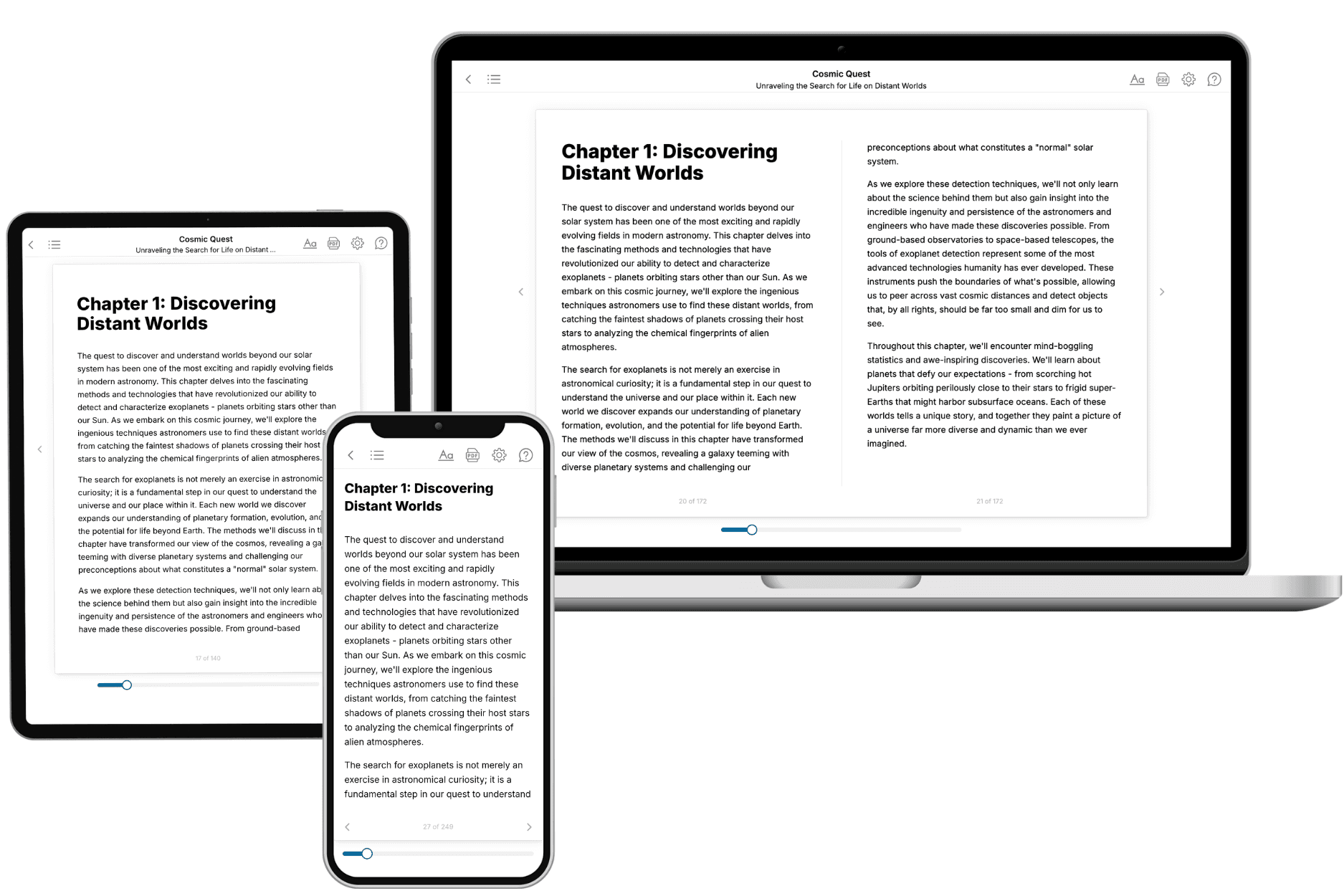
Your book is ready in 10 minutes. Read it online, download as EPUB or PDF, or send to Kindle.

Frequently asked questions
- What is TailoredRead?
TailoredRead creates complete, full-length nonfiction ebooks, written specifically for you. Tell us what you want to learn and why, and TailoredRead writes you a complete ebook on it, with charts, tables, and diagrams throughout. Read it online, on Kindle, or on any e-reader, or download it as a PDF or EPUB. Every book is written fresh the day you order it.
- How is the book tailored to me?
Before anything is written, you answer a few short questions about your goals, your background, and the topics you care about. Your book is then planned around your answers: written at your level, focused on your goals, and covering the topics you chose, instead of the one-size-fits-all book a store sells everyone.
- Will it read like generic AI content?
No. Your book isn't a chat transcript: it's planned chapter by chapter before a single word is written, told in a clear book voice, and explains ideas visually with charts, tables, and diagrams. After writing, every book goes through an editorial pass that polishes chapters so the book reads consistent from start to finish. Judge for yourself: browse thousands of sample books on our Explore Books page.
- How accurate is the content?
Our AI first checks whether your subject needs live research. Niche and fast-moving subjects are researched before writing, and the book plan and chapters are grounded in what it finds. After writing, every book goes through a quality pass that checks its facts and consistency, and researched books list their sources in a Notes section at the back.
- How long is the book?
You choose the length: Comprehensive (250-300 pages), Detailed (150-200 pages), Essential (70-100 pages), or Short (30-50 pages).
- Does the book include visuals?
Yes. Every book includes charts, tables, and diagrams: timelines, checklists, step-by-step guides, decision trees, comparison tables, matrices, and bar charts. A typical book includes dozens of these visual elements.
- Can I read it on Kindle? What formats can I download?
Yes. Every book can be read in our online reader or downloaded as a PDF or EPUB. The EPUB can be opened with Kindle, Apple Books, Kobo, and any e-reader. The Commercial and Author licenses also include an editable Word (DOCX) and Markdown download.
- How much does it cost?
About the price of a regular ebook. The exact price depends on your book's length and complexity, from $2 for the shortest books to $35 for the most comprehensive, and it's shown when you review your book, before you commit to anything. Each book is a one-time purchase, yours to keep, no subscription. Licenses that let you share, teach, or publish your book range from $35.99 to $49.99.
- Can I preview the book before purchasing?
Before you pay, you'll see what your book will cover: the title, a detailed description, the estimated length, and the complete chapter-by-chapter table of contents, so you know what you're getting before you decide. The full text itself is written after you purchase.
- How long does it take to create a book?
About 10 minutes. You can start reading the opening chapters while the rest is still being written.