Parlez Météo
Mastering French Weather Vocabulary and Expressions
Picture yourself strolling through the streets of Paris, effortlessly discussing the day's forecast with locals.
269 pages13 chaptersJan 13, 2025Learn French
About this book
As you describe the gentle rain or the warm sunshine, you feel a sense of pride in your ability to express yourself fluently in French. This is the confidence you'll gain from "Parlez Météo: Mastering French Weather Vocabulary and Expressions." This comprehensive guide takes you beyond basic weather terms, immersing you in the rich tapestry of French meteorological language. You'll discover how to describe various weather phenomena, understand regional climate differences, and engage in meaningful conversations about the environment in French. From the misty mornings of Normandy to the sun-drenched beaches of the Côte d'Azur, "Parlez Météo" equips you with the linguistic tools to paint vivid pictures of France's diverse weather landscapes. You'll learn to interpret weather forecasts, express your feelings about different climates, and even explore French idioms related to weather. By the end of this book, you'll have expanded your French vocabulary, improved your listening comprehension, and gained the confidence to discuss weather and climate in any French-speaking context. Whether you're planning a trip to a Francophone country or simply want to enrich your language skills, "Parlez Météo" is your key to mastering this essential aspect of the French language.
Table of contents
- IntroductionThe Importance of Weather in French Language and Culture, Overview of the Book's Structure and Learning Approach, How to Use This Book EffectivelyRead below
- Chapter 1: The Basics of French Weather VocabularyEssential Weather Terms, The Four Seasons in French, Talking About Temperature, Types of Precipitation
- Chapter 2: Describing Weather ConditionsSunny and Clear Skies, Cloudy and Overcast Conditions, Rainy and Stormy Weather, Windy and Breezy Conditions
- Chapter 3: Advanced Weather VocabularyMeteorological Terms, Describing Extreme Weather Events, Climate-related Vocabulary, Weather Instruments and Measurements
- Chapter 4: Common Weather Expressions and IdiomsEveryday Weather Phrases, Weather-related Idioms and Their Meanings, French Weather Proverbs, Colloquial Weather Expressions
- Chapter 5: Regional Weather Patterns in FranceNorthern France and the Channel Coast, Southern France and the Mediterranean, Central France and the Alps, The Atlantic Coast
- Chapter 6: Weather and Climate in Francophone CountriesCanada and Quebec, North African Francophone Countries, French Caribbean Islands, Other Francophone Regions
- Chapter 7: Understanding French Weather ForecastsWeather Forecast Vocabulary, Reading Written Weather Forecasts, Listening to Weather Reports, Using French Weather Apps and Websites
- Chapter 8: Seasonal Activities and WeatherSpring Activities and Vocabulary, Summer Activities and Vocabulary, Autumn Activities and Vocabulary, Winter Activities and Vocabulary
- Chapter 9: Weather and Small Talk in FrenchStarting Conversations About Weather, Responding to Weather Comments, Expressing Weather Preferences, Talking About How Weather Affects Your Mood
- Chapter 10: Weather and Travel in French-speaking CountriesPacking Vocabulary for Different Weather Conditions, Weather Considerations in Travel Planning, Dealing with Weather Emergencies While Traveling, Weather-dependent Tourist Attractions
- Chapter 11: Discussing Climate Change in FrenchClimate Change Vocabulary, Talking About Environmental Issues, Discussing Sustainable Practices, Expressing Concerns and Hopes for Future Climate
- Chapter 12: Weather in French Media and LiteratureWeather in French News Reports, Weather Descriptions in French Literature, French Songs About Weather, Weather in French Films
- Chapter 13: Practical Application and ReviewWeather-related Role-playing Scenarios, Weather Description Writing Exercises, Weather-focused Listening Practice, Comprehensive Vocabulary Review, Tips for Real-world Practice and Immersion
- Conclusion
- Glossary of French Weather Terms
- Further Resources
Introduction
Welcome to "Parlez Météo: Mastering French Weather Vocabulary and Expressions." This comprehensive guide is designed to take your French language skills to new heights by focusing on a topic that's universally relevant and endlessly fascinating: the weather. Whether you're planning a trip to France, engaging in conversations with French speakers, or simply looking to enrich your language abilities, understanding and discussing weather in French is an essential skill that will serve you well in countless situations.
Weather is more than just a topic of small talk; it's a window into the culture, lifestyle, and daily experiences of French-speaking people around the world. By mastering weather-related vocabulary and expressions, you'll not only improve your language skills but also gain deeper insights into the French way of life. From the misty mornings of Normandy to the sun-drenched beaches of the Côte d'Azur, from the snowy peaks of the Alps to the tropical climates of French overseas territories, weather plays a crucial role in shaping the diverse landscapes and cultures of the Francophone world.
Throughout this book, you'll embark on a journey that will take you from basic weather terms to advanced meteorological concepts, from everyday expressions to poetic descriptions of atmospheric phenomena. You'll learn how to confidently discuss current conditions, interpret weather forecasts, and engage in meaningful conversations about climate and the environment. By the time you finish this guide, you'll be able to express yourself with the fluency and nuance of a native speaker when it comes to all things weather-related in French.
But this book is more than just a collection of vocabulary lists and grammar rules. It's a practical, engaging, and culturally rich resource that will help you integrate weather-related language into your everyday French usage. Through a combination of clear explanations, practical examples, and interactive exercises, you'll develop not just knowledge, but true fluency in discussing weather in French.
So, whether you're an intermediate learner looking to expand your vocabulary, a traveler preparing for a trip to a French-speaking country, or simply someone fascinated by the interplay of language and weather, this book is your key to mastering an essential aspect of French communication. Let's begin our exploration of the rich and varied world of French weather vocabulary and expressions!
The Importance of Weather in French Language and Culture
Weather is a universal topic that transcends cultural boundaries, but its significance in French language and culture is particularly noteworthy. In France and other Francophone countries, discussing the weather is not merely a form of small talk; it's an integral part of daily life, social interactions, and cultural expression. Understanding the role of weather in French culture is crucial for anyone seeking to master the language and gain deeper insights into the Francophone world.
Historically, France's economy has been deeply tied to agriculture, making weather patterns a matter of great importance. This agricultural heritage has left an indelible mark on the French language, with numerous idioms, proverbs, and expressions related to weather and seasons. For instance, the expression "faire un temps de chien" (literally, "to make dog weather") is used to describe particularly nasty weather, while "en avril, ne te découvre pas d'un fil" (in April, don't remove a thread) advises caution about changing weather in spring[1].
In everyday conversation, weather serves as a natural icebreaker and a way to establish common ground. French people often begin interactions by commenting on the current weather conditions or forecasts. This practice is not merely superficial; it reflects a shared experience and a way of connecting with others. Being able to engage in these weather-related exchanges is an essential social skill in French-speaking contexts.
Moreover, weather plays a significant role in French literature and art. From the Impressionist painters who sought to capture the changing effects of light and atmosphere, to writers like Marcel Proust, who used weather as a powerful metaphor for human emotions and memories, weather has been a constant source of inspiration in French cultural production. Understanding weather vocabulary and expressions can therefore enhance your appreciation of French art and literature.
The French language itself reflects the importance of weather through its rich and nuanced vocabulary. French offers a wide array of terms to describe subtle variations in weather conditions. For example, while English might simply use "rain," French distinguishes between "bruine" (drizzle), "averse" (shower), "déluge" (downpour), and many other types of precipitation. This linguistic richness allows for precise and evocative descriptions of weather phenomena.
Weather also plays a crucial role in French tourism and lifestyle. Many regions of France are known for their specific climatic conditions, which influence local culture, cuisine, and activities. The Mediterranean climate of Provence, the Atlantic breezes of Brittany, or the snowy slopes of the Alps all contribute to the unique character of these regions. Understanding and being able to discuss these weather patterns can greatly enhance your travel experiences and interactions with locals.
In the context of global climate change, weather and climate discussions have taken on new importance in French public discourse. Being able to engage in these conversations requires not only basic weather vocabulary but also an understanding of more complex environmental terms and concepts. This knowledge allows you to participate in important debates and discussions about one of the most pressing issues of our time.
Furthermore, weather-related language in French extends beyond mere description to include a wealth of idiomatic expressions that add color and depth to the language. These expressions often carry cultural and historical significance. For example, "avoir un coup de soleil" (literally, "to have a hit of sun") means to get sunburned, while "être dans le brouillard" (to be in the fog) means to be confused or uncertain. Mastering these expressions will not only improve your language skills but also demonstrate a deeper understanding of French culture.
In professional contexts, weather knowledge can be particularly valuable. Many industries in France and Francophone countries are weather-dependent, from agriculture and tourism to renewable energy and transportation. Being able to discuss weather and climate in a professional setting can be a significant asset in these fields.
Lastly, the importance of weather in French language and culture is reflected in the media. Weather forecasts on French television and radio are often more detailed and given more airtime than in many other countries. They are presented not just as practical information, but as a topic of general interest, often including historical data, regional variations, and impacts on daily life. Understanding these forecasts is a practical skill that can greatly enhance your ability to navigate daily life in a French-speaking environment.
In conclusion, weather is far more than just a topic of casual conversation in French language and culture. It's a lens through which to view history, society, art, and daily life in the Francophone world. By mastering weather-related vocabulary and expressions, you're not just learning words and phrases; you're gaining a deeper understanding of French culture and a powerful tool for meaningful communication in a wide variety of contexts.
Overview of the Book's Structure and Learning Approach
"Parlez Météo: Mastering French Weather Vocabulary and Expressions" is structured to provide a comprehensive and engaging learning experience. The book is designed with a logical progression that builds your knowledge and skills step by step, while also allowing for flexibility in your learning approach. Whether you prefer to work through the book sequentially or focus on specific areas of interest, you'll find the content accessible and adaptable to your needs.
The book begins with the fundamentals, introducing you to essential weather terms and basic concepts. Chapter 1, "The Basics of French Weather Vocabulary," lays the foundation by covering essential terms, the four seasons, ways to talk about temperature, and types of precipitation. This chapter ensures that you have a solid grasp of the core vocabulary needed to discuss weather in French.
As you progress, the book delves into more specific and detailed aspects of weather description. Chapter 2, "Describing Weather Conditions," expands your vocabulary and expressive capabilities, teaching you how to articulate various weather states from sunny skies to stormy conditions. This chapter helps you move beyond basic statements to more nuanced and vivid descriptions of weather phenomena.
Building on this foundation, Chapter 3 introduces "Advanced Weather Vocabulary," including meteorological terms, descriptions of extreme weather events, climate-related vocabulary, and terms related to weather instruments and measurements. This chapter is designed to elevate your language skills to a more sophisticated level, allowing you to engage in more technical or scientific discussions about weather and climate.
Recognizing the importance of idiomatic language, Chapter 4 focuses on "Common Weather Expressions and Idioms." Here, you'll explore everyday phrases, weather-related idioms, proverbs, and colloquial expressions. This chapter adds color and authenticity to your French, helping you sound more natural and culturally aware in your weather-related conversations.
The book then takes a geographical approach in Chapters 5 and 6, exploring "Regional Weather Patterns in France" and "Weather and Climate in Francophone Countries." These chapters not only expand your weather vocabulary but also provide valuable cultural and geographical knowledge about France and the wider Francophone world. You'll learn how to discuss weather in different regions, understanding the climatic diversity of French-speaking areas.
Practical application is a key focus of the book. Chapter 7, "Understanding French Weather Forecasts," teaches you how to interpret and discuss weather predictions, an essential skill for daily life in a French-speaking environment. Chapter 8, "Seasonal Activities and Weather," connects weather vocabulary to real-life contexts, exploring how weather influences activities throughout the year.
The book also addresses the social aspects of weather discussions. Chapter 9, "Weather and Small Talk in French," provides guidance on how to use weather as a conversation starter and how to express personal opinions and feelings about weather conditions. This chapter helps you navigate social situations with confidence.
For those planning to travel, Chapter 10, "Weather and Travel in French-speaking Countries," offers practical vocabulary and advice for dealing with weather considerations while exploring Francophone destinations. This chapter ensures that you're prepared for any weather-related situation you might encounter on your travels.
Recognizing the growing importance of environmental issues, Chapter 11, "Discussing Climate Change in French," equips you with the vocabulary and structures needed to engage in conversations about this critical global topic. This chapter helps you participate in important contemporary discussions in French.
To provide cultural context, Chapter 12 explores "Weather in French Media and Literature," showing how weather is represented in various forms of French cultural expression. This chapter enhances your understanding of how weather permeates French culture beyond everyday conversation.
The book concludes with Chapter 13, "Practical Application and Review," which offers a range of exercises, role-playing scenarios, and review activities to consolidate your learning. This chapter ensures that you can apply your new knowledge in practical, real-world situations.
Throughout the book, you'll find a variety of learning aids and features designed to enhance your understanding and retention:
- Clear explanations of grammar points related to weather expressions
- Pronunciation guides for challenging words and phrases
- Cultural notes providing context and insights into French attitudes towards weather
- Practice exercises to reinforce your learning
- Dialogues and sample conversations demonstrating the use of weather vocabulary in context
- Tips for remembering challenging vocabulary or expressions
The learning approach of this book is based on the principle of active engagement. Rather than simply presenting information, each chapter encourages you to interact with the material through exercises, reflection questions, and practical applications. This approach ensures that you're not just memorizing vocabulary, but truly internalizing it and learning how to use it in real-life situations.
Moreover, the book employs a spiral learning technique, where key concepts and vocabulary are revisited and expanded upon throughout the chapters. This reinforces your learning and helps you build connections between different aspects of weather-related language.
By the end of the book, you'll have not only expanded your French vocabulary significantly but also gained a deeper understanding of how weather intersects with French language, culture, and daily life. You'll be equipped to confidently discuss weather in a variety of contexts, from casual conversations to more formal or technical settings.
Remember, language learning is a journey, and this book is designed to be your companion along the way. Feel free to revisit chapters, focus on areas that interest you most, and most importantly, enjoy the process of discovering the rich world of French weather expressions!
How to Use This Book Effectively
To get the most out of "Parlez Météo: Mastering French Weather Vocabulary and Expressions," it's important to approach your learning strategically. This book is designed to be flexible, catering to different learning styles and needs. Here are some tips and strategies to help you use this book effectively and maximize your learning experience.
First and foremost, set clear goals for your learning. Before you begin, take a moment to reflect on what you hope to achieve. Are you preparing for a trip to a French-speaking country? Do you want to understand French weather forecasts? Or are you aiming to engage in more sophisticated conversations about climate and environment? Having clear objectives will help you focus your efforts and measure your progress.
While the book is structured to build your knowledge progressively, don't feel constrained to follow it in strict order. If you're an intermediate learner, you might want to start with the more advanced chapters and refer back to earlier ones as needed. If you're preparing for a specific situation, such as a trip to a particular region, you might want to focus on the relevant geographical and practical chapters first.
Consistency is key in language learning. Try to establish a regular study routine, even if it's just for short periods each day. Research has shown that frequent, shorter study sessions are often more effective than infrequent, longer ones[2]. Set aside dedicated time for working through the book, and try to incorporate weather-related French into your daily life.
Active engagement with the material is crucial for effective learning. Don't just read the chapters passively; interact with the content. Take notes, highlight key points, and most importantly, complete all the exercises and activities provided. These are designed to reinforce your learning and help you apply the vocabulary and concepts in practical ways.
Make use of the various learning aids provided throughout the book. Pay attention to pronunciation guides, cultural notes, and tips for remembering challenging vocabulary. These features are designed to enrich your understanding and make the learning process smoother and more enjoyable.
Practice speaking out loud as much as possible. Language learning involves muscle memory, especially when it comes to pronunciation. Read dialogues aloud, repeat new vocabulary, and practice forming sentences. If possible, find a language exchange partner or join a French conversation group to practice your new weather-related vocabulary in real conversations.
Utilize technology to supplement your learning. There are numerous apps and online resources that can complement this book. For example, you could use flashcard apps to review vocabulary, listen to French weather forecasts online, or use language learning apps to practice in your spare time. The book provides suggestions for additional resources in the "Further Resources" section.
Don't be afraid to make mistakes. They are a natural and important part of the learning process. When you encounter difficulties or make errors, view them as opportunities to learn and improve. Keep a "mistake journal" where you note down common errors and their corrections. Reviewing this regularly can help prevent recurring mistakes.
Contextualize your learning by connecting it to real-world situations. Watch French weather reports, read French newspapers' weather sections, or follow French meteorological services on social media. This will not only reinforce your learning but also expose you to authentic language use and cultural context.
Regularly review and revise what you've learned. Language acquisition is not linear, and it's normal to forget some information over time. Schedule regular review sessions to go over previous chapters and exercises. This spaced repetition approach has been shown to significantly improve long-term retention of information[3].
Try to immerse yourself in the language as much as possible. Change your phone or computer settings to French, listen to French music or podcasts about weather and climate, or watch French movies that feature significant weather elements. The more you surround yourself with the language, the more natural it will become.
Be patient with yourself and celebrate your progress. Language learning is a journey, and improvement often happens gradually. Take time to acknowledge your achievements, no matter how small they might seem. Perhaps you understood a French weather forecast for the first time, or successfully used a weather idiom in conversation. These milestones are important markers of your progress.
Finally, remember that this book is a tool, and its effectiveness depends on how you use it. Be proactive in your learning, seek out opportunities to apply what you've learned, and most importantly, enjoy the process. Learning about weather in French is not just about acquiring vocabulary; it's about gaining a new perspective on the world and the way different cultures interact with their environment.
By following these strategies and fully engaging with the material presented in "Parlez Météo," you'll be well on your way to mastering French weather vocabulary and expressions. Remember, the goal is not just to learn words, but to be able to communicate effectively and confidently about weather in French. With dedication and consistent practice, you'll soon find yourself discussing the weather like a native speaker, adding depth and authenticity to your French language skills.
Notes
Introduction
- 1. I. Chollet and J. M. Robert, Les expressions idiomatiques, CLE International, 2008
- 2. N. Kornell, "Optimising learning using flashcards," Applied Cognitive Psychology, 2009
- 3. S. H. Kang, "Spaced repetition promotes efficient and effective learning," Policy Insights from the Behavioral and Brain Sciences, 2016
This is the end of the free sample. The full book has 13 chapters.
Want this book written for you?
Tell us your goals and background, and get your own version of this book, tailored by AI to you.


Benefits of AI-tailored books
- Read one book, not ten:
- all the Learn French knowledge you need, gathered into a single book.
- Save days of learning:
- tell us your goals, choose your topics, and the whole book is built around them.
- Learn effortlessly:
- Learn French book written for your specific background and expertise.
- Understand at a glance:
- includes charts, tables, timelines, checklists, decision trees, and more.
- Stay current:
- written the day you order it, not years ago.
- Trust what you read:
- every book is checked for accuracy, with real research when your subject needs it.
Create your unique book in 3 steps
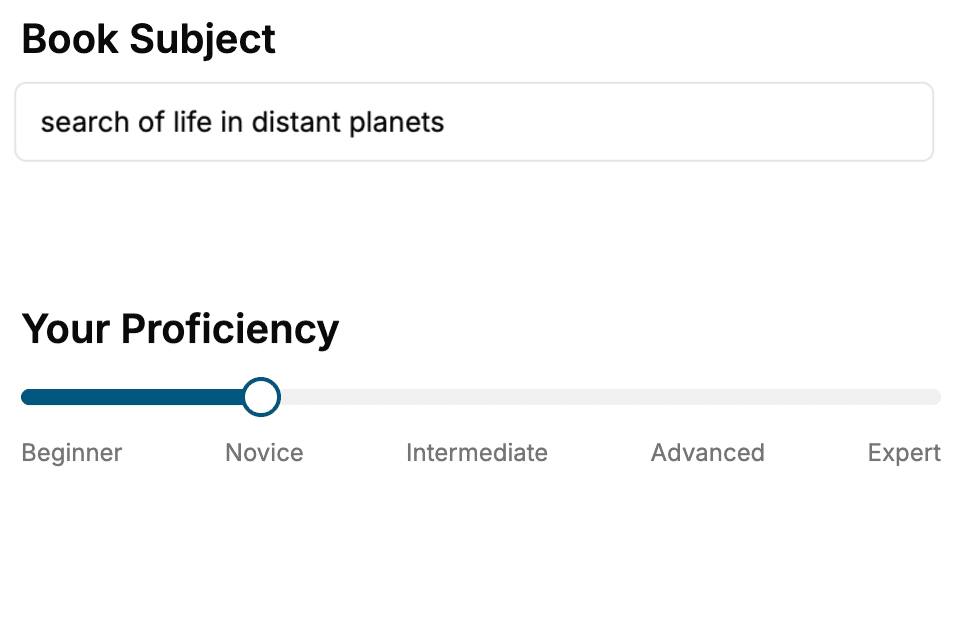
- 1. Select your focus
Select the focus of your Learn French book and share your background
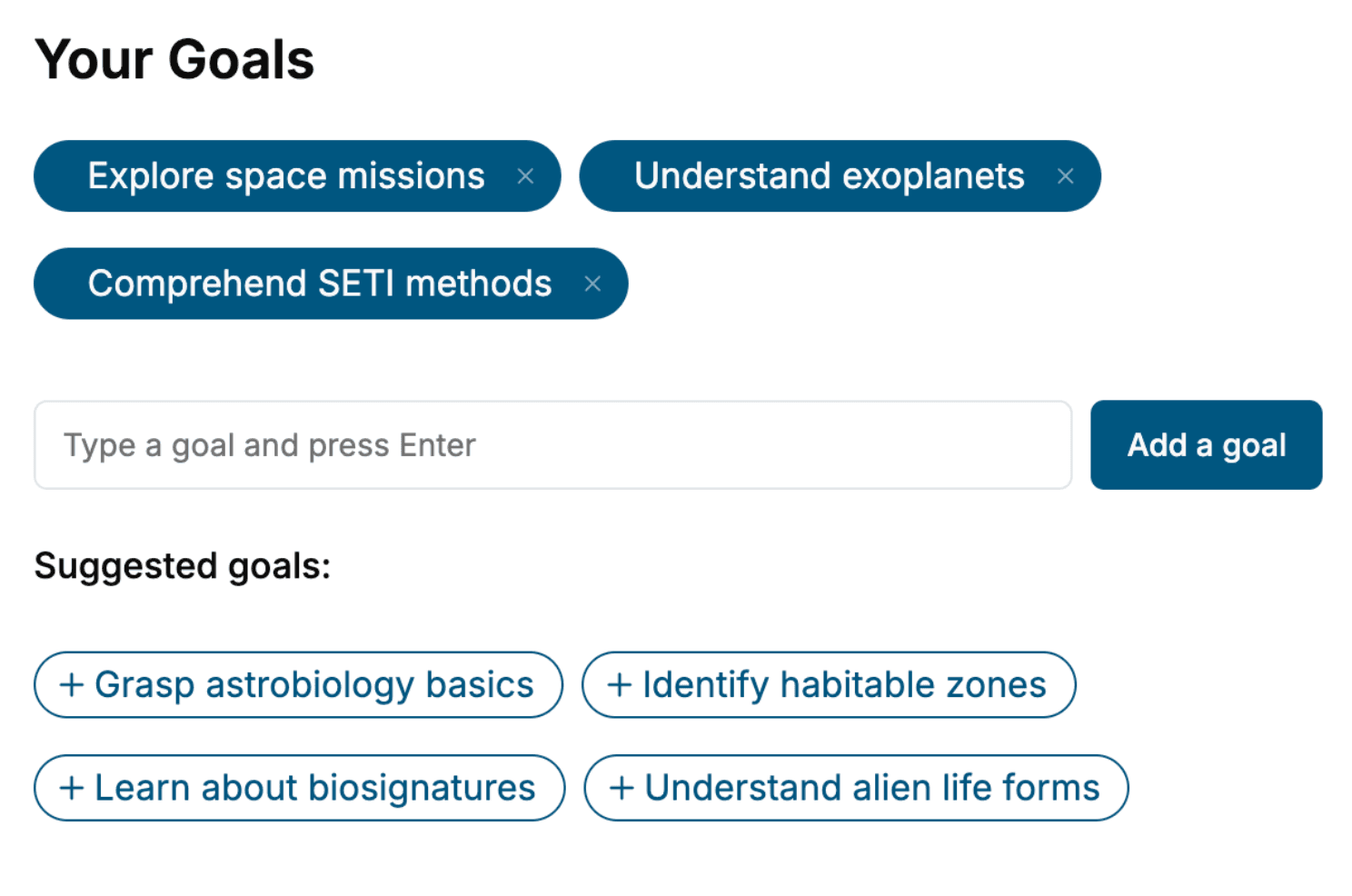
- 2. Personalize your book
Specify your goals and choose sub-topics to include
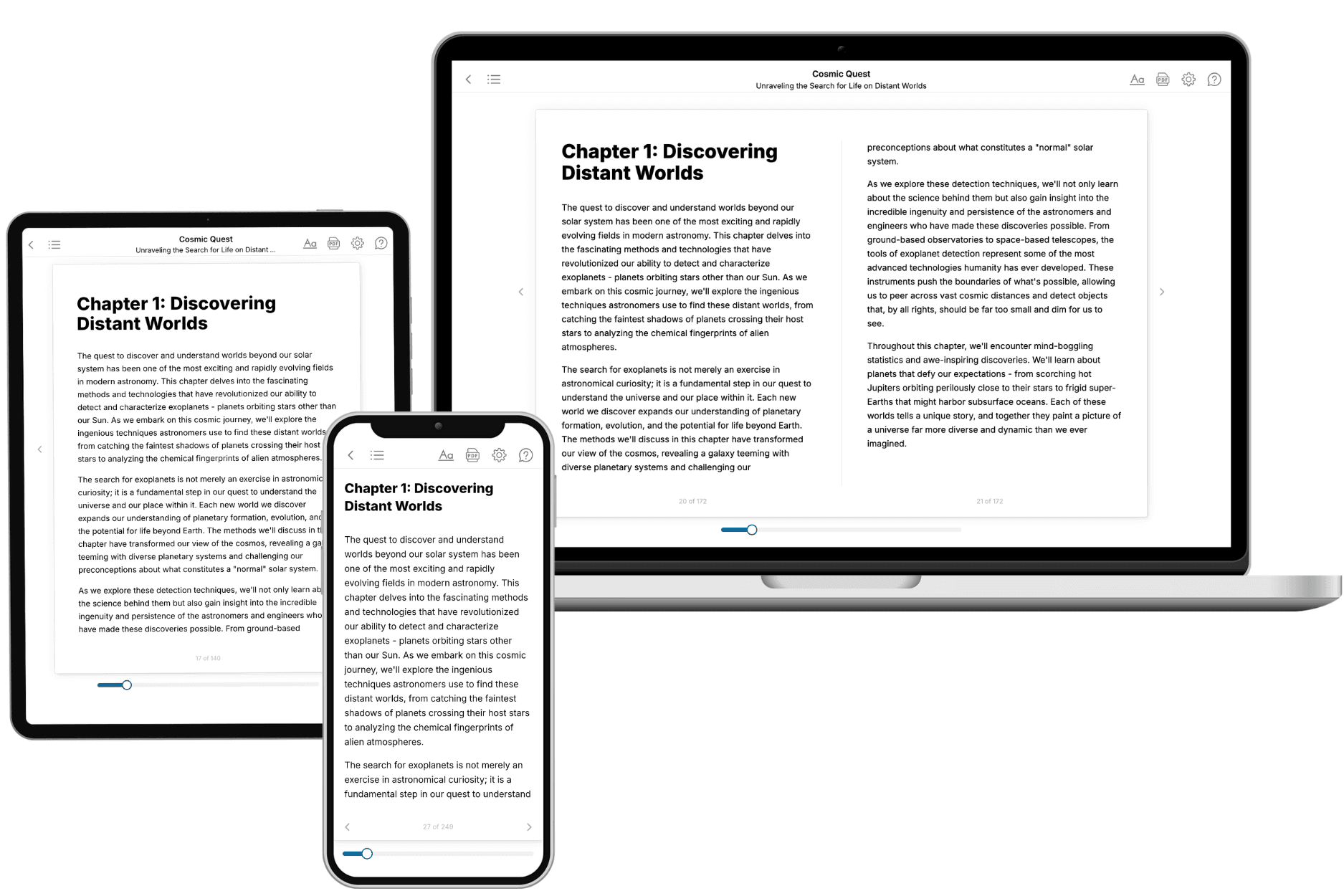
- 3. Get your tailored book
Your book is ready in 10 minutes. Read it online, download as EPUB or PDF, or send to Kindle.
Frequently asked questions
- What is TailoredRead?
TailoredRead creates complete, full-length nonfiction ebooks, written specifically for you. Tell us what you want to learn and why, and TailoredRead writes you a complete ebook on it, with charts, tables, and diagrams throughout. Read it online, on Kindle, or on any e-reader, or download it as a PDF or EPUB. Every book is written fresh the day you order it.
- How is the book tailored to me?
Before anything is written, you answer a few short questions about your goals, your background, and the topics you care about. Your book is then planned around your answers: written at your level, focused on your goals, and covering the topics you chose, instead of the one-size-fits-all book a store sells everyone.
- Will it read like generic AI content?
No. Your book isn't a chat transcript: it's planned chapter by chapter before a single word is written, told in a clear book voice, and explains ideas visually with charts, tables, and diagrams. After writing, every book goes through an editorial pass that polishes chapters so the book reads consistent from start to finish. Judge for yourself: browse thousands of sample books on our Explore Books page.
- How accurate is the content?
Our AI first checks whether your subject needs live research. Niche and fast-moving subjects are researched before writing, and the book plan and chapters are grounded in what it finds. After writing, every book goes through a quality pass that checks its facts and consistency, and researched books list their sources in a Notes section at the back.
- How long is the book?
You choose the length: Comprehensive (250-300 pages), Detailed (150-200 pages), Essential (70-100 pages), or Short (30-50 pages).
- Does the book include visuals?
Yes. Every book includes charts, tables, and diagrams: timelines, checklists, step-by-step guides, decision trees, comparison tables, matrices, and bar charts. A typical book includes dozens of these visual elements.
- Can I read it on Kindle? What formats can I download?
Yes. Every book can be read in our online reader or downloaded as a PDF or EPUB. The EPUB can be opened with Kindle, Apple Books, Kobo, and any e-reader. The Commercial and Author licenses also include an editable Word (DOCX) and Markdown download.
- How much does it cost?
About the price of a regular ebook. The exact price depends on your book's length and complexity, from $2 for the shortest books to $35 for the most comprehensive, and it's shown when you review your book, before you commit to anything. Each book is a one-time purchase, yours to keep, no subscription. Licenses that let you share, teach, or publish your book range from $35.99 to $49.99.
- Can I preview the book before purchasing?
Before you pay, you'll see what your book will cover: the title, a detailed description, the estimated length, and the complete chapter-by-chapter table of contents, so you know what you're getting before you decide. The full text itself is written after you purchase.
- How long does it take to create a book?
About 10 minutes. You can start reading the opening chapters while the rest is still being written.