Rock Solid
Mastering the Principles and Applications of Rock Mechanics in Engineering
You'll elevate your expertise in rock mechanics and engineering with this comprehensive guide.
300 pages15 chaptersFeb 24, 2025Civil Engineering
About this book
"Rock Solid" equips you with the knowledge and skills to tackle complex geotechnical challenges with confidence. Delve into the fundamental principles of rock mechanics and their real-world applications in civil and geotechnical engineering projects. This book bridges the gap between theory and practice, offering you a deep understanding of rock behavior, strength, and deformation. You'll explore cutting-edge techniques for rock mass classification, slope stability analysis, and underground excavation design. With a focus on practical problem-solving, you'll learn to apply these concepts to real engineering scenarios. Packed with case studies, numerical examples, and hands-on exercises, "Rock Solid" ensures you're well-prepared to handle the diverse challenges of working with rock in various engineering contexts. Whether you're designing tunnels, foundations, or open-pit mines, this book will be your go-to resource for making informed decisions and implementing effective solutions in rock engineering projects.
Table of contents
- IntroductionThe Importance of Rock Mechanics in Engineering, Overview of the Book, How to Use This BookRead below
- Chapter 1: Fundamentals of Rock MechanicsRock Formation and Classification, Physical Properties of Rocks, Stress and Strain in Rock Masses, Rock Strength and Failure Criteria
- Chapter 2: Rock Mass Classification SystemsRock Quality Designation (RQD), Rock Mass Rating (RMR) System, Q-System for Rock Mass Classification, Geological Strength Index (GSI)
- Chapter 3: Site Investigation and Rock TestingGeological Field Mapping Techniques, Core Drilling and Sampling, In-Situ Rock Testing Methods, Laboratory Testing of Rock Samples
- Chapter 4: Rock Strength and DeformationElastic Properties of Rocks, Plastic and Time-Dependent Behavior, Influence of Discontinuities on Rock Strength, Methods for Estimating Rock Mass Strength
- Chapter 5: In-Situ Stress and Its MeasurementOrigins of In-Situ Stress, Stress Measurement Techniques, Stress Estimation Methods, Implications of In-Situ Stress on Engineering Design
- Chapter 6: Rock Slope Stability AnalysisRock Slope Failure Modes, Kinematic Analysis of Rock Slopes, Limit Equilibrium Methods, Probabilistic Slope Stability Analysis
- Chapter 7: Foundations in RockBearing Capacity of Rock Foundations, Settlement Analysis in Rock, Design of Anchored Foundations, Case Studies of Rock Foundations
- Chapter 8: Underground Excavation DesignMechanics of Tunneling, Rock Support Systems, Induced Stresses Around Openings, Excavation Methods and Their Impact
- Chapter 9: Numerical Modeling in Rock MechanicsFinite Element Method in Rock Engineering, Discrete Element Modeling, Boundary Element Method, Model Calibration and Validation
- Chapter 10: Rock Blasting and ExcavationPrinciples of Blast Design, Vibration Control in Blasting, Rock Fragmentation Analysis, Controlled Blasting Techniques
- Chapter 11: Rock Reinforcement and SupportRock Bolting Systems, Shotcrete Applications, Cable Anchors and Tie-backs, Design of Support Systems
- Chapter 12: Rock Mechanics in Dam EngineeringDam Foundation Treatment, Abutment Stability Analysis, Seepage Control in Rock Foundations, Instrumentation and Monitoring of Dams
- Chapter 13: Rock Mechanics in Petroleum EngineeringWellbore Stability Analysis, Hydraulic Fracturing Mechanics, Reservoir Geomechanics, Sand Production Prediction and Control
- Chapter 14: Case Studies in Rock EngineeringTunnel and Underground Projects, Slope Stabilization Projects, Foundation Engineering Challenges, Mining Engineering Applications
- Chapter 15: Emerging Technologies in Rock MechanicsRemote Sensing and LiDAR Applications, Machine Learning in Rock Engineering, Virtual and Augmented Reality in Rock Mechanics, IoT and Real-time Monitoring Systems
- ConclusionFuture Trends in Rock Mechanics, The Importance of Continuous Learning
- Glossary
- Further Reading
Introduction
Welcome to "Rock Solid: Mastering the Principles and Applications of Rock Mechanics in Engineering." This comprehensive guide is designed to elevate your expertise in rock mechanics and engineering, equipping you with the knowledge and skills necessary to tackle complex geotechnical challenges with confidence. As you embark on this journey through the fascinating world of rock mechanics, you'll discover how this field forms the backbone of numerous civil and geotechnical engineering projects, from towering skyscrapers to deep underground tunnels.
Rock mechanics, at its core, is the study of how rocks behave under various conditions and stresses. It's a field that combines elements of geology, physics, and engineering to understand and predict the behavior of rock masses. This understanding is crucial for designing safe, efficient, and sustainable structures in or on rock. Whether you're a seasoned professional looking to deepen your knowledge or a student aiming to build a solid foundation in this field, this book will serve as an invaluable resource in your pursuit of mastery in rock mechanics and its applications.
Throughout this book, you'll explore the fundamental principles that govern rock behavior, delve into advanced techniques for analysis and design, and learn how to apply these concepts to real-world engineering scenarios. From the microscopic structure of individual rock minerals to the macroscopic behavior of entire rock masses, you'll gain a holistic understanding of the factors that influence rock performance in engineering contexts. This knowledge will empower you to make informed decisions, implement effective solutions, and innovate in your approach to rock engineering projects.
As we progress through the chapters, you'll find that this book bridges the gap between theory and practice. Each concept is presented with a focus on its practical application, ensuring that you not only understand the 'what' and 'why' of rock mechanics but also the 'how' of applying these principles in your work. Case studies, numerical examples, and hands-on exercises are integrated throughout the text to reinforce your learning and provide you with tangible ways to apply your knowledge.
In an era where engineering challenges are becoming increasingly complex, and the demand for sustainable and innovative solutions is growing, a deep understanding of rock mechanics is more valuable than ever. This book will prepare you to meet these challenges head-on, whether you're designing foundations for a high-rise building, planning an underground storage facility, or assessing the stability of a natural slope. By mastering the principles and applications of rock mechanics, you'll be well-equipped to contribute to the cutting edge of geotechnical and civil engineering.
The Importance of Rock Mechanics in Engineering
Rock mechanics plays a pivotal role in a wide array of engineering disciplines, serving as the foundation for countless projects that shape our built environment and infrastructure. Its importance cannot be overstated, as it directly impacts the safety, efficiency, and longevity of structures that interact with rock masses. From the towering skyscrapers that define city skylines to the intricate network of tunnels that facilitate underground transportation, the principles of rock mechanics are at work, ensuring the stability and functionality of these engineering marvels.
One of the primary reasons rock mechanics is so crucial in engineering is its role in risk assessment and mitigation. By understanding how rock masses behave under various conditions, engineers can predict potential failure modes and design structures that can withstand the forces they may encounter. This predictive capability is essential in preventing catastrophic failures that could result in loss of life, economic damage, and environmental harm. For instance, in the field of slope stability analysis, rock mechanics principles allow engineers to assess the likelihood of landslides and design appropriate stabilization measures, protecting communities and infrastructure in mountainous or hilly regions.
In the realm of underground construction, rock mechanics is indispensable. The design of tunnels, mines, and underground storage facilities relies heavily on the accurate characterization of rock masses and the prediction of their behavior during and after excavation. Without a solid grasp of rock mechanics, it would be impossible to create safe and efficient underground spaces that can withstand the immense pressures exerted by surrounding rock masses. The principles of rock mechanics guide engineers in selecting appropriate excavation methods, designing support systems, and predicting long-term stability, all of which are critical for the success of underground projects.
The field of foundation engineering also leans heavily on rock mechanics, especially when dealing with structures built on or in rock. The bearing capacity of rock, its deformation characteristics, and potential settlement all need to be carefully evaluated to ensure the stability of structures. This is particularly important for large-scale projects such as dams, bridges, and high-rise buildings, where the consequences of foundation failure could be catastrophic. Rock mechanics provides the tools and methodologies to assess these factors accurately, allowing engineers to design foundations that can safely transfer loads from structures to the underlying rock mass.
In the energy sector, rock mechanics plays a vital role in the exploration and extraction of natural resources. The oil and gas industry relies on rock mechanics principles for wellbore stability analysis, hydraulic fracturing design, and reservoir characterization. Similarly, in geothermal energy production, understanding the behavior of rock masses under high temperatures and pressures is crucial for efficient and sustainable energy extraction. As the world transitions towards more sustainable energy sources, the importance of rock mechanics in developing and implementing new technologies cannot be overstated.
Rock mechanics also contributes significantly to environmental protection and sustainable development. By providing insights into the behavior of rock masses, it helps in the design of structures that minimize environmental impact. For example, in the field of waste management, rock mechanics principles are applied in the design of secure underground repositories for hazardous waste, ensuring long-term isolation from the biosphere. In the context of climate change, understanding rock behavior is crucial for developing carbon capture and storage solutions, where CO2 is sequestered in deep geological formations.
The importance of rock mechanics extends to the field of natural hazard mitigation as well. Seismic design of structures in rocky terrain, assessment of volcanic hazards, and prediction of rock falls all rely on the principles of rock mechanics. By understanding how rock masses respond to dynamic loads and environmental changes, engineers can develop more resilient infrastructure and implement effective early warning systems, thereby protecting communities from natural disasters.
In the realm of cultural heritage preservation, rock mechanics plays a subtle but crucial role. Many historical monuments and archaeological sites are carved into or built upon rock. Understanding the long-term behavior of these rock masses is essential for preserving these invaluable cultural treasures for future generations. Rock mechanics provides the tools to assess the stability of these sites and design appropriate conservation measures.
As we look to the future, the importance of rock mechanics in engineering is only set to grow. With increasing urbanization and the need for more efficient use of underground space, the demands on rock engineering are becoming more complex. The development of smart cities, underground transportation networks, and deep geological repositories for nuclear waste are just a few examples of future challenges that will require advanced rock mechanics knowledge.
Moreover, as we push the boundaries of exploration, both on Earth and beyond, rock mechanics will play a crucial role. From deep sea mining to the potential colonization of other planets, understanding the behavior of rock under extreme conditions will be paramount. The principles of rock mechanics developed on Earth will need to be adapted and expanded to address the unique challenges posed by extraterrestrial environments.
In conclusion, the importance of rock mechanics in engineering cannot be overstated. It is a field that underpins the safety, efficiency, and sustainability of countless engineering projects. By providing the tools to understand and predict the behavior of rock masses, it enables engineers to design structures that are not only safe and functional but also in harmony with their geological environment. As we face the engineering challenges of the future, a deep understanding of rock mechanics will be more crucial than ever, making it an indispensable field of study for any aspiring or practicing geotechnical or civil engineer.
Overview of the Book
"Rock Solid: Mastering the Principles and Applications of Rock Mechanics in Engineering" is structured to provide you with a comprehensive and logical progression through the field of rock mechanics. The book is designed to build your knowledge from the ground up, starting with fundamental concepts and gradually moving towards more complex applications and advanced techniques. This approach ensures that you develop a solid foundation in rock mechanics principles before tackling the intricacies of their practical applications in various engineering scenarios.
The book begins with an exploration of the fundamentals of rock mechanics in Chapter 1. Here, you'll delve into the processes of rock formation and classification, gaining an understanding of how different rock types come into existence and how they are categorized based on their origin and composition. This chapter also covers the physical properties of rocks, providing you with the basic knowledge needed to understand how rocks behave under different conditions. The concepts of stress and strain in rock masses are introduced, laying the groundwork for more advanced topics. You'll also explore rock strength and failure criteria, essential concepts for predicting how rock will perform under various loading conditions.
Chapter 2 focuses on rock mass classification systems, a crucial tool in rock engineering. You'll learn about various classification methods including the Rock Quality Designation (RQD), Rock Mass Rating (RMR) system, Q-System, and the Geological Strength Index (GSI). These classification systems are vital for characterizing rock masses and predicting their behavior in engineering projects. By mastering these systems, you'll be able to quickly assess rock quality and make informed decisions in the field.
Site investigation and rock testing are covered in Chapter 3, emphasizing the importance of gathering accurate data for engineering design. You'll explore geological field mapping techniques, core drilling and sampling methods, in-situ rock testing, and laboratory testing of rock samples. This chapter underscores the critical role that proper site investigation plays in the success of any rock engineering project.
Chapter 4 delves deeper into rock strength and deformation, building on the concepts introduced in earlier chapters. You'll study the elastic properties of rocks, their plastic and time-dependent behavior, and the influence of discontinuities on rock strength. Methods for estimating rock mass strength are also covered, providing you with practical tools for assessing the mechanical properties of rock masses in real-world scenarios.
In-situ stress and its measurement are the focus of Chapter 5. You'll learn about the origins of in-situ stress, various stress measurement techniques, and methods for estimating stress conditions. The chapter also discusses the implications of in-situ stress on engineering design, highlighting how understanding the stress state of a rock mass is crucial for predicting its behavior during and after excavation or construction.
Chapter 6 tackles the important topic of rock slope stability analysis. You'll explore different rock slope failure modes, learn about kinematic analysis of rock slopes, and study limit equilibrium methods for assessing stability. The chapter also introduces probabilistic slope stability analysis, providing a more nuanced approach to risk assessment in slope engineering.
Foundations in rock are covered in Chapter 7, where you'll learn about the bearing capacity of rock foundations, settlement analysis in rock, and the design of anchored foundations. Case studies of rock foundations are presented to illustrate the practical application of these concepts.
Chapter 8 focuses on underground excavation design, covering the mechanics of tunneling, rock support systems, induced stresses around openings, and various excavation methods. This chapter is particularly relevant for those involved in tunnel engineering, mining, or underground storage projects.
Numerical modeling in rock mechanics is the subject of Chapter 9. Here, you'll be introduced to various modeling techniques including the finite element method, discrete element modeling, and the boundary element method. The chapter also covers model calibration and validation, essential skills for ensuring the accuracy and reliability of numerical models.
Chapter 10 explores rock blasting and excavation, covering principles of blast design, vibration control, rock fragmentation analysis, and controlled blasting techniques. This knowledge is crucial for projects involving rock removal or shaping.
Rock reinforcement and support are discussed in Chapter 11, where you'll learn about various support systems including rock bolting, shotcrete applications, and cable anchors. The chapter also covers the design of support systems, providing you with the tools to ensure the stability of rock excavations.
Chapters 12 and 13 focus on specific applications of rock mechanics in dam engineering and petroleum engineering respectively. These chapters demonstrate how the principles learned earlier in the book are applied in these specialized fields.
Chapter 14 presents a series of case studies in rock engineering, covering a range of projects including tunnels, slope stabilization, foundation engineering challenges, and mining applications. These real-world examples help to consolidate your understanding and illustrate the practical application of rock mechanics principles.
The book concludes with Chapter 15, which looks at emerging technologies in rock mechanics. This forward-looking chapter covers topics such as remote sensing and LiDAR applications, machine learning in rock engineering, virtual and augmented reality, and IoT-based monitoring systems. It provides insight into the future direction of the field and the new tools that are shaping rock engineering practice.
Throughout the book, you'll find numerous diagrams, charts, and illustrations to help visualize complex concepts. Practical examples and problem-solving exercises are included to reinforce your learning and develop your analytical skills. By the end of the book, you'll have a comprehensive understanding of rock mechanics principles and their applications, equipping you to tackle a wide range of rock engineering challenges with confidence.
How to Use This Book
"Rock Solid: Mastering the Principles and Applications of Rock Mechanics in Engineering" is designed to be a comprehensive resource that caters to various learning styles and professional needs. To get the most out of this book, it's important to approach it strategically. This section will guide you on how to effectively use this book to maximize your learning and application of rock mechanics principles in your professional practice or academic pursuits.
First and foremost, it's recommended that you read the book sequentially, especially if you're new to the field of rock mechanics. The chapters are structured to build upon each other, with fundamental concepts introduced early on and more complex applications presented later. This progressive approach ensures that you develop a solid foundation before tackling more advanced topics. However, if you're an experienced professional looking to refresh your knowledge on specific topics, you can certainly use the table of contents to navigate directly to the chapters most relevant to your current needs.
As you read through each chapter, pay close attention to the key concepts highlighted in bold or italics. These are crucial ideas that form the backbone of rock mechanics theory and practice. Take the time to fully understand these concepts before moving on. If you encounter a term or concept you're not familiar with, refer to the glossary at the end of the book for quick definitions and explanations.
Throughout the book, you'll find numerous examples and case studies. These are not mere illustrations but are integral to understanding how theoretical concepts are applied in real-world scenarios. Study these examples carefully, trying to understand not just the solution, but the thought process behind it. Consider how you might approach similar problems in your own work. For maximum benefit, attempt to solve the example problems on your own before looking at the provided solution.
Each chapter concludes with a set of review questions and practical exercises. These are designed to reinforce your learning and help you apply the concepts you've just studied. Don't skip these! They are invaluable for consolidating your knowledge and developing your problem-solving skills. Try to complete these exercises without referring back to the chapter content. This will help you identify areas where you might need further study.
The book includes numerous diagrams, charts, and illustrations. These visual aids are crucial for understanding spatial concepts and complex processes in rock mechanics. Take the time to study these carefully. Try to recreate key diagrams from memory as a way of testing your understanding. This practice will also help you develop the ability to quickly sketch out ideas when working on real projects.
As you progress through the book, make connections between different chapters and concepts. Rock mechanics is a highly interconnected field, and understanding these relationships will deepen your comprehension and improve your ability to solve complex problems. For instance, how does the rock mass classification system you learned about in Chapter 2 relate to the slope stability analysis techniques covered in Chapter 6? Making these connections will help you develop a more holistic understanding of rock mechanics.
Don't hesitate to use the book as a reference in your daily work or studies. The detailed table of contents and index make it easy to quickly locate specific information. Keep the book handy when working on projects or assignments related to rock mechanics. You'll likely find yourself referring back to various sections as you encounter different challenges in your work.
For those using this book as part of a course or self-study program, consider forming a study group with colleagues or classmates. Discussing the concepts and working through problems together can provide new perspectives and deepen your understanding. You can use the end-of-chapter exercises as a basis for group discussions or problem-solving sessions.
The "Further Reading" section at the end of the book provides references to additional resources on various topics in rock mechanics. Use these to explore areas of particular interest in more depth. This section can also guide your continued learning beyond the scope of this book.
As you read about various techniques and methodologies, consider how they might apply to projects you're currently working on or have worked on in the past. This practice of relating new knowledge to your personal experience will help cement your learning and make it more relevant to your professional practice.
Remember that mastering rock mechanics is an ongoing process. The field is constantly evolving with new research and technologies. Use this book as a foundation, but stay curious and continue to learn. Attend conferences, read journal articles, and engage with the professional community to stay up-to-date with the latest developments in the field.
Finally, don't be afraid to challenge the ideas presented in the book. As you gain experience and develop your own insights, you may find new ways of approaching problems or alternative interpretations of data. This critical thinking is essential for advancing the field of rock mechanics and for developing your own expertise.
By following these guidelines, you'll be able to extract maximum value from "Rock Solid: Mastering the Principles and Applications of Rock Mechanics in Engineering." Whether you're a student, a practicing engineer, or a researcher, this book will serve as a comprehensive guide and a valuable reference in your journey to mastering rock mechanics. Remember, the true test of your understanding will come when you apply these principles to real-world engineering challenges. So, use this book not just as a source of knowledge, but as a springboard for practical application and innovation in your rock engineering projects.
This is the end of the free sample. The full book has 15 chapters.
Want this book written for you?
Tell us your goals and background, and get your own version of this book, tailored by AI to you.


Benefits of AI-tailored books
- Read one book, not ten:
- all the Civil Engineering knowledge you need, gathered into a single book.
- Save days of learning:
- tell us your goals, choose your topics, and the whole book is built around them.
- Learn effortlessly:
- Civil Engineering book written for your specific background and expertise.
- Understand at a glance:
- includes charts, tables, timelines, checklists, decision trees, and more.
- Stay current:
- written the day you order it, not years ago.
- Trust what you read:
- every book is checked for accuracy, with real research when your subject needs it.
Create your unique book in 3 steps
- 1. Select your focus
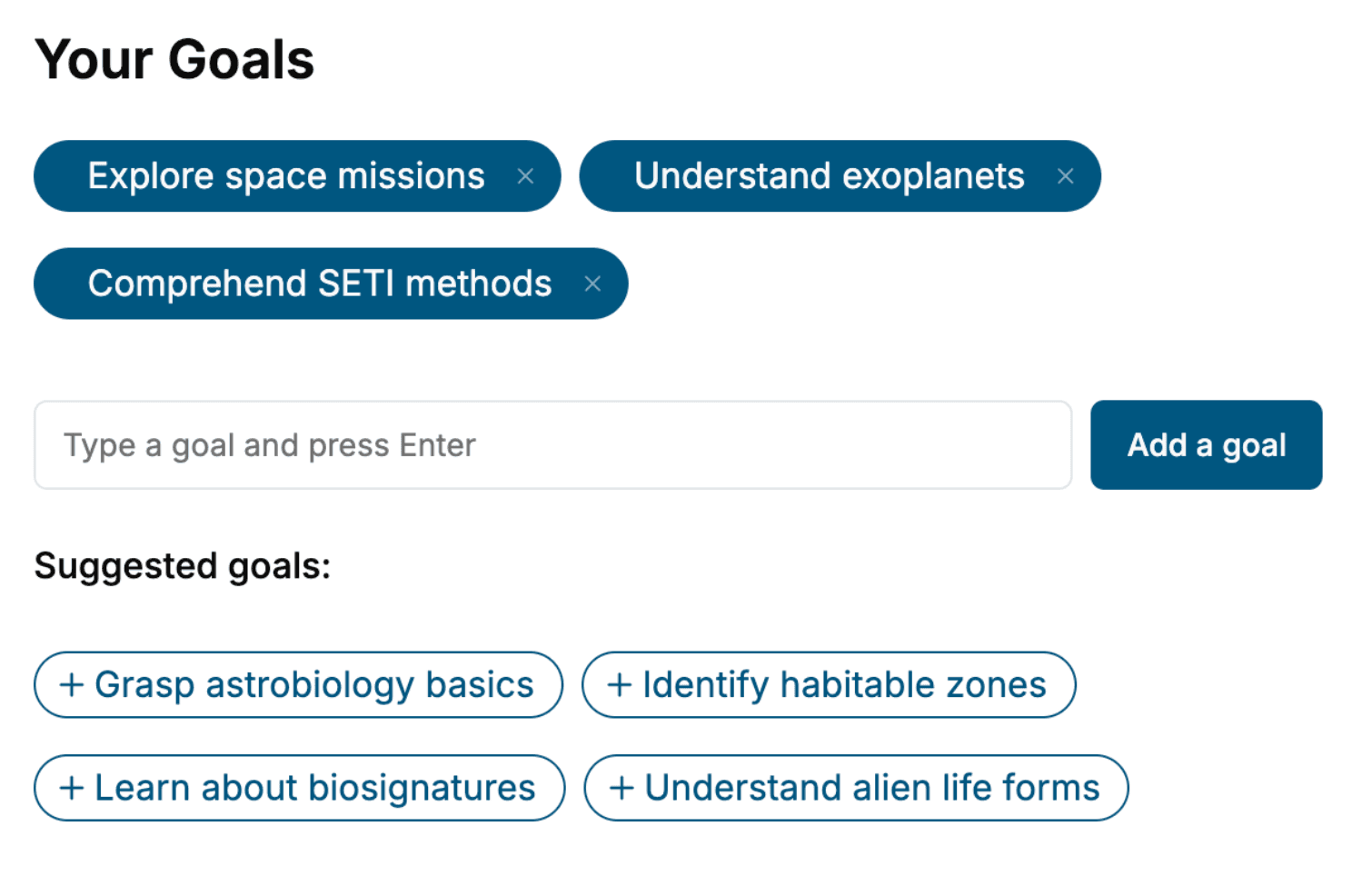
Select the focus of your Civil Engineering book and share your background
- 2. Personalize your book
Specify your goals and choose sub-topics to include
- 3. Get your tailored book
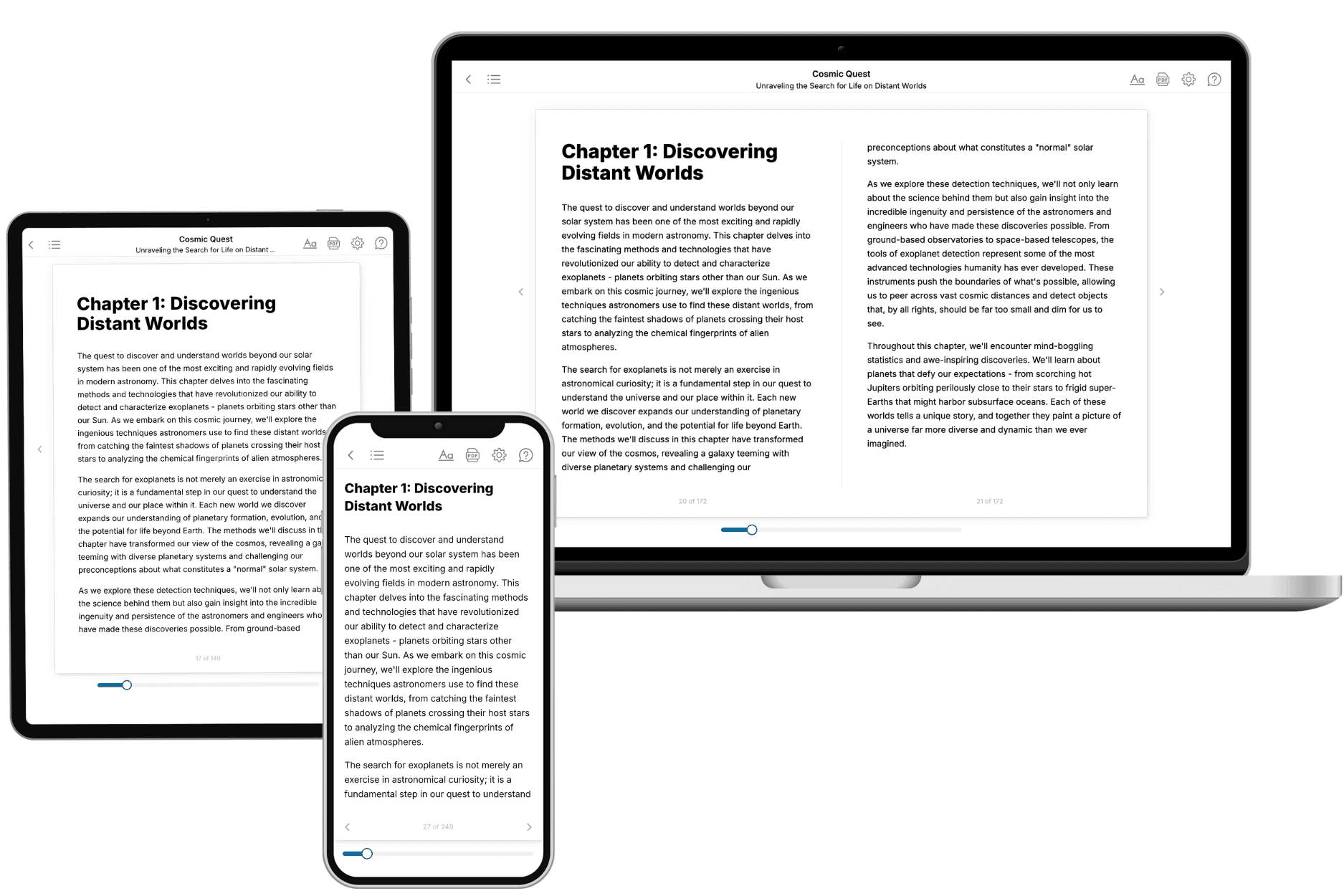
Your book is ready in 10 minutes. Read it online, download as EPUB or PDF, or send to Kindle.

Frequently asked questions
- What is TailoredRead?
TailoredRead creates complete, full-length nonfiction ebooks, written specifically for you. Tell us what you want to learn and why, and TailoredRead writes you a complete ebook on it, with charts, tables, and diagrams throughout. Read it online, on Kindle, or on any e-reader, or download it as a PDF or EPUB. Every book is written fresh the day you order it.
- How is the book tailored to me?
Before anything is written, you answer a few short questions about your goals, your background, and the topics you care about. Your book is then planned around your answers: written at your level, focused on your goals, and covering the topics you chose, instead of the one-size-fits-all book a store sells everyone.
- Will it read like generic AI content?
No. Your book isn't a chat transcript: it's planned chapter by chapter before a single word is written, told in a clear book voice, and explains ideas visually with charts, tables, and diagrams. After writing, every book goes through an editorial pass that polishes chapters so the book reads consistent from start to finish. Judge for yourself: browse thousands of sample books on our Explore Books page.
- How accurate is the content?
Our AI first checks whether your subject needs live research. Niche and fast-moving subjects are researched before writing, and the book plan and chapters are grounded in what it finds. After writing, every book goes through a quality pass that checks its facts and consistency, and researched books list their sources in a Notes section at the back.
- How long is the book?
You choose the length: Comprehensive (250-300 pages), Detailed (150-200 pages), Essential (70-100 pages), or Short (30-50 pages).
- Does the book include visuals?
Yes. Every book includes charts, tables, and diagrams: timelines, checklists, step-by-step guides, decision trees, comparison tables, matrices, and bar charts. A typical book includes dozens of these visual elements.
- Can I read it on Kindle? What formats can I download?
Yes. Every book can be read in our online reader or downloaded as a PDF or EPUB. The EPUB can be opened with Kindle, Apple Books, Kobo, and any e-reader. The Commercial and Author licenses also include an editable Word (DOCX) and Markdown download.
- How much does it cost?
About the price of a regular ebook. The exact price depends on your book's length and complexity, from $2 for the shortest books to $35 for the most comprehensive, and it's shown when you review your book, before you commit to anything. Each book is a one-time purchase, yours to keep, no subscription. Licenses that let you share, teach, or publish your book range from $35.99 to $49.99.
- Can I preview the book before purchasing?
Before you pay, you'll see what your book will cover: the title, a detailed description, the estimated length, and the complete chapter-by-chapter table of contents, so you know what you're getting before you decide. The full text itself is written after you purchase.
- How long does it take to create a book?
About 10 minutes. You can start reading the opening chapters while the rest is still being written.