The Scent of Nature
Unraveling the Mystery of Stink Bug Odor in the Great Outdoors
Imagine yourself on a serene hiking trail, surrounded by the beauty of nature.
253 pages13 chaptersFeb 5, 2025Entomology
About this book
As you breathe in the fresh air, you suddenly catch a whiff of something peculiar. Your curiosity is piqued, and you wonder: What could be the source of this distinct odor? Welcome to the fascinating world of stink bugs and their intriguing scent. "The Scent of Nature: Unraveling the Mystery of Stink Bug Odor in the Great Outdoors" is your ultimate guide to understanding one of nature's most unique defense mechanisms. This book takes you on an olfactory adventure, exploring the intricate world of stink bugs and their impact on our outdoor experiences. You'll discover the science behind the stink bug's infamous odor, learn to identify various species, and gain insights into their behavior and habitat. Whether you're a casual hiker, a camping enthusiast, or simply someone who loves to explore nature, this book will enhance your outdoor adventures by providing you with a deeper understanding of these often-misunderstood creatures. Packed with practical tips for dealing with stink bug encounters and fascinating facts about insect communication, "The Scent of Nature" will forever change the way you perceive these remarkable insects. Get ready to see (and smell) the natural world in a whole new light!
Table of contents
- IntroductionThe Fascinating World of Stink Bugs, The Importance of Odor in Nature, What to Expect from This BookRead below
- Chapter 1: Stink Bug BasicsWhat Are Stink Bugs?, Stink Bug Anatomy, The Life Cycle of Stink Bugs, Common Stink Bug Habitats
- Chapter 2: The Science of StinkChemical Composition of Stink Bug Odor, How Stink Bugs Produce Their Odor, Odor Variations Among Species, How Humans Perceive Stink Bug Odor
- Chapter 3: Odor as a Defense MechanismThe Evolutionary Purpose of Stink, How Odor Deters Predators, Other Insect Defense Mechanisms, Effectiveness of Odor-Based Defense
- Chapter 4: Identifying Stink Bugs in the WildVisual Characteristics of Common Stink Bug Species, Behavior Patterns and Habitat Preferences, Using Odor for Identification, Distinguishing Stink Bugs from Look-Alikes
- Chapter 5: The Ecological Role of Stink BugsStink Bugs in the Food Chain, Interactions with Plants, Impact on Local Ecosystems, Contribution to Biodiversity
- Chapter 6: Stink Bug Encounters in the OutdoorsCommon Encounter Scenarios, Seasonal Patterns of Stink Bug Activity, Factors That Attract Stink Bugs, Tips for Preventing Unwanted Encounters
- Chapter 7: Humane Handling and CoexistenceSafe Removal Techniques, Natural Repellents and Deterrents, Ethical Considerations in Stink Bug Management, Strategies for Peaceful Coexistence
- Chapter 8: The Impact of Stink Bug Odor on NatureEffects on Plants and Vegetation, How Other Animals React to the Odor, Environmental Persistence of the Odor, Role in Maintaining Ecological Balance
- Chapter 9: Stink Bugs and Climate ChangeChanges in Stink Bug Distribution, Impact on Population Dynamics, Stink Bug Adaptation Strategies, Predictions for Future Stink Bug Behavior
- Chapter 10: Cultural Significance of Stink BugsFolklore and Myths, Cultural Perceptions Around the World, Symbolic Meanings in Different Societies, Stink Bugs in Popular Culture
- Chapter 11: Stink Bug Research and ConservationCurrent Research Trends, Citizen Science Projects, Conservation Efforts and Challenges, Future Directions in Stink Bug Studies
- Chapter 12: Appreciating Stink Bugs in the OutdoorsTechniques for Observing Stink Bugs, Tips for Photographing Stink Bugs, Educational Activities for Nature Enthusiasts, Guidelines for Responsible Interaction
- Chapter 13: Conclusion: Embracing the Scent of NatureKey Takeaways, The Future of Human-Stink Bug Interactions, Reflecting on Our Place in Nature, A Call to Action for Nature Lovers
- Glossary
- Further Reading
Introduction
Welcome to the captivating world of stink bugs and their intriguing odor. As you embark on this olfactory journey through nature, prepare to discover the hidden complexities and fascinating adaptations of these often misunderstood creatures. This introduction will set the stage for your exploration, providing a glimpse into the remarkable realm of stink bugs, the significance of odor in the natural world, and an overview of the adventure that awaits you in the pages ahead.
Throughout this book, you'll gain a deeper appreciation for the intricate relationships between insects, their environment, and the role that scent plays in their survival. By understanding the science behind stink bug odor and its impact on ecosystems, you'll develop a new perspective on these creatures and their place in the great outdoors. Whether you're a seasoned nature enthusiast or a curious beginner, this book will equip you with the knowledge to enhance your outdoor experiences and foster a greater connection with the natural world around you.
The Fascinating World of Stink Bugs
Stink bugs, members of the insect family Pentatomidae, are a diverse group of creatures found across the globe. With over 4,700 species identified worldwide, these insects have adapted to a wide range of habitats and climates[1]. Their name, derived from their distinctive defense mechanism, only hints at the complexity and intrigue that surrounds these remarkable insects. As you delve deeper into their world, you'll discover that stink bugs are far more than just their odor – they are a testament to the ingenuity of nature and the myriad ways in which organisms have evolved to survive and thrive.
Stink bugs come in a variety of shapes, sizes, and colors, each species uniquely adapted to its environment. From the vibrant green of the Southern Green Stink Bug (Nezara viridula) to the mottled brown of the Brown Marmorated Stink Bug (Halyomorpha halys), these insects exhibit a remarkable diversity in appearance. Their shield-shaped bodies, typically measuring between 8 to 20 millimeters in length, are instantly recognizable once you know what to look for. As you explore outdoor spaces, from lush forests to urban gardens, you'll begin to notice these fascinating creatures in a new light, appreciating the subtle differences that distinguish one species from another.
One of the most intriguing aspects of stink bugs is their behavior. These insects are not merely passive inhabitants of their environments; they are active participants in complex ecological relationships. Stink bugs play crucial roles in various ecosystems, serving as both herbivores and prey for other animals. Their feeding habits can have significant impacts on plant life, while their presence supports populations of predators such as birds and other insects. As you learn more about stink bug behavior, you'll gain insights into the delicate balance of nature and the interconnectedness of all living things.
The life cycle of stink bugs is another area of fascination. From egg to adult, these insects undergo a process known as incomplete metamorphosis, passing through several nymphal stages before reaching maturity. Each stage of their development presents unique challenges and adaptations, showcasing the resilience and versatility of these creatures. By understanding the life cycle of stink bugs, you'll be better equipped to identify them at various stages and appreciate the journey they undertake from birth to adulthood.
Perhaps the most well-known feature of stink bugs is their eponymous odor. This distinctive scent, often described as resembling cilantro or burnt tires, is more than just an unpleasant smell – it's a sophisticated defense mechanism that has evolved over millions of years. The ability to produce and release this odor on demand is a remarkable adaptation that has helped stink bugs survive in a world full of potential predators. As you explore the science behind this odor, you'll gain a new appreciation for the complexity of insect defense mechanisms and the ingenuity of evolutionary adaptations.
Stink bugs have also made their mark on human society, often in ways that extend beyond their natural habitats. In some cultures, these insects have been incorporated into traditional medicine or cuisine. In others, they've become agricultural pests of significant concern. The Brown Marmorated Stink Bug, for instance, has become an invasive species in many parts of the world, causing economic damage to crops and becoming a nuisance in homes[2]. Understanding the impact of stink bugs on human activities adds another layer to our appreciation of these insects and the complex relationships between humans and nature.
As you embark on this journey into the world of stink bugs, prepare to have your preconceptions challenged and your curiosity piqued. These insects, often overlooked or misunderstood, have much to teach us about adaptation, survival, and the intricate web of life that surrounds us. By the end of this book, you'll see stink bugs not as mere pests or curiosities, but as fascinating creatures worthy of our attention and respect. Their world is one of wonder and complexity, waiting to be explored by those willing to look beyond the surface and delve into the captivating realm of insect life.
Throughout your outdoor adventures, whether you're hiking through a dense forest, camping under the stars, or simply enjoying a local park, the knowledge you gain about stink bugs will enhance your experience. You'll develop a keener eye for spotting these insects in their natural habitats, a deeper understanding of their behaviors and interactions, and a greater appreciation for the role they play in the ecosystems you explore. The world of stink bugs is a microcosm of the larger natural world, offering insights into the principles of ecology, evolution, and biodiversity that govern all life on Earth.
As we continue our exploration of stink bugs and their fascinating odor, remember that every aspect of these creatures – from their physical appearance to their chemical defenses – tells a story of survival and adaptation. Each characteristic has been honed over countless generations, shaped by the pressures of predation, competition, and environmental change. By understanding stink bugs, we gain a window into the broader processes that have shaped life on our planet, and we develop a deeper appreciation for the complexity and resilience of the natural world.
The Importance of Odor in Nature
Odor plays a crucial role in the natural world, serving as a silent yet powerful form of communication among living organisms. In the vast tapestry of nature, scents and smells form an invisible landscape of information, influencing behavior, guiding interactions, and shaping ecosystems. The importance of odor extends far beyond the human experience, forming a fundamental aspect of how many species, including stink bugs, perceive and interact with their environment. As you delve into this olfactory dimension of nature, you'll gain a new appreciation for the complexity and sophistication of life's chemical language.
In the animal kingdom, odors serve a multitude of purposes. They can act as attractants, drawing organisms towards food sources or potential mates. Conversely, they can serve as repellents, warning of danger or marking territories. For many species, odors provide crucial information about their surroundings, helping them navigate complex environments and make decisions critical to their survival. The sense of smell is often far more developed in many animals than in humans, allowing them to detect and interpret a vast array of chemical signals that we might never perceive[3].
In the plant world, odors play an equally important role. Floral scents, for instance, are not merely pleasant aromas for human enjoyment but sophisticated mechanisms for attracting pollinators. Different plant species have evolved specific scent profiles to attract particular types of insects or other animals, ensuring the continuation of their genetic lineage. Some plants even use odors as a form of defense, releasing volatile compounds that repel herbivores or attract predators of the insects that feed on them. This chemical ecology demonstrates the intricate relationships between plants, insects, and other organisms in ecosystems.
For insects like stink bugs, odor is a cornerstone of their survival strategy. The distinctive scent they produce serves multiple purposes, primarily as a defense mechanism against predators. When threatened, stink bugs release a cocktail of chemicals from glands on their thorax, creating an odor that is unpleasant and potentially harmful to would-be attackers. This chemical defense is a prime example of how odor can be used as a powerful tool for survival in the natural world. But the importance of odor for stink bugs extends beyond defense. These insects also use scents for communication within their species, with some stink bugs producing pheromones to attract mates or signal to others about food sources.
The study of odors in nature, known as chemical ecology, has revealed fascinating insights into the complexity of ecosystems. Researchers have discovered intricate networks of chemical signals that connect different species and regulate various ecological processes. For example, trees under attack by insects have been found to release volatile compounds that warn neighboring trees, allowing them to preemptively boost their defenses. Such discoveries highlight the sophisticated ways in which odors facilitate communication not just within species, but across entire ecosystems[4].
Understanding the importance of odor in nature also has practical applications for human activities. In agriculture, knowledge of insect pheromones has led to the development of more environmentally friendly pest control methods. By using synthetic versions of these chemical signals, farmers can disrupt the mating patterns of pest species or lure them into traps, reducing the need for harmful pesticides. In conservation efforts, an understanding of animal scent marking and territorial behaviors can inform strategies for managing wildlife populations and preserving habitats.
For outdoor enthusiasts, an appreciation of nature's olfactory landscape can greatly enhance the experience of exploring natural environments. As you hike through a forest or camp in the wilderness, being aware of the scents around you – from the earthy smell of decomposing leaves to the sharp tang of pine needles – can provide a deeper connection to the ecosystem. Recognizing the odors associated with different plants and animals, including stink bugs, adds another dimension to your understanding and enjoyment of nature.
The world of odors in nature also intersects with human culture and history. Many of the scents we associate with particular environments or experiences have deep evolutionary roots. The smell of rain on dry earth, known as petrichor, for instance, is caused by bacteria in the soil releasing compounds when moisture is present – a scent that may have helped our ancestors locate water sources. Similarly, many of the plant-based fragrances we find pleasant have evolved to attract pollinators, highlighting the intricate connections between human preferences and natural selection.
As we explore the importance of odor in nature, it's crucial to recognize that human activities can disrupt these delicate chemical communications. Air pollution, for example, can interfere with insects' ability to detect pheromones, potentially impacting their reproduction and survival. Climate change is altering the timing of when plants release certain scents, which can desynchronize relationships between plants and their pollinators. Understanding these impacts underscores the need for conservation efforts that consider not just the visible aspects of ecosystems, but also the invisible chemical landscapes that are vital to their functioning.
The study of odors in nature also opens up new frontiers in scientific research. Advances in analytical chemistry and neurobiology are allowing scientists to decode the complex chemical signals used by various species and understand how they are perceived and processed. This research not only enhances our understanding of the natural world but also has potential applications in fields such as medicine, where insights into chemical communication could lead to new diagnostic tools or treatments.
As you continue to explore the world of stink bugs and their odors, keep in mind that you are delving into just one facet of nature's vast olfactory landscape. The distinctive scent of these insects is part of a much larger tapestry of chemical communication that permeates the natural world. By understanding the importance of odor in nature, you'll gain a deeper appreciation for the complexity of life and the myriad ways in which organisms interact with their environment and each other.
What to Expect from This Book
As you embark on this olfactory journey through "The Scent of Nature: Unraveling the Mystery of Stink Bug Odor in the Great Outdoors," you're about to dive into a world that's often overlooked but endlessly fascinating. This book is designed to be your comprehensive guide to understanding stink bugs, their distinctive odor, and the broader implications of chemical communication in nature. Whether you're a seasoned naturalist, a curious hiker, or someone who's simply intrigued by the complexities of the natural world, this book offers a wealth of information and insights that will enhance your outdoor experiences and deepen your appreciation for the intricacies of insect life.
Throughout the chapters that follow, you'll be taken on a multifaceted exploration of stink bugs and their place in the natural world. We'll begin by laying a solid foundation of knowledge about these insects, covering their basic biology, anatomy, and life cycle. You'll learn to identify different species of stink bugs and understand their habitat preferences, equipping you with the skills to spot and recognize these creatures during your outdoor adventures. This foundational knowledge will serve as a springboard for deeper investigations into the more complex aspects of stink bug biology and behavior.
A significant portion of the book is dedicated to unraveling the science behind the stink bug's infamous odor. You'll delve into the chemical composition of this scent, exploring how it's produced, stored, and released by the insects. We'll examine the variations in odor among different stink bug species and discuss how these chemical differences can be used for species identification. The book will also explore how humans perceive stink bug odor, providing insights into the physiological and psychological aspects of our olfactory experiences in nature.
One of the key themes running throughout the book is the evolutionary significance of the stink bug's odor as a defense mechanism. You'll gain an understanding of how this chemical defense evolved, its effectiveness against various predators, and how it compares to other insect defense strategies. This exploration will broaden your perspective on the diverse ways in which organisms have adapted to survive in their environments, highlighting the ingenuity of natural selection.
Beyond the focus on stink bugs themselves, this book places these insects within the larger context of their ecosystems. You'll learn about the ecological roles that stink bugs play, including their interactions with plants, their place in food webs, and their contributions to biodiversity. We'll explore how stink bug odor affects other organisms in their habitats, from plants to other insects to larger animals. This ecological perspective will help you appreciate the interconnectedness of life in the outdoors and the ripple effects that even small creatures like stink bugs can have on their environments.
As an outdoor enthusiast, you'll find practical information that you can apply directly to your nature experiences. The book includes guidance on how to handle encounters with stink bugs in the wild, offering tips for observation, photography, and respectful interaction. You'll learn about the seasonal patterns of stink bug activity and factors that might attract these insects, helping you anticipate and prepare for potential encounters during your outdoor activities. We'll also discuss humane ways to manage stink bug presence in various settings, balancing human comfort with respect for these creatures and their ecological importance.
In addressing contemporary issues, the book explores the impacts of climate change on stink bug populations and distribution. You'll gain insights into how shifting environmental conditions are affecting these insects and what this might mean for the future of ecosystems. We'll also look at the role of stink bugs in agriculture, discussing both their status as pests in some contexts and their potential benefits in others. This balanced approach will help you understand the complex relationships between insects, human activities, and environmental change.
Throughout the book, you'll find engaging case studies, real-world examples, and the latest research findings that bring the world of stink bugs to life. These elements will not only deepen your understanding but also showcase the ongoing scientific investigations into these fascinating creatures. You'll learn about current research trends, citizen science projects you can participate in, and conservation efforts aimed at protecting insect biodiversity.
To enhance your learning experience, the book includes practical tools and resources. You'll find identification guides, tips for conducting your own observations in nature, and suggestions for further reading if you wish to delve deeper into specific topics. The book also addresses common myths and misconceptions about stink bugs, helping you separate fact from fiction and become a more informed nature enthusiast.
As we explore the cultural significance of stink bugs, you'll discover how these insects have been perceived and utilized by different societies throughout history. From their role in folklore and mythology to their appearances in popular culture, you'll gain a broader perspective on the human-stink bug relationship. This cultural context adds depth to your understanding of these insects and their place in our collective consciousness.
By the time you reach the conclusion of this book, you'll have gained a comprehensive understanding of stink bugs, their odor, and their role in nature. More importantly, you'll have developed a new lens through which to view the natural world. The knowledge and insights you gain will enhance your outdoor experiences, allowing you to notice and appreciate details that might have previously escaped your attention. You'll be equipped to share your newfound knowledge with others, potentially inspiring fellow nature lovers to take a closer look at the small but significant creatures that inhabit our world.
Ultimately, "The Scent of Nature" aims to transform your perception of stink bugs from mere pests or curiosities into fascinating subjects worthy of study and appreciation. By understanding these insects and their chemical communications, you'll gain a deeper respect for the complexity of life and the myriad ways in which organisms have adapted to their environments. This book is an invitation to open your senses to the hidden chemical landscape that surrounds us, enriching your connection to nature and enhancing every outdoor adventure you embark upon.
So, as you turn the pages that follow, prepare to embark on an olfactory odyssey that will challenge your perceptions, expand your knowledge, and deepen your appreciation for the intricate tapestry of life in the great outdoors. Welcome to the fascinating world of stink bugs and the scent of nature!
Notes
Introduction
- 1. A. R. Panizzi and others, "Stink bugs (Pentatomidae)," C. W. Schaefer & A. R. Panizzi, Heteroptera of economic importance (). CRC Press, 2000
- 2. T. C. Leskey and A. L. Nielsen, "Impact of the invasive brown marmorated stink bug in North America and Europe: history, biology, ecology, and management," Annual Review of Entomology, 2018
- 3. T. D. Wyatt, Pheromones and animal behavior, Cambridge University Press, 2014
- 4. M. Dicke and I. T. Baldwin, "The evolutionary context for herbivore-induced plant volatiles," Trends in Plant Science, 2010
This is the end of the free sample. The full book has 13 chapters.
Want this book written for you?
Tell us your goals and background, and get your own version of this book, tailored by AI to you.


Benefits of AI-tailored books
- Read one book, not ten:
- all the Entomology knowledge you need, gathered into a single book.
- Save days of learning:
- tell us your goals, choose your topics, and the whole book is built around them.
- Learn effortlessly:
- Entomology book written for your specific background and expertise.
- Understand at a glance:
- includes charts, tables, timelines, checklists, decision trees, and more.
- Stay current:
- written the day you order it, not years ago.
- Trust what you read:
- every book is checked for accuracy, with real research when your subject needs it.
Create your unique book in 3 steps
- 1. Select your focus
Select the focus of your Entomology book and share your background
- 2. Personalize your book
Specify your goals and choose sub-topics to include
- 3. Get your tailored book
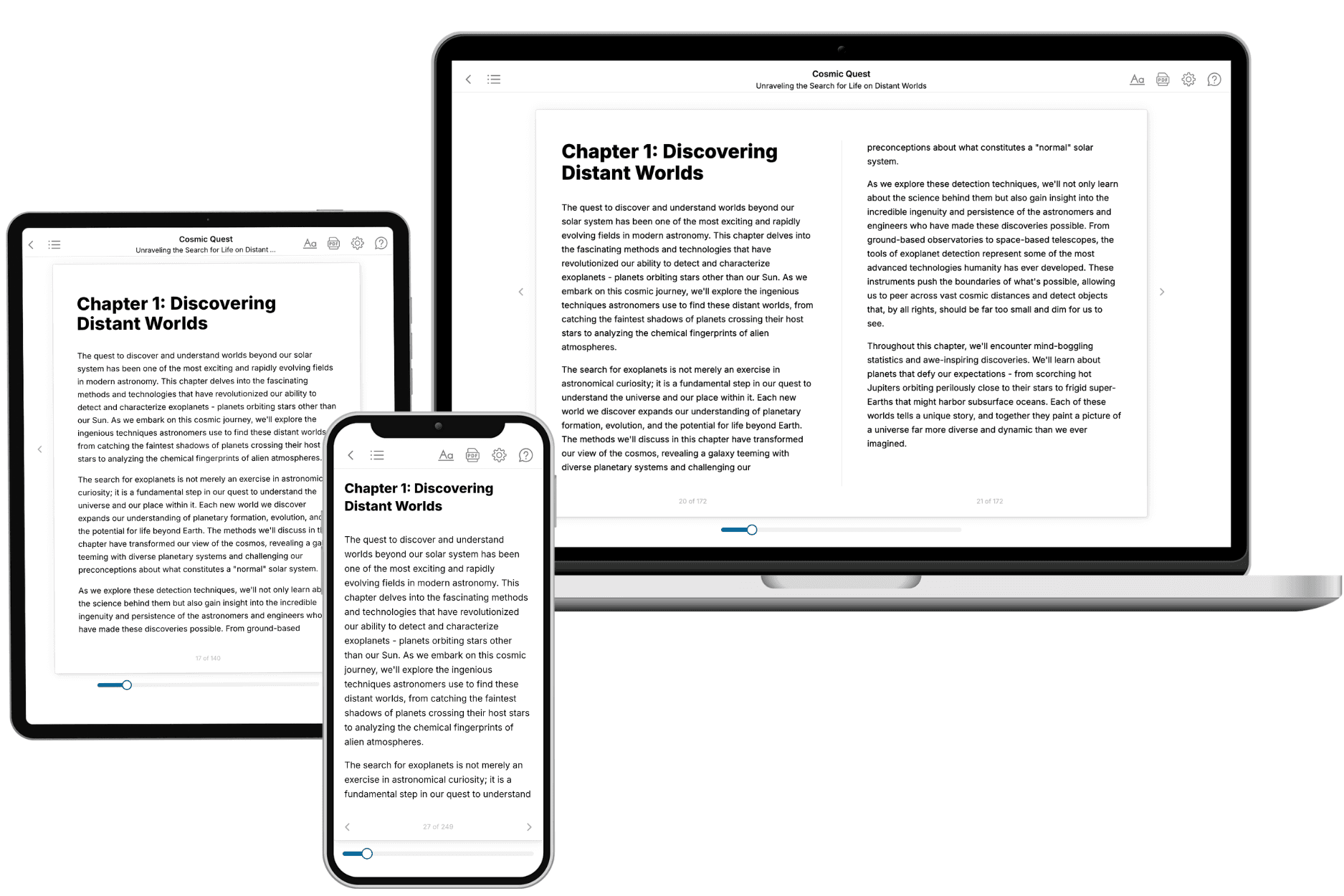
Your book is ready in 10 minutes. Read it online, download as EPUB or PDF, or send to Kindle.
Frequently asked questions
- What is TailoredRead?
TailoredRead creates complete, full-length nonfiction ebooks, written specifically for you. Tell us what you want to learn and why, and TailoredRead writes you a complete ebook on it, with charts, tables, and diagrams throughout. Read it online, on Kindle, or on any e-reader, or download it as a PDF or EPUB. Every book is written fresh the day you order it.
- How is the book tailored to me?
Before anything is written, you answer a few short questions about your goals, your background, and the topics you care about. Your book is then planned around your answers: written at your level, focused on your goals, and covering the topics you chose, instead of the one-size-fits-all book a store sells everyone.
- Will it read like generic AI content?
No. Your book isn't a chat transcript: it's planned chapter by chapter before a single word is written, told in a clear book voice, and explains ideas visually with charts, tables, and diagrams. After writing, every book goes through an editorial pass that polishes chapters so the book reads consistent from start to finish. Judge for yourself: browse thousands of sample books on our Explore Books page.
- How accurate is the content?
Our AI first checks whether your subject needs live research. Niche and fast-moving subjects are researched before writing, and the book plan and chapters are grounded in what it finds. After writing, every book goes through a quality pass that checks its facts and consistency, and researched books list their sources in a Notes section at the back.
- How long is the book?
You choose the length: Comprehensive (250-300 pages), Detailed (150-200 pages), Essential (70-100 pages), or Short (30-50 pages).
- Does the book include visuals?
Yes. Every book includes charts, tables, and diagrams: timelines, checklists, step-by-step guides, decision trees, comparison tables, matrices, and bar charts. A typical book includes dozens of these visual elements.
- Can I read it on Kindle? What formats can I download?
Yes. Every book can be read in our online reader or downloaded as a PDF or EPUB. The EPUB can be opened with Kindle, Apple Books, Kobo, and any e-reader. The Commercial and Author licenses also include an editable Word (DOCX) and Markdown download.
- How much does it cost?
About the price of a regular ebook. The exact price depends on your book's length and complexity, from $2 for the shortest books to $35 for the most comprehensive, and it's shown when you review your book, before you commit to anything. Each book is a one-time purchase, yours to keep, no subscription. Licenses that let you share, teach, or publish your book range from $35.99 to $49.99.
- Can I preview the book before purchasing?
Before you pay, you'll see what your book will cover: the title, a detailed description, the estimated length, and the complete chapter-by-chapter table of contents, so you know what you're getting before you decide. The full text itself is written after you purchase.
- How long does it take to create a book?
About 10 minutes. You can start reading the opening chapters while the rest is still being written.