The Scone Alchemist
Mastering the Magic of Ingredients for Perfect Scones
Are your scones falling flat instead of rising to perfection?
269 pages13 chaptersJan 26, 2025Scone Baking
About this book
The secret to extraordinary scones lies not in the technique, but in the alchemy of ingredients. In "The Scone Alchemist: Mastering the Magic of Ingredients for Perfect Scones," you'll discover the transformative power of selecting and combining the right ingredients. This comprehensive guide delves deep into the world of scone ingredients, unraveling the mysteries behind flour types, fats, liquids, and add-ins. You'll learn how each component contributes to the texture, flavor, and appearance of your scones, and how to manipulate these elements to achieve your desired results. From understanding the science of gluten development to exploring innovative flavor combinations, this book will elevate your scone-making skills to new heights. Whether you're aiming for light and flaky or rich and indulgent, you'll find the knowledge and inspiration to create scones that will delight your taste buds and impress your friends and family.
Table of contents
- IntroductionThe Magic of Scones, The Alchemy of Ingredients, What to Expect from This Book, A Brief History of SconesRead below
- Chapter 1: Flour PowerTypes of Flour for Scones, Understanding Gluten Content, Whole Grain Flours in Scones, Creating Custom Flour Blends
- Chapter 2: The Fat of the MatterButter Basics, The Richness of Cream, Alternative Fats for Unique Textures, The Importance of Fat Temperature
- Chapter 3: Liquid GoldMilk Varieties and Their Effects, The Magic of Buttermilk, Non-Dairy Liquid Alternatives, Balancing Liquid Ratios
- Chapter 4: Sweet SensationsTypes of Sugar in Scones, Honey and Syrups as Sweeteners, Artificial and Alternative Sweeteners, Balancing Sweetness in Scones
- Chapter 5: The Rise and ShineBaking Powder: The Primary Leavener, Baking Soda and Acid Reactions, Combining Leavening Agents, Natural Leavening Methods
- Chapter 6: The Salt of the EarthTypes of Salt for Baking, The Function of Salt in Scones, Salt Substitutes and Alternatives, Crafting Savory Scones
- Chapter 7: Eggs: The Great BinderThe Function of Eggs in Scones, Egg Substitutes for Vegan Scones, Yolk to White Ratio Experiments, The Perfect Egg Wash
- Chapter 8: Flavor EnhancersVanilla and Other Extracts, The Power of Citrus Zest, Spices and Herbs in Scones, Balancing Flavors in Scones
- Chapter 9: Fruitful AdditionsWorking with Dried Fruits, Incorporating Fresh Fruits, Candied Fruits and Peels, Preparing Fruits for Scones
- Chapter 10: Nuts About TextureNut Varieties for Scones, Seeds: Small but Mighty, Toasting Techniques for Enhanced Flavor, Nut Flours in Scone Recipes
- Chapter 11: Chocolate Chip ChroniclesTypes of Chocolate for Scones, Chips vs. Chunks: A Texture Comparison, Incorporating Cocoa Powder, Pairing Chocolate with Other Flavors
- Chapter 12: Say CheeseCheese Varieties for Savory Scones, Techniques for Incorporating Cheese, Pairing Cheese with Other Savory Ingredients, Vegan Cheese Alternatives
- Chapter 13: Gluten-Free AlchemyGluten-Free Flour Blends, The Role of Xanthan Gum, Achieving the Right Texture, Enhancing Flavor in Gluten-Free Scones
- ConclusionMastering Ingredient Alchemy, Encouragement for Experimentation
- Glossary of Scone Ingredients
- Further Reading and Resources
Introduction
The Magic of Scones
There's something truly magical about scones. These humble yet versatile pastries have captivated taste buds and hearts for centuries, transcending cultural boundaries and becoming a beloved staple in kitchens around the world. The allure of scones lies not just in their delightful taste and texture, but in the very process of creating them – a process that, when mastered, feels nothing short of alchemical.
At first glance, scones may seem simple – a basic mixture of flour, fat, and liquid, perhaps with a handful of add-ins for flavor. But within this simplicity lies a world of complexity and nuance. The perfect scone is a delicate balance of contrasts: crisp on the outside, yet tender and flaky on the inside; rich and satisfying, yet light enough to leave you wanting more; sweet or savory, depending on the occasion or preference. Achieving this balance is where the true magic of scone-making resides.
What makes a scone truly exceptional? Is it the golden-brown crust that crackles slightly when you break it apart? The soft, buttery interior that melts in your mouth? The subtle interplay of flavors that dance across your palate with each bite? In truth, it's all of these elements combined, working in harmony to create a sensory experience that's greater than the sum of its parts. This harmonious blend is the result of careful ingredient selection and precise execution – the hallmarks of a skilled scone alchemist.
The magic of scones extends beyond their taste and texture. There's something inherently comforting about these pastries, evoking memories of cozy afternoons, shared moments with loved ones, and the simple pleasures of home baking. A freshly baked scone, still warm from the oven, has the power to transform an ordinary day into something special. It's a small luxury that brings joy and satisfaction in equal measure.
Moreover, scones possess a remarkable versatility that few other baked goods can match. From classic cream scones served with jam and clotted cream to savory versions studded with herbs and cheese, the possibilities are nearly endless. This adaptability allows for constant experimentation and discovery, ensuring that the world of scones remains ever-exciting for both bakers and eaters alike.
As you embark on your journey to become a true scone alchemist, remember that the magic lies not just in the end result, but in the process itself. The act of creating scones – from selecting the finest ingredients to the meditative process of working the dough with your hands – can be a deeply satisfying and even therapeutic experience. It's an opportunity to slow down, to connect with the food you're creating, and to share the fruits of your labor with others.
In the pages that follow, you'll delve deep into the art and science of scone-making, uncovering the secrets that transform simple ingredients into extraordinary pastries. You'll learn to harness the power of different flours, fats, and liquids, and discover how subtle adjustments can yield dramatically different results. You'll explore the world of add-ins and flavorings, learning how to create scones that range from classically comforting to boldly innovative.
But beyond the technical knowledge, this book aims to instill in you a sense of wonder and excitement about the possibilities that lie within each batch of scones. It's an invitation to experiment, to trust your instincts, and to find joy in the process of creation. Whether you're a seasoned baker looking to refine your skills or a newcomer eager to explore the world of scones, there's magic waiting to be discovered in your kitchen.
So preheat your oven, dust off your baking sheets, and prepare to embark on a journey of culinary alchemy. The world of scones awaits, full of delicious possibilities and moments of pure, buttery bliss. Let the magic begin!
The Alchemy of Ingredients
At the heart of every exceptional scone lies a carefully orchestrated blend of ingredients, each playing a crucial role in the final product. This is where the true alchemy of scone-making comes into play – the transformation of simple, everyday ingredients into something truly extraordinary. Understanding this alchemy is key to elevating your scones from good to unforgettable.
The foundation of any scone recipe is, of course, flour. But not all flours are created equal, and the type you choose can dramatically impact the texture and flavor of your scones. All-purpose flour is the most common choice, offering a balanced protein content that yields tender yet structured scones. However, venturing into the world of alternative flours – such as whole wheat, spelt, or even nut flours – can open up new realms of flavor and nutrition. The protein content of your chosen flour affects gluten development, which in turn influences the texture of your scones. Too much gluten can result in tough, chewy scones, while too little can lead to crumbly, fall-apart pastries. Finding the right balance is crucial, and often involves blending different types of flour to achieve the perfect consistency[1].
Next in the alchemical process comes the fat – typically butter, though cream, shortening, or even alternative fats like coconut oil can be used. The fat serves multiple purposes in scones. It coats the flour particles, inhibiting gluten formation and ensuring tenderness. It also creates pockets of steam during baking, which contribute to the scone's flakiness and rise. The temperature and handling of your fat are crucial; cold butter cut into small pieces and quickly worked into the flour creates those coveted flaky layers, while room temperature butter or melted fats will yield a denser, cakier texture. The type of fat you choose will also impact flavor – butter provides a rich, classic taste, while alternatives like coconut oil can impart subtle flavor notes that complement certain add-ins.
Liquid ingredients are the next key player in the scone alchemy. Most recipes call for milk or cream, but buttermilk, yogurt, or non-dairy alternatives can also be used to great effect. The liquid not only binds the ingredients together but also contributes to the scone's tenderness and flavor. Acidic liquids like buttermilk or yogurt can react with leavening agents to provide extra lift, while also adding a subtle tangy note to the flavor profile. The amount of liquid used is crucial – too little will result in dry, crumbly scones, while too much can lead to a sticky dough that spreads during baking. Achieving the right balance often requires a bit of intuition and experience, as factors like humidity and the absorbency of your flour can affect how much liquid is needed.
Leavening agents – typically baking powder, sometimes with the addition of baking soda – are the magical elements that give scones their characteristic rise. These chemical leaveners produce carbon dioxide gas when exposed to moisture and heat, causing the dough to expand and creating that desirable light, airy texture. The amount and type of leavening agent used can significantly impact the final texture of your scones. Too little will result in dense, heavy scones, while too much can lead to an unpleasant metallic taste and excessive browning. Understanding the science behind these leaveners allows you to adjust your recipes for optimal rise and texture[2].
Sweeteners play a dual role in scone alchemy. Beyond providing sweetness, they contribute to moisture retention, browning, and texture. Granulated sugar is the most common choice, but alternatives like brown sugar, honey, or maple syrup can add depth of flavor and unique textural properties. In savory scones, a small amount of sugar can enhance other flavors without making the scone noticeably sweet. The type and amount of sweetener used can affect the scone's moisture content and browning, so adjustments to other ingredients may be necessary when experimenting with different sweeteners.
Eggs, while not present in all scone recipes, can be a powerful alchemical agent when used. They provide structure, richness, and color to scones. The proteins in eggs coagulate during baking, helping to set the structure of the scone, while the fats in the yolk contribute to tenderness and flavor. Eggs also aid in browning, giving scones a beautiful golden color. Some recipes use only egg yolks for added richness, while others incorporate whipped egg whites for a lighter texture. Understanding the role of eggs allows you to make informed decisions about whether to include them in your recipes and how to adjust other ingredients accordingly.
Salt, often overlooked, is a crucial element in the alchemy of scones. Beyond enhancing flavor, salt strengthens gluten structure and controls yeast activity in recipes that use natural leavening. It also helps to balance sweetness and bring out the flavors of other ingredients. The type of salt used – table salt, sea salt, or kosher salt – can affect both flavor and measurement, so it's important to be consistent in your choice.
Finally, we come to the vast world of add-ins and flavorings – the elements that truly allow for creative expression in scone-making. From dried fruits and nuts to chocolate chips, herbs, and spices, these ingredients can transform a basic scone into a unique culinary experience. However, the alchemy doesn't stop at simply tossing these ingredients into the dough. Consideration must be given to how they will interact with other ingredients, affect moisture content, and impact the scone's texture. Dried fruits, for example, may need to be soaked before use to prevent them from drawing moisture from the dough. Nuts might benefit from toasting to enhance their flavor. Fresh fruits require careful handling to prevent them from making the dough too wet.
The true magic of ingredient alchemy in scone-making lies not just in understanding the role of each component, but in how they interact with one another. A change in one ingredient often necessitates adjustments to others to maintain the delicate balance that results in perfect scones. This interplay is where the art of baking meets the science of ingredients, allowing for endless experimentation and discovery.
As you delve deeper into the world of scone alchemy, you'll develop an intuitive understanding of how ingredients work together. You'll learn to predict how changes in your recipe will affect the final product, and you'll gain the confidence to create your own unique scone variations. This journey of discovery is what transforms a baker into a true alchemist – someone who can take simple ingredients and, through knowledge, skill, and a touch of magic, turn them into gold.
What to Expect from This Book
"The Scone Alchemist: Mastering the Magic of Ingredients for Perfect Scones" is your comprehensive guide to unlocking the secrets of exceptional scone-making. This book is designed to take you on a journey through the intricate world of scone ingredients, empowering you with the knowledge and skills to create scones that are not just good, but truly extraordinary. Whether you're a novice baker looking to master the basics or an experienced pastry chef seeking to refine your craft, this book offers insights and techniques that will elevate your scone game to new heights.
Throughout the chapters that follow, you'll embark on an in-depth exploration of each key ingredient category, beginning with the foundational elements and progressing to more specialized components. Each chapter is crafted to provide a thorough understanding of how different ingredients function within scone recipes, how they interact with one another, and how you can manipulate them to achieve your desired results. You'll learn not just the "what" of scone ingredients, but the crucial "why" and "how" that will transform you from a recipe follower into a true scone alchemist.
In Chapter 1, "Flour Power," you'll dive into the world of flours, exploring how different types and blends can dramatically alter the texture and flavor of your scones. You'll learn about gluten content, protein levels, and how to create custom flour blends that perfectly suit your scone vision. This chapter will equip you with the knowledge to move beyond all-purpose flour and experiment with whole grain, alternative, and gluten-free options.
Chapter 2, "The Fat of the Matter," delves into the crucial role that fats play in scone-making. From classic butter to rich cream and alternative fats, you'll discover how each option affects the flavor, texture, and richness of your scones. This chapter also covers the importance of fat temperature and handling techniques, empowering you to achieve that perfect balance of flakiness and tenderness.
In "Liquid Gold," Chapter 3, you'll explore the world of liquid ingredients and their impact on scone texture and flavor. From milk and buttermilk to non-dairy alternatives, you'll learn how to choose the right liquid for your recipe and how to balance liquid ratios for optimal results. This chapter also covers the science behind how liquids interact with other ingredients, allowing you to troubleshoot common issues and perfect your scone consistency.
Chapter 4, "Sweet Sensations," is dedicated to the art of sweetening scones. You'll discover the different types of sugars and sweeteners available, their unique properties, and how to use them to enhance both flavor and texture. This chapter also covers the delicate balance of sweetness in scones, including how to create perfectly balanced savory variations.
In "The Rise and Shine," Chapter 5, you'll uncover the secrets of leavening agents. From baking powder to baking soda and natural leavening methods, you'll learn how these ingredients create the lift and texture that define a great scone. This chapter includes practical advice on how to adjust leavening for different ingredients and desired outcomes.
Chapter 6, "The Salt of the Earth," explores the often-underappreciated role of salt in scone-making. You'll learn about different types of salt, their functions beyond just flavor, and how to use salt to enhance both sweet and savory scones. This chapter also covers salt substitutes and alternatives for those seeking to reduce sodium intake.
In "Eggs: The Great Binder," Chapter 7, you'll discover the multifaceted role of eggs in scone recipes. From providing structure and richness to creating the perfect golden crust, eggs are a powerful ingredient in the scone alchemist's toolkit. This chapter also covers egg substitutes for vegan baking and how to create the perfect egg wash for a professional finish.
Chapters 8 through 12 delve into the world of flavor enhancers and add-ins, covering everything from extracts and spices to fruits, nuts, chocolate, and cheese. These chapters are filled with creative ideas and practical tips for incorporating a wide range of ingredients to create unique and delicious scone variations. You'll learn how to balance flavors, prepare ingredients for optimal incorporation, and troubleshoot common issues when working with different add-ins.
Chapter 13, "Gluten-Free Alchemy," is dedicated to the art of creating exceptional gluten-free scones. You'll learn about gluten-free flour blends, the role of xanthan gum, and techniques for achieving the right texture and flavor in gluten-free baking. This chapter ensures that those with gluten sensitivities or celiac disease can still enjoy the magic of perfect scones.
Throughout the book, you'll find practical tips, troubleshooting advice, and creative variations to inspire your scone-making adventures. Each chapter includes detailed explanations of the science behind ingredient interactions, empowering you to make informed decisions when adapting recipes or creating your own. You'll also find insights into ingredient sourcing, storage, and preparation, ensuring that you start with the best possible components for your scones.
By the time you reach the conclusion, you'll have gained a comprehensive understanding of scone ingredients and how to use them to create truly exceptional pastries. You'll be equipped with the knowledge and confidence to experiment with different flavor combinations, textures, and techniques, allowing you to develop your own signature scone recipes.
Remember, this book is not just a collection of recipes, but a guide to understanding the fundamental principles of scone-making. It's designed to empower you with the knowledge to create, adapt, and perfect scone recipes to suit your tastes and dietary needs. By mastering the alchemy of ingredients, you'll be able to transform simple components into scones that are truly magical – crisp yet tender, flavorful, and utterly irresistible.
So, prepare to embark on a journey of culinary discovery. With "The Scone Alchemist" as your guide, you'll unlock the secrets to creating scones that will delight your senses, impress your friends and family, and bring a touch of magic to your baking repertoire. Let the transformation begin!
A Brief History of Scones
To truly appreciate the art of scone-making, it's essential to understand the rich history behind these beloved pastries. Scones have a long and somewhat contested history, with roots that stretch back centuries and span multiple cultures. This journey through time not only provides fascinating context for your baking adventures but also offers insights into how scones have evolved and why certain ingredients and techniques have become traditional.
The exact origins of scones are shrouded in mystery, with several countries claiming to be their birthplace. One popular theory traces scones back to Scotland in the early 1500s. The first known print reference to scones appears in 1513 in a translation of "The Aeneid" by Scottish poet Gavin Douglas[3]. However, some food historians argue that scones may have been enjoyed in Scotland long before this written mention, passed down through oral tradition and local customs.
The word "scone" itself is believed to come from the Gaelic term "sgonn," meaning a shapeless mass or large mouthful. Others suggest it may be derived from the Dutch word "schoonbrot," meaning beautiful bread, or from the German word "schonbrot," meaning fine or beautiful bread. These linguistic roots hint at the scone's widespread appeal and its journey across different cultures.
Originally, scones were made with oats, shaped into a large round, scored into four to six triangles, and cooked on a griddle over an open fire. This method of preparation was practical for the time, allowing for quick cooking with minimal equipment. The transition to oven-baking came later, as ovens became more common in households. This shift in cooking method also allowed for greater experimentation with ingredients and shapes.
As scones spread beyond Scotland, they began to evolve. In England, scones became an integral part of the tradition of afternoon tea, which was introduced in the 1840s by Anna, the Duchess of Bedford. The story goes that the Duchess would become hungry in the late afternoon, long before the fashionably late dinner hour. She began requesting tea, bread, and cakes to be brought to her room, and soon this became a social event as she invited friends to join her. Scones, with their quick preparation time and delightful taste, were a perfect addition to this new meal[4].
The popularity of afternoon tea, and by extension scones, spread rapidly through Victorian England. It was during this period that many of the traditions associated with scones, such as serving them with clotted cream and jam, became established. The debate over whether to apply the cream or the jam first (known as the Cornish vs. Devon method) also has its roots in this era, adding a touch of playful controversy to the scone's history.
As British influence spread across the globe during the colonial era, so too did the tradition of scones. In countries like Australia and New Zealand, scones became a staple of home baking, often featuring in community cookbooks and passed down through generations. In these countries, scones took on local flavors and variations, adapting to available ingredients and tastes.
In the United States, scones followed a slightly different path. They were introduced by British and Scottish immigrants but evolved to suit American tastes and ingredients. American scones tend to be sweeter and more indulgent than their British counterparts, often incorporating a wider variety of add-ins like fruits, nuts, and chocolate chips. The rise of coffee shop culture in the late 20th century also contributed to the popularity of scones in America, with many cafes offering them as a breakfast or snack option.
Throughout their history, scones have demonstrated remarkable adaptability. From humble beginnings as a quick, practical food made with simple ingredients, they have evolved into a diverse category of baked goods that can be sweet or savory, simple or elaborate. This adaptability is part of what makes scones so enduringly popular and why they continue to inspire bakers around the world.
The ingredients used in scones have also evolved over time. Early scones were made primarily with oats, as wheat flour was more expensive and less common in many areas. As wheat became more widely available, it began to replace oats as the primary flour in scone recipes. The introduction of chemical leavening agents like baking powder in the 19th century also had a significant impact on scone recipes, allowing for lighter, fluffier textures.
In recent years, there has been a renewed interest in traditional baking methods and ingredients. Many bakers are experimenting with heritage grains, sourdough leavening, and alternative flours, bringing scones full circle back to their rustic roots while incorporating modern nutritional knowledge and culinary techniques.
Understanding the history of scones provides valuable context for your baking adventures. It explains why certain ingredients and techniques have become traditional and offers inspiration for both honoring these traditions and innovating upon them. As you embark on your journey to become a scone alchemist, remember that you are part of a long and rich culinary tradition – one that continues to evolve with each batch of scones that emerges from the oven.
This brief history of scones sets the stage for the in-depth exploration of ingredients and techniques that follows. It reminds us that scones, like all great foods, are not static but continually evolving. As you read through the subsequent chapters and begin experimenting in your own kitchen, you'll be adding your own chapter to the ongoing story of this beloved pastry. Whether you choose to honor traditional methods or push the boundaries with innovative ingredients and techniques, you're participating in a culinary tradition that spans centuries and crosses cultures. So let this rich history inspire you as you embark on your scone-making journey, and remember that every scone you bake is a small piece of culinary history in the making.
Notes
Introduction
- 1. Figoni, Paula. How Baking Works: Exploring the Fundamentals of Baking Science. John Wiley & Sons, 2010
- 2. McGee, Harold. On Food and Cooking: The Science and Lore of the Kitchen. Scribner, 2004
- 3. Ayto, John. An A-Z of Food and Drink. Oxford University Press, 2002
- 4. Pettigrew, Jane. A Social History of Tea. Benjamin Press, 2001
This is the end of the free sample. The full book has 13 chapters.
Want this book written for you?
Tell us your goals and background, and get your own version of this book, tailored by AI to you.


Benefits of AI-tailored books
- Read one book, not ten:
- all the Scone Baking knowledge you need, gathered into a single book.
- Save days of learning:
- tell us your goals, choose your topics, and the whole book is built around them.
- Learn effortlessly:
- Scone Baking book written for your specific background and expertise.
- Understand at a glance:
- includes charts, tables, timelines, checklists, decision trees, and more.
- Stay current:
- written the day you order it, not years ago.
- Trust what you read:
- every book is checked for accuracy, with real research when your subject needs it.
Create your unique book in 3 steps
- 1. Select your focus
Select the focus of your Scone Baking book and share your background
- 2. Personalize your book
Specify your goals and choose sub-topics to include
- 3. Get your tailored book
Your book is ready in 10 minutes. Read it online, download as EPUB or PDF, or send to Kindle.


Frequently asked questions
- What is TailoredRead?
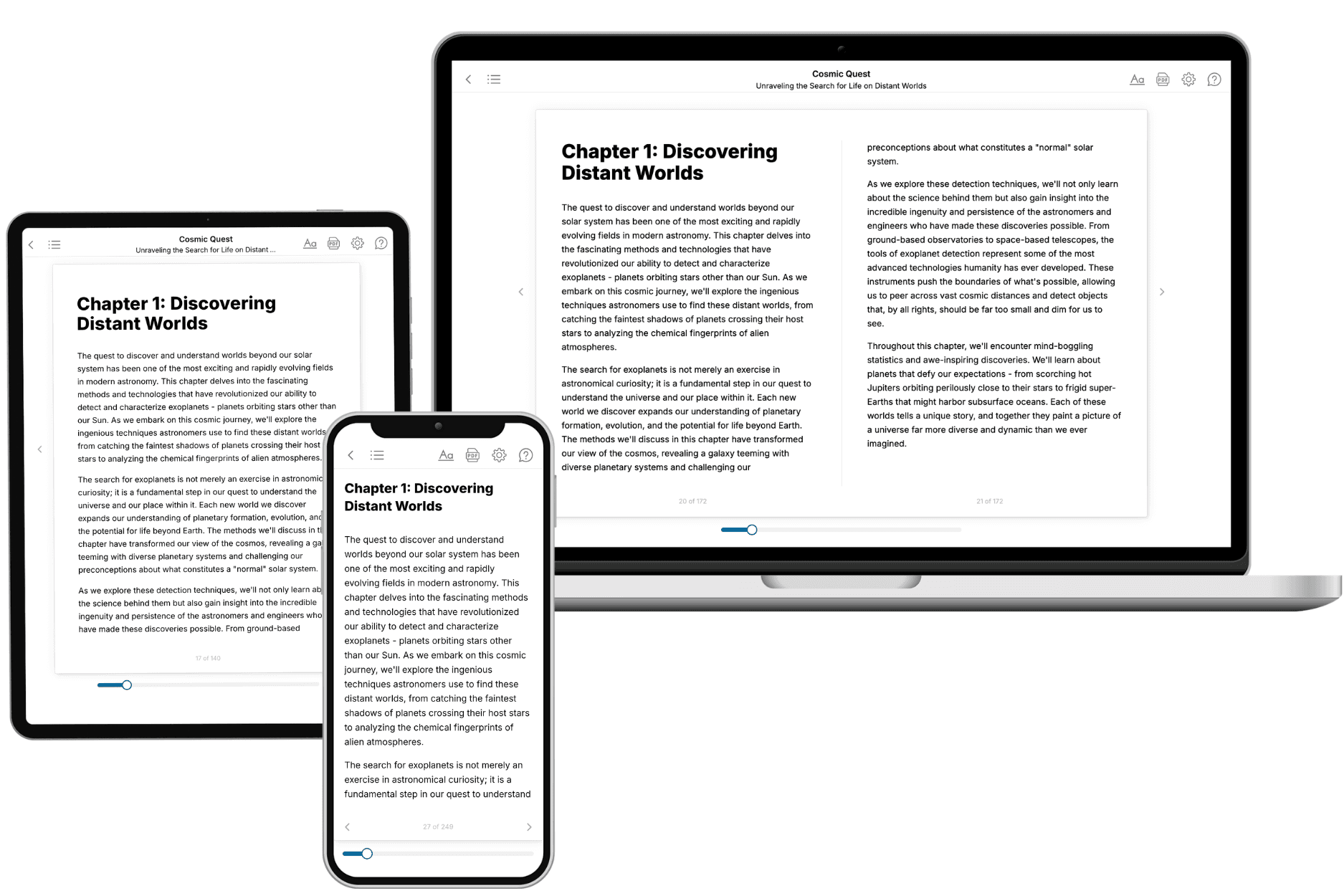
TailoredRead creates complete, full-length nonfiction ebooks, written specifically for you. Tell us what you want to learn and why, and TailoredRead writes you a complete ebook on it, with charts, tables, and diagrams throughout. Read it online, on Kindle, or on any e-reader, or download it as a PDF or EPUB. Every book is written fresh the day you order it.
- How is the book tailored to me?
Before anything is written, you answer a few short questions about your goals, your background, and the topics you care about. Your book is then planned around your answers: written at your level, focused on your goals, and covering the topics you chose, instead of the one-size-fits-all book a store sells everyone.
- Will it read like generic AI content?
No. Your book isn't a chat transcript: it's planned chapter by chapter before a single word is written, told in a clear book voice, and explains ideas visually with charts, tables, and diagrams. After writing, every book goes through an editorial pass that polishes chapters so the book reads consistent from start to finish. Judge for yourself: browse thousands of sample books on our Explore Books page.
- How accurate is the content?
Our AI first checks whether your subject needs live research. Niche and fast-moving subjects are researched before writing, and the book plan and chapters are grounded in what it finds. After writing, every book goes through a quality pass that checks its facts and consistency, and researched books list their sources in a Notes section at the back.
- How long is the book?
You choose the length: Comprehensive (250-300 pages), Detailed (150-200 pages), Essential (70-100 pages), or Short (30-50 pages).
- Does the book include visuals?
Yes. Every book includes charts, tables, and diagrams: timelines, checklists, step-by-step guides, decision trees, comparison tables, matrices, and bar charts. A typical book includes dozens of these visual elements.
- Can I read it on Kindle? What formats can I download?
Yes. Every book can be read in our online reader or downloaded as a PDF or EPUB. The EPUB can be opened with Kindle, Apple Books, Kobo, and any e-reader. The Commercial and Author licenses also include an editable Word (DOCX) and Markdown download.
- How much does it cost?
About the price of a regular ebook. The exact price depends on your book's length and complexity, from $2 for the shortest books to $35 for the most comprehensive, and it's shown when you review your book, before you commit to anything. Each book is a one-time purchase, yours to keep, no subscription. Licenses that let you share, teach, or publish your book range from $35.99 to $49.99.
- Can I preview the book before purchasing?
Before you pay, you'll see what your book will cover: the title, a detailed description, the estimated length, and the complete chapter-by-chapter table of contents, so you know what you're getting before you decide. The full text itself is written after you purchase.
- How long does it take to create a book?
About 10 minutes. You can start reading the opening chapters while the rest is still being written.