Sizzling Success
Mastering the Art of Chicken and Green Bean Stir-Fry
You've tried countless times to recreate that perfect chicken and green bean stir-fry from your favorite restaurant, but it always falls short.
269 pages13 chaptersFeb 15, 2025Chinese Cooking
About this book
The chicken is dry, the green beans are limp, and the flavors just don't pop. But what if you could unlock the secrets to creating restaurant-quality stir-fries right in your own kitchen? "Sizzling Success: Mastering the Art of Chicken and Green Bean Stir-Fry" is your ultimate guide to elevating this classic dish from mediocre to magnificent. You'll discover the precise techniques that chefs use to achieve that perfect balance of tender chicken, crisp vegetables, and bold flavors. From selecting the right ingredients to mastering the art of high-heat cooking, this book will equip you with the knowledge and skills to create stir-fries that will impress even the most discerning palates. By the time you finish this book, you'll have the confidence to experiment with flavors, create your own signature stir-fry dishes, and even adapt these techniques to other ingredients. Get ready to transform your weeknight dinners and wow your friends and family with your newfound culinary expertise. Your journey to becoming a stir-fry master starts here!
Table of contents
- IntroductionThe Basics of Stir-Frying, Why Chicken and Green Beans?, What You'll Learn in This Book, Essential Equipment for Stir-FryingRead below
- Chapter 1: Selecting the Perfect IngredientsChoosing the Right Cut of Chicken, Types of Green Beans and Their Characteristics, Essential Aromatics for Stir-Frying, Key Components of Stir-Fry Sauces
- Chapter 2: Mise en Place: The Key to Successful Stir-FryingPreparing Chicken for Stir-Frying, Trimming and Cutting Green Beans, Mincing and Slicing Aromatics, Pre-mixing Stir-Fry Sauces, Organizing Your Stir-Fry Workspace
- Chapter 3: Mastering Your Stir-Fry EquipmentTypes of Woks and Their Uses, Seasoning and Caring for Your Wok, Alternatives to Woks for Stir-Frying, Essential Utensils for Stir-Frying
- Chapter 4: The Art of High-Heat CookingUnderstanding Wok Hei, Managing Heat Levels During Stir-Frying, Timing and Sequencing Ingredients, Safety Precautions for High-Heat Cooking
- Chapter 5: Perfecting Chicken in Stir-FriesThe Art of Velveting Chicken, Marinating Techniques for Flavorful Chicken, Achieving the Perfect Doneness, Creating Different Textures with Chicken
- Chapter 6: Mastering Green Beans in Stir-FriesTo Blanch or Not to Blanch, Maintaining Crispness During Cooking, Maximizing Flavor Absorption, Exploring Different Cooking Methods for Green Beans
- Chapter 7: The Role of Aromatics and SpicesGarlic and Ginger: The Dynamic Duo, Onions, Scallions, and Shallots in Stir-Fries, Incorporating Dried Spices and Herbs, Adding Heat: Fresh and Dried Chilies
- Chapter 8: Crafting the Perfect Stir-Fry SauceBuilding a Flavorful Sauce Base, Thickening Agents and Their Uses, Balancing Sweet, Salty, Sour, and Umami, Classic Stir-Fry Sauce Variations
- Chapter 9: The Stir-Fry Process: Step by StepPreheating Your Wok or Pan, Selecting and Adding Oil, The Order of Adding Ingredients, Tossing and Stirring Techniques, Incorporating the Sauce
- Chapter 10: Chicken and Green Bean Stir-Fry VariationsRegional Chinese Stir-Fry Styles, Fusion Flavors from Around the World, Adding Other Vegetables to the Mix, Substituting Chicken with Other Proteins
- Chapter 11: Troubleshooting Common Stir-Fry ProblemsDealing with Soggy Vegetables, Preventing Dry or Overcooked Chicken, Fixing Sauce Consistency Issues, Avoiding Burnt or Bitter Flavors, Ensuring Even Cooking of All Ingredients
- Chapter 12: Plating and PresentationBasic Plating Techniques for Stir-Fries, Choosing and Applying Garnishes, Creating Visual Appeal through Color Balance, Accompaniments and Serving Suggestions
- Chapter 13: Health and Nutrition ConsiderationsControlling Calories in Stir-Fries, Maximizing Nutritional Benefits of Vegetables, Adapting Recipes for Different Dietary Needs, Portion Control and Balanced Meals
- ConclusionKey Takeaways for Stir-Fry Success, Continuing Your Stir-Fry Journey
- Glossary of Stir-Fry Terms
- Further Resources
Introduction
Welcome to the sizzling world of stir-frying, where the art of quick cooking meets the science of flavor development. As you embark on this culinary journey, you're about to discover the secrets behind creating restaurant-quality chicken and green bean stir-fries that will elevate your home cooking to new heights. This introduction will lay the foundation for your stir-fry mastery, covering the basics of this cooking technique, the reasons behind focusing on chicken and green beans, an overview of what you'll learn throughout this book, and the essential equipment you'll need to get started.
Stir-frying is more than just a cooking method; it's a gateway to a world of flavors, textures, and culinary creativity. By the end of this book, you'll have the confidence to create dishes that not only rival your favorite takeout but also express your unique culinary voice. Whether you're looking to expand your weeknight dinner repertoire, impress guests with your wok skills, or simply enjoy the process of cooking delicious, healthy meals, mastering the art of stir-frying will open up a world of possibilities in your kitchen.
The Basics of Stir-Frying
Stir-frying is a cooking technique that originated in China and has since spread throughout the world, becoming a cornerstone of many Asian cuisines. At its core, stir-frying involves cooking small, uniform pieces of food quickly over high heat while constantly stirring or tossing. This method not only cooks food rapidly but also imparts a unique flavor profile known as "wok hei" or "breath of the wok," which is characterized by a subtle smokiness and depth of flavor that's difficult to achieve with other cooking methods.
The key principles of stir-frying are rooted in both practicality and flavor enhancement. Historically, this technique developed as a way to cook food quickly while conserving fuel, which was often scarce. The high heat and constant movement ensure that ingredients cook evenly and retain their texture, color, and nutritional value. Vegetables remain crisp-tender, meats stay juicy, and flavors meld together in a harmonious blend that's greater than the sum of its parts.
One of the most critical aspects of successful stir-frying is preparation. The Chinese concept of "mise en place," which translates to "everything in its place," is particularly crucial in stir-frying. Because the cooking process happens so quickly, having all ingredients prepped and ready to go before you start cooking is essential. This includes cutting meats and vegetables, mixing sauces, and having all necessary utensils within arm's reach.
The order in which ingredients are added to the wok or pan is another fundamental principle of stir-frying. Generally, aromatics like garlic and ginger are cooked first to infuse the oil with flavor. Next, ingredients are added in order of their cooking time, with those requiring longer cooking going in first. This ensures that everything is cooked to perfection by the time the dish is complete.
Temperature control is another crucial skill in stir-frying. The ability to adjust heat quickly and maintain the right temperature throughout the cooking process is what separates a good stir-fry from a great one. Too low a temperature can result in soggy, steamed food, while too high a temperature can lead to burnt flavors and unevenly cooked ingredients.
Understanding the role of oil in stir-frying is also essential. The oil not only prevents food from sticking to the wok but also acts as a medium for heat transfer. Choosing the right oil with a high smoke point, such as peanut or vegetable oil, is crucial for achieving that coveted wok hei without imparting any burnt flavors to the dish.
As you progress through this book, you'll delve deeper into these principles and learn how to apply them specifically to chicken and green bean stir-fries. You'll discover how to select the best ingredients, prepare them properly, and cook them to perfection using techniques honed over centuries. By mastering these basics, you'll be well on your way to creating stir-fries that are not only delicious but also healthier and more economical than takeout options.
Why Chicken and Green Beans?
You might wonder why this book focuses specifically on chicken and green bean stir-fries. The combination of chicken and green beans in a stir-fry is not only delicious but also offers a perfect balance of flavors, textures, and nutritional benefits. This pairing serves as an excellent foundation for learning stir-fry techniques that can be applied to a wide range of ingredients.
Chicken is a versatile protein that readily absorbs flavors, making it an ideal canvas for experimenting with different marinades and sauces. Its mild taste allows the flavors of aromatics and seasonings to shine through without overpowering the dish. From a culinary perspective, chicken provides an excellent opportunity to learn about protein cookery in a wok. You'll discover techniques like velveting, which involves pre-coating the chicken in a mixture of cornstarch and egg white to create a tender, silky texture that's characteristic of many Chinese stir-fries.
Green beans, on the other hand, offer a crisp texture and vibrant color that contrast beautifully with the tender chicken. They retain their shape and crunch when properly stir-fried, providing a satisfying bite that complements the softer texture of the chicken. Green beans also have a mild, slightly sweet flavor that pairs well with a variety of sauces and seasonings, making them an excellent vegetable for learning how to balance flavors in a stir-fry.
From a nutritional standpoint, the combination of chicken and green beans creates a well-balanced meal. Chicken provides lean protein essential for muscle building and repair, while green beans offer fiber, vitamins, and minerals. This pairing allows you to create dishes that are not only tasty but also nutritious and satisfying.
Moreover, chicken and green beans are readily available in most grocery stores year-round, making this stir-fry combination accessible to cooks regardless of location or season. This accessibility ensures that you can practice your stir-fry skills regularly without having to source hard-to-find ingredients.
By focusing on this specific combination, you'll learn techniques that can be easily adapted to other proteins and vegetables. The skills you develop in perfecting chicken and green bean stir-fries will serve as a solid foundation for exploring more complex stir-fry dishes in the future. Whether you're substituting beef for chicken or snow peas for green beans, the principles you learn will remain the same, allowing you to create countless variations with confidence.
As you progress through this book, you'll discover that mastering chicken and green bean stir-fries is about more than just cooking these two ingredients together. It's about understanding the interplay of textures, the balance of flavors, and the timing required to bring out the best in each component. You'll learn how to create marinades that enhance the chicken's natural flavors, how to achieve the perfect doneness for both the meat and the vegetables, and how to craft sauces that tie everything together into a cohesive, delicious dish.
By the end of your journey through this book, you'll have gained a deep understanding of not just how to cook chicken and green beans in a wok, but how to approach stir-frying as a whole. This focused approach will give you the confidence to experiment with different ingredients, flavors, and techniques, ultimately making you a more versatile and skilled cook in the kitchen.
What You'll Learn in This Book
This book is designed to take you on a comprehensive journey through the art of stir-frying, with a specific focus on mastering chicken and green bean dishes. By the time you reach the final page, you'll have acquired a wealth of knowledge and skills that will transform your approach to cooking, not just stir-fries, but a wide range of dishes. Let's take a closer look at the key areas you'll explore and the skills you'll develop throughout this culinary adventure.
First and foremost, you'll gain a deep understanding of ingredient selection and preparation. You'll learn how to choose the best cuts of chicken for stir-frying, understanding the differences between breast meat and thigh meat, and how each behaves in the wok. You'll discover the various types of green beans available and how to select the freshest ones for optimal flavor and texture. Beyond the main ingredients, you'll explore the world of aromatics, learning how garlic, ginger, and various types of onions can elevate your stir-fries to new heights.
The concept of mise en place will become second nature to you as you learn the importance of proper preparation in stir-frying. You'll master techniques for cutting chicken to ensure even cooking, trimming and cutting green beans for the perfect bite, and organizing your workspace for efficient cooking. This preparation extends to sauce-making as well, where you'll learn to pre-mix stir-fry sauces that balance sweet, salty, sour, and umami flavors.
Equipment plays a crucial role in stir-frying, and this book will guide you through selecting and using the right tools for the job. You'll learn about different types of woks and their uses, how to season and care for your wok to develop a natural non-stick surface, and alternatives to woks for those without access to traditional equipment. Understanding how to use these tools effectively will significantly impact the quality of your stir-fries.
One of the most critical skills you'll develop is heat management. You'll learn the art of high-heat cooking, understanding how to achieve and maintain the right temperature throughout the stir-frying process. This includes mastering the concept of "wok hei" or "breath of the wok," that elusive smoky flavor that sets great stir-fries apart. You'll also learn how to time and sequence the addition of ingredients to ensure everything is cooked to perfection.
Specific techniques for cooking chicken in stir-fries will be covered in depth. You'll explore the art of velveting, a technique that results in incredibly tender and moist chicken. Various marinating methods will be discussed, allowing you to infuse your chicken with a variety of flavors before it even hits the wok. You'll also learn how to achieve different textures with chicken, from silky smooth to crispy and caramelized.
When it comes to green beans, you'll discover techniques for maintaining their crispness and vibrant color while ensuring they're cooked through. You'll learn when and how to blanch green beans before stir-frying, and how to maximize their flavor absorption. Different cooking methods for green beans will be explored, allowing you to create a variety of textures and flavors in your dishes.
The role of aromatics and spices in stir-frying will be a key focus, teaching you how to layer flavors and create depth in your dishes. You'll learn how to incorporate dried spices and herbs, as well as fresh chilies, to add heat and complexity to your stir-fries. Understanding how these elements interact with the main ingredients will allow you to create more nuanced and flavorful dishes.
Sauce-making is an art in itself, and you'll become proficient in crafting the perfect stir-fry sauces. From building a flavorful base to understanding thickening agents and balancing flavors, you'll learn to create sauces that complement and enhance your chicken and green bean stir-fries. You'll also explore classic stir-fry sauce variations, giving you a repertoire of options to keep your meals exciting and diverse.
The book will take you through the entire stir-fry process step by step, from preheating your wok to the final toss of ingredients with sauce. You'll learn proper techniques for adding oil, the correct order of adding ingredients, and methods for tossing and stirring that ensure even cooking and optimal flavor development.
To expand your culinary horizons, you'll explore variations on the classic chicken and green bean stir-fry. This includes regional Chinese styles, fusion flavors from around the world, and ways to incorporate other vegetables or substitute different proteins. This knowledge will allow you to adapt the basic techniques you've learned to create a wide variety of dishes.
No cooking guide would be complete without addressing common problems, and this book is no exception. You'll learn how to troubleshoot issues like soggy vegetables, dry chicken, sauce consistency problems, and uneven cooking. These problem-solving skills will make you a more confident and adaptable cook.
Finally, you'll delve into the art of plating and presentation, learning how to make your stir-fries as visually appealing as they are delicious. From basic plating techniques to choosing appropriate garnishes and creating color balance, you'll discover how to present your dishes in a way that's sure to impress.
By the end of this book, you'll have transformed from a novice to a confident stir-fry chef, armed with the knowledge and skills to create delicious, healthy, and impressive chicken and green bean stir-fries. More importantly, you'll have gained a solid foundation in stir-frying techniques that you can apply to a wide range of ingredients and cuisines, opening up a world of culinary possibilities in your kitchen.
Essential Equipment for Stir-Frying
Before you embark on your stir-frying journey, it's crucial to equip your kitchen with the right tools. While it's possible to create delicious stir-fries with basic kitchen equipment, having the proper utensils can significantly enhance your cooking experience and the quality of your dishes. This section will guide you through the essential equipment needed for stir-frying, explaining the importance of each item and offering suggestions for alternatives where applicable.
The cornerstone of any stir-fry setup is, of course, the wok. Traditional woks are round-bottomed and made of carbon steel, which heats quickly and evenly. The round bottom allows for easy tossing of ingredients and creates different heat zones within the wok. For home cooks using Western-style stoves, a flat-bottomed wok is often more practical as it sits securely on the burner. When choosing a wok, look for one that's 14 inches in diameter, which provides ample space for ingredients to cook without overcrowding. If a wok isn't available, a large, heavy-bottomed skillet can serve as a suitable alternative, though it may not provide the same heat distribution and tossing capabilities[1].
A wok spatula, also known as a chuan, is another essential tool. Its long handle keeps your hand away from the intense heat of the wok, while its slightly curved edge is designed to conform to the shape of the wok, making it easy to toss and stir ingredients. A wooden or bamboo spatula is a good alternative, as it won't scratch the surface of your wok or pan.
For those using a round-bottomed wok on a flat stovetop, a wok ring is necessary. This metal ring sits on the burner and cradles the wok, providing stability and allowing proper heat distribution. Without a wok ring, a round-bottomed wok will be unstable and won't heat evenly on a flat surface.
A pair of long cooking chopsticks is invaluable for stir-frying. These extra-long chopsticks allow you to easily manipulate individual pieces of food in the wok, which is particularly useful when you're cooking meat and want to ensure even browning. They're also great for tossing ingredients quickly and efficiently. If you're not comfortable using chopsticks, a pair of long-handled tongs can serve a similar purpose.
A sharp chef's knife is essential for preparing ingredients for stir-frying. You'll need to cut meats and vegetables into uniform pieces to ensure even cooking. A Chinese cleaver, while not strictly necessary, can be a versatile tool for chopping, slicing, and even transferring ingredients to the wok.
A fine-mesh strainer or spider skimmer is useful for removing items from hot oil when velveting meat or blanching vegetables. It allows you to quickly scoop out ingredients while leaving the oil or water behind. This tool is particularly helpful when you're preparing ingredients in batches.
When it comes to measuring ingredients, a set of measuring spoons and cups is indispensable. Stir-fry sauces often require precise measurements to achieve the right balance of flavors. As you become more experienced, you may find yourself eyeballing quantities, but for beginners, accurate measurements are key to consistent results.
Small bowls for organizing your mise en place are crucial. Having all your ingredients prepped and within reach is essential for successful stir-frying, as the cooking process happens quickly. A set of various sized bowls allows you to have everything ready and organized before you start cooking.
A kitchen scale can be very helpful, especially when following recipes that provide ingredient quantities by weight. This is particularly useful for meat and vegetables, ensuring you have the right proportions for balanced stir-fries.
While not strictly necessary, a wok lid can be useful for certain stir-fry techniques, particularly when you need to steam ingredients briefly or keep food warm. A large, domed lid that fits your wok or skillet will suffice.
Lastly, don't forget about safety equipment. A pair of heat-resistant gloves can protect your hands when handling the hot wok, and a fire extinguisher should always be kept in the kitchen, especially when cooking with high heat.
Remember, while having the right equipment can make stir-frying easier and more enjoyable, it's not about having every gadget available. Start with the basics - a good wok or skillet, a spatula, and a sharp knife - and build your collection as you become more comfortable with stir-frying techniques. The most important tools are your enthusiasm and willingness to learn. With practice, you'll soon be creating delicious chicken and green bean stir-fries with confidence, regardless of the equipment you have on hand.
Notes
Introduction
- 1. Grace Young, The Breath of a Wok, Simon and Schuster, 2004
This is the end of the free sample. The full book has 13 chapters.
Want this book written for you?
Tell us your goals and background, and get your own version of this book, tailored by AI to you.


Benefits of AI-tailored books
- Read one book, not ten:
- all the Chinese Cooking knowledge you need, gathered into a single book.
- Save days of learning:
- tell us your goals, choose your topics, and the whole book is built around them.
- Learn effortlessly:
- Chinese Cooking book written for your specific background and expertise.
- Understand at a glance:
- includes charts, tables, timelines, checklists, decision trees, and more.
- Stay current:
- written the day you order it, not years ago.
- Trust what you read:
- every book is checked for accuracy, with real research when your subject needs it.
Create your unique book in 3 steps
- 1. Select your focus
Select the focus of your Chinese Cooking book and share your background
- 2. Personalize your book
Specify your goals and choose sub-topics to include
- 3. Get your tailored book
Your book is ready in 10 minutes. Read it online, download as EPUB or PDF, or send to Kindle.


Frequently asked questions
- What is TailoredRead?
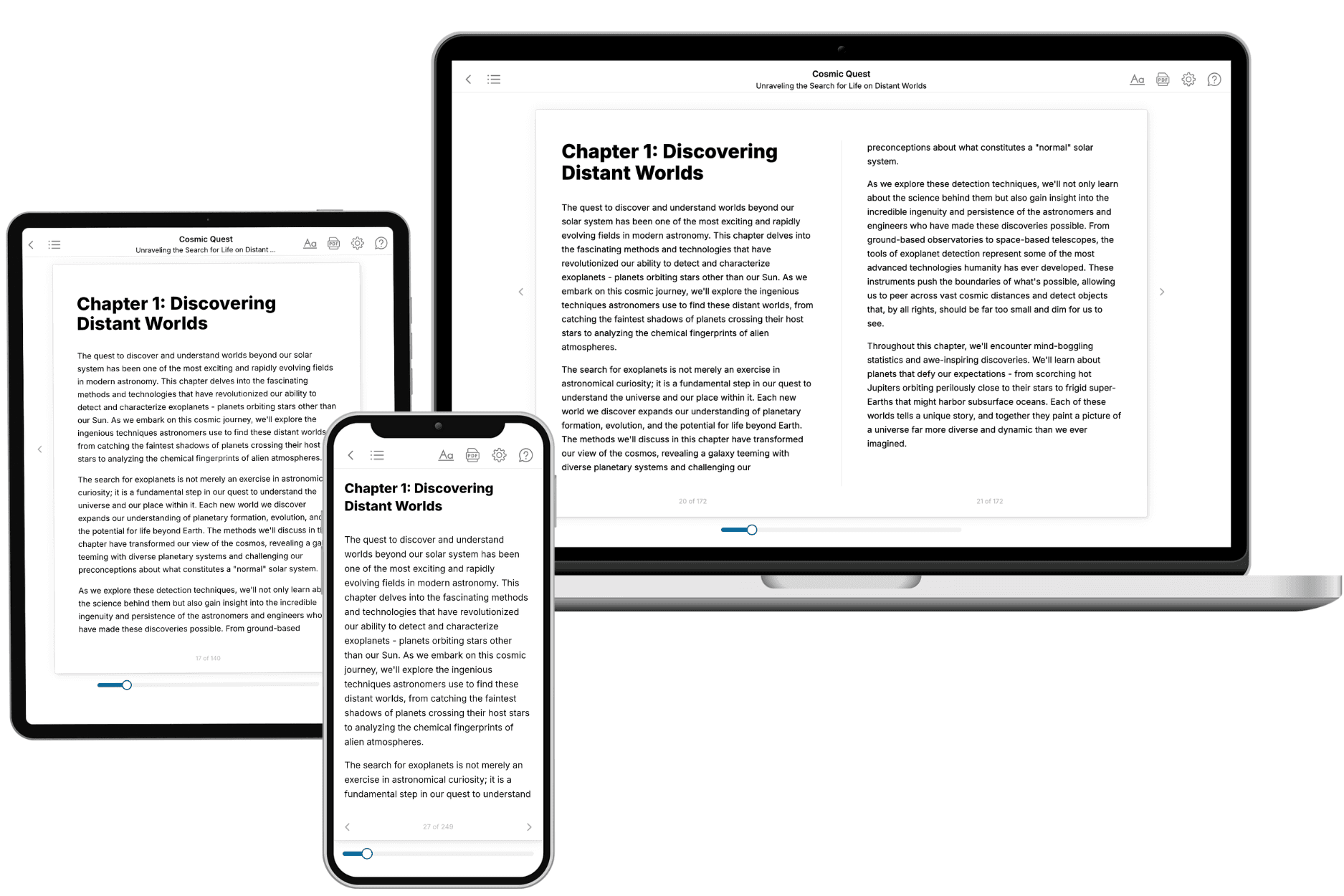
TailoredRead creates complete, full-length nonfiction ebooks, written specifically for you. Tell us what you want to learn and why, and TailoredRead writes you a complete ebook on it, with charts, tables, and diagrams throughout. Read it online, on Kindle, or on any e-reader, or download it as a PDF or EPUB. Every book is written fresh the day you order it.
- How is the book tailored to me?
Before anything is written, you answer a few short questions about your goals, your background, and the topics you care about. Your book is then planned around your answers: written at your level, focused on your goals, and covering the topics you chose, instead of the one-size-fits-all book a store sells everyone.
- Will it read like generic AI content?
No. Your book isn't a chat transcript: it's planned chapter by chapter before a single word is written, told in a clear book voice, and explains ideas visually with charts, tables, and diagrams. After writing, every book goes through an editorial pass that polishes chapters so the book reads consistent from start to finish. Judge for yourself: browse thousands of sample books on our Explore Books page.
- How accurate is the content?
Our AI first checks whether your subject needs live research. Niche and fast-moving subjects are researched before writing, and the book plan and chapters are grounded in what it finds. After writing, every book goes through a quality pass that checks its facts and consistency, and researched books list their sources in a Notes section at the back.
- How long is the book?
You choose the length: Comprehensive (250-300 pages), Detailed (150-200 pages), Essential (70-100 pages), or Short (30-50 pages).
- Does the book include visuals?
Yes. Every book includes charts, tables, and diagrams: timelines, checklists, step-by-step guides, decision trees, comparison tables, matrices, and bar charts. A typical book includes dozens of these visual elements.
- Can I read it on Kindle? What formats can I download?
Yes. Every book can be read in our online reader or downloaded as a PDF or EPUB. The EPUB can be opened with Kindle, Apple Books, Kobo, and any e-reader. The Commercial and Author licenses also include an editable Word (DOCX) and Markdown download.
- How much does it cost?
About the price of a regular ebook. The exact price depends on your book's length and complexity, from $2 for the shortest books to $35 for the most comprehensive, and it's shown when you review your book, before you commit to anything. Each book is a one-time purchase, yours to keep, no subscription. Licenses that let you share, teach, or publish your book range from $35.99 to $49.99.
- Can I preview the book before purchasing?
Before you pay, you'll see what your book will cover: the title, a detailed description, the estimated length, and the complete chapter-by-chapter table of contents, so you know what you're getting before you decide. The full text itself is written after you purchase.
- How long does it take to create a book?
About 10 minutes. You can start reading the opening chapters while the rest is still being written.