Code Harmony
Mastering the Liskov Substitution Principle for Robust Software Design
You've been writing object-oriented code for a while, but something still feels off.
269 pages13 chaptersEnglishDec 18, 2024Software Development
About this book
Your classes inherit properly, your methods override correctly, yet your software remains brittle and prone to unexpected bugs. What if the key to unlocking truly robust and flexible code has been hiding in plain sight? Code Harmony: Mastering the Liskov Substitution Principle for Robust Software Design is your guide to one of the most powerful yet often misunderstood principles in object-oriented programming. This book demystifies the Liskov Substitution Principle (LSP), showing you how to leverage it to create more maintainable, extensible, and reliable software systems. Through practical examples and real-world scenarios, you'll discover how to apply the LSP to solve common design challenges and avoid subtle pitfalls that can undermine your codebase. You'll learn to think in terms of contracts and behaviors, ensuring that your class hierarchies are not just syntactically correct, but semantically sound. By the end of this book, you'll have a deep understanding of how the Liskov Substitution Principle fits into the broader context of SOLID principles and clean architecture. You'll be equipped with the knowledge and techniques to design software that's not just functional, but truly harmonious – where every piece fits together seamlessly, creating systems that are a joy to work with and easy to evolve.
Table of contents
- IntroductionThe Importance of the Liskov Substitution Principle, Book Overview and How to Use It, Prerequisites and AssumptionsRead below
- Chapter 1: Foundations of Object-Oriented ProgrammingKey OOP Concepts Revisited, Inheritance and Polymorphism, Interfaces and Abstractions, Introduction to Design Principles
- Chapter 2: Introducing the Liskov Substitution PrincipleDefining LSP, Barbara Liskov and the Origin of LSP, Why LSP Matters in Software Design, LSP in the Context of SOLID Principles
- Chapter 3: Understanding Subtypes and SupertypesWhat is a Subtype?, Behavioral Subtyping, The 'Is-A' Relationship, Subtype Polymorphism
- Chapter 4: Recognizing LSP ViolationsCommon LSP Violations, Preconditions and Postconditions, Invariants and Their Importance, Exception Handling and LSP
- Chapter 5: Design by Contract and LSPIntroduction to Design by Contract, Contracts and Their Relation to LSP, Implementing Contracts in Code, Contract Inheritance and LSP
- Chapter 6: LSP in Practice: Real-World ExamplesThe Classic Shape Hierarchy, Collection Classes and LSP, File I/O and LSP Compliance, UI Components and Substitutability
- Chapter 7: LSP and Design PatternsTemplate Method Pattern and LSP, Strategy Pattern: A Friend of LSP, Factory Patterns and Substitutability, Decorator Pattern and LSP Compliance
- Chapter 8: Testing for LSP ComplianceUnit Testing and LSP, Property-Based Testing for Behavioral Subtyping, Writing Contract Tests, Test Doubles and LSP
- Chapter 9: Refactoring Towards LSP ComplianceIdentifying LSP Violations in Existing Code, Refactoring Techniques for LSP Compliance, Interface Segregation and LSP, Favoring Composition Over Inheritance
- Chapter 10: LSP and Software ArchitectureLSP in Layered Architecture, Microservices and LSP, Plugin Architectures and Substitutability, API Design with LSP in Mind
- Chapter 11: LSP Across Different Programming LanguagesLSP in Java, LSP in C#, LSP in Python, LSP in TypeScript
- Chapter 12: Challenges and Limitations of LSPLSP Trade-offs and Considerations, Performance Implications of Strict LSP Adherence, Balancing LSP with Code Complexity, LSP in the Real World: When to Break the Rules
- Chapter 13: The Future of LSP and Object-Oriented DesignLSP in Functional Programming Paradigms, LSP and AI-Assisted Coding, Evolving OOP and Its Impact on LSP, Future Research Directions in Substitutability
- ConclusionRecap of Key LSP Concepts, Applying LSP in Your Daily Coding Practice, Continuous Learning and Improvement
- AppendixLSP Cheat Sheet, Common LSP Pitfalls and How to Avoid Them
- Glossary
Introduction
Welcome to "Code Harmony: Mastering the Liskov Substitution Principle for Robust Software Design." As you embark on this journey to deepen your understanding of advanced design principles in object-oriented programming, you're about to discover the profound impact that the Liskov Substitution Principle (LSP) can have on your software development practices. This introduction will set the stage for your exploration of LSP, providing you with a solid foundation to build upon as you progress through the book.
The world of software development is constantly evolving, with new technologies and methodologies emerging at a rapid pace. However, amidst this ever-changing landscape, certain fundamental principles remain steadfast, guiding developers towards creating more robust, flexible, and maintainable code. The Liskov Substitution Principle, named after computer scientist Barbara Liskov, is one such principle that has stood the test of time and continues to be a cornerstone of effective object-oriented design.
As an intermediate software developer with experience in object-oriented programming, you've likely encountered situations where your code, despite adhering to basic OOP concepts, still feels brittle or prone to unexpected behavior. You may have found yourself questioning why certain design choices lead to cascading bugs or why seemingly minor changes can have far-reaching consequences throughout your codebase. The Liskov Substitution Principle offers insights and solutions to these common challenges, providing a powerful framework for creating more harmonious and resilient software systems.
Throughout this book, you'll delve deep into the intricacies of LSP, moving beyond surface-level understanding to grasp its profound implications for software design and architecture. You'll learn how to apply LSP not just as a theoretical concept, but as a practical tool that can transform the way you approach inheritance, polymorphism, and the relationships between classes in your software projects.
By mastering the Liskov Substitution Principle, you'll gain the ability to create code that's not only functionally correct but also inherently more flexible and easier to maintain. You'll develop a keen eye for identifying subtle violations of LSP and learn techniques to refactor existing code to bring it into compliance. Moreover, you'll discover how LSP interacts with other SOLID principles and design patterns, giving you a holistic view of modern software architecture best practices.
The Importance of the Liskov Substitution Principle
The Liskov Substitution Principle is far more than just another rule to memorize or a box to check in your development process. It represents a fundamental shift in how you think about object-oriented design and the relationships between classes. At its core, LSP states that objects of a superclass should be replaceable with objects of its subclasses without affecting the correctness of the program. This simple yet powerful concept has far-reaching implications for the design and structure of your software.
One of the primary reasons LSP is so crucial is its role in ensuring the reliability and predictability of your code. When you adhere to LSP, you create a contract between classes that guarantees consistent behavior, regardless of which specific subclass is being used. This consistency is the bedrock of robust software systems, allowing you to build upon and extend your code with confidence. Without LSP, you risk introducing subtle bugs and inconsistencies that can be incredibly difficult to track down and resolve, especially as your codebase grows in size and complexity.
Consider, for example, a scenario where you have a base class representing a shape, with subclasses for specific shapes like rectangles and squares. Without proper adherence to LSP, you might find that code that works perfectly with rectangles suddenly breaks when used with squares, despite squares being a type of rectangle in the mathematical sense. This kind of unexpected behavior is exactly what LSP helps you avoid, ensuring that your class hierarchies are not just syntactically correct, but semantically sound as well.
Furthermore, LSP plays a crucial role in promoting code reusability and modularity. When your classes and interfaces are designed with LSP in mind, they become more interchangeable and composable. This flexibility allows you to create more modular systems where components can be easily swapped out or extended without causing ripple effects throughout the codebase. As a result, your software becomes more adaptable to changing requirements and easier to maintain over time.
The importance of LSP also extends to the realm of testing and quality assurance. When your code adheres to LSP, it becomes inherently more testable. You can write tests at a higher level of abstraction, confident that they will hold true for all subclasses. This not only simplifies your testing process but also makes your tests more robust and less prone to breaking as you refactor or extend your code.
Moreover, LSP serves as a powerful design tool that can help you uncover and address deeper architectural issues in your software. Violations of LSP often point to fundamental flaws in how classes and interfaces are structured. By paying attention to these violations and working to resolve them, you'll naturally gravitate towards cleaner, more logical designs that better represent the problem domain you're working in.
As you progress in your software development career, you'll find that understanding and applying LSP becomes increasingly valuable. It's a principle that separates merely functional code from truly well-designed systems. By mastering LSP, you'll be better equipped to create software that's not only correct but also flexible, maintainable, and scalable. These qualities are increasingly important in today's fast-paced development environment, where codebases need to evolve rapidly to meet changing business needs.
In the chapters that follow, you'll explore LSP in depth, learning how to recognize violations, refactor code to adhere to the principle, and design new systems with LSP in mind from the ground up. You'll see how LSP interacts with other design principles and patterns, and how it can be applied across different programming languages and paradigms. By the end of this journey, you'll have a comprehensive understanding of LSP that will elevate your software design skills to new heights.
Remember, the goal is not just to write code that works, but to create software systems that stand the test of time, adapt to change, and provide a solid foundation for future development. The Liskov Substitution Principle is a key tool in achieving this goal, and mastering it will make you a more effective and valuable software developer.
Book Overview and How to Use It
"Code Harmony: Mastering the Liskov Substitution Principle for Robust Software Design" is structured to provide you with a comprehensive understanding of LSP, starting from the foundational concepts and progressing to advanced applications and real-world scenarios. This book is designed to be both a learning tool and a reference guide, allowing you to dive deep into specific topics or get a broad overview of LSP's role in software design.
The book is divided into several key sections, each building upon the previous to create a cohesive learning experience. Here's an overview of what you can expect from each part of the book:
1. Foundations of Object-Oriented Programming: This section revisits key OOP concepts, ensuring you have a solid grasp of the fundamentals before diving into LSP. It covers inheritance, polymorphism, interfaces, and abstractions, providing a refresher and potentially introducing new perspectives on these core concepts.
2. Introducing the Liskov Substitution Principle: Here, you'll get a formal introduction to LSP, including its definition, origins, and importance in software design. This section also places LSP in the context of the broader SOLID principles, helping you understand how it fits into the larger picture of object-oriented design.
3. Understanding Subtypes and Supertypes: This crucial section delves into the concept of behavioral subtyping, which is at the heart of LSP. You'll learn about the 'is-a' relationship and how it relates to subtype polymorphism, providing the theoretical foundation for applying LSP in practice.
4. Recognizing LSP Violations: One of the most valuable skills in applying LSP is the ability to identify when it's being violated. This section covers common LSP violations, the importance of preconditions and postconditions, invariants, and how exception handling relates to LSP.
5. Design by Contract and LSP: Here, you'll explore the powerful technique of Design by Contract and how it relates to ensuring LSP compliance. You'll learn how to implement contracts in code and how contract inheritance interacts with LSP.
6. LSP in Practice: Real-World Examples: This section brings theory into practice with concrete examples of LSP application in various domains, including shape hierarchies, collection classes, file I/O, and UI components.
7. LSP and Design Patterns: You'll discover how LSP interacts with common design patterns, including Template Method, Strategy, Factory, and Decorator patterns. This knowledge will help you apply LSP more effectively in complex software architectures.
8. Testing for LSP Compliance: Learn how to verify LSP compliance through various testing techniques, including unit testing, property-based testing, contract tests, and the use of test doubles.
9. Refactoring Towards LSP Compliance: This practical section provides techniques for identifying LSP violations in existing code and refactoring to bring it into compliance. It also covers related concepts like interface segregation and favoring composition over inheritance.
10. LSP and Software Architecture: Explore how LSP impacts higher-level architectural decisions, including its role in layered architectures, microservices, plugin architectures, and API design.
11. LSP Across Different Programming Languages: See how LSP is applied in various popular programming languages, including Java, C#, Python, and TypeScript, understanding the nuances and language-specific considerations.
12. Challenges and Limitations of LSP: No principle is without its trade-offs. This section discusses the challenges of applying LSP, including performance implications and balancing LSP with code complexity.
13. The Future of LSP and Object-Oriented Design: Look ahead to how LSP might evolve, including its application in functional programming paradigms, its role in AI-assisted coding, and future research directions in substitutability.
To get the most out of this book, it's recommended that you read it sequentially, as each chapter builds upon the concepts introduced in previous ones. However, each chapter is also designed to stand alone to some extent, allowing you to focus on specific areas of interest or revisit particular topics as needed.
Throughout the book, you'll find numerous code examples, case studies, and practical exercises. It's highly encouraged that you work through these examples, experimenting with the code and trying out variations. The more you engage with the material hands-on, the better you'll internalize the principles of LSP.
Don't hesitate to revisit earlier chapters as you progress. Often, the later, more advanced topics will shed new light on the foundational concepts, deepening your understanding. Keep this book handy as a reference as you work on your own projects, using it to guide your design decisions and troubleshoot issues related to class hierarchies and object substitutability.
Remember, mastering LSP is not just about understanding the theory but about developing an intuition for good object-oriented design. As you work through this book, try to apply the principles to your own code and projects. Look for opportunities to refactor existing code or design new systems with LSP in mind. The more you practice, the more natural these principles will become, and the more powerful a tool LSP will be in your software development toolkit.
Prerequisites and Assumptions
"Code Harmony: Mastering the Liskov Substitution Principle for Robust Software Design" is written with a specific reader in mind: a software developer with intermediate experience in object-oriented programming. While the book aims to be as accessible as possible, there are certain prerequisites and assumptions about your background knowledge that will help you get the most out of this material.
First and foremost, it's assumed that you have a solid grasp of fundamental programming concepts. This includes understanding variables, control structures (if statements, loops), functions, and basic data structures. You should be comfortable reading and writing code in at least one object-oriented programming language.
In terms of object-oriented programming specifically, you should have experience with the following concepts:
- Classes and Objects: You should understand the difference between a class (the blueprint) and an object (an instance of a class). You should be comfortable creating classes, instantiating objects, and working with object properties and methods.
- Inheritance: You should have experience creating class hierarchies using inheritance. This includes understanding how subclasses inherit properties and methods from their parent classes, and how to override methods in subclasses.
- Polymorphism: You should be familiar with the concept of polymorphism, both in terms of method overriding and the ability to treat objects of different classes that share a common superclass in a uniform manner.
- Encapsulation: You should understand the principle of encapsulation and how it's typically implemented using access modifiers (public, private, protected) in object-oriented languages.
- Interfaces and Abstract Classes: While not required, familiarity with interfaces and abstract classes will be beneficial, as these concepts are closely related to LSP.
In addition to these OOP basics, it's helpful if you have some exposure to software design principles and patterns. While the book will cover these topics as they relate to LSP, prior knowledge will allow for a deeper understanding. Familiarity with concepts like SOLID principles, design patterns, and software architecture will be advantageous but is not strictly necessary.
From a practical standpoint, you should have experience working on software projects beyond simple tutorials or academic exercises. Real-world coding experience will help you appreciate the challenges that LSP addresses and understand the context in which it's applied. If you've encountered issues related to inheritance hierarchies, unexpected behavior in subclasses, or difficulties in extending existing code, you'll find the material in this book particularly relevant.
While the book uses examples from various programming languages to illustrate concepts, a deep knowledge of any specific language is not required. The principles of LSP are language-agnostic, and the focus is on the underlying concepts rather than language-specific implementations. However, familiarity with at least one object-oriented language (such as Java, C#, Python, or C++) will make it easier to follow the examples and apply the concepts to your own work.
It's also assumed that you have a basic understanding of software testing concepts. While the book will cover testing as it relates to LSP, familiarity with unit testing, test-driven development, or other testing methodologies will be helpful.
If you find that you're lacking in any of these areas, don't be discouraged. The book includes refreshers on key concepts and provides resources for further learning. However, you may find it beneficial to brush up on basic OOP concepts before diving into the more advanced topics covered in later chapters.
Lastly, it's important to approach this material with an open mind and a willingness to challenge existing assumptions about object-oriented design. LSP often requires rethinking common practices and can sometimes feel counterintuitive at first. A curious and analytical mindset will serve you well as you explore these concepts.
Remember, the goal of this book is not just to teach you about LSP in isolation, but to help you become a better software designer overall. As such, you'll get the most benefit if you're ready to think critically about software design, question existing practices, and apply new concepts to real-world problems.
With these prerequisites in mind, you're well-prepared to embark on this journey of mastering the Liskov Substitution Principle. The concepts you'll learn will not only deepen your understanding of object-oriented programming but will also equip you with powerful tools to create more robust, flexible, and maintainable software systems.
This is the end of the free sample. The full book has 13 chapters.
Want this book written for you?
Tell us your goals and background, and get your own version of this book, tailored by AI to you.


Benefits of AI-tailored books
- Read one book, not ten:
- all the Software Development knowledge you need, gathered into a single book.
- Save days of learning:
- tell us your goals, choose your topics, and the whole book is built around them.
- Learn effortlessly:
- Software Development book written for your specific background and expertise.
- Understand at a glance:
- includes charts, tables, timelines, checklists, decision trees, and more.
- Stay current:
- written the day you order it, not years ago.
- Trust what you read:
- every book is checked for accuracy, with real research when your subject needs it.
Create your unique book in 3 steps
- 1. Select your focus
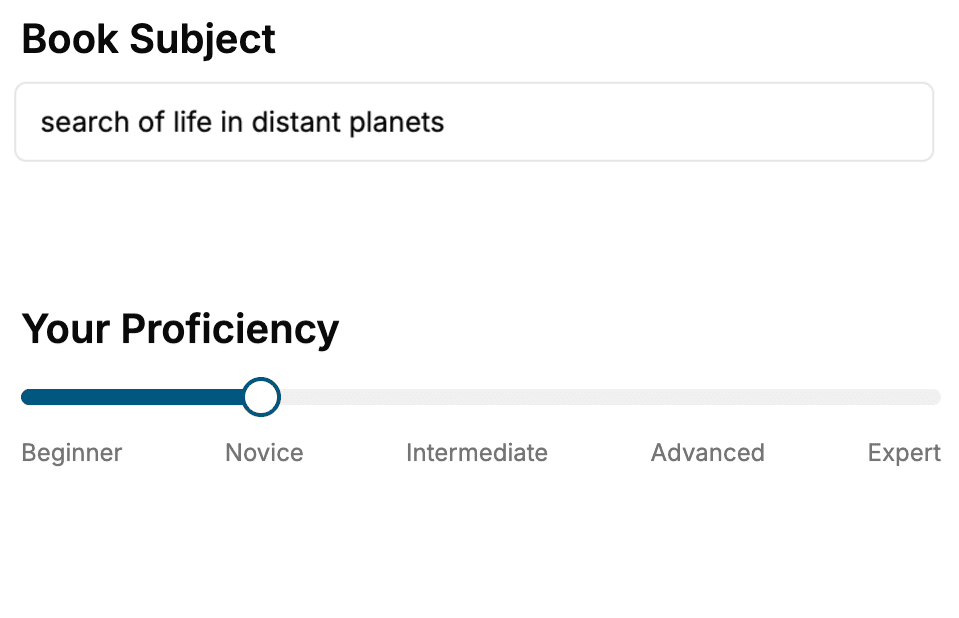
Select the focus of your Software Development book and share your background
- 2. Personalize your book
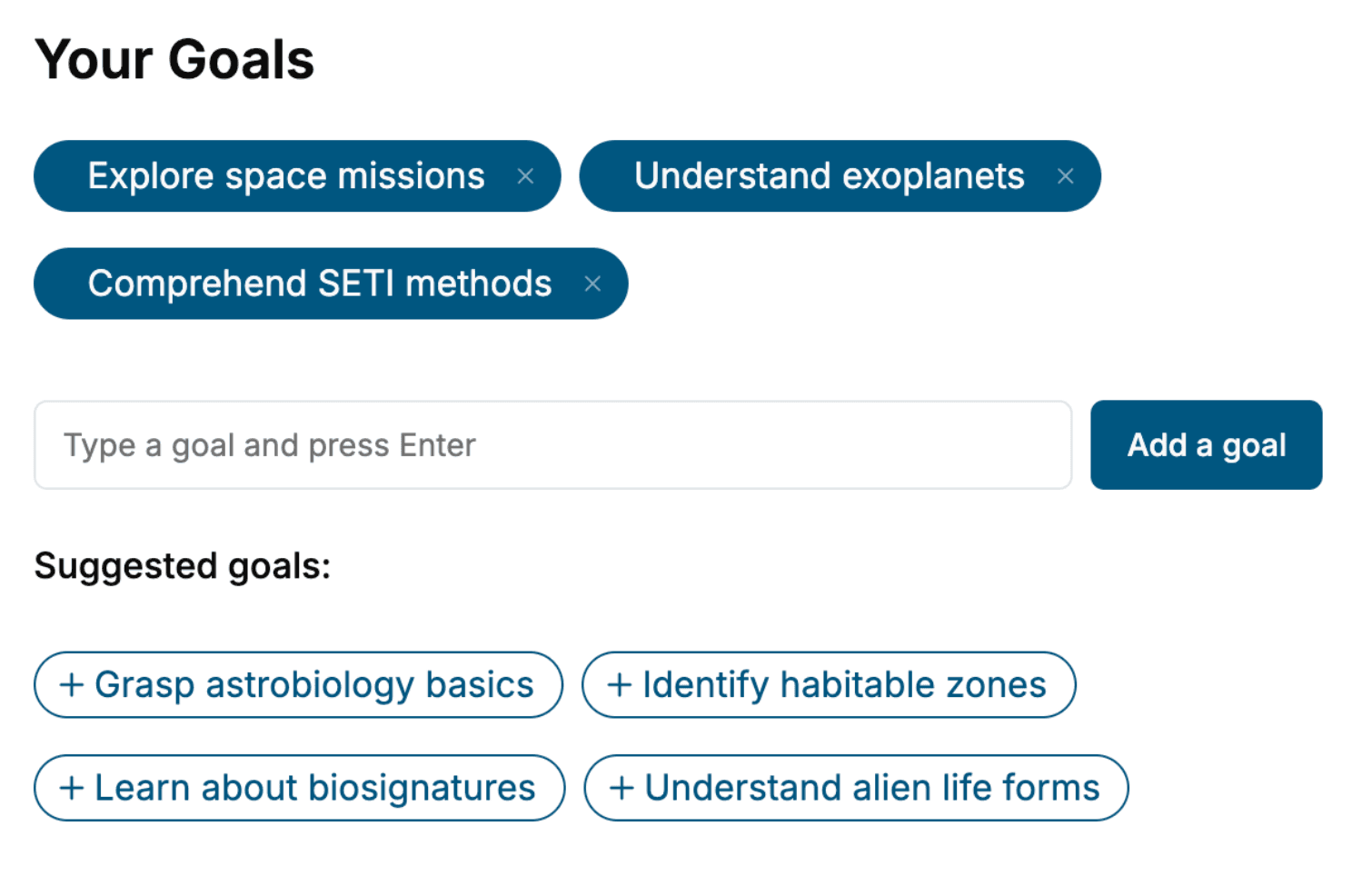
Specify your goals and choose sub-topics to include
- 3. Get your tailored book
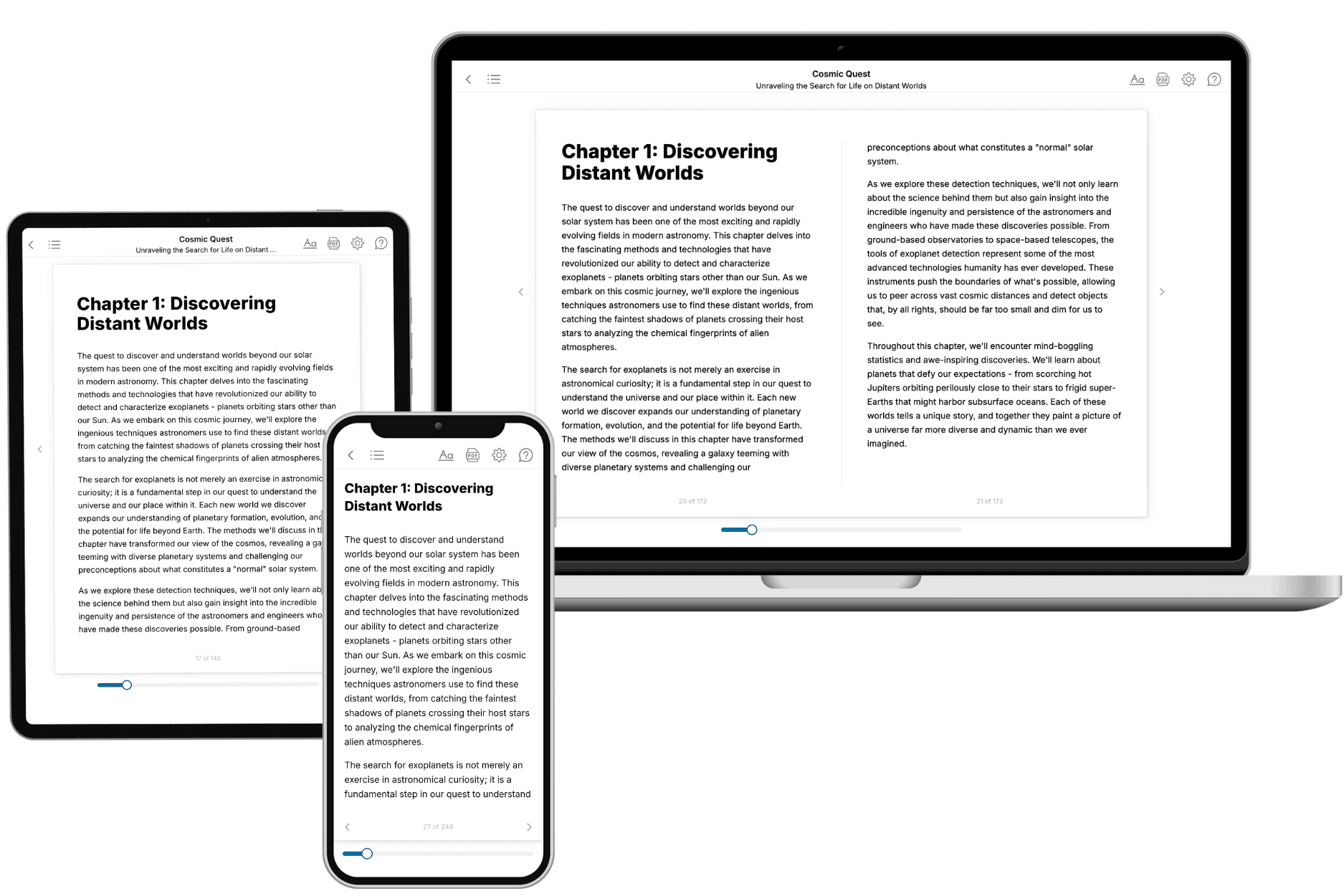
Your book is ready in 10 minutes. Read it online, download as EPUB or PDF, or send to Kindle.
Frequently asked questions
- What is TailoredRead?
TailoredRead creates complete, full-length nonfiction ebooks, written specifically for you. Tell us what you want to learn and why, and TailoredRead writes you a complete ebook on it, with charts, tables, and diagrams throughout. Read it online, on Kindle, or on any e-reader, or download it as a PDF or EPUB. Every book is written fresh the day you order it.
- How is the book tailored to me?
Before anything is written, you answer a few short questions about your goals, your background, and the topics you care about. Your book is then planned around your answers: written at your level, focused on your goals, and covering the topics you chose, instead of the one-size-fits-all book a store sells everyone.
- Will it read like generic AI content?
No. Your book isn't a chat transcript: it's planned chapter by chapter before a single word is written, told in a clear book voice, and explains ideas visually with charts, tables, and diagrams. After writing, every book goes through an editorial pass that polishes chapters so the book reads consistent from start to finish. Judge for yourself: browse thousands of sample books on our Explore Books page.
- How accurate is the content?
Our AI first checks whether your subject needs live research. Niche and fast-moving subjects are researched before writing, and the book plan and chapters are grounded in what it finds. After writing, every book goes through a quality pass that checks its facts and consistency, and researched books list their sources in a Notes section at the back.
- How long is the book?
You choose the length: Comprehensive (250-300 pages), Detailed (150-200 pages), Essential (70-100 pages), or Short (30-50 pages).
- Does the book include visuals?
Yes. Every book includes charts, tables, and diagrams: timelines, checklists, step-by-step guides, decision trees, comparison tables, matrices, and bar charts. A typical book includes dozens of these visual elements.
- Can I read it on Kindle? What formats can I download?
Yes. Every book can be read in our online reader or downloaded as a PDF or EPUB. The EPUB can be opened with Kindle, Apple Books, Kobo, and any e-reader. The Commercial and Author licenses also include an editable Word (DOCX) and Markdown download.
- How much does it cost?
About the price of a regular ebook. The exact price depends on your book's length and complexity, from $2 for the shortest books to $35 for the most comprehensive, and it's shown when you review your book, before you commit to anything. Each book is a one-time purchase, yours to keep, no subscription. Licenses that let you share, teach, or publish your book range from $35.99 to $49.99.
- Can I preview the book before purchasing?
Before you pay, you'll see what your book will cover: the title, a detailed description, the estimated length, and the complete chapter-by-chapter table of contents, so you know what you're getting before you decide. The full text itself is written after you purchase.
- How long does it take to create a book?
About 10 minutes. You can start reading the opening chapters while the rest is still being written.