The 358-Year Quest
Unraveling Fermat's Last Theorem
Embark on a mathematical odyssey that spans over three centuries.
253 pages12 chaptersJan 18, 2025Mathematics
About this book
"The 358-Year Quest: Unraveling Fermat's Last Theorem" takes you on an exhilarating journey through one of mathematics' most captivating puzzles. You'll dive into the minds of brilliant mathematicians, explore the evolution of number theory, and witness the power of human perseverance in the face of seemingly insurmountable challenges. This book brings to life the fascinating story behind Fermat's Last Theorem, from its inception in the margins of an ancient Greek text to its groundbreaking resolution in the modern era. You'll gain insights into the lives of key players, the mathematical concepts that paved the way for the proof, and the technological advancements that made it possible. Whether you're a mathematics student, a curious professional, or simply someone who loves a good intellectual adventure, this book will expand your understanding of mathematical problem-solving and inspire you to tackle your own challenges with renewed vigor. Get ready to experience the thrill of discovery and the beauty of mathematical reasoning as you unravel the mystery that captivated the world's greatest minds for over three centuries.
Table of contents
- IntroductionOverview of Fermat's Last Theorem, Historical Significance and Impact, Structure of the BookRead below
- Chapter 1: The Origins of Fermat's Last TheoremPierre de Fermat: The Enigmatic Mathematician, From Pythagoras to Fermat, The Famous Margin Note, Initial Reactions and Early Attempts
- Chapter 2: Foundations of Number TheoryPrime Numbers and Their Properties, Introduction to Modular Arithmetic, Diophantine Equations, Basic Algebraic Structures
- Chapter 3: Early Progress and Partial ProofsEuler's Contribution: The Case of n=3, Sophie Germain and Her Theorem, Dirichlet and Legendre's Work, Kummer and Regular Primes
- Chapter 4: 19th Century DevelopmentsGaussian Integers and Complex Numbers, Kummer's Ideal Numbers, Foundations of Class Field Theory, Algebraic Number Fields
- Chapter 5: Modern Mathematical ToolsIntroduction to Elliptic Curves, Modular Forms and Their Properties, Galois Representations, Iwasawa Theory
- Chapter 6: The Taniyama-Shimura ConjectureOrigins of the Conjecture, Connecting Elliptic Curves and Modular Forms, The Frey Curve, Serre's Conjecture and Its Implications
- Chapter 7: Andrew Wiles: The Man Behind the ProofWiles' Mathematical Background, A Childhood Fascination with Fermat, Career Highlights and Previous Work, The Decision to Tackle Fermat's Last Theorem
- Chapter 8: Wiles' Approach to the ProofApplying Iwasawa Theory, The Horizontal and Vertical Approach, Euler Systems and Their Role, The Kolyvagin-Flach Method
- Chapter 9: The Announcement of the ProofThe Cambridge Lectures, Initial Excitement and Reactions, The Peer Review Process, Discovery of a Flaw
- Chapter 10: Resolving the GapUnderstanding the Nature of the Error, Collaboration with Richard Taylor, Developing New Approaches, The Final Breakthrough
- Chapter 11: Verification and Acceptance of the ProofRigorous Checking by Experts, The Role of Computer Assistance, The Publication Process, Acceptance by the Mathematical Community
- Chapter 12: Implications and Impact of the ProofAdvancements in Number Theory, New Directions in Mathematical Research, Impact on Public Perception of Mathematics, Future Mathematical Challenges
- ConclusionRecapitulating the 358-Year Journey, The Lesson of Persistence in Mathematics, The Ongoing Legacy of Fermat's Last Theorem
- Glossary of Mathematical Terms
- Suggestions for Further Reading
Introduction
Mathematics, with its elegant simplicity and profound complexity, has captivated human minds for millennia. Among the vast array of mathematical puzzles and theorems that have challenged scholars throughout history, few have held the same allure and mystique as Fermat's Last Theorem. This seemingly simple statement, scribbled in the margin of a book by the 17th-century mathematician Pierre de Fermat, would go on to become one of the most famous unsolved problems in mathematics, defying the efforts of brilliant minds for over three and a half centuries.
The journey to prove Fermat's Last Theorem is a testament to human perseverance, ingenuity, and the ever-evolving nature of mathematical thought. It is a story that spans generations, continents, and mathematical disciplines, ultimately culminating in a proof that not only resolved the long-standing conjecture but also revolutionized several areas of mathematics in the process. This introduction aims to set the stage for the mathematical odyssey that follows, providing you with a broad overview of Fermat's Last Theorem, its historical significance, and the structure of the book that will guide you through this fascinating narrative.
Overview of Fermat's Last Theorem
At its core, Fermat's Last Theorem is deceptively simple to state. It posits that no three positive integers a, b, and c can satisfy the equation a^n + b^n = c^n for any integer value of n greater than 2. This statement is a generalization of the famous Pythagorean theorem, which states that in a right-angled triangle, the square of the length of the hypotenuse (the side opposite the right angle) is equal to the sum of squares of the other two sides. In mathematical terms, the Pythagorean theorem can be expressed as a^2 + b^2 = c^2, where a and b are the lengths of the two shorter sides of the right-angled triangle, and c is the length of the hypotenuse.
The simplicity of Fermat's Last Theorem's statement belies the profound complexity of its proof. Pierre de Fermat claimed to have a "truly marvelous demonstration" of this theorem, which the margin of the book was too narrow to contain. However, no record of this proof was ever found, and for centuries, mathematicians doubted whether Fermat actually had a valid proof. The search for a proof became one of the most notorious challenges in mathematics, inspiring generations of mathematicians and amateur enthusiasts alike to tackle the problem.
The theorem's allure lies not just in its historical significance, but also in its connections to various branches of mathematics. As mathematicians attempted to prove Fermat's Last Theorem, they developed new techniques and theories that would go on to have far-reaching implications in number theory, algebraic geometry, and other areas of mathematics. The journey to prove the theorem led to the development of entire new fields of study, demonstrating the interconnectedness of mathematical concepts and the often unexpected ways in which progress in one area can lead to breakthroughs in another.
One of the most fascinating aspects of Fermat's Last Theorem is its resistance to proof for so long. Despite its simple statement, the theorem proved to be incredibly difficult to demonstrate conclusively. Over the centuries, mathematicians made significant progress, proving the theorem for specific values of n and developing powerful new mathematical tools in the process. However, a general proof remained elusive until the late 20th century, when British mathematician Andrew Wiles finally cracked the code after years of intense, solitary work.
Wiles' proof, announced in 1993 and finally accepted as correct in 1995, was a monumental achievement that drew upon centuries of mathematical development. It involved sophisticated techniques from various areas of mathematics, including elliptic curves, modular forms, and Galois representations. The proof was not only a triumph in its own right but also validated and connected several other important mathematical theories, further cementing the theorem's place in the pantheon of mathematical achievements.
The story of Fermat's Last Theorem is more than just a tale of mathematical discovery; it is a human story of passion, perseverance, and the relentless pursuit of knowledge. It demonstrates the collaborative nature of mathematical progress, with each generation building upon the work of those who came before. At the same time, it highlights the potential for individual brilliance and dedication to make groundbreaking contributions to human understanding.
As you delve deeper into the pages of this book, you will encounter the key players in this mathematical drama, from Fermat himself to the countless mathematicians who contributed to the theorem's eventual proof. You will explore the mathematical concepts that form the foundation of the proof, gaining insights into the beautiful and complex world of number theory and related fields. Along the way, you will witness the evolution of mathematical thought and the development of powerful new tools and techniques that continue to shape the landscape of modern mathematics.
Whether you are a seasoned mathematician or simply someone with a curiosity about one of the most famous problems in mathematical history, the story of Fermat's Last Theorem offers something for everyone. It is a testament to the enduring power of human curiosity and the remarkable achievements that can result from sustained intellectual effort. As you embark on this journey through the history and mathematics of Fermat's Last Theorem, prepare to be inspired, challenged, and ultimately awed by the beauty and complexity of mathematical reasoning.
Historical Significance and Impact
The historical significance of Fermat's Last Theorem extends far beyond its mathematical content. For 358 years, this seemingly simple statement stood as a tantalizing challenge to mathematicians worldwide, shaping the course of mathematical research and inspiring countless individuals to pursue careers in mathematics. The theorem's impact on the field of mathematics and on broader intellectual culture is difficult to overstate, as it has influenced the development of numerous mathematical disciplines and captured the public imagination in a way that few mathematical problems have ever done.
From its inception in 1637, when Pierre de Fermat scribbled his famous note in the margin of Diophantus' Arithmetica, to its eventual proof by Andrew Wiles in 1995, Fermat's Last Theorem has been a constant presence in the mathematical world. Its longevity as an unsolved problem is remarkable, spanning periods of significant mathematical and scientific advancement, from the Age of Enlightenment through the Industrial Revolution and into the modern era. During this time, the theorem served as a driving force for innovation in mathematics, spurring the development of new techniques and entire fields of study.
One of the most significant impacts of Fermat's Last Theorem has been its role in advancing number theory. As mathematicians grappled with the problem, they developed increasingly sophisticated tools and concepts in this field. For example, the work of Ernst Kummer in the mid-19th century on ideal numbers, inspired in part by attempts to prove Fermat's Last Theorem, laid the groundwork for modern algebraic number theory. Similarly, the theorem played a crucial role in the development of algebraic geometry, as mathematicians sought to understand the relationships between equations and geometric shapes in ever more abstract terms.
The theorem's influence extended beyond pure mathematics into related fields such as cryptography and computer science. The mathematical techniques developed in pursuit of its proof have found applications in these areas, demonstrating the often unexpected ways in which pure mathematical research can lead to practical advancements. For instance, elliptic curve cryptography, which plays a crucial role in modern secure communication systems, has its roots in the same mathematical concepts that were central to the eventual proof of Fermat's Last Theorem.
Fermat's Last Theorem has also had a profound impact on the way mathematics is perceived by the general public. Its simple statement and long history of eluding proof made it one of the few mathematical problems to capture widespread public attention. The theorem has been featured in popular culture, including books, films, and television shows, helping to humanize mathematics and make it more accessible to non-specialists. The story of Andrew Wiles' successful proof, in particular, has become a modern legend, inspiring countless individuals with its tale of perseverance and intellectual triumph.
The theorem's long journey to proof has also highlighted the collaborative nature of mathematical research. While Wiles' final proof was the result of years of solitary work, it built upon centuries of mathematical development and the contributions of numerous mathematicians. This aspect of the theorem's history serves as a powerful reminder of the cumulative nature of scientific progress and the importance of sharing knowledge across generations and cultures.
In the academic world, Fermat's Last Theorem has had a lasting impact on how mathematical research is conducted and evaluated. The complexity of Wiles' proof, which ran to hundreds of pages and drew upon diverse areas of mathematics, challenged traditional notions of what constitutes a mathematical proof. It sparked discussions about the role of computer-assisted proofs and the need for new methods of verification in an era of increasingly complex mathematical arguments.
The theorem has also played a significant role in mathematics education. Its simple statement makes it accessible to students at various levels, while its rich history and connections to different areas of mathematics make it an excellent vehicle for introducing more advanced concepts. Many aspiring mathematicians have been drawn to the field by the allure of Fermat's Last Theorem, inspired by the idea that seemingly simple problems can lead to profound mathematical insights.
Furthermore, the story of Fermat's Last Theorem serves as a powerful example of the unpredictable nature of mathematical research. What began as a marginal note in a 17th-century book led to the development of entire mathematical disciplines and ultimately required tools that would not be invented for centuries. This aspect of the theorem's history underscores the importance of pursuing fundamental research, even when immediate applications are not apparent.
As you delve deeper into the history and mathematics of Fermat's Last Theorem in the following chapters, you will gain a greater appreciation for its far-reaching impact. From its influence on the development of abstract algebra and number theory to its role in shaping public perceptions of mathematics, the theorem has left an indelible mark on the intellectual landscape. Its story is not just one of mathematical discovery, but of human curiosity, perseverance, and the enduring quest for knowledge that defines the scientific enterprise.
Structure of the Book
This book is designed to take you on a comprehensive journey through the fascinating world of Fermat's Last Theorem. It is structured to provide a logical progression from the theorem's origins to its eventual proof, while also exploring the mathematical concepts and historical context that are crucial to understanding this remarkable story. Whether you are a mathematics enthusiast with some background in the field or simply curious about one of the most famous problems in mathematical history, this book aims to offer insights and explanations that will deepen your appreciation of the theorem and its significance.
The book begins by delving into the origins of Fermat's Last Theorem in Chapter 1. Here, you will be introduced to Pierre de Fermat, the enigmatic mathematician who first proposed the theorem. You'll explore the mathematical climate of the 17th century and the context in which Fermat made his famous marginal note. This chapter also traces the connection between Fermat's work and that of the ancient Greek mathematician Pythagoras, whose theorem on right-angled triangles forms the basis for Fermat's more general statement. You'll gain insights into the initial reactions to Fermat's claim and the early attempts to prove or disprove it, setting the stage for the centuries-long quest that followed.
Chapter 2 lays the groundwork for understanding the mathematical concepts that are central to Fermat's Last Theorem and its proof. This chapter introduces key ideas from number theory, including prime numbers, modular arithmetic, and Diophantine equations. While some of these concepts may be familiar to you, others may be new. The chapter aims to provide clear explanations and examples to ensure that you have a solid foundation for the more advanced topics that follow. Understanding these fundamental concepts is crucial for appreciating the complexity of the theorem and the sophistication of the eventual proof.
Chapters 3 and 4 trace the early progress made towards proving Fermat's Last Theorem, covering the period from the late 17th century through the 19th century. You'll learn about the contributions of mathematical luminaries such as Leonhard Euler, who proved the theorem for the case n=3, and Sophie Germain, whose work on the theorem was groundbreaking for its time. These chapters also explore the development of new mathematical tools and concepts that arose from attempts to prove the theorem, including Kummer's work on ideal numbers and the foundations of algebraic number theory. Throughout these chapters, you'll see how each partial proof or new approach brought mathematicians closer to understanding the full complexity of Fermat's Last Theorem.
The book then shifts focus to the modern era in Chapter 5, introducing the mathematical tools that would ultimately prove crucial in resolving Fermat's Last Theorem. This chapter covers topics such as elliptic curves, modular forms, and Galois representations. While these concepts are more advanced, the book strives to present them in an accessible manner, using analogies and examples to illustrate their significance. Understanding these modern mathematical tools is essential for grasping the approach that would eventually lead to the theorem's proof.
Chapter 6 is dedicated to the Taniyama-Shimura Conjecture, a seemingly unrelated problem in mathematics that turned out to be intimately connected to Fermat's Last Theorem. This chapter explains the conjecture and its significance, as well as how it came to be linked to Fermat's Last Theorem through the work of mathematicians like Gerhard Frey and Ken Ribet. The connection between these two problems would prove to be the key that ultimately unlocked the proof of Fermat's Last Theorem.
Chapters 7 and 8 focus on Andrew Wiles, the mathematician who finally proved Fermat's Last Theorem. These chapters provide insight into Wiles' background, his lifelong fascination with the theorem, and the approach he took in tackling this monumental problem. You'll learn about the years of solitary work Wiles undertook, the mathematical techniques he employed, and the challenges he faced along the way. These chapters offer a human perspective on the process of mathematical discovery, highlighting the dedication and perseverance required to solve such a complex problem.
The dramatic events surrounding the announcement of Wiles' proof are covered in Chapters 9 and 10. These chapters detail the initial excitement following Wiles' announcement, the subsequent discovery of a flaw in the proof, and the intense period of work that followed as Wiles and his colleague Richard Taylor worked to resolve the issue. The narrative in these chapters captures the tension and excitement of this period, offering a glimpse into the high-stakes world of cutting-edge mathematical research.
Chapter 11 explores the process of verifying and accepting Wiles' proof. This chapter discusses the rigorous checking process undertaken by experts in the field, the role of computer assistance in verifying parts of the proof, and the steps involved in publishing such a significant mathematical result. It also touches on the acceptance of the proof by the broader mathematical community and the celebrations that followed this monumental achievement.
The final chapter, Chapter 12, examines the implications and impact of the proof of Fermat's Last Theorem. This chapter discusses how the proof has advanced number theory and other areas of mathematics, opened up new directions for research, and influenced public perception of mathematics. It also looks to the future, considering what new challenges lie ahead in the field of mathematics and how the lessons learned from the proof of Fermat's Last Theorem might be applied to these problems.
Throughout the book, you'll find explanations of key mathematical concepts, historical anecdotes, and insights into the lives and work of the mathematicians who contributed to this centuries-long quest. Sidebars and diagrams are used to illustrate complex ideas, and each chapter concludes with a summary of key points to reinforce your understanding. The book also includes a glossary of mathematical terms and suggestions for further reading, allowing you to delve deeper into topics that particularly interest you.
By structuring the book in this way, the aim is to provide you with a comprehensive understanding of Fermat's Last Theorem, its historical context, and the mathematical concepts that underpin its proof. Whether you're reading for mathematical insight, historical interest, or simply the thrill of following one of the greatest intellectual adventures in human history, this book offers a journey through a fascinating landscape of mathematical discovery and human achievement.
This is the end of the free sample. The full book has 12 chapters.
Want this book written for you?
Tell us your goals and background, and get your own version of this book, tailored by AI to you.


Benefits of AI-tailored books
- Read one book, not ten:
- all the Mathematics knowledge you need, gathered into a single book.
- Save days of learning:
- tell us your goals, choose your topics, and the whole book is built around them.
- Learn effortlessly:
- Mathematics book written for your specific background and expertise.
- Understand at a glance:
- includes charts, tables, timelines, checklists, decision trees, and more.
- Stay current:
- written the day you order it, not years ago.
- Trust what you read:
- every book is checked for accuracy, with real research when your subject needs it.
Create your unique book in 3 steps
- 1. Select your focus
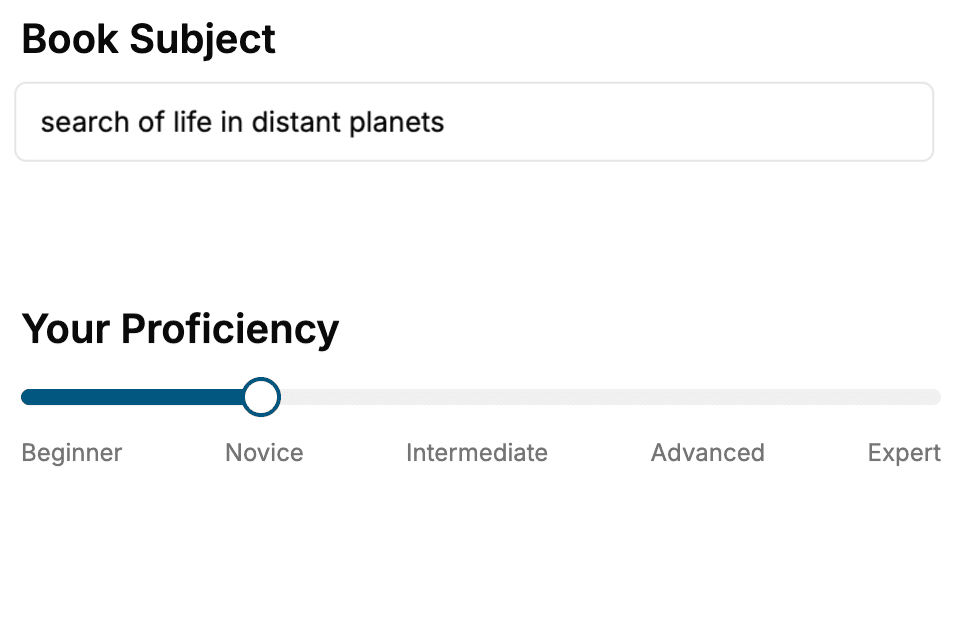
Select the focus of your Mathematics book and share your background
- 2. Personalize your book
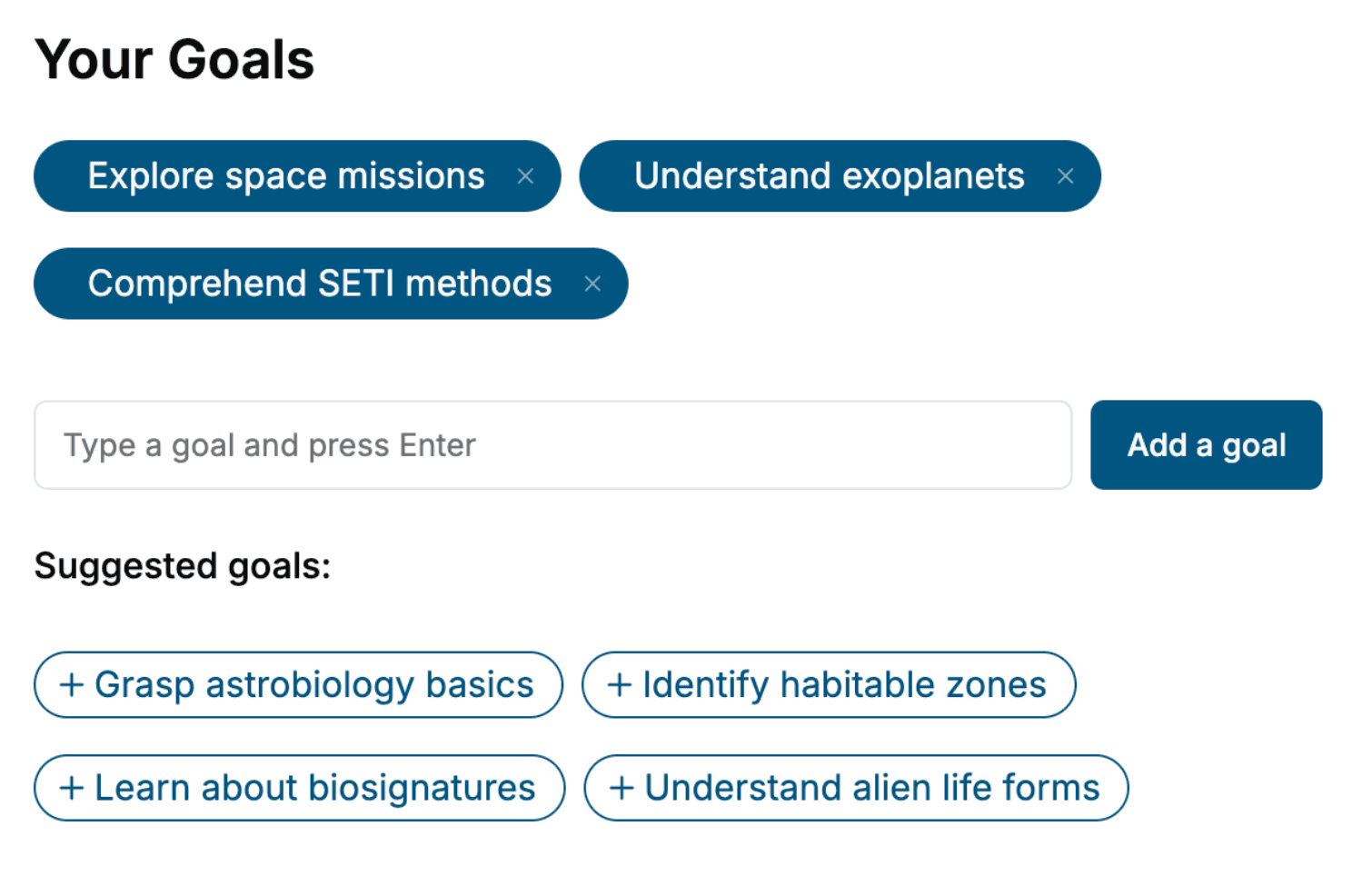
Specify your goals and choose sub-topics to include
- 3. Get your tailored book
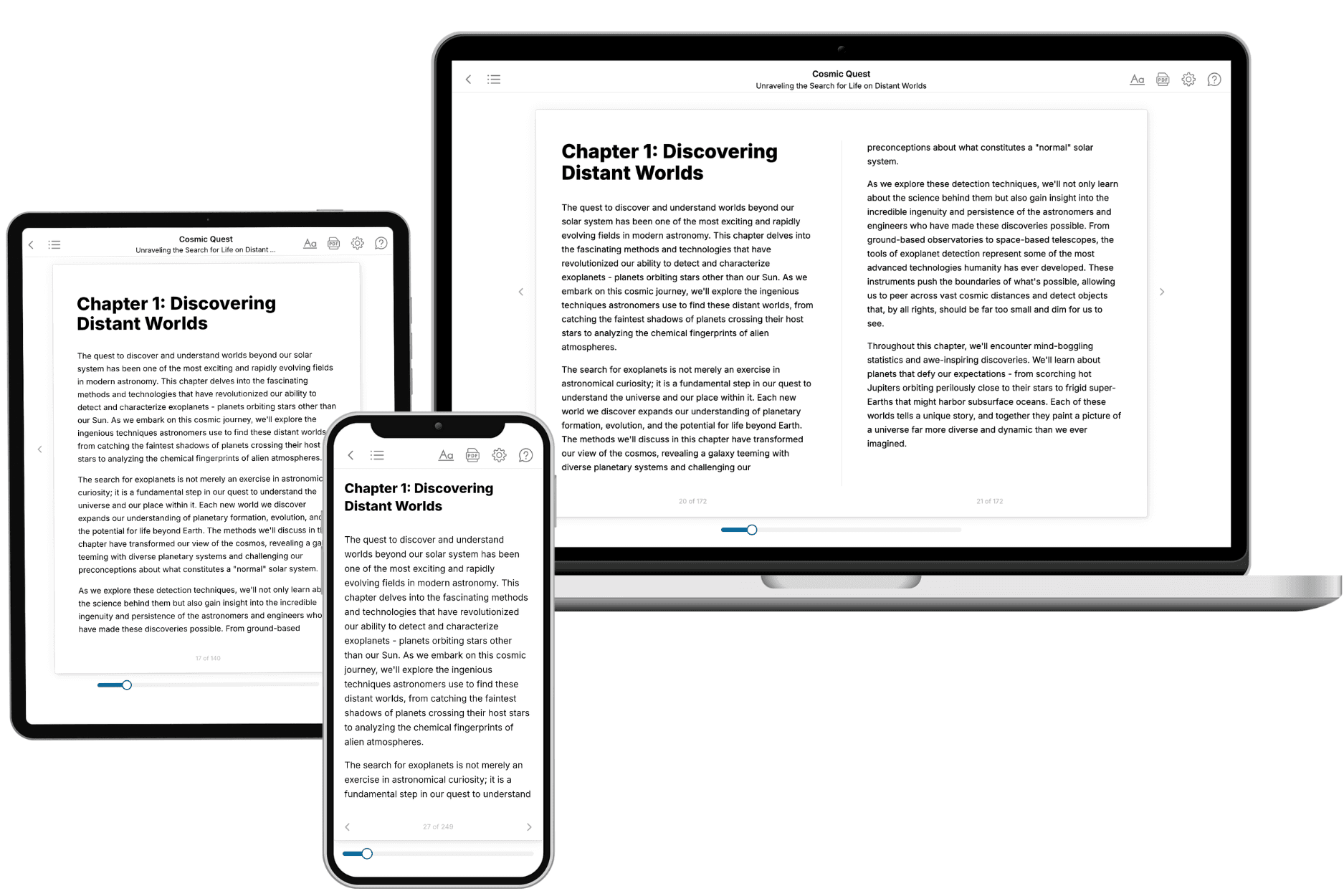
Your book is ready in 10 minutes. Read it online, download as EPUB or PDF, or send to Kindle.
Frequently asked questions
- What is TailoredRead?
TailoredRead creates complete, full-length nonfiction ebooks, written specifically for you. Tell us what you want to learn and why, and TailoredRead writes you a complete ebook on it, with charts, tables, and diagrams throughout. Read it online, on Kindle, or on any e-reader, or download it as a PDF or EPUB. Every book is written fresh the day you order it.
- How is the book tailored to me?
Before anything is written, you answer a few short questions about your goals, your background, and the topics you care about. Your book is then planned around your answers: written at your level, focused on your goals, and covering the topics you chose, instead of the one-size-fits-all book a store sells everyone.
- Will it read like generic AI content?
No. Your book isn't a chat transcript: it's planned chapter by chapter before a single word is written, told in a clear book voice, and explains ideas visually with charts, tables, and diagrams. After writing, every book goes through an editorial pass that polishes chapters so the book reads consistent from start to finish. Judge for yourself: browse thousands of sample books on our Explore Books page.
- How accurate is the content?
Our AI first checks whether your subject needs live research. Niche and fast-moving subjects are researched before writing, and the book plan and chapters are grounded in what it finds. After writing, every book goes through a quality pass that checks its facts and consistency, and researched books list their sources in a Notes section at the back.
- How long is the book?
You choose the length: Comprehensive (250-300 pages), Detailed (150-200 pages), Essential (70-100 pages), or Short (30-50 pages).
- Does the book include visuals?
Yes. Every book includes charts, tables, and diagrams: timelines, checklists, step-by-step guides, decision trees, comparison tables, matrices, and bar charts. A typical book includes dozens of these visual elements.
- Can I read it on Kindle? What formats can I download?
Yes. Every book can be read in our online reader or downloaded as a PDF or EPUB. The EPUB can be opened with Kindle, Apple Books, Kobo, and any e-reader. The Commercial and Author licenses also include an editable Word (DOCX) and Markdown download.
- How much does it cost?
About the price of a regular ebook. The exact price depends on your book's length and complexity, from $2 for the shortest books to $35 for the most comprehensive, and it's shown when you review your book, before you commit to anything. Each book is a one-time purchase, yours to keep, no subscription. Licenses that let you share, teach, or publish your book range from $35.99 to $49.99.
- Can I preview the book before purchasing?
Before you pay, you'll see what your book will cover: the title, a detailed description, the estimated length, and the complete chapter-by-chapter table of contents, so you know what you're getting before you decide. The full text itself is written after you purchase.
- How long does it take to create a book?
About 10 minutes. You can start reading the opening chapters while the rest is still being written.