The Absurd Ballot
How Political Theater Reveals the Truth About Power, Freedom, and Democracy
Most people assume political satire is just entertainment—a way to laugh at politicians and feel superior.
191 pages9 chaptersFeb 21, 2026Political Satire
About this book
But satire is far more powerful than that. It's a sophisticated tool for exposing the contradictions, hypocrisies, and absurdities embedded in political systems that serious journalism often overlooks. This book explores how satirists throughout history have used humor, exaggeration, and wit to challenge power, shape public opinion, and defend political freedom itself. You'll discover why the most ridiculous-sounding political claims are often literally true, how to recognize propaganda disguised as policy, and why the ability to mock authority is essential to democracy. Through real-world examples, historical analysis, and practical insights, you'll learn to read politics with a sharper eye—understanding not just what politicians say, but what they actually mean. Whether you're frustrated by political theater or simply want to understand power dynamics more deeply, this book offers both intellectual substance and genuine entertainment.
Table of contents
- IntroductionWhy Satire Matters in Politics, Satire vs. Comedy: Understanding the Difference, How to Read This BookRead below
- Chapter 1: The History of Political SatireAncient Roots: From Rome to the Renaissance, The Enlightenment: Satire as Intellectual Weapon, The Modern Era: Satire Goes Mainstream
- Chapter 2: How Satire Works: The Mechanics of Political HumorExaggeration: Making the Absurd Obvious, Irony and Reversal: Saying What You Don't Mean, Parody and Mimicry: Imitation as Critique
- Chapter 3: The Truth Hidden in AbsurdityReality Is Stranger Than Satire, Identifying Propaganda Disguised as Policy, Satire as a Mirror to Power
- Chapter 4: Political Theater: Understanding the PerformanceThe Gap Between Rhetoric and Reality, How Political Messaging Manipulates Perception, Theater Tactics: Distraction, Spectacle, and Misdirection
- Chapter 5: Satire and Freedom: The Right to Mock AuthorityFreedom of Expression and Political Satire, Historical Battles Over Satirical Speech, Why Satire Is Essential to Democracy
- Chapter 6: Reading Between the Lines: Decoding Political LanguageDoublespeak and Political Language Games, Detecting Spin and Manufactured Narratives, Finding Subtext and Hidden Meaning
- Chapter 7: Case Studies: Satire That Changed PoliticsHistorical Examples of Effective Political Satire, Modern Satire and Its Political Impact, When Satire Provokes Backlash and Why
- Chapter 8: The Satirist's Toolkit: Techniques and StrategiesResearch and Accuracy: The Foundation of Effective Satire, Timing and Delivery: When and How to Strike, Audience Awareness and Satirical Effectiveness
- Chapter 9: Satire in the Digital AgeSatire on Social Media: Viral Politics and Misinformation, Memes as Modern Political Commentary, Challenges of Satire in the Digital Age
- ConclusionThe Future of Political Satire, Becoming a More Critical Reader of Politics
- Further Reading and Resources
Introduction
There is a moment that many politically engaged people recognize. You are watching a press conference, reading a policy statement, or scrolling through a politician's latest speech, and something feels deeply, almost comically wrong. The words sound reasonable on the surface, but underneath them is a tangle of contradiction, self-interest, and carefully managed illusion. You sense the gap between what is being said and what is actually happening. That gap, that uncomfortable space between official reality and actual reality, is exactly where political satire lives.
Most people treat satire as a side dish. It is the late-night monologue you watch before bed, the political cartoon you share on social media, the satirical news article that makes you laugh and then scroll on. But this view dramatically underestimates what satire actually does. At its best, political satire is a precision instrument. It cuts through the noise of spin, messaging, and manufactured consensus to expose the raw mechanics of power in ways that straightforward journalism and academic analysis often cannot. Satire does not just entertain. It reveals.
This book is built on a simple but important argument: understanding political satire makes you a sharper, more clear-eyed reader of politics itself. When you understand how satirists identify contradictions, expose hypocrisy, and translate political theater into plain language, you develop the same skills for yourself. You stop being a passive audience for political performance and start being an active, critical observer. That shift matters enormously, not just for your own understanding, but for the health of democratic life more broadly.
The chapters ahead move through history, technique, and real-world application. You will encounter ancient Roman satirists who mocked emperors at considerable personal risk, Enlightenment writers who used wit as a weapon against tyranny, and modern satirists whose work has genuinely shifted public opinion and political outcomes. Along the way, you will pick up practical tools for decoding political language, recognizing propaganda, and understanding the theater that surrounds every major political event. The goal is not cynicism. The goal is clarity, and occasionally, a genuine laugh at the absurdity of it all.
Why Satire Matters in Politics
Political satire has a reputation problem. Critics on one side dismiss it as cheap entertainment that trivializes serious issues. Critics on the other side worry that it breeds cynicism and disengagement, turning complex political problems into punchlines. Both critiques contain a grain of truth, but they miss the larger picture. Satire, when done well, is one of the most effective tools for political education and civic engagement that any society has ever produced.
Consider what satire actually accomplishes that other forms of political communication do not. A policy brief explains what a law does. An investigative report documents what went wrong. A political speech tells you what a leader wants you to believe. Satire does something different. It shows you the shape of the contradiction. It makes visible the distance between the official story and the lived reality. And it does this in a form that is memorable, shareable, and emotionally resonant in ways that a white paper simply cannot be.
Research supports this intuition. Studies have found that exposure to political satire increases political knowledge and engagement, particularly among younger audiences who might otherwise tune out traditional news formats.[1] A 2012 study from the Pew Research Center found that viewers of satirical news programs like The Daily Show scored higher on political knowledge tests than viewers of many traditional news outlets. Satire is not a substitute for serious journalism, but it is a genuine complement to it.
Part of satire's power comes from its ability to say things that polite political discourse cannot. There are truths about power that are too uncomfortable, too obvious, or too embarrassing for mainstream media to state directly. Satire can state them plainly, wrapped in humor that makes the medicine easier to swallow. When a satirist points out that a politician's anti-corruption speech was delivered at a fundraiser hosted by the very industries they claim to regulate, the joke lands because the truth is undeniable. The laughter is recognition.
Satire also serves a crucial social function by creating shared language around political events. When a satirical phrase or image captures something true about a political figure or situation, it spreads rapidly and becomes a cultural shorthand. Think of how certain satirical portrayals have permanently shaped public perception of political figures, sometimes more durably than any serious profile or biography. This is not trivial. Shared cultural references are part of how communities process and discuss political reality together.
Perhaps most importantly, satire preserves something essential about the relationship between citizens and power. The ability to mock authority, to laugh at the powerful, to refuse to treat political leaders as sacred or untouchable, is a marker of political freedom. Authoritarian regimes understand this instinctively, which is why they consistently move to suppress satirists and comedians early in their consolidation of power. The satirist's freedom to ridicule is, in a very real sense, a canary in the coal mine for democratic health.
Example: In 2011, during the Arab Spring, satirist Bassem Youssef began broadcasting a YouTube show from his apartment in Egypt, mocking the Mubarak government with sharp wit and pointed humor. The show eventually became the most-watched political program in Egyptian history. When the subsequent government of Mohamed Morsi had him arrested for insulting the president, the international outcry was immediate. His prosecution became a global story precisely because everyone understood what it meant: a government that cannot tolerate mockery is a government that cannot tolerate freedom.
The lesson is not that satire is always right, always fair, or always effective. Like any tool, it can be misused. It can punch down instead of up, reinforce stereotypes instead of challenging them, or mistake cruelty for wit. But when satire is grounded in factual accuracy and genuine understanding of its targets, it becomes something genuinely powerful. It becomes a form of truth-telling that reaches people where other forms of communication cannot.
This book takes satire seriously as a political phenomenon, not just as entertainment. That means examining how it works, where it has succeeded and failed, and what it reveals about the political systems it targets. It also means treating you as someone capable of engaging with both the humor and the substance simultaneously, because the best satire always rewards that kind of dual attention.
Satire vs. Comedy: Understanding the Difference
Before going further, it is worth drawing a clear line between satire and comedy, because the two are often confused and the confusion matters. Comedy's primary goal is to make you laugh. Satire's primary goal is to make you think, and the laughter is the vehicle, not the destination. This distinction shapes everything about how satire is constructed, what it targets, and what it asks of its audience.
Pure comedy is largely indifferent to truth. A comedian can invent absurd scenarios, exaggerate for effect, or construct elaborate fictional situations, and none of that undermines the comedy as long as it is funny. Satire operates under a different constraint. Effective satire must be grounded in something real. The exaggeration has to be recognizable as exaggeration of an actual truth. The absurdity has to reflect actual absurdity. When satire loses its connection to factual reality, it stops being satire and becomes either pure fiction or, worse, misinformation.
This is why the best political satirists are also, in a meaningful sense, journalists. They research their targets carefully. They understand the policies, the history, the contradictions, and the context before they start constructing the joke. Jonathan Swift did not write A Modest Proposal, his devastating 1729 satirical essay suggesting the Irish poor sell their children as food, without a deep understanding of British colonial policy toward Ireland. The horror of the piece works precisely because every element of it reflects a real policy logic that Swift understood intimately.
The key distinction in practice: A comedian might say, "Politicians are all liars," and get a laugh from the general cynicism. A satirist would identify a specific politician, a specific lie, and a specific context, then construct a piece that makes the lie visible in a way that is both funny and undeniable. The comedian entertains. The satirist indicts.
There is also a directional difference between comedy and satire. Comedy can point in any direction. It can mock the powerful or the powerless, the insider or the outsider, the serious or the trivial. Satire, in its classical and most meaningful form, has a direction: it punches up. It targets power, authority, hypocrisy, and pretension. When satire punches down, targeting the vulnerable or the marginalized, it loses its moral grounding and becomes something closer to cruelty dressed in clever language.
This directional quality is part of why satire is politically significant in a way that pure comedy is not. Satire is inherently a form of dissent. It says, implicitly or explicitly, that the powerful are not as powerful, as wise, or as legitimate as they claim to be. It democratizes the relationship between citizen and authority by insisting that authority is always available for scrutiny and ridicule. That is a political act, not just an artistic one.
Understanding this distinction also helps you become a more critical consumer of political humor. Not everything that calls itself satire actually is. Some content uses the label of satire to spread misinformation while claiming the protection of humor. Some uses the form of satire to punch down at vulnerable groups while pretending to challenge power. Knowing what genuine satire looks like, grounded in fact, directed at power, and aimed at revelation rather than mere mockery, gives you a framework for evaluating what you encounter.
The practical test is straightforward. Ask three questions about any piece of political humor you encounter:
- Is it grounded in something factually true? Does the exaggeration or absurdity reflect a real situation, or is it fabricated?
- Who is the target? Is it challenging power and authority, or is it mocking people who are already vulnerable?
- What does it want you to understand? Is there a point beyond the laugh, a truth it is trying to make visible?
If the answer to all three questions is satisfying, you are probably looking at genuine satire. If the humor relies on false premises, targets the powerless, or has no point beyond the joke itself, you are looking at something else, and it is worth knowing the difference. This book will help you develop that discernment, not just as a consumer of satire, but as a reader of political communication more broadly.
Comedy and satire can coexist in the same piece of work, and often the best satirists are also genuinely funny in a pure comedic sense. But keeping the distinction clear in your mind helps you understand what satire is actually doing and why it matters beyond the laugh track. The humor is the hook. The truth is the point.
How to Read This Book
This book is organized to take you on a journey from the historical foundations of political satire through to its modern digital forms, with practical tools woven throughout. You do not need to read it cover to cover in sequence, though that approach will give you the fullest picture. Each chapter is designed to stand on its own if you want to jump to a topic that interests you most. That said, the chapters do build on each other in meaningful ways, and the early historical chapters provide context that makes the later analytical chapters richer.
The first two chapters establish the historical and technical foundations. Chapter 1 traces political satire from ancient Rome through the Renaissance and into the modern era, showing how the form has evolved while its core purpose has remained remarkably consistent. Chapter 2 breaks down the specific techniques satirists use, including exaggeration, irony, and parody, and explains how each one works to expose political truth. These chapters give you the vocabulary and historical context you need for everything that follows.
Chapters 3 through 6 move into analysis and application. This is where the book gets into the mechanics of political theater, the gap between rhetoric and reality, and the specific techniques politicians use to manage perception and manufacture consent. These chapters are designed to be immediately practical. After reading them, you should be able to watch a political speech or read a policy announcement with a noticeably sharper eye for what is actually being communicated versus what is being said.
Here is a quick map of what each section covers:
- Chapters 1–2: History and technique. The foundations of political satire and how it works mechanically.
- Chapters 3–4: Truth and theater. How satire reveals hidden realities and how political performance works.
- Chapter 5: Freedom and democracy. Why the right to mock authority is essential to political freedom.
- Chapter 6: Language and decoding. How to read political language critically, including doublespeak and spin.
- Chapters 7–8: Case studies and toolkit. Real-world examples of effective satire and practical techniques for creating and evaluating it.
- Chapter 9: The digital age. How satire functions in the era of social media, memes, and viral misinformation.
Throughout the book, you will find concrete examples drawn from history and contemporary politics. These examples are chosen not to make any particular partisan argument, but to illustrate specific principles about how power works and how satire exposes it. The goal is analytical clarity, not political advocacy. The examples span different countries, different political systems, and different historical periods, because the dynamics of political theater and satirical response are genuinely universal.
You will also find practical frameworks and questions you can apply immediately. Each major concept comes with a way to use it in your own reading of political events. Think of these as lenses you can pick up and put down as needed. Some will be more useful in certain political contexts than others, but all of them are designed to make you a more active, critical, and ultimately more empowered reader of political life.
A word about tone. This book takes its subject seriously without taking itself too seriously. Political satire is, after all, fundamentally about humor, and a book about humor that is relentlessly solemn would be missing the point. You will find moments of genuine wit alongside the analysis, not because the analysis is less important, but because the combination is truer to what satire actually is. The best political commentary has always understood that laughter and seriousness are not opposites. They are partners.
One important note about what this book is not. It is not a guide to any particular political position or party. It does not argue that one side of the political spectrum is more deserving of satirical treatment than another. Power, hypocrisy, and the gap between rhetoric and reality are features of political life across the ideological spectrum, and the analytical tools in this book apply equally everywhere. The goal is to sharpen your thinking, not to direct it toward any predetermined conclusion.
Finally, this book assumes that you are already someone who thinks carefully about politics and wants to think even more carefully. It does not talk down to you or assume you need to be convinced that politics matters. What it does assume is that you are open to the idea that humor and wit can be serious analytical tools, and that the satirist's eye for contradiction and absurdity is a skill worth developing. If you bring that openness, the pages ahead have a great deal to offer. The absurdity of political life is vast, and understanding it, really understanding it, is both more important and more entertaining than most people realize.
Notes
Introduction
- 1. J. Baumgartner and J. S. Morris, "The Daily Show Effect," American Politics Research, 2006
This is the end of the free sample. The full book has 9 chapters.
Want this book written for you?
Tell us your goals and background, and get your own version of this book, tailored by AI to you.


Benefits of AI-tailored books
- Read one book, not ten:
- all the Political Satire knowledge you need, gathered into a single book.
- Save days of learning:
- tell us your goals, choose your topics, and the whole book is built around them.
- Learn effortlessly:
- Political Satire book written for your specific background and expertise.
- Understand at a glance:
- includes charts, tables, timelines, checklists, decision trees, and more.
- Stay current:
- written the day you order it, not years ago.
- Trust what you read:
- every book is checked for accuracy, with real research when your subject needs it.
Create your unique book in 3 steps
- 1. Select your focus
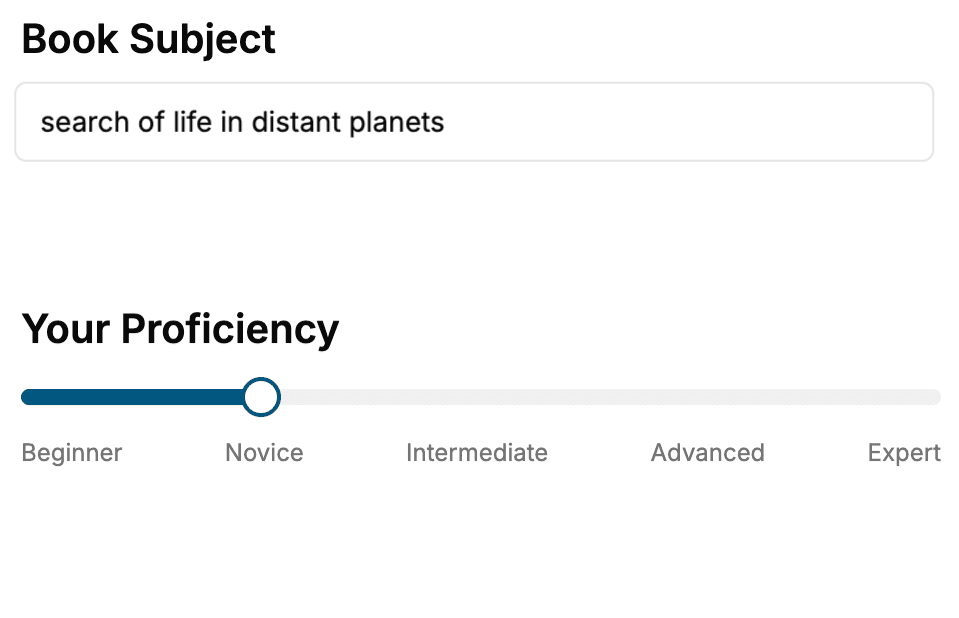
Select the focus of your Political Satire book and share your background
- 2. Personalize your book
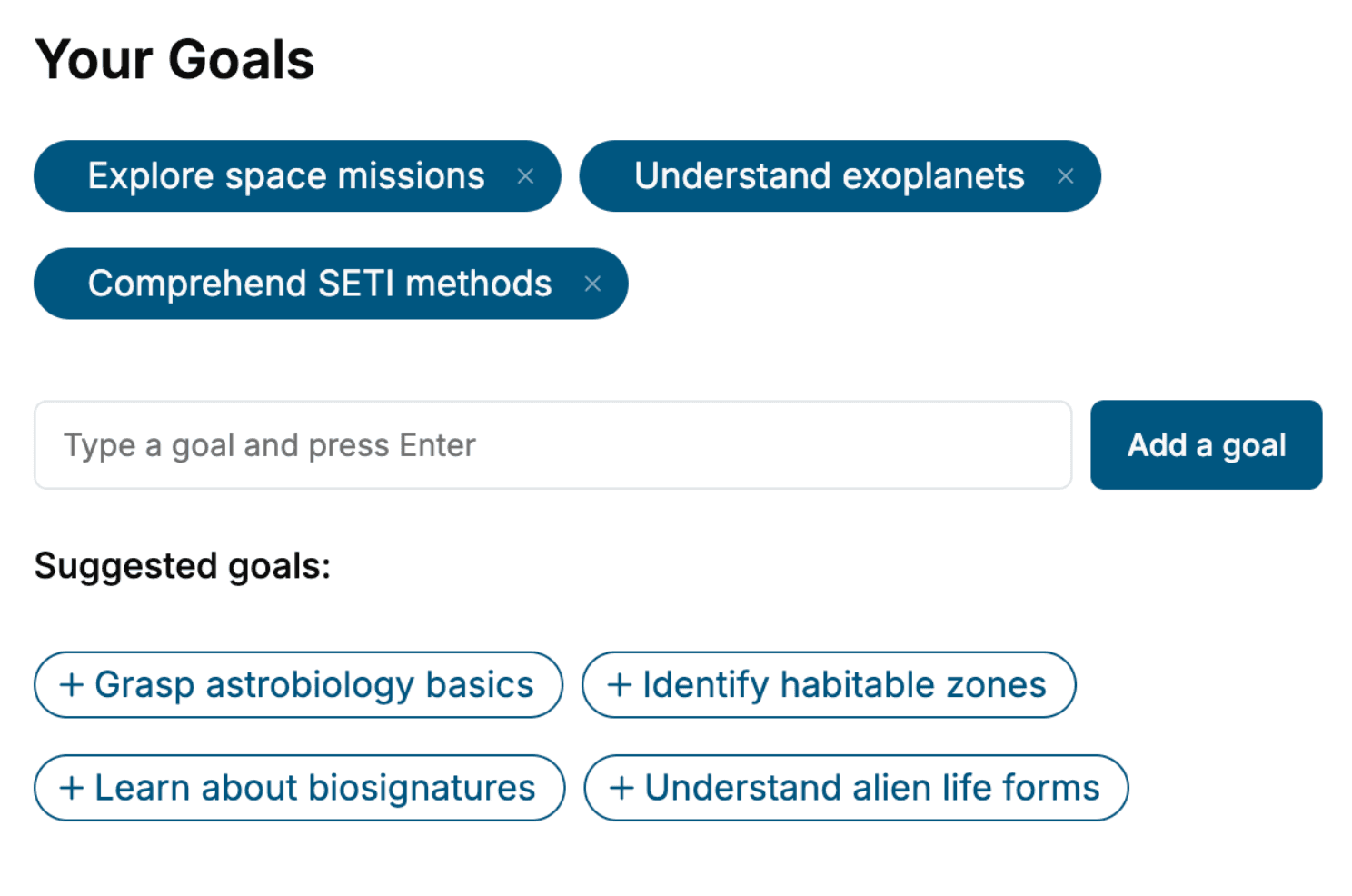
Specify your goals and choose sub-topics to include
- 3. Get your tailored book
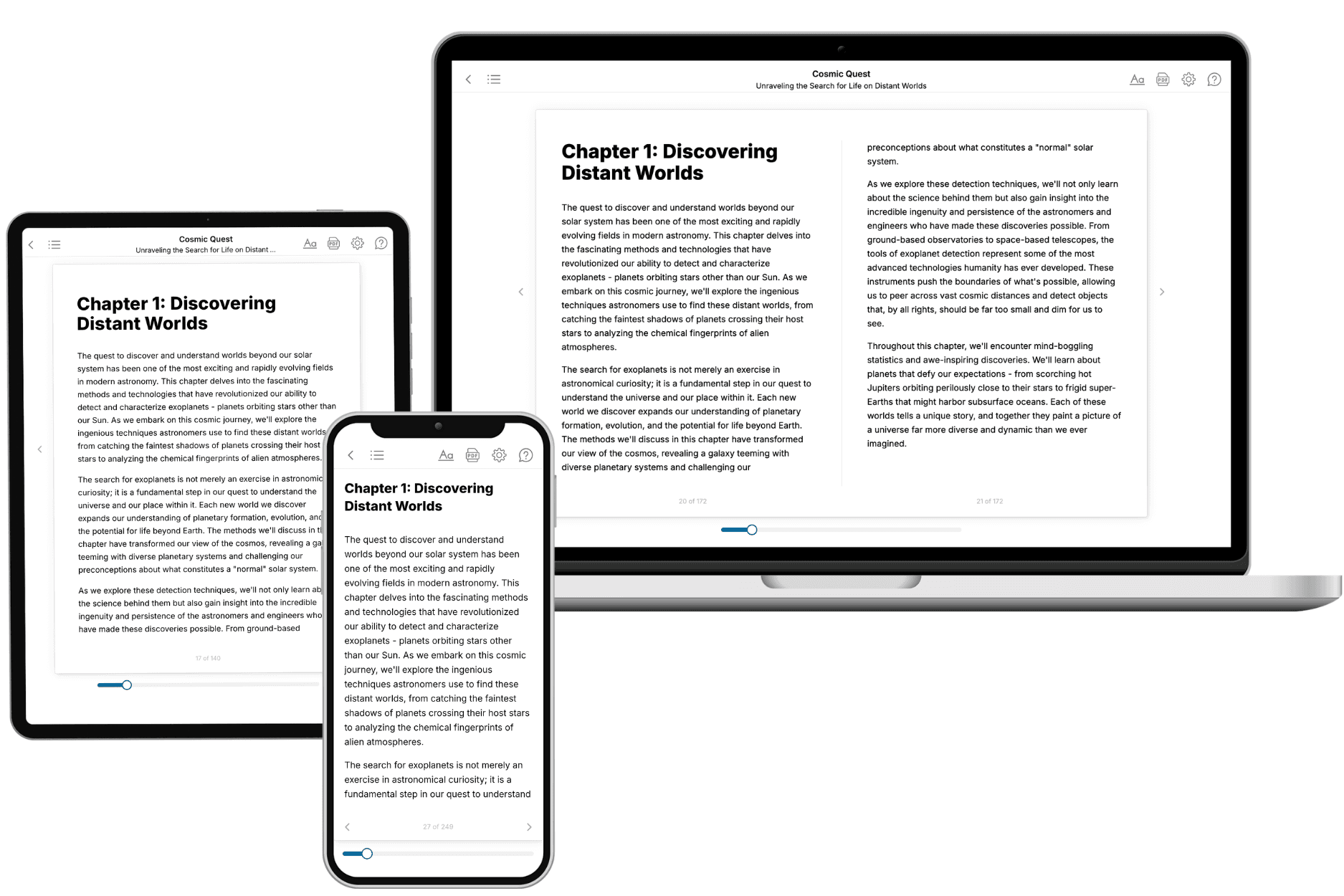
Your book is ready in 10 minutes. Read it online, download as EPUB or PDF, or send to Kindle.
Frequently asked questions
- What is TailoredRead?
TailoredRead creates complete, full-length nonfiction ebooks, written specifically for you. Tell us what you want to learn and why, and TailoredRead writes you a complete ebook on it, with charts, tables, and diagrams throughout. Read it online, on Kindle, or on any e-reader, or download it as a PDF or EPUB. Every book is written fresh the day you order it.
- How is the book tailored to me?
Before anything is written, you answer a few short questions about your goals, your background, and the topics you care about. Your book is then planned around your answers: written at your level, focused on your goals, and covering the topics you chose, instead of the one-size-fits-all book a store sells everyone.
- Will it read like generic AI content?
No. Your book isn't a chat transcript: it's planned chapter by chapter before a single word is written, told in a clear book voice, and explains ideas visually with charts, tables, and diagrams. After writing, every book goes through an editorial pass that polishes chapters so the book reads consistent from start to finish. Judge for yourself: browse thousands of sample books on our Explore Books page.
- How accurate is the content?
Our AI first checks whether your subject needs live research. Niche and fast-moving subjects are researched before writing, and the book plan and chapters are grounded in what it finds. After writing, every book goes through a quality pass that checks its facts and consistency, and researched books list their sources in a Notes section at the back.
- How long is the book?
You choose the length: Comprehensive (250-300 pages), Detailed (150-200 pages), Essential (70-100 pages), or Short (30-50 pages).
- Does the book include visuals?
Yes. Every book includes charts, tables, and diagrams: timelines, checklists, step-by-step guides, decision trees, comparison tables, matrices, and bar charts. A typical book includes dozens of these visual elements.
- Can I read it on Kindle? What formats can I download?
Yes. Every book can be read in our online reader or downloaded as a PDF or EPUB. The EPUB can be opened with Kindle, Apple Books, Kobo, and any e-reader. The Commercial and Author licenses also include an editable Word (DOCX) and Markdown download.
- How much does it cost?
About the price of a regular ebook. The exact price depends on your book's length and complexity, from $2 for the shortest books to $35 for the most comprehensive, and it's shown when you review your book, before you commit to anything. Each book is a one-time purchase, yours to keep, no subscription. Licenses that let you share, teach, or publish your book range from $35.99 to $49.99.
- Can I preview the book before purchasing?
Before you pay, you'll see what your book will cover: the title, a detailed description, the estimated length, and the complete chapter-by-chapter table of contents, so you know what you're getting before you decide. The full text itself is written after you purchase.
- How long does it take to create a book?
About 10 minutes. You can start reading the opening chapters while the rest is still being written.