Advanced Analytics Mastery
From Statistical Foundations to Production-Ready Machine Learning Models
Imagine confidently deploying machine learning models that not only predict accurately but also earn stakeholder trust through transparency and business impact.
238 pages11 chaptersNov 5, 2025Data AnalyticsCreated by Terrence
About this book
This comprehensive guide bridges the gap between statistical theory and real-world analytics practice, equipping you with advanced techniques that transform raw data into strategic business value. You'll master predictive modeling frameworks, learn to communicate complex findings through data storytelling, and implement production-ready systems that scale. From time series forecasting and anomaly detection to natural language processing and Bayesian methods, each chapter builds practical skills grounded in statistical rigor. Whether you're optimizing SQL queries, validating clustering results, or deploying A/B testing frameworks, you'll discover how to combine technical excellence with business acumen. This book moves beyond textbook examples to address real deployment challenges: handling missing data intelligently, correcting for multiple testing, interpreting complex models, and measuring true business impact. Perfect for data scientists ready to elevate their impact from analysis to action.
Table of contents
- IntroductionWhy Advanced Analytics Matters in Modern Business, Your Roadmap Through This Book, How to Get Maximum Value from These ChaptersRead below
- Chapter 1: Statistical Foundations and Hypothesis TestingBuilding a Rigorous Hypothesis Testing Framework, Understanding Statistical Significance and P-Values, Correcting for Multiple Testing to Prevent False Discoveries, Designing Studies with Adequate Statistical Power
- Chapter 2: Mastering Regression Analysis TechniquesMultivariate Regression: Modeling Complex Relationships, Logistic Regression for Classification Problems, Bayesian Hierarchical Modeling for Nested Data Structures, Diagnosing and Validating Regression Models
- Chapter 3: Time Series Forecasting and DecompositionUnderstanding Temporal Dependencies and Patterns, ARIMA Forecasting Models: Theory and Application, Decomposing Time Series into Trend, Seasonality, and Residuals, Validating and Comparing Forecasting Models
- Chapter 4: Advanced Machine Learning ModelsGradient Boosting Methods for Superior Predictive Performance, Interpreting Complex Models: SHAP, LIME, and Feature Importance, Dimensionality Reduction: PCA, Feature Selection, and Compression, Cross-Validation and Hyperparameter Tuning Strategies
- Chapter 5: Anomaly Detection and Outlier AnalysisIdentifying Different Types of Anomalies in Data, Anomaly Detection Algorithms: Statistical and Machine Learning Approaches, Validating Anomalies and Measuring Detection Performance, Translating Anomalies into Business Insights and Actions
- Chapter 6: Natural Language Processing and Text AnalysisNLP Fundamentals: Tokenization, Preprocessing, and Vectorization, Sentiment Analysis Techniques for Customer and Market Insights, NLP Text Classification: Building and Deploying Text Models, Real-World NLP Applications in Business Analytics
- Chapter 7: Data Quality and PreparationMissing Data Imputation: Methods and Best Practices, Comprehensive Data Quality Assessment Frameworks, Clustering Validation Metrics and Quality Assurance, Building Robust Data Preparation Pipelines
- Chapter 8: Data Storytelling and CommunicationData Storytelling Frameworks: Structure and Narrative, Optimizing Data Visualization Techniques for Impact, Adapting Analytics Messages for Different Stakeholders, Designing Business Intelligence Dashboards That Drive Action
- Chapter 9: Analytics Infrastructure and OptimizationQuery Performance Tuning and SQL Optimization, Big Data Processing Tools and Distributed Computing, Scaling Analytics Infrastructure for Production Workloads, Monitoring and Maintaining Analytics Systems
- Chapter 10: Predictive Model Deployment and MonitoringDeployment Strategies: From Development to Production, Model Governance and Version Control, Monitoring Model Performance and Detecting Drift, Continuous Improvement and Model Retraining Workflows
- Chapter 11: Business Metrics and A/B TestingDefining and Validating Business Metrics, A/B Testing Frameworks and Experimental Design, Analyzing A/B Test Results with Statistical Rigor, Building Metrics Dashboards for Continuous Monitoring
- ConclusionIntegrating Advanced Analytics into Your Organization, Future Directions in Analytics and Continuous Learning
- Glossary of Key Terms
- Further Reading and Resources
Introduction
The landscape of data science has evolved dramatically over the past decade. What once sufficed as basic statistical analysis and simple predictive models now falls short of modern business expectations. Organizations demand more than accurate predictions—they require transparent, interpretable, and production-ready analytics systems that drive measurable business value. The gap between academic statistical knowledge and practical implementation has widened, leaving many data scientists struggling to translate their technical expertise into strategic impact. This book bridges that divide by combining rigorous statistical foundations with real-world deployment practices that transform analytical insights into business outcomes.
You already possess intermediate analytics expertise and understand fundamental statistical concepts. Your challenge now lies in advancing beyond textbook examples to master the complex techniques that distinguish exceptional data scientists from competent practitioners. This journey requires more than learning new algorithms—it demands developing the judgment to select appropriate methods, the rigor to validate results properly, and the communication skills to translate technical findings into compelling business narratives. Throughout these chapters, you'll discover how statistical theory intersects with practical constraints, how model accuracy balances against interpretability, and how technical excellence combines with business acumen to create analytics systems that stakeholders trust and act upon.
The modern data scientist operates at the intersection of statistics, engineering, and business strategy. Your role extends far beyond building models—you architect systems that scale, communicate insights that persuade, and deploy solutions that withstand production pressures. This book addresses the full spectrum of advanced analytics challenges you'll encounter: handling messy real-world data, correcting for statistical pitfalls, interpreting complex models, optimizing infrastructure performance, and measuring true business impact. Each chapter builds practical skills grounded in statistical rigor, moving systematically from foundational concepts through advanced techniques to production deployment. By the end, you'll possess a comprehensive toolkit for delivering analytics solutions that combine technical excellence with strategic business value.
Why Advanced Analytics Matters in Modern Business
Business environments have grown increasingly complex and data-rich, creating both opportunities and challenges for analytics professionals. Organizations collect vast quantities of structured and unstructured data from customer interactions, operational systems, market signals, and external sources. This data deluge promises competitive advantages for companies that can extract actionable insights, but it overwhelms traditional analytical approaches. Simple descriptive statistics and basic regression models cannot capture the intricate patterns, temporal dependencies, and nonlinear relationships embedded in modern datasets. Advanced analytics techniques—from gradient boosting and Bayesian hierarchical models to natural language processing and anomaly detection—provide the sophisticated tools necessary to unlock value from complex data landscapes.
The business impact of advanced analytics extends across every organizational function and industry sector. Marketing teams leverage predictive models to optimize customer acquisition costs and personalize campaign targeting. Operations managers deploy time series forecasting to anticipate demand fluctuations and optimize inventory levels. Risk analysts implement anomaly detection systems to identify fraudulent transactions and security threats in real-time. Product teams use A/B testing frameworks to validate feature improvements and measure user engagement. Financial analysts apply Bayesian methods to incorporate prior knowledge and quantify uncertainty in forecasts. These applications share common requirements: statistical rigor to ensure trustworthy results, model interpretability to earn stakeholder confidence, and production-ready implementation to deliver value at scale.
Consider a concrete example from retail analytics. A major e-commerce company sought to reduce customer churn by predicting which subscribers would cancel their memberships. Initial logistic regression models achieved 72% accuracy but provided limited actionable insights—stakeholders couldn't understand why specific customers received high churn scores. The data science team implemented gradient boosting models that improved accuracy to 84%, then applied SHAP (SHapley Additive exPlanations) values to decompose predictions into interpretable feature contributions. This combination revealed that recent customer service interactions, shipping delays, and product return frequency were the strongest churn predictors. Armed with these insights, the retention team designed targeted interventions that reduced churn by 23% over six months[1]. This example illustrates why advanced analytics matters: technical sophistication enables better predictions, but interpretability and business translation create actual value.
The competitive landscape increasingly rewards organizations that master advanced analytics capabilities. Companies that deploy sophisticated predictive models gain advantages in pricing optimization, demand forecasting, and resource allocation. Those that implement robust A/B testing frameworks iterate faster and make better product decisions. Organizations that build scalable analytics infrastructure respond more quickly to market changes and operational challenges. However, these advantages require more than purchasing tools or hiring data scientists—they demand systematic approaches to model development, validation, deployment, and monitoring. The technical debt from poorly implemented analytics systems can exceed their benefits, creating maintenance burdens, generating misleading insights, and eroding stakeholder trust. This book equips you with the knowledge to build analytics capabilities that deliver sustainable competitive advantages rather than technical liabilities.
Stakeholder expectations have evolved alongside analytical capabilities, creating new demands for transparency and accountability. Business leaders no longer accept black-box predictions without understanding the underlying logic and assumptions. Regulatory requirements increasingly mandate model explainability, particularly in high-stakes domains like credit scoring, healthcare, and criminal justice. Customers expect personalized experiences but demand privacy protections and algorithmic fairness. These pressures require data scientists to balance multiple objectives simultaneously:
- Predictive accuracy: Models must perform well on held-out test data and generalize to new scenarios
- Interpretability: Stakeholders need to understand why models make specific predictions and which features drive outcomes
- Fairness: Predictions should not exhibit systematic bias against protected groups or perpetuate historical discrimination
- Robustness: Models must handle missing data, outliers, and distribution shifts without catastrophic failures
- Scalability: Systems must process production workloads efficiently and maintain performance as data volumes grow
- Maintainability: Analytics infrastructure should support version control, monitoring, and continuous improvement workflows
The technical challenges of advanced analytics extend beyond algorithm selection to encompass the entire model lifecycle. Data preparation consumes substantial effort—handling missing values intelligently, detecting and addressing outliers, engineering informative features, and validating data quality. Model development requires careful attention to statistical assumptions, proper train-test splitting, hyperparameter tuning, and cross-validation strategies. Deployment introduces new concerns around query optimization, infrastructure scaling, monitoring for model drift, and establishing feedback loops. Each stage presents opportunities for errors that compromise model reliability and business value. Mastering advanced analytics means developing systematic approaches to these challenges rather than treating them as afterthoughts.
The integration of statistical rigor with business context separates exceptional analytics work from technically competent but strategically ineffective efforts. Statistical significance does not automatically imply business importance—a highly significant but tiny effect may not justify implementation costs. Conversely, business-critical insights may emerge from exploratory analysis that doesn't meet traditional significance thresholds. Effective data scientists develop judgment about when to prioritize different objectives: maximizing predictive accuracy versus ensuring interpretability, implementing sophisticated methods versus maintaining simplicity, pursuing statistical perfection versus delivering timely insights. This book emphasizes developing that judgment through concrete examples, practical frameworks, and explicit discussion of tradeoffs you'll encounter in real-world projects.
The democratization of analytics tools has paradoxically increased the need for advanced expertise. Modern software libraries make it trivially easy to fit complex models—a few lines of Python code can train gradient boosting machines, neural networks, or Bayesian hierarchical models. However, this accessibility creates risks when practitioners apply sophisticated methods without understanding their assumptions, limitations, and proper validation procedures. Misapplied statistical tests generate false discoveries. Improperly validated models fail in production. Poorly communicated insights confuse rather than inform stakeholders. Your advanced expertise becomes valuable precisely because it enables you to navigate these pitfalls, select appropriate methods for specific problems, validate results rigorously, and communicate findings effectively. This book develops that expertise systematically across the full spectrum of advanced analytics challenges.
Your Roadmap Through This Book
This book follows a carefully structured progression from statistical foundations through advanced techniques to production deployment and business impact measurement. The organization reflects the natural workflow of analytics projects while building conceptual understanding systematically. Early chapters establish rigorous statistical frameworks that underpin all subsequent techniques. Middle chapters explore specialized methods for different data types and analytical challenges. Later chapters address deployment, infrastructure, and business communication concerns that transform analytical work into organizational value. You can read sequentially for comprehensive coverage or jump to specific chapters addressing your immediate needs, though foundational concepts in early chapters inform techniques presented later.
The journey begins with Statistical Foundations and Hypothesis Testing, establishing the rigorous framework necessary for trustworthy analytics. You'll master hypothesis testing methodology, understand the proper interpretation of p-values and statistical significance, learn multiple testing corrections that prevent false discoveries, and design studies with adequate statistical power. These foundations prove critical throughout subsequent chapters—time series forecasting requires proper significance testing, A/B testing demands multiple comparison corrections, and model validation relies on understanding statistical power. Many analytics failures trace back to fundamental statistical errors, making this foundational knowledge essential regardless of which advanced techniques you ultimately apply.
Mastering Regression Analysis Techniques explores the versatile regression framework from multiple perspectives. You'll advance beyond simple linear regression to multivariate models that capture complex relationships, logistic regression for classification problems, and Bayesian hierarchical approaches for nested data structures. The chapter emphasizes regression diagnostics—detecting violations of assumptions, identifying influential observations, and validating model fit. Regression provides the conceptual foundation for many machine learning algorithms, and understanding its nuances develops intuition that transfers to more complex methods. The practical examples demonstrate how regression addresses real business problems from customer churn prediction to pricing optimization.
Time Series Forecasting and Decomposition addresses the specialized techniques required when data exhibits temporal dependencies. You'll understand how autocorrelation and seasonality violate standard regression assumptions, master ARIMA models for forecasting future values, decompose time series into trend, seasonal, and residual components, and validate forecasting models properly. Time series analysis appears throughout business analytics—demand forecasting, financial modeling, operational monitoring, and anomaly detection all involve temporal data. The chapter provides both theoretical understanding and practical implementation guidance, including how to handle common challenges like missing observations, structural breaks, and multiple seasonal patterns.
The Advanced Machine Learning Models chapter elevates your predictive modeling capabilities with sophisticated algorithms and interpretation techniques. You'll master gradient boosting methods that consistently win prediction competitions, learn to interpret complex models using SHAP values and LIME, apply dimensionality reduction techniques like PCA, and implement rigorous cross-validation and hyperparameter tuning strategies. The emphasis on interpretability reflects modern requirements—stakeholders increasingly demand explanations alongside predictions. Practical examples demonstrate the tradeoffs between model complexity and interpretability, showing when sophisticated methods justify their additional complexity and when simpler approaches suffice.
Anomaly Detection and Outlier Analysis explores techniques for identifying unusual patterns that signal business opportunities or risks. You'll distinguish different anomaly types (point anomalies, contextual anomalies, and collective anomalies), implement both statistical and machine learning detection algorithms, validate anomaly detection performance, and translate detected anomalies into business insights. The chapter addresses the critical challenge of separating meaningful anomalies from noise—not every outlier deserves attention, and effective anomaly detection requires combining statistical methods with domain expertise. Real-world examples span fraud detection, quality control, system monitoring, and customer behavior analysis.
The Natural Language Processing and Text Analysis chapter unlocks insights from unstructured text data that traditional analytics cannot capture. You'll master NLP fundamentals including tokenization and vectorization, implement sentiment analysis for customer and market insights, build text classification models, and explore real-world NLP applications in business analytics. Text data appears everywhere—customer reviews, support tickets, social media, survey responses, and internal documents—but requires specialized techniques. The chapter balances theoretical understanding with practical implementation, showing how to preprocess text effectively, select appropriate algorithms, and validate NLP model performance.
Data Quality and Preparation addresses the unglamorous but critical work that determines analytical success. You'll learn intelligent missing data imputation methods, implement comprehensive data quality assessment frameworks, validate clustering results properly, and build robust data preparation pipelines. Poor data quality undermines even the most sophisticated models, making this foundational work essential. The chapter provides systematic approaches to common challenges:
- Detecting and handling different missing data mechanisms (MCAR, MAR, MNAR)
- Identifying and addressing outliers without losing important information
- Validating data consistency across sources and time periods
- Engineering informative features from raw data
- Documenting data preparation decisions for reproducibility
- Automating quality checks within production pipelines
Data Storytelling and Communication transforms technical findings into compelling narratives that drive business decisions. You'll master storytelling frameworks that structure analytical presentations, optimize visualization techniques for maximum impact, adapt messages for different stakeholder audiences, and design dashboards that drive action. Technical excellence means little if stakeholders don't understand or act on your insights. This chapter develops the communication skills that distinguish influential data scientists from technically proficient but strategically ineffective analysts. Practical examples demonstrate how to present uncertainty honestly, frame recommendations persuasively, and build credibility with non-technical audiences.
The Analytics Infrastructure and Optimization chapter addresses the engineering concerns that enable analytics at scale. You'll master query performance tuning and SQL optimization, leverage big data processing tools and distributed computing, scale analytics infrastructure for production workloads, and implement monitoring for analytics systems. As data volumes grow and stakeholder demands increase, infrastructure becomes a critical constraint. The chapter provides practical guidance on selecting appropriate tools, optimizing performance bottlenecks, and building systems that remain maintainable as complexity grows. Real-world examples demonstrate the performance improvements possible through systematic optimization.
Predictive Model Deployment and Monitoring bridges the gap between development and production, addressing the challenges of operationalizing analytics. You'll learn deployment strategies that minimize risk, implement model governance and version control, monitor model performance and detect drift, and establish continuous improvement workflows. Many models never reach production due to deployment challenges, and those that do often degrade silently as data distributions shift. This chapter provides systematic approaches to deployment that ensure models deliver sustained value rather than becoming technical debt. The emphasis on monitoring and continuous improvement reflects the reality that model deployment marks the beginning rather than the end of the model lifecycle.
The final analytical chapter, Business Metrics and A/B Testing, focuses on measuring impact and validating improvements rigorously. You'll learn to define and validate business metrics properly, design A/B testing frameworks with statistical rigor, analyze test results while avoiding common pitfalls, and build metrics dashboards for continuous monitoring. A/B testing has become the gold standard for validating product changes and business decisions, but improper implementation generates misleading results. The chapter addresses practical challenges like determining appropriate sample sizes, handling multiple testing corrections, detecting novelty effects, and measuring long-term impacts. These skills prove essential for demonstrating the business value of your analytical work.
How to Get Maximum Value from These Chapters
This book serves multiple purposes depending on your current needs and learning style. You can read it cover-to-cover for comprehensive skill development, use it as a reference when facing specific analytical challenges, or focus on particular chapters addressing your immediate priorities. Each chapter stands relatively independently while building on foundational concepts from earlier sections. The practical examples, code snippets, and frameworks provide templates you can adapt to your own projects. To maximize value, approach the material actively rather than passively—work through examples with your own data, implement the techniques in your analytical environment, and reflect on how the concepts apply to your specific business context.
The book balances theoretical understanding with practical implementation throughout. Statistical theory sections explain why techniques work and when they apply, providing the conceptual foundation necessary for sound judgment. Implementation sections demonstrate how to apply techniques using modern tools and libraries, addressing practical concerns like computational efficiency and parameter selection. Business application sections connect technical methods to real-world problems, illustrating how analytical techniques create organizational value. This three-part structure—theory, implementation, application—repeats throughout chapters, ensuring you develop both technical proficiency and strategic judgment. When reading, pay attention to all three dimensions rather than focusing exclusively on implementation details.
Each chapter includes concrete examples drawn from real-world analytics projects across diverse industries and functions. These examples serve multiple purposes: they illustrate how techniques apply to actual business problems, demonstrate common pitfalls and how to avoid them, show the tradeoffs involved in method selection, and provide templates you can adapt to your own work. When encountering examples, consider how they relate to your own analytical challenges. What aspects transfer directly? What modifications would your context require? What additional complications might arise? This active engagement transforms examples from illustrations into learning opportunities that develop your analytical judgment.
The technical content assumes you possess intermediate analytics expertise and familiarity with common tools and languages. Code examples use Python and SQL, the dominant languages in modern analytics practice, but focus on concepts rather than syntax. If you work primarily in R, Julia, or other languages, you'll find the conceptual explanations and algorithmic descriptions transfer readily. The book emphasizes understanding what techniques do and when to apply them rather than memorizing specific function calls. Modern documentation and AI assistants can help with syntax; your value as an advanced practitioner comes from knowing which techniques to apply, how to validate results properly, and how to interpret findings in business context.
To extract maximum value from each chapter, consider this systematic approach:
- Preview: Read the chapter introduction and section headings to understand the overall structure and key concepts
- Engage actively: Work through examples with your own data or similar datasets, implementing techniques in your analytical environment
- Connect to context: Reflect on how concepts apply to your specific business problems and analytical challenges
- Validate understanding: Explain key concepts to colleagues or write summaries in your own words
- Apply immediately: Identify opportunities to use new techniques in current projects while concepts remain fresh
- Return periodically: Revisit chapters as you encounter related challenges, deepening understanding through repeated exposure
The book emphasizes developing judgment alongside technical skills. Analytics involves constant tradeoffs: accuracy versus interpretability, sophistication versus simplicity, statistical rigor versus practical constraints, technical perfection versus timely delivery. Exceptional data scientists navigate these tradeoffs effectively by understanding the implications of different choices. Throughout the chapters, pay attention to discussions of when techniques apply, what assumptions they require, and what limitations they possess. This meta-knowledge about methods proves as valuable as the methods themselves, enabling you to select appropriate approaches for specific problems rather than applying familiar techniques regardless of context.
Many chapters include frameworks, checklists, and systematic approaches to common analytical challenges. These structured tools serve multiple purposes: they ensure you address all relevant considerations, they provide starting points for unfamiliar problems, and they facilitate communication with stakeholders by making your analytical process transparent. Consider adapting these frameworks to your organizational context, adding domain-specific considerations and removing irrelevant elements. Over time, you'll develop your own analytical frameworks that reflect your accumulated experience and judgment. The frameworks in this book provide starting points rather than rigid prescriptions.
The book addresses both technical and organizational challenges because analytics success requires navigating both dimensions. Technical excellence in model development means little if you cannot secure stakeholder buy-in, obtain necessary data access, or deploy models into production systems. Conversely, strong stakeholder relationships and organizational influence cannot compensate for statistically flawed analysis or unreliable models. Effective data scientists develop capabilities across this full spectrum—statistical rigor, technical implementation, business communication, and organizational navigation. As you read, consider not just what techniques to apply but how to build the organizational support necessary for successful implementation.
Finally, recognize that mastering advanced analytics requires sustained practice beyond reading. This book provides knowledge, frameworks, and examples, but expertise develops through applying these concepts to real problems, encountering unexpected challenges, learning from failures, and gradually building intuition. Treat each chapter as a starting point for deeper exploration rather than a complete treatment. Supplement the material with additional reading, online courses, conference presentations, and conversations with other practitioners. Most importantly, apply new techniques to actual projects where stakes and constraints force you to grapple with practical considerations that textbook examples elide. The combination of structured learning from this book and experiential learning from real projects will develop the advanced capabilities that distinguish exceptional data scientists.
Notes
Introduction
- 1. Based on industry case studies from leading e-commerce platforms implementing interpretable machine learning for customer retention.
This is the end of the free sample. The full book has 11 chapters.
Want this book written for you?
Tell us your goals and background, and get your own version of this book, tailored by AI to you.


Benefits of AI-tailored books
- Read one book, not ten:
- all the Data Analytics knowledge you need, gathered into a single book.
- Save days of learning:
- tell us your goals, choose your topics, and the whole book is built around them.
- Learn effortlessly:
- Data Analytics book written for your specific background and expertise.
- Understand at a glance:
- includes charts, tables, timelines, checklists, decision trees, and more.
- Stay current:
- written the day you order it, not years ago.
- Trust what you read:
- every book is checked for accuracy, with real research when your subject needs it.
Create your unique book in 3 steps
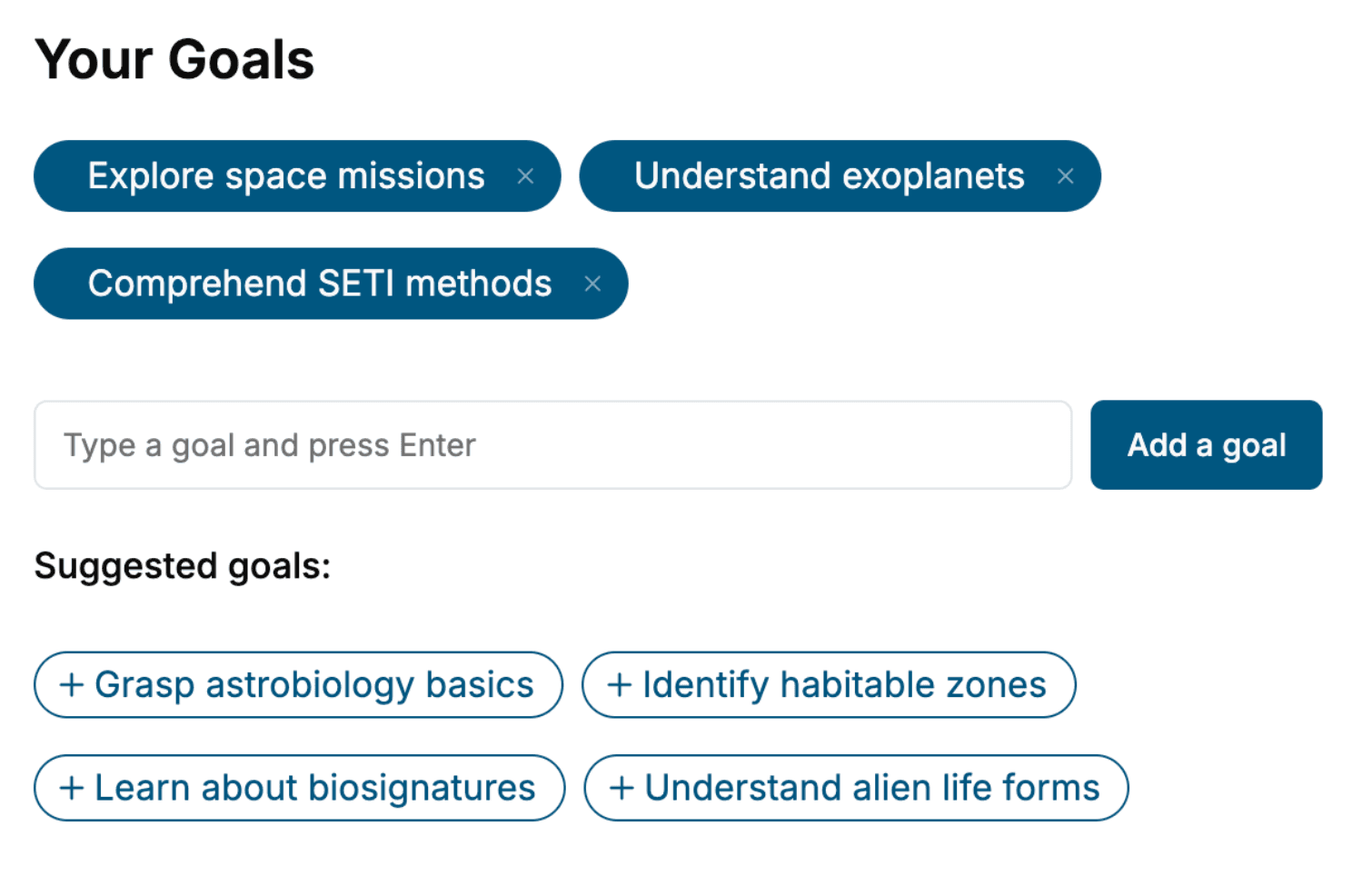
- 1. Select your focus
Select the focus of your Data Analytics book and share your background
- 2. Personalize your book
Specify your goals and choose sub-topics to include
- 3. Get your tailored book
Your book is ready in 10 minutes. Read it online, download as EPUB or PDF, or send to Kindle.

Frequently asked questions
- What is TailoredRead?
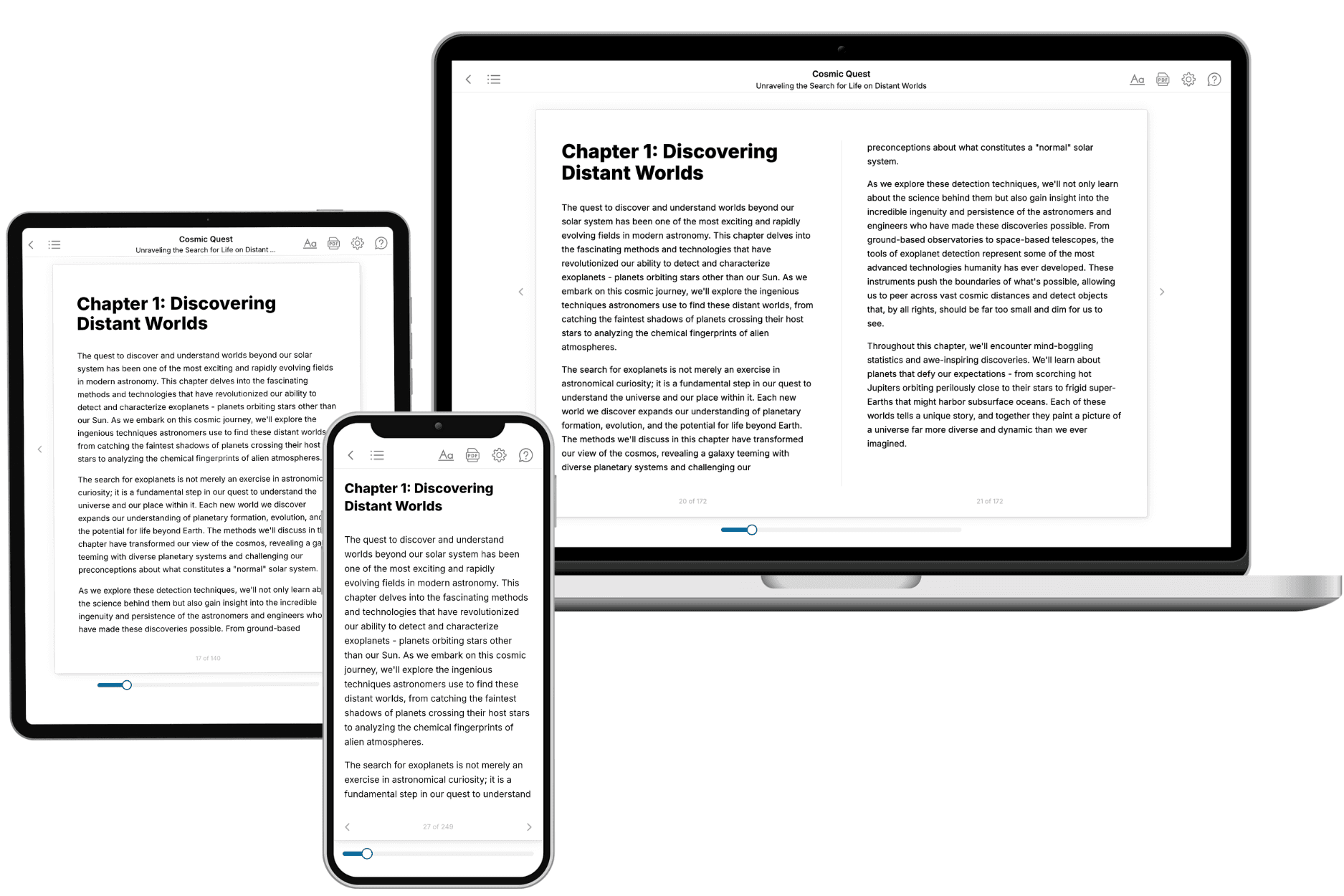
TailoredRead creates complete, full-length nonfiction ebooks, written specifically for you. Tell us what you want to learn and why, and TailoredRead writes you a complete ebook on it, with charts, tables, and diagrams throughout. Read it online, on Kindle, or on any e-reader, or download it as a PDF or EPUB. Every book is written fresh the day you order it.
- How is the book tailored to me?
Before anything is written, you answer a few short questions about your goals, your background, and the topics you care about. Your book is then planned around your answers: written at your level, focused on your goals, and covering the topics you chose, instead of the one-size-fits-all book a store sells everyone.
- Will it read like generic AI content?
No. Your book isn't a chat transcript: it's planned chapter by chapter before a single word is written, told in a clear book voice, and explains ideas visually with charts, tables, and diagrams. After writing, every book goes through an editorial pass that polishes chapters so the book reads consistent from start to finish. Judge for yourself: browse thousands of sample books on our Explore Books page.
- How accurate is the content?
Our AI first checks whether your subject needs live research. Niche and fast-moving subjects are researched before writing, and the book plan and chapters are grounded in what it finds. After writing, every book goes through a quality pass that checks its facts and consistency, and researched books list their sources in a Notes section at the back.
- How long is the book?
You choose the length: Comprehensive (250-300 pages), Detailed (150-200 pages), Essential (70-100 pages), or Short (30-50 pages).
- Does the book include visuals?
Yes. Every book includes charts, tables, and diagrams: timelines, checklists, step-by-step guides, decision trees, comparison tables, matrices, and bar charts. A typical book includes dozens of these visual elements.
- Can I read it on Kindle? What formats can I download?
Yes. Every book can be read in our online reader or downloaded as a PDF or EPUB. The EPUB can be opened with Kindle, Apple Books, Kobo, and any e-reader. The Commercial and Author licenses also include an editable Word (DOCX) and Markdown download.
- How much does it cost?
About the price of a regular ebook. The exact price depends on your book's length and complexity, from $2 for the shortest books to $35 for the most comprehensive, and it's shown when you review your book, before you commit to anything. Each book is a one-time purchase, yours to keep, no subscription. Licenses that let you share, teach, or publish your book range from $35.99 to $49.99.
- Can I preview the book before purchasing?
Before you pay, you'll see what your book will cover: the title, a detailed description, the estimated length, and the complete chapter-by-chapter table of contents, so you know what you're getting before you decide. The full text itself is written after you purchase.
- How long does it take to create a book?
About 10 minutes. You can start reading the opening chapters while the rest is still being written.