Advanced Tennis Mastery
Elevate Your Game with Pro-Level Techniques and Strategic Insights
In "Advanced Tennis Mastery," you're about to take your tennis game to new heights.
145 pages6 chaptersJul 26, 2025Tennis
About this book
This comprehensive guide is tailored for the dedicated player ready to refine their skills and adopt professional-level strategies. You'll dive deep into the intricacies of serve mechanics, exploring how to maximize power and precision through advanced biomechanics and tactical placement. The book breaks down complex techniques like the topspin forehand and the art of volleying, providing you with actionable insights to dominate the court. As you progress through the chapters, you'll discover how to perfect your footwork, a critical yet often overlooked aspect of high-level play. You'll learn the secrets of the split-step timing and how it can dramatically improve your reaction time and court coverage. The guide also introduces you to sophisticated match analysis tools, enabling you to dissect professional games and apply those insights to your own matches. Whether you're looking to add finesse to your drop shots or gain a competitive edge through strategic play, "Advanced Tennis Mastery" offers the knowledge and drills you need. By the end of this book, you'll have a pro-level understanding of the game, armed with the techniques and tactical awareness to outmaneuver your opponents and achieve your full potential on the court.
Table of contents
- IntroductionOverview of Advanced Tennis Mastery, The Importance of Refined Technique, The Mental Game in Advanced TennisRead below
- Chapter 1: Mastering the ServeUnderstanding Serve Biomechanics, Perfecting the Service Motion, Strategic Serve Placement, Mastering Serve Variations
- Chapter 2: Advanced Groundstroke TechniquesPerfecting the Topspin Forehand, Backhand Mastery: One-Handed and Two-Handed, Strategic Shot Selection
- Chapter 3: Dominating at the NetAdvanced Volley Techniques, Optimal Volley Positioning, Perfecting the Overhead Smash
- Chapter 4: Footwork and Court MovementMastering the Split-Step Timing, Improving Court Coverage, Recovery and Repositioning
- Chapter 5: Mastering Specialty ShotsThe Art of the Drop Shot, Offensive and Defensive Lobs, Slice Mastery for All Occasions
- Chapter 6: Advanced Match StrategyUsing Match Analysis Tools, Analyzing and Exploiting Opponent Weaknesses, Adapting Your Play Style Mid-Match
- Conclusion
- Appendix: Training Drills and Exercises
Introduction
Welcome to "Advanced Tennis Mastery: Elevate Your Game with Pro-Level Techniques and Strategic Insights." This comprehensive guide is designed to take your tennis game to the next level, providing you with the knowledge, techniques, and strategies employed by professional players. As an experienced tennis player with a high level of expertise, you're already familiar with the fundamentals of the game. Now, it's time to refine your skills, perfect specific techniques, and develop a deeper understanding of match strategy that will elevate your performance on the court.
Throughout this book, you'll explore advanced concepts that will challenge your current understanding of the game and push you to new heights of performance. From mastering the intricacies of serve biomechanics to developing a keen tactical awareness during matches, each chapter is crafted to provide you with actionable insights that you can immediately apply to your game. Whether you're looking to dominate your local club championships or aspire to compete at higher levels, the techniques and strategies outlined in this book will serve as your roadmap to tennis excellence.
As we embark on this journey together, it's important to approach each concept with an open mind and a willingness to refine your existing skills. The path to mastery in tennis is one of continuous improvement and adaptation. The techniques and strategies you'll learn here are not just theoretical concepts but practical tools that have been proven effective at the highest levels of the sport. By integrating these advanced principles into your game, you'll not only improve your physical performance but also enhance your mental approach to tennis, giving you a comprehensive edge over your opponents.
Overview of Advanced Tennis Mastery
"Advanced Tennis Mastery" is structured to provide a logical progression through various aspects of high-level tennis play. We begin with an in-depth look at serving, arguably the most important shot in tennis. You'll learn how to analyze and improve your serve biomechanics, perfect your service motion, and develop strategic serve placement that can give you a significant advantage from the very first stroke of each point. This foundation in serving excellence sets the stage for the rest of your game to flourish.
From there, we delve into advanced groundstroke techniques, focusing on perfecting your topspin forehand and mastering both one-handed and two-handed backhand strokes. You'll discover how to add depth and control to your groundstrokes, making them more effective weapons in your arsenal. The book then guides you through the intricacies of net play, teaching you how to dominate the front court with advanced volley techniques, optimal positioning, and a perfected overhead smash.
A critical yet often overlooked aspect of high-level tennis is footwork and court movement. You'll learn how to master the split-step timing, a fundamental technique that can dramatically improve your court coverage and reaction time. This section will transform the way you move on the court, enabling you to reach more balls and maintain better positioning throughout rallies.
As you progress through the book, you'll explore specialty shots that can give you a tactical edge. The art of the drop shot, the strategic use of offensive and defensive lobs, and the mastery of the slice for various situations will add versatility to your game. These shots are essential tools for keeping your opponents off-balance and creating opportunities to win points.
The final chapters focus on advanced match strategy, introducing you to sophisticated match analysis tools and techniques. You'll learn how to analyze and exploit opponent weaknesses, adapt your play style mid-match, and develop a mental game that complements your physical skills. This strategic approach to tennis will elevate your decision-making on the court, allowing you to outmaneuver opponents even when they may have similar technical abilities.
Throughout the book, you'll find practical drills and exercises designed to help you implement the techniques discussed. These training methods have been carefully selected to ensure that you can effectively translate the concepts from theory to practice. By consistently applying these drills to your training regimen, you'll see tangible improvements in your game.
Remember, the journey to tennis mastery is ongoing. This book serves as your guide, but your dedication to practice and willingness to push your boundaries will ultimately determine your success. As you work through each chapter, take the time to internalize the concepts and apply them diligently in your training sessions and matches. With patience and persistence, you'll see your game transform, reaching new heights of performance and enjoyment on the tennis court.
The Importance of Refined Technique
At the advanced level of tennis, the importance of refined technique cannot be overstated. While raw athleticism and natural talent can take a player far, it's the meticulous attention to technical details that separates good players from great ones. Refined technique is the foundation upon which all other aspects of your game are built. It allows for consistency, power, and precision in your shots, and provides the platform for tactical creativity during matches.
One of the primary benefits of honing your technique is increased efficiency. When your strokes are technically sound, you expend less energy to produce the same or better results. This efficiency becomes crucial in long matches or tournaments where conserving energy can make the difference between victory and defeat. Moreover, refined technique reduces the risk of injury by ensuring that your body moves in biomechanically correct ways, distributing the stress of repetitive motions more evenly across your musculoskeletal system[1].
Another critical aspect of refined technique is its role in shot consistency. When your strokes are technically sound, you're able to replicate them more reliably under various conditions and pressures. This consistency is the bedrock of high-level tennis, allowing you to execute your game plan even when facing adversity or tough opponents. It's the reason why professional players can maintain their level of play throughout long matches and grueling tournaments.
Refined technique also opens up a world of tactical possibilities. When you have a solid technical foundation, you can focus more on strategy and less on the mechanics of your shots. This allows you to be more creative in your shot selection and placement, giving you the ability to construct points more effectively. For instance, a well-refined topspin forehand not only provides consistency and depth but also allows you to change the direction of the ball more easily, opening up angles that can wrong-foot your opponent.
Furthermore, advanced technique enables you to adapt more quickly to different playing conditions. Whether it's adjusting to various court surfaces, dealing with wind, or countering different styles of play, a player with refined technique has the tools to make necessary adjustments without compromising the core elements of their strokes. This adaptability is crucial for success across different tournaments and against diverse opponents.
It's important to note that refining your technique is an ongoing process. Even the world's top players continually work on their technique, making small adjustments to stay ahead of the competition. As you progress through this book, you'll be introduced to advanced technical concepts for each aspect of the game. Approach these with patience and persistence, understanding that improvements in technique often come gradually but yield significant long-term benefits.
To truly benefit from the technical instruction in this book, it's crucial to combine the knowledge gained with deliberate practice. This means focusing intently on specific aspects of your technique during training sessions, often breaking down complex movements into smaller, manageable parts. Video analysis can be an invaluable tool in this process, allowing you to compare your technique to the ideal models presented in the book and make necessary adjustments[2].
Remember, the goal of refining your technique is not to achieve a textbook-perfect form that looks good but doesn't produce results. Instead, the aim is to develop a technique that is efficient, consistent, and effective for your individual game style. As you work through the technical aspects covered in this book, always relate them back to their practical application in match situations. The true test of refined technique is its effectiveness under the pressures of competition.
By dedicating yourself to the continuous refinement of your technique, you're laying the groundwork for long-term improvement and success in your tennis career. The advanced techniques covered in the following chapters will build upon your existing skills, pushing you to new levels of performance and understanding of the game. Embrace this process of technical refinement, and you'll find that it not only improves your physical game but also enhances your confidence and mental approach to tennis.
The Mental Game in Advanced Tennis
While refined technique and physical prowess are crucial components of advanced tennis, the mental aspect of the game is equally, if not more, important at higher levels of play. The mental game encompasses a wide range of psychological skills and attributes that can significantly impact your performance on the court. As you progress through the advanced stages of tennis, you'll find that matches are often won or lost in the mind as much as they are with the racquet.
One of the fundamental aspects of the mental game is focus and concentration. At the advanced level, points are often decided by small margins, and a momentary lapse in concentration can be the difference between winning and losing. Developing the ability to maintain intense focus throughout a match, regardless of external distractions or the score, is a skill that separates top players from the rest. This involves training your mind to stay present in the moment, focusing on the task at hand rather than dwelling on past points or worrying about future outcomes[3].
Another critical component of the mental game is emotional control. Tennis can be an emotionally charged sport, with momentum swings and high-pressure situations that can test even the most composed players. Learning to manage your emotions, staying calm under pressure, and maintaining a positive attitude regardless of the circumstances are skills that can give you a significant edge over opponents who may be more prone to emotional volatility. This doesn't mean suppressing all emotions, but rather channeling them productively and not allowing negative emotions to derail your performance.
Confidence is another cornerstone of the mental game in advanced tennis. This doesn't refer to unfounded bravado, but rather a deep-seated belief in your abilities and preparation. Confidence comes from thorough preparation, both physical and mental, and from a track record of success in training and matches. It allows you to trust your shots in crucial moments and to play assertively rather than tentatively. Building and maintaining confidence is an ongoing process that involves setting and achieving realistic goals, acknowledging your strengths, and learning constructively from failures.
Resilience and the ability to bounce back from setbacks are also crucial mental skills for advanced tennis players. In any match or tournament, you're likely to face adversity, whether it's a string of lost points, a bad call, or physical discomfort. Developing mental toughness allows you to view these challenges as opportunities rather than insurmountable obstacles. This resilience is built through experience and by reframing setbacks as learning opportunities rather than failures.
Strategic thinking and decision-making under pressure are mental skills that become increasingly important as you advance in tennis. This involves the ability to quickly analyze situations, recall patterns from practice and previous matches, and make tactical decisions in real-time. Developing your strategic thinking skills allows you to adapt your game plan mid-match, exploit opponent weaknesses, and maximize your strengths. It's a cognitive skill that complements your physical abilities and can give you a significant advantage over opponents who may be technically proficient but less tactically astute.
Visualization and mental rehearsal are powerful tools used by many top athletes, including tennis players. By vividly imagining successful performances and positive outcomes, you can enhance your confidence and prepare your mind and body for actual match situations. This technique can be particularly effective when preparing for important matches or when working on new techniques, as it helps create neural pathways that support improved performance[4].
Goal setting is another crucial aspect of the mental game in advanced tennis. Setting clear, specific, and challenging yet achievable goals provides direction and motivation for your training and competitive efforts. These goals should encompass not just outcomes (like winning a specific tournament) but also process goals (such as improving a particular aspect of your technique) and performance goals (like maintaining a certain first-serve percentage). Regularly reviewing and adjusting your goals keeps you focused and motivated on your path to tennis mastery.
Developing pre-match and in-match routines is an effective way to manage the mental challenges of advanced tennis. These routines can help you achieve an optimal mental state before and during matches, ensuring that you're focused, relaxed, and ready to perform at your best. Pre-match routines might include visualization exercises, specific warm-up sequences, or motivational self-talk. In-match routines, such as a specific sequence between points or a breathing technique during changeovers, can help you reset mentally and maintain focus throughout the match.
It's important to recognize that the mental game is not separate from the physical aspects of tennis but is intimately intertwined with them. A strong mental game can enhance your physical performance, allowing you to play closer to your potential more consistently. Conversely, refined technique and physical fitness can boost your confidence and mental resilience. As you work through the technical and strategic aspects covered in this book, always consider how they relate to and can be supported by your mental approach to the game.
Developing a strong mental game is a continuous process that requires deliberate practice, just like any physical skill. Throughout this book, you'll find suggestions and exercises aimed at enhancing various aspects of your mental game alongside the technical and strategic instruction. Embrace these opportunities to strengthen your mental skills, and you'll find that they not only improve your tennis performance but also contribute positively to other areas of your life.
Remember, at the advanced level of tennis, the margins between victory and defeat are often slim. By developing a robust mental game, you give yourself a significant advantage, one that can make the difference in tight matches and help you perform consistently at your best. As you continue your journey towards tennis mastery, view the mental aspect of the game not as a separate entity but as an integral part of your overall development as a player.
Notes
Introduction
- 1. T. S. Ellenbecker and E. P. Roetert, "The relationship between stroke technique and injury prevention in tennis," Medicine and Science in Tennis, 2009
- 2. M. Crespo and M. Reid, Coaching beginner and intermediate tennis players, London: International Tennis Federation, 2007
- 3. R. S. Weinberg and D. Gould, Foundations of Sport and Exercise Psychology (7th ed.), Human Kinetics, 2018
- 4. R. W. Coelho and others, "Imagery intervention in open and closed tennis motor skill performance," Perceptual and Motor Skills, 2007
This is the end of the free sample. The full book has 6 chapters.
Want this book written for you?
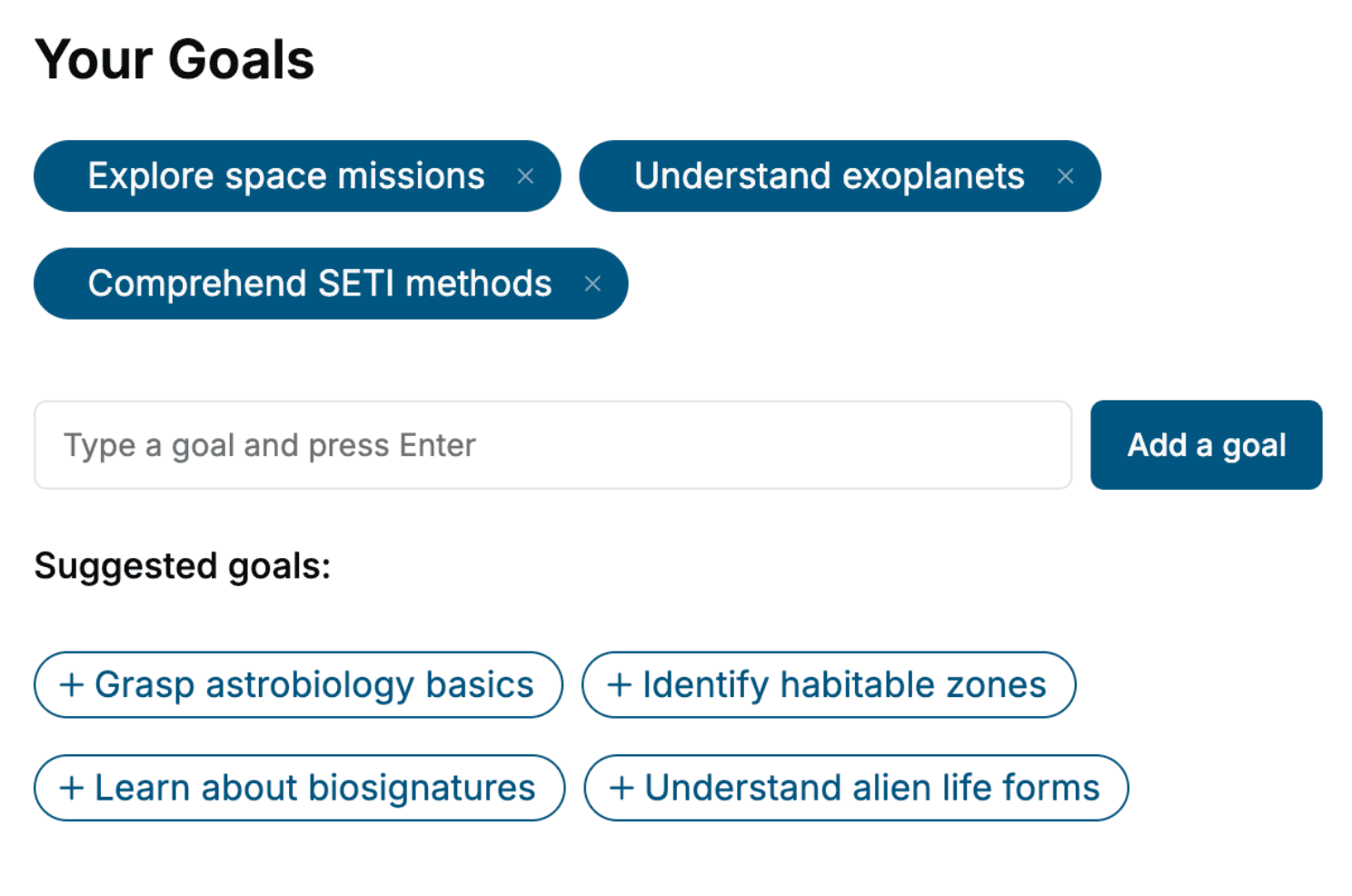
Tell us your goals and background, and get your own version of this book, tailored by AI to you.


Benefits of AI-tailored books
- Read one book, not ten:
- all the Tennis knowledge you need, gathered into a single book.
- Save days of learning:
- tell us your goals, choose your topics, and the whole book is built around them.
- Learn effortlessly:
- Tennis book written for your specific background and expertise.
- Understand at a glance:
- includes charts, tables, timelines, checklists, decision trees, and more.
- Stay current:
- written the day you order it, not years ago.
- Trust what you read:
- every book is checked for accuracy, with real research when your subject needs it.
Create your unique book in 3 steps
- 1. Select your focus
Select the focus of your Tennis book and share your background
- 2. Personalize your book
Specify your goals and choose sub-topics to include
- 3. Get your tailored book
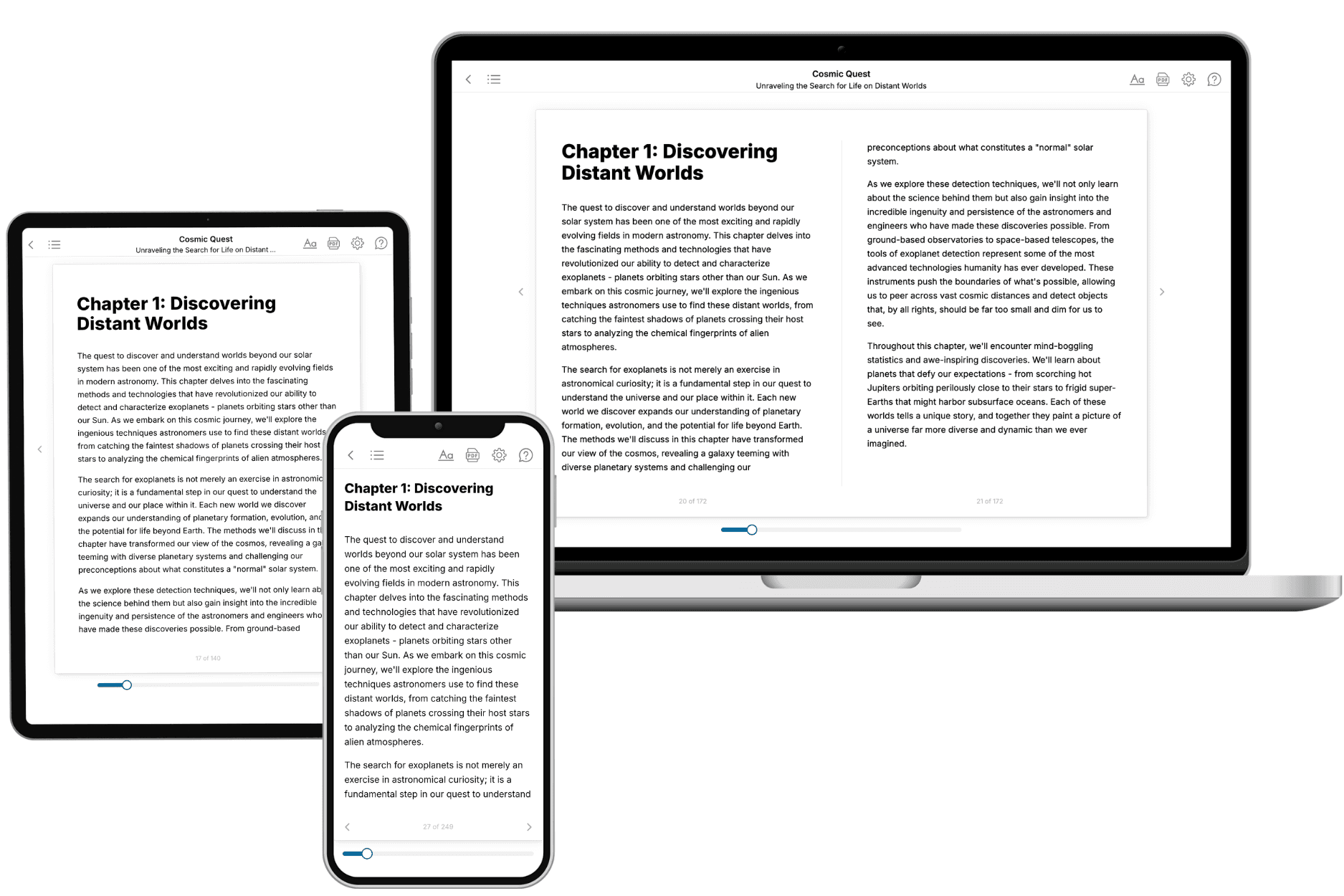
Your book is ready in 10 minutes. Read it online, download as EPUB or PDF, or send to Kindle.

Frequently asked questions
- What is TailoredRead?
TailoredRead creates complete, full-length nonfiction ebooks, written specifically for you. Tell us what you want to learn and why, and TailoredRead writes you a complete ebook on it, with charts, tables, and diagrams throughout. Read it online, on Kindle, or on any e-reader, or download it as a PDF or EPUB. Every book is written fresh the day you order it.
- How is the book tailored to me?
Before anything is written, you answer a few short questions about your goals, your background, and the topics you care about. Your book is then planned around your answers: written at your level, focused on your goals, and covering the topics you chose, instead of the one-size-fits-all book a store sells everyone.
- Will it read like generic AI content?
No. Your book isn't a chat transcript: it's planned chapter by chapter before a single word is written, told in a clear book voice, and explains ideas visually with charts, tables, and diagrams. After writing, every book goes through an editorial pass that polishes chapters so the book reads consistent from start to finish. Judge for yourself: browse thousands of sample books on our Explore Books page.
- How accurate is the content?
Our AI first checks whether your subject needs live research. Niche and fast-moving subjects are researched before writing, and the book plan and chapters are grounded in what it finds. After writing, every book goes through a quality pass that checks its facts and consistency, and researched books list their sources in a Notes section at the back.
- How long is the book?
You choose the length: Comprehensive (250-300 pages), Detailed (150-200 pages), Essential (70-100 pages), or Short (30-50 pages).
- Does the book include visuals?
Yes. Every book includes charts, tables, and diagrams: timelines, checklists, step-by-step guides, decision trees, comparison tables, matrices, and bar charts. A typical book includes dozens of these visual elements.
- Can I read it on Kindle? What formats can I download?
Yes. Every book can be read in our online reader or downloaded as a PDF or EPUB. The EPUB can be opened with Kindle, Apple Books, Kobo, and any e-reader. The Commercial and Author licenses also include an editable Word (DOCX) and Markdown download.
- How much does it cost?
About the price of a regular ebook. The exact price depends on your book's length and complexity, from $2 for the shortest books to $35 for the most comprehensive, and it's shown when you review your book, before you commit to anything. Each book is a one-time purchase, yours to keep, no subscription. Licenses that let you share, teach, or publish your book range from $35.99 to $49.99.
- Can I preview the book before purchasing?
Before you pay, you'll see what your book will cover: the title, a detailed description, the estimated length, and the complete chapter-by-chapter table of contents, so you know what you're getting before you decide. The full text itself is written after you purchase.
- How long does it take to create a book?
About 10 minutes. You can start reading the opening chapters while the rest is still being written.