Affinity Chromatography Essentials
Master the Science and Practice of Selective Protein Separation
What if the purity of your protein samples directly determined the success of your entire research project?
222 pages10 chaptersJun 17, 2026Chromatography
About this book
Affinity chromatography stands as one of the most powerful yet underutilized tools in modern biochemistry, capable of achieving separation selectivity that other techniques simply cannot match. This comprehensive guide takes you beyond basic theory to equip you with the practical knowledge needed to master affinity chromatography in real-world laboratory settings. You'll discover how to select the right ligands and matrices for your specific applications, optimize binding and elution conditions, and troubleshoot common problems that plague even experienced researchers. Whether you're purifying therapeutic proteins, isolating antibodies, or developing diagnostic assays, this book provides the actionable insights and step-by-step protocols you need to achieve consistent, reproducible results. Learn from detailed case studies, understand the science behind every decision you make, and gain the confidence to design sophisticated purification strategies that deliver exceptional outcomes.
Table of contents
- IntroductionWhy Affinity Chromatography Matters in Modern Science, How to Use This Book, Key Concepts You'll MasterRead below
- Chapter 1: Fundamentals of Affinity ChromatographyWhat Is Affinity Chromatography?, Historical Development and Evolution, How It Compares to Other Separation Techniques
- Chapter 2: Binding Principles and Molecular InteractionsLigand-Target Binding Mechanisms, Binding Kinetics and Rate Constants, Thermodynamics and Binding Affinity, Specificity and Selectivity in Binding
- Chapter 3: Ligands, Matrices, and Column MaterialsTypes of Ligands and Their Applications, Choosing the Right Matrix Material, Ligand Immobilization Strategies, Evaluating Commercial Affinity Columns
- Chapter 4: Buffer Systems and Experimental ConditionsSelecting Appropriate Buffer Systems, pH, Ionic Strength, and Temperature Effects, Additives and Condition Modifiers
- Chapter 5: Column Preparation and Sample LoadingProper Column Equilibration Procedures, Sample Preparation and Pre-treatment, Loading Strategies and Flow Rates, Column Capacity and Overloading Effects
- Chapter 6: Elution Techniques and Recovery OptimizationElution Methods: Competitive and Non-competitive, Gradient Elution Strategies, Maximizing Recovery and Yield
- Chapter 7: Troubleshooting Common ProblemsAddressing Non-specific Binding, Diagnosing and Fixing Low Recovery, Preventing and Resolving Column Fouling, Managing Peak Broadening and Resolution Issues
- Chapter 8: Practical Applications and Case StudiesProtein Purification from Complex Mixtures, Antibody Purification and Characterization, Enzyme Isolation and Activity Preservation
- Chapter 9: Integration with Other Chromatography TechniquesDesigning Multi-step Purification Workflows, Combining with Gel Filtration Chromatography, Pairing with Ion Exchange Chromatography
- Chapter 10: Quality Control and Regulatory ConsiderationsMeasuring Purity and Quality Metrics, Method Validation and Reproducibility, Regulatory Standards and Compliance
- ConclusionYour Path to Affinity Chromatography Mastery
- Glossary of Key Terms
- Further Reading and Resources
Introduction
Imagine spending weeks growing and expressing a recombinant protein, only to end up with a sample so contaminated with host cell proteins that your downstream assays produce meaningless results. This scenario plays out in laboratories around the world more often than most researchers care to admit. The difference between a successful purification and a frustrating dead end frequently comes down to one critical choice: the separation technique you select and how well you understand it. Affinity chromatography, when applied correctly, can transform that frustrating outcome into a clean, high-yield result in a single step.
Affinity chromatography is built on a beautifully simple idea. Every protein has at least one binding partner in nature, whether that is a substrate, a cofactor, an inhibitor, or another protein. By immobilizing that binding partner onto a solid support and passing your sample through it, you can capture your target molecule with extraordinary selectivity while everything else flows right through. The technique exploits the same molecular recognition that drives biological function, turning nature's own specificity into a powerful laboratory tool. No other chromatography method comes close to matching this level of selectivity in a single pass.
Despite its power, affinity chromatography is frequently misunderstood, underutilized, or applied without the depth of knowledge needed to get consistent results. Many researchers treat it as a black-box procedure, following a protocol without understanding why each step matters. When something goes wrong, which it inevitably does, they lack the conceptual foundation to diagnose the problem. This book was written to change that. Whether you are new to affinity chromatography or looking to sharpen skills you have already developed, the goal here is to give you both the scientific understanding and the practical tools to work with confidence at every stage of the process.
The chapters ahead cover everything from the molecular forces that drive ligand-target binding to the regulatory standards that govern pharmaceutical purification workflows. Along the way, you will find concrete protocols, worked examples, troubleshooting frameworks, and decision-making guides that connect theory directly to bench practice. The science is explained clearly, without unnecessary jargon, but without oversimplifying the details that actually matter. By the time you reach the final chapter, you should be able to design, execute, and troubleshoot an affinity chromatography experiment with the kind of systematic confidence that comes from genuine understanding.
Why Affinity Chromatography Matters in Modern Science
The demand for highly purified proteins has never been greater. Biopharmaceutical manufacturing, structural biology, proteomics, and diagnostic assay development all depend on obtaining target molecules at high purity and in sufficient quantity to support downstream work. Traditional separation methods such as ion exchange, size exclusion, and hydrophobic interaction chromatography each contribute something valuable, but none of them can match the selectivity that affinity chromatography delivers. When a single purification step can take a crude cell lysate from roughly 1% target protein to greater than 95% purity, the practical impact on research efficiency is enormous.[1]
The biopharmaceutical industry provides the clearest illustration of why this matters at scale. Monoclonal antibodies are among the most important therapeutic molecules in modern medicine, used to treat cancers, autoimmune diseases, and infectious conditions. Protein A affinity chromatography is the industry-standard first step for purifying these antibodies from cell culture supernatants. A single Protein A column can capture an antibody with purity levels exceeding 98% in one pass, dramatically reducing the number of subsequent polishing steps required. This efficiency translates directly into lower manufacturing costs and faster timelines for bringing therapies to patients.
Beyond pharmaceuticals, affinity chromatography plays a central role in basic research. Structural biologists rely on it to obtain the milligram quantities of pure protein needed for crystallography and cryo-electron microscopy studies. Enzymologists use it to isolate active enzymes while preserving their catalytic function. Researchers developing diagnostic tests use affinity methods to capture and concentrate biomarkers from complex biological fluids like serum or urine. In each of these contexts, the selectivity of affinity chromatography is not just convenient; it is often the only practical way to achieve the required purity.
The technique has also become indispensable in the emerging field of proteomics, where researchers aim to identify and quantify thousands of proteins simultaneously from complex biological samples. Affinity enrichment strategies allow specific subsets of proteins, such as phosphoproteins or glycoproteins, to be selectively captured and concentrated before mass spectrometry analysis. Without this enrichment step, low-abundance proteins of biological interest would be completely masked by the overwhelming presence of highly abundant proteins. Affinity chromatography essentially acts as a molecular filter that makes the invisible visible.
It is also worth noting that affinity chromatography continues to evolve rapidly. New ligand chemistries, improved matrix materials, and advances in immobilization technology are constantly expanding what is possible. Aptamer-based affinity columns, molecularly imprinted polymers, and nanobody-functionalized resins represent just a few of the innovations pushing the field forward. Understanding the foundational principles covered in this book will position you to evaluate and adopt these new tools intelligently as they become available, rather than simply following vendor protocols without context.
Finally, the consequences of getting purification wrong extend far beyond wasted time and reagents. In a research context, impure protein samples can produce misleading experimental results that send entire projects in the wrong direction. In a clinical or pharmaceutical context, inadequate purification can introduce contaminants that pose safety risks to patients. The stakes are real, and the investment in understanding affinity chromatography deeply is one that pays dividends across every application where protein quality matters.
How to Use This Book
This book is organized to serve two types of readers. The first is someone building knowledge from the ground up, who wants to understand affinity chromatography systematically before applying it. The second is an experienced researcher who already runs affinity columns regularly but wants to deepen their understanding of specific aspects, whether that is optimizing elution conditions, troubleshooting a persistent problem, or integrating affinity steps into a more complex purification workflow. Both approaches are valid, and the book is structured to support either path.
If you are reading sequentially, the chapters follow a logical progression. The early chapters establish the scientific foundation, covering what affinity chromatography is, how it works at the molecular level, and how it compares to other separation techniques. The middle chapters move into practical territory, addressing ligand and matrix selection, buffer systems, column preparation, sample loading, and elution strategies. The later chapters focus on troubleshooting, real-world applications, integration with complementary techniques, and quality control. This arc takes you from concept to confident practice.
If you are using the book as a reference, each chapter is designed to stand on its own. The subchapters within each chapter address specific, focused questions. For example, if you are dealing with a non-specific binding problem right now, you can go directly to Chapter 7 without needing to read everything that precedes it. Key terms are defined when they first appear and are also collected in the glossary at the back of the book for quick reference. Cross-references within chapters point you to related content when deeper background would be helpful.
Throughout the book, you will find several recurring features designed to make the content immediately useful in the laboratory:
- Worked examples that walk through real experimental scenarios with specific numbers, conditions, and decision points
- Decision frameworks that help you choose between options when multiple approaches are valid
- Troubleshooting tables that map symptoms to likely causes and corrective actions
- Protocol summaries that distill key procedures into step-by-step formats you can reference at the bench
- Common mistakes sections that highlight the errors most likely to undermine your results
The case studies in Chapter 8 deserve special mention. Each one follows a complete purification project from initial planning through final quality assessment, including the problems that arose and how they were resolved. These are not idealized success stories. They reflect the kind of iterative problem-solving that real laboratory work requires. Reading through them will give you a realistic sense of how the principles covered in earlier chapters play out under actual experimental conditions, including the moments when things do not go as planned.
One practical suggestion: do not skip Chapter 2 on binding principles and molecular interactions, even if you are primarily interested in the practical chapters. The decisions you make about buffer conditions, elution strategies, and troubleshooting approaches all make more sense when you understand the underlying molecular forces at work. Researchers who treat affinity chromatography as a purely procedural exercise tend to struggle when their standard protocol stops working. Those who understand the science behind each step can adapt intelligently when conditions change.
The Further Reading section at the end of the book provides curated references for each chapter, pointing you toward primary literature, review articles, and technical resources for topics you want to explore in greater depth. The field moves quickly, and staying current with the literature is one of the best ways to continue developing your expertise beyond what any single book can cover. Think of this book as a foundation, not a ceiling.
Finally, a note on notation and terminology. Affinity chromatography spans multiple disciplines, including biochemistry, chemical engineering, pharmaceutical science, and analytical chemistry, and different communities sometimes use different terms for the same concepts. Where terminology varies, the most widely used term in the biochemistry and life sciences literature is used here, with alternatives noted where relevant. This should make the content accessible regardless of your specific disciplinary background.
Key Concepts You'll Master
Before diving into the detailed chapters, it helps to have a map of the conceptual territory ahead. Affinity chromatography draws on ideas from several areas of science, and understanding how these ideas connect to each other is part of what makes the technique so intellectually satisfying to learn. The following overview introduces the core concepts you will develop throughout the book, giving you a framework to hang new information on as you encounter it.
The most fundamental concept is molecular recognition. Proteins interact with other molecules through a combination of non-covalent forces, including hydrogen bonds, electrostatic interactions, van der Waals forces, and hydrophobic effects. These forces combine to create binding interactions that are both specific (the right molecule binds) and reversible (the molecule can be released under the right conditions). Affinity chromatography exploits this reversibility deliberately. You want your target to bind tightly enough to be captured during loading, but loosely enough to be released cleanly during elution. Understanding what drives binding strength gives you the tools to control both of these steps.
Closely related to molecular recognition is the concept of binding affinity, typically expressed as the dissociation constant (Kd). The Kd describes how tightly a ligand and its target interact. A low Kd value, in the nanomolar range for example, indicates very tight binding. A high Kd value, in the micromolar range, indicates weaker binding. Both situations present different practical challenges. Very tight binding can make elution difficult without denaturing your target protein. Very weak binding may result in poor capture efficiency. Chapter 2 covers how to work with binding affinity data to make informed decisions about your experimental design.
The ligand is the molecule immobilized on the column matrix that captures your target. Ligand selection is one of the most consequential decisions in affinity chromatography, and it depends on what you know about your target molecule's binding partners. Common ligand categories include:
- Biological ligands such as antibodies, lectins, protein A, and streptavidin, which exploit natural binding interactions
- Enzyme substrates and cofactors such as NAD+ or ATP analogs, used to capture specific enzyme classes
- Metal ions used in immobilized metal affinity chromatography (IMAC) to capture histidine-tagged proteins
- Synthetic ligands designed to mimic natural binding partners with improved stability and lower cost
The matrix is the solid support that carries the ligand. An ideal matrix is chemically inert, mechanically stable, has low non-specific binding, and allows adequate flow rates under operating conditions. Agarose-based beads have historically dominated the field due to their favorable properties, but newer materials including silica, synthetic polymers, and magnetic particles offer advantages in specific applications. The choice of matrix affects not just performance but also scalability, cost, and compatibility with cleaning and sanitization procedures. These trade-offs are explored in detail in Chapter 3.
Elution strategy is where many researchers encounter their first serious challenges. Once your target is bound to the column, you need to release it in a form that is pure, active, and concentrated. The two main approaches are specific elution, using a competing molecule that displaces the target from the ligand, and non-specific elution, using changes in pH, ionic strength, or chaotropic agents to disrupt the binding interaction. Each approach has advantages and risks. Harsh elution conditions can denature sensitive proteins. Mild conditions may leave some target bound to the column, reducing yield. Chapter 6 covers how to select and optimize elution conditions for different target-ligand combinations.
Beyond these core concepts, you will also develop a working understanding of several important practical topics:
- Column equilibration and regeneration: how to prepare a column for use and restore it to working condition after each run
- Sample preparation: how to pre-treat your starting material to maximize binding efficiency and protect column performance
- Non-specific binding: why unwanted proteins sometimes stick to the column and how to minimize this problem
- Scale-up considerations: how to translate a method that works at small scale into a reliable process at larger volumes
- Quality metrics: how to assess the purity and yield of your purified protein using quantitative methods
One concept that deserves early emphasis is the idea of systematic optimization. Affinity chromatography is not a one-size-fits-all technique. The conditions that work perfectly for purifying a His-tagged enzyme from E. coli lysate may be completely wrong for purifying a glycoprotein from mammalian cell culture supernatant. Every target-ligand pair has its own optimal conditions, and finding those conditions requires a methodical approach to experimental design. Throughout this book, you will encounter frameworks for making these optimization decisions efficiently, without having to test every possible variable in an exhaustive trial-and-error process.
It is also worth establishing early that purity and yield are often in tension with each other. Conditions that maximize purity, such as stringent washing steps, may reduce yield by washing away some of your target along with the contaminants. Conditions that maximize yield may compromise purity by allowing some contaminants to remain. Understanding this trade-off and knowing how to navigate it for your specific application is one of the most practically valuable skills you will develop. The answer depends on what you need the purified protein for. A structural biology experiment may demand very high purity even at the cost of yield, while a preparative biochemistry application may prioritize yield over absolute purity.
By the time you have worked through all ten chapters, you will have a comprehensive toolkit for approaching affinity chromatography problems. You will understand the science well enough to predict how changes in conditions will affect your results. You will have practical protocols and decision frameworks to guide your experimental work. And you will have the troubleshooting knowledge to diagnose and fix problems when they arise. That combination of theoretical understanding and practical skill is what separates researchers who consistently get good results from those who struggle to reproduce their own data. The goal of this book is to put you firmly in the first category.
Notes
Introduction
- 1. M. Wilchek and others, Affinity chromatography, Methods in Enzymology, 1984
This is the end of the free sample. The full book has 10 chapters.
Want this book written for you?
Tell us your goals and background, and get your own version of this book, tailored by AI to you.


Benefits of AI-tailored books
- Read one book, not ten:
- all the Chromatography knowledge you need, gathered into a single book.
- Save days of learning:
- tell us your goals, choose your topics, and the whole book is built around them.
- Learn effortlessly:
- Chromatography book written for your specific background and expertise.
- Understand at a glance:
- includes charts, tables, timelines, checklists, decision trees, and more.
- Stay current:
- written the day you order it, not years ago.
- Trust what you read:
- every book is checked for accuracy, with real research when your subject needs it.
Create your unique book in 3 steps
- 1. Select your focus
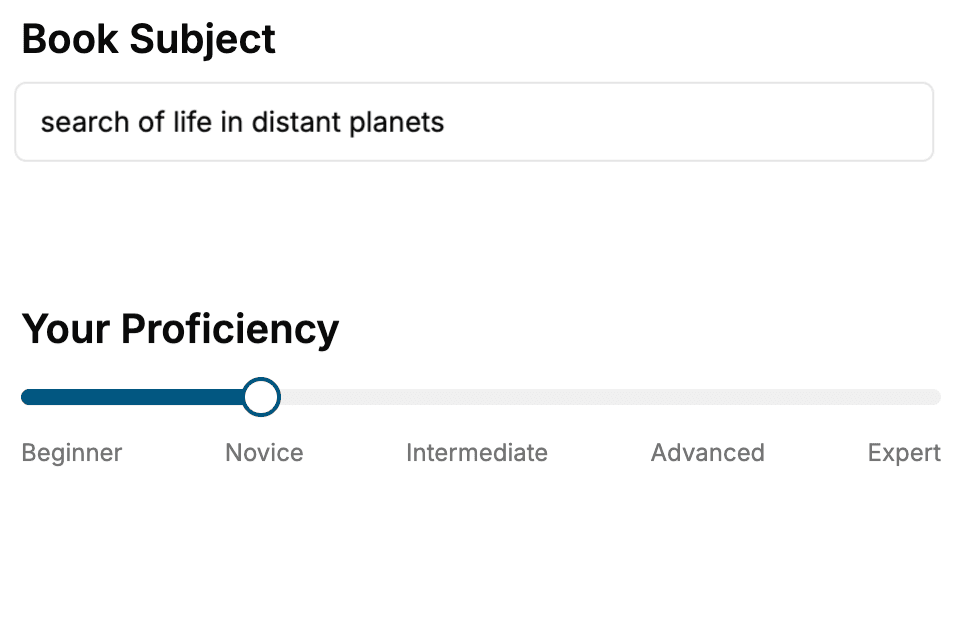
Select the focus of your Chromatography book and share your background
- 2. Personalize your book
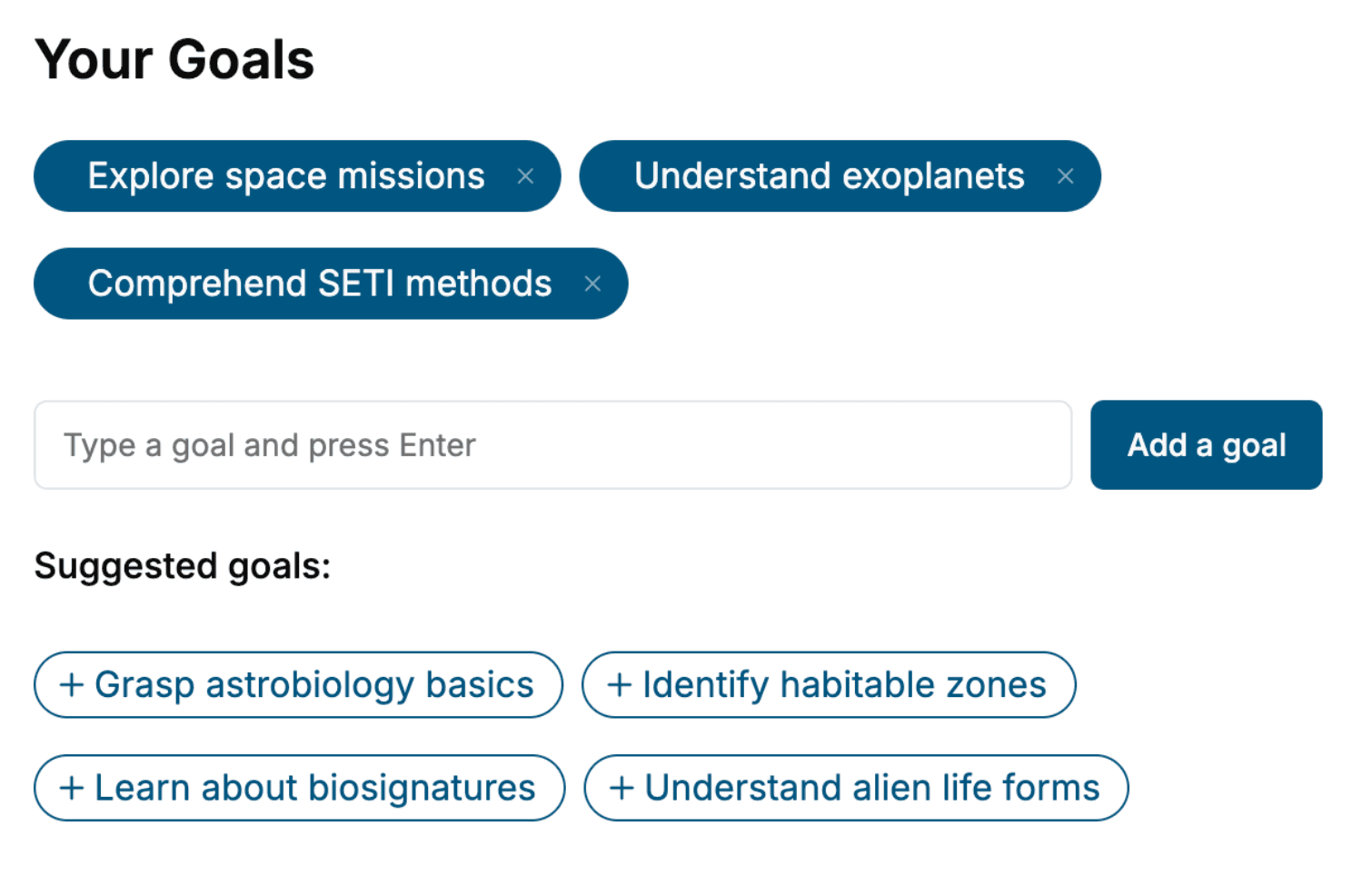
Specify your goals and choose sub-topics to include
- 3. Get your tailored book
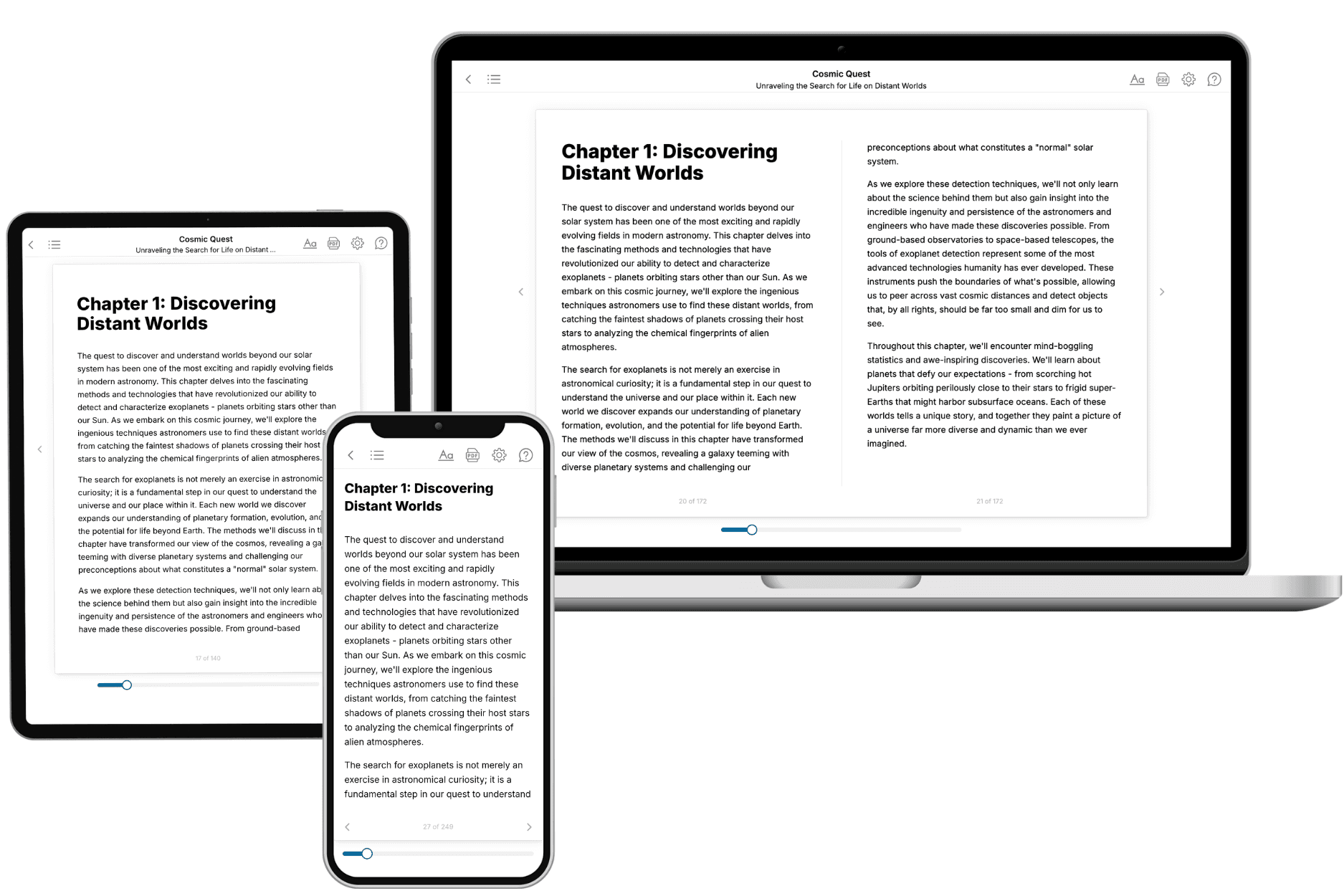
Your book is ready in 10 minutes. Read it online, download as EPUB or PDF, or send to Kindle.
Frequently asked questions
- What is TailoredRead?
TailoredRead creates complete, full-length nonfiction ebooks, written specifically for you. Tell us what you want to learn and why, and TailoredRead writes you a complete ebook on it, with charts, tables, and diagrams throughout. Read it online, on Kindle, or on any e-reader, or download it as a PDF or EPUB. Every book is written fresh the day you order it.
- How is the book tailored to me?
Before anything is written, you answer a few short questions about your goals, your background, and the topics you care about. Your book is then planned around your answers: written at your level, focused on your goals, and covering the topics you chose, instead of the one-size-fits-all book a store sells everyone.
- Will it read like generic AI content?
No. Your book isn't a chat transcript: it's planned chapter by chapter before a single word is written, told in a clear book voice, and explains ideas visually with charts, tables, and diagrams. After writing, every book goes through an editorial pass that polishes chapters so the book reads consistent from start to finish. Judge for yourself: browse thousands of sample books on our Explore Books page.
- How accurate is the content?
Our AI first checks whether your subject needs live research. Niche and fast-moving subjects are researched before writing, and the book plan and chapters are grounded in what it finds. After writing, every book goes through a quality pass that checks its facts and consistency, and researched books list their sources in a Notes section at the back.
- How long is the book?
You choose the length: Comprehensive (250-300 pages), Detailed (150-200 pages), Essential (70-100 pages), or Short (30-50 pages).
- Does the book include visuals?
Yes. Every book includes charts, tables, and diagrams: timelines, checklists, step-by-step guides, decision trees, comparison tables, matrices, and bar charts. A typical book includes dozens of these visual elements.
- Can I read it on Kindle? What formats can I download?
Yes. Every book can be read in our online reader or downloaded as a PDF or EPUB. The EPUB can be opened with Kindle, Apple Books, Kobo, and any e-reader. The Commercial and Author licenses also include an editable Word (DOCX) and Markdown download.
- How much does it cost?
About the price of a regular ebook. The exact price depends on your book's length and complexity, from $2 for the shortest books to $35 for the most comprehensive, and it's shown when you review your book, before you commit to anything. Each book is a one-time purchase, yours to keep, no subscription. Licenses that let you share, teach, or publish your book range from $35.99 to $49.99.
- Can I preview the book before purchasing?
Before you pay, you'll see what your book will cover: the title, a detailed description, the estimated length, and the complete chapter-by-chapter table of contents, so you know what you're getting before you decide. The full text itself is written after you purchase.
- How long does it take to create a book?
About 10 minutes. You can start reading the opening chapters while the rest is still being written.