Agile Testing with TestFlight
Master Iterative Development and Beta Testing for Modern App Development
Many development teams struggle with the gap between writing code and getting real user feedback.
238 pages11 chaptersAug 23, 2026Apple TestFlight
About this book
They ship features that don't meet expectations, discover critical bugs after launch, or waste weeks in lengthy testing phases that slow down their sprints. The problem isn't lack of effort—it's that traditional testing approaches don't align with how modern Agile teams actually work. This book shows you how to integrate Apple's TestFlight platform directly into your Agile workflow, creating a seamless feedback loop from development to production. You'll learn how to structure your sprints around continuous testing, leverage beta users as part of your validation strategy, and use TestFlight's capabilities to maintain quality without sacrificing speed. Whether you're using Scrum, Kanban, or another Agile methodology, you'll discover practical techniques for implementing CI/CD pipelines, managing cross-functional teams, and building a testing culture that supports rapid iteration. By the end, you'll have a clear roadmap for delivering better apps faster.
Table of contents
- IntroductionWhy Agile Testing Matters in Modern Development, The Role of TestFlight in Your Agile Workflow, What You'll Learn in This BookRead below
- Chapter 1: Agile Fundamentals and TestingCore Agile Principles and Values, Understanding Iterative Development and Sprints, Testing as a First-Class Agile Practice
- Chapter 2: Agile Methodologies: Scrum, Kanban, and BeyondScrum: Structured Sprints and Ceremonies, Kanban: Continuous Flow and Flexibility, Choosing the Right Methodology for Your Team
- Chapter 3: Introduction to TestFlight and Apple's Testing PlatformWhat TestFlight Is and How It Works, TestFlight Across iOS, macOS, and Beyond, Getting Started with TestFlight and App Store Connect
- Chapter 4: Continuous Integration and Continuous DeploymentCI/CD Pipelines: Automating Your Workflow, Integrating TestFlight into Your CI/CD Pipeline, Reducing Bottlenecks and Accelerating Releases
- Chapter 5: Building Cross-Functional Agile TeamsOrganizing Developers, QA, and Product Managers, Collaboration Practices for Effective Testing, Communication Channels and Feedback Loops
- Chapter 6: Beta Testing Strategies with TestFlightThe Purpose and Value of Beta Testing, Recruiting and Managing Beta Testers, Collecting and Analyzing User Feedback
- Chapter 7: Quality Assurance in Agile WorkflowsQA's Role in Agile Development, Unit Testing and Automated Testing Practices, Building a Testing Center of Excellence
- Chapter 8: AI and Automation in Agile TestingAI-Powered Testing Tools and Their Benefits, Automating Repetitive Test Cases, Balancing Automation with Human Exploratory Testing
- Chapter 9: Managing Requirements and Documentation in AgileLightweight Documentation Practices, Adapting to Changing Requirements During Sprints, Writing User Stories and Acceptance Criteria
- Chapter 10: Metrics, Monitoring, and Continuous ImprovementKey Metrics for Agile Testing Teams, Using TestFlight Analytics and Crash Reports, Retrospectives and Continuous Improvement Cycles
- Chapter 11: Real-World Implementation: From Sprint to ReleasePlanning Sprints with Testing in Mind, Daily Standups and Testing Visibility, Determining Release Readiness with TestFlight Data
- ConclusionKey Takeaways for Your Agile Journey, Next Steps and Continuous Evolution
- Glossary
- Further Reading and Resources
Introduction
A product manager opens a crash report on a Monday morning and finds forty new entries from a build that shipped to beta testers only three days earlier. The team could panic, or it could treat this as exactly the signal the process was built to produce. That second reaction, calm and structured rather than reactive, separates teams that have genuinely adopted Agile testing from teams that have simply adopted Agile vocabulary. This book exists for the second group's aspiration and the first group's frustration: the gap between saying "we're Agile" and actually connecting every sprint to real user behavior through a working feedback mechanism.
Software teams have absorbed the language of sprints, standups, and backlogs for years, yet many still treat testing as a phase bolted onto the end of development rather than a thread woven through it. The result is a familiar pattern: features get built, a testing cycle gets scheduled, bugs get found late, and release dates slip. Meanwhile, the tools available to close that gap have matured considerably, particularly on Apple's platforms, where a beta build can reach real users within minutes of a build being uploaded. The technology has outpaced the habits of many teams using it.
This introduction sets the frame for everything that follows. It explains why testing needs to be a continuous activity rather than a checkpoint, how TestFlight fits into that continuous activity as a distribution and feedback tool, and what structure the rest of the book follows to help apply these ideas in a real organization. None of this requires abandoning a methodology already in place. Whether a team runs Scrum, Kanban, Extreme Programming, or a blend of practices borrowed from several methodologies, the core argument stays the same: fast feedback from real users, gathered continuously, produces better software than fast feedback withheld until the end.
Consider two teams building similar apps. Team A finishes a feature, runs it through an internal QA pass, and releases it to the App Store six weeks later, learning how users actually feel about it only through App Store reviews and support tickets. Team B ships a beta build to a small group of external testers within the same sprint the feature was built, collects structured feedback and crash logs within days, and adjusts before the feature ever reaches a public release. Both teams may use the word "Agile" to describe their process. Only one of them is practicing it in a way that actually shortens the distance between building and learning.
Why Agile Testing Matters in Modern Development
Traditional software testing grew out of a world where release cycles were measured in months or years, and a dedicated testing phase made sense because everything else in the process was slow too. Mobile app development broke that assumption. Users expect frequent updates, competitors ship weekly, and app marketplaces reward apps that respond quickly to feedback. A testing approach built for annual release cycles cannot serve a team that wants to ship every two weeks. The mismatch between old testing habits and new release expectations is where most of the pain in modern app development actually lives.
Agile testing solves this by refusing to treat testing as a separate stage at all. Instead, it treats testing as an activity that happens alongside coding, starting from the first day of a sprint rather than the last. A developer writing a new screen writes tests for that screen in the same sitting. A QA engineer reviews acceptance criteria before a single line of code is written, not after the feature is "done." This shift changes the psychology of the team: bugs stop being something discovered by someone else later, and start being something everyone catches together, early, while the cost of fixing them is still low.
The cost curve here is worth being concrete about. A defect caught while a developer is still writing the feature might take minutes to fix. The same defect caught during a dedicated test phase after several other features have been built on top of it might take hours, because now other code depends on the broken behavior. The same defect caught after release, once real users have built workflows around the buggy behavior or lost trust in the app, might cost days of support tickets, a patch release, and reputational damage that no amount of engineering effort can undo. Agile testing is fundamentally a strategy for staying on the cheap end of that curve.
None of this works without genuinely rapid feedback loops, and this is where many teams stall. It is one thing to say that testing should happen continuously; it is another to have a mechanism that gets a working build in front of real users continuously. Internal QA teams can only catch so much, because they know the app too well and use it too differently from an average customer. A team needs external eyes, real devices, and real usage patterns feeding back into the sprint, not just internal test cases feeding back into a checklist. That need for external, real-world feedback is precisely the gap that a platform like TestFlight is built to close.
Think about how a feedback loop actually behaves when it is short versus when it is long. A short loop, where a bug is reported and fixed within the same day, keeps a small mental model in every developer's head: what changed, why it broke, how it was fixed. A long loop, where feedback arrives weeks after code was written, forces a developer to reconstruct that context from scratch, often after moving on to several other features in the meantime. Every long loop imposes what amounts to a tax on the whole team's attention. Shortening loops is not a nicety. It is one of the highest-leverage things a team can do to increase both quality and speed at the same time.
Agile testing also changes who is responsible for quality. In a waterfall-influenced setup, quality is often seen as a QA team's job, something that happens after development is "finished." In a genuinely Agile setup, quality becomes a shared responsibility across the entire cross-functional team, discussed in more detail in the chapter on structuring cross-functional Agile teams. Developers write unit tests. Product managers write clear acceptance criteria before work starts. QA engineers spend more time on exploratory testing and less time chasing basic regressions that automation should have already caught. This distribution of responsibility is not a demotion of QA's role; it is an expansion of everyone else's.
The Role of TestFlight in Your Agile Workflow
TestFlight sits at the exact point where Agile theory meets Agile practice for teams building on Apple's platforms. A sprint can be planned perfectly, a backlog can be groomed with precise acceptance criteria, and a team can hold flawless daily standups, but none of that produces real user feedback unless a working build actually reaches real people. TestFlight is the mechanism that makes that last step fast and repeatable. A build gets uploaded through App Store Connect, external testers receive it, and within a short window, the team has crash logs, screenshots, and written feedback in hand, all without going through a formal App Store release.
What makes this valuable inside an Agile workflow specifically is the cadence it enables. A sprint that ends without any external validation is really just an internal exercise, an assumption that the team built the right thing without any evidence beyond its own judgment. A sprint that ends with a beta build in the hands of testers turns that assumption into a testable hypothesis. Did users understand the new onboarding flow? Did the redesigned checkout screen reduce confusion or increase it? These are questions that internal review cannot answer reliably, because the people reviewing already know how the feature is supposed to work.
A concrete example makes this tangible. Imagine a team working in two-week sprints on a fitness tracking app. Midway through a sprint, they finish a new workout-logging screen. Rather than waiting until the end of the sprint or the end of the release cycle, they push a beta build to a small group of external testers that same day. By the next standup, two testers have reported that a save button is easy to miss, and one has flagged a crash on a specific device model. The team fixes both issues before the sprint even closes, instead of discovering them from a wave of one-star reviews after a public launch.
TestFlight's usefulness does not stop at collecting bug reports. It also functions as a decision-support tool for product direction. When a team is unsure whether a new feature resonates with users, a beta build offers a lower-risk way to find out than a full public release. If the feedback loop reveals that testers are confused or indifferent, the feature can be reworked or dropped before it ever reaches the App Store, sparing the team a public misstep. This connects directly to the idea, developed further in the chapter on designing beta testing strategies, that beta testing is not simply bug-hunting. It is product validation happening in parallel with development rather than after it.
Because TestFlight now extends across more of Apple's platforms rather than being limited to a single device type, a team's testing strategy can follow its product strategy rather than being constrained by it. An app that started on one platform and expanded to others does not need a separate testing tool for each expansion; the same beta distribution and feedback mechanism can extend along with the product. That continuity matters for Agile teams especially, because it means the habits, dashboards, and processes built around TestFlight for one platform do not need to be reinvented when the product grows into new ones. The chapter on TestFlight's expansion across the Apple ecosystem covers this in detail.
It also matters that TestFlight fits naturally into automated pipelines rather than requiring a manual, ad-hoc distribution step every time a build is ready. When TestFlight is wired into a continuous integration and continuous deployment pipeline, a build that passes automated checks can move to beta testers without anyone needing to remember to upload it manually. This turns beta testing from an occasional event into a standing, always-on part of the workflow. The mechanics of setting that pipeline up, and the specific bottlenecks it removes, are the focus of the chapter on integrating TestFlight into a CI/CD pipeline. For now, the point to hold onto is simpler: TestFlight is not an add-on to Agile testing, it is close to a prerequisite for doing Agile testing well on Apple's platforms.
One caution is worth raising early. TestFlight is a distribution and feedback tool, not a substitute for a testing strategy. Handing a broken build to external testers and hoping for useful feedback is not the same as designing a deliberate beta testing strategy with clear goals, a defined tester group, and a plan for what to do with the feedback once it arrives. Teams that treat TestFlight as a shortcut around planning tend to get noisy, low-value feedback and testers who disengage quickly. Teams that treat it as one well-integrated piece of a broader Agile testing approach get exactly what the tool promises: fast, real, actionable signal from the people who will actually use the app.
What You'll Learn in This Book
The chapters ahead move from foundations to practice in a deliberate order, so that concepts build on each other rather than arriving as disconnected topics. The early chapters establish the shared vocabulary and mindset: what Agile actually asks of a team, how the major methodologies differ, and how TestFlight works mechanically as a platform. From there, the book moves into the practical machinery of shipping software continuously, including CI/CD pipelines, team structure, and the specific craft of running a beta testing program that produces useful, not just plentiful, feedback.
A chapter early in the book lays out the foundational values behind Agile development and explains why testing was embedded into the philosophy from its origins rather than treated as an afterthought. Following that, a chapter compares the major Agile methodologies, including Scrum, Kanban, Extreme Programming, and others, giving a framework for deciding which approach, or which blend of approaches, fits a given team's size, release cadence, and culture. These two chapters give the conceptual footing that the rest of the book builds on, so that later, more technical discussions of pipelines and tooling always connect back to a clear underlying philosophy.
The middle portion of the book gets specific about TestFlight itself and the infrastructure around it. One chapter explains what TestFlight is at a technical level and how it has grown to serve more of Apple's platform ecosystem beyond its original scope. Another chapter walks through building and refining a CI/CD pipeline that incorporates TestFlight, so that beta builds reach testers automatically rather than through manual, error-prone steps. A further chapter addresses the human side of this machinery: how to structure a cross-functional team so that testing is visible to everyone, not siloed inside a QA function that nobody else pays attention to until something breaks.
From there, the book turns to the craft of beta testing itself: how to design a beta testing strategy, recruit and manage a group of external testers who provide reliable feedback rather than noise, and turn that feedback into decisions a product team can act on. A companion chapter looks at QA's evolving role inside this kind of Agile workflow, tracing the shift toward stronger unit testing practices and the emergence of dedicated Testing Centers of Excellence inside larger organizations. Another chapter addresses a genuinely current shift in the field: how AI-powered tools are automating repetitive testing work, and why exploratory testing performed by a human tester remains something automation has not replaced.
Two further chapters address the paperwork and the measurement side of Agile testing, subjects that are easy to neglect but that quietly determine whether a process actually sticks. One covers how to keep documentation lightweight without losing clarity, using techniques like well-written user stories and precise acceptance criteria to keep requirements adaptive as a sprint evolves. Another covers the metrics that actually indicate testing health, including how to read TestFlight analytics and crash reports meaningfully, and how retrospectives should feed lessons back into the next sprint rather than becoming a ritual nobody takes seriously.
The book closes with a chapter that pulls every earlier idea into a single, continuous scenario: planning a sprint with testing built in from day one, running daily standups that keep testing visible to the whole team, and using TestFlight data as genuine evidence when deciding whether a build is ready for release. That final chapter is deliberately practical, meant to function as a template a real team could follow rather than an abstract summary of what came before. Reading straight through from this introduction to that closing chapter builds a complete, workable picture of Agile testing with TestFlight, but each chapter is also written to stand on its own for anyone who needs to revisit a specific piece of the process later.
Throughout, the aim stays practical rather than theoretical. Every concept introduced, whether it is a Kanban board, a CI/CD pipeline, or a Testing Center of Excellence, is presented alongside the concrete question of how it changes what a team actually does on a Tuesday afternoon during an active sprint. That is the standard this book holds itself to, and it is the standard worth applying to any Agile testing practice adopted afterward: not whether it sounds good in a planning meeting, but whether it shortens the distance between writing code and learning something true about the people who will use it.
This is the end of the free sample. The full book has 11 chapters.
Want this book written for you?
Tell us your goals and background, and get your own version of this book, tailored by AI to you.


Benefits of AI-tailored books
- Read one book, not ten:
- all the Apple TestFlight knowledge you need, gathered into a single book.
- Save days of learning:
- tell us your goals, choose your topics, and the whole book is built around them.
- Learn effortlessly:
- Apple TestFlight book written for your specific background and expertise.
- Understand at a glance:
- includes charts, tables, timelines, checklists, decision trees, and more.
- Stay current:
- written the day you order it, not years ago.
- Trust what you read:
- every book is checked for accuracy, with real research when your subject needs it.
Create your unique book in 3 steps
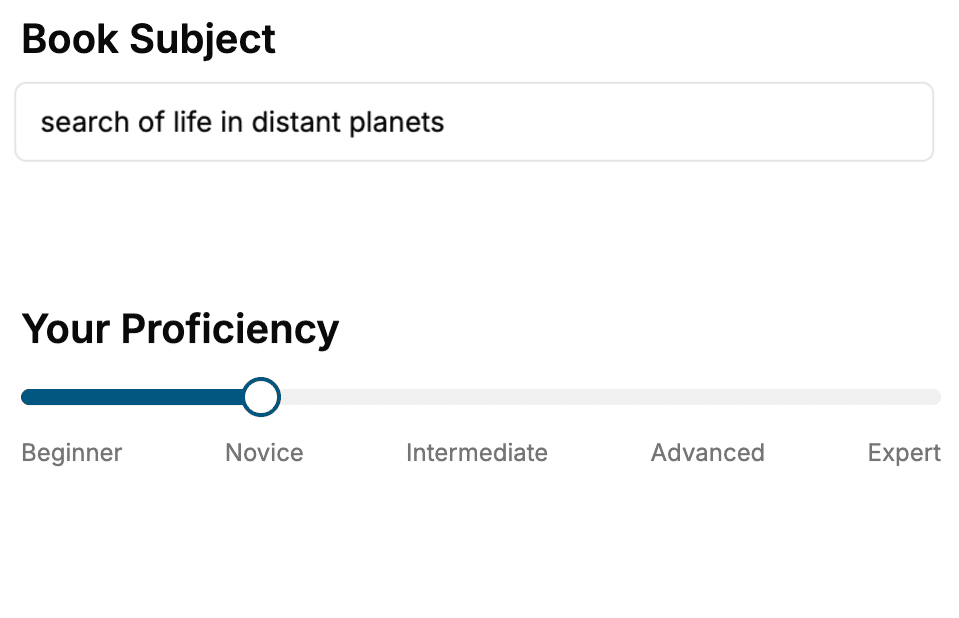
- 1. Select your focus
Select the focus of your Apple TestFlight book and share your background
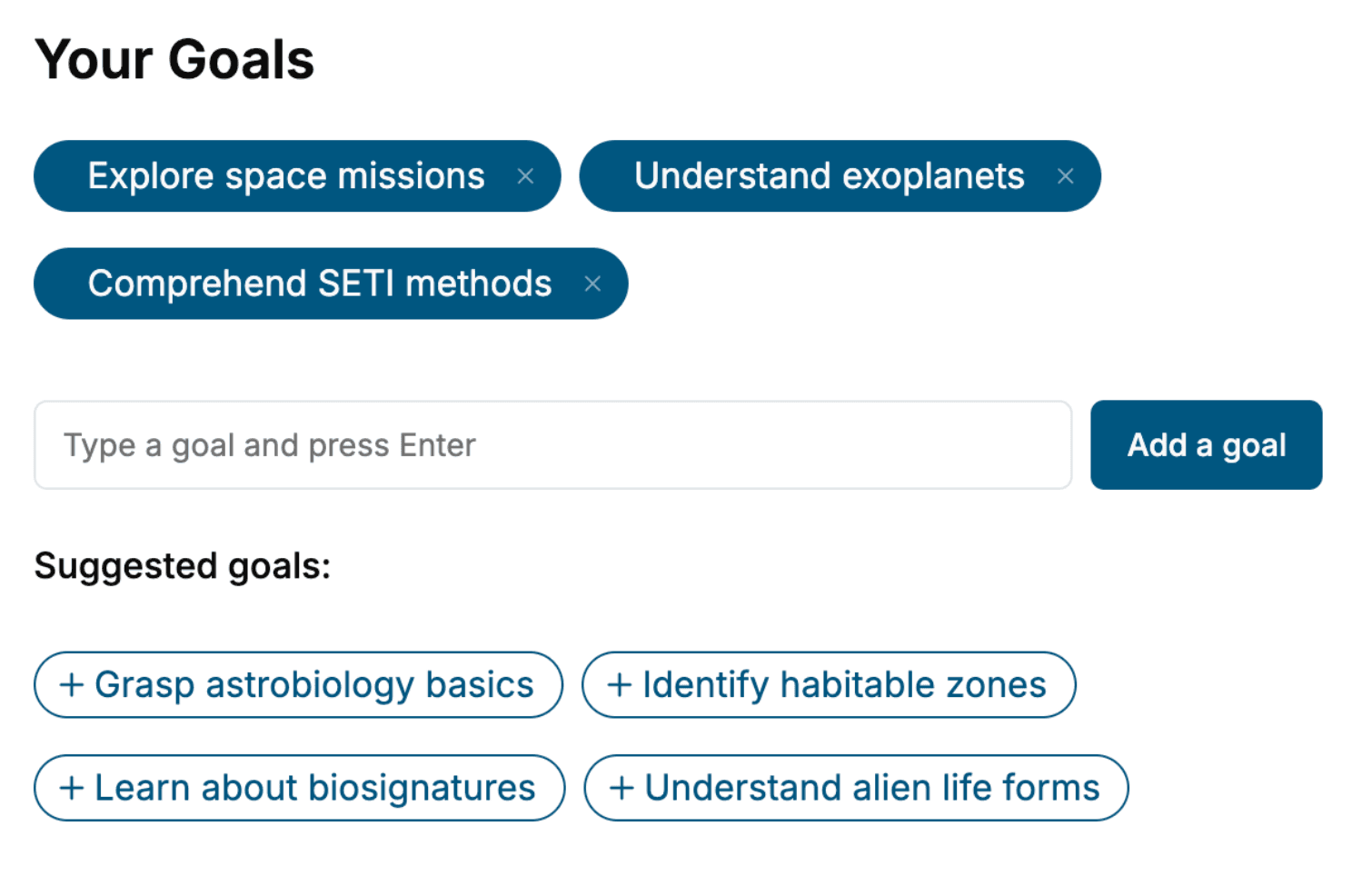
- 2. Personalize your book
Specify your goals and choose sub-topics to include
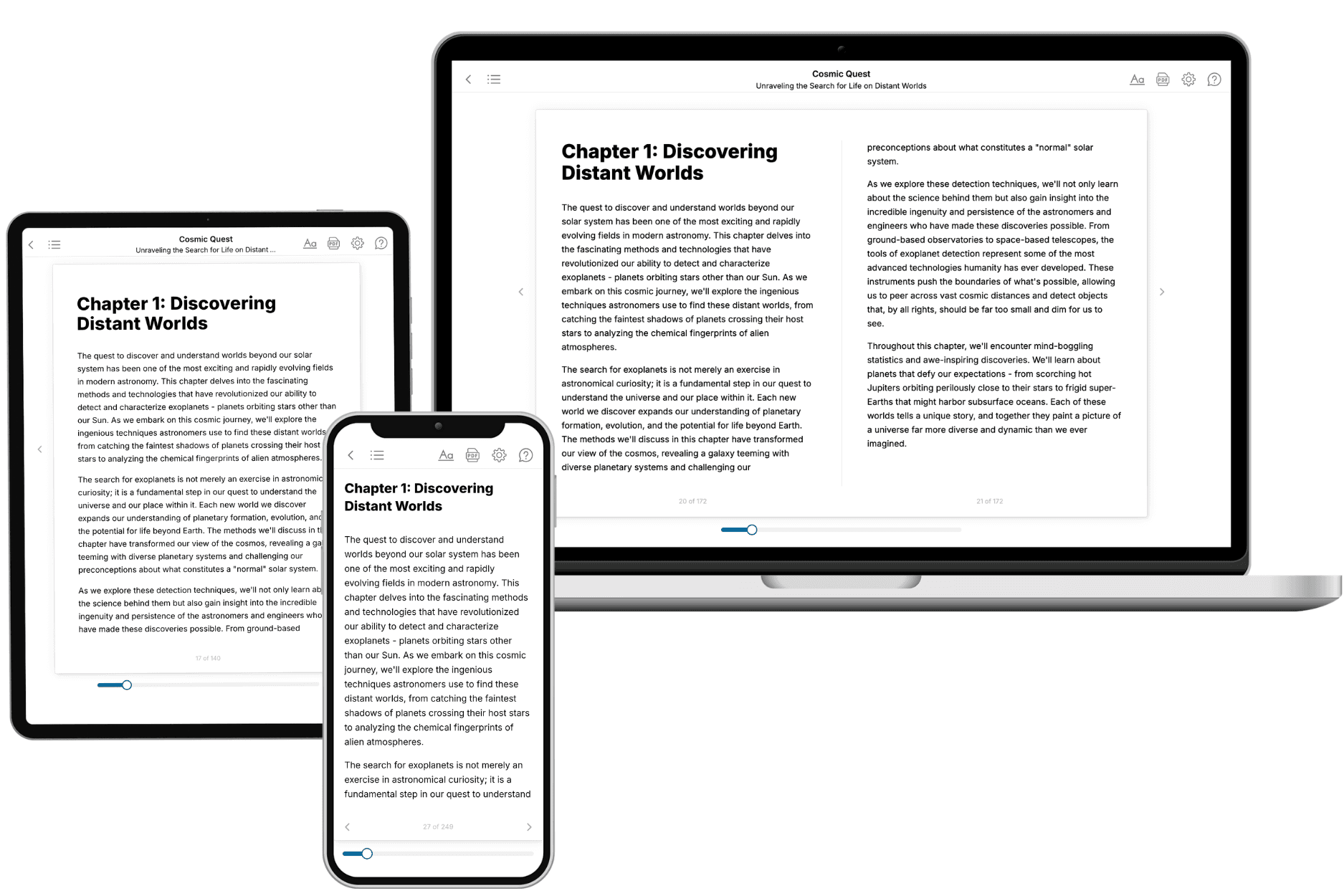
- 3. Get your tailored book
Your book is ready in 10 minutes. Read it online, download as EPUB or PDF, or send to Kindle.
Frequently asked questions
- What is TailoredRead?
TailoredRead creates complete, full-length nonfiction ebooks, written specifically for you. Tell us what you want to learn and why, and TailoredRead writes you a complete ebook on it, with charts, tables, and diagrams throughout. Read it online, on Kindle, or on any e-reader, or download it as a PDF or EPUB. Every book is written fresh the day you order it.
- How is the book tailored to me?
Before anything is written, you answer a few short questions about your goals, your background, and the topics you care about. Your book is then planned around your answers: written at your level, focused on your goals, and covering the topics you chose, instead of the one-size-fits-all book a store sells everyone.
- Will it read like generic AI content?
No. Your book isn't a chat transcript: it's planned chapter by chapter before a single word is written, told in a clear book voice, and explains ideas visually with charts, tables, and diagrams. After writing, every book goes through an editorial pass that polishes chapters so the book reads consistent from start to finish. Judge for yourself: browse thousands of sample books on our Explore Books page.
- How accurate is the content?
Our AI first checks whether your subject needs live research. Niche and fast-moving subjects are researched before writing, and the book plan and chapters are grounded in what it finds. After writing, every book goes through a quality pass that checks its facts and consistency, and researched books list their sources in a Notes section at the back.
- How long is the book?
You choose the length: Comprehensive (250-300 pages), Detailed (150-200 pages), Essential (70-100 pages), or Short (30-50 pages).
- Does the book include visuals?
Yes. Every book includes visual elements such as timelines, checklists, step-by-step guides, decision trees, comparison tables, and matrices, and many include bar charts. A typical book includes dozens of these visual elements.
- Can I read it on Kindle? What formats can I download?
Yes. Every book can be read in our online reader or downloaded as a PDF or EPUB. The EPUB can be opened with Kindle, Apple Books, Kobo, and any e-reader. The Commercial and Author licenses also include an editable Word (DOCX) and Markdown download.
- How much does it cost?
About the price of a regular ebook. The exact price depends on your book's length and complexity, from $2 for the shortest books to $35 for the most comprehensive, and it's shown when you review your book, before you commit to anything. Each book is a one-time purchase, yours to keep, no subscription. Licenses that let you share, teach, or publish your book range from $35.99 to $49.99.
- Can I preview the book before purchasing?
Before you pay, you'll see what your book will cover: the title, a detailed description, the estimated length, and the complete chapter-by-chapter table of contents, so you know what you're getting before you decide. The full text itself is written after you purchase.
- How long does it take to create a book?
About 10 minutes. You can start reading the opening chapters while the rest is still being written.