AI in Mobile Games
Master Intelligent Game Design for the Mobile Platform
Discover how to bring intelligent life to your mobile games.
207 pages9 chaptersMay 7, 2026Game Development
About this book
This guide walks you through the complete process of understanding, designing, and implementing AI systems specifically optimized for mobile platforms. You'll start with foundational AI concepts and progress through practical architectures like behavior trees and finite state machines, learning how to work within the strict resource constraints of mobile devices. Explore how to create believable NPCs with realistic pathfinding and decision-making, implement adaptive difficulty systems that keep players engaged, and leverage player behavior analysis to improve retention. You'll also learn how machine learning can enhance your games, along with essential testing and balancing techniques. Whether you're building puzzle games, action titles, or strategy games, this book provides the knowledge and frameworks you need to create AI systems that feel natural, responsive, and fair—all while maintaining the performance your players expect.
Table of contents
- IntroductionWhy AI Matters in Mobile Gaming, Understanding Mobile Platform Constraints, What You'll Learn in This BookRead below
- Chapter 1: AI Fundamentals for Mobile GamesCore AI Concepts and Terminology, Different AI Approaches: Reactive vs. Deliberative, How Mobile AI Differs from Console and PC Games
- Chapter 2: AI Architectures for Mobile PlatformsFinite State Machines: Simple and Effective, Behavior Trees: Flexibility and Control, Utility-Based AI: Decision Making Through Scoring, Comparing Architectures: When to Use Each
- Chapter 3: Creating Believable NPC BehaviorPathfinding and Movement Systems, NPC Decision-Making and Personality, Interaction Systems and NPC Communication
- Chapter 4: Adaptive Difficulty and Player EngagementDesigning Adaptive Difficulty Systems, Analyzing Player Behavior and Skill, Keeping Players Engaged Through Personalization
- Chapter 5: Machine Learning in Mobile GamesMachine Learning Fundamentals for Game Developers, Predicting Player Retention and Churn, Personalized Content and Recommendations, Optimizing ML Models for Mobile Devices
- Chapter 6: Performance Optimization and Resource ManagementCPU and Memory Optimization Techniques, Battery and Power Consumption Considerations, Profiling and Debugging AI Systems
- Chapter 7: Testing and Balancing AI SystemsPlaytesting Frameworks and Methodologies, Balancing AI Difficulty and Fairness, Handling Edge Cases and Unexpected Behaviors
- Chapter 8: Ethics and Fairness in Game AIEthical Considerations in AI Game Design, Avoiding Manipulative Mechanics, Transparency and Player Trust
- Chapter 9: Real-World Case Studies and ExamplesAI in Puzzle Games: Intelligent Opponents, AI in Action Games: Combat and Tactics, AI in Strategy Games: Planning and Adaptation
- ConclusionKey Takeaways and Next Steps, The Future of AI in Mobile Gaming
- Glossary
- Further Reading and Resources
Introduction
Think about the last mobile game that genuinely surprised you. Maybe an enemy flanked you from an unexpected angle, or the game quietly dialed up the challenge right when you were getting comfortable. Perhaps a puzzle opponent seemed to read your strategy and counter it before you could execute. Whatever the moment was, there's a good chance artificial intelligence was behind it. AI is the invisible engine that makes game worlds feel alive, opponents feel smart, and experiences feel personal. In mobile gaming, that engine has to run quietly, efficiently, and without draining your player's battery in twenty minutes.
Mobile gaming is now the largest segment of the global games market, generating over $90 billion in revenue annually and reaching more than 2.5 billion players worldwide.[1] That scale brings enormous opportunity, but it also brings fierce competition. Players have thousands of free-to-play titles competing for their attention at any given moment. The games that retain players longest are rarely the ones with the flashiest graphics. They're the ones that feel responsive, fair, and intelligently designed. AI is the technology that makes that possible, and understanding it is no longer optional for serious mobile game developers.
This book is written for developers and designers who already have a working knowledge of game development and want to go deeper into AI systems built specifically for mobile platforms. You won't find vague theory here. Every concept is grounded in practical implementation, real constraints, and the kinds of decisions you'll actually face when building a game for Android or iOS. From finite state machines to machine learning models, from pathfinding algorithms to adaptive difficulty systems, this book covers the full spectrum of AI tools available to mobile game creators, along with honest guidance on when to use each one.
The goal isn't to make you an AI researcher. The goal is to make you a better game developer. AI in mobile games is ultimately a design problem as much as a technical one. The best AI systems are the ones players never consciously notice, because they're too busy having fun. This book will help you build exactly that kind of invisible intelligence into your games.
Why AI Matters in Mobile Gaming
The mobile gaming market is brutally competitive. The average mobile game loses 77% of its daily active users within the first three days after install.[2] That number is sobering. It means that most players who download your game will abandon it before they've even scratched the surface of what you built. Retention is the defining challenge of mobile game development, and AI is one of the most powerful tools available to address it. When a game adapts to a player's skill level, responds intelligently to their choices, and creates moments of genuine surprise, players stay longer and come back more often.
Consider what happens in a game without meaningful AI. Enemies follow predictable patterns that players memorize within minutes. Difficulty stays flat, so skilled players get bored and new players get frustrated. NPCs repeat the same behaviors in loops, breaking the illusion of a living world. These problems aren't just aesthetic. They directly affect session length, return rate, and ultimately revenue. A well-designed AI system addresses all of these issues by creating experiences that feel dynamic and responsive rather than scripted and static.
AI also enables personalization at a scale that manual design simply cannot match. A human designer can create a handful of difficulty presets, but an adaptive AI system can tune the experience continuously for each individual player based on their actual behavior. This kind of personalization was once the exclusive domain of large studios with massive budgets. Today, the tools and frameworks needed to implement it are accessible to independent developers and small teams, which is a significant shift in what's possible for mobile game creators at every level.
Beyond gameplay, AI plays a growing role in the business side of mobile games. Predictive models can identify which players are likely to churn before they actually leave, giving developers the opportunity to intervene with targeted content or offers. Recommendation systems can surface the right in-game items or challenges at the right moment, improving both engagement and monetization. These applications of AI aren't about manipulating players. They're about understanding what players want and delivering it more effectively, which is good for players and good for the business.
It's also worth noting what AI is not. AI in games is not magic, and it's not a shortcut to good design. A poorly designed game with sophisticated AI is still a poorly designed game. AI amplifies the quality of your underlying design decisions. If your core gameplay loop is engaging, AI can make it dramatically more so. If it isn't, no amount of clever pathfinding or adaptive difficulty will save it. This book treats AI as a powerful tool in service of good game design, not as a replacement for it.
The best AI in games is the kind players never think about. They just feel like the game understands them. That feeling of being understood is what keeps players coming back.
Finally, AI matters in mobile gaming because the platform itself demands it. Mobile players interact with games in short sessions, often in distracting environments, with varying levels of attention and skill. A game that can read those conditions and adapt accordingly provides a fundamentally better experience than one that treats every session identically. AI is the mechanism that allows your game to meet players where they are, rather than forcing them to meet the game on fixed terms.
Understanding Mobile Platform Constraints
Building AI for mobile is fundamentally different from building AI for PC or console, and the difference comes down to resources. A modern gaming PC might have 16 to 32 gigabytes of RAM, a dedicated GPU with its own memory, and a processor running at high clock speeds with multiple performance cores. A mid-range Android phone has a fraction of that capacity, shares processing resources across the entire operating system, and is powered by a battery that players expect to last all day. Every AI system you build for mobile has to operate within these constraints without compromise.
CPU budget is the most immediate constraint you'll encounter. Mobile processors have improved dramatically over the past decade, but they still can't match desktop hardware for raw compute power. More importantly, your game's AI is competing for CPU time with rendering, physics, audio, networking, and the operating system itself. A complex AI calculation that takes 5 milliseconds on a PC might take 20 milliseconds on a budget Android device, which is enough to cause noticeable frame rate drops. This means mobile AI algorithms need to be lean, predictable in their execution time, and designed to degrade gracefully when resources are tight.
Memory constraints add another layer of complexity. Mobile devices typically have between 2 and 8 gigabytes of RAM, and your game will rarely have exclusive access to more than a fraction of that. Large AI data structures, complex navigation meshes, or in-memory machine learning models can quickly consume memory that the system needs for other tasks. When memory pressure gets high enough, the operating system will terminate background apps or, in extreme cases, your game itself. Designing AI systems with a minimal memory footprint isn't just good practice on mobile. It's a survival requirement.
Battery consumption is a constraint that's easy to overlook during development but impossible for players to ignore. AI systems that run intensive calculations every frame will drain a battery noticeably faster than optimized alternatives. Players who notice their phone getting hot or their battery dropping quickly during your game will often uninstall it, regardless of how good the gameplay is. This means mobile AI needs to be designed with power efficiency in mind from the start, using techniques like time-sliced updates, event-driven processing, and sleeping inactive agents rather than polling them continuously.
The diversity of mobile hardware adds yet another challenge. Unlike console development, where you're targeting a single known hardware configuration, mobile development means your game will run on thousands of different device models with wildly different capabilities. A flagship iPhone 15 Pro and a budget Android phone from 2020 are both "mobile devices," but their performance characteristics are vastly different. Your AI systems need to scale across this range, either by detecting device capability at runtime and adjusting complexity accordingly, or by being efficient enough that they run acceptably on the lowest-end devices you intend to support.
Thermal throttling is a related issue that catches many developers off guard. When a mobile processor runs at high load for an extended period, the device heats up and the processor automatically reduces its clock speed to prevent damage. This means a game that runs smoothly for the first five minutes might start stuttering after ten minutes of intensive play, as the CPU throttles down. AI systems that spike CPU usage unpredictably are particularly vulnerable to this problem. Smooth, consistent CPU usage is almost always preferable to occasional bursts of heavy computation, even if the average load is the same.
Understanding these constraints isn't meant to be discouraging. It's meant to frame the design decisions you'll make throughout this book. Every AI architecture, algorithm, and technique covered here is evaluated not just on what it can do, but on what it costs to do it on a mobile device. The constraints of mobile development push you toward solutions that are elegant and efficient, which often produces better AI than the brute-force approaches that are possible on more powerful hardware.
Here's a quick summary of the key mobile constraints to keep in mind as you read:
- CPU budget: Limited processing power shared across the entire system, with strict frame time budgets (typically 16ms for 60fps or 33ms for 30fps)
- Memory limits: Typically 2–8GB total RAM, with your game competing against the OS and other apps
- Battery life: Players expect hours of play; intensive AI calculations accelerate drain and generate heat
- Hardware diversity: Thousands of device configurations ranging from budget to flagship, each with different performance ceilings
- Thermal throttling: Sustained high CPU load causes processors to slow down, creating performance degradation over time
What You'll Learn in This Book
This book is organized as a progressive journey through mobile game AI, starting with foundational concepts and building toward advanced techniques. Each chapter is designed to stand on its own as a reference, but reading them in order will give you the clearest understanding of how the pieces fit together. Here's what to expect as you work through the material.
Chapter 1: AI Fundamentals for Mobile Games establishes the vocabulary and conceptual framework you'll use throughout the rest of the book. You'll learn the core terminology of game AI, understand the difference between reactive and deliberative AI approaches, and see clearly how mobile AI differs from what you might encounter in console or PC game development. If you're already comfortable with basic AI concepts, this chapter will serve as a useful calibration point. If AI is relatively new territory for you, it will give you the foundation you need to engage confidently with everything that follows.
Chapter 2: AI Architectures for Mobile Platforms dives into the practical structures used to organize AI behavior. You'll explore finite state machines, behavior trees, and utility-based systems in detail, with concrete examples of how each one works and when each one is the right choice. This chapter includes a direct comparison of all three architectures across key criteria like complexity, performance cost, and maintainability, giving you a clear decision framework for your own projects.
Chapter 3: Creating Believable NPC Behavior focuses on the characters that populate your game world. You'll learn how pathfinding algorithms work and how to implement them efficiently on mobile hardware. You'll explore how to give NPCs distinct personalities and decision-making styles that make them feel like individuals rather than interchangeable units. You'll also look at interaction systems that allow NPCs to communicate with each other and with the player in ways that feel natural and purposeful.
Chapter 4: Adaptive Difficulty and Player Engagement addresses one of the most impactful applications of AI in mobile games. You'll learn how to design systems that monitor player performance in real time and adjust challenge levels accordingly, keeping players in the engagement zone where the game is neither too easy nor too frustrating. This chapter also covers the analysis of player behavior data and how to use that data to personalize the experience in ways that feel helpful rather than intrusive.
Chapter 5: Machine Learning in Mobile Games introduces the more advanced end of the AI spectrum. You'll learn the fundamentals of machine learning as they apply to game development, without getting lost in mathematical theory. Practical topics include predicting player churn before it happens, building recommendation systems for in-game content, and optimizing machine learning models to run efficiently on mobile hardware. This chapter is designed to make ML approachable for developers who haven't worked with it before, while still providing enough depth to be useful for those who have.
Chapter 6: Performance Optimization and Resource Management is where the rubber meets the road for mobile development. You'll learn specific techniques for reducing CPU and memory usage in AI systems, strategies for minimizing battery drain, and how to use profiling tools to identify and fix performance bottlenecks. This chapter includes practical guidance on testing AI performance across different device tiers and handling the thermal throttling problem that affects sustained gameplay sessions.
Chapter 7: Testing and Balancing AI Systems covers the often-overlooked work of making sure your AI actually behaves the way you intend. You'll learn how to set up playtesting frameworks that generate useful data about AI behavior, how to balance AI difficulty so it feels fair rather than arbitrary, and how to identify and handle edge cases before they reach your players. This chapter treats AI testing as a discipline in its own right, with specific methodologies rather than generic advice.
Chapter 8: Ethics and Fairness in Game AI addresses the responsibilities that come with building systems that influence player behavior. You'll examine the line between engagement and manipulation, learn how to design AI systems that are transparent about what they're doing, and understand how to build player trust rather than erode it. This chapter is particularly relevant for developers working on free-to-play games, where the temptation to use AI for exploitative monetization is real and the consequences of doing so are significant.
Chapter 9: Real-World Case Studies and Examples brings everything together through concrete examples from three major mobile game genres. You'll see how AI principles apply differently in puzzle games, action games, and strategy games, with specific implementation examples drawn from each genre. These case studies are designed to help you connect the abstract concepts from earlier chapters to the specific challenges you're likely to face in your own projects.
Throughout the book, you'll find several recurring elements designed to make the material as useful as possible:
- Code examples and pseudocode that illustrate how concepts translate into actual implementation
- Performance benchmarks and estimates that help you understand the real cost of different approaches on mobile hardware
- Decision frameworks that help you choose between competing approaches based on your specific game's needs
- Common pitfalls that highlight mistakes developers frequently make and how to avoid them
- Practical exercises at the end of key sections that encourage you to apply what you've learned to your own projects
One thing worth setting expectations about: this book covers a wide range of AI techniques, from very simple to quite sophisticated. Not every technique will be right for every game. A casual puzzle game doesn't need the same AI complexity as a real-time strategy title. Part of what you'll develop as you read is the judgment to know which tools are appropriate for your specific situation. The goal isn't to implement everything in this book. It's to understand enough that you can make informed choices about what to implement and why.
By the time you finish this book, you'll have a clear mental model of how AI systems work in mobile games, practical knowledge of how to implement the most important ones, and the judgment to make smart decisions about AI design in your own projects. Whether you're building your first mobile game or your twentieth, the frameworks and techniques here will help you create experiences that feel smarter, more responsive, and more engaging than anything you've built before. That's a worthwhile goal, and this book is designed to help you reach it.
This is the end of the free sample. The full book has 9 chapters.
Want this book written for you?
Tell us your goals and background, and get your own version of this book, tailored by AI to you.


Benefits of AI-tailored books
- Read one book, not ten:
- all the Game Development knowledge you need, gathered into a single book.
- Save days of learning:
- tell us your goals, choose your topics, and the whole book is built around them.
- Learn effortlessly:
- Game Development book written for your specific background and expertise.
- Understand at a glance:
- includes charts, tables, timelines, checklists, decision trees, and more.
- Stay current:
- written the day you order it, not years ago.
- Trust what you read:
- every book is checked for accuracy, with real research when your subject needs it.
Create your unique book in 3 steps
- 1. Select your focus
Select the focus of your Game Development book and share your background
- 2. Personalize your book
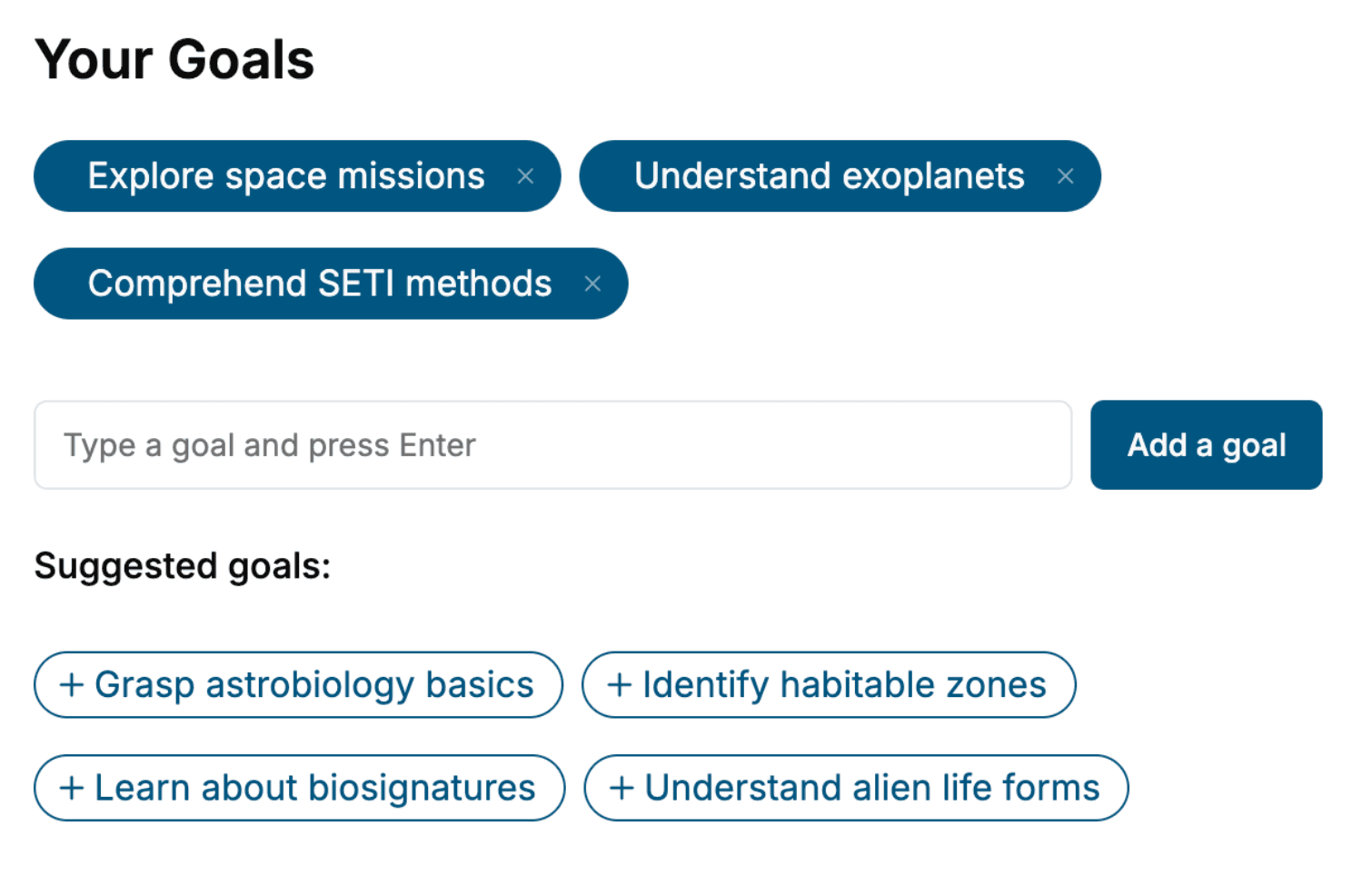
Specify your goals and choose sub-topics to include
- 3. Get your tailored book
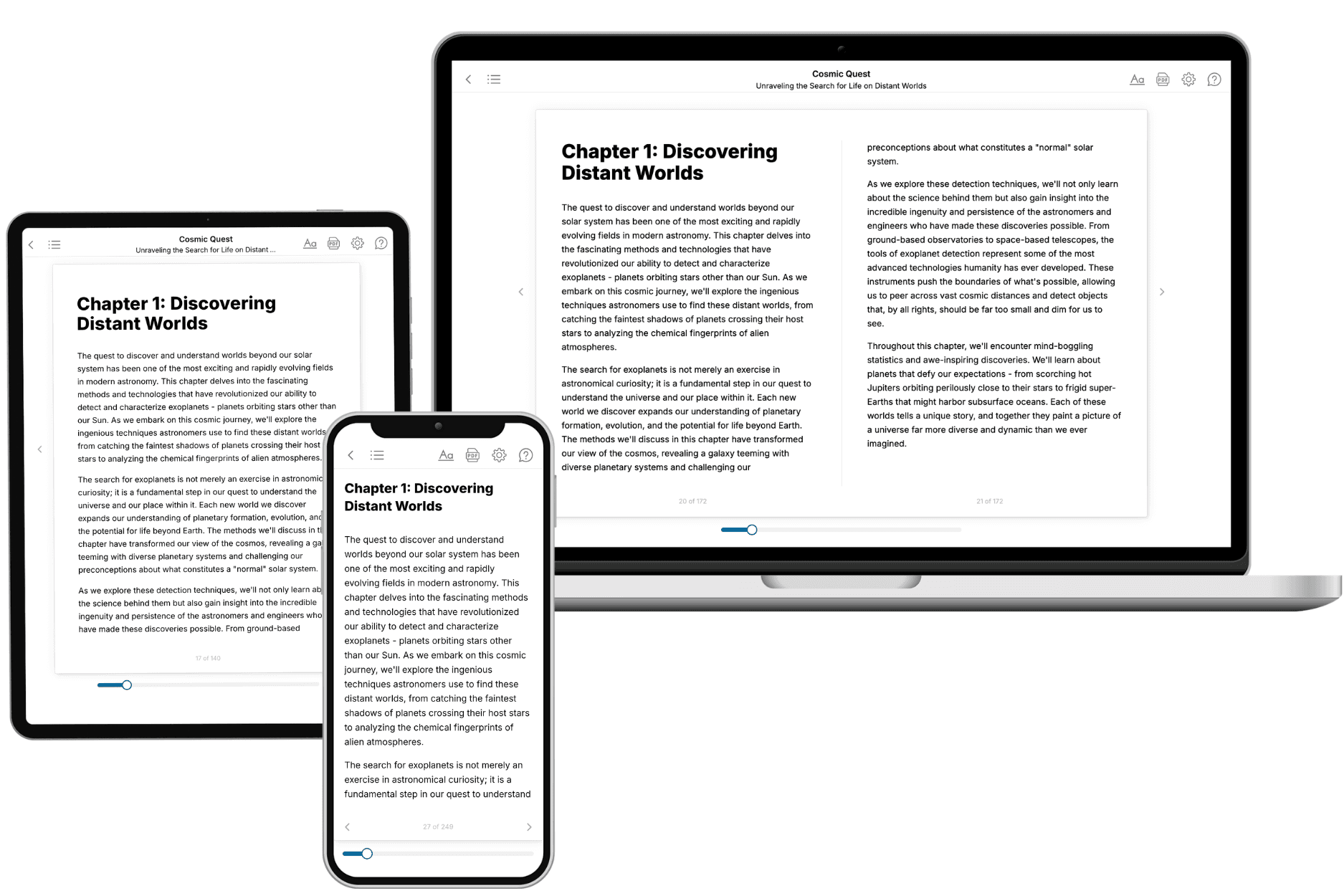
Your book is ready in 10 minutes. Read it online, download as EPUB or PDF, or send to Kindle.

Frequently asked questions
- What is TailoredRead?
TailoredRead creates complete, full-length nonfiction ebooks, written specifically for you. Tell us what you want to learn and why, and TailoredRead writes you a complete ebook on it, with charts, tables, and diagrams throughout. Read it online, on Kindle, or on any e-reader, or download it as a PDF or EPUB. Every book is written fresh the day you order it.
- How is the book tailored to me?
Before anything is written, you answer a few short questions about your goals, your background, and the topics you care about. Your book is then planned around your answers: written at your level, focused on your goals, and covering the topics you chose, instead of the one-size-fits-all book a store sells everyone.
- Will it read like generic AI content?
No. Your book isn't a chat transcript: it's planned chapter by chapter before a single word is written, told in a clear book voice, and explains ideas visually with charts, tables, and diagrams. After writing, every book goes through an editorial pass that polishes chapters so the book reads consistent from start to finish. Judge for yourself: browse thousands of sample books on our Explore Books page.
- How accurate is the content?
Our AI first checks whether your subject needs live research. Niche and fast-moving subjects are researched before writing, and the book plan and chapters are grounded in what it finds. After writing, every book goes through a quality pass that checks its facts and consistency, and researched books list their sources in a Notes section at the back.
- How long is the book?
You choose the length: Comprehensive (250-300 pages), Detailed (150-200 pages), Essential (70-100 pages), or Short (30-50 pages).
- Does the book include visuals?
Yes. Every book includes charts, tables, and diagrams: timelines, checklists, step-by-step guides, decision trees, comparison tables, matrices, and bar charts. A typical book includes dozens of these visual elements.
- Can I read it on Kindle? What formats can I download?
Yes. Every book can be read in our online reader or downloaded as a PDF or EPUB. The EPUB can be opened with Kindle, Apple Books, Kobo, and any e-reader. The Commercial and Author licenses also include an editable Word (DOCX) and Markdown download.
- How much does it cost?
About the price of a regular ebook. The exact price depends on your book's length and complexity, from $2 for the shortest books to $35 for the most comprehensive, and it's shown when you review your book, before you commit to anything. Each book is a one-time purchase, yours to keep, no subscription. Licenses that let you share, teach, or publish your book range from $35.99 to $49.99.
- Can I preview the book before purchasing?
Before you pay, you'll see what your book will cover: the title, a detailed description, the estimated length, and the complete chapter-by-chapter table of contents, so you know what you're getting before you decide. The full text itself is written after you purchase.
- How long does it take to create a book?
About 10 minutes. You can start reading the opening chapters while the rest is still being written.