AI-Powered Insurance Sales
Master Lead Qualification and Close More Policies with Intelligent Automation
What if you could identify your most promising prospects before they even realize they're ready to buy?
238 pages11 chaptersAug 17, 2026InsuranceCreated by Jim
About this book
In today's competitive insurance market, the difference between thriving advisors and struggling ones isn't luck—it's data. AI tools have fundamentally changed how top-performing insurance professionals qualify leads, predict close probability, and convert prospects into clients. This book reveals the exact strategies, tools, and workflows that leading life insurance advisors use to increase conversion rates and productivity. You'll discover how predictive analytics identifies high-potential prospects, how conversation intelligence coaches you to close more deals, and how workflow automation reclaims hours of your week. Whether you're managing a small book of business or leading a team, you'll learn to build a modern GTM tech stack that turns data into revenue. The insurance industry is shifting—and the advisors who master AI-powered lead qualification will dominate their markets.
Table of contents
- IntroductionWhy AI Tools Matter for Insurance Advisors Today, The Productivity Gap: Manual vs. AI-Powered Sales, What You'll Learn in This Book, How to Use This Book for Maximum ImpactRead below
- Chapter 1: The AI Sales Revolution in InsuranceFrom Experimental to Mainstream: AI Tools in 2026, Understanding the ROI Timeline: 3-6 Months to Results, The Competitive Advantage of Early Adoption
- Chapter 2: Understanding Your AI Sales Tech StackWhat Is a GTM Tech Stack and Why It Matters, Core Components: CRM, Conversation Intelligence, and Analytics, Why Multi-Tool Stacks Outperform Single Platforms
- Chapter 3: Predictive Close Probability: Your Crystal Ball for SalesHow Predictive Analytics Models Work, Understanding Close Probability Scores, Applying Predictions to Your Daily Sales Activities
- Chapter 4: Lead Scoring and Qualification for InsuranceBehavioral and Firmographic Data: The Foundation of Scoring, Insurance-Specific Signals That Predict Purchase Intent, Implementing Lead Scoring in Your Sales Process
- Chapter 5: Insurance Lead Prioritization: Focus on What MattersBuilding Your Lead Prioritization Framework, Identifying High-Potential Prospects Automatically, Optimizing Your Time Allocation Based on Lead Quality
- Chapter 6: Conversation Intelligence: Learn from Every CallWhat Conversation Intelligence Tools Actually Do, Extracting Coaching Insights from Call Analysis, Using Call Data to Refine Your Sales Pitch
- Chapter 7: Workflow Automation: Reclaim Your TimeWhere Automation Delivers the Biggest Time Savings, Automating CRM Data Entry and Pipeline Updates, Intelligent Follow-Up Sequences and Task Management
- Chapter 8: Agentic AI and Autonomous WorkflowsUnderstanding Agentic AI and Autonomous Agents, How Autonomous Agents Execute Workflows Without Human Intervention, Maintaining Human Oversight and Relationship Control
- Chapter 9: Data Quality and CRM Hygiene: The Foundation of AI SuccessWhy Data Quality Is Non-Negotiable for AI Accuracy, Establishing Clean Data Practices and CRM Hygiene, Ongoing Data Maintenance and Quality Monitoring
- Chapter 10: Building Your Implementation RoadmapAssessing Your Current Sales Process and Technology, Selecting the Right Tools for Your Needs, Planning Your Rollout and Change Management
- Chapter 11: Measuring Success and Optimizing PerformanceKey Metrics to Track: Conversion Rates, Pipeline Velocity, and ROI, Continuous Improvement: Iterating Based on Data, Scaling What Works Across Your Sales Organization
- ConclusionThe Future of AI-Powered Insurance Sales, Your Next Steps: From Knowledge to Action
- Glossary
- Further Reading and Resources
Introduction
Picture a life insurance advisor sitting down at nine in the morning with forty open leads in a spreadsheet, three unanswered voicemails, and a calendar full of appointments that may or may not turn into policies. She spends the first two hours deciding who to call, cross-referencing notes, and updating her CRM by hand. By the time she makes her first real sales conversation, half the morning is gone. This scene repeats itself daily across the insurance industry, and it is exactly the problem that AI-powered tools were built to solve.
The shift underway in insurance sales is not about replacing advisors with machines. It is about giving advisors the same kind of data advantage that large financial institutions have used for years, now packaged into tools that a single producer or small team can afford and operate. Instead of guessing which prospect to call next, an advisor can open a dashboard and see a ranked list built from real behavior and real data. Instead of manually logging every call, automated systems capture and organize that information in the background.
This introduction lays the groundwork for everything that follows. It explains why AI adoption has moved from a niche experiment to a standard practice among competitive advisors, and it shows the practical gap between advisors who still work manually and those who use AI to guide their day. It also previews the specific skills covered ahead, from Predictive Analytics and Lead Scoring to Conversation Intelligence and Agentic AI, and offers a simple way to work through the material so the concepts turn into habits.
None of this requires a technical background or a large budget to start. The tools discussed throughout this book are designed for working advisors, not data scientists, and the value comes from applying a handful of ideas consistently rather than mastering every feature of every platform. What matters most right now is understanding why this shift is happening and what it will mean for the way policies get sold from this point forward.
Why AI Tools Matter for Insurance Advisors Today
Life insurance sales has always depended on timing. A prospect who just had a child, bought a home, or changed jobs is far more receptive to a conversation about coverage than one who was contacted at random. The challenge has never been a lack of leads. It has been figuring out, quickly and reliably, which leads are worth pursuing right now and which ones can wait. AI tools exist to answer that exact question, using patterns in data that a person scanning a spreadsheet would never catch on their own.
Consider two advisors working the same pool of five hundred leads. One works through them in the order they arrived, calling whoever is next on the list regardless of how warm or cold that lead actually is. The other uses a scoring system that ranks leads by their likelihood to convert, based on signals like website activity, quote requests, and demographic fit. The second advisor spends the same eight-hour day, but nearly all of it goes toward prospects who are statistically more likely to say yes. Over a month, that difference compounds into a measurable gap in closed policies.
The insurance industry is also becoming more competitive in how leads are generated and distributed. Leads increasingly arrive through digital channels, quote comparison sites, and referral platforms that produce far more volume than any single advisor can manually sort through. Without a systematic way to separate strong prospects from weak ones, advisors either burn time on low-probability contacts or miss high-probability ones buried in the noise. AI-driven qualification exists specifically to solve this sorting problem at a scale no person can match by hand.
There is also a client-experience dimension to this shift. Prospects today are used to fast, relevant responses from every other service they interact with, from retail to banking apps. An advisor who takes days to follow up on an inquiry, or who asks questions a prospect already answered on an intake form, creates friction that a competitor without that friction will exploit. AI tools that automatically capture and surface prior interactions help advisors show up prepared, which builds trust before the first real conversation even begins.
None of this diminishes the advisor's role. Insurance is still a relationship-driven, trust-based sale, and no scoring model or automated workflow can replace the judgment, empathy, and product knowledge that a skilled advisor brings to a conversation about protecting a family's financial future. What AI tools change is where that advisor spends their limited hours: less time hunting for the right prospect, more time actually talking with them.
The chapter ahead on the broader shift toward mainstream AI adoption will unpack how this transition happened across the industry and what it means for advisors who have not yet started. For now, the key point is simple: the tools exist, they are increasingly accessible, and the gap between advisors using them and advisors who are not is widening every quarter.
Advisors sometimes resist these tools out of concern that automation will make their approach feel impersonal or robotic. In practice, the opposite tends to be true when the tools are used well. A well-scored lead list means every call an advisor makes is more likely to matter, which makes each conversation feel less like a cold pitch and more like a timely, relevant offer. The personal touch does not disappear. It gets redirected toward the moments where it counts most.
Understanding why these tools matter now sets up everything else in this book. Every later chapter, whether on Close Probability Score models, Conversation Intelligence, or Workflow Automation, builds on this same core idea: better data and better tools let advisors focus their limited time on the highest-value activity, which is talking with prospects who are genuinely ready to buy.
The Productivity Gap: Manual vs. AI-Powered Sales
To see the productivity gap clearly, it helps to break a typical advisor's day into its component tasks. Prospecting, qualifying, calling, following up, and administrative work like updating records all compete for the same hours. In a fully manual process, administrative and qualification tasks often consume a disproportionate share of the day, leaving a smaller fraction for actual selling conversations. AI-powered tools attack this imbalance directly by automating or accelerating the tasks that do not require human judgment.
The specific numbers are illustrative rather than measured data, but the direction of the shift reflects what advisors commonly report once automation and scoring tools take over routine tasks.
| Task Category | Series | Share of Day | |
|---|---|---|---|
| Admin and CRM entry | Manual Process | 35% | |
| AI-Supported Process | 10% | ||
| Lead sorting and qualification | Manual Process | 25% | |
| AI-Supported Process | 10% | ||
| Selling conversations | Manual Process | 25% | |
| AI-Supported Process | 55% | ||
| Follow-up and scheduling | Manual Process | 15% | |
| AI-Supported Process | 25% |
What stands out in that comparison is not just that selling time increases, it is that follow-up and scheduling also grow as a share of the day. That may seem counterintuitive, but it makes sense once automation removes the burden of manually tracking who needs a callback. Advisors using automated follow-up sequences tend to actually do more consistent follow-up, not less, because the system prompts them at the right moment instead of relying on memory or a sticky note.
The gap becomes even more visible over a full sales cycle rather than a single day. A manual process tends to lose momentum between touchpoints because there is no consistent trigger reminding the advisor to re-engage a prospect at the right time. An AI-supported process maintains that momentum through automated reminders and prioritized task lists, which shortens the gap between first contact and a closed policy. This shows up later in the book as Pipeline Velocity, a metric that captures how quickly leads move through each stage of the funnel.
It is worth being concrete about what "manual" actually looks like in practice, since the term can sound abstract. A manual process typically means an advisor working from spreadsheets or a bare-bones CRM, deciding call order based on gut feeling or simple chronology, typing call notes after the fact from memory, and sending follow-up emails one at a time when they remember to. Every one of those steps is a place where time leaks out and details get lost.
By contrast, an AI-supported process routes leads by Close Probability Score, captures call details automatically through Conversation Intelligence, and triggers follow-up sequences without requiring the advisor to remember each one individually. The advisor's job shifts from managing the mechanics of the process to managing the relationships within it. That shift is the entire productivity gap in a single sentence: less mechanical overhead, more relationship time.
None of this means every advisor using AI tools automatically outperforms every advisor who does not. Tools amplify whatever process sits underneath them, which is why later chapters spend real time on Data Quality and CRM Hygiene. A poorly maintained CRM feeding a scoring model will produce unreliable scores, no matter how sophisticated the underlying algorithm is. The productivity gap favors advisors who combine good tools with disciplined habits, not tools alone.
The chapters ahead walk through each piece of this gap in detail, starting with how a modern AI Sales Tech Stack is put together and moving through prediction, scoring, conversation analysis, and automation. Each one closes a specific piece of the gap illustrated above, and together they explain how advisors reclaim hours that used to disappear into administrative work.
What You'll Learn in This Book
This book is organized to move from foundational concepts toward practical implementation, so each chapter builds on the one before it rather than standing alone. The early chapters establish why AI adoption matters and how the pieces of a modern sales technology stack fit together. The middle chapters go deep on the specific capabilities that drive results: predicting which leads will close, scoring and prioritizing prospects, extracting coaching value from sales calls, and automating the busywork that eats into selling time.
The chapter on the broader AI sales revolution covers how these tools went from experimental novelties to standard practice, including the typical timeline advisors can expect before seeing a return on the investment. From there, the chapter on the AI Sales Tech Stack explains how CRM systems, conversation intelligence platforms, and analytics tools work together rather than as isolated point solutions, and why combining several focused tools tends to outperform relying on one all-in-one platform.
Two chapters focus specifically on identifying the right prospects. One explains how Predictive Analytics and Close Probability Score models use historical outcomes and current engagement signals to estimate how likely a given lead is to convert. The other covers Lead Scoring in depth, showing how Behavioral Data Signals and Firmographic Data combine to separate genuinely promising prospects from ones that only look promising on the surface.
Building directly on that scoring work, a dedicated chapter on the Lead Prioritization Framework shows how to turn scores into a daily action plan, so the highest-value leads surface automatically instead of getting lost among lower-priority contacts. This is where the abstract idea of scoring becomes a concrete morning routine: open the dashboard, see who is ranked highest, start calling.
Two more chapters focus on what happens during and after the sales conversation itself. The chapter on Conversation Intelligence explains how call recording and analysis tools turn everyday sales calls into a source of coaching insight, helping advisors spot patterns in what works and what falls flat. The chapter on Workflow Automation then shows where automation saves the most time, particularly around CRM updates and follow-up sequences, without stripping away the human judgment that relationship-based selling requires.
The book also addresses the newest and most advanced layer of this shift: Agentic AI. A dedicated chapter explains what autonomous agents actually do, how they carry out Autonomous Workflow Execution across multiple steps without constant human input, and why maintaining Human Oversight remains essential even as these systems take on more responsibility. This is presented not as a distant future concept but as a capability advisors can start using in a limited, controlled way today.
Because every AI tool depends on the data feeding it, a full chapter is devoted to Data Quality and CRM Hygiene, covering why inconsistent or outdated records undermine even the best scoring models and how to build habits that keep data clean over time. The book then closes its practical arc with a chapter on building an Implementation Roadmap, walking through how to assess a current sales process, choose the right tools for a given book of business, and roll out changes using sound Change Management principles rather than disruptive, all-at-once switches.
The final substantive chapter ties everything together around measurement, covering the key metrics that prove these tools are working, including Pipeline Velocity and ROI Timeline, and explaining how to run a Continuous Improvement Loop that keeps refining results rather than treating adoption as a one-time project. By the end, the goal is not just familiarity with AI concepts but a working plan for putting them into practice.
How to Use This Book for Maximum Impact
This book works best as a reference to return to rather than a single read-through to finish and shelve. Each chapter is built around a distinct capability, and most advisors will find some chapters immediately relevant to a gap in their current process while others describe capabilities worth adopting later. Reading the whole book once to understand the full picture, then revisiting specific chapters while actually implementing changes, tends to produce better results than trying to absorb and apply everything at once.
A practical way to approach this is to read with a specific question in mind for each chapter: does this apply to a gap in the current process, and if so, what is the smallest first step? For example, after reading about Lead Scoring, the smallest first step might simply be identifying which two or three data points already sitting in a CRM could serve as an initial scoring signal, rather than attempting to build a full model immediately.
The checklist below offers a simple way to approach each chapter so the ideas translate into action rather than staying theoretical.
Getting the Most from Each Chapter
- Identify one task in your current process that this chapter's concept could improve
- Note whether you already have a tool that supports this capability, even partially
- Write down the smallest first step you could take this week, not the full ideal version
- Flag any data gaps in your CRM that would need fixing before this idea works well
- Revisit the chapter again after trying the first step, and adjust based on what happened
It helps to keep a running list of specific questions or objections that come up while reading, especially around cost, complexity, or how a given tool fits an existing book of business. Many of those questions get addressed directly in the chapter on building an Implementation Roadmap, which covers how to assess current tools, select new ones deliberately, and manage the change process so a rollout does not disrupt existing client relationships.
Advisors managing a team rather than an individual book of business should pay particular attention to the sections on Change Management and scaling successful practices, since adoption across a group of producers raises different challenges than adoption by a single advisor. Rolling out a new scoring system or automation workflow to a team requires buy-in, training, and a way to measure whether individual producers are actually using the new process, none of which is necessary when only one person is involved.
Throughout the book, concrete examples and step-by-step explanations are used deliberately instead of abstract descriptions, because the goal is application rather than general awareness. When a concept feels too abstract to act on immediately, it is worth pausing and asking what a concrete version of it would look like inside an actual CRM or calendar, rather than moving on and hoping it becomes clear later.
Finally, treat the early claims in this introduction as a preview rather than a full case, since each one is unpacked with more depth and more specific mechanics in the chapters where it belongs. The gap between advisors who systematically apply these tools and those who do not tends to widen over time rather than staying fixed, which makes the timing of getting started more important than getting every detail perfect on the first attempt.
This is the end of the free sample. The full book has 11 chapters.
Want this book written for you?
Tell us your goals and background, and get your own version of this book, tailored by AI to you.


Benefits of AI-tailored books
- Read one book, not ten:
- all the Insurance knowledge you need, gathered into a single book.
- Save days of learning:
- tell us your goals, choose your topics, and the whole book is built around them.
- Learn effortlessly:
- Insurance book written for your specific background and expertise.
- Understand at a glance:
- includes charts, tables, timelines, checklists, decision trees, and more.
- Stay current:
- written the day you order it, not years ago.
- Trust what you read:
- every book is checked for accuracy, with real research when your subject needs it.
Create your unique book in 3 steps
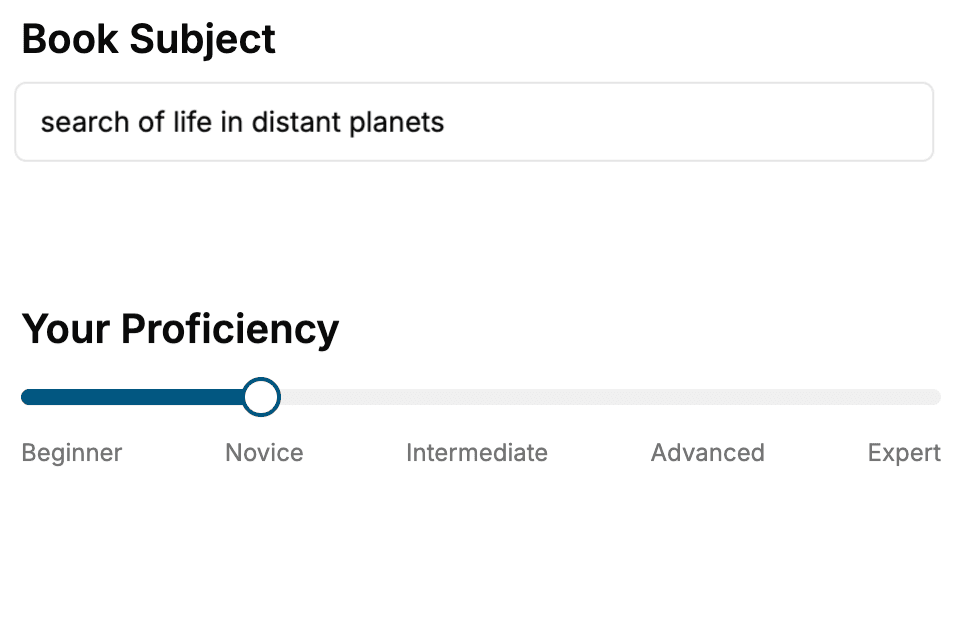
- 1. Select your focus
Select the focus of your Insurance book and share your background
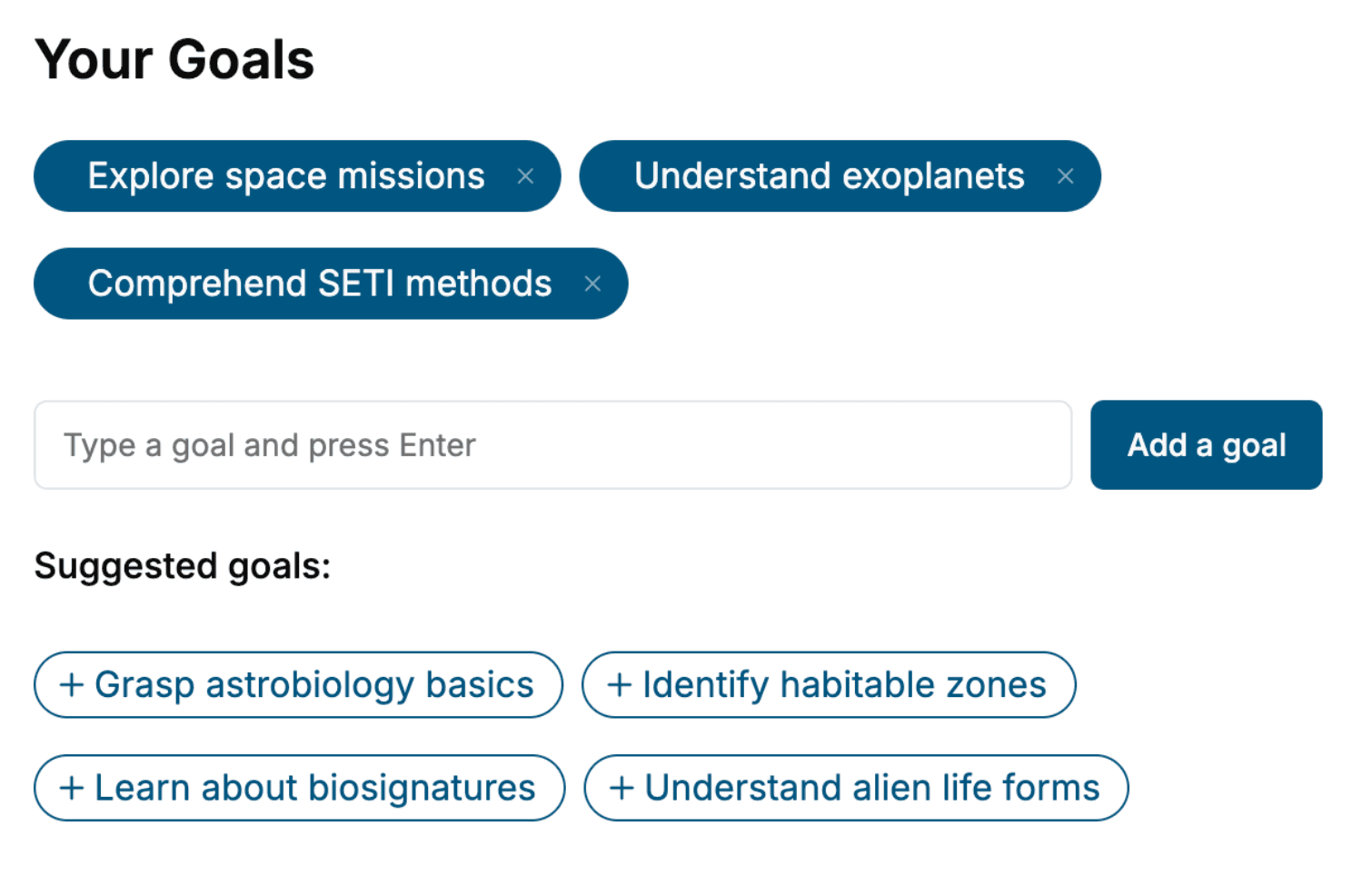
- 2. Personalize your book
Specify your goals and choose sub-topics to include
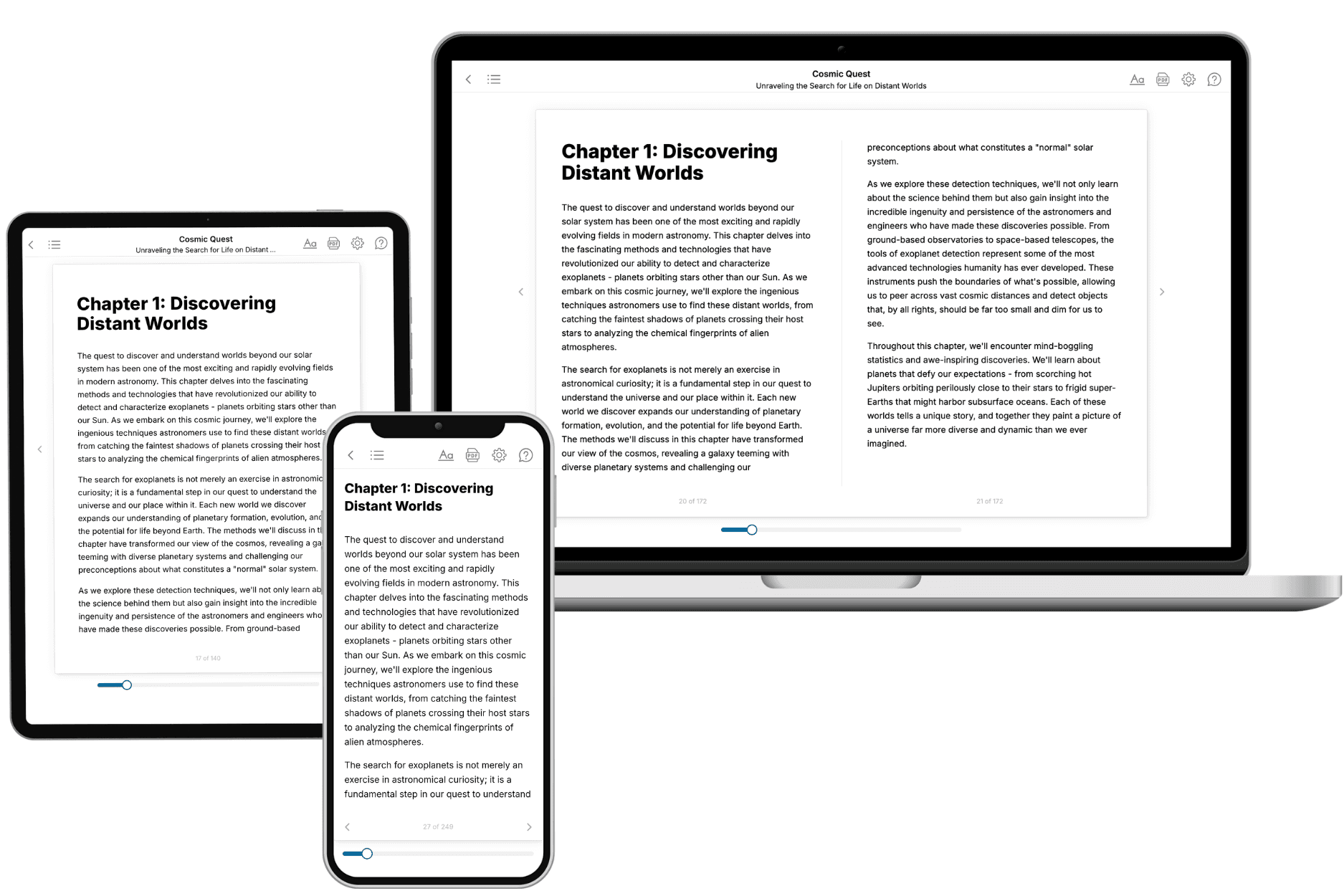
- 3. Get your tailored book
Your book is ready in 10 minutes. Read it online, download as EPUB or PDF, or send to Kindle.
Frequently asked questions
- What is TailoredRead?
TailoredRead creates complete, full-length nonfiction ebooks, written specifically for you. Tell us what you want to learn and why, and TailoredRead writes you a complete ebook on it, with charts, tables, and diagrams throughout. Read it online, on Kindle, or on any e-reader, or download it as a PDF or EPUB. Every book is written fresh the day you order it.
- How is the book tailored to me?
Before anything is written, you answer a few short questions about your goals, your background, and the topics you care about. Your book is then planned around your answers: written at your level, focused on your goals, and covering the topics you chose, instead of the one-size-fits-all book a store sells everyone.
- Will it read like generic AI content?
No. Your book isn't a chat transcript: it's planned chapter by chapter before a single word is written, told in a clear book voice, and explains ideas visually with charts, tables, and diagrams. After writing, every book goes through an editorial pass that polishes chapters so the book reads consistent from start to finish. Judge for yourself: browse thousands of sample books on our Explore Books page.
- How accurate is the content?
Our AI first checks whether your subject needs live research. Niche and fast-moving subjects are researched before writing, and the book plan and chapters are grounded in what it finds. After writing, every book goes through a quality pass that checks its facts and consistency, and researched books list their sources in a Notes section at the back.
- How long is the book?
You choose the length: Comprehensive (250-300 pages), Detailed (150-200 pages), Essential (70-100 pages), or Short (30-50 pages).
- Does the book include visuals?
Yes. Every book includes charts, tables, and diagrams: timelines, checklists, step-by-step guides, decision trees, comparison tables, matrices, and bar charts. A typical book includes dozens of these visual elements.
- Can I read it on Kindle? What formats can I download?
Yes. Every book can be read in our online reader or downloaded as a PDF or EPUB. The EPUB can be opened with Kindle, Apple Books, Kobo, and any e-reader. The Commercial and Author licenses also include an editable Word (DOCX) and Markdown download.
- How much does it cost?
About the price of a regular ebook. The exact price depends on your book's length and complexity, from $2 for the shortest books to $35 for the most comprehensive, and it's shown when you review your book, before you commit to anything. Each book is a one-time purchase, yours to keep, no subscription. Licenses that let you share, teach, or publish your book range from $35.99 to $49.99.
- Can I preview the book before purchasing?
Before you pay, you'll see what your book will cover: the title, a detailed description, the estimated length, and the complete chapter-by-chapter table of contents, so you know what you're getting before you decide. The full text itself is written after you purchase.
- How long does it take to create a book?
About 10 minutes. You can start reading the opening chapters while the rest is still being written.