Alluxio Cache Mastery
Advanced Techniques for Optimizing Distributed Data Access and Processing
Slow data access and processing in distributed systems can cripple your applications and frustrate users.
300 pages16 chaptersMay 16, 2025Software DevelopmentCreated by Chris
About this book
In "Alluxio Cache Mastery," you'll discover cutting-edge techniques to supercharge your data infrastructure. This comprehensive guide dives deep into advanced Alluxio caching strategies, RPC optimization, and distributed system design. You'll learn how to implement custom caching policies, fine-tune memory management, and leverage data locality for unprecedented performance gains. With hands-on examples and expert insights, you'll master the art of balancing cache hit rates, managing distributed locks, and optimizing query execution plans. Whether you're scaling up your data pipelines or fine-tuning your analytics platform, this book equips you with the knowledge to architect high-performance, reliable distributed systems that can handle massive datasets with ease.
Table of contents
- IntroductionAlluxio: The Distributed Cache Layer, Performance Challenges in Distributed Systems, Book Structure and How to Use It, Prerequisites and SetupRead below
- Chapter 1: Alluxio Architecture Deep DiveCore Components and Their Interactions, Data Flow and Processing Pipeline, Metadata Management and Namespace, Storage Tiers and Data Placement
- Chapter 2: Advanced Caching StrategiesUnderstanding Cache Policies, Implementing Custom Caching Strategies, Advanced Cache Eviction Algorithms, Cache Prewarming Techniques
- Chapter 3: Memory Management and OptimizationMemory Allocation Strategies, JVM Tuning for Alluxio, Off-Heap Memory Management, Memory Usage Monitoring and Analysis
- Chapter 4: Optimizing Data LocalityData Locality Heuristics, Optimal Worker Placement Strategies, Data Replication for Locality, Locality-Aware Task Scheduling
- Chapter 5: RPC Performance OptimizationUnderstanding Alluxio's RPC Architecture, Network Configuration and Tuning, Optimizing Data Serialization, Asynchronous RPC Patterns
- Chapter 6: Designing Effective Tiered StorageChoosing the Right Storage Media, Data Allocation Across Tiers, Data Promotion and Demotion Strategies, Measuring and Optimizing Tiered Storage Efficiency
- Chapter 7: Distributed Cache CoherenceCache Coherence Models in Distributed Systems, Implementing Consistency Protocols, Cache Invalidation Techniques, Balancing Coherence and Performance
- Chapter 8: Alluxio Metrics Analysis and VisualizationKey Performance Metrics in Alluxio, Setting Up Metrics Collection, Metrics Visualization Tools and Techniques, Using Metrics for Performance Tuning
- Chapter 9: Asynchronous Cache OperationsAsynchronous Programming Patterns in Alluxio, Implementing Asynchronous Read and Write Operations, Callback Handling and Error Management, Measuring and Optimizing Asynchronous Performance
- Chapter 10: Advanced Data Partitioning SchemesData Partitioning Strategies for Distributed Caches, Implementing Dynamic Partitioning, Handling Data Skew in Partitioned Caches, Partition Migration and Rebalancing
- Chapter 11: Alluxio Security FeaturesAuthentication Mechanisms, Fine-grained Authorization, Data Encryption in Transit and at Rest, Audit Logging and Security Monitoring
- Chapter 12: Fault Tolerance and High AvailabilityAlluxio Master Failover Mechanisms, Worker Failure Detection and Recovery, Journal Management for Metadata Persistence, Disaster Recovery Planning
- Chapter 13: Integrating Alluxio with Data Processing FrameworksOptimizing Alluxio-Spark Integration, Enhancing Presto Queries with Alluxio, Alluxio-Hadoop Synergy, Accelerating Flink Jobs with Alluxio
- Chapter 14: Query Execution and OptimizationUnderstanding Query Execution Plans, Implementing Predicate Pushdown, Optimizing Join Operations, Query Result Caching Strategies
- Chapter 15: Designing Efficient ETL PipelinesETL Architecture with Alluxio, Optimizing Data Ingestion Processes, Efficient Data Transformation Techniques, Monitoring and Debugging ETL Pipelines
- Chapter 16: Benchmarking and Performance TestingDesigning Effective Benchmarks, Simulating Real-world Workloads, Analyzing Benchmark Results, Implementing Continuous Performance Testing
- ConclusionFuture Trends in Distributed Caching, Best Practices Recap
- AppendixAlluxio Configuration Reference, Troubleshooting Guide
Introduction
In the rapidly evolving landscape of distributed systems and big data processing, the ability to efficiently manage and access vast amounts of data has become a critical factor in determining the success of modern applications. As data volumes continue to grow exponentially, traditional approaches to data storage and retrieval are often found wanting, struggling to keep pace with the demands of high-performance computing environments. It is within this context that Alluxio has emerged as a powerful solution, offering a distributed cache layer that bridges the gap between computation frameworks and storage systems, dramatically improving data access speeds and overall system performance.
This book, "Alluxio Cache Mastery: Advanced Techniques for Optimizing Distributed Data Access and Processing," is designed to equip you with the knowledge and skills necessary to harness the full potential of Alluxio in your distributed systems. Whether you're scaling up data pipelines, fine-tuning analytics platforms, or architecting high-performance, reliable systems capable of handling massive datasets, the advanced techniques and strategies presented in this guide will prove invaluable in your quest for optimal performance.
Throughout the following chapters, we will delve deep into the intricacies of Alluxio's architecture, explore cutting-edge caching strategies, and uncover the secrets to maximizing data locality and minimizing latency in distributed environments. From implementing custom caching policies to optimizing RPC performance, from designing effective tiered storage solutions to ensuring distributed cache coherence, this comprehensive guide covers all aspects of Alluxio cache mastery.
As we embark on this journey of advanced Alluxio optimization, it's important to note that the techniques and strategies discussed in this book are not mere theoretical concepts. They are battle-tested approaches, backed by real-world case studies, empirical data, and the collective experience of experts in the field. By the time you reach the final chapter, you will have gained not only a deep understanding of Alluxio's inner workings but also the practical skills to implement and fine-tune these advanced techniques in your own distributed systems.
Alluxio: The Distributed Cache Layer
Alluxio, formerly known as Tachyon, is an open-source distributed file system that serves as a virtual file system layer between computation frameworks and storage systems. At its core, Alluxio is designed to address one of the most significant challenges in distributed computing: the widening gap between the speed of computation and the speed of data access. By providing a unified namespace and acting as a distributed cache, Alluxio enables applications to access data at memory speed, regardless of where the data is physically stored.
The fundamental principle behind Alluxio's effectiveness lies in its ability to create a layer of abstraction between compute frameworks (such as Spark, Presto, or Flink) and underlying storage systems (like HDFS, S3, or GCS). This abstraction allows Alluxio to intelligently cache frequently accessed data in memory, dramatically reducing I/O overhead and improving overall system performance. Moreover, Alluxio's tiered storage architecture enables it to leverage a combination of memory, SSD, and HDD storage, providing a flexible and cost-effective solution for managing large-scale data sets.
One of Alluxio's key strengths is its seamless integration with existing big data ecosystems. It supports a wide range of storage systems and computation frameworks out of the box, making it an ideal choice for organizations looking to optimize their data infrastructure without overhauling their entire stack. This compatibility, combined with Alluxio's powerful caching capabilities, has led to its adoption by numerous high-profile companies across various industries, from tech giants to financial institutions.
Alluxio's architecture is designed with scalability and fault tolerance in mind. It employs a master-worker model, where a single master (or a group of masters in high-availability mode) manages the global namespace and coordinates the activities of multiple worker nodes. This distributed architecture allows Alluxio to scale horizontally, accommodating growing data volumes and computational demands. Furthermore, Alluxio implements various fault tolerance mechanisms, ensuring data consistency and system reliability even in the face of node failures or network partitions.
Another crucial aspect of Alluxio is its support for data locality optimization. By intelligently placing data close to the computation, Alluxio can significantly reduce network traffic and improve processing speeds. This feature is particularly valuable in scenarios where data needs to be processed repeatedly, as it allows subsequent computations to access cached data locally, avoiding the need for costly data transfers across the network.
As we delve deeper into Alluxio's capabilities throughout this book, you'll discover how its flexible architecture and powerful features can be leveraged to solve complex performance challenges in distributed systems. From implementing custom caching strategies to optimizing data flow across heterogeneous storage tiers, Alluxio provides a rich set of tools and APIs that enable fine-grained control over data access and processing patterns.
It's worth noting that while Alluxio offers significant performance benefits out of the box, achieving optimal performance in complex, large-scale distributed systems often requires a deep understanding of its internals and advanced configuration techniques. This is precisely where the value of this book lies – in equipping you with the knowledge and skills to go beyond basic usage and truly master the art of Alluxio cache optimization.
In the subsequent sections and chapters, we'll explore these advanced techniques in detail, providing you with the insights needed to design, implement, and maintain high-performance distributed systems powered by Alluxio. Whether you're dealing with real-time analytics, large-scale machine learning pipelines, or complex ETL processes, the strategies outlined in this book will help you unlock the full potential of Alluxio and take your distributed data processing capabilities to the next level.
Performance Challenges in Distributed Systems
Distributed systems, while offering unparalleled scalability and processing power, come with their own set of unique challenges, particularly in the realm of performance optimization. As data volumes grow and computational demands increase, these challenges become more pronounced, often becoming bottlenecks that can significantly impact the efficiency and responsiveness of large-scale applications. Understanding these challenges is crucial for appreciating the role Alluxio plays in addressing them and for grasping the importance of the advanced optimization techniques we'll explore throughout this book.
One of the primary performance challenges in distributed systems is the issue of data locality. In traditional architectures, computation and data are often physically separated, necessitating costly data transfers across the network. This separation can lead to significant latency, especially when dealing with large datasets or when multiple nodes need to access the same data simultaneously. The impact of poor data locality is not just limited to increased processing times; it can also lead to network congestion, affecting the performance of the entire cluster. Alluxio addresses this challenge by providing a distributed caching layer that brings data closer to computation, but as we'll see in later chapters, optimizing data locality requires careful planning and implementation of advanced strategies[1].
Another significant challenge is the heterogeneity of storage systems in modern data infrastructures. Many organizations employ a mix of storage solutions, ranging from high-performance SSDs to cost-effective cloud storage services. Each of these storage systems has its own performance characteristics, access patterns, and cost considerations. Coordinating data access across these diverse storage tiers while maintaining optimal performance is a complex task. Alluxio's tiered storage feature provides a foundation for addressing this challenge, but as we'll explore in depth, designing an effective tiered storage strategy requires a nuanced understanding of workload patterns, data access frequencies, and storage system capabilities.
Consistency and coherence in distributed caches present another layer of complexity. When multiple nodes in a cluster are caching and modifying data, ensuring that all nodes have a consistent view of the data becomes crucial. Weak consistency models can lead to data inconsistencies and hard-to-debug errors, while overly strict consistency models can significantly impact performance. Striking the right balance between consistency and performance is a delicate task that requires a deep understanding of distributed systems principles and the specific requirements of the application at hand. In the chapters dedicated to distributed cache coherence, we'll delve into advanced techniques for maintaining consistency without sacrificing performance.
Scalability is another critical challenge that distributed systems must address. As data volumes and processing requirements grow, the system must be able to scale horizontally by adding more nodes to the cluster. However, achieving linear scalability is often easier said than done. Issues such as load balancing, resource allocation, and coordination overhead can all impact the system's ability to scale effectively. Throughout this book, we'll explore how Alluxio's architecture supports scalability and examine advanced techniques for optimizing performance in large-scale deployments.
Resource management and optimization present ongoing challenges in distributed environments. Memory, CPU, network bandwidth, and storage I/O are all finite resources that must be carefully managed to ensure optimal system performance. Overallocation of resources can lead to contention and degraded performance, while underutilization represents wasted capacity. Alluxio provides various mechanisms for resource management, but as we'll see, achieving optimal resource utilization often requires a combination of careful configuration, monitoring, and dynamic adjustment based on workload characteristics.
Fault tolerance and high availability are critical considerations in any distributed system. Node failures, network partitions, and other issues are inevitable in large-scale deployments. Ensuring that the system can continue to operate and maintain data integrity in the face of these failures is essential. While Alluxio incorporates various fault tolerance mechanisms, implementing robust high availability solutions often requires careful planning and configuration. We'll explore advanced techniques for enhancing fault tolerance and ensuring continuous operation in later chapters.
Performance monitoring and optimization in distributed systems present their own set of challenges. The sheer scale and complexity of these systems make it difficult to gain a comprehensive view of performance bottlenecks and their root causes. Collecting, aggregating, and analyzing performance metrics across a large cluster requires sophisticated tooling and methodologies. Moreover, optimizing performance often involves making trade-offs between various system parameters, a process that requires both expertise and a deep understanding of the specific workload characteristics. Throughout this book, we'll examine advanced approaches to performance monitoring, analysis, and optimization in Alluxio-powered distributed systems.
Lastly, the challenge of adapting to evolving workloads and changing data access patterns cannot be overstated. Distributed systems must be flexible enough to handle varying computational demands and data access requirements. Static configurations and rigid architectures often fail to deliver optimal performance as workloads change over time. We'll explore how Alluxio's flexibility can be leveraged to create adaptive systems that can dynamically adjust to changing conditions, ensuring consistent performance across a wide range of scenarios.
As we progress through the chapters of this book, we'll address each of these challenges in detail, providing you with the knowledge and tools to overcome them using Alluxio's advanced features and optimization techniques. By understanding these fundamental challenges and mastering the strategies to address them, you'll be well-equipped to design, implement, and maintain high-performance distributed systems that can handle the most demanding data processing tasks with ease and efficiency.
Book Structure and How to Use It
"Alluxio Cache Mastery" is structured to provide a comprehensive and logical progression through the advanced concepts and techniques of optimizing Alluxio for high-performance distributed systems. The book is designed to cater to the needs of experienced software engineers and system architects who are looking to deepen their understanding of Alluxio and master its advanced features. To help you navigate this wealth of information effectively, this section outlines the book's structure and provides guidance on how to make the most of its contents.
The book is divided into 16 chapters, each focusing on a specific aspect of Alluxio optimization. While the chapters build upon each other to some extent, they are also designed to be relatively self-contained, allowing you to focus on specific areas of interest if desired. However, for those new to Alluxio or looking for a comprehensive understanding, reading the chapters in order is recommended.
Chapter 1, "Alluxio Architecture Deep Dive," sets the foundation for the rest of the book by providing a detailed exploration of Alluxio's core components, data flow mechanisms, and architectural principles. This chapter is crucial for understanding the subsequent optimization techniques and is recommended reading for all users, regardless of their prior experience with Alluxio.
Chapters 2 through 5 focus on core performance optimization techniques, including advanced caching strategies, memory management, data locality optimization, and RPC performance tuning. These chapters form the backbone of Alluxio performance optimization and provide essential knowledge for anyone looking to squeeze maximum performance out of their Alluxio deployment.
Chapters 6 and 7 delve into more specialized topics, covering tiered storage design and distributed cache coherence. These chapters are particularly relevant for users dealing with complex storage hierarchies or strict consistency requirements in their distributed systems.
Chapters 8 through 10 explore advanced operational aspects of Alluxio, including metrics analysis, asynchronous cache operations, and data partitioning schemes. These chapters provide valuable insights for system administrators and DevOps professionals responsible for maintaining and optimizing Alluxio deployments in production environments.
Chapters 11 and 12 address critical non-functional requirements, focusing on security features and fault tolerance mechanisms in Alluxio. These chapters are essential reading for anyone deploying Alluxio in enterprise environments where data security and system reliability are paramount.
Chapters 13 through 15 explore Alluxio's integration with various data processing frameworks, query optimization techniques, and ETL pipeline design. These chapters are particularly relevant for data engineers and architects looking to leverage Alluxio in complex data processing workflows.
The final chapter, Chapter 16, covers benchmarking and performance testing methodologies specific to Alluxio. This chapter provides valuable guidance on how to measure and validate the performance improvements achieved through the optimization techniques discussed throughout the book.
To make the most of this book, it's recommended to have a solid understanding of distributed systems principles and some hands-on experience with Alluxio. Each chapter includes practical examples, code snippets, and configuration guidelines that you can apply directly to your Alluxio deployments. It's highly encouraged to experiment with these examples in a test environment as you progress through the book.
Throughout the book, you'll find references to external resources, research papers, and official Alluxio documentation. These references are provided to offer additional context and deeper insights into specific topics. While not essential for understanding the core concepts presented in the book, exploring these resources can further enhance your knowledge and provide valuable perspectives on distributed systems optimization.
The book also includes various case studies and real-world examples that illustrate how the discussed techniques have been applied in production environments. These case studies offer valuable insights into the practical challenges and solutions encountered when optimizing Alluxio at scale.
As you progress through the book, it's important to keep in mind that optimizing distributed systems is often an iterative process. The techniques and strategies presented should be viewed as tools in your optimization toolkit, to be applied judiciously based on your specific use cases and performance requirements. Regular benchmarking and performance testing, as discussed in Chapter 16, will be crucial in validating the effectiveness of your optimization efforts.
Finally, while this book covers a wide range of advanced topics, the field of distributed systems and caching technologies is constantly evolving. It's recommended to stay updated with the latest developments in Alluxio and related technologies by following official documentation, community forums, and academic publications in the field.
By approaching this book with a hands-on mindset and a willingness to experiment, you'll be well-equipped to master the art of Alluxio cache optimization and take your distributed systems performance to new heights. Whether you're tackling specific performance bottlenecks or architecting entirely new data processing pipelines, the knowledge and techniques presented in this book will serve as a valuable resource in your journey towards building high-performance, scalable distributed systems.
Prerequisites and Setup
Before diving into the advanced techniques and strategies covered in this book, it's important to ensure that you have the necessary prerequisites in place. This section outlines the knowledge, skills, and technical setup required to make the most of the content presented in "Alluxio Cache Mastery." By meeting these prerequisites, you'll be well-prepared to engage with the advanced concepts and practical examples throughout the book.
First and foremost, a solid foundation in distributed systems principles is essential. You should be familiar with concepts such as distributed computing, parallel processing, data partitioning, and consistency models. A good understanding of the challenges inherent in distributed environments, such as network latency, fault tolerance, and scalability issues, will greatly enhance your ability to appreciate and apply the optimization techniques discussed in this book. If you need to brush up on these concepts, resources such as "Designing Data-Intensive Applications" by Martin Kleppmann or "Distributed Systems: Principles and Paradigms" by Andrew S. Tanenbaum and Maarten van Steen are excellent starting points[2].
A strong background in Java programming is crucial, as Alluxio is primarily written in Java, and many of the examples and code snippets in this book will be in Java. Familiarity with Java concurrency models, memory management, and performance optimization techniques will be particularly beneficial. Additionally, experience with other JVM languages such as Scala can be helpful, especially when working with integrations for frameworks like Apache Spark.
Prior experience with Alluxio is highly recommended. You should be comfortable with basic Alluxio concepts, installation procedures, and configuration options. Hands-on experience with deploying and managing Alluxio in a distributed environment will provide valuable context for the advanced topics covered in this book. If you're new to Alluxio or need a refresher, it's advisable to work through the official Alluxio documentation and complete some of the getting started guides before proceeding with this book.
Familiarity with big data processing frameworks such as Apache Spark, Apache Flink, or Presto is beneficial, as many of the integration examples and optimization techniques discussed in the book will reference these frameworks. While deep expertise in these technologies is not required, a general understanding of their architectures and how they interact with distributed storage systems will be helpful.
Knowledge of various storage systems, including HDFS, Amazon S3, Google Cloud Storage, and local file systems, is important. Understanding the characteristics, strengths, and limitations of these storage systems will help you appreciate how Alluxio can be optimized to work effectively with different underlying storage layers.
Experience with performance tuning and optimization in distributed environments is valuable. This includes familiarity with concepts such as caching strategies, data locality, network optimization, and resource management. Experience with monitoring and profiling tools for distributed systems will also be beneficial when working through the performance analysis and optimization chapters.
From a technical setup perspective, you'll need access to a development environment capable of running Alluxio and associated big data technologies. This typically includes:
- A Java Development Kit (JDK), version 8 or later
- An Integrated Development Environment (IDE) such as IntelliJ IDEA or Eclipse
- Apache Maven or another build tool for managing Java projects
- Git for version control and accessing example code repositories
- Access to a multi-node cluster for testing and experimentation (this can be a physical cluster, a set of virtual machines, or a cloud-based solution)
For hands-on exercises and examples, you'll need to set up an Alluxio cluster. This can be done on a single machine for testing purposes, but a multi-node setup is recommended for exploring more advanced scenarios. The official Alluxio documentation provides detailed instructions for various deployment options, including local, cluster, and cloud-based setups.
Familiarity with Linux/Unix command-line interfaces is essential, as many operations and configurations in Alluxio are performed through command-line tools. Basic scripting skills (e.g., Bash scripting) can also be helpful for automating setup and test procedures.
Throughout the book, we'll be using various tools for performance analysis, monitoring, and visualization. While specific instructions will be provided where necessary, familiarity with tools such as JConsole, VisualVM, Grafana, or similar monitoring and profiling tools can be advantageous.
It's worth noting that the field of distributed systems and big data technologies is rapidly evolving. While this book strives to cover the most current and relevant techniques, it's always beneficial to stay updated with the latest developments in Alluxio and related technologies. Regularly checking the official Alluxio documentation, release notes, and community forums is recommended to stay abreast of new features and best practices.
Lastly, a curious and experimental mindset is perhaps the most important prerequisite. The techniques and strategies presented in this book are meant to be explored, tested, and adapted to your specific use cases. Be prepared to experiment, measure results, and iterate on your implementations to achieve optimal performance in your unique distributed environment.
By ensuring you meet these prerequisites and have the necessary technical setup in place, you'll be well-prepared to dive into the advanced world of Alluxio cache mastery. The journey ahead will be challenging but rewarding, equipping you with the knowledge and skills to push the boundaries of performance in your distributed data processing systems.
This is the end of the free sample. The full book has 16 chapters.
Want this book written for you?
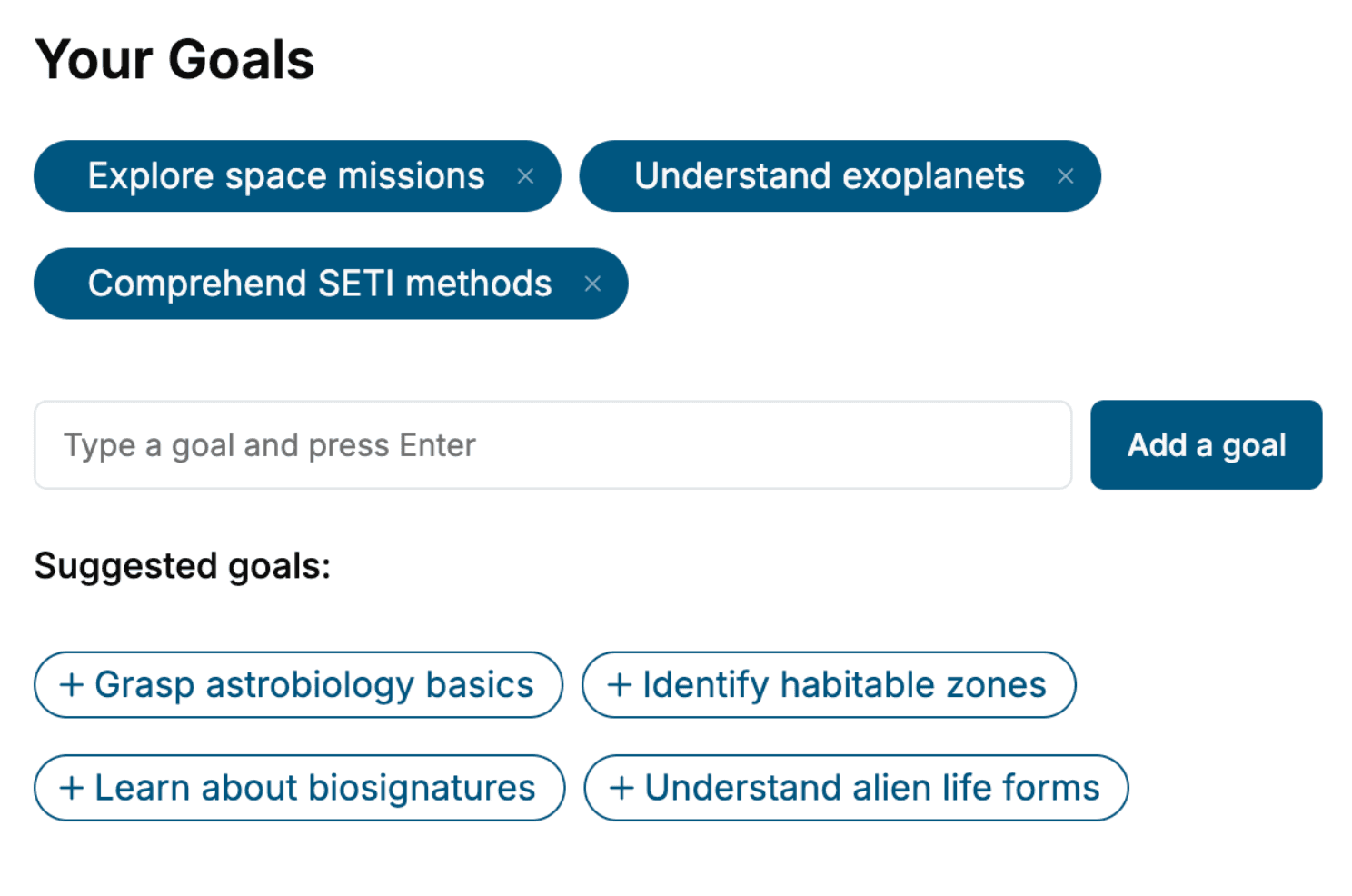
Tell us your goals and background, and get your own version of this book, tailored by AI to you.


Benefits of AI-tailored books
- Read one book, not ten:
- all the Software Development knowledge you need, gathered into a single book.
- Save days of learning:
- tell us your goals, choose your topics, and the whole book is built around them.
- Learn effortlessly:
- Software Development book written for your specific background and expertise.
- Understand at a glance:
- includes charts, tables, timelines, checklists, decision trees, and more.
- Stay current:
- written the day you order it, not years ago.
- Trust what you read:
- every book is checked for accuracy, with real research when your subject needs it.
Create your unique book in 3 steps
- 1. Select your focus
Select the focus of your Software Development book and share your background
- 2. Personalize your book
Specify your goals and choose sub-topics to include
- 3. Get your tailored book
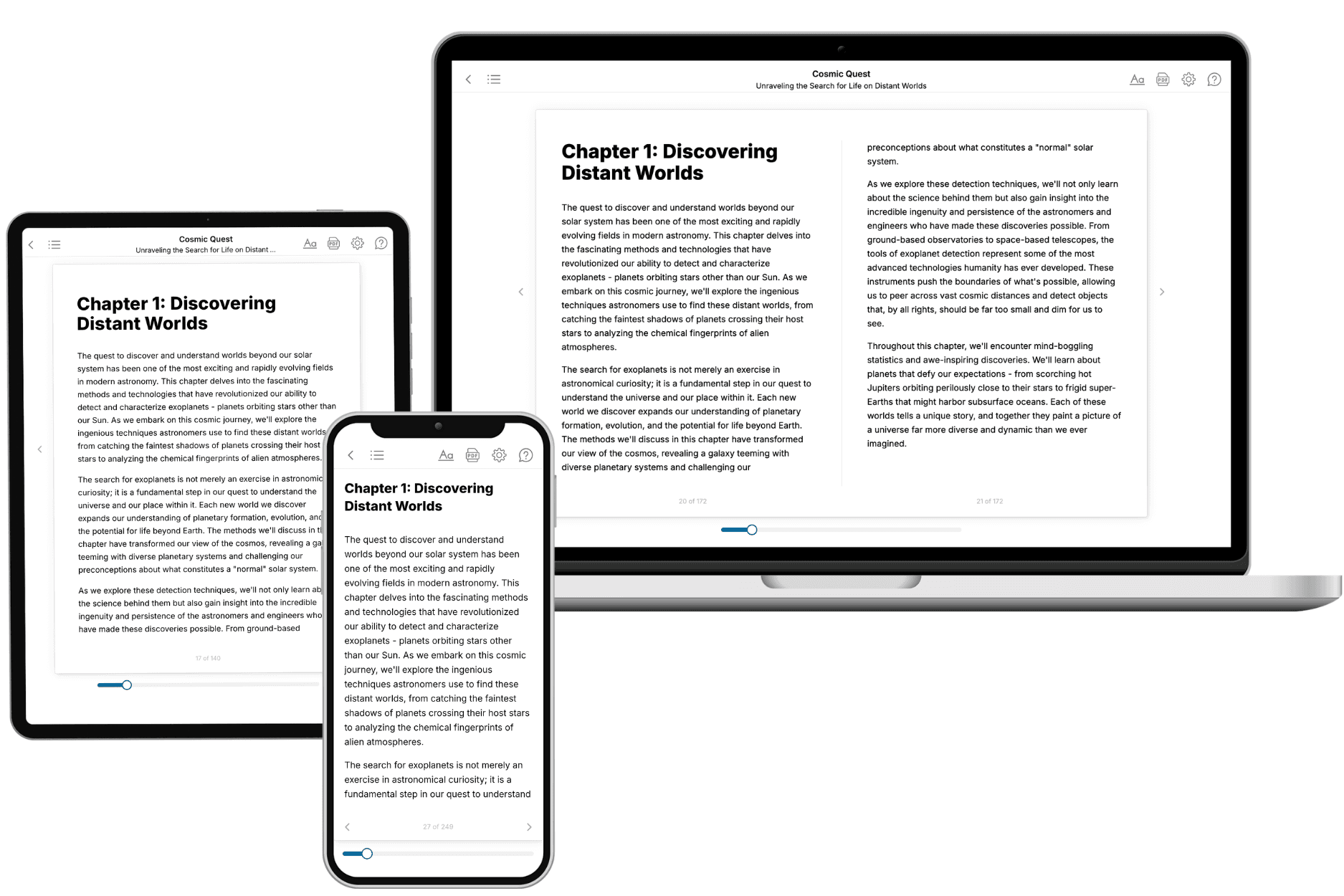
Your book is ready in 10 minutes. Read it online, download as EPUB or PDF, or send to Kindle.

Frequently asked questions
- What is TailoredRead?
TailoredRead creates complete, full-length nonfiction ebooks, written specifically for you. Tell us what you want to learn and why, and TailoredRead writes you a complete ebook on it, with charts, tables, and diagrams throughout. Read it online, on Kindle, or on any e-reader, or download it as a PDF or EPUB. Every book is written fresh the day you order it.
- How is the book tailored to me?
Before anything is written, you answer a few short questions about your goals, your background, and the topics you care about. Your book is then planned around your answers: written at your level, focused on your goals, and covering the topics you chose, instead of the one-size-fits-all book a store sells everyone.
- Will it read like generic AI content?
No. Your book isn't a chat transcript: it's planned chapter by chapter before a single word is written, told in a clear book voice, and explains ideas visually with charts, tables, and diagrams. After writing, every book goes through an editorial pass that polishes chapters so the book reads consistent from start to finish. Judge for yourself: browse thousands of sample books on our Explore Books page.
- How accurate is the content?
Our AI first checks whether your subject needs live research. Niche and fast-moving subjects are researched before writing, and the book plan and chapters are grounded in what it finds. After writing, every book goes through a quality pass that checks its facts and consistency, and researched books list their sources in a Notes section at the back.
- How long is the book?
You choose the length: Comprehensive (250-300 pages), Detailed (150-200 pages), Essential (70-100 pages), or Short (30-50 pages).
- Does the book include visuals?
Yes. Every book includes charts, tables, and diagrams: timelines, checklists, step-by-step guides, decision trees, comparison tables, matrices, and bar charts. A typical book includes dozens of these visual elements.
- Can I read it on Kindle? What formats can I download?
Yes. Every book can be read in our online reader or downloaded as a PDF or EPUB. The EPUB can be opened with Kindle, Apple Books, Kobo, and any e-reader. The Commercial and Author licenses also include an editable Word (DOCX) and Markdown download.
- How much does it cost?
About the price of a regular ebook. The exact price depends on your book's length and complexity, from $2 for the shortest books to $35 for the most comprehensive, and it's shown when you review your book, before you commit to anything. Each book is a one-time purchase, yours to keep, no subscription. Licenses that let you share, teach, or publish your book range from $35.99 to $49.99.
- Can I preview the book before purchasing?
Before you pay, you'll see what your book will cover: the title, a detailed description, the estimated length, and the complete chapter-by-chapter table of contents, so you know what you're getting before you decide. The full text itself is written after you purchase.
- How long does it take to create a book?
About 10 minutes. You can start reading the opening chapters while the rest is still being written.