Andalusian Marvels
A Traveler's Guide to the Architectural Wonders of Southern Spain
Elevate your Andalusian adventure with a deep dive into the region's breathtaking architecture.
315 pages16 chaptersMar 5, 2025Architecture
About this book
"Andalusian Marvels" is your passport to uncovering the hidden stories behind every arch, dome, and intricate tile work that makes this Spanish gem unique. You'll gain the knowledge to spot the subtle differences between Moorish and Christian influences, understand the historical context that shaped these magnificent structures, and discover off-the-beaten-path architectural treasures that most tourists miss. This guide doesn't just show you what to see – it teaches you how to see, appreciate, and truly experience the rich tapestry of Andalusian architecture. Whether you're planning your first visit or returning to explore more deeply, this book will enrich your journey, helping you connect with the soul of Andalusia through its timeless architectural legacy.
Table of contents
- IntroductionAndalusia: A Land of Architectural Wonders, How to Use This Guide, Preparing for Your Architectural JourneyRead below
- Chapter 1: The Historical Tapestry of Andalusian ArchitecturePre-Islamic Influences, The Moorish Golden Age, Architectural Shifts During the Reconquista, Modern and Contemporary Influences
- Chapter 2: Islamic Architectural MarvelsMosque Architecture and Design, Palaces and Fortresses, The Art of Geometric Patterns, Calligraphy in Architecture
- Chapter 3: Christian Architectural TreasuresCathedral Architecture and Design, Monasteries and Convents, Renaissance and Baroque Influences, Religious Symbolism in Christian Architecture
- Chapter 4: Mudéjar: The Fusion of CulturesOrigins and Development of Mudéjar Style, Key Features of Mudéjar Architecture, Famous Examples of Mudéjar Architecture, Mudéjar Influence in Modern Architecture
- Chapter 5: Materials and Techniques in Andalusian ArchitectureLocal Building Materials, Traditional Construction Methods, Decorative Arts and Craftsmanship, Adapting to the Andalusian Climate
- Chapter 6: Urban Planning and Architectural LandscapesLayout of Islamic Cities, Christian Town Planning, Plazas and Public Spaces, Modern Urban Development
- Chapter 7: Domestic Architecture in AndalusiaTraditional Andalusian Homes, The Role of Courtyards and Patios, Rural Architecture: Cortijos and Haciendas, Modern Residential Architecture
- Chapter 8: Gardens and Water FeaturesIslamic Garden Design, Innovative Water Systems, Famous Gardens of Andalusia, Modern Landscaping with Historical Roots
- Chapter 9: Architectural Gems of SevilleSeville Cathedral and La Giralda, Real Alcázar, Plaza de España, Modern Marvel: Metropol Parasol
- Chapter 10: Córdoba's Architectural TreasuresThe Mezquita-Catedral, Alcázar de los Reyes Cristianos, Medina Azahara, The Jewish Quarter (Judería)
- Chapter 11: Granada: A Moorish Architectural ParadiseThe Alhambra Palace Complex, Gardens of the Generalife, The Albaicín Quarter, Granada Cathedral and Royal Chapel
- Chapter 12: Málaga's Architectural DiversityThe Alcazaba of Málaga, Castillo de Gibralfaro, Málaga Cathedral, Modern Architectural Landmarks
- Chapter 13: Hidden Architectural GemsCádiz: Ancient and Modern, Jaén's Renaissance Splendor, The Alcazaba of Almería, Architectural Highlights of Huelva
- Chapter 14: Preserving Andalusia's Architectural HeritageChallenges in Architectural Conservation, Notable Restoration Projects, Sustainable Preservation Techniques, The Future of Architectural Preservation
- Chapter 15: Contemporary Andalusian ArchitectureModern Influences on Andalusian Design, Innovative Architectural Projects, Blending the Old with the New, Future Trends in Andalusian Architecture
- Chapter 16: Practical Guide for Architectural EnthusiastsPlanning Your Architectural Visits, Photography Tips for Architecture, Recommended Guided Tours and Experiences, Additional Resources and Reading
- ConclusionThe Enduring Legacy of Andalusian Architecture, Inspiring Future Exploration
- Glossary of Architectural Terms
- Further Reading
Introduction
Welcome to the captivating world of Andalusian architecture, a realm where centuries of history, diverse cultural influences, and artistic brilliance converge to create some of the most awe-inspiring structures in the world. As you embark on this journey through the sun-drenched landscapes of southern Spain, you'll discover a rich tapestry of architectural marvels that tell the story of a region shaped by the interplay of Islamic, Christian, and Jewish traditions. From the intricate geometric patterns adorning ancient mosques to the grandeur of Renaissance cathedrals, Andalusia's architectural heritage offers a visual feast that will both delight your senses and deepen your understanding of this fascinating corner of the world.
Andalusia, with its strategic location at the crossroads of Europe and Africa, has long been a melting pot of cultures, each leaving its indelible mark on the region's built environment. The Moorish conquest in the 8th century ushered in a golden age of Islamic architecture, introducing innovative design elements, advanced engineering techniques, and a profound appreciation for aesthetics that would shape Andalusian architecture for centuries to come. The subsequent Christian Reconquista brought new architectural styles and adaptations, often blending seamlessly with existing Islamic features to create the unique Mudéjar style. This architectural evolution continued through the Renaissance, Baroque, and modern periods, resulting in a diverse and layered architectural landscape that never fails to inspire and amaze visitors from around the globe.
As you delve into the pages of this guide, you'll gain the knowledge and insights needed to fully appreciate the nuances of Andalusian architecture. You'll learn to recognize the distinctive features of Islamic design, such as horseshoe arches, intricate tile work, and calligraphy, and understand how these elements were incorporated into later Christian structures. You'll explore the innovative use of light, water, and gardens in Andalusian buildings, elements that not only enhanced their beauty but also provided practical solutions to the region's hot, dry climate. Moreover, you'll discover how Andalusian architecture extends beyond famous monuments to influence everyday buildings, urban planning, and even contemporary design.
This introduction serves as your gateway to the architectural wonders of Andalusia, setting the stage for the in-depth explorations that follow. Whether you're planning your first visit to the region or returning to delve deeper into its architectural treasures, this guide will equip you with the knowledge to see beyond the surface beauty and truly understand the historical, cultural, and artistic significance of Andalusia's built heritage. So, prepare to embark on an unforgettable architectural journey through one of Spain's most enchanting regions, where every stone, arch, and ornate detail has a story to tell.
Andalusia: A Land of Architectural Wonders
Andalusia, the southernmost region of Spain, is a land where history, culture, and architecture intertwine to create a truly unique and captivating landscape. Spanning over 87,000 square kilometers, this diverse region encompasses everything from sun-drenched coastlines to rugged mountain ranges, fertile valleys to arid deserts. But it is perhaps in its cities and towns where Andalusia's true architectural splendor shines brightest, offering visitors a visual journey through centuries of artistic and cultural evolution.
At the heart of Andalusia's architectural identity lies its rich and complex history. For over seven centuries, from 711 to 1492, much of the region was under Islamic rule, a period that saw the construction of some of the most magnificent examples of Moorish architecture in the world. The Great Mosque of Córdoba, with its forest of columns and distinctive red and white arches, stands as a testament to the sophistication and grandeur of Islamic design. Similarly, the Alhambra in Granada, with its intricate palaces, tranquil courtyards, and lush gardens, represents the pinnacle of Nasrid architecture and continues to inspire awe in visitors from around the globe[1].
The Christian Reconquista, which culminated in 1492 with the fall of Granada, ushered in a new era of architectural development in Andalusia. Rather than completely replacing Islamic structures, Christian rulers often adapted and expanded upon existing buildings, leading to the emergence of the unique Mudéjar style. This architectural fusion can be seen in countless churches, palaces, and public buildings throughout the region, where Islamic decorative elements seamlessly blend with Christian structural forms. The Real Alcázar in Seville, with its mixture of Moorish, Gothic, and Renaissance elements, exemplifies this harmonious integration of styles.
As you explore Andalusia, you'll encounter architectural wonders from every era of the region's history. The Roman ruins of Italica near Seville offer a glimpse into the region's ancient past, while the Renaissance Cathedral of Jaén showcases the grandeur of 16th-century Christian architecture. In Cádiz, you can admire the Baroque splendor of its 18th-century cathedral, and in Málaga, you'll find striking examples of modern architecture, such as the cube-like structure of the Pompidou Centre.
But Andalusia's architectural marvels extend far beyond its most famous monuments. The region's vernacular architecture, shaped by local climate, materials, and traditions, is equally fascinating. The iconic white villages (pueblos blancos) of the Sierra Nevada and Alpujarras regions, with their flat-roofed houses and narrow, winding streets, offer a glimpse into traditional Andalusian life. In urban areas, the ubiquitous patio houses, with their central courtyards filled with plants and fountains, demonstrate how architectural design has adapted to provide comfort in the hot Andalusian climate.
Water plays a crucial role in Andalusian architecture, both as a practical necessity and as an aesthetic element. The sophisticated irrigation systems developed during the Islamic period not only made agriculture possible in arid areas but also gave rise to the creation of beautiful gardens and water features. The Court of the Lions in the Alhambra, with its central fountain and water channels, is perhaps the most famous example of this, but you'll find similar water elements in countless patios, courtyards, and public spaces throughout Andalusia.
As you delve deeper into Andalusia's architectural landscape, you'll also discover the importance of decorative arts in enhancing and defining spaces. Intricate tile work (azulejos), ornate plasterwork (yeserías), and carved wooden ceilings (artesonados) are integral components of Andalusian architecture, adding color, texture, and visual interest to buildings. These decorative elements often incorporate complex geometric patterns and calligraphy, reflecting the Islamic prohibition on representational art and creating a sense of infinite space and divine presence[2].
The architectural wonders of Andalusia are not frozen in time but continue to evolve and inspire. Contemporary architects in the region often draw upon traditional elements and techniques, reinterpreting them in modern contexts. This blend of old and new can be seen in projects like the Metropol Parasol in Seville, a massive wooden structure that has become an icon of 21st-century Andalusian architecture while paying homage to the organic forms found in historical Islamic design.
As you prepare to explore Andalusia's architectural treasures, remember that each building, street, and plaza tells a story of cultural exchange, artistic innovation, and human ingenuity. From the grandest palace to the humblest village house, Andalusian architecture offers a window into the region's soul, reflecting its history, values, and aspirations. This guide will help you unlock the secrets of these architectural wonders, enhancing your appreciation of their beauty and deepening your understanding of their significance. So, get ready to embark on an unforgettable journey through a land where architecture is not just a backdrop but a living, breathing part of the cultural landscape.
How to Use This Guide
This comprehensive guide to Andalusian architecture is designed to be your trusted companion as you explore the rich architectural heritage of southern Spain. Whether you're planning a trip to Andalusia, conducting research, or simply indulging your curiosity about this fascinating region, this book will provide you with the knowledge and insights needed to fully appreciate the nuances and significance of Andalusian architecture. To help you make the most of this guide, here's an overview of its structure and some tips on how to use it effectively.
The book is organized into thematic chapters that cover various aspects of Andalusian architecture, from its historical context to specific styles, materials, and notable examples. Each chapter is further divided into subsections that delve deeper into particular topics. This structure allows you to either read the book from cover to cover for a comprehensive understanding or focus on specific areas of interest. The chapters are designed to build upon each other, providing a logical progression from the general to the specific, but they can also be read independently based on your needs and interests.
One of the key features of this guide is its emphasis on context. Andalusian architecture didn't develop in isolation but was shaped by historical events, cultural influences, and environmental factors. Throughout the book, you'll find explanations of how these various elements contributed to the evolution of architectural styles and techniques. This contextual information will help you understand not just what you're seeing, but why it looks the way it does and what it represents in the broader cultural landscape of Andalusia.
To enhance your learning experience, the guide incorporates various visual aids and supplementary materials. You'll find detailed descriptions of architectural features, accompanied by illustrations and photographs that help bring these elements to life. Sidebars and text boxes provide additional information on specific topics, historical figures, or interesting anecdotes related to Andalusian architecture. These elements are designed to break up the text and provide engaging, easily digestible bits of information that complement the main narrative.
For those planning to visit Andalusia, the guide includes practical information and tips for exploring architectural sites. You'll find suggestions on the best times to visit certain monuments, how to avoid crowds, and what to look for to fully appreciate the architectural details. The book also provides insights into lesser-known architectural gems that are often overlooked by tourists, allowing you to venture off the beaten path and discover hidden treasures.
One of the most valuable aspects of this guide is its focus on developing your "architectural eye." Throughout the book, you'll learn how to identify different architectural styles, recognize specific features and decorative elements, and understand the principles behind various design choices. This knowledge will not only enhance your appreciation of famous monuments but will also allow you to see the beauty and significance in everyday Andalusian buildings and urban spaces.
To help reinforce your learning, each chapter concludes with a summary of key points and a set of reflection questions. These questions are designed to encourage you to think critically about what you've read and to make connections between different aspects of Andalusian architecture. They can also serve as discussion prompts if you're reading the book as part of a study group or travel preparation.
The guide also includes a comprehensive glossary of architectural terms, which you can refer to whenever you encounter unfamiliar vocabulary. This feature is particularly useful for those new to architectural study, as it allows you to quickly look up definitions without interrupting your reading flow. Additionally, the book provides a list of recommended further reading for those who wish to delve deeper into specific topics.
For travelers, the final chapter of the book offers a practical guide to planning your architectural exploration of Andalusia. This includes suggested itineraries, tips on photography and sketching architecture, and information on guided tours and workshops that can enhance your experience. You'll also find advice on how to respectfully visit religious sites and other culturally sensitive locations.
Remember that this guide is not just a source of information but a tool for enhancing your personal experience of Andalusian architecture. As you read, try to visualize the spaces and structures described. If possible, complement your reading with online resources, virtual tours, or documentaries that can provide additional visual context. And of course, if you have the opportunity to visit Andalusia, use this guide as a reference during your explorations, allowing it to deepen your appreciation and understanding of the architectural wonders you encounter.
By actively engaging with the material in this guide, asking questions, and making connections between different aspects of Andalusian architecture, you'll develop a rich, nuanced understanding of this extraordinary architectural heritage. Whether you're standing before the Mezquita in Córdoba, wandering the streets of Seville's Jewish Quarter, or admiring a simple village church, the knowledge you gain from this guide will allow you to see beyond the surface beauty and truly appreciate the depth, complexity, and enduring significance of Andalusian architecture.
Preparing for Your Architectural Journey
Embarking on an architectural journey through Andalusia is an adventure that promises to engage your senses, challenge your perceptions, and deepen your appreciation for the built environment. To make the most of this experience, whether you're planning a physical trip to the region or embarking on a virtual exploration, it's essential to prepare yourself both mentally and practically. This section will guide you through the steps you can take to ensure that your architectural journey through Andalusia is as rewarding and enriching as possible.
First and foremost, it's crucial to approach Andalusian architecture with an open mind and a willingness to learn. The architectural landscape of this region is incredibly diverse, reflecting centuries of cultural exchange, technological innovation, and artistic experimentation. You may encounter styles and features that are unfamiliar or challenge your preconceptions about what architecture should look like. Embrace this diversity and use it as an opportunity to expand your understanding of architectural possibilities. Remember that each building, no matter how grand or humble, has a story to tell about the people who built it, the society it served, and the ideals it represented.
To build a solid foundation for your architectural exploration, take some time to familiarize yourself with the basic vocabulary of architecture. Understanding terms like "nave," "minaret," "horseshoe arch," or "muqarnas" will allow you to better comprehend descriptions of buildings and communicate about what you're seeing. The glossary provided in this book is an excellent resource for this purpose, but you might also consider creating your own illustrated glossary as you encounter new terms, sketching or photographing examples to reinforce your understanding.
Developing your observational skills is another crucial aspect of preparing for your architectural journey. Practice looking closely at buildings in your own environment, noting details like the shape of windows, the texture of materials, or the arrangement of decorative elements. Try to discern the underlying structure of buildings and how different components fit together. This habit of careful observation will serve you well when you encounter the complex and often intricate architecture of Andalusia.
If you're planning a physical trip to Andalusia, consider investing in some practical tools to enhance your architectural exploration. A good quality camera is essential for documenting the buildings you encounter, but don't neglect the value of sketching. Even if you're not an artist, the act of drawing buildings or architectural details can help you notice aspects you might otherwise overlook. A small sketchbook and a set of pencils can be invaluable companions on your journey. Additionally, a pair of binoculars can be useful for examining details on tall buildings or distant structures.
Research is a crucial part of preparing for your architectural journey. While this book provides a comprehensive overview of Andalusian architecture, you might want to delve deeper into specific areas that interest you. Look for documentaries, online lectures, or virtual tours that can provide additional visual context for the buildings and sites you plan to visit. If you're interested in a particular period or style, such as Islamic architecture or the Renaissance in Andalusia, consider reading some specialized texts to deepen your understanding.
When planning your itinerary, whether for a physical or virtual tour, try to include a mix of famous monuments and lesser-known architectural sites. While iconic structures like the Alhambra or the Mezquita are undoubtedly worth visiting, some of the most rewarding architectural experiences can be found in small town churches, local museums, or even residential neighborhoods. This guide includes suggestions for off-the-beaten-path architectural gems, but don't be afraid to do your own research and make discoveries.
If you're visiting Andalusia in person, consider the timing of your trip carefully. The region can be extremely hot in summer, which can make extended architectural explorations challenging. Spring and fall generally offer more comfortable temperatures. Also, be aware that many sites have specific visiting hours or may require advance booking, especially for popular monuments like the Alhambra. Planning ahead can help you avoid disappointment and make the most of your time.
Language can be a significant factor in your architectural journey. While many major sites offer information in English, having some basic Spanish language skills can greatly enhance your experience, especially when exploring less touristy areas. Consider learning some key architectural terms in Spanish, as well as phrases for asking about building histories or features.
As you prepare for your journey, remember that understanding Andalusian architecture is not just about memorizing facts or recognizing styles. It's about developing a deeper appreciation for how buildings reflect and shape human culture, how they solve practical problems, and how they express artistic and spiritual aspirations. Try to engage with the architecture on an emotional as well as an intellectual level. How do different spaces make you feel? What might it have been like to live or work in these buildings when they were first constructed?
Finally, prepare to be flexible and open to unexpected discoveries. While it's good to have a plan, some of the most memorable architectural experiences can come from spontaneous explorations or chance encounters. Allow yourself time to wander, to sit and observe, and to absorb the atmosphere of the places you visit. Andalusian architecture is not just about individual buildings but about how they come together to create unique urban and rural landscapes.
By taking these steps to prepare for your architectural journey through Andalusia, you'll be setting the stage for a rich and rewarding experience. Whether you're standing before a centuries-old mosque, exploring a Renaissance palace, or admiring a contemporary reinterpretation of traditional forms, you'll have the knowledge and skills to appreciate the full depth and complexity of Andalusia's architectural heritage. Remember, every building has a story to tell, and with the right preparation, you'll be ready to listen and understand.
This is the end of the free sample. The full book has 16 chapters.
Want this book written for you?
Tell us your goals and background, and get your own version of this book, tailored by AI to you.


Benefits of AI-tailored books
- Read one book, not ten:
- all the Architecture knowledge you need, gathered into a single book.
- Save days of learning:
- tell us your goals, choose your topics, and the whole book is built around them.
- Learn effortlessly:
- Architecture book written for your specific background and expertise.
- Understand at a glance:
- includes charts, tables, timelines, checklists, decision trees, and more.
- Stay current:
- written the day you order it, not years ago.
- Trust what you read:
- every book is checked for accuracy, with real research when your subject needs it.
Create your unique book in 3 steps
- 1. Select your focus
Select the focus of your Architecture book and share your background
- 2. Personalize your book
Specify your goals and choose sub-topics to include
- 3. Get your tailored book
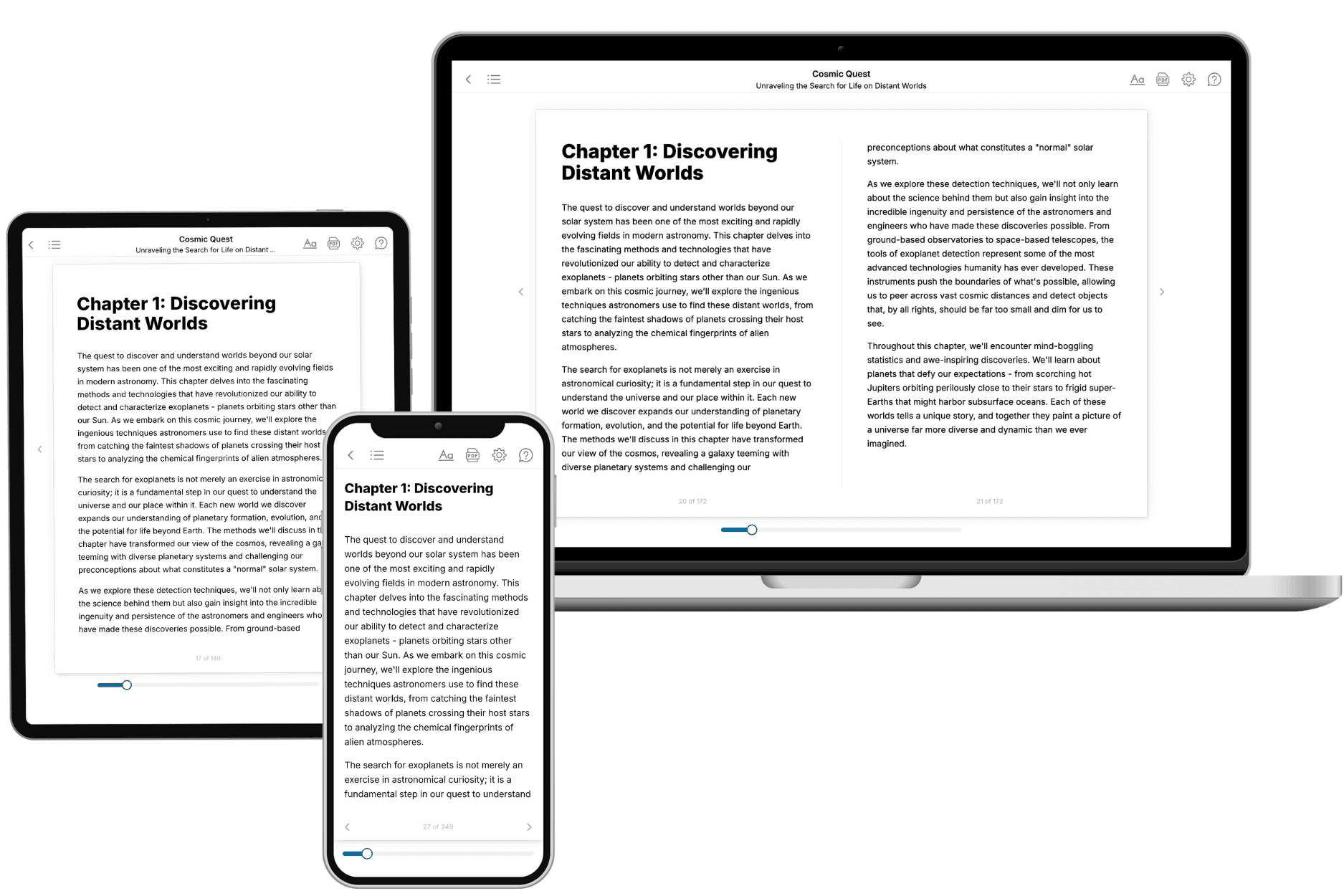
Your book is ready in 10 minutes. Read it online, download as EPUB or PDF, or send to Kindle.

Frequently asked questions
- What is TailoredRead?
TailoredRead creates complete, full-length nonfiction ebooks, written specifically for you. Tell us what you want to learn and why, and TailoredRead writes you a complete ebook on it, with charts, tables, and diagrams throughout. Read it online, on Kindle, or on any e-reader, or download it as a PDF or EPUB. Every book is written fresh the day you order it.
- How is the book tailored to me?
Before anything is written, you answer a few short questions about your goals, your background, and the topics you care about. Your book is then planned around your answers: written at your level, focused on your goals, and covering the topics you chose, instead of the one-size-fits-all book a store sells everyone.
- Will it read like generic AI content?
No. Your book isn't a chat transcript: it's planned chapter by chapter before a single word is written, told in a clear book voice, and explains ideas visually with charts, tables, and diagrams. After writing, every book goes through an editorial pass that polishes chapters so the book reads consistent from start to finish. Judge for yourself: browse thousands of sample books on our Explore Books page.
- How accurate is the content?
Our AI first checks whether your subject needs live research. Niche and fast-moving subjects are researched before writing, and the book plan and chapters are grounded in what it finds. After writing, every book goes through a quality pass that checks its facts and consistency, and researched books list their sources in a Notes section at the back.
- How long is the book?
You choose the length: Comprehensive (250-300 pages), Detailed (150-200 pages), Essential (70-100 pages), or Short (30-50 pages).
- Does the book include visuals?
Yes. Every book includes charts, tables, and diagrams: timelines, checklists, step-by-step guides, decision trees, comparison tables, matrices, and bar charts. A typical book includes dozens of these visual elements.
- Can I read it on Kindle? What formats can I download?
Yes. Every book can be read in our online reader or downloaded as a PDF or EPUB. The EPUB can be opened with Kindle, Apple Books, Kobo, and any e-reader. The Commercial and Author licenses also include an editable Word (DOCX) and Markdown download.
- How much does it cost?
About the price of a regular ebook. The exact price depends on your book's length and complexity, from $2 for the shortest books to $35 for the most comprehensive, and it's shown when you review your book, before you commit to anything. Each book is a one-time purchase, yours to keep, no subscription. Licenses that let you share, teach, or publish your book range from $35.99 to $49.99.
- Can I preview the book before purchasing?
Before you pay, you'll see what your book will cover: the title, a detailed description, the estimated length, and the complete chapter-by-chapter table of contents, so you know what you're getting before you decide. The full text itself is written after you purchase.
- How long does it take to create a book?
About 10 minutes. You can start reading the opening chapters while the rest is still being written.