Argumentative Essay Structure Guide
Thesis statements, evidence, counterarguments and transitions explained
Your words have the power to change minds, but only if they're arranged with purpose and precision.
269 pages13 chaptersJan 10, 2025Writing
About this book
In "The Architecture of Argument," you'll discover how to construct essays that don't just present information, but persuade with power and clarity. This guide takes you beyond the basics of essay writing, focusing on the specific challenges and opportunities of argumentative essays. You'll learn how to build a solid foundation for your arguments, create smooth transitions between ideas, and conclude with impact. From selecting compelling evidence to anticipating and addressing counterarguments, you'll gain the tools to make your writing more dynamic and convincing. Whether you're a student facing academic assignments or a professional looking to sharpen your persuasive writing skills, this book offers practical strategies to elevate your argumentative essays. By the end, you'll approach your writing with newfound confidence, armed with techniques to structure arguments that resonate with your readers and stand up to scrutiny.
Table of contents
- IntroductionThe Power of Structured Arguments, Overview of the Book's Contents, Why Structure Matters in Argumentative Essays, Your Journey to Mastering Argumentative EssaysRead below
- Chapter 1: Foundations of Argumentative EssaysDefining the Argumentative Essay, Purpose and Goals of Argumentative Writing, Types of Arguments and Their Structures, Understanding Your Audience
- Chapter 2: Crafting a Powerful Thesis StatementThe Role of the Thesis in Argumentative Essays, Characteristics of a Strong Thesis Statement, Developing Your Thesis, Placement and Refinement of the Thesis
- Chapter 3: The Blueprint of Persuasion: Essay StructureThe Basic Structure of an Argumentative Essay, Alternative Structures for Complex Arguments, Organizing Ideas for Maximum Impact, Outlining Techniques for Argumentative Essays
- Chapter 4: Crafting Compelling IntroductionsHook Techniques to Grab Attention, Providing Context and Background, Introducing Your Thesis Effectively, Creating a Roadmap for Your Essay
- Chapter 5: Constructing Solid Body ParagraphsCrafting Effective Topic Sentences, The Internal Structure of Body Paragraphs, Integrating Evidence and Examples, Providing Analysis and Explanation
- Chapter 6: Strengthening Your Argument with EvidenceTypes of Evidence in Argumentative Writing, Evaluating and Selecting Credible Sources, Incorporating Evidence Effectively, Avoiding Logical Fallacies in Your Arguments
- Chapter 7: Addressing CounterargumentsThe Importance of Acknowledging Opposing Views, Identifying Potential Counterarguments, Strategies for Refuting Objections, Making Concessions and Qualifications
- Chapter 8: Creating Smooth Transitions and FlowThe Role of Transitions in Argumentative Essays, Types of Transitions and Their Uses, Transitioning Between Paragraphs, Maintaining Logical Flow of Ideas
- Chapter 9: Crafting Impactful ConclusionsThe Purpose and Elements of a Strong Conclusion, Restating Your Thesis Effectively, Summarizing Key Arguments, Providing a Call to Action or Future Implications
- Chapter 10: Harnessing the Power of Language and ToneBalancing Formal and Informal Language, Rhetorical and Persuasive Techniques, Maintaining Objectivity in Passionate Arguments, The Impact of Word Choice on Argument Strength
- Chapter 11: Revision Strategies for Argumentative EssaysRevising for Structural Integrity, Enhancing Argument Coherence and Logic, Reviewing and Strengthening Evidence, Polishing Language and Style
- Chapter 12: Avoiding Common Pitfalls in Argumentative EssaysOvercoming Weak or Unclear Thesis Statements, Addressing Insufficient or Irrelevant Evidence, Eliminating Logical Inconsistencies, Minimizing Bias and Excessive Subjectivity
- Chapter 13: Advanced Techniques for Argumentative WritingStructuring Complex, Multi-faceted Arguments, Incorporating Visual Aids and Data, Using Stylistic Devices for Emphasis, Anticipating and Preempting Rebuttals
- ConclusionKey Takeaways for Effective Argumentative Essays, The Path to Continuous Improvement
- AppendixArgumentative Essay Templates, Argumentative Essay Checklist
- GlossaryKey Terms in Argumentative Writing
Introduction
In the realm of written communication, few skills are as valuable as the ability to construct a compelling argument. Whether you're a student crafting an academic essay, a professional preparing a business proposal, or an activist advocating for social change, the power to persuade through structured, logical reasoning is an invaluable asset. "The Architecture of Argument: A Comprehensive Guide to Crafting Persuasive Essays" is designed to equip you with the tools and techniques necessary to master this critical skill.
As you embark on this journey to enhance your argumentative writing, it's essential to understand that effective argumentation is not about winning at all costs or shouting the loudest. Instead, it's about presenting your ideas in a clear, logical, and compelling manner that respects your audience's intelligence while guiding them towards your perspective. This book will teach you how to construct arguments that are not only persuasive but also ethical and intellectually honest.
Throughout this guide, you'll discover that the art of argumentation is much like architecture. Just as an architect must consider form, function, and aesthetics when designing a building, a skilled writer must balance logic, evidence, and rhetorical appeal when crafting an argument. You'll learn how to lay a solid foundation with a clear thesis, build supporting structures with well-organized paragraphs, and create a cohesive whole that leads your reader to a satisfying conclusion.
By the time you finish this book, you'll have developed a robust toolkit for creating argumentative essays that stand up to scrutiny and effectively communicate your ideas. Whether you're facing academic assignments, professional challenges, or personal passions, the skills you'll acquire here will serve you well in any context where persuasion is key.
The Power of Structured Arguments
At its core, a well-structured argument is a powerful tool for influencing thought and inspiring action. Throughout history, structured arguments have been at the heart of significant social, political, and scientific advancements. From Aristotle's rhetorical treatises to Martin Luther King Jr.'s "Letter from Birmingham Jail," the ability to present a cogent argument has been instrumental in shaping human discourse and progress.
The power of a structured argument lies in its ability to organize complex ideas into a coherent and persuasive narrative. When you present your thoughts in a logical, well-organized manner, you make it easier for your audience to follow your reasoning and, ultimately, to be convinced by your position. A structured argument acts as a roadmap, guiding your readers through your thought process and leading them to your conclusion.
Moreover, a well-structured argument demonstrates respect for your audience. By presenting your ideas clearly and systematically, you show that you value your readers' time and intelligence. This approach builds credibility and trust, making your audience more receptive to your message. As the philosopher Stephen Toulmin noted in his seminal work "The Uses of Argument," the structure of an argument is not just about logic, but also about how that logic is communicated and received[1].
In today's information-rich environment, where attention is a scarce resource, the ability to present a clear, structured argument is more valuable than ever. Whether you're writing an academic paper, a business proposal, or a social media post, your ability to articulate your ideas effectively can set you apart. A well-structured argument cuts through the noise, capturing attention and leaving a lasting impact on your audience.
Furthermore, the process of structuring an argument is not just about presentation; it's a powerful tool for critical thinking. As you learn to organize your thoughts into a coherent structure, you'll find that your own understanding of the topic deepens. You'll become more adept at identifying logical flaws, recognizing strong evidence, and anticipating counterarguments. This enhanced critical thinking ability is valuable far beyond the realm of writing, influencing how you approach problems and make decisions in all areas of life.
Consider, for instance, the impact of structured arguments in the scientific community. The scientific method itself is built on the foundation of presenting hypotheses, evidence, and conclusions in a structured manner. This approach has led to countless breakthroughs and advancements. A study published in the journal "Nature" found that papers with more structured abstracts were cited more frequently, indicating their greater impact and persuasiveness within the scientific community[2].
In the legal world, the power of structured arguments is equally evident. Lawyers who can present their cases in a clear, logical manner are more likely to sway judges and juries. The entire legal system is built on the premise that truth and justice can be arrived at through the structured presentation and evaluation of arguments.
Even in the world of business, the ability to construct a compelling argument can be the difference between success and failure. Whether you're pitching a new idea to your boss, presenting a marketing strategy to clients, or negotiating a deal with partners, your success often hinges on your ability to present your case in a structured, persuasive manner.
As you progress through this book, you'll learn to harness this power for yourself. You'll discover how to structure your arguments for maximum impact, how to support your claims with compelling evidence, and how to anticipate and address counterarguments. These skills will not only improve your writing but will also enhance your overall ability to communicate and persuade in various aspects of your personal and professional life.
Remember, the goal of a structured argument is not to manipulate or deceive, but to present your ideas in the most clear, logical, and compelling manner possible. By mastering this skill, you'll be better equipped to engage in meaningful discourse, contribute to important debates, and make a positive impact in your chosen field.
Overview of the Book's Contents
"The Architecture of Argument" is designed to take you on a comprehensive journey through the art and science of crafting persuasive essays. Each chapter builds upon the previous one, providing you with a solid foundation in argumentative writing before delving into more advanced techniques. This carefully structured approach ensures that you'll develop your skills progressively, gaining confidence and competence as you work through the book.
We begin with the foundations of argumentative essays in Chapter 1, where you'll explore the fundamental principles that underpin effective argumentation. You'll learn about the different types of arguments, their purposes, and how to tailor your approach to your specific audience. This foundational knowledge will serve as the bedrock for everything that follows, ensuring that you understand the 'why' behind the 'how' of argumentative writing.
Chapter 2 focuses on one of the most critical elements of any argumentative essay: the thesis statement. Here, you'll learn how to craft powerful, focused thesis statements that effectively encapsulate your argument. You'll discover the characteristics of strong thesis statements and practice developing and refining your own. This chapter is crucial because a well-crafted thesis statement acts as the north star for your entire essay, guiding both you and your reader through your argument.
In Chapter 3, we delve into the overall structure of argumentative essays. You'll learn about different organizational strategies and how to choose the most effective structure for your specific argument. This chapter will teach you how to create outlines that ensure your essay flows logically from point to point, maintaining coherence and impact throughout.
Chapters 4 and 9 bookend your essay, focusing on crafting compelling introductions and impactful conclusions respectively. You'll learn techniques for hooking your reader's attention from the start and leaving them with a lasting impression at the end. These chapters emphasize the importance of these often-overlooked sections in framing your entire argument effectively.
The heart of your essay - the body paragraphs - is covered in Chapter 5. Here, you'll learn how to construct solid, well-reasoned paragraphs that each contribute meaningfully to your overall argument. You'll discover techniques for crafting effective topic sentences, integrating evidence, and providing thorough analysis.
Chapter 6 dives deeper into the use of evidence, teaching you how to select, evaluate, and incorporate compelling support for your claims. You'll learn about different types of evidence and how to use them effectively while avoiding common logical fallacies that can undermine your argument.
In Chapter 7, we tackle one of the most challenging aspects of argumentation: addressing counterarguments. You'll learn why acknowledging opposing views is crucial for building a strong argument and discover strategies for refuting objections effectively. This chapter will help you strengthen your own position by anticipating and addressing potential criticisms.
Chapter 8 focuses on creating smooth transitions and maintaining logical flow throughout your essay. You'll learn about different types of transitions and how to use them to guide your reader seamlessly from one idea to the next, ensuring that your argument unfolds naturally and persuasively.
The power of language and tone in argumentation is explored in Chapter 10. Here, you'll discover how to strike the right balance between formal and informal language, use rhetorical techniques effectively, and maintain objectivity even when arguing passionately. You'll learn how word choice can significantly impact the strength and reception of your argument.
Chapter 11 is dedicated to revision strategies specific to argumentative essays. You'll learn how to review and refine your work, focusing on strengthening your argument's structure, logic, and evidence. This chapter emphasizes the importance of revision in the writing process and provides practical techniques for improving your essay.
In Chapter 12, we address common pitfalls in argumentative writing and how to avoid them. This chapter will help you identify and correct issues like weak thesis statements, insufficient evidence, logical inconsistencies, and excessive bias. By learning to recognize and avoid these common problems, you'll be able to produce stronger, more persuasive essays.
Finally, Chapter 13 introduces advanced techniques for those looking to take their argumentative writing to the next level. You'll explore strategies for handling complex, multi-faceted arguments, incorporating visual aids and data, using stylistic devices for emphasis, and anticipating rebuttals. This chapter will help you refine your skills and tackle more challenging argumentative tasks.
Throughout the book, you'll find practical exercises, real-world examples, and tips from experienced writers to help you apply what you're learning. By the end of this journey, you'll have a comprehensive understanding of how to construct powerful, persuasive arguments in your writing.
Why Structure Matters in Argumentative Essays
The structure of an argumentative essay is not merely a formality or a set of arbitrary rules. It is, in fact, the skeleton that supports your entire argument, giving it shape, coherence, and strength. A well-structured essay does more than just present information; it guides the reader through a logical progression of ideas, building a compelling case for your position step by step. Understanding why structure matters is crucial for developing your skills as a persuasive writer.
First and foremost, a clear structure makes your argument easier to follow. In the same way that a well-organized presentation is more engaging and memorable than a rambling monologue, a structured essay holds your reader's attention and helps them grasp your key points. Research in cognitive psychology has shown that information presented in a structured, logical manner is more easily understood and remembered than information presented haphazardly[3]. By organizing your ideas into a coherent structure, you're not just making your essay more readable; you're making your argument more memorable and impactful.
Moreover, a strong structure lends credibility to your argument. When your essay is well-organized, it demonstrates to your reader that you've thought carefully about your position and have a clear, logical basis for your claims. This structured approach shows that you're not merely reacting emotionally or spouting opinions, but that you've considered the issue thoughtfully and can present your ideas in a reasoned manner. In academic and professional settings, this structured approach is often seen as a mark of intellectual rigor and maturity.
Structure also helps you, as the writer, to clarify and refine your own thinking. The process of organizing your thoughts into a coherent structure forces you to examine the logical connections between your ideas. As you work on structuring your essay, you may discover gaps in your reasoning or areas where your argument needs strengthening. This process of structuring can thus be a powerful tool for critical thinking and self-reflection, helping you to develop a more robust and well-reasoned argument.
Furthermore, a well-structured essay allows you to anticipate and address potential counterarguments more effectively. By organizing your ideas logically, you can more easily identify points where a reader might disagree or raise objections. This allows you to address these potential criticisms proactively, strengthening your overall argument. The ability to anticipate and address counterarguments is a hallmark of strong argumentative writing, and a clear structure makes this much easier to achieve.
The structure of your essay also plays a crucial role in guiding your research and evidence-gathering process. When you have a clear structure in mind, you can more easily identify what types of evidence you need to support each part of your argument. This can make your research more focused and efficient, ensuring that you gather relevant, compelling evidence to support each of your key points.
In addition, a well-structured essay is more adaptable and easier to revise. If you need to add new information or modify your argument, a clear structure provides a framework within which you can make these changes without losing coherence. This flexibility is particularly valuable in academic and professional settings, where you may need to revise your work based on feedback or new information.
It's also worth noting that different disciplines and contexts may have specific expectations regarding essay structure. For example, scientific papers often follow the IMRAD structure (Introduction, Methods, Results, and Discussion), while legal arguments might use the IRAC method (Issue, Rule, Application, Conclusion). Understanding these structural conventions and why they're used can help you tailor your writing to different audiences and purposes more effectively.
Finally, a strong structure can help you manage the emotional aspects of argumentation more effectively. When dealing with controversial or emotionally charged topics, it can be easy to get carried away by passion or to lose sight of your main points. A clear structure acts as an anchor, helping you stay focused on your key arguments and present them in a balanced, rational manner. This structured approach can make your argument more persuasive, especially when dealing with readers who may not initially agree with your position.
As you progress through this book, you'll learn various structural techniques and strategies for organizing your arguments effectively. Remember that while these structures provide useful frameworks, they should not be seen as rigid formulas. The best argumentative essays use structure flexibly, adapting it to best serve the specific argument being made. By mastering the principles of effective structure, you'll be able to craft arguments that are not only logically sound but also engaging, persuasive, and impactful.
Your Journey to Mastering Argumentative Essays
As you embark on this journey to master the art of argumentative essay writing, it's important to understand that this is a skill that develops over time with practice and reflection. This book is designed to be your guide, providing you with the knowledge, techniques, and strategies you need to craft compelling arguments. However, true mastery will come from applying these lessons to your own writing, learning from your successes and mistakes, and continuously refining your skills.
Your journey begins with understanding the fundamentals of argumentation. You'll learn to identify the key components of an effective argument and how these elements work together to create a persuasive whole. This foundational knowledge will serve as the bedrock for everything that follows, allowing you to approach each writing task with a clear understanding of what you're trying to achieve and how to go about it.
As you progress, you'll delve deeper into the specifics of crafting argumentative essays. You'll learn how to develop strong thesis statements, structure your essays for maximum impact, and support your claims with compelling evidence. These skills form the core of effective argumentation, and you'll find yourself returning to these principles again and again as you hone your craft.
One of the most challenging aspects of this journey will be learning to anticipate and address counterarguments. This skill requires you to step outside your own perspective and consider your argument from different angles. It's a process that can be uncomfortable at first, as it requires you to confront potential weaknesses in your own reasoning. However, as you practice this skill, you'll find that it not only strengthens your arguments but also deepens your understanding of the topics you're writing about.
Throughout your journey, you'll also be developing your critical thinking skills. The process of constructing and evaluating arguments will teach you to analyze information more effectively, to question assumptions (including your own), and to draw logical conclusions from evidence. These skills will serve you well not just in your writing, but in all areas of your academic, professional, and personal life.
As you apply the techniques you learn in this book, you may find that your writing process changes. Many writers discover that they need to spend more time planning and outlining their essays, but that this upfront investment pays off in smoother, more focused writing. You might also find that you approach research differently, looking not just for information that supports your position, but also for credible sources that present opposing views.
It's important to remember that becoming a skilled argumentative writer is not just about following a set of rules or techniques. It's about developing your own voice and style within the framework of effective argumentation. As you practice, you'll begin to find ways to infuse your personality and unique perspective into your writing while still maintaining the logical structure and rigor that characterize strong arguments.
One of the most rewarding aspects of this journey is the way it can change how you engage with the world around you. As you become more adept at constructing and analyzing arguments, you'll likely find yourself approaching information more critically, whether you're reading a news article, listening to a political speech, or engaging in a debate with friends. This heightened analytical awareness can lead to a deeper, more nuanced understanding of complex issues.
It's also worth noting that the skills you'll develop are highly transferable. While this book focuses on written argumentation, the principles you'll learn apply equally to verbal debates, presentations, and even everyday conversations. As you progress in your journey, you may find opportunities to apply these skills in a variety of contexts, from academic discussions to professional negotiations.
Remember that mastery is an ongoing process. Even the most experienced writers continue to learn and refine their skills with each new piece they write. Don't be discouraged if you find some aspects challenging at first. Each essay you write is an opportunity to apply what you've learned and to discover areas where you can improve.
Finally, as you work through this book and apply its lessons to your own writing, try to maintain a balance between critical self-assessment and self-compassion. Analyze your work critically to identify areas for improvement, but also acknowledge your progress and celebrate your successes along the way. Writing is a craft that improves with practice, and each essay you complete is a step forward in your journey.
By the end of this book, you'll have a comprehensive toolkit for crafting persuasive argumentative essays. But more than that, you'll have embarked on a journey of intellectual growth and self-discovery. You'll have developed skills that will serve you well in any field that values clear thinking and effective communication. So, embrace the challenges ahead, approach each writing task as an opportunity to learn and grow, and enjoy the process of becoming a master of argumentative writing.
Notes
Introduction
- 1. Stephen E. Toulmin, The Uses of Argument, Cambridge University Press, 2003
- 2. J. Hartley, "Current findings from research on structured abstracts," Journal of the Medical Library Association, 2004
- 3. J. D. Bransford and M. K. Johnson, "Contextual prerequisites for understanding," Journal of Verbal Learning and Verbal Behavior, 1972
This is the end of the free sample. The full book has 13 chapters.
Want this book written for you?
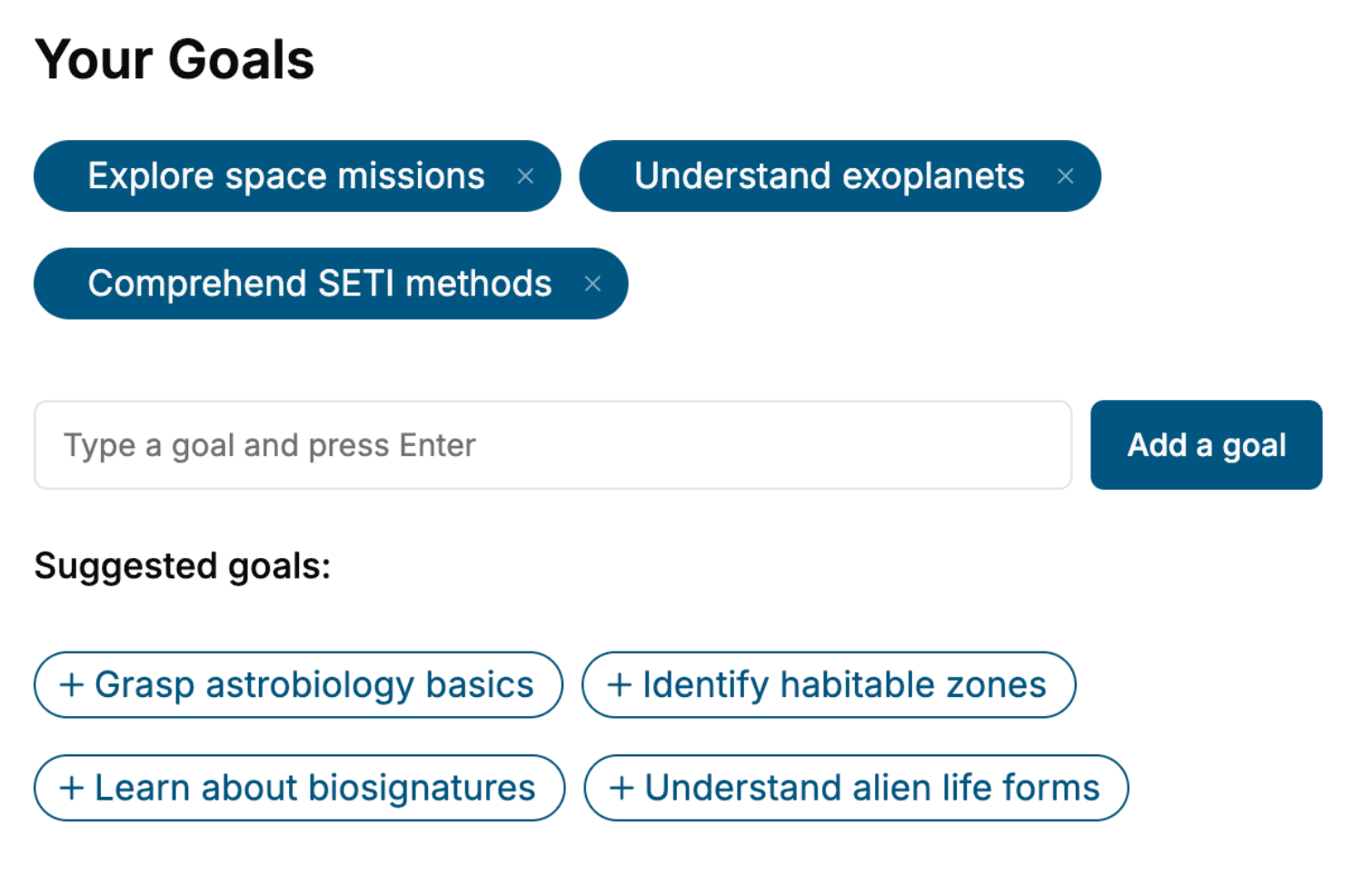
Tell us your goals and background, and get your own version of this book, tailored by AI to you.


Benefits of AI-tailored books
- Read one book, not ten:
- all the Writing knowledge you need, gathered into a single book.
- Save days of learning:
- tell us your goals, choose your topics, and the whole book is built around them.
- Learn effortlessly:
- Writing book written for your specific background and expertise.
- Understand at a glance:
- includes charts, tables, timelines, checklists, decision trees, and more.
- Stay current:
- written the day you order it, not years ago.
- Trust what you read:
- every book is checked for accuracy, with real research when your subject needs it.
Create your unique book in 3 steps
- 1. Select your focus
Select the focus of your Writing book and share your background
- 2. Personalize your book
Specify your goals and choose sub-topics to include
- 3. Get your tailored book
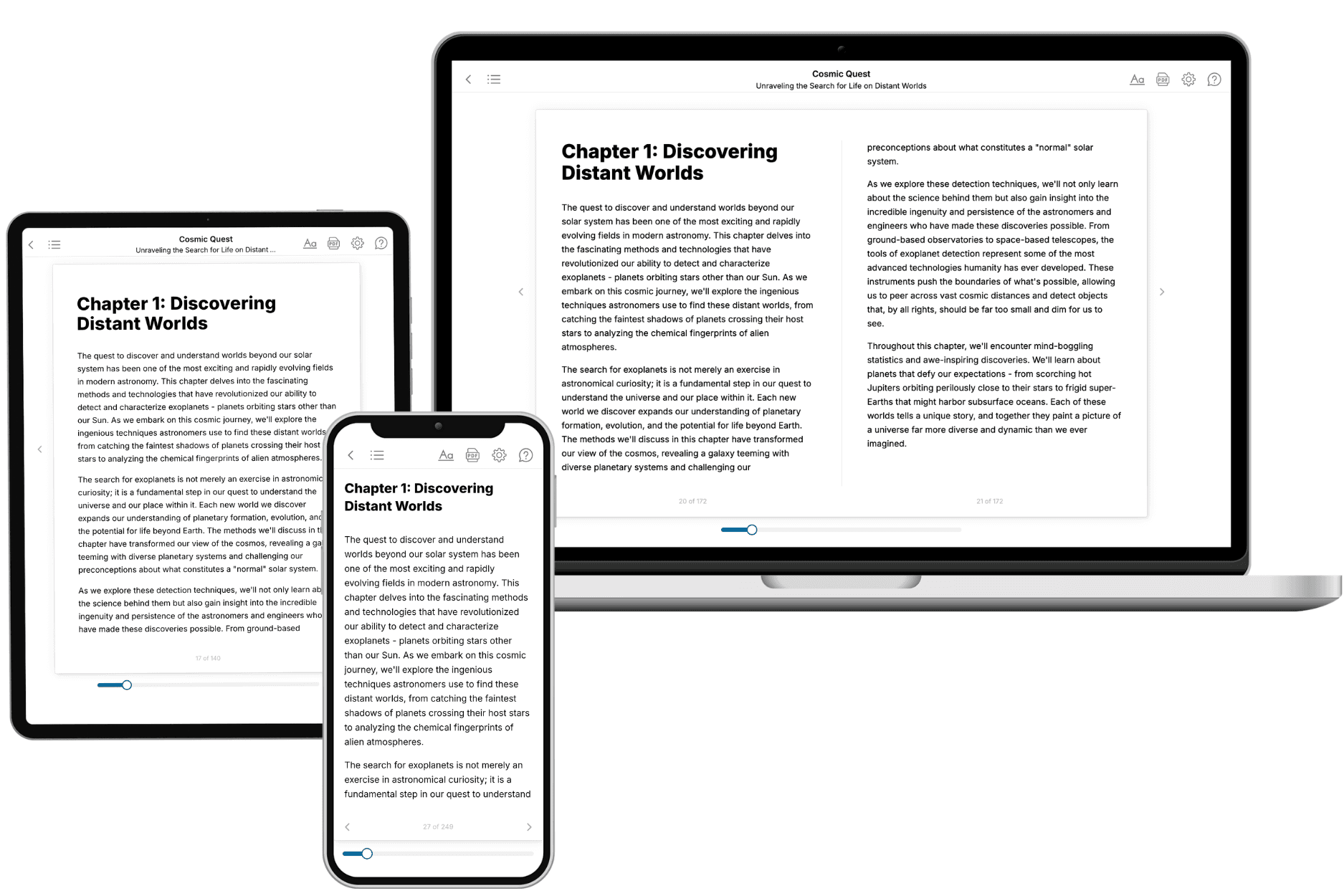
Your book is ready in 10 minutes. Read it online, download as EPUB or PDF, or send to Kindle.

Frequently asked questions
- What is TailoredRead?
TailoredRead creates complete, full-length nonfiction ebooks, written specifically for you. Tell us what you want to learn and why, and TailoredRead writes you a complete ebook on it, with charts, tables, and diagrams throughout. Read it online, on Kindle, or on any e-reader, or download it as a PDF or EPUB. Every book is written fresh the day you order it.
- How is the book tailored to me?
Before anything is written, you answer a few short questions about your goals, your background, and the topics you care about. Your book is then planned around your answers: written at your level, focused on your goals, and covering the topics you chose, instead of the one-size-fits-all book a store sells everyone.
- Will it read like generic AI content?
No. Your book isn't a chat transcript: it's planned chapter by chapter before a single word is written, told in a clear book voice, and explains ideas visually with charts, tables, and diagrams. After writing, every book goes through an editorial pass that polishes chapters so the book reads consistent from start to finish. Judge for yourself: browse thousands of sample books on our Explore Books page.
- How accurate is the content?
Our AI first checks whether your subject needs live research. Niche and fast-moving subjects are researched before writing, and the book plan and chapters are grounded in what it finds. After writing, every book goes through a quality pass that checks its facts and consistency, and researched books list their sources in a Notes section at the back.
- How long is the book?
You choose the length: Comprehensive (250-300 pages), Detailed (150-200 pages), Essential (70-100 pages), or Short (30-50 pages).
- Does the book include visuals?
Yes. Every book includes visual elements such as timelines, checklists, step-by-step guides, decision trees, comparison tables, and matrices, and many include bar charts. A typical book includes dozens of these visual elements.
- Can I read it on Kindle? What formats can I download?
Yes. Every book can be read in our online reader or downloaded as a PDF or EPUB. The EPUB can be opened with Kindle, Apple Books, Kobo, and any e-reader. The Commercial and Author licenses also include an editable Word (DOCX) and Markdown download.
- How much does it cost?
About the price of a regular ebook. The exact price depends on your book's length and complexity, from $2 for the shortest books to $35 for the most comprehensive, and it's shown when you review your book, before you commit to anything. Each book is a one-time purchase, yours to keep, no subscription. Licenses that let you share, teach, or publish your book range from $35.99 to $49.99.
- Can I preview the book before purchasing?
Before you pay, you'll see what your book will cover: the title, a detailed description, the estimated length, and the complete chapter-by-chapter table of contents, so you know what you're getting before you decide. The full text itself is written after you purchase.
- How long does it take to create a book?
About 10 minutes. You can start reading the opening chapters while the rest is still being written.