The Architecture of Civilization
How Systems, Trade, and Power Shaped Human History from Ancient Times to the Medieval World
Discover how human civilizations developed as interconnected systems of power, trade, and belief that shaped the course of history.
207 pages11 chaptersDec 31, 2025World HistoryCreated by Cassie
About this book
This book traces the architectural foundations of our world from humanity's earliest settlements through the medieval period, revealing the systematic patterns that governed how societies organized themselves, connected across continents, and transformed through major historical transitions. You'll explore how ancient empires built centralized governance structures, how trade networks like the Silk Road created the first global systems of exchange, how feudalism emerged as a response to chaos, and how religious institutions unified diverse populations. By examining the mechanics of social hierarchies, the impact of migration and conquest, and the patterns of cultural diffusion, you'll gain a systems-based perspective on history that illuminates why civilizations rose, fell, and evolved. Perfect for those seeking to understand not just what happened in history, but how and why civilizations functioned as they did.
Table of contents
- IntroductionWhy Systems Matter in Understanding History, The Scope and Approach of This Book, How to Read This Book as a Systems ThinkerRead below
- Chapter 1: The First Civilizations: Building the FoundationThe Agricultural Revolution and Settlement Patterns, Mesopotamia and Egypt: Two Models of Organization, Early Governance Systems and Centralized Power
- Chapter 2: Ancient Empires and Political ArchitectureThe Egyptian Hierarchy: Pharaohs and Divine Authority, The Indus Valley Civilization and Urban Planning, Early Chinese Dynasties and Bureaucratic Systems
- Chapter 3: Classical Civilizations: Democracy, Republic, and EmpireGreek City-States and the Birth of Democracy, The Roman Republic: Checks, Balances, and Expansion, The Roman Empire: Bureaucracy and Infrastructure
- Chapter 4: Trade Networks and Global ConnectivityThe Silk Road: Origins and Structure, How Trade Networks Functioned and Connected Civilizations, Cultural and Technological Diffusion Through Trade
- Chapter 5: Religious Systems as Organizing ForcesReligion as a Tool for Unifying and Governing Societies, The Rise of Major World Religions and Their Spread, Religious Syncretism: When Belief Systems Collide and Blend
- Chapter 6: Social Hierarchies and Caste SystemsOrigins of the Caste System in Ancient India, How Social Hierarchies Functioned as Organizing Systems, Comparing Hierarchies Across Civilizations
- Chapter 7: Nomadic Peoples and Migration PatternsUnderstanding Nomadic Societies and Their Systems, How Migration Patterns Reshaped Established Civilizations, The Steppe Empires and Their Influence on Eurasia
- Chapter 8: The Medieval World: Feudalism and HierarchyThe Origins of Feudalism: Response to Chaos and Fragmentation, Feudal Vassal Relationships and Networks of Obligation, How the Feudal System Functioned as a Governance Model
- Chapter 9: Medieval Power Dynamics and ChivalryMedieval Chivalry Codes and Warrior Culture, The Church's Role in Medieval Power Structures, Conflicts Between Nobility and the Consolidation of Power
- Chapter 10: Medieval Urban Growth and Economic SystemsThe Emergence of Medieval Cities and Towns, Merchant Guilds and the Organization of Medieval Commerce, Medieval Trade Networks and Economic Interdependence
- Chapter 11: Viking Expansion and Cultural ImpactViking Origins and Expansion Routes, How Vikings Disrupted and Reshaped European Societies, The Legacy of Viking Expansion in Medieval Europe
- ConclusionPatterns Across Time: What History Reveals About Systems, Applying Historical Insights to Modern Understanding
Introduction
History is not simply a collection of dates, battles, and famous leaders. It is a complex tapestry of interconnected systems that evolved, adapted, and transformed over millennia. When you examine the rise and fall of civilizations through a systems lens, patterns emerge that reveal fundamental truths about how human societies organize themselves, distribute power, exchange resources, and respond to challenges. This book approaches history as an IT professional approaches a complex network: by identifying the architecture, understanding the protocols, mapping the connections, and analyzing how components interact to create emergent behaviors. Just as modern systems have layers of infrastructure, protocols, and user interfaces, ancient and medieval civilizations developed their own layered architectures of governance, economy, religion, and social organization.
The civilizations you'll explore in this book were not isolated experiments. They were nodes in an expanding network of human organization that stretched across continents and millennia. The Egyptian pharaoh's centralized authority influenced Persian administrative systems. Greek democratic experiments informed Roman republican structures. Chinese bureaucratic innovations traveled along trade routes to influence governance models thousands of miles away. The Silk Road functioned as a data highway, transmitting not just silk and spices but ideas, technologies, religions, and organizational models. Understanding these connections transforms history from a linear narrative into a dynamic systems map where changes in one region rippled outward to reshape distant societies.
Your background in systems analysis provides a unique advantage in understanding historical civilizations. You already think in terms of inputs and outputs, feedback loops, hierarchies, networks, and system failures. You understand that complex systems exhibit behaviors that cannot be predicted by examining individual components in isolation. You recognize that redundancy, modularity, and adaptability determine whether systems survive disruptions. These same principles governed whether ancient empires thrived or collapsed, whether trade networks expanded or contracted, and whether social structures remained stable or fractured. This book will help you apply your analytical framework to human history, revealing the systematic logic behind events that might otherwise seem random or personality-driven.
The period covered in this book—from the first agricultural settlements through the medieval world—represents humanity's foundational experiments in large-scale organization. These were the centuries when humans first grappled with questions that remain relevant today: How do you govern populations of millions? How do you maintain order across vast distances? How do you integrate diverse cultures into cohesive systems? How do you balance centralized control with local autonomy? How do you create economic systems that incentivize production and facilitate exchange? The solutions developed by ancient Mesopotamians, Egyptians, Greeks, Romans, Chinese dynasties, and medieval Europeans created templates that continue to influence modern governance, economics, and social organization.
This introduction will prepare you to engage with the material ahead by establishing why systems thinking matters for historical understanding, clarifying the scope and approach of the book, and providing guidance on how to extract maximum value from each chapter. You'll learn to recognize the patterns that repeat across civilizations, understand the variables that produce different outcomes, and develop frameworks for analyzing how and why societies evolve. By the end of this book, you won't just know more historical facts—you'll possess a systematic understanding of how civilizations function as complex adaptive systems.
Why Systems Matter in Understanding History
Traditional historical narratives often focus on individual leaders, decisive battles, and dramatic turning points. While these elements make compelling stories, they obscure the underlying systems that actually determined outcomes. When you examine the fall of the Roman Empire, for example, focusing solely on barbarian invasions or weak emperors misses the systemic factors that made collapse inevitable: overextended supply lines, currency debasement, administrative fragmentation, and the breakdown of the tax system that funded the military. These were system failures, not personality failures. Understanding history through a systems lens reveals that civilizations succeed or fail based on the robustness of their organizational architecture, not just the quality of their leadership.
Systems thinking allows you to identify patterns that repeat across different civilizations and time periods. Consider how multiple ancient empires independently developed similar solutions to the same organizational challenges. Egypt, Persia, China, and Rome all created hierarchical bureaucracies with specialized departments, standardized record-keeping, and chains of command. They all developed taxation systems to extract resources from agricultural populations. They all built infrastructure networks—roads, canals, postal systems—to facilitate communication and control. These parallel developments weren't coincidental. They emerged because certain organizational structures solve fundamental problems of scale, coordination, and resource distribution more effectively than alternatives. Recognizing these patterns helps you understand not just what happened, but why it had to happen that way.
The systems perspective also illuminates how changes in one domain cascade through entire civilizations. When the stirrup reached Europe from Central Asia in the early medieval period, it wasn't just a technological innovation—it was a system disruptor. The stirrup enabled heavy cavalry warfare, which required expensive equipment and extensive training. This military technology shift reinforced feudalism by making mounted knights the dominant military force, which in turn strengthened the power of land-holding nobility, which shaped the entire social hierarchy of medieval Europe. A single technological component altered the military system, which transformed the political system, which restructured the social system. This kind of cascading change is invisible if you examine each domain in isolation, but becomes clear when you analyze civilizations as integrated systems.
Systems analysis also helps you understand why civilizations exhibit resilience or fragility. Resilient systems have redundancy, modularity, and adaptive capacity. The Roman Empire's road network created redundancy in communication and troop movement, making the system resistant to local disruptions. Chinese dynasties developed modular administrative structures where provinces could function semi-autonomously, preventing local problems from cascading into system-wide failures. Medieval European feudalism, despite its inefficiencies, proved remarkably adaptive because power was distributed across multiple nodes rather than concentrated in a single point of failure. Conversely, highly centralized systems like the Inca Empire could be conquered rapidly because eliminating the central node paralyzed the entire system. Understanding these architectural differences explains why some civilizations survived for centuries while others collapsed within generations.
The systems approach reveals that civilizations are not static entities but dynamic processes constantly responding to internal and external pressures. Population growth strains agricultural systems, forcing innovations in farming techniques or territorial expansion. Climate changes disrupt food production, triggering migrations that reshape political boundaries. New technologies alter military balances, forcing adaptations in governance structures. Trade networks introduce foreign ideas that challenge existing belief systems, requiring cultural integration or conflict. These feedback loops create constant evolution, and civilizations that develop effective mechanisms for adaptation survive while rigid systems fracture. By examining these dynamic processes, you gain insight into how and why civilizations transform over time.
Finally, systems thinking helps you avoid the trap of technological or cultural determinism. It's tempting to attribute civilization success to superior technology or cultural values, but systems analysis reveals that context and integration matter more than individual components. The Mongols conquered vast territories not because they had superior technology—their opponents often had better metallurgy and fortifications—but because they integrated mobility, communication, and logistics into a superior military system. Similarly, the Islamic Golden Age flourished not because of any single cultural factor but because the Abbasid Caliphate created systems that integrated diverse knowledge traditions, funded scholarship, and facilitated information exchange across a vast empire. Success came from system architecture, not component superiority.
Understanding history through systems provides practical frameworks for analyzing contemporary challenges. The same patterns that governed ancient trade networks apply to modern global supply chains. The tensions between centralized authority and local autonomy that shaped Roman provincial administration mirror current debates about federal versus state power. The mechanisms of cultural diffusion that spread Buddhism along the Silk Road operate similarly to how ideas spread through modern digital networks. By studying how historical systems functioned, adapted, and failed, you develop analytical tools applicable far beyond historical contexts. This is why systems matter: they reveal the underlying logic of human organization across all times and places.
The Scope and Approach of This Book
This book covers approximately 5,000 years of human history, from the first agricultural settlements around 3500 BCE through the end of the medieval period around 1500 CE. This timeframe encompasses humanity's transition from small-scale tribal societies to complex civilizations spanning continents. The geographical scope is global, examining civilizations across Mesopotamia, Egypt, the Mediterranean, India, China, Central Asia, and Europe. However, the focus is not encyclopedic coverage of every civilization but rather systematic analysis of how different societies solved fundamental organizational challenges. You'll explore representative examples that illustrate broader patterns, with depth prioritized over breadth to ensure you understand not just what happened but how systems functioned.
The book is organized thematically rather than strictly chronologically, though each chapter maintains historical progression within its theme. This structure allows you to trace how specific systems—governance, trade, religion, social hierarchy—evolved across different civilizations and time periods. For example, rather than covering all aspects of ancient Egypt in one chapter and then moving to Greece, you'll examine Egyptian governance systems alongside Greek and Roman political structures to understand how different civilizations approached the same organizational challenges. This comparative approach reveals patterns and variations that would be obscured by a purely chronological narrative. You'll see how solutions developed in one civilization influenced or differed from approaches in others, building a systematic understanding of organizational possibilities.
Each chapter focuses on a specific system or organizational domain:
- Political systems: How civilizations structured authority, distributed power, and maintained control across populations and territories
- Economic systems: How societies organized production, facilitated exchange, and integrated into larger trade networks
- Religious systems: How belief systems functioned as organizing forces that unified populations and legitimized authority
- Social systems: How hierarchies emerged, how labor was organized, and how status was determined and maintained
- Military systems: How warfare shaped political structures and how military organization reflected broader social patterns
- Cultural systems: How ideas, technologies, and practices spread between civilizations and transformed through contact
The analytical approach throughout the book emphasizes mechanisms over narratives. Rather than simply describing what happened, each chapter explains how systems functioned, why they took particular forms, and what factors determined their success or failure. You'll encounter questions like: What problem was this system designed to solve? What were its components and how did they interact? What inputs did it require and what outputs did it produce? What made it stable or unstable? How did it respond to disruptions? What were its failure modes? This mechanistic analysis transforms historical events into case studies of system design, implementation, and evolution. You'll develop the ability to analyze any civilization by asking these systematic questions.
The book draws on archaeological evidence, primary historical sources, and contemporary historical scholarship to build accurate pictures of how ancient and medieval systems functioned. However, the presentation avoids academic jargon and focuses on clear explanations accessible to readers without specialized historical training. When technical terms are necessary—such as feudal vassalage or bureaucratic hierarchy—they're defined clearly with concrete examples. The goal is to make sophisticated historical analysis accessible to systems thinkers from technical backgrounds who may not have formal historical training but possess the analytical frameworks to understand complex organizational structures.
Throughout the book, you'll find explicit connections drawn between historical systems and modern parallels. These aren't superficial analogies but genuine structural similarities that reveal enduring patterns in human organization. For instance, the chapter on trade networks doesn't just describe the Silk Road but analyzes it as a distributed network with nodes, protocols, and emergent properties—concepts directly applicable to understanding modern internet infrastructure or global supply chains. The chapter on feudalism examines it as a hierarchical system with defined relationships and obligations, similar to organizational structures in modern corporations. These connections help you see history not as distant and irrelevant but as a laboratory of organizational experiments with lessons for contemporary challenges.
The book acknowledges limitations and uncertainties in historical knowledge. Ancient civilizations left incomplete records, and much of what we know comes from archaeological inference, biased sources, or fragmentary evidence. Where significant scholarly debates exist about how systems functioned, the book presents the most widely accepted interpretations while noting alternative views. The goal is not to present definitive answers to every historical question but to provide frameworks for systematic analysis based on available evidence. You'll learn to think probabilistically about historical systems, recognizing that we can understand general patterns and mechanisms even when specific details remain uncertain.
Finally, this book is designed to build progressively. Early chapters establish foundational concepts—how agricultural surplus enables specialization, how centralized authority emerges, how trade networks form—that later chapters build upon. The chapter on feudalism, for example, assumes you understand the Roman administrative systems that preceded it and the trade networks that connected medieval Europe to other regions. This progressive structure means that reading sequentially provides the most coherent experience, though each chapter is also designed to stand alone for readers interested in specific topics. By the conclusion, you'll have integrated knowledge across multiple systems and time periods, enabling sophisticated analysis of how civilizations function as complete, interconnected entities.
How to Read This Book as a Systems Thinker
Approach each chapter as you would approach understanding a complex technical system: by first identifying the components, then understanding how they interact, and finally analyzing the emergent behaviors that result from those interactions. When reading about ancient Egyptian governance, for example, don't just memorize that pharaohs held absolute power. Instead, map out the system: What were the inputs (agricultural surplus, labor, resources)? What were the processing mechanisms (bureaucratic administration, religious legitimation, military enforcement)? What were the outputs (monumental architecture, territorial control, social stability)? What feedback loops maintained the system (successful harvests reinforcing divine authority, military victories enabling resource extraction)? This analytical approach transforms passive reading into active system modeling.
As you read, actively look for patterns that repeat across different civilizations. Create mental or physical notes comparing how different societies solved similar problems. For instance, when you read about Roman roads, Chinese postal systems, and Persian royal roads, recognize that these are parallel solutions to the same challenge: maintaining communication and control across vast territories. Ask yourself: What common features do these solutions share? What contextual factors explain their differences? What does this pattern reveal about the fundamental requirements of large-scale governance? By identifying these patterns, you build reusable frameworks for understanding how civilizations address universal organizational challenges.
Pay special attention to system failures and transitions, as these reveal the most about how systems actually functioned. When reading about the fall of the Western Roman Empire, focus not just on what collapsed but on why the system couldn't adapt. What dependencies existed? What redundancies were lacking? What feedback loops turned negative? What external shocks exceeded the system's adaptive capacity? Similarly, when examining transitions like the shift from Roman centralization to medieval feudalism, analyze what systemic factors made the new structure viable when the old one failed. Failures and transitions are natural experiments that expose the underlying mechanics of civilizations.
Use the following analytical framework as you read each chapter:
- Identify the core problem: What organizational challenge is this system addressing? (e.g., coordinating labor, distributing resources, maintaining security)
- Map the components: What are the key elements of this system? (e.g., institutions, roles, technologies, resources)
- Trace the interactions: How do components connect and influence each other? What are the information flows and resource flows?
- Recognize the constraints: What limitations shaped this system? (e.g., technology, geography, population, resources)
- Analyze the dynamics: What feedback loops exist? How does the system respond to changes? What makes it stable or unstable?
- Evaluate the outcomes: What did this system accomplish? What were its failure modes? How long did it persist and why?
Don't treat historical examples as isolated case studies. Instead, build a mental database of organizational patterns and their outcomes. When you read about the caste system in ancient India, add it to your understanding of how societies create social hierarchies. When you encounter Viking expansion patterns, integrate that with your knowledge of how nomadic peoples interact with settled civilizations. When you study medieval guilds, connect them to your understanding of how economic systems organize production and exchange. Over time, you'll develop a rich library of organizational patterns, each with documented implementations, outcomes, and contextual factors. This database becomes a powerful tool for analyzing not just historical civilizations but any complex organizational system.
Engage actively with the material by asking questions that go beyond what's explicitly stated in the text. If a chapter explains that the Silk Road facilitated cultural exchange, ask yourself: What specific mechanisms enabled this exchange? What incentives motivated merchants to carry ideas along with goods? What barriers limited the spread of certain technologies or beliefs? What network effects emerged as the trade system expanded? By pushing beyond surface descriptions to mechanistic explanations, you develop deeper understanding and stronger analytical skills. The book provides frameworks and examples, but your active questioning transforms information into genuine insight.
Consider creating visual representations of the systems you're learning about. Diagrams, flowcharts, and network maps can clarify relationships that are difficult to grasp from text alone. For example, mapping the feudal hierarchy as a tree structure with nodes representing different levels of vassalage makes the system's architecture immediately clear. Drawing the Silk Road as a network with nodes representing cities and edges representing trade routes helps you understand its topology and vulnerabilities. Visualizing the Roman administrative hierarchy as an organizational chart reveals its bureaucratic structure. These visual models don't need to be elaborate—simple sketches that capture key relationships are often most useful. The act of creating them forces you to think precisely about system structure.
Finally, reflect on how historical patterns apply to contemporary systems you encounter in your professional and personal life. When you read about how ancient empires struggled to maintain control over distant provinces, consider how modern organizations face similar challenges coordinating distributed teams. When you learn about how trade networks created interdependencies between civilizations, think about how global supply chains create similar vulnerabilities today. When you study how religious institutions unified diverse populations, reflect on how shared values and cultures function in modern organizations. These connections aren't just intellectual exercises—they're opportunities to apply historical insights to current challenges. History becomes most valuable when it informs your understanding of the present and future, not just the past.
This is the end of the free sample. The full book has 11 chapters.
Want this book written for you?
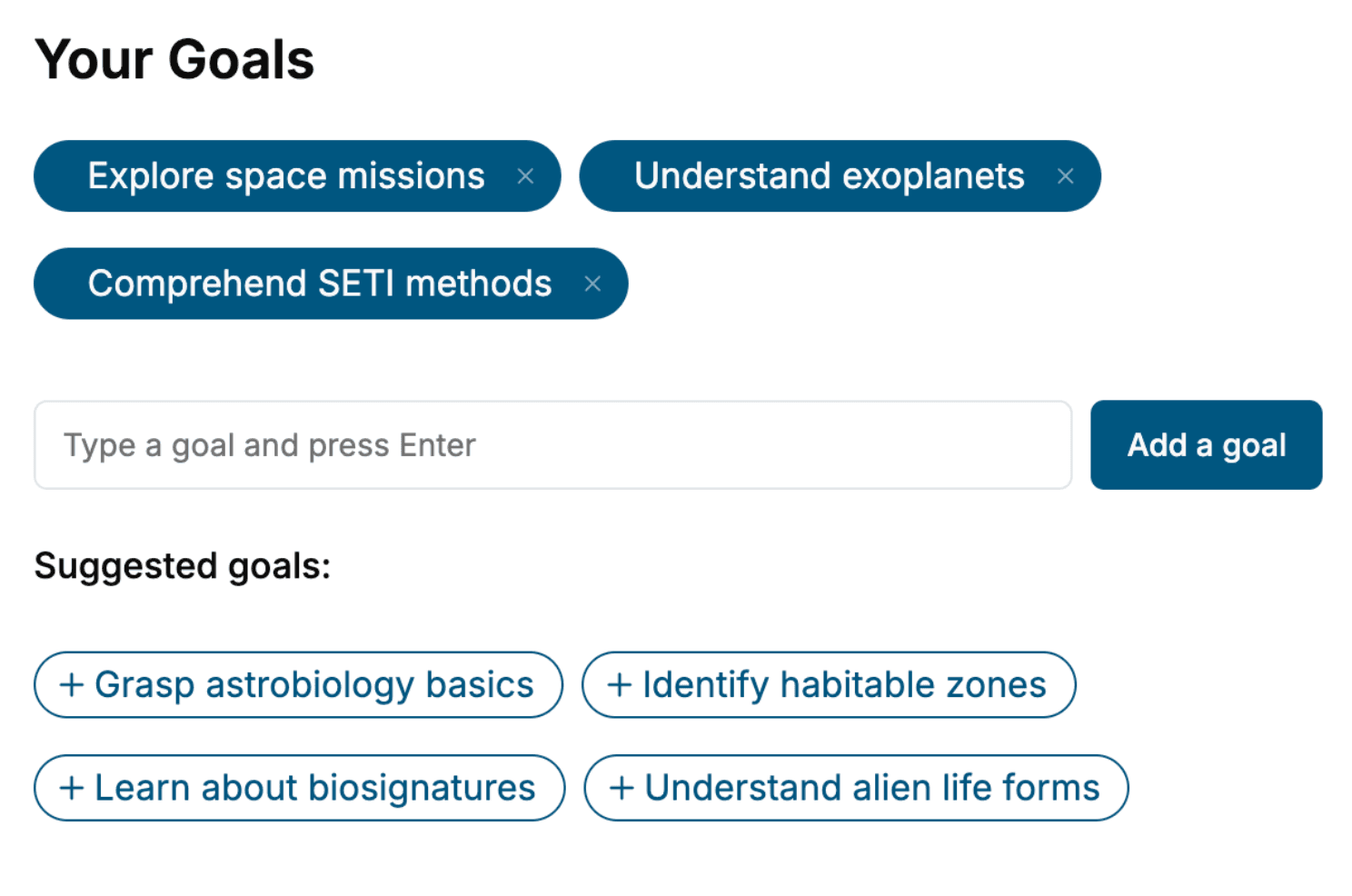
Tell us your goals and background, and get your own version of this book, tailored by AI to you.


Benefits of AI-tailored books
- Read one book, not ten:
- all the World History knowledge you need, gathered into a single book.
- Save days of learning:
- tell us your goals, choose your topics, and the whole book is built around them.
- Learn effortlessly:
- World History book written for your specific background and expertise.
- Understand at a glance:
- includes charts, tables, timelines, checklists, decision trees, and more.
- Stay current:
- written the day you order it, not years ago.
- Trust what you read:
- every book is checked for accuracy, with real research when your subject needs it.
Create your unique book in 3 steps
- 1. Select your focus
Select the focus of your World History book and share your background
- 2. Personalize your book
Specify your goals and choose sub-topics to include
- 3. Get your tailored book
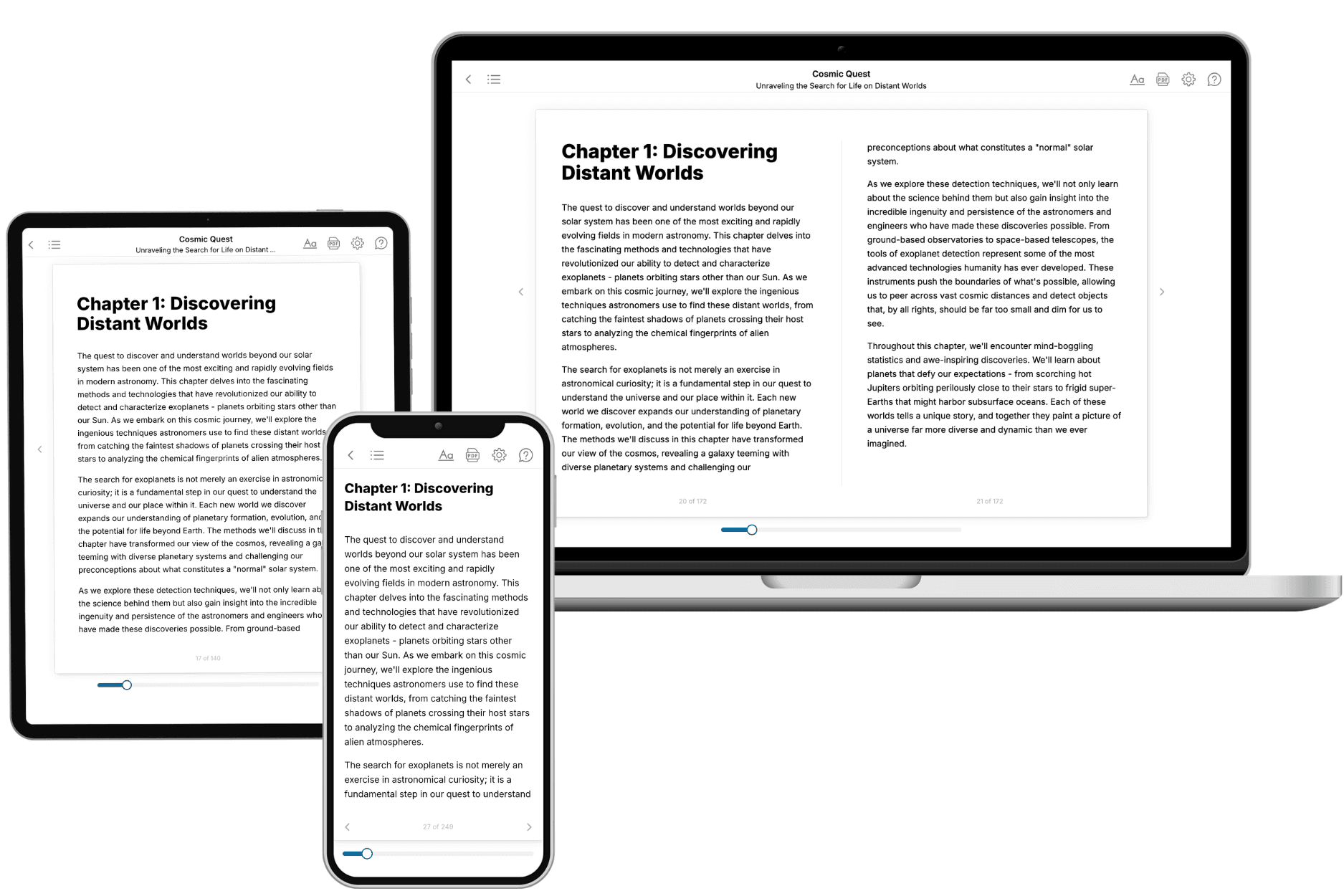
Your book is ready in 10 minutes. Read it online, download as EPUB or PDF, or send to Kindle.

Frequently asked questions
- What is TailoredRead?
TailoredRead creates complete, full-length nonfiction ebooks, written specifically for you. Tell us what you want to learn and why, and TailoredRead writes you a complete ebook on it, with charts, tables, and diagrams throughout. Read it online, on Kindle, or on any e-reader, or download it as a PDF or EPUB. Every book is written fresh the day you order it.
- How is the book tailored to me?
Before anything is written, you answer a few short questions about your goals, your background, and the topics you care about. Your book is then planned around your answers: written at your level, focused on your goals, and covering the topics you chose, instead of the one-size-fits-all book a store sells everyone.
- Will it read like generic AI content?
No. Your book isn't a chat transcript: it's planned chapter by chapter before a single word is written, told in a clear book voice, and explains ideas visually with charts, tables, and diagrams. After writing, every book goes through an editorial pass that polishes chapters so the book reads consistent from start to finish. Judge for yourself: browse thousands of sample books on our Explore Books page.
- How accurate is the content?
Our AI first checks whether your subject needs live research. Niche and fast-moving subjects are researched before writing, and the book plan and chapters are grounded in what it finds. After writing, every book goes through a quality pass that checks its facts and consistency, and researched books list their sources in a Notes section at the back.
- How long is the book?
You choose the length: Comprehensive (250-300 pages), Detailed (150-200 pages), Essential (70-100 pages), or Short (30-50 pages).
- Does the book include visuals?
Yes. Every book includes charts, tables, and diagrams: timelines, checklists, step-by-step guides, decision trees, comparison tables, matrices, and bar charts. A typical book includes dozens of these visual elements.
- Can I read it on Kindle? What formats can I download?
Yes. Every book can be read in our online reader or downloaded as a PDF or EPUB. The EPUB can be opened with Kindle, Apple Books, Kobo, and any e-reader. The Commercial and Author licenses also include an editable Word (DOCX) and Markdown download.
- How much does it cost?
About the price of a regular ebook. The exact price depends on your book's length and complexity, from $2 for the shortest books to $35 for the most comprehensive, and it's shown when you review your book, before you commit to anything. Each book is a one-time purchase, yours to keep, no subscription. Licenses that let you share, teach, or publish your book range from $35.99 to $49.99.
- Can I preview the book before purchasing?
Before you pay, you'll see what your book will cover: the title, a detailed description, the estimated length, and the complete chapter-by-chapter table of contents, so you know what you're getting before you decide. The full text itself is written after you purchase.
- How long does it take to create a book?
About 10 minutes. You can start reading the opening chapters while the rest is still being written.