The Architecture of Inequality
Understanding Social Stratification in the Modern World
The persistent gap between the privileged and the disadvantaged seems to widen despite decades of social progress, leaving many wondering how these divisions actually work and why they endure.
284 pages14 chaptersSep 22, 2025Sociology
About this book
Social stratification touches every aspect of our lives—from the neighborhoods we live in to the opportunities we encounter—yet its mechanisms often remain invisible to those navigating within these systems. This comprehensive exploration reveals how social hierarchies are constructed, maintained, and transformed across different societies and historical periods. You'll discover the intricate ways that class, status, and power intersect to create complex patterns of advantage and disadvantage, while examining how factors like education, technology, and globalization reshape traditional boundaries between social groups. Through clear analysis of real-world examples and contemporary research, you'll gain the tools to recognize stratification patterns in your own environment and understand how individual experiences connect to broader structural forces. The book examines both the barriers that limit social mobility and the mechanisms that enable change, providing insights into how societies can address inequality while acknowledging the persistent challenges involved. Whether you're studying sociology, working in social policy, or simply seeking to understand the social world around you, this book offers the analytical framework needed to make sense of one of society's most fundamental features—the unequal distribution of resources, opportunities, and life chances.
Table of contents
- IntroductionDefining Social Stratification, Why Stratification Matters Today, The Sociological Perspective on Inequality, Navigating This BookRead below
- Chapter 1: Foundations of Social StratificationHistorical Origins of Social Hierarchy, Types of Stratification Systems, Universal Patterns and Cultural Variations, Measuring and Mapping Inequality
- Chapter 2: Theoretical Frameworks for Understanding StratificationThe Functionalist Perspective, Conflict Theory and Class Struggle, Symbolic Interactionism and Status Symbols, Contemporary Theoretical Developments
- Chapter 3: The Three Dimensions of StratificationClass: The Economic Dimension, Status: The Prestige Dimension, Power: The Political Dimension, How the Dimensions Intersect
- Chapter 4: Class Systems and Economic StratificationDefining Social Class in Modern Society, Models of Class Structure, Wealth and Income Distribution Patterns, Class Consciousness and Identity
- Chapter 5: Status Groups and Social PrestigeHow Status Groups Form and Maintain Boundaries, Lifestyle and Consumption Patterns, Cultural Capital and Distinction, Status Symbols in Contemporary Society
- Chapter 6: Power Structures and Political StratificationElite Theory and Power Concentration, Pluralist Perspectives on Power Distribution, Institutional Sources of Power, Social Networks and Power Relations
- Chapter 7: Social Mobility and Life ChancesTypes and Patterns of Social Mobility, Mechanisms That Enable or Restrict Mobility, Intergenerational Mobility Trends, Myths and Realities of Social Mobility
- Chapter 8: Education and Social StratificationEducation as the Great Equalizer?, Educational Inequality and Access, Credentialism and Educational Inflation, How Schools Reproduce Social Class
- Chapter 9: Intersectionality and Multiple IdentitiesRace and Class Intersections, Gender and Stratification Patterns, Age, Generation, and Social Position, Multiple Disadvantage and Privilege
- Chapter 10: Global Stratification and InequalityWorld System Theory and Global Hierarchy, Development and Global Inequality Patterns, Globalization's Impact on Stratification, Transnational Elites and Global Power
- Chapter 11: Technology and the Digital DivideDigital Inequality and Access Patterns, Technology Skills as Cultural Capital, Automation's Impact on Class Structure, The Platform Economy and New Inequalities
- Chapter 12: Urban Stratification and Spatial InequalityResidential Segregation Patterns, Neighborhood Effects on Life Chances, Gentrification and Displacement, Spatial Mismatch and Opportunity Access
- Chapter 13: Social Movements and Stratification ChangeCollective Action and Social Change, Movement Strategies for Addressing Inequality, Institutional Change and Reform Efforts, Resistance and Backlash to Change
- Chapter 14: The Future of Social StratificationEmerging Trends in Inequality, Policy Interventions and Their Effectiveness, Technological Disruption and Social Structure, Scenarios for Future Stratification Systems
- ConclusionKey Insights and Takeaways, Ongoing Challenges and Debates
- Glossary
- Further Reading
Introduction
Walk through any major city and you'll witness social stratification in action. The executive stepping out of a luxury sedan contrasts sharply with the homeless individual seeking shelter nearby. The private school student in designer uniforms passes the public school with overcrowded classrooms and outdated textbooks. These visible differences represent just the surface of a complex system that shapes every aspect of human society. Social stratification—the hierarchical arrangement of individuals and groups based on factors like wealth, power, and prestige—operates as one of the most fundamental organizing principles of social life, influencing everything from life expectancy to educational opportunities.
Understanding social stratification requires moving beyond simple observations of inequality to examine the underlying structures and processes that create and maintain these differences. This system doesn't emerge randomly or naturally; instead, it reflects deliberate social arrangements that have evolved over centuries, shaped by historical events, cultural values, and institutional practices. The patterns we observe today in income distribution, educational access, and social mobility represent the culmination of countless decisions made by individuals, organizations, and governments. These decisions create pathways that channel some people toward advantage while directing others toward disadvantage, often in ways that become self-reinforcing across generations.
The relevance of studying social stratification extends far beyond academic curiosity. In an era of growing inequality, understanding these systems becomes essential for anyone seeking to comprehend contemporary social problems or work toward meaningful change. Whether you're analyzing why certain communities lack access to quality healthcare, examining patterns in educational achievement, or questioning why some groups hold disproportionate political influence, the lens of social stratification provides crucial insights. This knowledge empowers you to see beyond individual circumstances to recognize the structural forces that shape life chances and social outcomes.
This book approaches social stratification as both a theoretical concept and a lived reality, combining sociological analysis with practical examples that illuminate how these systems operate in everyday life. Rather than treating inequality as an abstract phenomenon, we'll explore how stratification manifests in concrete ways—through housing patterns, workplace hierarchies, educational institutions, and social networks. You'll discover how different dimensions of stratification intersect and reinforce each other, creating complex webs of advantage and disadvantage that resist simple solutions while remaining amenable to systematic analysis and understanding.
Defining Social Stratification
Social stratification refers to the systematic ranking of individuals and groups within a society based on their access to valued resources, opportunities, and rewards. Unlike temporary differences in circumstances or random variations in outcomes, stratification represents persistent, structured inequality that becomes embedded in social institutions and cultural practices. This system creates distinct layers or strata within society, each characterized by different levels of wealth, power, prestige, and life chances. The term "stratification" itself draws from geology, where rock layers form over time through natural processes, suggesting how social layers similarly develop through historical accumulation of advantages and disadvantages.
The key characteristics that distinguish social stratification from other forms of inequality include its systematic nature, persistence across time, and institutional support. Systematic inequality means that differences follow predictable patterns rather than occurring randomly—certain groups consistently enjoy better outcomes while others face persistent disadvantages. This persistence manifests across generations, with parents' social positions strongly influencing their children's life chances through various mechanisms including inheritance, educational opportunities, and social connections. Institutional support refers to how major social institutions—from schools and workplaces to government agencies and religious organizations—operate in ways that maintain and legitimize existing hierarchies.
- Systematic patterns: Inequality follows predictable lines based on identifiable characteristics
- Intergenerational transmission: Social positions tend to pass from parents to children
- Institutional reinforcement: Major social institutions support and maintain hierarchies
- Cultural legitimation: Belief systems justify and normalize inequality
Social stratification operates through multiple interconnected dimensions that sociologist Max Weber identified as class, status, and power. Class refers to economic position based on wealth, income, and relationship to the means of production. Status involves social prestige and honor accorded to individuals based on lifestyle, education, occupation, or other culturally valued characteristics. Power encompasses the ability to influence others and control resources, whether through political position, organizational authority, or social influence. These dimensions often align—wealthy individuals typically enjoy high status and significant power—but they can also diverge in important ways that create complexity within stratification systems.
Consider how these dimensions play out in contemporary society through specific examples. A successful entrepreneur might possess substantial wealth (high class) and significant business influence (high power) while lacking the cultural prestige associated with old money families (moderate status). Conversely, a university professor might enjoy considerable social prestige and intellectual authority (high status and moderate power) while earning a relatively modest income (moderate class). A political activist from a working-class background might wield significant influence over policy decisions (high power) without possessing substantial wealth or traditional markers of prestige. These variations demonstrate how stratification systems create multiple pathways to advantage and disadvantage.
The boundaries between social strata are maintained through various mechanisms that sociologists call boundary maintenance processes. These include formal barriers like educational requirements, licensing procedures, and membership criteria, as well as informal practices such as social networking, cultural codes, and lifestyle expectations. Exclusive social clubs, elite educational institutions, and professional associations serve as gatekeeping organizations that control access to valuable resources and opportunities. Meanwhile, residential segregation, workplace hierarchies, and social customs create daily experiences that reinforce status differences and limit cross-class interaction.
Understanding social stratification also requires recognizing its multidimensional nature beyond Weber's classic trilogy. Contemporary scholars emphasize how factors like race, gender, age, sexuality, and nationality intersect with class, status, and power to create complex patterns of inequality. This intersectional approach reveals how individuals experience multiple, simultaneous forms of stratification that cannot be understood by examining any single dimension in isolation. A working-class woman of color, for example, faces different challenges and opportunities than a working-class white man, even when they share similar economic positions.
The concept of life chances—the probability of achieving desired outcomes like health, education, and economic security—provides a crucial lens for understanding stratification's real-world impact. Life chances vary systematically across social strata, with those in higher positions enjoying better health outcomes, longer life expectancy, greater educational achievement, and more economic security. These differences aren't simply matters of individual choice or effort; they reflect how social position shapes access to resources, opportunities, and support systems. Research consistently demonstrates that zip code, parental education, and family wealth predict life outcomes more strongly than individual characteristics like intelligence or motivation[1].
Social stratification also involves the creation and maintenance of social distance between groups. This distance manifests in physical separation through residential segregation, social separation through exclusive institutions and networks, and cultural separation through distinct lifestyles, values, and practices. The greater the social distance between groups, the less likely individuals are to interact across class lines, marry outside their social stratum, or develop empathy for those in different positions. This separation helps maintain existing hierarchies by limiting opportunities for cross-class solidarity and reducing awareness of how stratification systems operate.
Why Stratification Matters Today
The significance of social stratification has intensified dramatically in recent decades as inequality has reached levels not seen since the early twentieth century. In the United States, the top 1% of earners now control approximately 32% of total wealth, while the bottom 50% hold just 2%[2]. This concentration of resources at the top creates cascading effects throughout society, influencing everything from political representation to educational opportunities. Understanding these patterns becomes essential for anyone seeking to comprehend contemporary social problems, from housing affordability and healthcare access to political polarization and social mobility.
The COVID-19 pandemic starkly illustrated how social stratification shapes life-and-death outcomes in modern society. Essential workers—disproportionately from lower socioeconomic backgrounds—faced higher exposure risks while lacking the option to work from home. Wealthy individuals could retreat to second homes, access private healthcare, and maintain their incomes through remote work arrangements. Educational inequalities widened as affluent families provided private tutoring and high-speed internet while low-income students struggled with remote learning using smartphones and unreliable connections. These disparities weren't accidental; they reflected how existing stratification systems channeled risks and resources along predictable lines.
During the pandemic's first year, billionaire wealth increased by $1.9 trillion globally while over 100 million people fell into extreme poverty, demonstrating how crises often amplify existing inequalities rather than creating shared hardship.
Contemporary stratification systems also intersect with technological change in ways that create new forms of advantage and disadvantage. The digital divide separates those with access to high-speed internet, modern devices, and digital literacy skills from those without these resources. This divide increasingly determines access to employment opportunities, educational resources, healthcare services, and social connections. Remote work capabilities, online learning platforms, and digital financial services all require technological access that correlates strongly with existing socioeconomic position, potentially widening gaps between social strata.
Climate change represents another arena where stratification patterns profoundly shape outcomes and experiences. Wealthy communities can invest in flood barriers, relocate away from vulnerable areas, and purchase insurance against climate risks. Low-income communities often face the greatest exposure to environmental hazards while having the least capacity to adapt or relocate. This environmental inequality creates feedback loops where climate impacts worsen existing disadvantages, potentially creating new forms of stratification based on climate vulnerability and adaptive capacity.
The political implications of growing stratification pose significant challenges for democratic governance and social cohesion. As economic inequality increases, political influence becomes increasingly concentrated among wealthy individuals and organizations who can afford lobbying, campaign contributions, and other forms of political participation. This concentration of political power can lead to policies that further advantage the already privileged while neglecting the needs of lower-income groups. Research demonstrates strong correlations between economic inequality and political polarization, suggesting that stratification patterns influence not just individual outcomes but the overall functioning of democratic institutions[3].
Understanding stratification also becomes crucial for addressing persistent achievement gaps in education, health disparities across communities, and barriers to social mobility that limit human potential. Educational systems worldwide struggle with how to provide equal opportunities when students arrive at school with vastly different resources, experiences, and support systems. Healthcare systems grapple with how social determinants of health—including income, education, and neighborhood conditions—influence health outcomes more strongly than medical interventions alone. These challenges require sophisticated understanding of how stratification systems operate to develop effective interventions.
The global nature of contemporary stratification adds another layer of complexity and urgency to these issues. International trade, migration patterns, and global supply chains create connections between local inequality and worldwide stratification systems. A factory closure in one country might reflect production shifts to lower-wage regions, while immigration patterns often involve movement from areas with limited opportunities to regions with better prospects. Understanding these global connections becomes essential for comprehending local stratification patterns and developing appropriate responses.
Social stratification also matters because it shapes individual identity, aspirations, and worldviews in profound ways. People's understanding of what's possible, desirable, or appropriate for someone "like them" reflects their position within stratification systems. These internalized beliefs can either motivate efforts to improve one's position or create resignation to existing circumstances. The concept of cultural capital—knowledge, skills, and cultural competencies that provide advantages in social situations—illustrates how stratification operates through subtle mechanisms that extend far beyond economic resources alone.
Finally, studying stratification matters because it reveals both the persistence of inequality and the possibilities for change. While stratification systems show remarkable stability over time, they also evolve in response to technological innovations, social movements, policy interventions, and cultural shifts. Historical examples of significant stratification changes—from the abolition of slavery to the expansion of educational access—demonstrate that these systems, despite their apparent permanence, remain subject to human agency and collective action. Understanding how stratification works provides the foundation for efforts to create more equitable and just societies.
The Sociological Perspective on Inequality
The sociological approach to understanding inequality differs fundamentally from individualistic explanations that focus on personal characteristics, choices, or efforts. While individual factors certainly matter, sociology emphasizes how social structures, institutions, and processes shape opportunities and outcomes in ways that extend beyond individual control. This perspective reveals how seemingly personal problems—like unemployment, educational failure, or health issues—often reflect broader social patterns that affect entire groups of people. By examining these patterns, sociology helps distinguish between individual circumstances and structural forces that create systematic advantages and disadvantages.
Central to the sociological perspective is the concept of social structure—the organized patterns of relationships, institutions, and practices that shape social life. These structures include economic systems that determine how wealth is created and distributed, political systems that allocate power and influence, educational systems that provide credentials and cultural knowledge, and family systems that transmit resources across generations. Understanding stratification requires analyzing how these structures interact to create and maintain inequality, rather than simply cataloging individual differences in outcomes.
- Economic structures: Markets, employment systems, and wealth distribution mechanisms
- Political structures: Government institutions, policy-making processes, and power distribution
- Educational structures: Schools, credentialing systems, and knowledge transmission
- Cultural structures: Belief systems, values, and meaning-making processes
The sociological imagination, a concept developed by C. Wright Mills, provides a crucial tool for understanding stratification by connecting personal experiences to broader social forces. This perspective encourages examining how individual biographies intersect with historical circumstances and social structures to produce particular outcomes. For example, a person's unemployment might reflect not just personal qualifications or job-seeking efforts, but also economic restructuring, technological change, discrimination patterns, or regional economic decline. The sociological imagination reveals how private troubles often reflect public issues that require collective rather than individual solutions.
Sociology also emphasizes the relational nature of social stratification, recognizing that positions within hierarchies gain meaning through comparison and interaction with other positions. Wealth becomes meaningful in relation to poverty, prestige gains significance through contrast with stigma, and power operates through relationships of dominance and subordination. This relational perspective highlights how stratification systems require both advantaged and disadvantaged groups—the privileges of some depend on the exclusion of others. Understanding these relationships helps explain why reducing inequality often faces resistance from those who benefit from existing arrangements.
The sociological approach recognizes multiple theoretical perspectives that offer different insights into how stratification systems operate. Functionalist theories examine how inequality might serve social functions by motivating achievement and ensuring that important positions are filled by qualified individuals. Conflict theories focus on how dominant groups use their power to maintain advantages while subordinate groups struggle for better positions. Symbolic interactionist approaches explore how people create and maintain status distinctions through everyday interactions, symbols, and cultural practices. Each perspective illuminates different aspects of stratification while contributing to a more complete understanding.
Contemporary sociology increasingly emphasizes intersectionality—the recognition that individuals experience multiple, simultaneous forms of stratification based on race, gender, class, sexuality, age, and other characteristics. This approach reveals how different forms of inequality interact in complex ways that cannot be understood by examining any single dimension in isolation. An intersectional analysis might explore how working-class women of color face different challenges than working-class white women or middle-class women of color, demonstrating how various forms of stratification combine to create unique patterns of advantage and disadvantage.
The sociological perspective also emphasizes the importance of historical context in understanding contemporary stratification patterns. Current inequalities reflect the accumulated effects of past policies, practices, and events that continue to shape present circumstances. For example, residential segregation patterns in American cities reflect not just current housing market dynamics, but also historical practices like redlining, urban renewal, and discriminatory lending that created lasting spatial inequalities. Understanding these historical legacies becomes essential for comprehending why certain groups face persistent disadvantages despite formal equality of opportunity.
Sociology contributes crucial methodological approaches for studying stratification that go beyond anecdotal evidence or common-sense assumptions. Quantitative methods allow researchers to identify patterns in large datasets, measure the extent of inequality, and track changes over time. Qualitative methods provide insights into how people experience and understand their positions within stratification systems, revealing the meanings and processes that statistics alone cannot capture. Comparative methods examine how stratification systems vary across societies and historical periods, identifying factors that promote or reduce inequality.
The sociological perspective also recognizes that stratification systems are not fixed or inevitable, but rather represent human creations that can be modified through collective action, policy interventions, and cultural change. This recognition provides hope for addressing inequality while acknowledging the significant challenges involved in changing deeply embedded social structures. Sociology examines both the forces that maintain existing hierarchies and the mechanisms through which change occurs, providing insights for those working toward more equitable social arrangements.
Finally, the sociological approach emphasizes the importance of reflexivity—recognizing how researchers' own social positions influence their understanding of stratification. Sociologists must acknowledge their own locations within stratification systems and consider how these positions might shape their research questions, methods, and interpretations. This reflexive approach helps produce more accurate and comprehensive analyses while remaining honest about the limitations and perspectives that shape sociological knowledge about inequality.
Navigating This Book
This book is structured to build your understanding of social stratification systematically, moving from foundational concepts to contemporary applications and future challenges. The organization follows a logical progression that allows you to grasp basic principles before exploring more complex interactions and specialized topics. Each chapter builds upon previous material while remaining accessible to readers who might focus on specific areas of interest. The approach combines theoretical frameworks with empirical evidence and practical examples to provide both analytical tools and concrete illustrations of how stratification systems operate in real-world contexts.
The early chapters establish the conceptual foundation necessary for understanding stratification systems. Chapter 1 explores the historical origins and basic types of stratification systems, providing essential background for understanding how contemporary inequalities developed. Chapter 2 examines major theoretical frameworks that sociologists use to analyze stratification, giving you the analytical tools needed to interpret patterns and processes. Chapter 3 delves deeply into Weber's three dimensions of stratification—class, status, and power—showing how these elements interact to create complex hierarchies. These foundational chapters provide the conceptual vocabulary and analytical framework that inform all subsequent discussions.
- Chapters 1-3: Foundational concepts, theories, and analytical frameworks
- Chapters 4-6: Detailed examination of class, status, and power dimensions
- Chapters 7-8: Social mobility and educational stratification
- Chapters 9-12: Contemporary applications and specialized topics
- Chapters 13-14: Social change and future directions
The middle section of the book examines each dimension of stratification in detail, providing comprehensive analysis of how class, status, and power operate in contemporary society. Chapter 4 focuses on economic stratification and class systems, exploring how wealth and income inequalities create distinct class positions with different life chances. Chapter 5 analyzes status groups and social prestige, examining how cultural factors and lifestyle differences create hierarchies that may align with or diverge from economic position. Chapter 6 investigates power structures and political stratification, revealing how influence and authority are distributed across society and how they interact with economic and status hierarchies.
Two crucial chapters examine the dynamics of social mobility and the role of education in stratification systems. Chapter 7 analyzes patterns of social mobility, exploring both the mechanisms that enable people to change their social positions and the barriers that maintain existing hierarchies across generations. This chapter addresses common myths about mobility while providing evidence-based analysis of actual patterns and trends. Chapter 8 examines education's complex role in stratification, investigating how schools both promote opportunity and reproduce existing inequalities through various mechanisms that extend beyond simple access to schooling.
The book's later chapters explore contemporary developments and specialized applications that demonstrate how traditional stratification concepts apply to current social challenges. Chapter 9 examines intersectionality and multiple identities, showing how race, gender, age, and other characteristics interact with class to create complex patterns of advantage and disadvantage. Chapter 10 analyzes global stratification patterns, exploring how inequality operates at international levels and how globalization affects local stratification systems. Chapter 11 investigates technology's impact on stratification, including digital divides and how technological change creates new forms of inequality while potentially disrupting traditional hierarchies.
Chapter 12 focuses on urban stratification and spatial inequality, examining how geographic location influences life chances and how residential patterns both reflect and reinforce social hierarchies. This chapter provides concrete examples of how stratification manifests in everyday environments through housing patterns, neighborhood resources, and spatial access to opportunities. The analysis reveals how seemingly neutral geographic factors actually embody and perpetuate social inequalities in ways that affect millions of people's daily experiences.
The final chapters address social change and future directions in stratification research and practice. Chapter 13 examines social movements and efforts to challenge existing stratification systems, analyzing both successful and unsuccessful attempts to reduce inequality. This chapter provides insights into how collective action can influence stratification while acknowledging the significant obstacles that change efforts typically encounter. Chapter 14 explores emerging trends and future scenarios for stratification systems, considering how technological change, demographic shifts, and policy innovations might reshape inequality patterns in coming decades.
Throughout the book, several features enhance your learning experience and provide practical applications of theoretical concepts. Case studies in each chapter illustrate key concepts through detailed examination of specific situations, organizations, or events that demonstrate stratification processes in action. Data boxes present current statistics and research findings that quantify inequality patterns and trends. Comparative perspectives examine how stratification systems vary across different societies and historical periods, revealing both universal patterns and cultural variations in how inequality is organized and experienced.
Each chapter concludes with practical applications that help you apply sociological concepts to analyze stratification patterns in your own environment. These applications might involve examining local housing patterns, analyzing workplace hierarchies, or investigating educational inequalities in your community. The goal is to develop your ability to recognize and analyze stratification systems rather than simply memorize theoretical concepts. This practical focus prepares you to use sociological insights in various professional and personal contexts where understanding inequality becomes important.
The book's conclusion synthesizes key insights while addressing ongoing debates and challenges in stratification research. Rather than providing simple answers to complex questions, the conclusion emphasizes the analytical tools and perspectives that enable continued learning and application of sociological insights to evolving social conditions. The goal is to prepare you for lifelong engagement with questions of inequality and social justice, whether in academic, professional, or civic contexts where understanding stratification systems becomes essential for effective action and informed decision-making.
Notes
Introduction
- 1. R. Chetty and others, "Where is the land of opportunity?," The geography of intergenerational mobility in the United States. The Quarterly Journal of Economics, 2014
- 2. E. Saez and G. Zucman, "The rise of income and wealth inequality in America," Journal of Economic Perspectives, 2020
- 3. N. McCarty and others, Polarized America, MIT Press, 2016
This is the end of the free sample. The full book has 14 chapters.
Want this book written for you?
Tell us your goals and background, and get your own version of this book, tailored by AI to you.


Benefits of AI-tailored books
- Read one book, not ten:
- all the Sociology knowledge you need, gathered into a single book.
- Save days of learning:
- tell us your goals, choose your topics, and the whole book is built around them.
- Learn effortlessly:
- Sociology book written for your specific background and expertise.
- Understand at a glance:
- includes charts, tables, timelines, checklists, decision trees, and more.
- Stay current:
- written the day you order it, not years ago.
- Trust what you read:
- every book is checked for accuracy, with real research when your subject needs it.
Create your unique book in 3 steps
- 1. Select your focus
Select the focus of your Sociology book and share your background
- 2. Personalize your book
Specify your goals and choose sub-topics to include
- 3. Get your tailored book
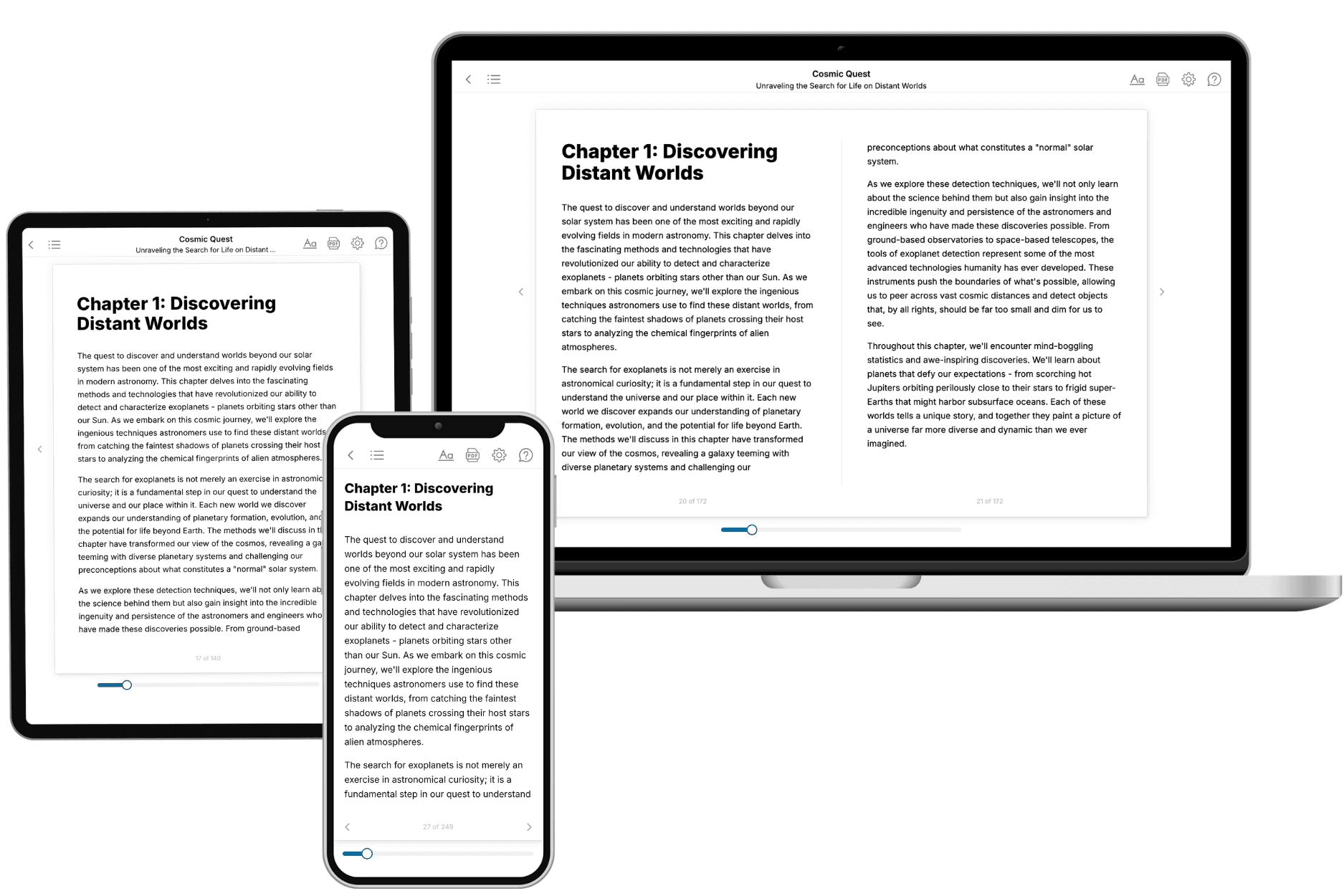
Your book is ready in 10 minutes. Read it online, download as EPUB or PDF, or send to Kindle.

Frequently asked questions
- What is TailoredRead?
TailoredRead creates complete, full-length nonfiction ebooks, written specifically for you. Tell us what you want to learn and why, and TailoredRead writes you a complete ebook on it, with charts, tables, and diagrams throughout. Read it online, on Kindle, or on any e-reader, or download it as a PDF or EPUB. Every book is written fresh the day you order it.
- How is the book tailored to me?
Before anything is written, you answer a few short questions about your goals, your background, and the topics you care about. Your book is then planned around your answers: written at your level, focused on your goals, and covering the topics you chose, instead of the one-size-fits-all book a store sells everyone.
- Will it read like generic AI content?
No. Your book isn't a chat transcript: it's planned chapter by chapter before a single word is written, told in a clear book voice, and explains ideas visually with charts, tables, and diagrams. After writing, every book goes through an editorial pass that polishes chapters so the book reads consistent from start to finish. Judge for yourself: browse thousands of sample books on our Explore Books page.
- How accurate is the content?
Our AI first checks whether your subject needs live research. Niche and fast-moving subjects are researched before writing, and the book plan and chapters are grounded in what it finds. After writing, every book goes through a quality pass that checks its facts and consistency, and researched books list their sources in a Notes section at the back.
- How long is the book?
You choose the length: Comprehensive (250-300 pages), Detailed (150-200 pages), Essential (70-100 pages), or Short (30-50 pages).
- Does the book include visuals?
Yes. Every book includes charts, tables, and diagrams: timelines, checklists, step-by-step guides, decision trees, comparison tables, matrices, and bar charts. A typical book includes dozens of these visual elements.
- Can I read it on Kindle? What formats can I download?
Yes. Every book can be read in our online reader or downloaded as a PDF or EPUB. The EPUB can be opened with Kindle, Apple Books, Kobo, and any e-reader. The Commercial and Author licenses also include an editable Word (DOCX) and Markdown download.
- How much does it cost?
About the price of a regular ebook. The exact price depends on your book's length and complexity, from $2 for the shortest books to $35 for the most comprehensive, and it's shown when you review your book, before you commit to anything. Each book is a one-time purchase, yours to keep, no subscription. Licenses that let you share, teach, or publish your book range from $35.99 to $49.99.
- Can I preview the book before purchasing?
Before you pay, you'll see what your book will cover: the title, a detailed description, the estimated length, and the complete chapter-by-chapter table of contents, so you know what you're getting before you decide. The full text itself is written after you purchase.
- How long does it take to create a book?
About 10 minutes. You can start reading the opening chapters while the rest is still being written.