The Architecture of Power
Understanding How Political Systems Shape Society and History
Most people experience politics as a confusing stream of headlines and partisan arguments, without understanding the deeper systems and ideas that drive them.
191 pages8 chaptersFeb 18, 2026Political Philosophy
About this book
You struggle to make sense of why governments act as they do, why different countries organize themselves so differently, and what political philosophers actually meant by their theories. This book cuts through the complexity by revealing the fundamental architecture underlying all political systems. You'll discover how power actually works, why certain political structures emerge and persist, and how the great political philosophies—from ancient times to today—continue to shape our world. Rather than memorizing facts, you'll develop a coherent framework for understanding politics at every level, from local governance to international relations. Whether you're trying to understand current events, evaluate political claims, or simply become a more informed citizen, this book provides the conceptual tools you need to see politics clearly.
Table of contents
- IntroductionWhy Politics Matters More Than You Think, What You'll Learn in This Book, How to Use This BookRead below
- Chapter 1: Foundations of PowerWhat Is Power and Where Does It Come From?, The Four Mechanisms of Political Control, Legitimacy and the Consent of the Governed
- Chapter 2: Political Systems and StructuresTypes of Government: From Monarchy to Democracy, Separation of Powers and Checks and Balances, Why Institutions Matter More Than Leaders
- Chapter 3: The Great Political PhilosophiesLiberalism: The Philosophy of Individual Rights and Freedom, Conservatism: Tradition, Order, and Gradual Change, Socialism and Marxism: Critiques of Capitalism and Class, Authoritarianism: Centralized Power and State Control
- Chapter 4: Democracy: Theory and PracticeWhat Democracy Actually Is (and Isn't), How Democratic Institutions Work, The Challenges and Vulnerabilities of Democracy
- Chapter 5: Ideology, Propaganda, and Political PersuasionWhat Is Ideology and How Does It Shape Thinking?, How Propaganda and Persuasion Techniques Work, Recognizing Political Manipulation and Bias
- Chapter 6: How Political Systems ChangeRevolution Versus Reform: Paths to Political Change, What Causes Political Systems to Transform, The Consequences and Costs of Political Transformation
- Chapter 7: Power Beyond BordersThe International State System and Sovereignty, Conflict, Cooperation, and the Balance of Power, Global Governance and International Institutions
- Chapter 8: Applying Political Theory to the Real WorldHow to Analyze Current Political Events, Evaluating Political Claims and Arguments, Becoming a More Informed and Engaged Citizen
- ConclusionKey Takeaways and Synthesis, Continuing Your Political Education
- Glossary of Key Terms
- Further Reading and Resources
Introduction
Every day, political decisions shape the world around you in ways that are easy to miss. The price of groceries, the quality of your local schools, whether your country is at peace or at war, how much of your paycheck you keep, and what rights you can exercise in public — all of these are outcomes of political systems working exactly as they were designed to work. Politics is not a spectator sport happening somewhere far away. It is the operating system running beneath nearly every aspect of modern life.
Yet most people find politics deeply confusing. The news cycle moves fast, partisan arguments seem to generate more heat than light, and the deeper logic behind why governments behave the way they do rarely gets explained. You might follow current events closely and still feel like you're watching a chess match without knowing the rules. That feeling is not a personal failing. It reflects a genuine gap between the information we consume and the conceptual frameworks we need to make sense of it.
This book exists to close that gap. Rather than offering commentary on today's headlines or advocating for any particular political position, it provides something more durable: a structured way of thinking about how political power works, where it comes from, how it gets organized into systems, and how those systems change over time. Think of it as learning the grammar of politics. Once you understand the underlying structure, the surface-level noise starts to make a lot more sense.
The ideas explored here draw on centuries of political philosophy, comparative government research, and historical analysis. From Aristotle's early classifications of government to Max Weber's theories of legitimacy, from the Federalist Papers to contemporary studies of democratic backsliding, political thinkers have been building a rich body of knowledge about how power operates. This book synthesizes that knowledge into an accessible framework that you can actually use. No prior academic background is required, only curiosity and a willingness to think carefully about how the world is organized.
Why Politics Matters More Than You Think
There is a common temptation to tune politics out entirely. The arguments feel circular, the politicians seem interchangeable, and the whole enterprise can appear corrupt or pointless. This reaction is understandable, but it comes with a serious cost. When people disengage from political life, they do not make politics go away. They simply hand more influence to those who remain engaged, often the people with the most to gain from specific outcomes.
Consider a concrete example. In the United States, voter turnout in local elections frequently falls below 20 percent of eligible voters.[1] Local governments control zoning laws, school budgets, policing policies, and property taxes. These decisions affect daily life far more directly than most federal legislation. Yet because most people ignore local politics, a small and often unrepresentative group of engaged citizens ends up making those decisions for everyone. Disengagement is not neutrality. It is a choice with real consequences.
Politics also matters because it is the arena where societies resolve their deepest disagreements. Every community faces fundamental questions: How should resources be distributed? Who gets to make decisions, and on whose behalf? What rights do individuals have against the collective? What obligations do citizens owe each other? These are not questions with obvious answers. Different political philosophies offer genuinely different responses, and the system a society adopts to answer them shapes everything from economic outcomes to personal freedoms.
History makes this point with brutal clarity. The political systems that governed Germany in 1920, 1940, and 1960 were radically different from one another, and so were the lives of ordinary Germans in each of those periods. The difference between living under the Weimar Republic, the Nazi regime, and postwar West Germany was not a matter of geography or culture alone. It was a matter of political architecture: who held power, how that power was constrained, and what ideology justified its use. Political systems are not abstract. They determine whether people live in freedom or fear.
Understanding politics also helps you become a more critical consumer of information. Political actors, media organizations, and interest groups all have incentives to frame events in ways that serve their purposes. Without a solid grasp of how political systems actually work, it is very difficult to evaluate those framings. You end up accepting or rejecting claims based on tribal loyalty rather than reasoned analysis. Political literacy is, in this sense, a form of intellectual self-defense.
Finally, politics matters because it is one of the few domains where ordinary people can genuinely influence outcomes at scale. Voting, organizing, deliberating, and holding institutions accountable are all mechanisms through which citizens shape the systems that govern them. These mechanisms are imperfect and often frustrating, but they are real. Understanding how they work is the first step toward using them effectively.
The price of apathy towards public affairs is to be ruled by evil men. — Plato, The Republic
That observation is roughly 2,400 years old, and it has not lost its relevance. Political engagement begins with political understanding, and political understanding begins with learning how the systems actually work.
What You'll Learn in This Book
This book is organized around a central question: how does political power work? That question unfolds across eight chapters, each building on the last to create a comprehensive picture of political life. The goal is not to make you an expert in any single area but to give you a coherent framework that connects the dots between political theory, historical events, and contemporary reality.
The journey begins with the foundations. Chapter 1 examines what power actually is, where it comes from, and how it operates through four distinct mechanisms: coercion, legitimacy, institutions, and ideology. Understanding these mechanisms is essential because they explain why some governments are stable and others collapse, why people obey authority even when they disagree with it, and why changing a political system is so much harder than simply changing its leaders.
Chapter 2 moves from power in the abstract to political systems in the concrete. It surveys the major types of government that have existed across history, from monarchies and oligarchies to republics and democracies. It also explores how the internal architecture of governments, particularly the separation of powers and the design of institutions, shapes political outcomes in ways that often matter more than the personalities of individual leaders.
Chapter 3 introduces the great political philosophies that have competed for dominance over the past three centuries. Liberalism, conservatism, socialism, and authoritarianism are not just labels for political parties. They are coherent worldviews with distinct assumptions about human nature, the role of the state, and the proper organization of society. Understanding what these philosophies actually argue, rather than caricatures of them, is essential for making sense of political debates.
From there, Chapter 4 takes a deep look at democracy, arguably the most consequential political idea of the modern era. It examines what democracy actually means in theory and practice, how democratic institutions function, and what makes democracies vulnerable to erosion and collapse. This chapter is particularly relevant given the global trend of democratic backsliding observed in recent decades.[2]
Chapter 5 turns to ideology and persuasion, exploring how political ideas spread, how propaganda works, and how to recognize manipulation and bias in political communication. This chapter equips you with practical tools for evaluating the political messages you encounter every day, from campaign advertisements to social media posts to news coverage.
The final three chapters broaden the lens. Chapter 6 examines how political systems change, comparing revolutionary and reformist paths and analyzing what causes political transformation. Chapter 7 extends the analysis beyond national borders to explore international relations, sovereignty, and global governance. Chapter 8 brings everything together with practical guidance on how to apply political theory to real-world events, evaluate political arguments, and engage more effectively as a citizen.
By the end of this book, you will have a working vocabulary for political analysis, a historical perspective on how systems have evolved, and a set of conceptual tools you can apply to any political situation you encounter. The specific examples and case studies used throughout are drawn from a wide range of countries and historical periods, deliberately avoiding a single national perspective. Politics is a global phenomenon, and understanding it requires a global view.
How to Use This Book
This book is designed to be read from beginning to end, with each chapter building on concepts introduced in earlier ones. That said, if you already have a solid grounding in a particular area, such as political philosophy or democratic theory, you can move through those chapters more quickly and spend more time on the areas that are newer to you. Each chapter is self-contained enough to be revisited independently once you have read the whole book.
As you read, try to connect the concepts to events and situations you already know about. Political theory can feel abstract when it is presented in isolation, but it becomes vivid and useful when applied to real cases. When Chapter 1 discusses legitimacy, think about a government you know of that lost public trust and what happened next. When Chapter 3 describes liberalism, think about how that philosophy shows up in specific policy debates you have encountered. Making these connections is how abstract frameworks become practical tools.
Throughout the book, you will find several recurring features designed to deepen your understanding:
- Concrete examples and case studies drawn from history and contemporary politics, illustrating how theoretical concepts play out in the real world
- Key terms highlighted in bold when they are first introduced, with definitions provided in the Glossary at the back of the book
- Footnotes pointing to sources and further reading for claims that deserve additional evidence or context
- Analytical frameworks that you can apply independently to new situations, not just the examples discussed in the text
- Practical guidance in the final chapter on how to use what you have learned in everyday civic life
One important note about perspective: this book deliberately avoids advocating for any particular political party, ideology, or policy position. The goal is analytical clarity, not persuasion. You will find that different political philosophies are presented on their own terms, with their strongest arguments given fair treatment. This is not because all political positions are equally valid in every context, but because understanding a perspective requires engaging with it seriously rather than dismissing it as a caricature. You will have to do your own evaluating.
It is also worth being honest about what this book does not do. It does not provide a comprehensive history of any single country's political development. It does not offer a detailed technical analysis of electoral systems, constitutional law, or public policy design. Those are valuable subjects, but they require their own dedicated treatments. What this book provides is the conceptual foundation that makes those more specialized studies meaningful. Think of it as building the frame before you add the walls.
Political understanding is not a destination you arrive at once and then possess forever. It is an ongoing practice of observation, analysis, and revision. The world changes, political systems evolve, and new challenges emerge that require new frameworks. The goal of this book is not to give you a fixed set of answers but to develop your capacity to ask better questions. That capacity, once built, stays with you regardless of what political landscape you find yourself navigating.
A few practical suggestions for getting the most out of your reading:
- Read actively. Pause at the end of each section and ask yourself what the key idea was and how it connects to something you already know.
- Keep a news source nearby. When a concept clicks, look for a current example of it in the news. The connection between theory and reality is where understanding really solidifies.
- Revisit the Glossary. Political vocabulary is precise, and the specific meanings of terms like sovereignty, legitimacy, or ideology matter. When a term feels fuzzy, look it up.
- Discuss what you read. Political ideas become clearer when you try to explain them to someone else or defend them in conversation. Find people who disagree with you and practice engaging with their views analytically rather than emotionally.
- Return to earlier chapters. After finishing the book, go back to Chapter 1 and notice how much richer the concepts feel now that you have the full framework in place.
The architecture of power is not a mystery reserved for academics and insiders. It is a set of patterns and principles that anyone can learn to recognize. Once you see those patterns, you cannot unsee them. Political events that once seemed random or baffling start to reveal their underlying logic. That shift in perception is what this book is designed to produce, and it begins on the very next page.
Notes
Introduction
This is the end of the free sample. The full book has 8 chapters.
Want this book written for you?
Tell us your goals and background, and get your own version of this book, tailored by AI to you.


Benefits of AI-tailored books
- Read one book, not ten:
- all the Political Philosophy knowledge you need, gathered into a single book.
- Save days of learning:
- tell us your goals, choose your topics, and the whole book is built around them.
- Learn effortlessly:
- Political Philosophy book written for your specific background and expertise.
- Understand at a glance:
- includes charts, tables, timelines, checklists, decision trees, and more.
- Stay current:
- written the day you order it, not years ago.
- Trust what you read:
- every book is checked for accuracy, with real research when your subject needs it.
Create your unique book in 3 steps
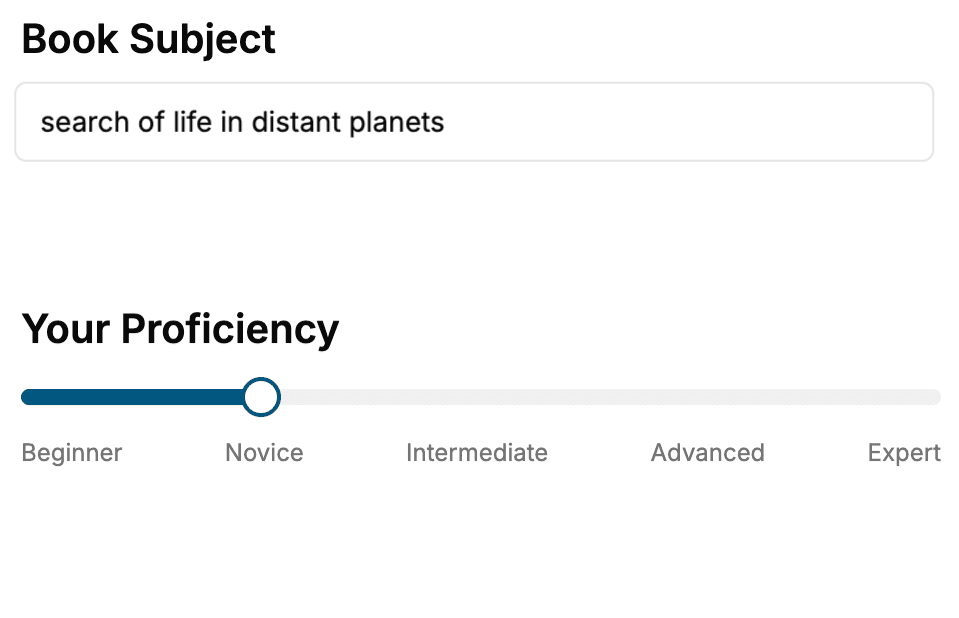
- 1. Select your focus
Select the focus of your Political Philosophy book and share your background
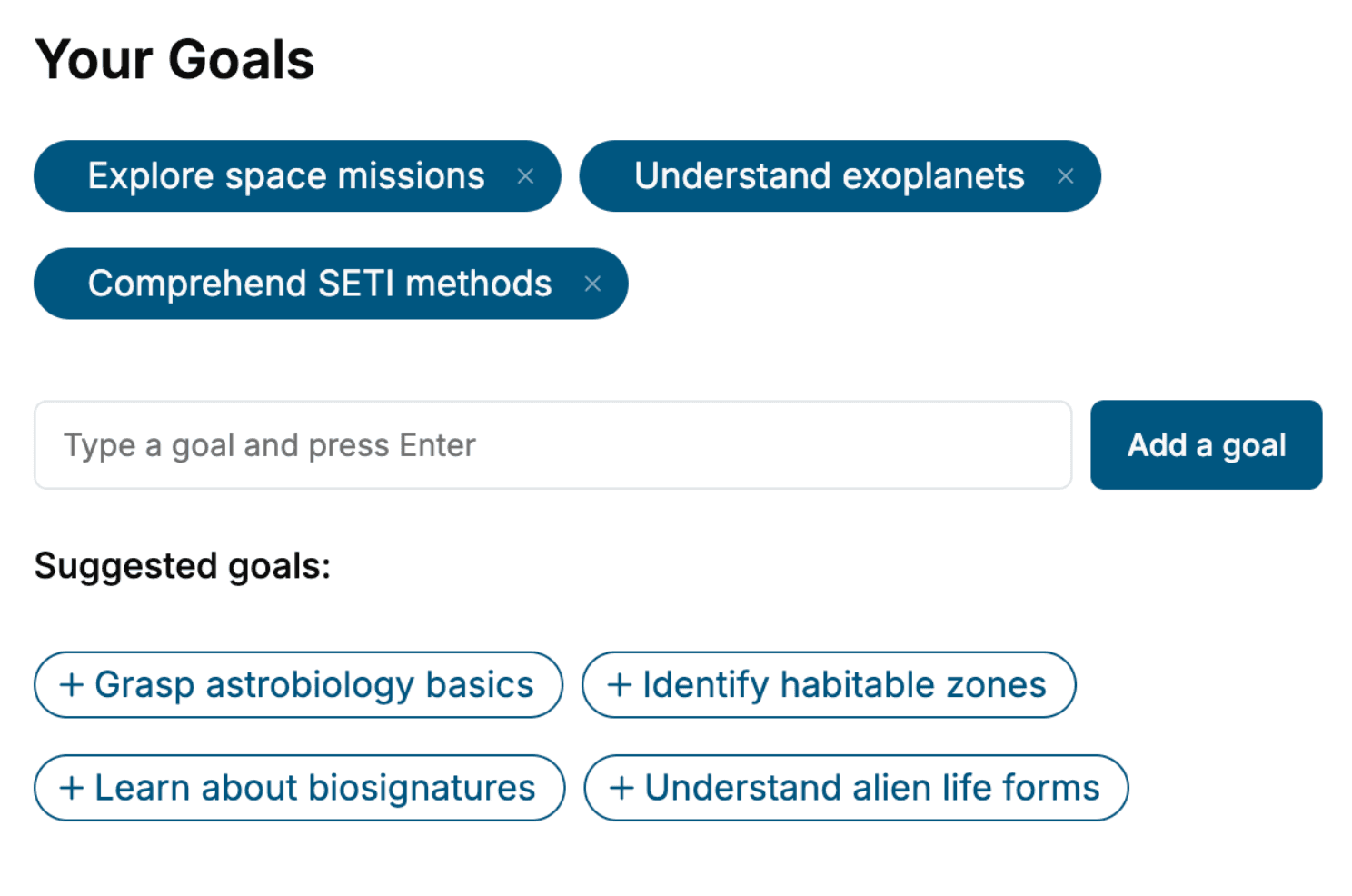
- 2. Personalize your book
Specify your goals and choose sub-topics to include
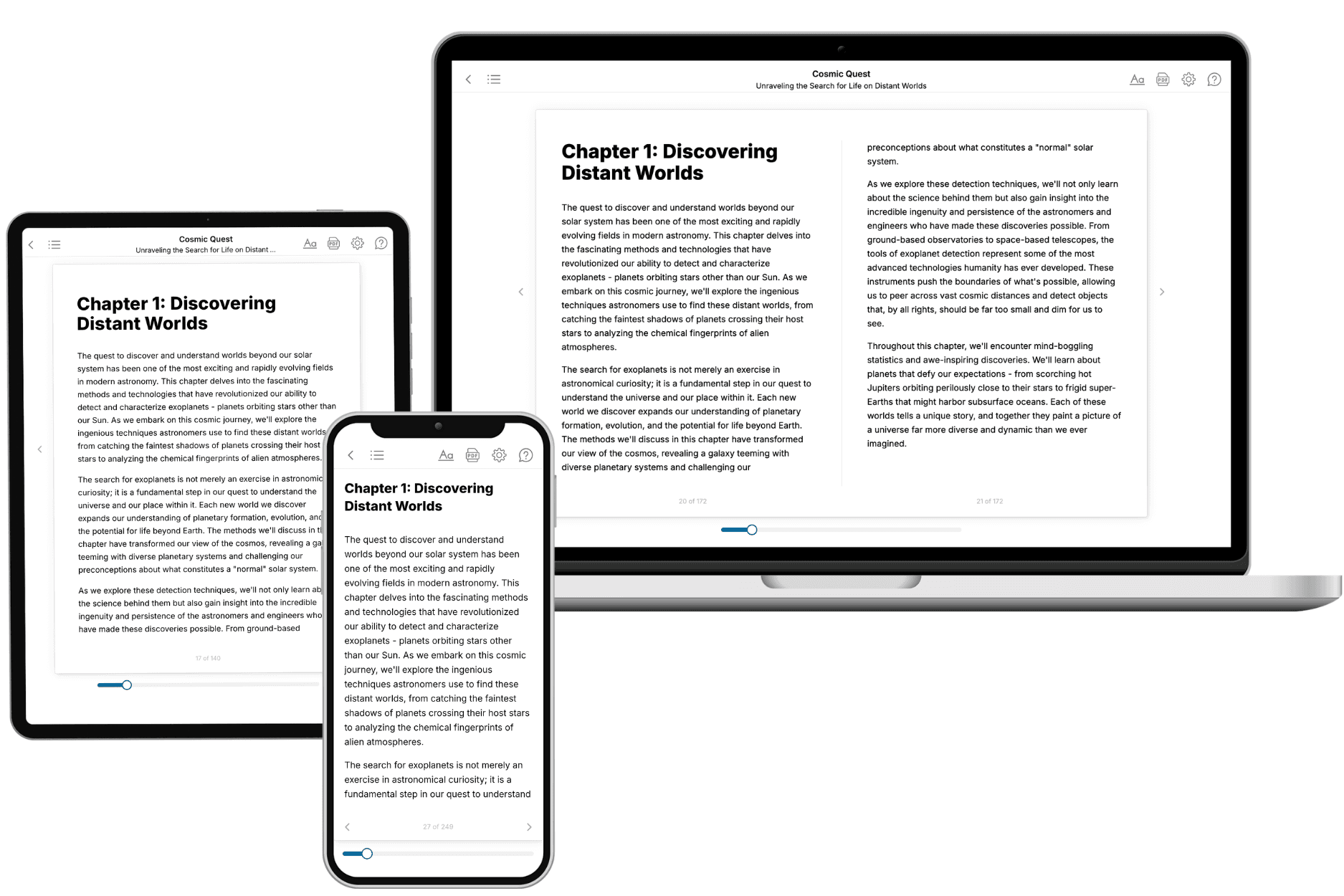
- 3. Get your tailored book
Your book is ready in 10 minutes. Read it online, download as EPUB or PDF, or send to Kindle.
Frequently asked questions
- What is TailoredRead?
TailoredRead creates complete, full-length nonfiction ebooks, written specifically for you. Tell us what you want to learn and why, and TailoredRead writes you a complete ebook on it, with charts, tables, and diagrams throughout. Read it online, on Kindle, or on any e-reader, or download it as a PDF or EPUB. Every book is written fresh the day you order it.
- How is the book tailored to me?
Before anything is written, you answer a few short questions about your goals, your background, and the topics you care about. Your book is then planned around your answers: written at your level, focused on your goals, and covering the topics you chose, instead of the one-size-fits-all book a store sells everyone.
- Will it read like generic AI content?
No. Your book isn't a chat transcript: it's planned chapter by chapter before a single word is written, told in a clear book voice, and explains ideas visually with charts, tables, and diagrams. After writing, every book goes through an editorial pass that polishes chapters so the book reads consistent from start to finish. Judge for yourself: browse thousands of sample books on our Explore Books page.
- How accurate is the content?
Our AI first checks whether your subject needs live research. Niche and fast-moving subjects are researched before writing, and the book plan and chapters are grounded in what it finds. After writing, every book goes through a quality pass that checks its facts and consistency, and researched books list their sources in a Notes section at the back.
- How long is the book?
You choose the length: Comprehensive (250-300 pages), Detailed (150-200 pages), Essential (70-100 pages), or Short (30-50 pages).
- Does the book include visuals?
Yes. Every book includes charts, tables, and diagrams: timelines, checklists, step-by-step guides, decision trees, comparison tables, matrices, and bar charts. A typical book includes dozens of these visual elements.
- Can I read it on Kindle? What formats can I download?
Yes. Every book can be read in our online reader or downloaded as a PDF or EPUB. The EPUB can be opened with Kindle, Apple Books, Kobo, and any e-reader. The Commercial and Author licenses also include an editable Word (DOCX) and Markdown download.
- How much does it cost?
About the price of a regular ebook. The exact price depends on your book's length and complexity, from $2 for the shortest books to $35 for the most comprehensive, and it's shown when you review your book, before you commit to anything. Each book is a one-time purchase, yours to keep, no subscription. Licenses that let you share, teach, or publish your book range from $35.99 to $49.99.
- Can I preview the book before purchasing?
Before you pay, you'll see what your book will cover: the title, a detailed description, the estimated length, and the complete chapter-by-chapter table of contents, so you know what you're getting before you decide. The full text itself is written after you purchase.
- How long does it take to create a book?
About 10 minutes. You can start reading the opening chapters while the rest is still being written.