Arduino Mastery
From Business Consultant to Tech Innovator: A Hands-On Guide to Prototyping and IoT
Embark on an exciting journey from business strategy to technological innovation with "Arduino Mastery." This comprehensive guide is tailored for professionals looking to expand their skill set into the world of electronics and programming.
315 pages16 chaptersNov 18, 2024Electronics
About this book
You'll start with the basics of Arduino, learning how to set up your development environment and understand fundamental concepts. As you progress, you'll dive into practical applications, exploring sensors, actuators, and communication protocols that form the backbone of IoT devices. Each chapter builds upon the last, gradually increasing in complexity while maintaining a clear, accessible approach. By the end of this book, you'll have the skills to prototype your business ideas, create data logging tools, and even automate home devices. Whether you're looking to enhance your consulting toolkit or pivot into tech entrepreneurship, "Arduino Mastery" provides the perfect blend of theory and hands-on practice to transform your ideas into reality.
Table of contents
- IntroductionThe Arduino Revolution in Business Innovation, Book Overview and Learning Path, Getting Started: What You'll NeedRead below
- Chapter 1: Arduino BasicsWhat is Arduino?, Arduino Board Anatomy, Setting Up the Arduino IDE, Your First Arduino Sketch
- Chapter 2: Electronics FundamentalsBasic Electronic Components, Basic Circuit Design, Breadboard Basics, Introduction to Soldering
- Chapter 3: Digital Input and OutputUnderstanding Digital Pins, Controlling LEDs, Reading Button Inputs, Project: Digital IO Traffic Light
- Chapter 4: Exploring the Analog WorldAnalog vs Digital Signals, Reading Analog Inputs, PWM for Analog Output, Project: Analog Mood Lamp
- Chapter 5: Working with SensorsTypes of Sensors, Temperature Sensing, Light Sensors and Photoresistors, Motion Detection with PIR Sensors
- Chapter 6: Controlling ActuatorsServo Motor Basics, Working with DC Motors, Introduction to Stepper Motors, Project: Automated Blinds Control
- Chapter 7: Displaying InformationUsing the Serial Monitor, LCD Display Interface, Working with OLED Displays, Project: Weather Station Display
- Chapter 8: Communication ProtocolsSerial Communication Basics, I2C Protocol, SPI Communication, Project: Multi-Sensor Data Logger
- Chapter 9: Wireless ConnectivityBluetooth Connectivity Basics, Using WiFi Shields, RF Communication, Project: Remote Environmental Monitor
- Chapter 10: Data Management and StorageData Logging Basics, SD Card Storage, Using EEPROM for Persistent Storage, Project: Long-Term Data Logger
- Chapter 11: Advanced Programming TechniquesWorking with Interrupts, Using Timers, Implementing State Machines, Project: Multi-tasking Arduino System
- Chapter 12: Power ManagementUnderstanding Power Consumption, Designing for Battery Power, Utilizing Sleep Modes, Project: Low-Power Weather Station
- Chapter 13: Prototyping TechniquesApplying Design Thinking to Arduino Projects, Rapid Prototyping Methods, Integrating 3D Printing with Arduino, Project: Prototyping a Smart Product
- Chapter 14: IoT FundamentalsCore IoT Concepts, Connecting to Cloud Platforms, MQTT Protocol for IoT, Project: IoT-Enabled Smart Office
- Chapter 15: Home Automation IntroductionHome Automation Basics, Smart Home Protocols, Integrating Voice Control, Project: Arduino-Based Smart Home Hub
- Chapter 16: Debugging and OptimizationCommon Arduino Errors and Solutions, Using Debugging Tools, Code Optimization Techniques, Testing Strategies for Arduino Projects
- ConclusionFuture Trends in Arduino and IoT, Next Steps in Your Arduino Journey
- AppendixAdditional Resources and Communities, Component List for Projects
- Glossary
Introduction
Welcome to the world of Arduino, where innovation meets practicality, and business acumen intertwines with technological prowess. As you embark on this journey from business consultant to tech innovator, you're about to unlock a realm of possibilities that will revolutionize your approach to problem-solving and product development. This introduction serves as your gateway to understanding the transformative power of Arduino in the business landscape, providing you with a roadmap for the exciting adventure that lies ahead.
Arduino has emerged as a game-changer in the tech industry, democratizing electronics and programming for enthusiasts, entrepreneurs, and professionals alike. Its user-friendly nature, coupled with its versatility, has made it an invaluable tool for rapid prototyping and bringing innovative ideas to life. As a business consultant with a strong educational background, you're uniquely positioned to leverage this technology, bridging the gap between strategic thinking and hands-on implementation.
Throughout this book, you'll discover how Arduino can be the catalyst for transforming abstract business concepts into tangible, working prototypes. You'll learn to speak the language of both business and technology, enabling you to communicate more effectively with technical teams and to envision solutions that were previously beyond reach. This newfound knowledge will not only enhance your consulting toolkit but also open doors to new career opportunities in the burgeoning field of IoT and smart technologies.
As we delve deeper into the world of Arduino, remember that this journey is about more than just learning to code or wire circuits. It's about developing a mindset that combines analytical thinking with creative problem-solving. You'll be equipped to approach business challenges from a fresh perspective, armed with the ability to create proof-of-concepts and minimum viable products that can validate your ideas quickly and cost-effectively.
So, prepare to roll up your sleeves and dive into the fascinating world of Arduino. Whether you're looking to enhance your consulting services, pivot into tech entrepreneurship, or simply expand your skill set, this book will guide you through every step of the process. Let's begin this transformative journey that will take you from a business strategist to a tech-savvy innovator capable of bringing groundbreaking ideas to life.
The Arduino Revolution in Business Innovation
The Arduino revolution has been quietly reshaping the landscape of business innovation for over a decade. This small, unassuming microcontroller board has become a powerful catalyst for change, enabling businesses of all sizes to prototype, iterate, and bring innovative products to market faster than ever before. As a business consultant stepping into this world, it's crucial to understand the profound impact Arduino has had and continues to have on the way companies approach product development and problem-solving.
At its core, Arduino represents a democratization of technology. Prior to its introduction, creating electronic prototypes or smart devices required specialized knowledge and often substantial financial investment. Arduino changed this paradigm by providing an accessible, low-cost platform that anyone with an idea could use to bring their vision to life. This accessibility has led to a surge in innovation across various industries, from consumer electronics to industrial automation[1].
For businesses, the implications of this revolution are far-reaching. First and foremost, Arduino has significantly reduced the barriers to entry for hardware development. Companies no longer need to invest heavily in custom hardware solutions at the early stages of product development. Instead, they can use Arduino to quickly create functional prototypes, test market viability, and iterate based on user feedback. This lean approach to hardware development aligns perfectly with modern business methodologies like agile and lean startup, allowing for rapid cycles of build-measure-learn[2].
Moreover, Arduino has fostered a culture of open innovation. The platform's open-source nature has given rise to a vast community of developers, makers, and innovators who freely share knowledge, code, and designs. For businesses, this means access to a wealth of resources and the ability to build upon existing solutions rather than starting from scratch. This collaborative ecosystem has accelerated innovation cycles and allowed companies to stay agile in rapidly evolving markets.
The Arduino revolution has also bridged the gap between physical and digital worlds, playing a crucial role in the development of Internet of Things (IoT) solutions. Businesses can now easily create connected devices that gather data, interact with the environment, and communicate with cloud services. This capability has opened up new avenues for data-driven decision making, predictive maintenance, and the creation of smart, responsive products and services[3].
In the realm of business strategy, Arduino has become a powerful tool for proof of concept and minimum viable product (MVP) development. Consultants and entrepreneurs can now rapidly prototype ideas, demonstrating their feasibility to stakeholders or potential investors without significant upfront costs. This ability to quickly move from concept to tangible demonstration has revolutionized the way businesses approach innovation and product development.
Furthermore, Arduino has played a significant role in the maker movement, which has had ripple effects throughout the business world. This movement, characterized by a DIY ethos and a focus on hands-on creation, has influenced consumer expectations and market trends. Companies are now expected to offer more customizable, hackable products, and many have embraced this trend by providing Arduino-compatible interfaces or open APIs for their products.
The educational impact of Arduino cannot be overstated. Its simplicity and accessibility have made it a popular choice in STEM education, helping to cultivate a new generation of tech-savvy professionals. For businesses, this means a growing talent pool of individuals who are comfortable with both hardware and software development, bridging a crucial skills gap in the tech industry.
As we look to the future, the Arduino revolution shows no signs of slowing down. With the continued growth of IoT, edge computing, and artificial intelligence, Arduino and similar platforms are poised to play an even more significant role in business innovation. They will enable companies to experiment with emerging technologies at a fraction of the cost and time traditionally required, maintaining competitiveness in an increasingly tech-driven market landscape.
For you, as a business consultant venturing into this space, understanding the Arduino revolution is not just about learning a new technology. It's about grasping a fundamental shift in how businesses approach innovation, product development, and problem-solving. By mastering Arduino, you're not just adding a technical skill to your repertoire; you're gaining a powerful lens through which to view business challenges and opportunities in the digital age.
As we progress through this book, keep in mind that the Arduino revolution is more than just a technological trend. It represents a new way of thinking about business problems, a means of rapidly testing and validating ideas, and a bridge between strategic thinking and practical implementation. Embrace this revolution, and you'll find yourself at the forefront of business innovation, equipped with the tools and mindset to drive meaningful change in any industry you choose to tackle.
Book Overview and Learning Path
As you embark on this journey from business consultant to tech innovator, it's essential to have a clear understanding of the path ahead. This book has been carefully structured to guide you through the world of Arduino, starting from the basics and progressively building towards more complex concepts and applications. The learning path is designed to be both comprehensive and practical, ensuring that you not only gain theoretical knowledge but also hands-on experience in applying Arduino to real-world business scenarios.
We begin our journey with the fundamentals. Chapter 1, "Arduino Basics," introduces you to the Arduino platform, its history, and its significance in the maker and business worlds. You'll learn about the different types of Arduino boards, their components, and how to set up your development environment. This chapter lays the groundwork for everything that follows, ensuring you have a solid understanding of what Arduino is and why it's so powerful for innovation.
With the basics under your belt, Chapter 2 dives into "Electronics Fundamentals." Here, you'll gain a crucial understanding of the electronic principles that underpin Arduino projects. You'll learn about components like resistors, capacitors, and transistors, and how they work together in circuits. This knowledge is essential for designing and troubleshooting your own Arduino-based solutions. By the end of this chapter, you'll be comfortable reading circuit diagrams and assembling basic electronic circuits.
Chapters 3 and 4 focus on the core functionalities of Arduino: digital and analog input/output. In "Digital Input and Output," you'll learn how to control LEDs, read button presses, and create simple interactive circuits. "Exploring the Analog World" takes you a step further, teaching you how to work with sensors that provide continuous data and how to generate variable outputs. These chapters form the backbone of your Arduino skills, enabling you to interact with a wide range of electronic components.
As we progress, Chapters 5 and 6 introduce you to the exciting world of sensors and actuators. "Working with Sensors" covers various types of sensors and how to integrate them into your projects, allowing you to gather data from the physical world. "Controlling Actuators" teaches you how to make things move, introducing concepts like servo motors and stepper motors. These chapters are crucial for developing projects that can sense and respond to their environment, a key aspect of many IoT and smart device applications.
Communication is at the heart of many Arduino projects, and Chapters 7 and 8 delve deep into this topic. "Displaying Information" covers various methods of outputting data, from simple serial monitor outputs to complex graphical displays. "Communication Protocols" introduces you to essential protocols like I2C and SPI, which allow Arduino to communicate with a wide range of external devices and sensors. These chapters will enable you to create more sophisticated projects that can process and display complex information.
In today's connected world, wireless capabilities are often a must-have feature. Chapter 9, "Wireless Connectivity," explores how to add Bluetooth, Wi-Fi, and RF communication to your Arduino projects. This knowledge is essential for creating IoT devices and remote-controlled systems, opening up a world of possibilities for innovative business applications.
Data is the lifeblood of many modern businesses, and Chapter 10, "Data Management and Storage," teaches you how to collect, store, and manage data using Arduino. You'll learn about data logging, working with SD cards, and using EEPROM for persistent storage. These skills are crucial for creating devices that can gather and analyze data over time, providing valuable insights for business decision-making.
As your projects become more complex, you'll need more advanced programming techniques. Chapter 11, "Advanced Programming Techniques," introduces concepts like interrupts, timers, and state machines. These tools will allow you to create more sophisticated and efficient Arduino programs, capable of handling multiple tasks and responding to events in real-time.
Power management is a critical consideration in many Arduino projects, especially those designed for portability or long-term deployment. Chapter 12, "Power Management," covers techniques for reducing power consumption, working with batteries, and implementing sleep modes. This knowledge is essential for creating sustainable and energy-efficient solutions.
Chapter 13, "Prototyping Techniques," bridges the gap between your Arduino skills and the business world of product development. You'll learn about rapid prototyping methods, integrating 3D printing with Arduino, and applying design thinking to your projects. This chapter is crucial for transforming your ideas into tangible prototypes that can be presented to stakeholders or potential investors.
The Internet of Things (IoT) is revolutionizing businesses across industries, and Chapter 14, "IoT Fundamentals," introduces you to this exciting field. You'll learn about core IoT concepts, how to connect Arduino to cloud platforms, and work with protocols like MQTT. This chapter sets the stage for creating connected devices that can provide real-time data and insights for businesses.
Chapter 15, "Home Automation Introduction," applies your Arduino skills to the rapidly growing smart home market. You'll explore home automation basics, work with smart home protocols, and even integrate voice control into your projects. This chapter provides valuable insights into a booming industry and demonstrates how Arduino can be used to create marketable smart home products.
As you near the end of your journey, Chapter 16, "Debugging and Optimization," equips you with essential skills for troubleshooting and improving your Arduino projects. You'll learn about common errors, debugging tools, and techniques for optimizing your code and hardware designs. These skills are crucial for developing robust, efficient, and reliable Arduino-based solutions.
Throughout the book, each chapter includes practical projects that reinforce the concepts you've learned. These projects are designed to be both educational and relevant to business applications, helping you build a portfolio of work that demonstrates your new skills.
The book concludes with a look at future trends in Arduino and IoT, providing you with insights into where the field is heading and how you can continue to grow your skills. Additionally, the appendices offer valuable resources, including a list of components used in the book's projects and information on Arduino communities where you can seek further knowledge and support.
By following this carefully structured learning path, you'll transform from a business consultant with limited technical experience to a tech-savvy innovator capable of prototyping business ideas and creating innovative solutions. Remember, the key to success is consistent practice and application of the concepts you learn. Don't hesitate to experiment, make mistakes, and learn from them. Each project and challenge you tackle will bring you one step closer to mastering Arduino and leveraging its power in your business endeavors.
Getting Started: What You'll Need
Embarking on your Arduino journey requires more than just enthusiasm and a willingness to learn. To make the most of this book and the projects within, you'll need to gather a set of essential tools and components. This section will guide you through everything you need to get started, from the basic Arduino board to the various electronic components you'll use throughout your learning journey. By ensuring you have the right equipment from the outset, you'll be well-prepared to tackle each chapter and project with confidence.
First and foremost, you'll need an Arduino board. While there are many variants available, for beginners, the Arduino Uno is an excellent choice. It's widely used, well-documented, and compatible with most shields and libraries. The Arduino Uno R3 is the recommended model for this book, as it offers a good balance of features and simplicity. However, if you already have a different Arduino model, such as the Nano or Mega, most of the projects in this book can be adapted to work with these boards as well[4].
In addition to the Arduino board, you'll need a way to connect it to your computer. Most Arduino boards come with a USB cable, typically USB-A to USB-B for the Uno. Ensure you have a compatible cable for programming and powering your Arduino. It's also a good idea to have a separate power supply for when you want to run your projects independently of a computer. A 9V battery with a barrel jack connector or a 5V USB power bank can be useful for this purpose.
A breadboard is an essential tool for prototyping circuits without the need for soldering. A standard half-size breadboard is sufficient for most projects in this book. You'll use this to connect various components to your Arduino quickly and easily. Along with the breadboard, you'll need a set of jumper wires. These come in male-to-male, male-to-female, and female-to-female varieties. A assortment of these will allow you to make all the necessary connections between your Arduino, breadboard, and components.
As for electronic components, you'll need a variety of basic parts to complete the projects in this book. Here's a list of essential components:
- Resistors: A variety pack of different values (220Ω, 1kΩ, 10kΩ are commonly used)
- Capacitors: Both ceramic and electrolytic, in various values
- LEDs: A selection of colors (red, green, blue, yellow)
- Pushbuttons and switches
- Potentiometers: 10kΩ is a common and versatile value
- Photoresistors (LDRs)
- Temperature sensors (e.g., TMP36 or DHT11)
- Servo motors
- DC motors
- Transistors: NPN (e.g., 2N2222) and PNP types
- Diodes: Regular and Zener diodes
- 7-segment displays
- 16x2 LCD display
- I2C modules (e.g., MPU-6050 gyroscope/accelerometer)
While this list might seem extensive, many of these components are inexpensive and often come in starter kits designed for Arduino beginners. Purchasing a comprehensive starter kit can be a cost-effective way to acquire most of the components you'll need for this book[5].
For more advanced projects, particularly those involving wireless communication or IoT applications, you may need additional modules such as:
- Bluetooth module (e.g., HC-05)
- Wi-Fi module (e.g., ESP8266)
- RF transmitter and receiver modules
- SD card module
- Real-Time Clock (RTC) module
In terms of tools, a few basic items will make your Arduino journey much smoother:
- A multimeter for measuring voltage, current, and resistance
- Wire strippers for preparing jumper wires
- A small set of screwdrivers
- Needle-nose pliers
- A soldering iron and solder (for more permanent projects)
Software is another crucial aspect of your Arduino setup. You'll need to download and install the Arduino Integrated Development Environment (IDE) on your computer. The Arduino IDE is available for Windows, macOS, and Linux, and can be downloaded for free from the official Arduino website. This software allows you to write code, compile it, and upload it to your Arduino board. It also includes a serial monitor for debugging and a vast library of example sketches to help you get started[6].
As you progress in your Arduino journey, you might find it helpful to use more advanced development environments. Visual Studio Code with the Arduino extension or PlatformIO are popular choices among experienced developers. However, for beginners, the standard Arduino IDE is more than sufficient and is what we'll be using throughout this book.
Lastly, don't forget about safety. While most Arduino projects operate at low voltages and are generally safe, it's always good practice to have a basic understanding of electrical safety. Consider investing in a small fire extinguisher rated for electrical fires, and always work in a well-ventilated area, especially if you're soldering.
Remember, while this list covers the essentials, you don't need to purchase everything at once. Start with the basics - an Arduino Uno, a breadboard, some jumper wires, and a few LEDs and resistors. As you progress through the book and tackle more complex projects, you can gradually acquire additional components and tools. The joy of working with Arduino is in the learning process, so don't let the initial setup overwhelm you. With each project, you'll gain confidence and expand your toolkit, both in terms of physical components and knowledge.
Now that you're equipped with knowledge about the essential tools and components, you're ready to dive into the world of Arduino. Remember, the most important things you need are curiosity, persistence, and a willingness to learn. With these qualities and the resources provided in this book, you're well on your way to becoming a proficient Arduino developer and tech innovator. Let's begin this exciting journey of discovery and creation!
Notes
Introduction
- 1. A. D'Ausilio, "Arduino: A low-cost multipurpose lab equipment," Behavior Research Methods, 2012
- 2. E. Ries, The Lean Startup, Crown Business, 2011
- 3. J. Gubbi and others, "Internet of Things (IoT)," Future Generation Computer Systems, 2013
- 4. Arduino, "Arduino Uno Rev3," 2023
- 5. Sparkfun, "SparkFun Inventor's Kit for Arduino Uno," 2023
- 6. Arduino, "Arduino Software (IDE)," 2023
This is the end of the free sample. The full book has 16 chapters.
Want this book written for you?
Tell us your goals and background, and get your own version of this book, tailored by AI to you.


Benefits of AI-tailored books
- Read one book, not ten:
- all the Electronics knowledge you need, gathered into a single book.
- Save days of learning:
- tell us your goals, choose your topics, and the whole book is built around them.
- Learn effortlessly:
- Electronics book written for your specific background and expertise.
- Understand at a glance:
- includes charts, tables, timelines, checklists, decision trees, and more.
- Stay current:
- written the day you order it, not years ago.
- Trust what you read:
- every book is checked for accuracy, with real research when your subject needs it.
Create your unique book in 3 steps
- 1. Select your focus
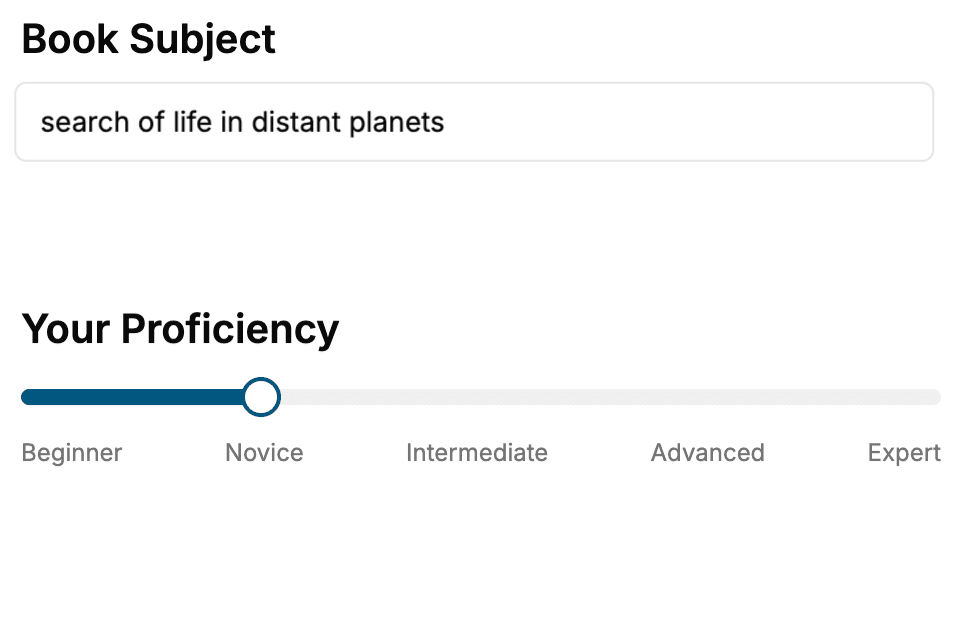
Select the focus of your Electronics book and share your background
- 2. Personalize your book
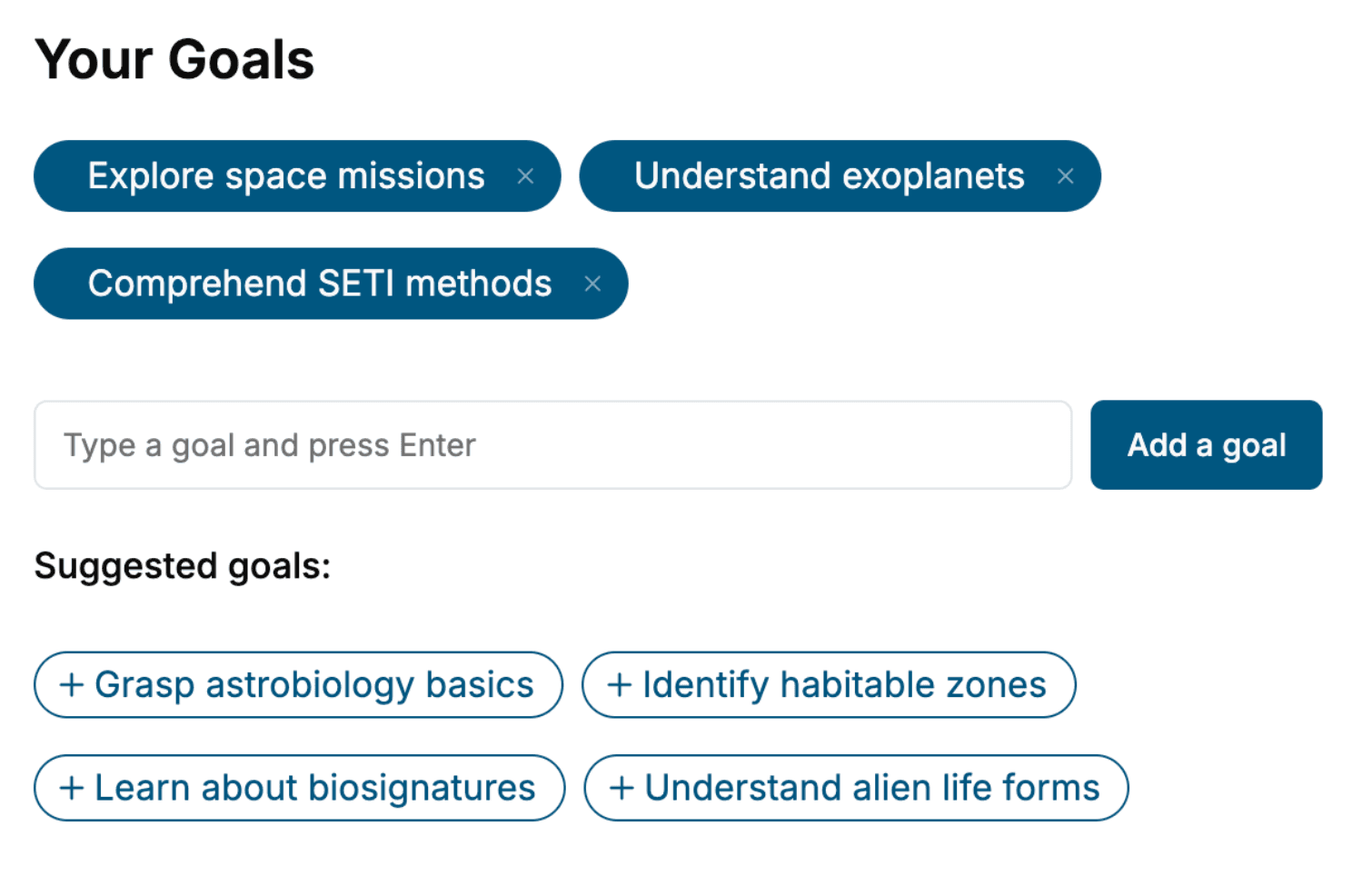
Specify your goals and choose sub-topics to include
- 3. Get your tailored book
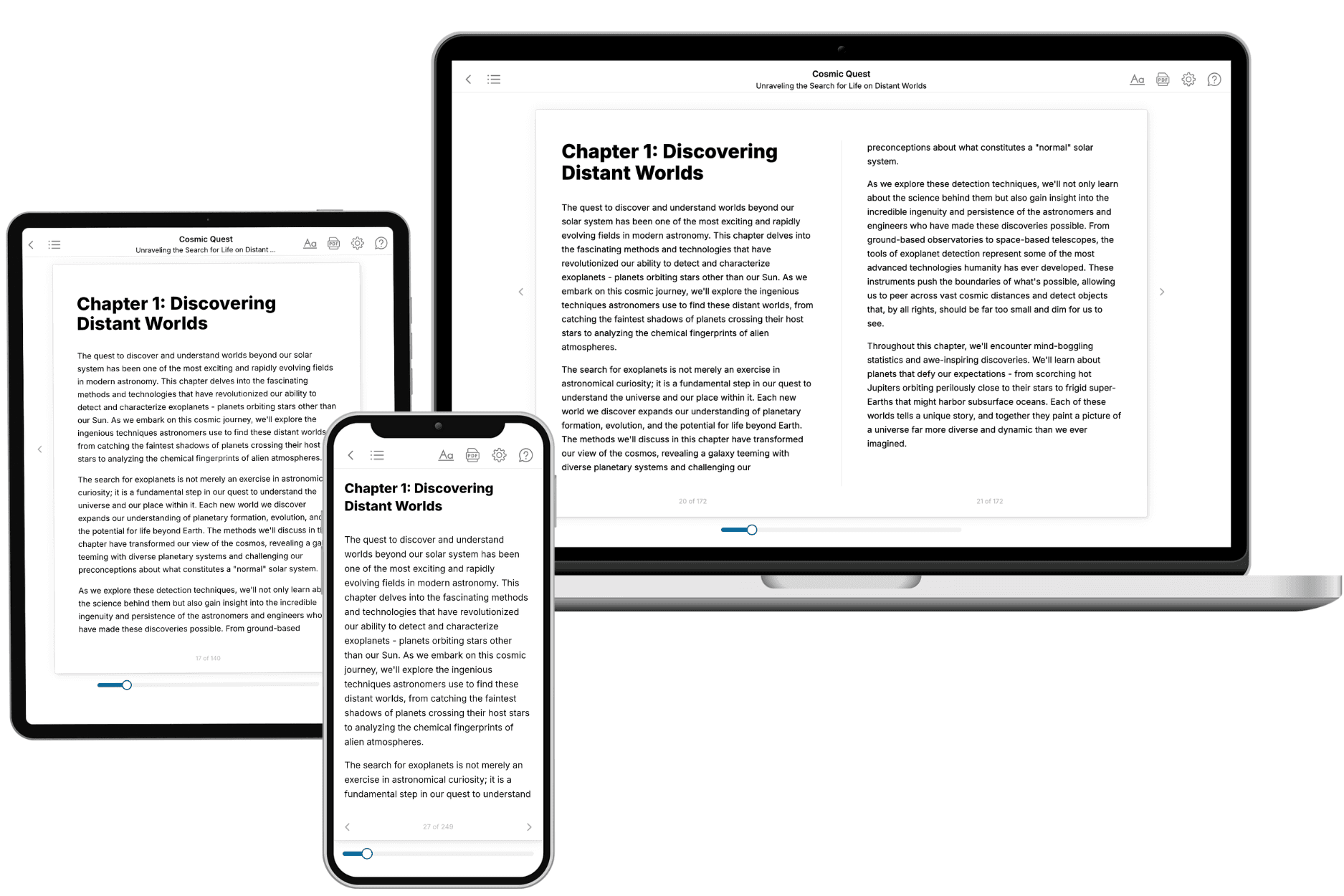
Your book is ready in 10 minutes. Read it online, download as EPUB or PDF, or send to Kindle.
Frequently asked questions
- What is TailoredRead?
TailoredRead creates complete, full-length nonfiction ebooks, written specifically for you. Tell us what you want to learn and why, and TailoredRead writes you a complete ebook on it, with charts, tables, and diagrams throughout. Read it online, on Kindle, or on any e-reader, or download it as a PDF or EPUB. Every book is written fresh the day you order it.
- How is the book tailored to me?
Before anything is written, you answer a few short questions about your goals, your background, and the topics you care about. Your book is then planned around your answers: written at your level, focused on your goals, and covering the topics you chose, instead of the one-size-fits-all book a store sells everyone.
- Will it read like generic AI content?
No. Your book isn't a chat transcript: it's planned chapter by chapter before a single word is written, told in a clear book voice, and explains ideas visually with charts, tables, and diagrams. After writing, every book goes through an editorial pass that polishes chapters so the book reads consistent from start to finish. Judge for yourself: browse thousands of sample books on our Explore Books page.
- How accurate is the content?
Our AI first checks whether your subject needs live research. Niche and fast-moving subjects are researched before writing, and the book plan and chapters are grounded in what it finds. After writing, every book goes through a quality pass that checks its facts and consistency, and researched books list their sources in a Notes section at the back.
- How long is the book?
You choose the length: Comprehensive (250-300 pages), Detailed (150-200 pages), Essential (70-100 pages), or Short (30-50 pages).
- Does the book include visuals?
Yes. Every book includes charts, tables, and diagrams: timelines, checklists, step-by-step guides, decision trees, comparison tables, matrices, and bar charts. A typical book includes dozens of these visual elements.
- Can I read it on Kindle? What formats can I download?
Yes. Every book can be read in our online reader or downloaded as a PDF or EPUB. The EPUB can be opened with Kindle, Apple Books, Kobo, and any e-reader. The Commercial and Author licenses also include an editable Word (DOCX) and Markdown download.
- How much does it cost?
About the price of a regular ebook. The exact price depends on your book's length and complexity, from $2 for the shortest books to $35 for the most comprehensive, and it's shown when you review your book, before you commit to anything. Each book is a one-time purchase, yours to keep, no subscription. Licenses that let you share, teach, or publish your book range from $35.99 to $49.99.
- Can I preview the book before purchasing?
Before you pay, you'll see what your book will cover: the title, a detailed description, the estimated length, and the complete chapter-by-chapter table of contents, so you know what you're getting before you decide. The full text itself is written after you purchase.
- How long does it take to create a book?
About 10 minutes. You can start reading the opening chapters while the rest is still being written.