Argentina's Military Rule
Understanding the Proceso de Reorganización Nacional and Its Legacy
Discover how Argentina's military dictatorship from 1976 to 1983 reshaped a nation and left scars that persist today.
222 pages10 chaptersNov 25, 2025Argentina History
About this book
This comprehensive examination takes you through the political turmoil and economic crisis that preceded the coup, the systematic repression that defined the regime, and the courageous resistance that ultimately led to democracy's restoration. You'll understand the human cost of authoritarian rule through documented accounts of disappearances and state violence, explore how economic policies restructured Argentine society, and learn how survivors and activists fought for justice and memory. By examining declassified documents, testimonies, and historical analysis, this book reveals how a nation confronted its darkest chapter and continues to reckon with its past. Whether you're studying Latin American history, interested in how democracies can be threatened and restored, or seeking to understand Argentina's contemporary political landscape, this book provides the context and clarity needed to grasp one of South America's most consequential historical periods.
Table of contents
- IntroductionWhy This Period Matters Today, What You'll Learn in This Book, How to Approach This HistoryRead below
- Chapter 1: Argentina Before the Coup: The Road to CrisisThe Perón Legacy and Political Instability, Economic Deterioration in the 1970s, Rising Social Conflict and Guerrilla Activity, The Breakdown of Democratic Institutions
- Chapter 2: The Military Takeover: March 1976How the Coup Unfolded, The Military Junta and Power Structure, The Regime's Initial Justifications and Rhetoric, Immediate Actions and Emergency Decrees
- Chapter 3: Repression and State ViolenceThe System of Disappearances, Clandestine Detention and Torture Centers, The Scale and Scope of Violence, Who Was Targeted and Why
- Chapter 4: Economic Restructuring and Social ImpactThe Regime's Economic Model, Deindustrialization and Labor Suppression, Growing Inequality and Poverty, The Debt Crisis and Financial Collapse
- Chapter 5: Cultural Control and Ideological TransformationControl of Education and Curriculum, Media Censorship and Propaganda, Suppression of Cultural Expression, Reshaping Argentine National Identity
- Chapter 6: Resistance and Civil SocietyThe Mothers of the Plaza de Mayo, Human Rights Organizations and Activists, Underground Resistance Movements, International Pressure and Solidarity
- Chapter 7: The Falkland Islands War and Regime DeclineThe Decision to Invade the Falklands, Military Defeat and Its Consequences, The Regime's Rapid Deterioration, The Beginning of Democratic Transition
- Chapter 8: The Return to Democracy: 1983 and BeyondThe 1983 Elections and Democratic Restoration, The Alfonsín Government and Initial Reforms, The National Commission on the Disappearance of Persons, Trials and Early Justice Efforts
- Chapter 9: Justice, Memory, and ReconciliationAmnesty Laws and Their Reversal, Renewed Trials and Prosecutions, Memory Sites and Memorialization, Generational Approaches to Memory
- Chapter 10: The Proceso's Lasting LegacyImpact on Argentine Politics and Democracy, Long-Term Economic Consequences, Intergenerational Trauma and Social Healing, Lessons for Latin America and the World
- ConclusionUnderstanding Dictatorship and Democracy, Argentina's Ongoing Reckoning with Its Past
- Glossary of Key Terms
- Further Reading and Resources
Introduction
On March 24, 1976, military tanks rolled through the streets of Buenos Aires as Argentina's armed forces seized control of the government. What followed was seven years of systematic repression, economic transformation, and social upheaval that would fundamentally reshape Argentine society. The military junta called their regime the Proceso de Reorganización Nacional—the National Reorganization Process—a clinical name that masked the brutal reality of state terrorism, forced disappearances, and the destruction of democratic institutions. This period represents one of the darkest chapters in Latin American history, yet understanding it is essential for anyone seeking to comprehend contemporary Argentina, the fragility of democratic systems, and how societies confront their traumatic pasts.
The story of Argentina's military dictatorship is not simply a historical curiosity confined to the past. It is a living memory that continues to shape political debates, economic policies, and social movements in Argentina today. The mothers who still march every Thursday in Buenos Aires's Plaza de Mayo, the ongoing trials of former military officers, and the fierce debates about memory and justice all testify to the enduring impact of these seven years. Beyond Argentina's borders, this period offers crucial lessons about how democracies can collapse, how authoritarian regimes maintain power through fear and violence, and how societies can—however imperfectly—seek accountability and healing after mass atrocities.
This book provides a comprehensive examination of the Proceso, from its origins in the political and economic chaos of the early 1970s through its violent implementation and eventual collapse, to the ongoing struggles for justice and memory that continue decades later. You will encounter difficult truths about human capacity for cruelty and complicity, but also inspiring stories of courage, resistance, and the persistent human demand for dignity and justice. The goal is not to overwhelm you with horror, but to help you understand how and why these events occurred, who was affected, and what their legacy means for Argentina and the world today.
Why This Period Matters Today
The Argentine military dictatorship of 1976-1983 offers critical insights into contemporary political challenges that extend far beyond one country's borders. At a time when democratic institutions face pressure in many parts of the world, understanding how Argentina's democracy collapsed provides valuable lessons about the warning signs of authoritarian takeover. The coup did not happen in a vacuum—it emerged from years of political instability, economic crisis, and social polarization that created conditions where many citizens welcomed military intervention as a solution to chaos. These patterns of democratic erosion remain relevant today as societies worldwide grapple with political fragmentation, economic inequality, and the appeal of authoritarian solutions to complex problems.
The human rights violations committed during the Proceso established precedents that transformed international law and accountability mechanisms. Argentina became a testing ground for concepts like crimes against humanity, universal jurisdiction, and the principle that certain crimes are so severe that they cannot be amnestied or forgotten. The Argentine experience influenced the development of international criminal tribunals, truth commissions in other countries, and the establishment of the International Criminal Court[1]. When you learn about the systematic disappearances and torture centers of the Proceso, you are also learning about the origins of modern human rights law and transitional justice mechanisms used worldwide.
The economic policies implemented during the dictatorship fundamentally restructured Argentine society in ways that persist today. The military regime's embrace of financial liberalization, deindustrialization, and debt accumulation created economic patterns that continue to shape Argentina's struggles with inflation, inequality, and financial instability. Understanding these economic transformations helps explain not only Argentina's contemporary economic challenges but also the broader impacts of neoliberal economic policies implemented across Latin America during the 1970s and 1980s. The social consequences of these policies—growing inequality, weakened labor movements, and concentrated wealth—remain central to political debates throughout the region.
The question of how societies confront their violent pasts makes Argentina's experience particularly relevant today. Countries around the world continue to grapple with legacies of authoritarianism, genocide, and state violence. Argentina's approach to justice and memory—including criminal trials, truth commissions, memory sites, and educational initiatives—has been studied and adapted by other nations facing similar challenges. The debates within Argentina about amnesty versus prosecution, forgetting versus remembering, and reconciliation versus accountability mirror conversations happening globally. By examining Argentina's struggles with these questions, you gain insight into universal challenges of transitional justice and collective memory.
The resistance movements that emerged during the dictatorship, particularly the Mothers of the Plaza de Mayo, demonstrate the power of civil society to challenge authoritarian rule even under conditions of extreme repression. These movements pioneered tactics of peaceful protest, international advocacy, and moral witness that have inspired human rights activists worldwide. Their insistence on truth and accountability in the face of state denial created a model for how ordinary citizens can resist tyranny and demand justice. Understanding their strategies and persistence offers lessons for contemporary social movements facing repression and state violence.
Finally, the Proceso matters because it reveals how quickly democratic norms can erode and how difficult they are to rebuild. Argentina had a long history of democratic institutions, a large middle class, high literacy rates, and strong civil society organizations—yet its democracy collapsed into brutal dictatorship. This history challenges assumptions that certain societies are immune to authoritarianism and highlights the constant vigilance required to maintain democratic systems. The slow, difficult process of rebuilding democratic institutions after 1983 demonstrates that transitions from dictatorship to democracy are neither automatic nor irreversible, a lesson with profound implications for contemporary democratization efforts worldwide.
The legacy of the Proceso continues to influence Argentine politics in direct and immediate ways. Political leaders invoke the dictatorship to justify policies or attack opponents. Debates about economic policy often reference the regime's economic model. Human rights organizations remain powerful political actors. Understanding this period is therefore essential for anyone seeking to comprehend contemporary Argentine politics, society, and culture. The past is not past in Argentina—it remains a living presence in political discourse, cultural production, and social movements.
What You'll Learn in This Book
This book is structured to guide you through the Proceso chronologically while also exploring thematic dimensions of the dictatorship. You will begin by understanding the historical context that made the coup possible, examining the political instability, economic crisis, and social conflict of the early 1970s. This foundation is crucial because the military did not seize power in a stable democracy—they intervened in a society experiencing profound crisis. You will learn about the legacy of Peronism, the rise of guerrilla movements, the breakdown of democratic institutions, and the economic deterioration that created conditions for military intervention. This context helps explain why significant portions of Argentine society initially supported or accepted the coup.
The book then examines the mechanics of the coup itself and the structure of military rule. You will understand how the armed forces organized their takeover, how they justified their intervention, and how they structured power among the three military branches. This section reveals the regime's initial rhetoric about restoring order and combating subversion, providing insight into how authoritarian regimes legitimize their seizure of power. You will learn about the emergency decrees, the suspension of constitutional rights, and the immediate actions the military took to consolidate control. Understanding this institutional framework is essential for comprehending how the regime functioned and maintained power.
A substantial portion of the book addresses the systematic repression that defined the Proceso. You will learn about the system of forced disappearances, the network of clandestine detention and torture centers, and the scale of state violence. This section includes:
- Documentation of how the disappearance system operated, from kidnapping to detention to murder
- Descriptions of major detention centers like the Navy Mechanics School (ESMA) and their functions
- Statistical analysis of the scope of repression, including estimates of victims and their demographics
- Examination of who was targeted and the regime's definition of "subversion"
- Testimonies from survivors and documentation from truth commissions
The economic transformation implemented during the dictatorship receives detailed attention because these policies had profound and lasting effects on Argentine society. You will learn about the regime's economic model, including financial liberalization, trade opening, and the suppression of labor movements. The book examines the process of deindustrialization, the growth of inequality and poverty, and the accumulation of foreign debt that would plague Argentina for decades. You will understand how economic policies were intertwined with political repression, as the regime used violence to suppress labor organizing and implement unpopular economic measures. This section connects economic policy to social outcomes, showing how the dictatorship reshaped Argentina's class structure and economic foundations.
Cultural control and ideological transformation represent another crucial dimension of the regime's project. You will learn how the military sought to reshape Argentine identity through control of education, censorship of media and cultural production, and promotion of conservative Catholic values. This section examines:
- Changes to school curricula and the purging of teachers and professors
- Censorship mechanisms and propaganda strategies
- Suppression of cultural expression, including book banning and persecution of artists
- The regime's vision of Argentine national identity and its ideological foundations
The book dedicates significant attention to resistance movements and civil society responses to the dictatorship. You will learn about the Mothers of the Plaza de Mayo and their courageous public protests demanding information about their disappeared children. The formation and activities of human rights organizations, underground resistance networks, and international solidarity movements receive detailed examination. This section demonstrates that even under conditions of extreme repression, resistance was possible and consequential. You will understand the strategies these movements employed, the risks they faced, and their ultimate impact on the regime's legitimacy and eventual collapse.
The Falklands War of 1982 represents a turning point in the dictatorship's trajectory, and you will learn how this military adventure was conceived as a way to restore the regime's legitimacy but instead accelerated its collapse. The book examines the decision to invade the islands, the conduct of the war, the devastating military defeat, and the political consequences that forced the military to negotiate a transition to democracy. This section reveals how external events can interact with internal dynamics to precipitate regime change and how military defeat exposed the regime's incompetence and isolation.
The transition to democracy and subsequent efforts to address the dictatorship's legacy form the final major sections of the book. You will learn about the 1983 elections, the challenges facing the new democratic government, and the creation of the National Commission on the Disappearance of Persons (CONADEP). The book traces the complex history of justice efforts, including:
- The trials of junta leaders in 1985
- The passage of amnesty laws in the late 1980s
- The reversal of these laws and renewal of prosecutions in the 2000s
- The creation of memory sites and memorialization efforts
- Ongoing debates about memory, justice, and reconciliation
Throughout the book, you will encounter specific examples, case studies, and personal stories that illustrate broader patterns and policies. These concrete details help make abstract concepts tangible and reveal the human dimensions of historical processes. You will also find analysis of primary sources, including declassified documents, testimony from trials and truth commissions, and contemporary accounts. This evidence-based approach ensures that the narrative is grounded in documented facts rather than speculation or ideology. The goal is to provide you with a comprehensive, nuanced understanding of this complex period that acknowledges multiple perspectives while maintaining clarity about the fundamental nature of the regime and its actions.
How to Approach This History
Studying a period of systematic state violence and human rights violations presents unique challenges that require thoughtful engagement. This history involves accounts of torture, murder, and profound human suffering that can be emotionally difficult to encounter. The book presents this material with the seriousness it deserves while avoiding gratuitous detail or sensationalism. The goal is to help you understand what happened and why without overwhelming you with graphic descriptions. When specific details about violence are included, they serve a documentary purpose—to establish the nature and extent of the repression. You should feel free to take breaks when needed and to process this material at your own pace.
Approaching this history requires awareness of the political sensitivities and ongoing debates that surround the Proceso. In Argentina and beyond, interpretations of this period remain contested. Some defend the military's actions as necessary to combat terrorism, while others emphasize the regime's criminality and the innocence of many victims. This book takes a clear position grounded in documented evidence and international human rights law: the systematic disappearances, torture, and extrajudicial killings constituted crimes against humanity that cannot be justified by any political context. However, understanding the regime's justifications and the beliefs of its supporters is important for comprehending how such atrocities became possible. Presenting the regime's rhetoric does not mean endorsing it, but rather examining how authoritarian rule is legitimized and maintained.
The book employs several strategies to help you engage with this complex material effectively:
- Chronological structure that allows you to follow the development of events over time
- Thematic chapters that explore specific dimensions like economics, culture, and resistance in depth
- Concrete examples that illustrate broader patterns and make abstract concepts tangible
- Primary source evidence including testimony, documents, and contemporary accounts
- Contextual information that connects Argentine events to broader regional and global patterns
- Analysis of causes and consequences that helps you understand not just what happened but why and with what effects
You do not need extensive background knowledge of Argentine history to benefit from this book, though some familiarity with Latin American history is helpful. Key terms, concepts, and historical references are explained when introduced, and a glossary provides quick reference for important terminology. The book assumes you have a general understanding of political concepts like democracy, authoritarianism, and human rights, but does not require specialized academic knowledge. If you encounter unfamiliar terms or concepts, the glossary and suggested readings provide resources for deeper exploration. The goal is to make this history accessible to anyone with serious interest, regardless of their prior expertise.
Consider engaging with this material actively rather than passively. As you read, ask yourself questions about causes and consequences, about individual choices and structural constraints, about resistance and complicity. Consider how the patterns you observe in Argentina might apply to other contexts or historical periods. Think about what this history reveals about human nature, political systems, and social change. This active engagement will deepen your understanding and help you connect this specific history to broader questions about politics, justice, and human rights. Taking notes, discussing the material with others, or writing reflections can enhance your learning and processing of difficult content.
The book includes references to additional resources throughout, and the final chapter provides an extensive guide to further reading and research. These resources allow you to explore specific topics in greater depth, encounter different perspectives and interpretations, and engage with primary sources directly. Documentary films, memoirs, academic studies, and archival collections offer opportunities to extend your understanding beyond what any single book can provide. Consider this book as an introduction and framework for understanding the Proceso, not as the final word on this complex and still-evolving history.
Remember that this history is not abstract or distant—it involves real people who suffered, resisted, and survived, as well as perpetrators who made choices to participate in atrocities. The disappeared were individuals with names, families, dreams, and futures that were stolen from them. The survivors carry trauma that shapes their lives decades later. The children of the disappeared continue to search for their identities and histories. Approaching this material with empathy and respect for these human dimensions is essential. At the same time, understanding the structural and institutional factors that enabled these atrocities helps prevent reducing this history to individual evil or exceptional circumstances. The challenge is to hold both perspectives simultaneously—to recognize the human suffering while analyzing the political, economic, and social systems that produced it.
Finally, consider what this history demands of you as a reader and citizen. Learning about past atrocities carries an implicit responsibility to remember, to bear witness, and to apply these lessons to contemporary challenges. This does not mean drawing simplistic parallels between past and present, but rather developing the analytical tools to recognize warning signs of democratic erosion, human rights violations, and authoritarian tendencies. It means understanding how ordinary people can become complicit in extraordinary crimes, and how others find the courage to resist. It means appreciating the fragility of democratic institutions and the constant work required to maintain them. The goal of studying this history is not just to know what happened in Argentina between 1976 and 1983, but to develop the understanding and commitment necessary to prevent such atrocities in the future.
As you proceed through this book, you will encounter moments of horror and moments of courage, stories of loss and stories of resistance, evidence of human cruelty and human dignity. This complexity reflects the reality of the period and the ongoing challenges of understanding and confronting it. The book aims to provide you with the knowledge, context, and analytical frameworks necessary to engage with this history thoughtfully and to understand its continuing relevance. The Proceso de Reorganización Nacional was a defining moment in Argentine history, but its lessons extend far beyond one country's experience. By understanding this period deeply, you gain insight into fundamental questions about power, justice, memory, and the possibilities for human societies to confront their darkest chapters and build more just futures.
Notes
Introduction
- 1. Kathryn Sikkink, The Justice Cascade, W.W. Norton & Company, 2011
This is the end of the free sample. The full book has 10 chapters.
Want this book written for you?
Tell us your goals and background, and get your own version of this book, tailored by AI to you.


Benefits of AI-tailored books
- Read one book, not ten:
- all the Argentina History knowledge you need, gathered into a single book.
- Save days of learning:
- tell us your goals, choose your topics, and the whole book is built around them.
- Learn effortlessly:
- Argentina History book written for your specific background and expertise.
- Understand at a glance:
- includes charts, tables, timelines, checklists, decision trees, and more.
- Stay current:
- written the day you order it, not years ago.
- Trust what you read:
- every book is checked for accuracy, with real research when your subject needs it.
Create your unique book in 3 steps
- 1. Select your focus
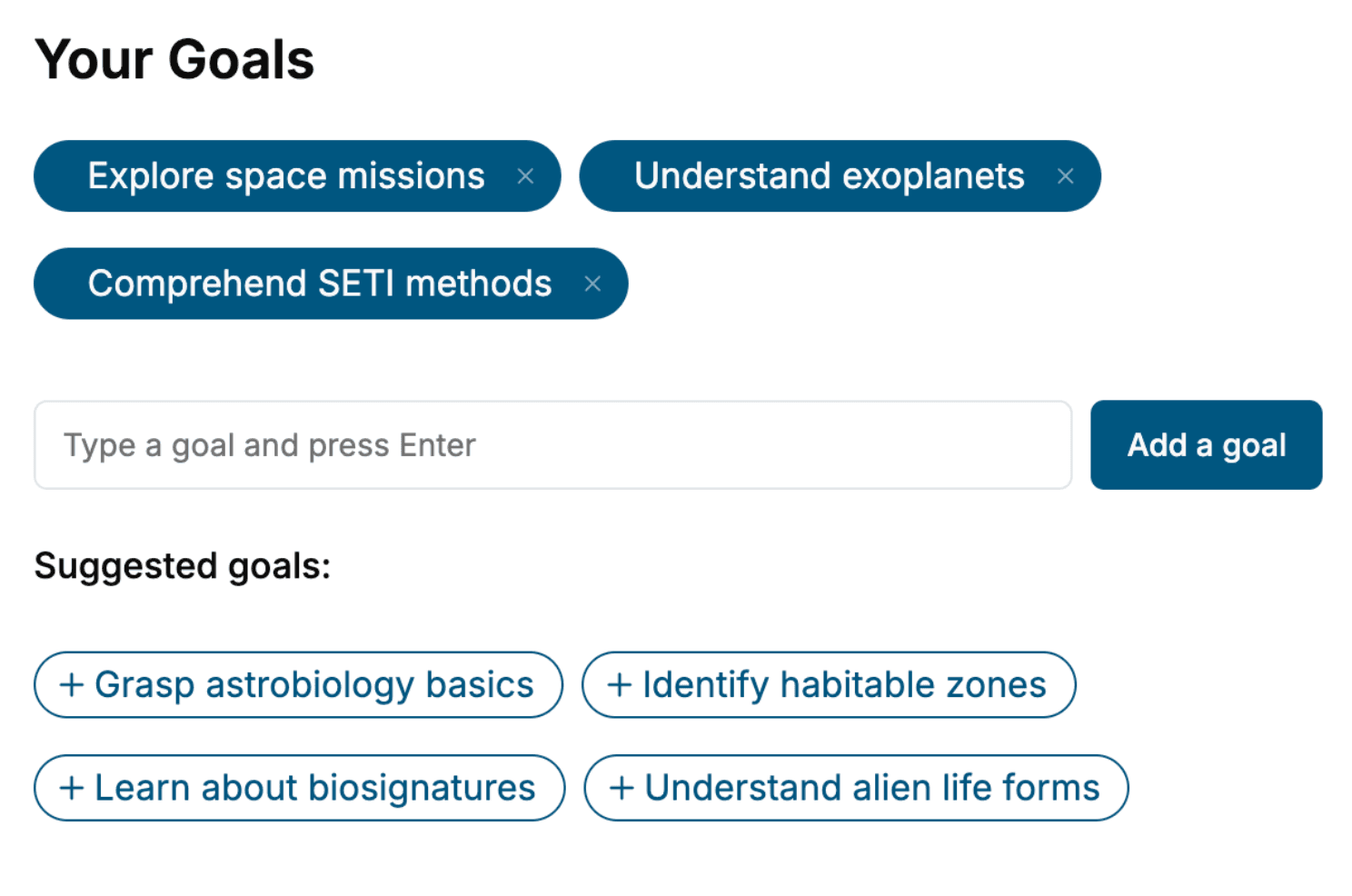
Select the focus of your Argentina History book and share your background
- 2. Personalize your book
Specify your goals and choose sub-topics to include
- 3. Get your tailored book
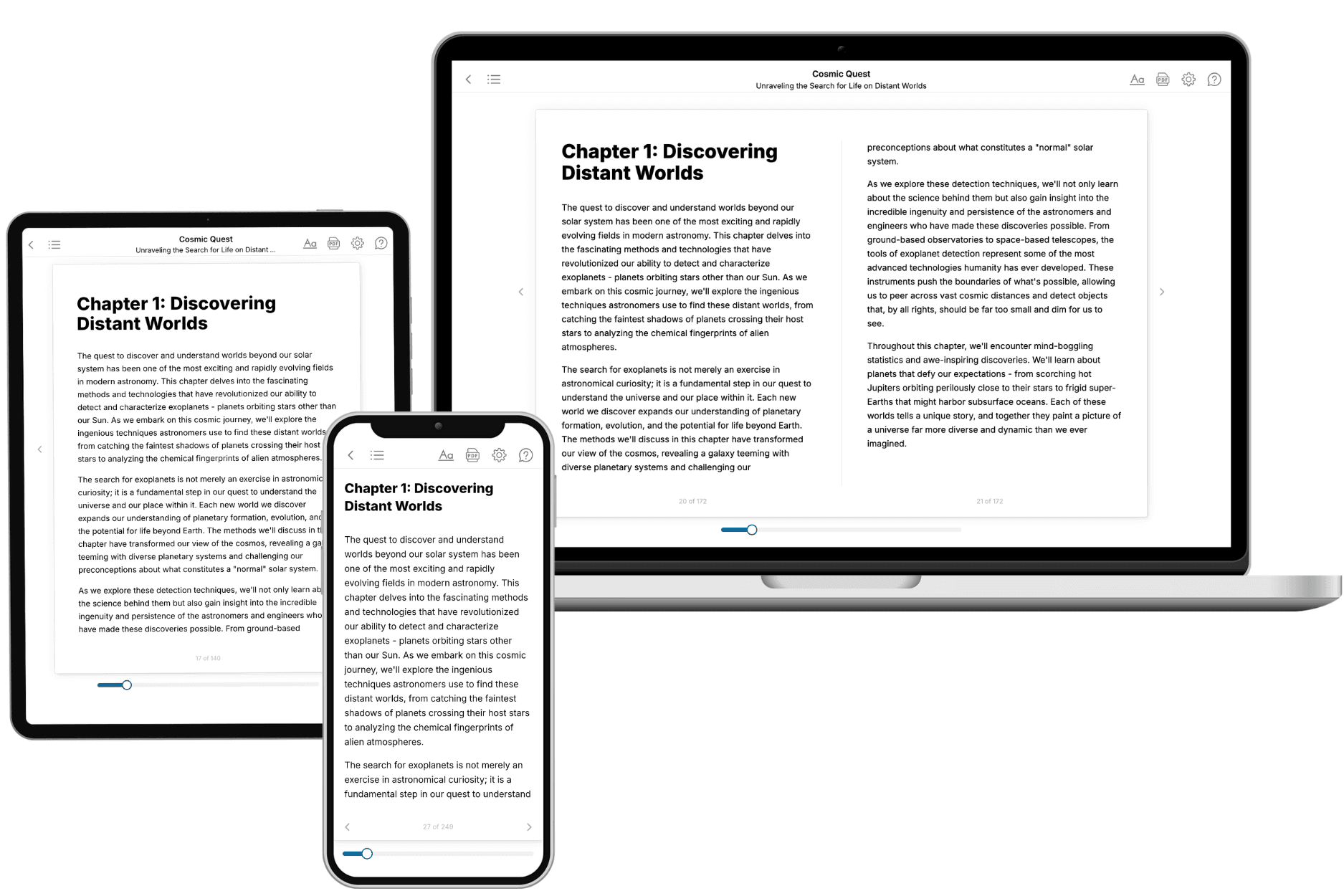
Your book is ready in 10 minutes. Read it online, download as EPUB or PDF, or send to Kindle.

Frequently asked questions
- What is TailoredRead?
TailoredRead creates complete, full-length nonfiction ebooks, written specifically for you. Tell us what you want to learn and why, and TailoredRead writes you a complete ebook on it, with charts, tables, and diagrams throughout. Read it online, on Kindle, or on any e-reader, or download it as a PDF or EPUB. Every book is written fresh the day you order it.
- How is the book tailored to me?
Before anything is written, you answer a few short questions about your goals, your background, and the topics you care about. Your book is then planned around your answers: written at your level, focused on your goals, and covering the topics you chose, instead of the one-size-fits-all book a store sells everyone.
- Will it read like generic AI content?
No. Your book isn't a chat transcript: it's planned chapter by chapter before a single word is written, told in a clear book voice, and explains ideas visually with charts, tables, and diagrams. After writing, every book goes through an editorial pass that polishes chapters so the book reads consistent from start to finish. Judge for yourself: browse thousands of sample books on our Explore Books page.
- How accurate is the content?
Our AI first checks whether your subject needs live research. Niche and fast-moving subjects are researched before writing, and the book plan and chapters are grounded in what it finds. After writing, every book goes through a quality pass that checks its facts and consistency, and researched books list their sources in a Notes section at the back.
- How long is the book?
You choose the length: Comprehensive (250-300 pages), Detailed (150-200 pages), Essential (70-100 pages), or Short (30-50 pages).
- Does the book include visuals?
Yes. Every book includes charts, tables, and diagrams: timelines, checklists, step-by-step guides, decision trees, comparison tables, matrices, and bar charts. A typical book includes dozens of these visual elements.
- Can I read it on Kindle? What formats can I download?
Yes. Every book can be read in our online reader or downloaded as a PDF or EPUB. The EPUB can be opened with Kindle, Apple Books, Kobo, and any e-reader. The Commercial and Author licenses also include an editable Word (DOCX) and Markdown download.
- How much does it cost?
About the price of a regular ebook. The exact price depends on your book's length and complexity, from $2 for the shortest books to $35 for the most comprehensive, and it's shown when you review your book, before you commit to anything. Each book is a one-time purchase, yours to keep, no subscription. Licenses that let you share, teach, or publish your book range from $35.99 to $49.99.
- Can I preview the book before purchasing?
Before you pay, you'll see what your book will cover: the title, a detailed description, the estimated length, and the complete chapter-by-chapter table of contents, so you know what you're getting before you decide. The full text itself is written after you purchase.
- How long does it take to create a book?
About 10 minutes. You can start reading the opening chapters while the rest is still being written.