The Art of Baked Brie
Master the Craft of Melting, Wrapping, and Serving the Perfect Baked Cheese
What if the most impressive appetizer you could serve required less than 30 minutes of active preparation?
191 pages10 chaptersDec 21, 2025Cooking
About this book
Baked brie has become a beloved centerpiece at gatherings, yet many home cooks approach it with uncertainty—unsure about timing, wrapping methods, or how to elevate beyond basic recipes. This comprehensive guide demystifies the art and science of baking brie, taking you from foundational techniques to restaurant-quality presentations. You'll discover why certain wrapping materials work better than others, learn the precise temperatures that transform cold cheese into silky perfection, and explore flavor combinations that transform a simple appetizer into a memorable dish. Whether you're preparing for an intimate dinner or a large gathering, this book provides the knowledge and confidence to create baked brie that impresses every time. Includes detailed instructions, troubleshooting tips, and creative variations that honor tradition while encouraging culinary experimentation.
Table of contents
- IntroductionWhy Baked Brie Matters, What You'll Learn in This Book, How to Use This GuideRead below
- Chapter 1: Understanding Brie CheeseThe History and Origins of Brie, Brie's Unique Composition and Structure, Selecting Quality Brie for Baking, Exploring Brie Varieties and Alternatives
- Chapter 2: The Science of Baking BrieHow Heat Transforms Cheese, Understanding Melting Points and Temperatures, Achieving the Perfect Creamy Texture
- Chapter 3: Wrapping Techniques and MaterialsPuff Pastry: Creating Crispy Exteriors, Phyllo Dough: Delicate and Elegant, Alternative Wrapping Materials and Methods, Step-by-Step Wrapping Techniques
- Chapter 4: Classic Baked Brie RecipesSimple Puff Pastry Baked Brie, Baked Brie with Nuts and Honey, Fig and Prosciutto Baked Brie, Cranberry and Pecan Variation
- Chapter 5: Flavor Pairings and CombinationsSweet Elements That Balance Richness, Savory Additions and Umami Boosters, Acidic Components for Balance, Herb and Spice Profiles
- Chapter 6: Advanced Variations and InnovationsSavory-Forward Baked Brie, Seasonal Variations and Ingredients, Individual Portions and Presentation
- Chapter 7: Timing, Temperature, and Baking MasteryComplete Temperature and Timing Guide, Adjusting for Different Ovens, Recognizing Doneness and Preventing Overcooking, Make-Ahead Strategies and Partial Baking
- Chapter 8: Troubleshooting and Common MistakesCommon Problems and Solutions, Texture Issues and How to Fix Them, Presentation Mishaps and Recovery
- Chapter 9: Serving, Presentation, and AccompanimentsOptimal Serving Temperature and Timing, Plating and Presentation Techniques, Selecting the Perfect Accompaniments, Wine and Beverage Pairings
- Chapter 10: Entertaining with Baked BriePlanning Baked Brie for Different Occasions, Scaling Recipes for Large Groups, Hosting Tips and Timeline Management
- ConclusionYour Journey to Baked Brie Mastery, Next Steps and Continued Exploration
Introduction
Picture this: guests arrive at your home, and within minutes, the aroma of warm, buttery pastry fills the air. You bring out a golden-brown package, slice through the crispy exterior, and reveal a cascade of molten cheese that pools onto the serving board. Conversations pause. Phones come out for photos. Someone asks for the recipe. This is the power of perfectly executed baked brie—a dish that transforms simple ingredients into an unforgettable centerpiece that elevates any gathering from ordinary to memorable.
Baked brie occupies a unique position in the culinary world. It's simultaneously elegant enough for formal dinner parties and approachable enough for casual game-day gatherings. Unlike many impressive-looking dishes that require advanced techniques or specialized equipment, baked brie delivers restaurant-quality results with minimal active preparation time. Yet despite its apparent simplicity, many home cooks approach it with uncertainty. Questions arise: How long should it bake? Which wrapping material works best? How do you prevent the cheese from leaking everywhere? What flavors complement without overwhelming? These uncertainties often lead to disappointing results—overcooked cheese that's lost its creamy texture, soggy pastry that lacks crispness, or flavor combinations that miss the mark.
This book exists to eliminate that uncertainty and replace it with confidence. You'll discover that baked brie isn't just about following a recipe—it's about understanding the principles that govern how cheese behaves under heat, how different wrapping materials interact with moisture and temperature, and how flavor components work together to create balance. With this knowledge, you'll move beyond simply replicating recipes to creating your own variations that reflect your taste preferences and the ingredients available to you. Whether you're preparing baked brie for the first time or looking to refine techniques you've already explored, this comprehensive guide provides the foundation for consistent success and creative exploration.
The journey ahead combines practical instruction with scientific understanding. You'll learn not just what to do, but why certain approaches work better than others. This deeper understanding transforms cooking from a series of steps to follow into an intuitive process where you can adjust and adapt based on the specific circumstances you encounter. The goal isn't to make you dependent on precise recipes, but to develop your judgment so you can confidently make decisions in the kitchen—adjusting timing for different oven characteristics, selecting appropriate cheese based on what's available, or improvising flavor combinations based on seasonal ingredients.
Why Baked Brie Matters
Baked brie has earned its place as a beloved appetizer for reasons that extend beyond its delicious taste. Understanding why this dish resonates so strongly with both hosts and guests helps explain its enduring popularity and reveals why mastering it adds significant value to your culinary repertoire. At its core, baked brie succeeds because it addresses multiple needs simultaneously—it's visually impressive, relatively simple to execute, accommodates various dietary preferences, and creates a shared experience that brings people together around food.
The visual impact of baked brie cannot be overstated. When you present a whole wheel of cheese wrapped in golden pastry, you're offering something that looks intentional and crafted. The moment of cutting into it—revealing the contrast between crispy exterior and flowing interior—creates a small theatrical moment that engages guests. This visual drama matters in entertaining because it signals care and effort without requiring you to spend hours in the kitchen. Compare this to other appetizers: a cheese board, while lovely, lacks the transformative element; individual hors d'oeuvres require extensive assembly; dips, though popular, don't command the same attention. Baked brie occupies a sweet spot where impressive presentation meets reasonable effort.
From a practical standpoint, baked brie offers remarkable flexibility in timing and preparation. Unlike dishes that must be served immediately at a precise moment, baked brie has a generous window of optimal serving temperature. You can prepare components ahead of time, assemble the dish hours before guests arrive, and bake it with predictable timing. This make-ahead capability reduces stress during entertaining, allowing you to focus on other aspects of hosting rather than being chained to the kitchen. The dish also scales well—the same techniques that work for a small wheel serving six people apply equally to larger formats for bigger gatherings.
The communal nature of baked brie contributes significantly to its appeal. Unlike plated appetizers where each person receives an individual portion, baked brie invites gathering and interaction. Guests congregate around the serving board, spreading cheese on crackers or bread, discussing flavor combinations, and naturally engaging in conversation. This shared experience creates connection in a way that separated portions cannot. The act of breaking bread together—or in this case, sharing cheese—has deep cultural resonance that transcends the specific food being served. You're not just feeding people; you're creating an opportunity for interaction and connection.
Baked brie also demonstrates impressive versatility in flavor profiles and dietary accommodations. The base preparation remains consistent, but the additions and accompaniments can shift dramatically to suit different occasions, seasons, or preferences. Consider these possibilities:
- Sweet variations with honey, fruit preserves, and nuts appeal to those who enjoy dessert-like flavors
- Savory versions featuring herbs, garlic, and mushrooms satisfy those preferring less sweetness
- Seasonal adaptations using cranberries in winter or fresh berries in summer keep the dish feeling current
- Dietary modifications such as gluten-free wrapping alternatives or vegetarian-friendly toppings expand accessibility
The economic efficiency of baked brie deserves consideration as well. While quality brie represents a moderate investment, the overall cost per serving remains reasonable compared to many other impressive appetizers. A single wheel of brie, some pastry, and simple accompaniments can serve eight to twelve people as a substantial appetizer. When you calculate the cost per person and compare it to alternatives like shrimp cocktail, beef tenderloin crostini, or elaborate charcuterie boards, baked brie often emerges as the more economical choice while still delivering significant impact. This value proposition makes it accessible for regular entertaining rather than reserved only for special occasions.
Perhaps most importantly, mastering baked brie builds broader culinary confidence. The skills you develop—working with pastry dough, understanding cheese behavior under heat, balancing flavors, managing timing—transfer to numerous other dishes. When you learn to recognize the visual and tactile cues that indicate properly baked cheese, you're developing judgment that applies to gratins, fondues, and other cheese-based preparations. The temperature control and timing awareness you cultivate translates to better results across your cooking. In this sense, baked brie serves as an excellent teaching vehicle for fundamental cooking principles that extend far beyond this single dish.
The confidence that comes from reliably producing impressive results shouldn't be underestimated. Many home cooks hesitate to entertain because they worry about executing dishes successfully under the pressure of hosting. Having a signature dish that you can prepare with confidence—knowing it will turn out well and impress guests—removes a significant barrier to entertaining. Baked brie can become that reliable centerpiece that anchors your appetizer offerings, allowing you to experiment with other elements of the menu while knowing you have at least one guaranteed success. This psychological benefit of culinary confidence ripples outward, encouraging more frequent entertaining and greater willingness to try new techniques in other areas of cooking.
What You'll Learn in This Book
This comprehensive guide takes you through every aspect of baked brie preparation, from selecting cheese at the store to presenting the finished dish to guests. The content is organized to build your knowledge progressively, starting with foundational understanding and advancing to creative variations and troubleshooting. Each chapter addresses specific aspects of the process, providing both theoretical knowledge and practical application. By the end, you'll possess not just a collection of recipes, but a deep understanding that enables you to approach baked brie with creativity and confidence.
The journey begins with understanding brie cheese itself—its history, production methods, and unique characteristics. You'll learn why brie behaves differently from other cheeses when heated, what happens to its structure at various temperatures, and how to evaluate quality when shopping. This foundation proves essential because the cheese you select fundamentally determines your results. You'll discover the differences between authentic French brie and domestic versions, understand how aging affects flavor and texture, and learn to identify visual and tactile indicators of quality. This knowledge transforms cheese shopping from guesswork into informed decision-making, ensuring you start with appropriate ingredients for your intended preparation.
The science of baking brie receives thorough exploration, demystifying what happens inside your oven. You'll understand the specific temperature range where brie transitions from firm to creamy without breaking down completely, learn why timing varies based on cheese size and starting temperature, and discover how different wrapping materials affect heat transfer. This scientific understanding explains why certain approaches work consistently while others produce unpredictable results. For example, you'll learn why baking at 375°F typically produces better results than 350°F or 425°F, and how the thermal mass of the cheese affects the time required to reach optimal texture. These insights allow you to adjust confidently when circumstances change—using a different oven, working with a larger or smaller wheel, or adapting to unexpected timing constraints.
Wrapping techniques receive detailed attention because the exterior treatment dramatically impacts the final result. You'll master working with puff pastry, learning how to handle it properly, achieve even thickness, and create seals that prevent leakage. Phyllo dough techniques are covered separately, as this delicate material requires different handling approaches. Alternative wrapping methods—including prosciutto wraps, bacon weaves, and even unwrapped preparations—expand your options for different occasions and dietary needs. Each technique includes step-by-step instructions with specific guidance on common pitfalls and how to avoid them. You'll learn, for instance, why egg wash application matters for pastry browning, how to prevent phyllo from drying out during assembly, and techniques for creating decorative pastry designs that elevate presentation.
Classic recipes provide proven formulas that deliver reliable results. These aren't just ingredient lists with instructions—each recipe includes explanations of why specific components work together, what role each element plays in the overall flavor profile, and how you might adjust based on personal preferences. The classic preparations covered include:
- Simple puff pastry baked brie that showcases proper technique without distracting additions
- Honey and nut combinations that demonstrate sweet-savory balance
- Fig and prosciutto versions that layer complementary flavors
- Cranberry and pecan variations that highlight seasonal ingredients
Flavor pairing principles receive systematic treatment, moving beyond specific recipes to underlying concepts. You'll learn why certain combinations work harmoniously while others clash, how to balance sweet, savory, acidic, and rich elements, and which ingredients complement brie's particular flavor profile. This section explores categories of additions—sweet elements like honey, jam, and dried fruit; savory components including herbs, garlic, and mushrooms; acidic elements such as balsamic reduction and citrus; and textural contrasts from nuts, seeds, and crispy elements. Understanding these principles enables you to create your own combinations confidently, selecting ingredients based on availability, season, or personal preference while maintaining the balance that makes baked brie successful.
Advanced variations push beyond traditional preparations, exploring creative approaches that maintain the essential appeal of baked brie while offering something unexpected. You'll discover savory-forward preparations that minimize sweetness, seasonal variations that highlight specific ingredients at their peak, and individual portion techniques that adapt the concept for different serving contexts. These advanced preparations demonstrate how the fundamental techniques you've learned can be applied creatively, encouraging experimentation while providing enough structure to ensure success. For example, you'll learn how to create individual brie parcels wrapped in phyllo for elegant plated appetizers, or how to incorporate seasonal ingredients like fresh herbs in spring or roasted squash in autumn.
Timing and temperature mastery receives dedicated attention because these factors critically determine success. You'll get specific guidance on baking times for different cheese sizes, learn how to adjust for oven variations, and discover techniques for recognizing doneness without cutting into the cheese prematurely. Make-ahead strategies are covered in detail, including which components can be prepared in advance, how to store partially assembled preparations, and techniques for finishing pre-baked cheese just before serving. This information proves invaluable for entertaining, allowing you to manage your time effectively while ensuring optimal results. You'll learn, for instance, that you can wrap brie completely and refrigerate it for up to 24 hours before baking, or partially bake it earlier in the day and finish it just before guests arrive.
Troubleshooting guidance addresses common problems and their solutions, helping you diagnose issues and prevent them in future preparations. This section covers challenges like cheese leaking during baking, pastry remaining soggy, overcooking that results in grainy texture, and presentation problems. Each issue receives analysis of likely causes and specific corrective actions. For example, if your cheese consistently leaks, you'll learn whether the problem stems from inadequate sealing, excessive baking time, or starting with overripe cheese—and how to address each cause. This troubleshooting knowledge accelerates your learning curve, helping you improve with each preparation rather than repeating the same mistakes.
Serving and presentation techniques ensure your carefully prepared baked brie makes the impact it deserves. You'll learn optimal serving temperatures, how long to let the cheese rest after baking, and techniques for cutting and serving that maintain visual appeal. Accompaniment selection receives detailed coverage, including which crackers, breads, and fresh elements pair best with different baked brie variations. Beverage pairing suggestions help you create cohesive flavor experiences, with specific wine recommendations and alternative options for non-alcohol drinkers. Plating and presentation guidance covers everything from selecting appropriate serving vessels to arranging accompaniments attractively, ensuring the complete presentation matches the quality of your preparation.
The final section addresses entertaining specifically, providing practical guidance for incorporating baked brie into various occasions. You'll learn how to plan timing when preparing multiple dishes, scale recipes for different group sizes, and manage the logistics of serving hot cheese to guests. This practical information bridges the gap between successfully making baked brie in your kitchen and confidently serving it at gatherings. You'll discover strategies for managing oven space when preparing multiple dishes, techniques for keeping baked brie at optimal temperature during extended serving periods, and approaches for presenting the dish that encourage guest interaction while maintaining food safety.
How to Use This Guide
This book is designed to serve both as a comprehensive learning resource and as a practical reference you'll return to repeatedly. The structure supports different approaches depending on your current skill level, available time, and specific goals. If you're completely new to baked brie, reading sequentially from beginning to end provides the most thorough foundation. However, if you're already familiar with basic preparation and want to expand your repertoire or solve specific problems, you can jump directly to relevant chapters. Understanding how the content is organized helps you extract maximum value regardless of your approach.
For beginners approaching baked brie for the first time, start with Chapters 1 and 2 to build foundational understanding. These chapters explain what makes brie unique and how heat affects its structure—knowledge that informs every subsequent technique. Then move to Chapter 3 on wrapping techniques, selecting one method to master initially. Puff pastry represents the most popular choice and offers the most forgiving learning curve. Once you've absorbed these fundamentals, proceed to Chapter 4's classic recipes, choosing the simple puff pastry version for your first attempt. This progression builds skills incrementally, ensuring each new technique rests on solid understanding of previous concepts. After successfully executing a basic preparation, return to explore flavor pairings in Chapter 5 and advanced variations in Chapter 6.
Intermediate cooks who have already prepared baked brie but want to improve consistency or expand their range can take a more selective approach. If your results have been inconsistent, focus on Chapter 7's timing and temperature guidance, then review Chapter 8's troubleshooting section to identify and correct specific issues you've encountered. If you're satisfied with your basic technique but want more variety, dive into Chapter 5's flavor pairing principles and Chapter 6's advanced variations. These chapters provide frameworks for creating your own combinations rather than just following recipes. The serving and presentation guidance in Chapter 9 helps elevate dishes you're already preparing successfully, adding polish that transforms good results into impressive ones.
Advanced home cooks and those with professional culinary experience will find value in the scientific explanations and systematic approach to flavor development. Even if you've prepared baked brie many times, the detailed exploration of cheese composition, heat transfer, and flavor balance principles may reveal insights that improve your results or explain why certain approaches work better than others. The advanced variations and entertaining strategies offer ideas for pushing beyond traditional preparations while maintaining the essential appeal that makes baked brie successful. Use this book as a reference for specific techniques or as inspiration for creative variations that fit your personal style.
The recipe format throughout the book follows a consistent structure designed to support both learning and execution:
- Ingredient lists specify quantities and provide guidance on selection and potential substitutions
- Preparation instructions break the process into clear steps with timing estimates
- Technique notes explain why specific approaches matter and what to watch for
- Variation suggestions offer ways to modify the base recipe while maintaining balance
- Make-ahead guidance indicates which steps can be completed in advance
- Serving recommendations suggest appropriate accompaniments and presentation approaches
Throughout the book, you'll encounter specific types of highlighted information that serve different purposes. Key terms appear in bold when first introduced, indicating concepts important enough to remember and apply across multiple preparations. Technique emphasis appears in italics to draw attention to specific actions or considerations that significantly impact results. Blockquotes highlight important principles, examples, or cautionary notes that deserve special attention. Code formatting appears when presenting specific measurements, temperatures, or formulas that require precision. These formatting conventions help you quickly identify different types of information and understand their relative importance.
The book includes numerous specific examples and case studies that illustrate concepts in practical contexts. These examples serve multiple purposes: they demonstrate how principles apply in real situations, provide models you can adapt to your circumstances, and help you develop judgment by showing the reasoning behind specific decisions. When you encounter an example, consider how the specific situation relates to your own context. What elements would you keep the same? What might you adjust based on your preferences, available ingredients, or the specific occasion? This active engagement with examples accelerates learning more effectively than passive reading.
Make-ahead timelines appear throughout the book because managing preparation timing is crucial for successful entertaining. These timelines break down which tasks can be completed days in advance, which should happen the day before, and which must occur just before serving. Following these timelines reduces stress and ensures you're not overwhelmed when guests arrive. However, treat them as guidelines rather than rigid requirements—your specific circumstances may allow more or less advance preparation depending on your schedule, refrigerator space, and comfort level with various techniques. The timelines provide a framework you can adapt rather than a prescription you must follow exactly.
Troubleshooting information appears both in the dedicated Chapter 8 and within individual recipes where specific issues commonly arise. When you encounter a problem, start by consulting the troubleshooting section related to the specific technique you're using, then refer to the comprehensive troubleshooting chapter if you need additional guidance. The troubleshooting approach focuses on diagnosis—identifying the likely cause of an issue based on observable symptoms—followed by specific corrective actions. This diagnostic approach helps you develop problem-solving skills that extend beyond the specific issues covered, enabling you to analyze and address unexpected challenges independently.
As you work through the book and gain experience, consider keeping notes about your preparations. Record which recipes you've tried, what modifications you made, how they turned out, and what you might adjust next time. Note your oven's characteristics—does it run hot or cool, are there hot spots that affect browning, how long does it take to preheat fully? Document which cheese brands you've used and how they performed. This personal record becomes increasingly valuable over time, helping you refine your approach based on your specific equipment, ingredient sources, and preferences. Your annotated copy of this book, supplemented with your own notes and observations, becomes a personalized guide that reflects your unique circumstances and evolving expertise.
Finally, approach this book with a spirit of experimentation and curiosity rather than rigid adherence to rules. The recipes and techniques presented represent proven approaches that deliver reliable results, but they're starting points rather than endpoints. Once you understand the underlying principles—how cheese behaves under heat, why certain flavor combinations work, what role different wrapping materials play—you're equipped to experiment confidently. Try substitutions, adjust proportions, combine elements from different recipes, and develop variations that reflect your personal taste. The goal isn't to make you dependent on following recipes exactly, but to develop your judgment and creativity so you can approach baked brie—and cooking more broadly—with confidence, understanding, and the freedom to make it your own.
This is the end of the free sample. The full book has 10 chapters.
Want this book written for you?
Tell us your goals and background, and get your own version of this book, tailored by AI to you.


Benefits of AI-tailored books
- Read one book, not ten:
- all the Cooking knowledge you need, gathered into a single book.
- Save days of learning:
- tell us your goals, choose your topics, and the whole book is built around them.
- Learn effortlessly:
- Cooking book written for your specific background and expertise.
- Understand at a glance:
- includes charts, tables, timelines, checklists, decision trees, and more.
- Stay current:
- written the day you order it, not years ago.
- Trust what you read:
- every book is checked for accuracy, with real research when your subject needs it.
Create your unique book in 3 steps
- 1. Select your focus
Select the focus of your Cooking book and share your background
- 2. Personalize your book
Specify your goals and choose sub-topics to include
- 3. Get your tailored book
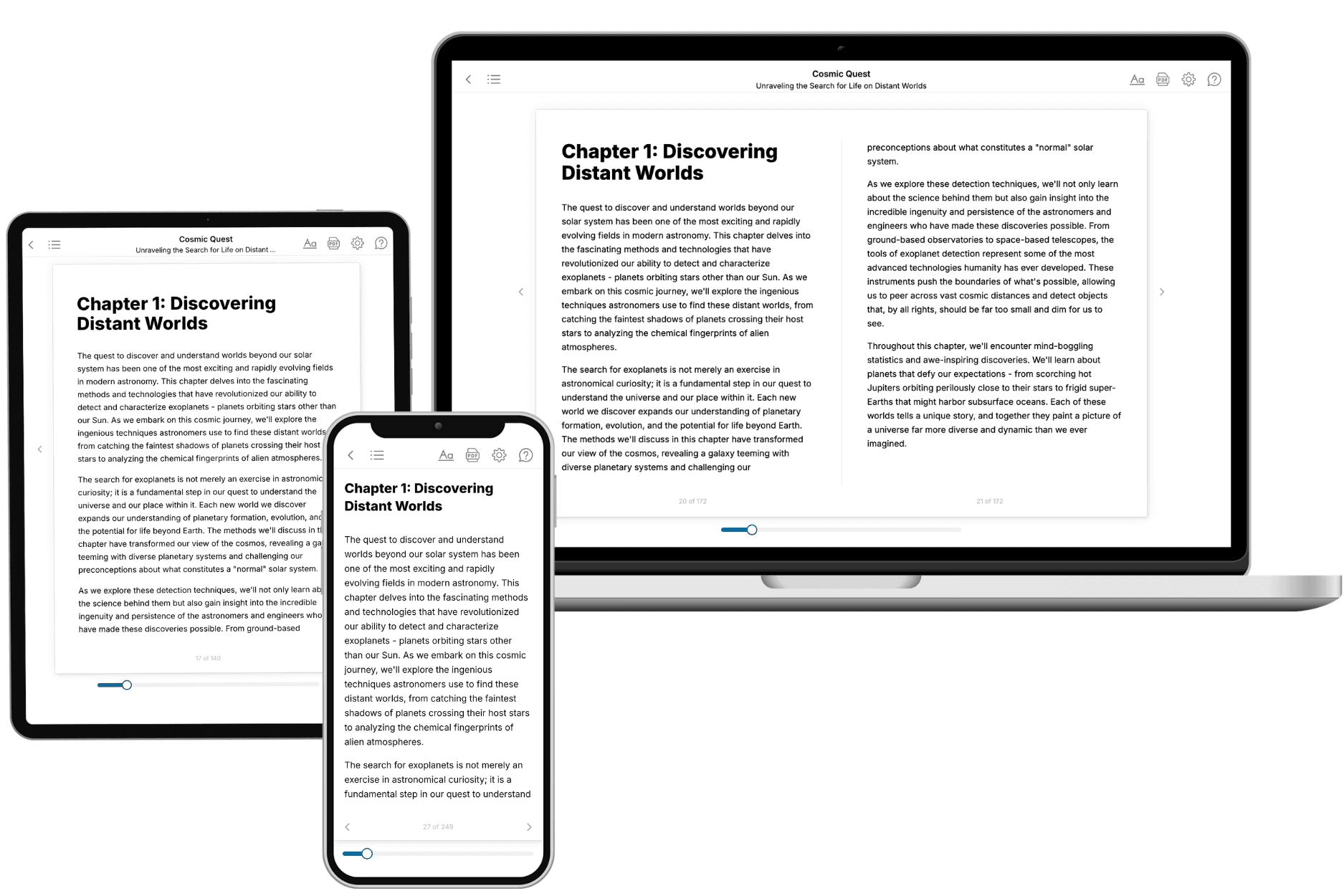
Your book is ready in 10 minutes. Read it online, download as EPUB or PDF, or send to Kindle.

Frequently asked questions
- What is TailoredRead?
TailoredRead creates complete, full-length nonfiction ebooks, written specifically for you. Tell us what you want to learn and why, and TailoredRead writes you a complete ebook on it, with charts, tables, and diagrams throughout. Read it online, on Kindle, or on any e-reader, or download it as a PDF or EPUB. Every book is written fresh the day you order it.
- How is the book tailored to me?
Before anything is written, you answer a few short questions about your goals, your background, and the topics you care about. Your book is then planned around your answers: written at your level, focused on your goals, and covering the topics you chose, instead of the one-size-fits-all book a store sells everyone.
- Will it read like generic AI content?
No. Your book isn't a chat transcript: it's planned chapter by chapter before a single word is written, told in a clear book voice, and explains ideas visually with charts, tables, and diagrams. After writing, every book goes through an editorial pass that polishes chapters so the book reads consistent from start to finish. Judge for yourself: browse thousands of sample books on our Explore Books page.
- How accurate is the content?
Our AI first checks whether your subject needs live research. Niche and fast-moving subjects are researched before writing, and the book plan and chapters are grounded in what it finds. After writing, every book goes through a quality pass that checks its facts and consistency, and researched books list their sources in a Notes section at the back.
- How long is the book?
You choose the length: Comprehensive (250-300 pages), Detailed (150-200 pages), Essential (70-100 pages), or Short (30-50 pages).
- Does the book include visuals?
Yes. Every book includes charts, tables, and diagrams: timelines, checklists, step-by-step guides, decision trees, comparison tables, matrices, and bar charts. A typical book includes dozens of these visual elements.
- Can I read it on Kindle? What formats can I download?
Yes. Every book can be read in our online reader or downloaded as a PDF or EPUB. The EPUB can be opened with Kindle, Apple Books, Kobo, and any e-reader. The Commercial and Author licenses also include an editable Word (DOCX) and Markdown download.
- How much does it cost?
About the price of a regular ebook. The exact price depends on your book's length and complexity, from $2 for the shortest books to $35 for the most comprehensive, and it's shown when you review your book, before you commit to anything. Each book is a one-time purchase, yours to keep, no subscription. Licenses that let you share, teach, or publish your book range from $35.99 to $49.99.
- Can I preview the book before purchasing?
Before you pay, you'll see what your book will cover: the title, a detailed description, the estimated length, and the complete chapter-by-chapter table of contents, so you know what you're getting before you decide. The full text itself is written after you purchase.
- How long does it take to create a book?
About 10 minutes. You can start reading the opening chapters while the rest is still being written.