The Art of Clear Writing
Master the Fundamentals of Effective Communication Through Words
Imagine your words having the power to captivate, persuade, and inspire every person who reads them.
176 pages8 chaptersApr 20, 2026Writing
About this book
Your ideas are valuable, but they deserve to be expressed with clarity and precision that makes them impossible to ignore. This book strips away the complexity of writing instruction and focuses on what actually works: practical, actionable techniques grounded in how language truly functions. You'll discover why some writers seem to effortlessly command attention while others struggle to be understood, and more importantly, you'll learn exactly how to join the first group. Through real-world examples, targeted exercises, and honest guidance, you'll develop the skills to write with confidence across emails, reports, stories, and beyond. Whether you're refining your professional communication or exploring creative expression, this guide provides the foundation every writer needs to turn their thoughts into words that matter.
Table of contents
- IntroductionWhy Writing Matters More Than You Think, What You'll Learn in This Book, How to Use This Guide for Maximum GrowthRead below
- Chapter 1: The Foundation: Understanding Your Purpose and AudienceDefining Your Writing Purpose, Knowing Your Reader Inside and Out, Matching Tone to Context
- Chapter 2: Clarity First: The Power of Simple, Direct LanguageEliminating Clutter and Unnecessary Words, Choosing Concrete Words Over Abstract Ones, Avoiding Jargon and Pretentious Language
- Chapter 3: Structure and Organization: Building a Logical FrameworkOutlining Before You Write, Creating Strong Openings That Hook Your Reader, Organizing Ideas Logically and Persuasively
- Chapter 4: Sentences That Sing: Crafting Engaging ProseThe Power of Active Voice, Varying Sentence Structure for Rhythm and Flow, Choosing Strong Verbs That Drive Action
- Chapter 5: Show, Don't Tell: Using Details and Examples EffectivelyThe Power of Specificity and Concrete Details, Using Examples Strategically to Illustrate Points, Descriptive Language Without Excess
- Chapter 6: The Revision Process: Where Good Writing Becomes GreatEmbracing the First Draft as a Starting Point, Revising for Clarity and Coherence, Editing for Precision and Impact
- Chapter 7: Adapting Your Voice: Writing for Different ContextsProfessional Writing: Emails, Reports, and Proposals, Creative Writing: Finding Your Unique Voice, Persuasive Writing: Convincing Your Audience
- Chapter 8: Reading as a Writer: Learning from the MastersDeveloping Critical Reading Habits, Analyzing What Makes Writing Effective, Building Your Writing Toolkit Through Reading
- Conclusion: Your Writing Journey AheadIntegrating Your Skills Into Daily Practice, Continuing to Grow as a Writer
- Further Reading and Resources
Introduction
Every day, you communicate through words. You write emails that need to persuade, reports that need to inform, messages that need to connect, and ideas that need to land with precision. Yet most people were never taught how to write well. They were taught grammar rules, essay formats, and how to avoid run-on sentences. That is not the same thing. Writing well means knowing how to make someone understand you, trust you, and care about what you have to say. That is a skill, and like any skill, it can be learned.
The gap between adequate writing and exceptional writing is smaller than most people assume. It is not about talent or vocabulary size. It is not about having a gift that some people are born with and others are not. The writers who consistently communicate with clarity and impact have simply learned to make better decisions at every stage of the process. They think before they write. They choose words with intention. They revise without ego. These are habits, not gifts, and this book is built around helping you develop them.
What you will find in these pages is practical, grounded, and direct. There are no abstract theories about the nature of language, no lengthy detours into literary history, and no advice that sounds good but falls apart the moment you sit down to write. Every principle covered here is connected to a real decision you will face as a writer. Every technique is something you can apply immediately, whether you are drafting a professional proposal, writing a personal essay, or simply trying to send a clearer email. The goal is not to make you sound like someone else. The goal is to help you say what you mean, clearly and confidently, in your own voice.
This introduction will walk you through three things before the main chapters begin. First, it will make the case for why writing matters far more than most people give it credit for. Second, it will give you a clear picture of what this book covers and what you will be able to do by the end of it. Third, it will show you how to use this guide in a way that produces real, lasting improvement rather than a quick read you forget within a week. Start here, and everything that follows will make more sense.
Why Writing Matters More Than You Think
Writing is not just a professional skill. It is one of the most direct expressions of how you think. When your writing is unclear, it is often because your thinking is unclear. When your writing is sharp and well-organized, it reflects a mind that has worked through an idea carefully and knows how to present it. This connection between thinking and writing runs deeper than most people realize. Improving your writing does not just make you a better communicator. It makes you a clearer thinker, and that has consequences in every area of your life.
In professional settings, writing quality has a measurable impact on how you are perceived. Research from the National Commission on Writing found that two-thirds of salaried employees in large American companies have some writing responsibility, and that poor writing costs businesses an estimated $3.1 billion annually in remediation and lost productivity.[1] Managers consistently report that employees who write clearly are seen as more competent, more credible, and more promotable than those who do not. Your writing is often the first impression you make, and it shapes how people evaluate your intelligence and judgment long before they meet you in person.
Consider two versions of the same professional email. The first reads: I wanted to reach out to touch base regarding the possibility of potentially scheduling a meeting at your earliest convenience to discuss the project going forward.
The second reads: Can we meet this week to discuss the project timeline?
Both ask the same question. But the second version respects the reader's time, signals confidence, and gets to the point. The first version buries the request under hedging language and filler phrases. Small differences like this, repeated across hundreds of emails and documents, add up to a significant difference in how you are perceived professionally.
Writing also matters in ways that extend well beyond the workplace. The ability to express yourself clearly in personal communication builds stronger relationships. A well-written message during a difficult conversation can prevent misunderstanding and show genuine care. A poorly written one can create conflict where none was intended. In creative contexts, clear writing is what separates a story that resonates from one that confuses. In civic life, the ability to write persuasively is one of the most powerful tools available to anyone who wants to advocate for change or contribute meaningfully to public discourse.
There is also a deeply personal dimension to writing that often goes unacknowledged. Writing is one of the few activities that forces you to slow down and examine what you actually believe. Journaling, personal essays, and reflective writing have been shown to reduce stress, improve emotional processing, and increase self-awareness.[2] When you write about your experiences and ideas, you are not just recording them. You are making sense of them. That process has real value, independent of whether anyone else ever reads what you write.
The point is this: writing is not a niche skill for people who work in communications or publishing. It is a foundational human capability that shapes how you think, how you are understood, and how much influence you have in the world. Treating it as something worth improving is one of the most practical investments you can make in yourself. That is the premise this book is built on, and it is worth holding onto as you work through the chapters ahead.
A useful way to think about it: Every piece of writing you send is a small representation of your mind. The clearer your writing, the more clearly others see your thinking. That visibility is either an asset or a liability. This book is about making it an asset.
One more thing worth noting: the bar for clear writing is not as high as it might seem. Most writing in the world, including professional writing, is mediocre. It is vague, padded, passive, and forgettable. That means the gap between average and genuinely good is not enormous. A modest, consistent effort to apply the principles in this book will put your writing well ahead of most of what people encounter every day. That is not a small advantage.
What You'll Learn in This Book
This book is organized around the core decisions every writer faces, from the earliest stage of figuring out what you want to say, all the way through to the final pass of editing and polishing. Each chapter focuses on a specific set of skills, and each builds on what came before. By the time you reach the conclusion, you will have a complete, practical framework for approaching any writing task with confidence and clarity.
Here is a clear picture of what each chapter covers:
- Chapter 1: Purpose and Audience. Before you write a single word, you need to know why you are writing and who you are writing for. This chapter gives you tools to define your purpose clearly and understand your reader deeply enough to make every decision that follows easier and more effective.
- Chapter 2: Clarity and Simple Language. This chapter tackles the most common writing problem: unnecessary complexity. You will learn how to cut clutter, choose concrete words over vague abstractions, and avoid the jargon and pretension that make writing feel distant and hard to follow.
- Chapter 3: Structure and Organization. Good ideas presented in the wrong order lose their power. This chapter covers how to outline before you write, how to open with a hook that earns attention, and how to arrange your ideas so they build logically toward your conclusion.
- Chapter 4: Sentences That Engage. This chapter goes deep on the craft of the sentence itself. You will learn why active voice creates energy, how to vary sentence length for rhythm, and how strong verbs can transform flat prose into writing that moves.
- Chapter 5: Show, Don't Tell. Abstract statements tell readers what to think. Specific details and examples let them experience it. This chapter teaches you how to use concrete details, strategic examples, and vivid description to make your writing come alive without becoming excessive.
- Chapter 6: The Revision Process. First drafts are never final. This chapter reframes revision as the most important part of writing, not a chore at the end. You will learn how to revise for clarity, coherence, and precision, and how to edit with the kind of honest eye that separates good writers from great ones.
- Chapter 7: Adapting Your Voice. Different contexts demand different approaches. This chapter covers professional writing (emails, reports, proposals), creative writing (finding your unique voice), and persuasive writing (making a compelling case), with specific techniques for each.
- Chapter 8: Reading as a Writer. The best writers are also dedicated readers. This chapter shows you how to read critically, analyze what makes writing effective, and build a personal toolkit of techniques drawn from the writers you admire most.
By the end of this book, you will be able to approach a blank page with a clear process rather than a vague hope. You will know how to identify what is weak in your own writing and how to fix it. You will have a set of specific, tested techniques that apply across contexts, from a two-line email to a ten-page report to a personal essay. That is the practical outcome this book is designed to deliver.
It is also worth being honest about what this book does not cover. It is not a grammar handbook. There are excellent references for that, and a few are listed in the Further Reading section at the back. It does not cover every genre of writing in depth. Screenwriting, academic research papers, and technical documentation each have their own conventions that go beyond the scope of a single guide. What this book does cover is the foundational layer that underlies all of those forms. Get the fundamentals right, and the genre-specific details become much easier to learn.
The skills in this book are also cumulative. Clarity of language (Chapter 2) becomes more powerful when combined with strong structure (Chapter 3). Active voice (Chapter 4) lands harder when paired with concrete details (Chapter 5). Revision (Chapter 6) is more effective when you know what you are looking for. Reading the chapters in order, at least the first time through, will give you the most complete picture of how these skills connect and reinforce each other.
One thing you will notice throughout is that this book practices what it preaches. The writing here is intentionally direct, concrete, and free of unnecessary complexity. When a principle is introduced, it is demonstrated in the prose itself. That is not an accident. The best way to understand what clear writing looks like is to read it, and the best way to learn a technique is to see it in action before you try it yourself.
How to Use This Guide for Maximum Growth
Reading about writing is not the same as improving at writing. That distinction matters, and it is worth addressing directly before you go any further. Many people read books about craft, nod along with the advice, and then return to their old habits the moment they sit down to write. The information did not stick because it was never applied. This guide is designed to prevent that outcome, but only if you engage with it actively rather than passively.
The most effective approach is to read each chapter with a specific piece of your own writing nearby. It does not matter what it is: a recent email, a report you are working on, a blog post, or even a paragraph you wrote years ago. As you read, apply each principle to that piece. When Chapter 2 talks about cutting unnecessary words, open your document and start cutting. When Chapter 4 introduces active voice, find the passive constructions in your own writing and rewrite them. This kind of immediate application is what converts reading into skill.
Here is a simple framework for working through each chapter:
- Read the chapter once through without stopping to take notes. Get the full picture of what is being covered before you start analyzing it.
- Identify the two or three principles that feel most relevant to your current writing challenges. Not every technique will be equally urgent for every writer at every stage.
- Apply those principles to a real piece of writing before moving to the next chapter. Even a single paragraph of deliberate practice is more valuable than reading three more chapters without applying anything.
- Return to the chapter later when you encounter a specific problem in your writing. This book is designed to work as a reference as well as a linear read.
It is also worth keeping a writing journal as you work through this guide. Not a diary, but a dedicated space where you experiment with techniques, record observations about writing you admire, and track the specific habits you are trying to build. Research on skill acquisition consistently shows that deliberate, reflective practice produces faster improvement than simple repetition.[3] Writing about your writing, even briefly, is one of the most effective ways to accelerate your growth.
Pay particular attention to the examples throughout the book. Each one is chosen to illustrate a specific principle in action, and many of them come in pairs: a weaker version and a stronger version of the same content. When you encounter these pairs, do not just read them and move on. Ask yourself why the stronger version works. What specific choices did the writer make? Could you apply the same logic to your own writing? That kind of analytical engagement is what separates readers who improve from readers who simply feel informed.
A practical tip: After finishing each chapter, write one paragraph using the techniques you just learned. It does not need to be polished or even good. The goal is to activate the skill, not to produce a masterpiece. A rough paragraph written immediately after reading is worth more than a perfect paragraph planned but never written.
Some chapters will feel more immediately relevant than others, depending on where you are in your writing development. If you already write with reasonable clarity but struggle with structure, Chapter 3 may feel like the most urgent read. If your sentences feel flat and lifeless, Chapter 4 will likely resonate most. That is fine. Use the table of contents to navigate toward your most pressing needs, but do come back to the other chapters eventually. The principles work together, and a weakness in one area often undermines strengths in another.
It is also worth setting a realistic expectation about the pace of improvement. Writing is a skill that develops over time, not overnight. You will not finish this book and immediately produce flawless prose. What you will have is a clear set of principles, a practical toolkit, and a much sharper eye for what is working and what is not in your own writing. That awareness is the foundation everything else is built on. The improvement that follows is a matter of consistent practice applied over weeks and months, not a single reading session.
Finally, approach this guide with a spirit of honest self-assessment. The writers who improve fastest are not the ones who are most talented. They are the ones who are most willing to look at their own work critically, identify what is not working, and make changes without defensiveness. That willingness to be honest about your weaknesses is not a sign of inadequacy. It is the defining characteristic of every writer who has ever gotten significantly better. Bring that honesty to every exercise, every revision, and every piece of writing you produce while working through this book, and the results will follow.
The chapters ahead are waiting. Each one is a step toward writing that is clearer, more confident, and more compelling than what you are producing right now. That is a worthwhile destination, and the path to it starts on the very next page.
Notes
Introduction
This is the end of the free sample. The full book has 8 chapters.
Want this book written for you?
Tell us your goals and background, and get your own version of this book, tailored by AI to you.


Benefits of AI-tailored books
- Read one book, not ten:
- all the Writing knowledge you need, gathered into a single book.
- Save days of learning:
- tell us your goals, choose your topics, and the whole book is built around them.
- Learn effortlessly:
- Writing book written for your specific background and expertise.
- Understand at a glance:
- includes charts, tables, timelines, checklists, decision trees, and more.
- Stay current:
- written the day you order it, not years ago.
- Trust what you read:
- every book is checked for accuracy, with real research when your subject needs it.
Create your unique book in 3 steps
- 1. Select your focus
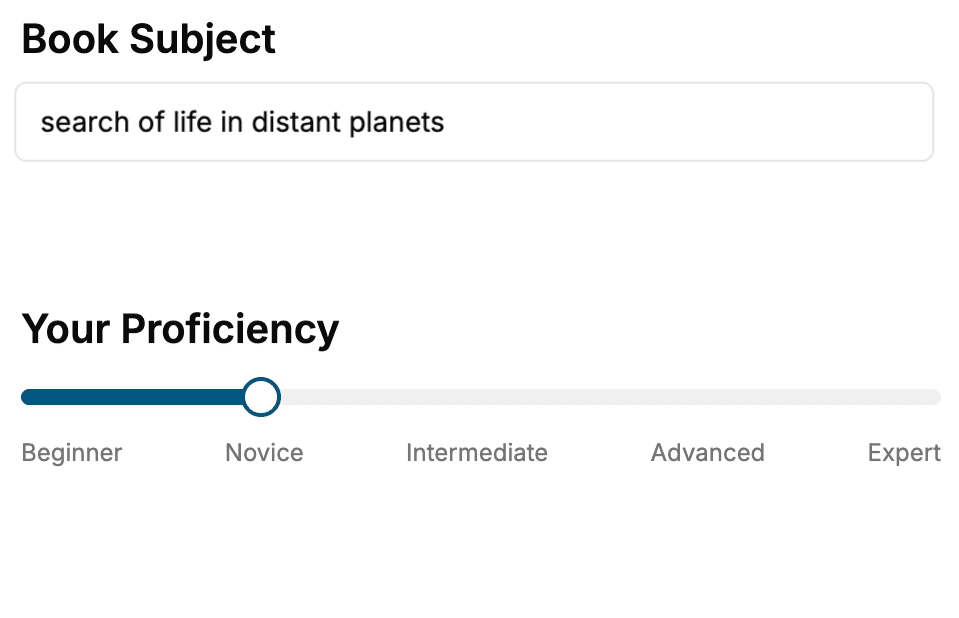
Select the focus of your Writing book and share your background
- 2. Personalize your book
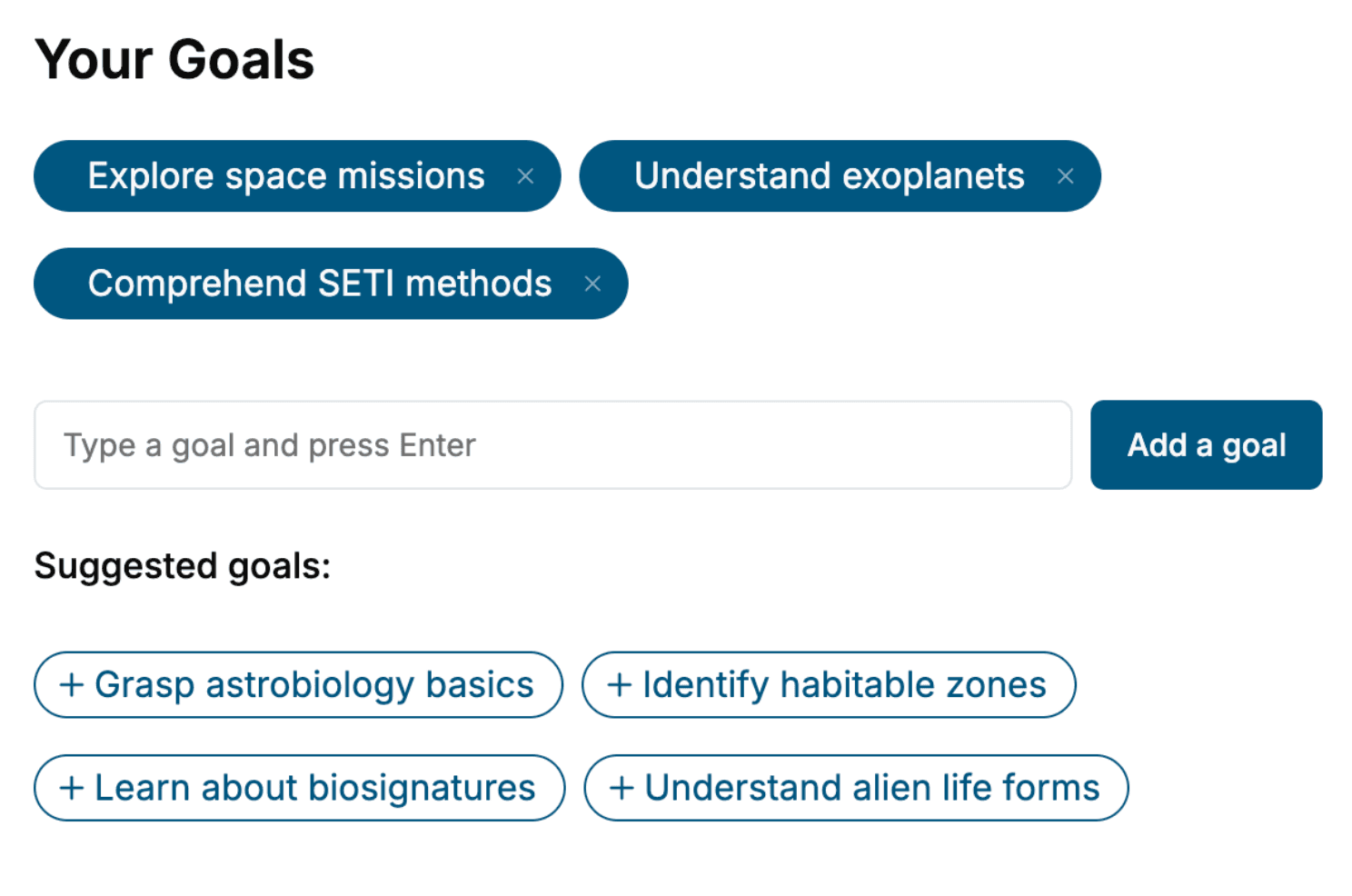
Specify your goals and choose sub-topics to include
- 3. Get your tailored book
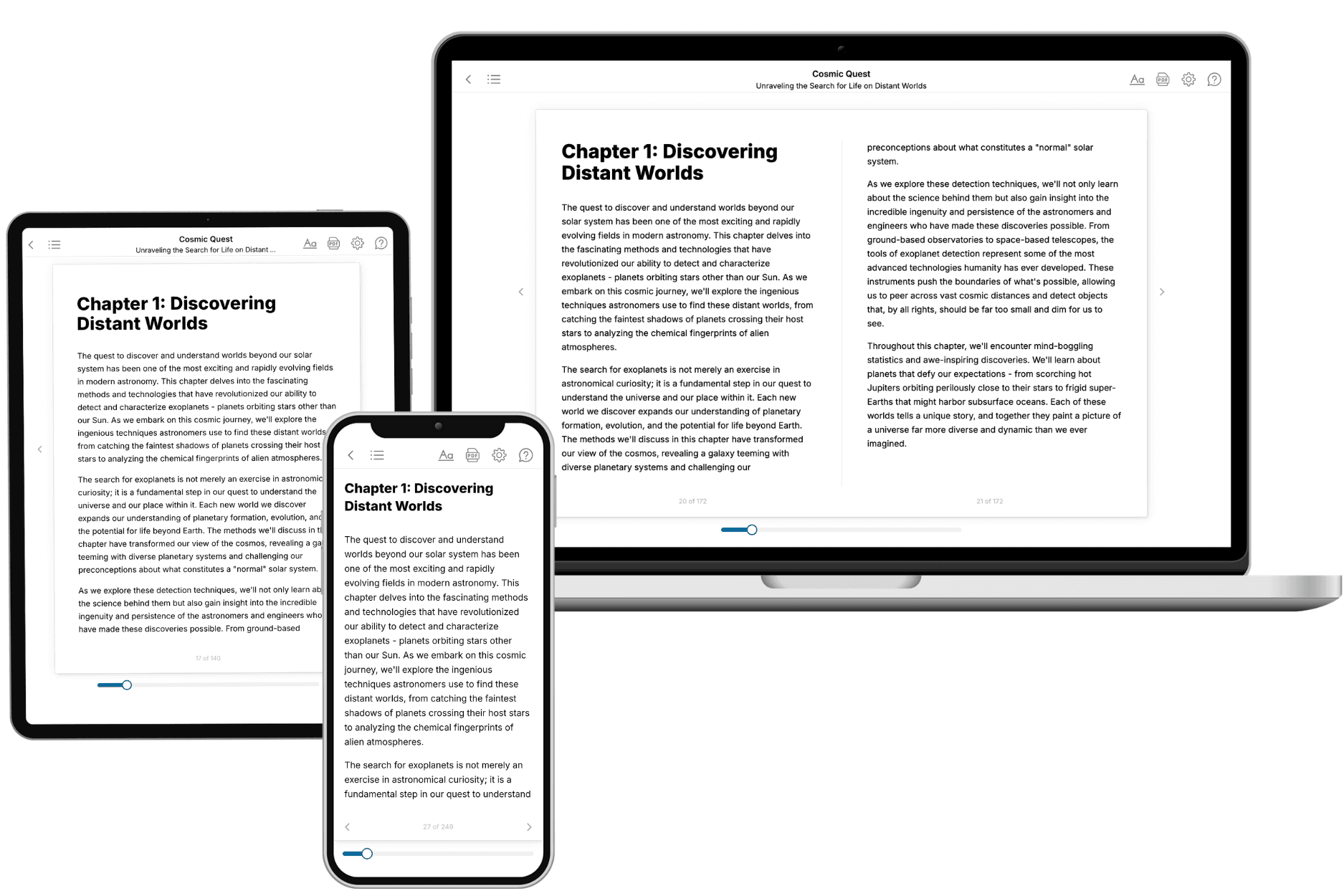
Your book is ready in 10 minutes. Read it online, download as EPUB or PDF, or send to Kindle.
Frequently asked questions
- What is TailoredRead?
TailoredRead creates complete, full-length nonfiction ebooks, written specifically for you. Tell us what you want to learn and why, and TailoredRead writes you a complete ebook on it, with charts, tables, and diagrams throughout. Read it online, on Kindle, or on any e-reader, or download it as a PDF or EPUB. Every book is written fresh the day you order it.
- How is the book tailored to me?
Before anything is written, you answer a few short questions about your goals, your background, and the topics you care about. Your book is then planned around your answers: written at your level, focused on your goals, and covering the topics you chose, instead of the one-size-fits-all book a store sells everyone.
- Will it read like generic AI content?
No. Your book isn't a chat transcript: it's planned chapter by chapter before a single word is written, told in a clear book voice, and explains ideas visually with charts, tables, and diagrams. After writing, every book goes through an editorial pass that polishes chapters so the book reads consistent from start to finish. Judge for yourself: browse thousands of sample books on our Explore Books page.
- How accurate is the content?
Our AI first checks whether your subject needs live research. Niche and fast-moving subjects are researched before writing, and the book plan and chapters are grounded in what it finds. After writing, every book goes through a quality pass that checks its facts and consistency, and researched books list their sources in a Notes section at the back.
- How long is the book?
You choose the length: Comprehensive (250-300 pages), Detailed (150-200 pages), Essential (70-100 pages), or Short (30-50 pages).
- Does the book include visuals?
Yes. Every book includes charts, tables, and diagrams: timelines, checklists, step-by-step guides, decision trees, comparison tables, matrices, and bar charts. A typical book includes dozens of these visual elements.
- Can I read it on Kindle? What formats can I download?
Yes. Every book can be read in our online reader or downloaded as a PDF or EPUB. The EPUB can be opened with Kindle, Apple Books, Kobo, and any e-reader. The Commercial and Author licenses also include an editable Word (DOCX) and Markdown download.
- How much does it cost?
About the price of a regular ebook. The exact price depends on your book's length and complexity, from $2 for the shortest books to $35 for the most comprehensive, and it's shown when you review your book, before you commit to anything. Each book is a one-time purchase, yours to keep, no subscription. Licenses that let you share, teach, or publish your book range from $35.99 to $49.99.
- Can I preview the book before purchasing?
Before you pay, you'll see what your book will cover: the title, a detailed description, the estimated length, and the complete chapter-by-chapter table of contents, so you know what you're getting before you decide. The full text itself is written after you purchase.
- How long does it take to create a book?
About 10 minutes. You can start reading the opening chapters while the rest is still being written.