The Art of Genuine Connection
Master the Skills That Make You Naturally Likeable and Effective in Every Relationship
Discover how to transform your relationships by developing the interpersonal skills that matter most.
191 pages9 chaptersJul 30, 2026Interpersonal Skills
About this book
This book guides you through understanding the core elements of genuine connection—from recognizing your own communication patterns to reading the subtle signals others send. You'll learn practical techniques for active listening, managing emotions in tense moments, and navigating disagreements without damaging relationships. Whether you're looking to strengthen friendships, improve workplace dynamics, or simply feel more confident in social situations, you'll find actionable strategies grounded in psychology and real-world experience. Each chapter builds on the last, moving from self-awareness to advanced relationship skills. By the end, you'll have a complete toolkit for creating authentic connections that last, all while staying true to who you are.
Table of contents
- IntroductionWhy Connection Matters More Than Ever, What You'll Learn in This Book, How to Use This GuideRead below
- Chapter 1: The Foundation: Understanding YourselfThe Role of Self-Awareness in Relationships, Identifying Your Communication Patterns, Clarifying Your Values and Emotional Triggers
- Chapter 2: The Power of Emotional IntelligenceUnderstanding Emotions: What They Are and Why They Matter, Recognizing Emotions in Yourself and Others, Managing Your Emotional Responses, Developing Genuine Empathy
- Chapter 3: Listening Like You Mean ItActive Listening: The Forgotten Skill, Overcoming Common Barriers to Listening, Practical Techniques for Better Listening
- Chapter 4: The Language of AuthenticitySpeaking Your Truth Without Harming Others, What Your Body Language Says About You, Mastering Tone, Pace, and Delivery, Why Vulnerability Is Actually a Strength
- Chapter 5: Building and Maintaining TrustThe Elements That Build Trust, Consistency and Reliability: The Trust Builders, Repairing Trust When It's Been Broken
- Chapter 6: Agreeableness Without Losing YourselfWhat Agreeableness Really Means, Setting Boundaries That Respect Both Parties, The Art of Saying No Without Guilt, Balancing Assertiveness with Consideration
- Chapter 7: Navigating Conflict with GraceReframing Conflict as an Opportunity, De-escalation Techniques That Work, Having Difficult Conversations Without Damage
- Chapter 8: Social Dynamics and Group InteractionsReading Social Cues and Group Dynamics, Communicating Effectively in Groups, Building Genuine Social Confidence, Networking Without Feeling Inauthentic
- Chapter 9: Deepening Relationships Over TimeHow Relationships Naturally Deepen, Creating Meaningful Moments Together, Maintaining Relationships Across Distance and Time
- ConclusionYour Journey Ahead, Final Reflections on Connection
- Further Reading and Resources
Introduction
Most people overestimate how much their words matter and underestimate how much everything else does. The tone behind a sentence, the pause before a response, the small act of remembering someone's name three weeks after meeting them — these are the things that determine whether a relationship grows or stalls. Connection is not a talent some people are born with. It is a set of learnable behaviors, and the research on this point is remarkably consistent. Studies in social psychology have repeatedly shown that the quality of a person's relationships is one of the strongest predictors of long-term wellbeing, professional success, and even physical health.[1]
That finding should be both encouraging and clarifying. If connection were purely a matter of personality, there would be little point in studying it. But because it depends on specific, repeatable behaviors, it becomes something you can actually work on. The person who listens well, who manages their reactions under pressure, who knows how to repair a relationship after a rupture — that person is not simply lucky or naturally gifted. They have developed skills, often without realizing it, through experience and reflection. This book makes that process deliberate.
The skills covered here are not about becoming someone you are not. They are not about performing warmth or engineering likability through tricks. The goal is something more durable: understanding the mechanics of genuine connection well enough that you can apply them consistently, even in situations that feel uncomfortable or unfamiliar. That means starting with yourself, moving outward to how you communicate, and eventually reaching the more complex territory of trust, conflict, and long-term relationship maintenance. Each layer builds on the one before it.
Why Connection Matters More Than Ever
Loneliness has become one of the more quietly urgent public health concerns of recent decades. In 2023, the U.S. Surgeon General issued an advisory describing loneliness and social isolation as a significant threat to public health, noting that lacking social connection carries health risks comparable to smoking up to 15 cigarettes a day.[2] That statistic is striking not because it is alarming, but because it reframes connection as something with real, measurable consequences — not just a nice-to-have quality of life feature.
At the same time, many people report feeling more connected than ever in a surface-level sense. Social media platforms, messaging apps, and video calls have made it easier to stay in contact with large numbers of people. Yet the depth of those contacts often remains shallow. There is a meaningful difference between being in frequent contact with someone and actually feeling understood by them. The first is easy to achieve with technology. The second requires something technology cannot provide on its own.
In professional contexts, the stakes are equally concrete. Research on workplace performance consistently finds that psychological safety — the sense that you can speak up, take risks, and be honest without fear of punishment — is one of the strongest predictors of team effectiveness.[3] Psychological safety is not created by policy or org charts. It is created by the quality of interpersonal interactions between people. That means the skills in this book are not just personally valuable. They are professionally consequential.
Consider two managers with identical technical expertise. One gives clear instructions but rarely acknowledges how team members are feeling. The other does the same work but also notices when someone seems overwhelmed, asks a follow-up question, and remembers what was said in a previous conversation. Over time, the second manager builds a team that communicates more openly, catches problems earlier, and retains people longer. The difference is not intelligence or strategy. It is interpersonal skill applied consistently.
Personal relationships follow the same logic. Friendships that last decades are not built on shared interests alone. They are built on a history of being present during difficult moments, of handling disagreements without cruelty, of showing up in small ways that accumulate into something significant. The skills that make those friendships possible are the same ones that make professional relationships work. They are transferable, and they are learnable.
None of this means that connection is simple or that the skills here will eliminate friction from your relationships. Friction is part of any real relationship. What changes when you develop these skills is your ability to navigate friction without it becoming damage. You become someone who can stay in a hard conversation rather than shutting down, who can repair a misunderstanding rather than letting it calcify, who can be honest without being harsh. That is what genuine connection actually looks like in practice.
What You'll Learn in This Book
This book is organized as a progression. It starts with the internal work — understanding yourself — and moves outward through communication, trust, conflict, and social dynamics before arriving at the long-term practices that sustain relationships over time. Each chapter addresses a distinct skill set, but they are designed to reinforce each other. The Self-Awareness you develop early on will make the Emotional Intelligence work in later chapters more effective. The Active Listening techniques you practice will make the Conflict Resolution strategies easier to apply.
Here is a brief map of what each section covers:
- Self-Awareness and Communication Patterns: Before you can connect with others, you need a clear picture of how you currently show up in relationships. This means examining your default Communication Patterns, identifying your Personal Values, and understanding your Emotional Triggers — the situations and behaviors that reliably pull you off balance.
- Emotional Intelligence: Emotion Recognition, Emotional Regulation, and Empathy are not abstract virtues. They are specific skills with specific techniques. This section covers how to read emotional signals accurately, how to manage your own reactions under pressure, and how to develop genuine Empathy rather than a performance of it.
- Active Listening: Most people listen to respond, not to understand. Active Listening is a discipline that changes that default. This section covers the most common Listening Barriers, the techniques that overcome them, and the practice of Reflective Listening that makes people feel genuinely heard.
- Authentic Communication: Authentic Communication covers how to express yourself honestly without causing unnecessary harm, how Body Language and Vocal Delivery either support or undermine your message, and why Vulnerability — handled well — creates deeper connection than polished self-presentation ever could.
- Trust: Trust is built through behavior, not declarations. This section examines the specific behaviors that build Trust over time, the role of Reliability and Accountability, and the structured process of Trust Repair after a rupture.
- Agreeableness and Boundary-Setting: Being considerate and being a pushover are not the same thing. This section explores what genuine Agreeableness looks like, how to set boundaries that respect both parties, and how to practice Assertiveness without sacrificing warmth.
- Conflict Reframing and De-escalation: Conflict is not the enemy of connection. Avoidance is. This section covers Conflict Reframing, De-escalation techniques, and the structure of Difficult Conversations that resolve rather than inflame.
- Social Dynamics and Group Communication: Reading a room, contributing effectively in group settings, and building Social Confidence are skills that operate differently from one-on-one interaction. This section addresses those differences directly, including how to approach Authentic Networking without feeling transactional.
- Relationship Deepening over time: The final section looks at how relationships naturally evolve, how to create Meaningful Moments that accelerate intimacy, and how to maintain connections across distance and changing life circumstances.
Each chapter includes concrete examples, practical frameworks, and specific actions you can take immediately. The goal is not to give you a theory of connection but to give you a working toolkit. Theory without application is just interesting reading. This book is designed to be used.
One thing worth being direct about: this is not a book about becoming more popular or more persuasive in a manipulative sense. The skills here are oriented toward genuine connection, which means they require honesty, including honesty about your own limitations and blind spots. Some of what you encounter will be uncomfortable. That discomfort is usually a sign that you are working on something real.
The research base for these skills draws from social psychology, attachment theory, organizational behavior, and communication studies. Where specific studies or findings are cited, they are chosen because they are well-replicated and practically relevant, not because they are dramatic or counterintuitive. The goal is accuracy, not novelty.
You do not need to read this book cover to cover in sequence, though that approach will give you the most coherent experience. If a particular chapter addresses something you are actively struggling with, starting there is entirely reasonable. The cross-references throughout the text will point you toward related material when it is relevant.
How to Use This Guide
Reading about interpersonal skills and actually developing them are two different activities. The gap between them is practice. This book is written to support practice, not just comprehension. That means the most useful way to engage with it is actively — pausing to reflect on examples, trying techniques in real conversations, and returning to sections when a specific situation calls for them.
A few practical suggestions for getting the most out of this material:
- Keep a reflection journal. After reading each chapter, spend five to ten minutes writing about how the concepts apply to a specific relationship or situation in your life. Generalization is the enemy of learning. The more specific you can be — naming a real person, a real conversation, a real pattern — the more useful the reflection will be.
- Choose one skill per week to practice deliberately. Trying to apply everything at once is a reliable way to apply nothing well. Pick one technique from a chapter and focus on it in your actual interactions for several days before moving to the next.
- Notice your resistance. If a particular concept or exercise feels uncomfortable or unnecessary, that reaction is worth examining. Resistance often points toward the areas where growth is most available.
- Revisit chapters after significant interactions. If you have a difficult conversation, a conflict, or a moment where a relationship deepens unexpectedly, go back to the relevant chapter and read it again with that experience in mind. The material will land differently.
- Find a practice partner if possible. Some of the techniques here — particularly around Active Listening and Difficult Conversations — are much easier to develop with someone who is also working on them. A trusted friend, colleague, or partner who is willing to give honest feedback can accelerate your progress significantly.
The structure of each chapter follows a consistent pattern. Concepts are introduced with enough context to understand why they matter, then illustrated with concrete examples, then broken down into specific, actionable steps. Where frameworks or templates are provided, they are meant as starting points, not scripts. Genuine connection cannot be scripted. What frameworks do is give you a structure to fall back on when you are under pressure and your instincts are not yet reliable.
One common mistake people make when working on interpersonal skills is treating them as performance. They read about Active Listening and then try to perform listening — nodding at the right moments, repeating phrases back — without actually being present. The techniques in this book are only useful when they are grounded in genuine attention and care. If the underlying intention is missing, the techniques will feel hollow to the other person, and they will be right to feel that way.
This brings up a point about authenticity that runs through the entire book. Authenticity does not mean saying whatever you feel, whenever you feel it, without regard for impact. That is not authenticity; it is impulsiveness. Authentic Communication means expressing what is true for you in a way that is honest, considered, and respectful of the other person's experience. That balance is a skill, and it takes practice to find.
The people who tend to get the most out of material like this are not the ones who are worst at connecting with others. They are often people who are already reasonably good at it but sense that something is missing — that their relationships could be deeper, their communication clearer, their responses to conflict more skillful. If that description fits, you are in the right place. The gap between good and genuinely excellent at connection is often smaller than it appears, and the specific skills that close it are exactly what this book covers.
There is also something worth saying about pace. Interpersonal skills develop over months and years, not days. You will not finish this book and immediately find that every relationship in your life has transformed. What you will find, if you engage with the material seriously, is that specific interactions start to go differently. A conversation that would have escalated stays calm. A moment of vulnerability that you would have avoided creates unexpected closeness. A boundary you would have failed to set gets communicated clearly and without guilt. Those moments accumulate. Over time, they change the texture of your relationships in ways that are hard to attribute to any single technique but are unmistakably real.
That accumulation is what genuine connection actually looks like from the inside. Not a dramatic transformation, but a steady shift in how you show up — more present, more honest, more capable of staying in the difficult moments that matter most. The skills that make that possible are what the rest of this book is about.
This is the end of the free sample. The full book has 9 chapters.
Want this book written for you?
Tell us your goals and background, and get your own version of this book, tailored by AI to you.


Benefits of AI-tailored books
- Read one book, not ten:
- all the Interpersonal Skills knowledge you need, gathered into a single book.
- Save days of learning:
- tell us your goals, choose your topics, and the whole book is built around them.
- Learn effortlessly:
- Interpersonal Skills book written for your specific background and expertise.
- Understand at a glance:
- includes charts, tables, timelines, checklists, decision trees, and more.
- Stay current:
- written the day you order it, not years ago.
- Trust what you read:
- every book is checked for accuracy, with real research when your subject needs it.
Create your unique book in 3 steps
- 1. Select your focus
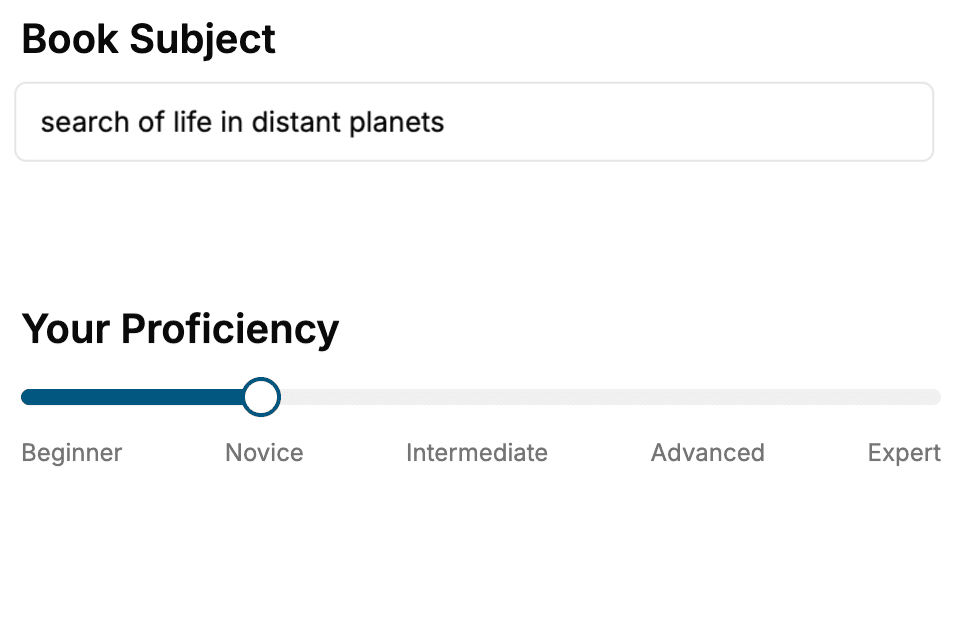
Select the focus of your Interpersonal Skills book and share your background
- 2. Personalize your book
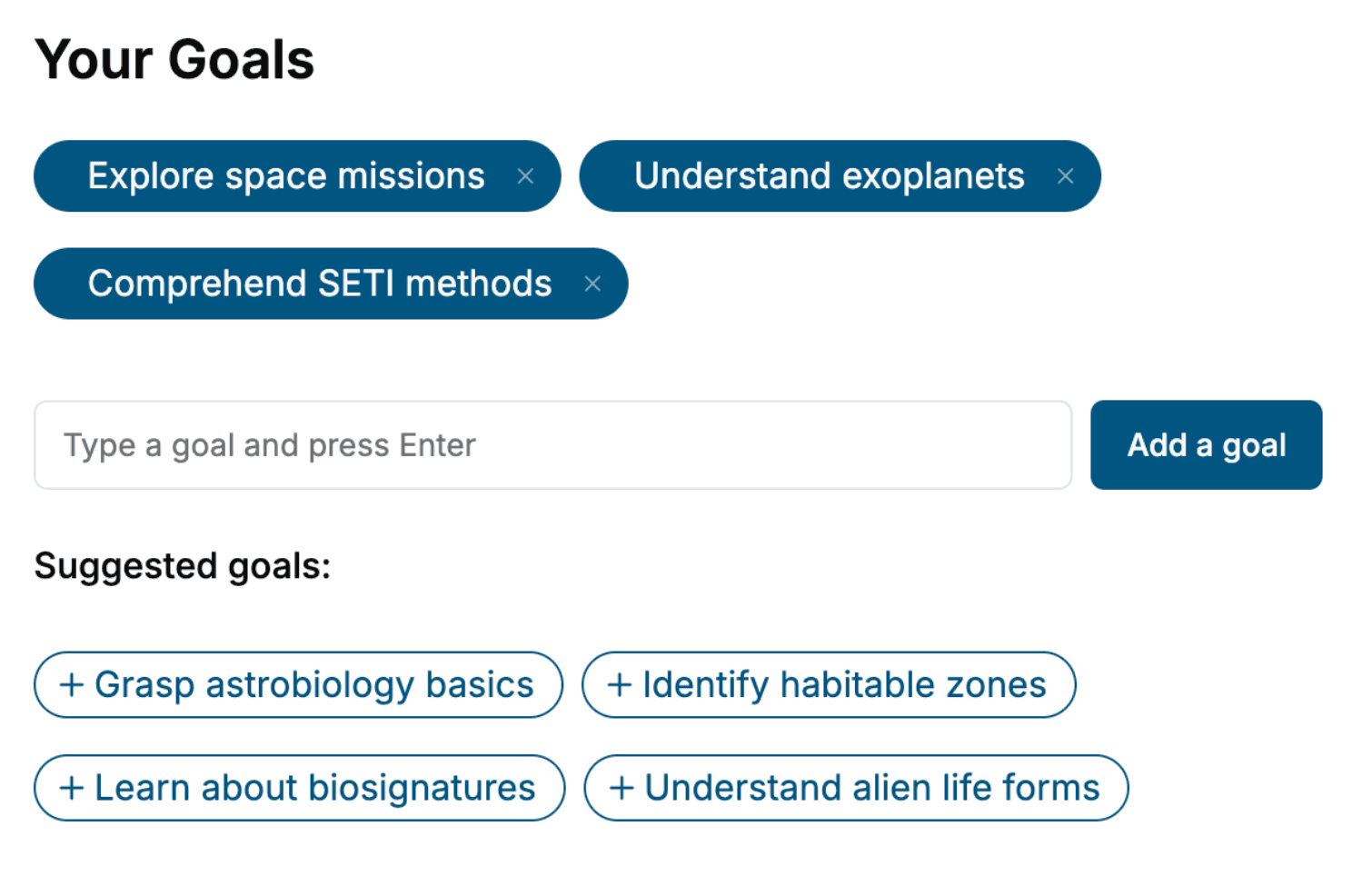
Specify your goals and choose sub-topics to include
- 3. Get your tailored book
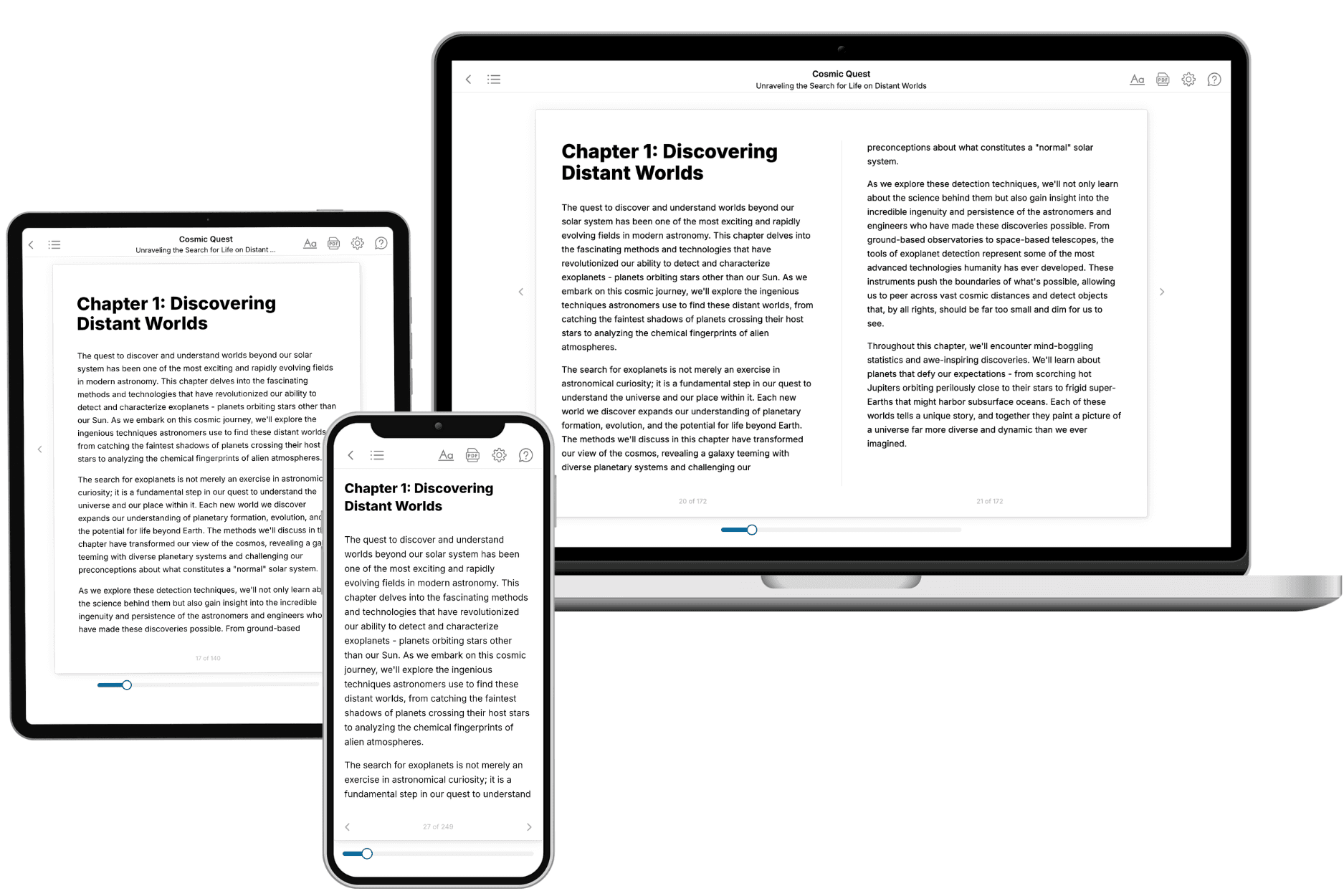
Your book is ready in 10 minutes. Read it online, download as EPUB or PDF, or send to Kindle.
Frequently asked questions
- What is TailoredRead?
TailoredRead creates complete, full-length nonfiction ebooks, written specifically for you. Tell us what you want to learn and why, and TailoredRead writes you a complete ebook on it, with charts, tables, and diagrams throughout. Read it online, on Kindle, or on any e-reader, or download it as a PDF or EPUB. Every book is written fresh the day you order it.
- How is the book tailored to me?
Before anything is written, you answer a few short questions about your goals, your background, and the topics you care about. Your book is then planned around your answers: written at your level, focused on your goals, and covering the topics you chose, instead of the one-size-fits-all book a store sells everyone.
- Will it read like generic AI content?
No. Your book isn't a chat transcript: it's planned chapter by chapter before a single word is written, told in a clear book voice, and explains ideas visually with charts, tables, and diagrams. After writing, every book goes through an editorial pass that polishes chapters so the book reads consistent from start to finish. Judge for yourself: browse thousands of sample books on our Explore Books page.
- How accurate is the content?
Our AI first checks whether your subject needs live research. Niche and fast-moving subjects are researched before writing, and the book plan and chapters are grounded in what it finds. After writing, every book goes through a quality pass that checks its facts and consistency, and researched books list their sources in a Notes section at the back.
- How long is the book?
You choose the length: Comprehensive (250-300 pages), Detailed (150-200 pages), Essential (70-100 pages), or Short (30-50 pages).
- Does the book include visuals?
Yes. Every book includes charts, tables, and diagrams: timelines, checklists, step-by-step guides, decision trees, comparison tables, matrices, and bar charts. A typical book includes dozens of these visual elements.
- Can I read it on Kindle? What formats can I download?
Yes. Every book can be read in our online reader or downloaded as a PDF or EPUB. The EPUB can be opened with Kindle, Apple Books, Kobo, and any e-reader. The Commercial and Author licenses also include an editable Word (DOCX) and Markdown download.
- How much does it cost?
About the price of a regular ebook. The exact price depends on your book's length and complexity, from $2 for the shortest books to $35 for the most comprehensive, and it's shown when you review your book, before you commit to anything. Each book is a one-time purchase, yours to keep, no subscription. Licenses that let you share, teach, or publish your book range from $35.99 to $49.99.
- Can I preview the book before purchasing?
Before you pay, you'll see what your book will cover: the title, a detailed description, the estimated length, and the complete chapter-by-chapter table of contents, so you know what you're getting before you decide. The full text itself is written after you purchase.
- How long does it take to create a book?
About 10 minutes. You can start reading the opening chapters while the rest is still being written.