The Art of Hainanese Chicken Rice
Master the Iconic Dish of Singapore and the Pacific Rim
Most home cooks believe Hainanese chicken rice is simple—just boil chicken and serve it over rice.
222 pages10 chaptersNov 21, 2025Asian Cooking
About this book
The reality is far more nuanced. This iconic Singaporean dish represents a masterclass in technique, flavor balance, and cultural fusion that defines Pacific Rim cooking. From the precise temperature control needed to poach chicken to silky perfection, to infusing rice with aromatics and chicken fat, every element demands attention. This book reveals the secrets behind restaurant-quality Hainanese chicken rice, exploring how Chinese culinary traditions transformed in Southeast Asia to create something entirely new. You'll learn the science of poaching, the art of rice preparation, and how to craft condiment sauces that elevate the entire dish. Beyond technique, discover the dish's fascinating history, its role in Singapore's multicultural identity, and how it varies across the Pacific Rim. Whether you're seeking to replicate your favorite hawker stall at home or deepen your understanding of Asian cuisine, this guide provides the knowledge and confidence to master one of the world's most beloved dishes.
Table of contents
- IntroductionWhy This Dish Matters, What You'll Learn in This Book, How to Use This GuideRead below
- Chapter 1: The History and Cultural Significance of Hainanese Chicken RiceOrigins in Hainan Province, Migration to Singapore and Southeast Asia, A Symbol of Multicultural Singapore, Global Influence and Modern Relevance
- Chapter 2: Understanding the Three Core ComponentsThe Poached Chicken: Foundation of Flavor, The Fragrant Rice: More Than a Base, The Condiment Sauces: Flavor Multipliers, Balance and Harmony on the Plate
- Chapter 3: Selecting and Preparing Your ChickenChoosing the Right Chicken, Preparation Techniques and Trussing, Brining and Seasoning Strategies, Quality Indicators and Sourcing
- Chapter 4: The Science and Art of PoachingTemperature Control and Precision, Crafting the Perfect Poaching Liquid, Timing and Testing for Doneness, Resting and Managing Carryover Cooking
- Chapter 5: Mastering the Rice: Selection, Preparation, and CookingRice Varieties and Their Characteristics, Washing and Soaking Techniques, Cooking Methods: Stovetop, Rice Cooker, and Alternatives, Infusing Aromatics and Chicken Fat
- Chapter 6: Creating Essential Condiment SaucesGinger Sauce: Pungent and Aromatic, Chili Sauce: Heat and Complexity, Soy Sauce Variations and Depth, Balancing Flavors and Adjusting to Taste
- Chapter 7: Regional Variations Across the Pacific RimSingapore Style: The Classic Standard, Malaysian Variations and Influences, Thai Adaptations and Fusion Elements, Other Regional Styles and Modern Interpretations
- Chapter 8: Plating, Presentation, and ServingTraditional Plating Techniques, Modern Presentations and Creativity, Garnishes and Accompaniments, Serving Temperature and Timing
- Chapter 9: Troubleshooting Common IssuesAddressing Dry or Overcooked Chicken, Fixing Mushy or Undercooked Rice, Correcting Bland or Unbalanced Flavors, Managing Timing and Coordination
- Chapter 10: Hainanese Chicken Rice in Pacific Rim CuisineCore Principles of Pacific Rim Cooking, Ingredient Philosophy and Sourcing, Fusion Possibilities and Modern Adaptations
- ConclusionYour Journey to Mastery, Continuing Your Culinary Exploration
- Glossary of Terms
- Further Reading and Resources
Introduction
Walk into any hawker center in Singapore, and you'll encounter a dish that defines the nation's culinary identity. Hainanese chicken rice appears deceptively simple: tender poached chicken, fragrant rice, and three condiment sauces arranged on a plate. Yet this apparent simplicity masks layers of technique, cultural history, and culinary philosophy that have captivated food lovers across the Pacific Rim for generations. What looks like a straightforward meal represents one of the most technically demanding dishes in Southeast Asian cuisine, requiring precision, patience, and an understanding of how flavors work together to create something greater than the sum of its parts.
The challenge facing home cooks isn't a lack of recipes—countless versions exist online and in cookbooks. The real obstacle is understanding why each step matters and how small adjustments affect the final result. Many attempt this dish only to produce dry chicken, bland rice, or unbalanced sauces that fail to capture the magic they've experienced in restaurants. The difference between mediocre and exceptional Hainanese chicken rice lies not in secret ingredients or expensive equipment, but in mastering fundamental techniques that professional cooks have refined over decades. Temperature control, timing, and attention to detail transform ordinary ingredients into an extraordinary meal.
This book takes you beyond basic recipes to explore the science, culture, and artistry behind Hainanese chicken rice. You'll discover how Chinese immigrants adapted their homeland cooking to Southeast Asian ingredients and tastes, creating a dish that became synonymous with Singapore itself. More importantly, you'll learn the practical skills needed to recreate restaurant-quality results in your own kitchen. Whether you're drawn to this dish through travel memories, cultural curiosity, or a desire to expand your cooking repertoire, the following chapters provide a comprehensive roadmap to mastery. The journey requires practice and patience, but the rewards—both culinary and cultural—make every effort worthwhile.
Why This Dish Matters
Hainanese chicken rice occupies a unique position in global cuisine as both a national dish and a cultural ambassador. In Singapore, it appears everywhere from humble hawker stalls to upscale restaurants, transcending class boundaries and bringing people together across ethnic and economic divides. The dish represents Singapore's multicultural identity—Chinese techniques, Malay influences, and a distinctly Singaporean sensibility that values quality, efficiency, and flavor balance. When Singapore's government sought to promote the nation's culinary heritage internationally, Hainanese chicken rice stood alongside chili crab and laksa as defining dishes that tell the story of a young nation built on immigration, adaptation, and innovation.
Beyond its cultural significance, this dish exemplifies principles that define excellent cooking across cuisines. The poaching technique demonstrates how gentle heat and precise timing preserve moisture and texture in protein. The rice preparation shows how a supporting element can become a star through proper treatment and flavor infusion. The condiment sauces illustrate how small amounts of intensely flavored accompaniments can transform a dish without overwhelming it. These aren't just lessons for making chicken rice—they're fundamental cooking skills that apply to countless other preparations. Master this dish, and you've developed techniques that will improve everything you cook.
The dish also serves as a gateway to understanding Pacific Rim cuisine more broadly. This culinary region, stretching from East Asia through Southeast Asia and across the Pacific, shares common threads: respect for ingredient quality, emphasis on balance rather than excess, and a willingness to adapt and fuse traditions. Hainanese chicken rice embodies all these characteristics. It takes a simple Hainanese preparation and transforms it through Southeast Asian aromatics and condiments. It prioritizes the natural flavor of quality chicken rather than masking it with heavy sauces. It achieves complexity through layering subtle flavors rather than adding more ingredients. Understanding this dish means understanding a broader culinary philosophy that has influenced cooking worldwide.
From a practical standpoint, Hainanese chicken rice offers home cooks an achievable challenge with impressive results. Unlike dishes requiring specialized equipment or hard-to-find ingredients, this preparation uses accessible components: chicken, rice, ginger, garlic, and basic condiments. The techniques, while demanding precision, don't require years of training to execute successfully. A home cook with intermediate skills can produce restaurant-quality results after understanding the principles and practicing the methods. This accessibility makes the dish an ideal vehicle for developing your cooking abilities while creating something genuinely delicious that will impress family and friends.
The dish's versatility adds to its appeal. While traditional preparations follow established patterns, the basic framework accommodates personal preferences and creative variations. Some cooks prefer their chicken served at room temperature, others piping hot. Rice can be cooked with varying amounts of chicken fat depending on dietary preferences. Condiment sauces can be adjusted for heat levels, sweetness, or acidity. Regional variations across Singapore, Malaysia, Thailand, and beyond demonstrate how the core concept adapts to local tastes while maintaining its essential character. This flexibility means you can make the dish your own while respecting its traditions.
Finally, Hainanese chicken rice matters because it challenges common assumptions about what makes food special. In an era when elaborate presentations and exotic ingredients often dominate culinary conversations, this dish reminds us that simplicity executed with skill can be more satisfying than complexity for its own sake. The best versions don't rely on expensive ingredients or flashy techniques—they succeed through careful attention to fundamentals. This philosophy resonates beyond the kitchen, offering lessons about craftsmanship, patience, and the value of doing simple things exceptionally well. Learning to make this dish means embracing these values and applying them to your cooking practice.
Understanding why this dish matters provides context for the detailed technical instruction that follows. You're not just learning a recipe—you're connecting with a culinary tradition that spans continents and generations. You're developing skills that will serve you throughout your cooking journey. You're participating in a living food culture that continues to evolve while honoring its roots. This broader perspective transforms the learning process from mechanical recipe-following into meaningful engagement with food, culture, and technique. Keep this significance in mind as you work through the chapters ahead, and you'll find deeper satisfaction in both the process and the results.
What You'll Learn in This Book
This book provides comprehensive instruction organized around the three core components that define Hainanese chicken rice: the poached chicken, the fragrant rice, and the condiment sauces. Each component receives detailed attention, breaking down techniques into manageable steps while explaining the science behind each method. You'll learn not just what to do, but why each step matters and how to adjust when things don't go according to plan. This approach builds genuine understanding rather than rote memorization, enabling you to troubleshoot problems and adapt techniques to your specific kitchen conditions and equipment.
The chicken preparation chapters cover everything from selecting the right bird to achieving perfectly tender, juicy meat with silky skin. You'll discover why temperature control matters more than cooking time, how to test for doneness without cutting into the meat, and what to do if your chicken isn't quite right. The instruction includes specific temperature ranges, timing guidelines for different chicken sizes, and techniques for managing the ice bath that stops cooking and creates the characteristic texture. You'll also learn about different chicken varieties, how to source quality birds, and whether brining or other pre-treatments improve results. These chapters transform chicken poaching from guesswork into a reliable, repeatable process.
Rice preparation receives equal attention, challenging the assumption that rice is merely a neutral base for the chicken. You'll learn which rice varieties work best and why, how washing and soaking affect texture, and the critical technique of cooking rice in chicken stock with aromatics and rendered chicken fat. The book covers multiple cooking methods—stovetop, rice cooker, and alternatives—with specific instructions for each approach. You'll discover how to achieve the ideal texture: grains that are separate yet slightly sticky, with a subtle sheen from the fat and deep flavor from the stock. Troubleshooting guidance addresses common problems like mushy, dry, or bland rice, ensuring consistent results regardless of your equipment or experience level.
The condiment sauce chapters provide detailed recipes and techniques for the three essential accompaniments: ginger-scallion sauce, chili sauce, and dark soy sauce. Each sauce receives thorough treatment, including ingredient selection, preparation methods, and flavor balancing. You'll learn how to adjust heat levels, acidity, and sweetness to match your preferences while maintaining the character that makes each sauce distinctive. The instruction explains how these sauces work together to create flavor complexity, why they're prepared fresh rather than purchased, and how to store them if you need to make them ahead. These chapters reveal how condiments transform the dish from good to exceptional.
Beyond core techniques, the book explores the dish's cultural context and regional variations. Historical chapters trace Hainanese chicken rice from its origins in Hainan Province through its transformation in Singapore and spread across Southeast Asia. You'll discover how Chinese immigrants adapted their cooking to new ingredients and influences, creating something distinctly different from the original Hainanese preparation. Regional variation chapters examine how the dish changes across Singapore, Malaysia, Thailand, and other locations, highlighting different approaches to chicken preparation, rice cooking, and sauce composition. This cultural and historical context enriches your understanding and appreciation of what you're cooking.
Practical chapters address plating, presentation, and serving considerations that affect the dining experience. You'll learn traditional plating techniques used in hawker stalls and restaurants, modern presentation approaches for home entertaining, and how to coordinate timing so everything reaches the table at the proper temperature. Garnish and accompaniment guidance covers the cucumber slices, cilantro, and other elements that complete the plate. These chapters ensure that your carefully prepared components come together into a cohesive, attractive presentation that does justice to your cooking efforts.
Troubleshooting receives dedicated attention throughout the book, with a comprehensive chapter addressing common problems and their solutions. Whether you're dealing with dry chicken, bland rice, unbalanced sauces, or timing challenges, you'll find specific guidance for diagnosing issues and correcting them. This practical problem-solving approach acknowledges that cooking doesn't always go perfectly and provides the knowledge needed to recover from mistakes or adjust for unexpected circumstances. The troubleshooting instruction builds confidence by showing that most problems have straightforward solutions once you understand their causes.
The final chapters connect Hainanese chicken rice to broader Pacific Rim culinary principles, exploring how this dish exemplifies regional cooking philosophy. You'll discover common threads that run through Pacific Rim cuisine: ingredient quality, flavor balance, simplicity, and cultural fusion. The book examines how these principles apply beyond chicken rice, suggesting ways to incorporate them into your broader cooking practice. Fusion possibilities and modern adaptations show how contemporary cooks reinterpret the dish while respecting its traditions. This broader perspective helps you understand Hainanese chicken rice not as an isolated recipe but as part of a living culinary tradition that continues to evolve.
How to Use This Guide
This book is designed for progressive learning, with each chapter building on concepts and techniques introduced earlier. If you're new to Hainanese chicken rice, start by reading through the entire book before attempting to cook. This initial read-through provides context and helps you understand how the components fit together. Pay particular attention to the chapters on chicken poaching and rice preparation, as these techniques form the foundation of the dish. Once you've absorbed the overall approach, return to the beginning and work through the recipes systematically, starting with individual components before attempting the complete dish. This methodical approach builds skills gradually and prevents the overwhelm that comes from trying to master everything simultaneously.
For cooks with some experience making Hainanese chicken rice, this book serves as a reference for refining technique and troubleshooting problems. Use the table of contents to navigate directly to chapters addressing your specific challenges or interests. If your chicken consistently comes out dry, focus on the poaching chapter and its detailed temperature guidance. If your rice lacks flavor, study the rice preparation chapter's sections on stock concentration and aromatics. The troubleshooting chapter provides quick reference for common issues, with cross-references to relevant technique sections for deeper understanding. This targeted approach allows you to improve specific aspects of your cooking without revisiting material you've already mastered.
The book's structure supports multiple cooking approaches and skill levels. Each major technique chapter includes:
- Foundational concepts explaining the science and principles behind the technique
- Step-by-step instructions with specific temperatures, times, and visual cues
- Equipment recommendations covering both essential tools and helpful alternatives
- Ingredient guidance for selecting quality components and making substitutions
- Troubleshooting tips addressing common problems and their solutions
- Variation suggestions for adapting techniques to personal preferences
Practice recommendations appear throughout the book, suggesting which techniques to master before moving forward. Consider preparing components separately before attempting the complete dish. Make the condiment sauces first—they're relatively simple and provide immediate feedback about flavor balancing. Next, practice poaching chicken until you consistently achieve tender, juicy results. Then work on rice preparation, which requires attention but less precision than chicken poaching. Once you're comfortable with each component individually, bring them together for the complete dish. This component-based practice builds confidence and ensures that you're not troubleshooting multiple problems simultaneously during your first complete preparation.
Equipment notes throughout the book acknowledge that home kitchens vary widely in their tools and capabilities. The recipes provide guidance for both well-equipped and minimally-equipped kitchens, with alternatives when specialized tools aren't available. A reliable thermometer is the single most important tool for success with this dish, enabling precise temperature control during chicken poaching. Beyond that, most preparations use standard kitchen equipment: pots, pans, a rice cooker or heavy-bottomed pot, and basic utensils. Where specific equipment significantly improves results, the book explains why and suggests budget-friendly options. This practical approach ensures that equipment limitations don't prevent you from achieving excellent results.
Ingredient sourcing receives attention throughout, with guidance for finding quality components and making appropriate substitutions when necessary. The book acknowledges that ingredient availability varies by location and provides alternatives that maintain the dish's character while accommodating what's accessible in your area. For example, if you can't find pandan leaves for rice preparation, the book explains how to adjust aromatics to compensate. If specific chili varieties aren't available, you'll learn how to blend commonly available chilies to approximate the desired flavor profile. This flexible approach respects traditional preparations while recognizing the practical realities of home cooking in diverse locations.
Timing and planning guidance helps you coordinate the multiple components that come together in the finished dish. A typical preparation timeline looks like this:
- Day before (optional): Prepare condiment sauces and refrigerate
- 2-3 hours before serving: Begin chicken poaching process
- 1 hour before serving: Start rice preparation
- 30 minutes before serving: Finish chicken, prepare garnishes
- At serving time: Plate components, bring to table
The book encourages experimentation within a framework of understanding. Once you've mastered the traditional preparation and understand why each technique matters, you're equipped to make informed variations. Try different chicken varieties, adjust sauce heat levels, experiment with rice aromatics, or explore regional variations described in later chapters. This creative exploration deepens your engagement with the dish while building broader cooking skills. However, master the fundamentals first—understanding the rules enables you to break them intelligently rather than randomly. The difference between successful innovation and disappointing results often lies in knowing which elements are essential and which are flexible.
Finally, approach this learning process with patience and realistic expectations. Hainanese chicken rice rewards practice and attention to detail, but it's not a dish you'll perfect on your first attempt. Each preparation teaches something new about timing, temperature, or flavor balance. Keep notes about what works and what doesn't, adjusting your approach based on results. Celebrate improvements rather than expecting immediate perfection. The journey toward mastery is itself rewarding, building skills and understanding that extend far beyond this single dish. With each attempt, you'll gain confidence and capability, moving steadily toward the restaurant-quality results that make this dish so beloved across the Pacific Rim and beyond.
This is the end of the free sample. The full book has 10 chapters.
Want this book written for you?
Tell us your goals and background, and get your own version of this book, tailored by AI to you.


Benefits of AI-tailored books
- Read one book, not ten:
- all the Asian Cooking knowledge you need, gathered into a single book.
- Save days of learning:
- tell us your goals, choose your topics, and the whole book is built around them.
- Learn effortlessly:
- Asian Cooking book written for your specific background and expertise.
- Understand at a glance:
- includes charts, tables, timelines, checklists, decision trees, and more.
- Stay current:
- written the day you order it, not years ago.
- Trust what you read:
- every book is checked for accuracy, with real research when your subject needs it.
Create your unique book in 3 steps
- 1. Select your focus
Select the focus of your Asian Cooking book and share your background
- 2. Personalize your book
Specify your goals and choose sub-topics to include
- 3. Get your tailored book
Your book is ready in 10 minutes. Read it online, download as EPUB or PDF, or send to Kindle.


Frequently asked questions
- What is TailoredRead?
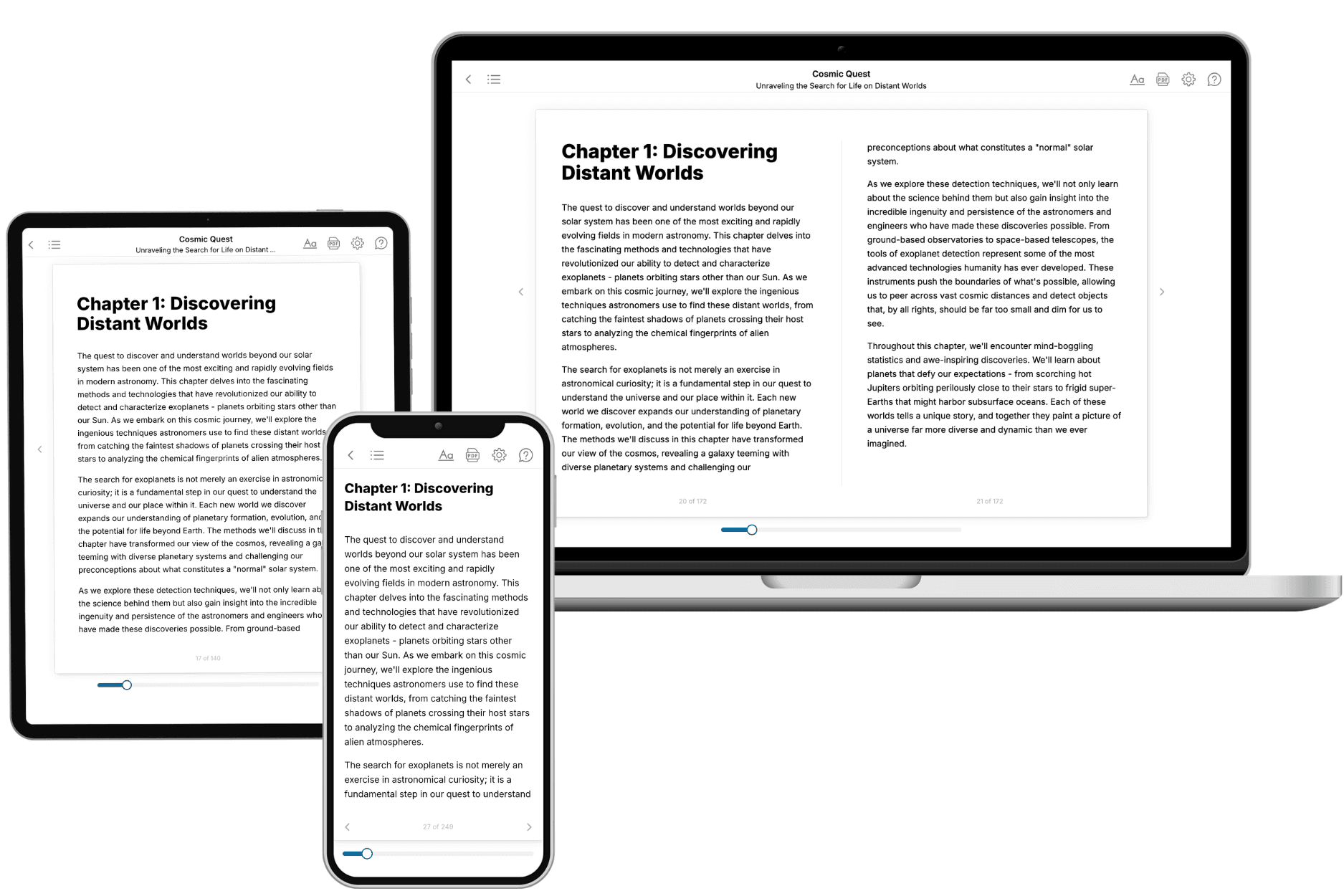
TailoredRead creates complete, full-length nonfiction ebooks, written specifically for you. Tell us what you want to learn and why, and TailoredRead writes you a complete ebook on it, with charts, tables, and diagrams throughout. Read it online, on Kindle, or on any e-reader, or download it as a PDF or EPUB. Every book is written fresh the day you order it.
- How is the book tailored to me?
Before anything is written, you answer a few short questions about your goals, your background, and the topics you care about. Your book is then planned around your answers: written at your level, focused on your goals, and covering the topics you chose, instead of the one-size-fits-all book a store sells everyone.
- Will it read like generic AI content?
No. Your book isn't a chat transcript: it's planned chapter by chapter before a single word is written, told in a clear book voice, and explains ideas visually with charts, tables, and diagrams. After writing, every book goes through an editorial pass that polishes chapters so the book reads consistent from start to finish. Judge for yourself: browse thousands of sample books on our Explore Books page.
- How accurate is the content?
Our AI first checks whether your subject needs live research. Niche and fast-moving subjects are researched before writing, and the book plan and chapters are grounded in what it finds. After writing, every book goes through a quality pass that checks its facts and consistency, and researched books list their sources in a Notes section at the back.
- How long is the book?
You choose the length: Comprehensive (250-300 pages), Detailed (150-200 pages), Essential (70-100 pages), or Short (30-50 pages).
- Does the book include visuals?
Yes. Every book includes charts, tables, and diagrams: timelines, checklists, step-by-step guides, decision trees, comparison tables, matrices, and bar charts. A typical book includes dozens of these visual elements.
- Can I read it on Kindle? What formats can I download?
Yes. Every book can be read in our online reader or downloaded as a PDF or EPUB. The EPUB can be opened with Kindle, Apple Books, Kobo, and any e-reader. The Commercial and Author licenses also include an editable Word (DOCX) and Markdown download.
- How much does it cost?
About the price of a regular ebook. The exact price depends on your book's length and complexity, from $2 for the shortest books to $35 for the most comprehensive, and it's shown when you review your book, before you commit to anything. Each book is a one-time purchase, yours to keep, no subscription. Licenses that let you share, teach, or publish your book range from $35.99 to $49.99.
- Can I preview the book before purchasing?
Before you pay, you'll see what your book will cover: the title, a detailed description, the estimated length, and the complete chapter-by-chapter table of contents, so you know what you're getting before you decide. The full text itself is written after you purchase.
- How long does it take to create a book?
About 10 minutes. You can start reading the opening chapters while the rest is still being written.