The Art of Handmade Pasta
Master Traditional Techniques and Create Restaurant-Quality Pasta at Home
Most home cooks struggle with pasta making because they treat it as a rigid recipe rather than a craft that requires understanding the fundamentals.
176 pages8 chaptersApr 21, 2026Pasta Cooking
About this book
This book teaches you the principles behind fresh pasta creation, moving beyond guesswork to give you the confidence to make perfect pasta every time. You'll discover why traditional Italian techniques work, how to select the right flour for different pasta types, and the exact steps to develop silky dough by hand or machine. Learn to shape classic pasta forms like tagliatelle, pappardelle, and ravioli, then explore regional variations from across Italy. This guide covers everything from ingredient selection and dough hydration to drying, storage, and pairing your homemade pasta with complementary sauces. Whether you're making simple egg pasta or experimenting with specialty doughs, you'll gain the knowledge and skills to create authentic, restaurant-quality pasta that impresses family and friends.
Table of contents
- IntroductionWhy Fresh Pasta Matters, Pasta Making as a Craft, How to Use This BookRead below
- Chapter 1: The Fundamentals of PastaA Brief History of Pasta, Understanding Pasta Types and Categories, The Science Behind Pasta Making, Essential Equipment and Tools
- Chapter 2: Selecting Your IngredientsChoosing the Right Flour, The Role of Eggs and Other Ingredients, Water, Salt, and Specialty Additions, Where to Source Quality Ingredients
- Chapter 3: Mastering Basic Egg Pasta DoughUnderstanding Hydration and Ratios, Making Dough by Hand, Using a Food Processor or Stand Mixer, Kneading, Resting, and Developing Gluten
- Chapter 4: Rolling and Shaping PastaRolling Dough by Hand and Machine, Creating Long Pasta Shapes, Making Filled Pasta: Ravioli and Tortellini, Shaping Short Pasta Forms
- Chapter 5: Regional Italian Pasta VariationsNorthern Italian Egg Pastas, Southern Italian Durum Wheat Pastas, Specialty Doughs: Spinach, Beet, and Herb Pastas, Gluten-Free and Alternative Flour Pastas
- Chapter 6: Drying and StorageFresh Versus Dried Pasta: When and Why, Proper Drying Techniques, Storage and Preservation Methods, Understanding Shelf Life and Quality
- Chapter 7: Cooking and Pairing Your PastaCooking Fresh Pasta Perfectly, Pairing Pasta Shapes with Sauces, Finishing Techniques and Serving
- Chapter 8: Troubleshooting Common ProblemsDough Texture and Consistency Problems, Rolling and Shaping Challenges, Cooking and Texture Problems, Prevention and Best Practices
- ConclusionYour Pasta-Making Journey Ahead
- Appendix: Quick Reference RecipesBasic Pasta Dough Recipes, Classic Sauce Pairings
Introduction
There is a moment that every pasta maker remembers. You've kneaded the dough for ten minutes, wrapped it in plastic, and let it rest. When you unwrap it, the texture has transformed. What was once rough and slightly sticky has become smooth, supple, and almost silky under your hands. That moment is not magic, even though it feels like it. It is the result of understanding what you are doing and why. That understanding is exactly what this book is designed to give you.
Fresh pasta has a reputation for being difficult, temperamental, and time-consuming. That reputation is not entirely undeserved, but it is also not the full story. The truth is that most pasta problems come from treating the process as a rigid recipe rather than a flexible craft. When you understand the role of each ingredient, the purpose of each step, and the signs to look for in your dough, the process becomes far more intuitive. You stop guessing and start reading the dough itself.
This book is built around that idea. Rather than handing you a list of recipes to follow without context, it walks you through the principles behind every technique. You will learn why Italian cooks in Bologna use a different flour than those in Naples, why resting dough matters as much as kneading it, and why the shape of your pasta is not just an aesthetic choice. Every piece of knowledge here connects to a practical outcome in your kitchen. By the time you finish this introduction, you will already understand more about pasta than most home cooks ever do.
The chapters ahead cover everything from ingredient selection and dough hydration to shaping, drying, cooking, and pairing. There is also a full troubleshooting chapter dedicated to the problems that trip up even experienced cooks, along with a quick-reference appendix for when you want to get straight to work. Whether you are making pasta for the first time or looking to sharpen skills you already have, this book meets you where you are and takes you further.
Why Fresh Pasta Matters
Walk into any well-stocked grocery store and you will find dozens of dried pasta options. They are affordable, consistent, and convenient. So why bother making fresh pasta at all? The answer goes beyond taste, though taste is certainly part of it. Fresh pasta offers a texture, tenderness, and depth of flavor that dried pasta simply cannot replicate. The difference becomes especially clear when you eat fresh tagliatelle tossed in a slow-cooked ragù. The pasta absorbs the sauce differently, clings to it more generously, and delivers a richness that feels complete in a way dried pasta rarely achieves.
The textural difference between fresh and dried pasta comes down to ingredients and structure. Dried pasta is typically made from semolina flour and water, extruded under pressure, and dried slowly to remove moisture. Fresh pasta, particularly the egg-based varieties common in northern Italy, contains whole eggs or egg yolks that add fat, richness, and a tender bite. The gluten network in fresh pasta is softer and more pliable, which means it cooks faster and absorbs flavors more readily. These are not small differences. They fundamentally change how a dish tastes and feels.[1]
Fresh pasta also gives you control that packaged products never can. You decide the thickness of your sheets, the width of your noodles, and the exact ingredients in your dough. Want to add a touch of saffron to your pasta for a Sardinian-inspired dish? You can. Want to make a thinner, more delicate sheet for a refined ravioli filling? That is entirely in your hands. This level of customization is one of the most compelling reasons to learn the craft. It transforms pasta from a pantry staple into a creative medium.
There is also a cultural dimension worth acknowledging. Pasta making is one of the oldest and most deeply rooted food traditions in Italy, with regional variations that reflect centuries of local agriculture, climate, and culinary identity. When you make fresh pasta by hand, you are participating in a tradition that connects kitchens across generations. That connection is not sentimental fluff. It is a reminder that the techniques you are learning were refined over hundreds of years by people who depended on them. They work because they were tested by time, not just by food writers.
From a practical standpoint, fresh pasta is also more economical than many people assume. A batch of egg pasta dough for four people requires roughly 200 grams of flour and two eggs. The cost is minimal. What you invest is time and attention, and both of those pay dividends quickly as your skills improve. Within a few sessions, you will be producing pasta that would cost significantly more at a specialty restaurant or Italian deli. The return on that investment is real and repeatable.
Finally, making fresh pasta is genuinely enjoyable. There is something deeply satisfying about working with your hands, feeling the dough change under your palms, and watching a simple pile of flour and eggs become something beautiful and delicious. Cooking is often rushed and functional. Pasta making invites you to slow down, pay attention, and take pride in the process. That experience has value in itself, separate from whatever ends up on the plate.
Pasta Making as a Craft
The word "craft" gets used loosely in food culture, but it applies precisely here. A craft is a skill that improves with practice, requires understanding of materials, and produces results that reflect the maker's judgment and touch. Pasta making fits all three criteria. You cannot become a skilled pasta maker by reading alone. You have to make dough, feel when it is right, notice when it is not, and adjust. That feedback loop between knowledge and physical experience is what separates craft from mere recipe execution.
One of the most important shifts in thinking this book asks you to make is moving away from rigid measurements toward responsive technique. Recipes give you a starting point, but flour absorbs moisture differently depending on its protein content, how it was stored, and even the humidity in your kitchen. A dough that needs 200 grams of flour on a dry winter day in Denver might need slightly less on a humid summer afternoon in New Orleans. Experienced pasta makers know this not because they memorized a chart, but because they have felt the difference in their hands enough times to recognize it.
This does not mean measurements are unimportant. Especially when you are starting out, precise ratios give you a reliable foundation. The goal is to use those ratios as a baseline while developing the sensory awareness to know when your dough needs a small adjustment. Think of it like learning to drive. At first, you focus intensely on every instruction. Over time, the actions become intuitive and you respond to conditions in real time. Pasta making follows the same learning curve.
Traditional Italian pasta makers, known as sfogline in the Emilia-Romagna region, spend years developing their technique. A skilled sfoglina can roll a sheet of pasta to a consistent thickness of less than one millimeter using only a long wooden rolling pin called a mattarello. That level of mastery takes time, but the principles behind it are accessible to anyone willing to practice. You do not need years of training to make excellent pasta at home. You need a solid understanding of the fundamentals and a willingness to learn from each batch you make.
Craft also means caring about quality at every stage. This includes choosing good flour, using fresh eggs, keeping your work surface clean and lightly floured, and giving your dough adequate resting time. These details are not optional extras. They are the difference between pasta that is merely acceptable and pasta that is genuinely excellent. Throughout this book, you will encounter specific guidance on each of these details, along with explanations of why they matter so you can make informed decisions rather than just following instructions blindly.
The best pasta makers are not those who follow recipes most precisely. They are those who understand their ingredients well enough to adapt when conditions change. That adaptability is the hallmark of true craft.
There is also a problem-solving dimension to pasta making that rewards a craftsman's mindset. When your dough tears during rolling, or your ravioli seals poorly, or your pasta sticks together after cutting, these are not failures. They are information. Each problem has a cause, and understanding that cause teaches you something that makes your next batch better. The troubleshooting chapter later in this book is built around exactly this idea: that problems are learning opportunities, not reasons to give up.
Approaching pasta making as a craft also changes how you relate to the tools and equipment involved. A pasta machine is not just a gadget. It is an extension of your hands that requires proper use and maintenance to perform well. A wooden board develops a slightly rough surface over time that actually helps grip the dough. Even the way you dust your work surface with flour affects the outcome. Paying attention to these details is part of what it means to take the craft seriously, and it is what separates home cooks who make good pasta occasionally from those who make great pasta consistently.
How to Use This Book
This book is organized to build your knowledge progressively. The early chapters establish the foundation: the history and science of pasta, the ingredients you need, and how to make and handle basic egg dough. The middle chapters move into shaping, regional variations, and specialty doughs. The later chapters cover drying, storage, cooking, and pairing. The final chapter addresses troubleshooting, and the appendix provides quick-reference recipes for when you want to get straight to work without rereading full chapters.
If you are new to pasta making, the recommended approach is to read the first three chapters before attempting any recipes. Those chapters give you the conceptual framework that makes everything else make sense. Skipping straight to a shaping tutorial without understanding dough hydration is like trying to paint without knowing how different brushes behave. You might get a result, but you will not understand why it worked or how to fix it when it does not.
If you already have some pasta-making experience, you can use this book more selectively. The chapter structure makes it easy to jump to specific topics. Looking to improve your ravioli technique? Go straight to the filled pasta section in Chapter 4. Curious about why your dough keeps tearing? Chapter 8 on troubleshooting will address that directly. The index and table of contents are designed to support this kind of targeted reading.
Throughout the book, you will find several recurring features designed to make the content more practical and actionable:
- Technique notes that explain the reasoning behind specific steps, so you understand not just what to do but why it works.
- Common mistakes highlighted within relevant sections, so you can avoid the errors that trip up most beginners.
- Variation suggestions that show how to adapt a base technique for different pasta types or regional styles.
- Troubleshooting cues embedded in shaping and dough chapters, pointing you toward solutions before problems escalate.
The recipes in this book are written with home kitchen conditions in mind. They assume you have a standard oven, a reasonably sized work surface, and basic kitchen tools. Where specialized equipment like a pasta machine or a pasta drying rack is helpful, alternatives are always provided. The goal is to make excellent pasta accessible regardless of how equipped your kitchen is. A rolling pin and a sharp knife are enough to get started.
Measurements in this book are given in both grams and cups, with grams listed first. If you do not already own a kitchen scale, this book is a good reason to get one. Weighing ingredients is significantly more accurate than volume measurements for pasta dough, where small differences in flour quantity can noticeably affect the final texture. A basic digital scale costs very little and will improve your results across all kinds of baking and pasta making.[2]
One practical suggestion before you begin: read a full chapter or section before you start cooking, rather than reading and cooking simultaneously. Pasta dough does not wait patiently while you scroll to the next paragraph. Knowing the full sequence of steps before you begin means you can work with confidence and focus on the dough rather than the page. This is especially important for filled pastas like ravioli, where timing and moisture management are critical.
Finally, keep notes as you practice. A simple notebook in the kitchen where you record what flour you used, how the dough felt, what adjustments you made, and how the final pasta turned out is one of the most valuable tools you can have. Over time, those notes become a personalized reference that reflects your specific kitchen, your preferred ingredients, and your developing technique. Professional cooks do this routinely. It is one of the habits that separates those who improve steadily from those who keep making the same mistakes.
The journey ahead is genuinely rewarding. Each batch of pasta you make will teach you something new, and the skills you build will compound over time. What feels effortful and uncertain at first will become natural and even meditative with practice. The goal of this book is not to make you dependent on its instructions forever. It is to give you the knowledge and confidence to eventually work without them, guided by your own hands and your own understanding of the craft. That is when pasta making truly becomes yours.
This is the end of the free sample. The full book has 8 chapters.
Want this book written for you?
Tell us your goals and background, and get your own version of this book, tailored by AI to you.


Benefits of AI-tailored books
- Read one book, not ten:
- all the Pasta Cooking knowledge you need, gathered into a single book.
- Save days of learning:
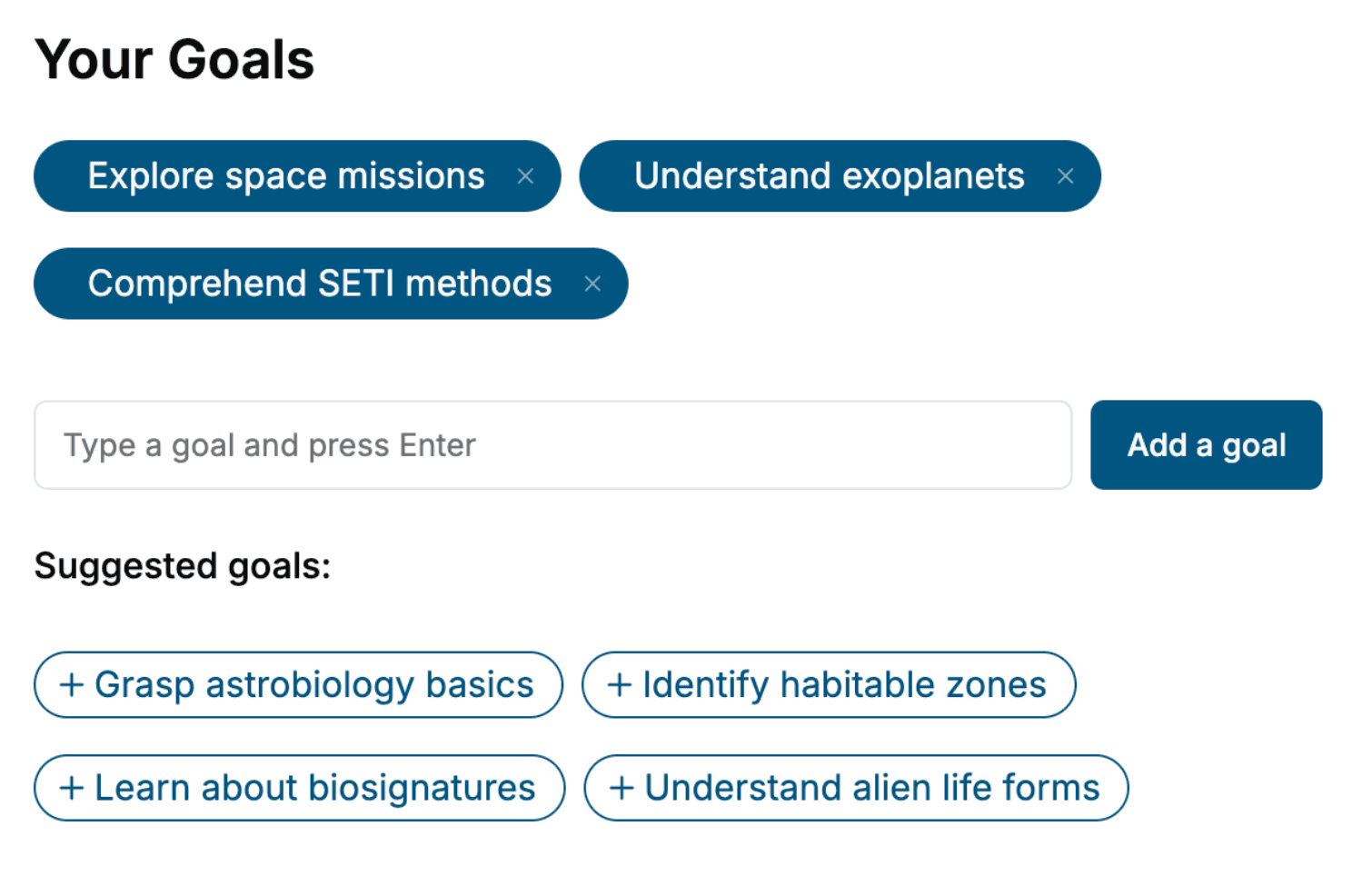
- tell us your goals, choose your topics, and the whole book is built around them.
- Learn effortlessly:
- Pasta Cooking book written for your specific background and expertise.
- Understand at a glance:
- includes charts, tables, timelines, checklists, decision trees, and more.
- Stay current:
- written the day you order it, not years ago.
- Trust what you read:
- every book is checked for accuracy, with real research when your subject needs it.
Create your unique book in 3 steps
- 1. Select your focus
Select the focus of your Pasta Cooking book and share your background
- 2. Personalize your book
Specify your goals and choose sub-topics to include
- 3. Get your tailored book
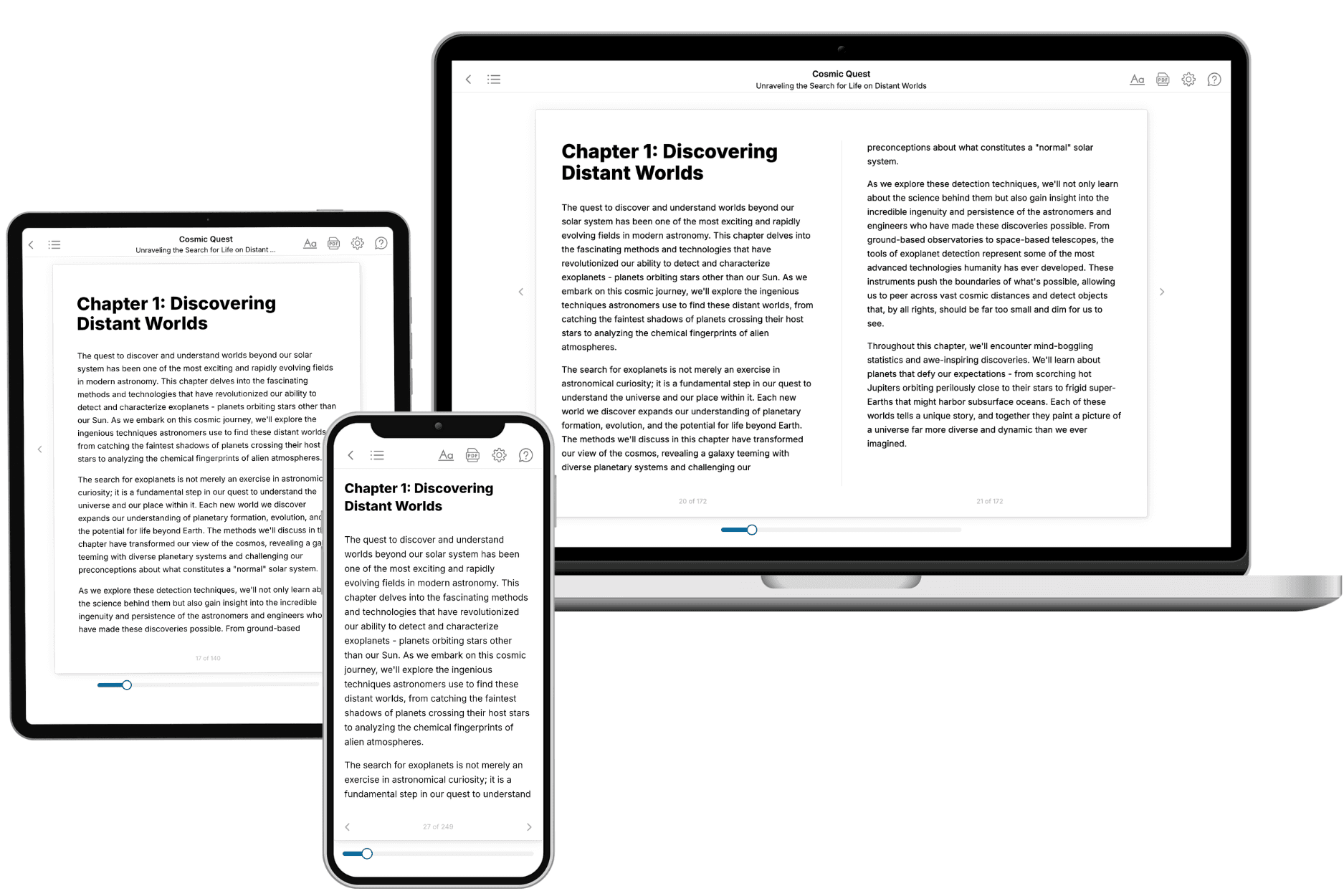
Your book is ready in 10 minutes. Read it online, download as EPUB or PDF, or send to Kindle.

Frequently asked questions
- What is TailoredRead?
TailoredRead creates complete, full-length nonfiction ebooks, written specifically for you. Tell us what you want to learn and why, and TailoredRead writes you a complete ebook on it, with charts, tables, and diagrams throughout. Read it online, on Kindle, or on any e-reader, or download it as a PDF or EPUB. Every book is written fresh the day you order it.
- How is the book tailored to me?
Before anything is written, you answer a few short questions about your goals, your background, and the topics you care about. Your book is then planned around your answers: written at your level, focused on your goals, and covering the topics you chose, instead of the one-size-fits-all book a store sells everyone.
- Will it read like generic AI content?
No. Your book isn't a chat transcript: it's planned chapter by chapter before a single word is written, told in a clear book voice, and explains ideas visually with charts, tables, and diagrams. After writing, every book goes through an editorial pass that polishes chapters so the book reads consistent from start to finish. Judge for yourself: browse thousands of sample books on our Explore Books page.
- How accurate is the content?
Our AI first checks whether your subject needs live research. Niche and fast-moving subjects are researched before writing, and the book plan and chapters are grounded in what it finds. After writing, every book goes through a quality pass that checks its facts and consistency, and researched books list their sources in a Notes section at the back.
- How long is the book?
You choose the length: Comprehensive (250-300 pages), Detailed (150-200 pages), Essential (70-100 pages), or Short (30-50 pages).
- Does the book include visuals?
Yes. Every book includes charts, tables, and diagrams: timelines, checklists, step-by-step guides, decision trees, comparison tables, matrices, and bar charts. A typical book includes dozens of these visual elements.
- Can I read it on Kindle? What formats can I download?
Yes. Every book can be read in our online reader or downloaded as a PDF or EPUB. The EPUB can be opened with Kindle, Apple Books, Kobo, and any e-reader. The Commercial and Author licenses also include an editable Word (DOCX) and Markdown download.
- How much does it cost?
About the price of a regular ebook. The exact price depends on your book's length and complexity, from $2 for the shortest books to $35 for the most comprehensive, and it's shown when you review your book, before you commit to anything. Each book is a one-time purchase, yours to keep, no subscription. Licenses that let you share, teach, or publish your book range from $35.99 to $49.99.
- Can I preview the book before purchasing?
Before you pay, you'll see what your book will cover: the title, a detailed description, the estimated length, and the complete chapter-by-chapter table of contents, so you know what you're getting before you decide. The full text itself is written after you purchase.
- How long does it take to create a book?
About 10 minutes. You can start reading the opening chapters while the rest is still being written.