The Art of Literary Translation
Bridging Languages, Preserving Voice, and Mastering the Craft
Master the nuanced craft of literary translation and develop the skills to bring literature across language barriers while preserving its soul.
222 pages10 chaptersAug 20, 2026Literary Translation
About this book
This comprehensive guide takes you beyond basic language conversion to explore the philosophical, technical, and creative dimensions of translating literature. You'll discover how to navigate cultural contexts, make strategic choices about idioms and wordplay, and develop a personal translation philosophy that guides your work. Through practical frameworks, real-world examples, and proven techniques, you'll learn to balance fidelity with readability, understand genre-specific challenges, and refine your voice as a translator. Whether you're translating poetry, prose, drama, or specialized literary forms, this book equips you with the conceptual foundation and practical tools to produce translations that honor the original while resonating authentically with new readers.
Table of contents
- IntroductionWhy Literary Translation Matters, Translation as Art and Craft, How to Use This Book, Your Translation Journey BeginsRead below
- Chapter 1: Foundations of Literary TranslationWhat Makes Translation Literary?, Major Translation Theories and Approaches, The Translator's Role and Responsibilities
- Chapter 2: Understanding Cultural ContextImmersing Yourself in Source Culture, Navigating Cultural References and Allusions, When and How to Adapt for Target Audience, Avoiding Stereotypes and Cultural Misrepresentation
- Chapter 3: Language Mechanics and EquivalenceStrategic Word Choice and Semantic Fields, Handling Idioms, Puns, and Wordplay, Preserving Syntax and Stylistic Voice, Capturing Rhythm, Sound, and Musicality
- Chapter 4: Developing Your Translation PhilosophyBalancing Fidelity and Fluency, Defining Your Personal Translation Approach, Creating a Decision-Making Framework
- Chapter 5: Translating PoetryUnique Challenges in Poetry Translation, Approaches to Meter, Rhyme, and Form, Translating Imagery, Metaphor, and Symbolism, Case Studies in Poetry Translation
- Chapter 6: Translating ProseCapturing Narrative Voice and Tone, Translating Dialogue and Characterization, Case Studies in Prose Translation
- Chapter 7: Translating DramaThe Unique Demands of Dramatic Translation, Translating for Performance and Stage Language, Case Studies in Drama Translation
- Chapter 8: The Translation ProcessPre-Translation Analysis and Planning, Drafting Strategies and First Passes, Revision, Refinement, and Polishing, Final Review and Quality Assurance
- Chapter 9: Tools, Resources, and ReferencesEssential Translation Tools and Software, Building Your Reference Library, Seeking and Incorporating Feedback
- Chapter 10: Building Expertise and SpecializationSpecializing in Literary Genres, Deepening Expertise in Specific Language Pairs, Continuous Learning and Professional Development
- ConclusionYour Path to Translation Mastery, Next Steps in Your Translation Practice
- Glossary of Translation Terms
- Further Reading and Resources
Introduction
Gabriel García Márquez once said that Gregory Rabassa's English version of One Hundred Years of Solitude improved on his own original in certain passages, a claim that sounds almost impossible until you understand what literary translation actually requires[1]. That statement points to something bigger than word-for-word conversion. A translator sat with Márquez's Spanish for months, made thousands of small decisions about rhythm, tone, and meaning, and produced a text that stood on its own as English literature. This book exists to help you understand how that kind of work happens and to build the skills that make it possible in your own language pair.
Literary translation gets treated, too often, as a mechanical afterthought to the "real" creative work of writing. A novel gets published, and later someone converts it into another language, as if swapping vocabulary were the whole job. That assumption collapses the moment you try it yourself. A joke that depends on a homonym in French has no equivalent joke in Japanese. A character's use of regional slang in a Nigerian novel carries class and identity signals that a flat, neutral English rendering erases entirely. Every sentence in a literary work is doing several jobs at once: conveying information, establishing voice, building rhythm, and often carrying cultural weight that a bilingual dictionary cannot touch.
This introduction lays the groundwork for everything that follows. It explains why literary translation deserves serious attention, distinguishes the artistic and technical sides of the discipline, and shows how the book's chapters build on each other. It also offers a practical orientation for different kinds of readers, since a beginner exploring the field and a working translator refining a philosophy will use this material differently. By the end of this introduction, the shape of your path through the book should be clear.
None of this requires you to already read multiple languages fluently or hold a degree in comparative literature. What it requires is curiosity about how meaning survives, or fails to survive, the crossing from one language into another, and a willingness to sit with difficult, unresolved choices rather than reaching for the first convenient answer. The chapters ahead will give you frameworks, examples, and exercises, but the underlying skill, judgment under uncertainty, only develops through practice. Treat this book as a training ground, not a rulebook that removes the need for your own thinking.
Why Literary Translation Matters
Most readers encounter world literature only through translation, whether they realize it or not. Homer, Dostoevsky, Kafka, and Murakami reach English-speaking audiences exclusively through the choices translators made, sentence by sentence, decade after decade. Without translators, a reader in Ohio would have no access to Clarice Lispector's prose, and a reader in Seoul would never encounter Toni Morrison's voice. The scale of this dependency is easy to underestimate because good translation disappears into the reading experience, leaving the impression that you are reading the author directly rather than reading a carefully constructed bridge someone else built.
Literary translation shapes which voices get heard globally and which stay confined to their original language. A country's literary output can remain invisible on the world stage for decades simply because too few skilled translators work in that language pair. The sudden international visibility of Scandinavian crime fiction in the 2000s, or the rise of Korean literature in English-language markets following Han Kang's international recognition, both depended on translators willing to take on the work and publishers willing to invest in it[2]. Translation is not a neutral technical service. It is a gatekeeping mechanism, for better or worse, that determines whose stories cross borders.
Beyond the marketplace of literary reputation, translation carries a quieter cultural function: it lets readers inhabit unfamiliar worldviews from the inside. A well-translated Chinese novel does not just report facts about Chinese life the way a news article might. It lets an English-speaking reader feel the rhythm of a Beijing household's dinner conversation, sense the weight of filial obligation in a character's hesitation, and absorb values that no summary could transmit. This kind of immersive cultural transmission depends entirely on translation quality. A clumsy or overly literal translation can make an entire culture's literature seem stiff, foreign in the wrong sense, or simply uninteresting, when the fault lies with the rendering rather than the source.
Consider a concrete case: the King James Bible, translated by a committee of scholars in the early seventeenth century, did not simply convey religious content into English. Its phrasing shaped the rhythms of English prose for the following four centuries, contributing idioms still in everyday use, such as a drop in the bucket
or the writing on the wall
[3]. That single translation project altered the trajectory of an entire language's literary style. Few translations will have that scale of influence, but the example shows how translation choices ripple outward far beyond the original transaction between two texts.
Literary translation also matters at a smaller, more personal scale, one you will encounter directly once you start working. Every translated book represents someone's sustained attention to another human being's imagination, given across a language barrier that would otherwise make that connection impossible. A grieving reader in Argentina finds comfort in a Japanese novel about loss because a translator spent a year finding the right Spanish words for grief that originally existed in Japanese. That transfer of feeling, not just information, is the real product of literary translation, and it is worth taking seriously as a craft rather than dismissing as clerical conversion work.
The stakes of getting translation wrong are also real and sometimes visible. Milan Kundera famously objected to early translations of his novels into English, arguing that translators had softened or altered his deliberately flat, ironic prose style into something more conventionally lyrical, changing the philosophical tone of his fiction[4]. His complaint illustrates that translation decisions are not cosmetic. They can change what a book means, how a character comes across, and what an author is understood to be arguing. Readers who cannot check the original have no way to know when this has happened, which places real responsibility on the translator's shoulders.
This responsibility extends to underrepresented languages and literatures in a particular way. When only one or two translators work actively in a given language pair, their individual choices become, in effect, the only version of that literature available to an entire readership. A translator working from Amharic or Mongolian into English carries an outsized influence compared to someone working in a heavily translated pair like French-English, where multiple competing versions of the same classic often exist. Recognizing this weight should sharpen your sense of care rather than intimidate you out of the work, since someone will do this job regardless, and it should ideally be done well.
Economically, literary translation remains a modest corner of the publishing industry, but its cultural return on investment is disproportionate to its budget. Translated fiction accounts for a small percentage of new titles published annually in English-language markets, yet translated works regularly win major international prizes and shape literary conversation[5]. This asymmetry between limited investment and outsized cultural impact suggests that skilled literary translators remain scarce relative to demand, which is good news for anyone building a career in the field.
Finally, literary translation matters because it trains a rare form of close reading. Translating a sentence forces you to notice every grammatical choice, every ambiguity, every sound pattern that a casual reader glides past. This heightened attention changes how you read in your own native language afterward, making you a sharper reader of any text, translated or not. That side effect alone justifies studying translation even if you never intend to publish a finished book, since the discipline reshapes your relationship with language generally.
The chapters that follow will return repeatedly to this central claim: literary translation is not a lesser, derivative activity compared to original writing, but a distinct discipline with its own demands, its own history of theoretical debate, and its own standards of excellence. Holding that conviction will matter later, particularly when facing skepticism from people who assume translation is simple substitution. It is not, and the rest of this book exists to show exactly why.
Translation as Art and Craft
Two different mental models compete for attention whenever people discuss translation, and confusing them causes most of the frustration new translators experience. The first model treats translation as a craft: a set of learnable techniques, reference tools, and quality checks that produce a reliable, correct result, similar to how a skilled carpenter follows joinery techniques to build a sound chair. The second model treats translation as an art: an act of creative interpretation where the translator's sensibility, voice, and judgment shape a genuinely new artistic object. Literary translation lives in the overlap of both models, and refusing to acknowledge either half leads to bad translations.
Treat translation purely as craft, ignoring the artistic dimension, and the result tends toward flat, over-literal renderings that transfer information accurately while losing everything that made the original text worth reading. A crime novel translated this way might preserve every plot detail correctly while completely flattening the sardonic narrator's voice that made the original a pleasure rather than a chore to read. This is often called an overly Formal Equivalence approach, prioritizing structural correspondence to the source sentence over the effect the sentence produces on a reader[6]. The translation is technically defensible and often unreadable.
Treat translation purely as art, ignoring the craft dimension, and a different failure appears: translators take excessive liberties, inserting their own stylistic preferences, cutting difficult passages, or substituting culturally distant references with domestic equivalents so aggressively that the original author's specific choices disappear entirely. This is one extreme of what translation theorists call Domestication, where a source text gets reshaped to feel entirely native to the target audience, sometimes at the cost of everything that made it distinctive in the first place[7]. A translation this loose risks becoming the translator's own creative work wearing the original author's name.
Working literary translators generally operate between these poles, and the position they take is not fixed but shifts sentence by sentence depending on what a given passage demands. A dialogue-heavy scene full of slang might call for creative, non-literal solutions that capture tone over exact wording. A passage carrying precise legal or technical information embedded in a novel's plot might call for tight, careful accuracy with almost no room for creative departure. Recognizing which mode a given sentence needs, and switching fluidly between them, is itself a skill that develops only through sustained practice and honest feedback on your drafts.
A useful analogy compares literary translation to musical performance rather than mechanical reproduction. A pianist playing a Chopin nocturne does not invent new notes, but neither does she produce a robotic, metronomic reading of the score. She interprets tempo, dynamics, and phrasing within the boundaries the composer set down, and two skilled pianists can produce two legitimately different, equally valid performances of the identical piece. Literary translators work similarly: the source text sets firm boundaries, but within those boundaries, meaningful interpretive choices remain, and two skilled translators working on the same novel will produce two different, both legitimate, English versions.
The craft side of this work includes concrete, learnable components that this book will cover in detail across later chapters. These include building strong Language Pair Expertise, developing research habits for handling Realia and cultural references accurately, mastering reference tools and CAT Tools that support consistency across a long manuscript, and following disciplined stages of Pre-Translation Analysis, drafting, and Quality Assurance. None of these components require special talent, only training and repetition, much like learning proper technique on a musical instrument before attempting expressive performance.
The art side of the work resists this kind of checklist treatment, but it can still be cultivated deliberately rather than left to chance. Reading widely in both your source and target languages sharpens your instinct for what makes prose feel alive. Studying multiple published translations of the same classic text, comparing how different translators handled the same tricky passage, trains your eye to notice options you might not have generated on your own. Writing original creative work in your target language, even informally, builds the stylistic muscle you will need when a source sentence has no clean equivalent and you must construct something new that still honors the original's spirit.
A concrete example clarifies the interplay. Suppose a French source sentence uses a pun built on the double meaning of the word voler, which means both to fly
and to steal
. English has no single word carrying both meanings, so a purely craft-based, literal approach fails outright. A translator working artistically might invent a new pun elsewhere in the paragraph to compensate for the lost wordplay, preserving the passage's playful tone even though the specific joke moves location. That decision requires craft (knowing the surrounding context well enough to find a safe place for a compensating pun) and art (having the creative facility to invent one that fits naturally).
This dual nature explains why literary translation resists full automation, even as machine translation tools grow more sophisticated for technical and everyday text. A machine can produce a serviceable, literal rendering of most sentences, but it cannot yet reliably judge when a pun needs compensating elsewhere, when a character's clipped speech pattern signals working-class identity that must be preserved through register rather than vocabulary, or when an author's repeated short sentences are a deliberate rhythmic choice rather than a stylistic accident. These judgment calls sit at the intersection of art and craft, and they remain, for now, distinctly human territory.
Holding both halves of this identity, craftsperson and artist, without collapsing into either extreme, is the working discipline this book aims to build. Later chapters on Translation Philosophy will give you frameworks for deciding, case by case, how much creative latitude a given passage warrants. For now, the key point to carry forward is simple: technique without sensibility produces correct but lifeless translations, and sensibility without technique produces lively but unreliable ones. Literary translation worth reading requires both operating together.
How to Use This Book
This book is structured to move from conceptual foundations toward increasingly specific, applied skills, and then outward toward professional practice. The early chapters establish what literary translation is, survey the major theoretical frameworks that have shaped the field, and build your understanding of cultural context as inseparable from linguistic accuracy. The middle chapters get into technical mechanics: word choice, wordplay, syntax, and sound, followed by a dedicated chapter on building your own Translation Philosophy so you have consistent principles to apply rather than reinventing your approach with every new project.
Three genre-specific chapters follow this foundation, covering poetry, prose, and drama in turn. Each of these forms poses distinct problems that the general chapters cannot fully address. Poetry translation confronts Meter, Rhyme Scheme, and Poetic Form directly, often forcing painful tradeoffs between sound and sense that prose rarely demands. Prose translation focuses on sustaining Narrative Voice and distinguishing characters through Idiolect across hundreds of pages, a different kind of endurance challenge. Drama translation adds a further layer, since a script's Speakability and Stage Language must survive being spoken aloud by actors in front of a live audience, not just read silently on a page. If your interests lean toward one of these forms, you can read that chapter with extra attention, though working through all three builds a more complete sense of the field's range.
The later chapters shift from craft to process and profession. One chapter walks through the full workflow of a translation project, from Pre-Translation Analysis through drafting, revision, and final Quality Assurance, giving you a repeatable structure to apply to any future project regardless of genre. Another chapter surveys practical tools, including CAT Tools, Parallel Corpora, reference libraries, and feedback systems, so you are not left improvising your working setup from scratch. The final substantive chapter looks outward toward career development, addressing Genre Specialization, deepening Language Pair Expertise, and sustaining continuous learning over a long career, useful whether you plan to translate professionally or as a serious ongoing practice.
You do not need to read this book strictly cover to cover to benefit from it, though the sequence was designed to build logically. If you already have a working grasp of translation theory and want to jump directly to the poetry, prose, or drama chapters, that is a reasonable path, since each genre chapter is written to stand reasonably independently. If you are earlier in your development and unsure where your interests lie, working through the chapters in order will expose you to the full range of the field before you commit to specializing anywhere.
Each chapter includes concrete examples drawn from real translated works and translation history, alongside frameworks meant for direct application to your own projects. When a chapter presents a framework, such as a checklist for Pre-Translation Analysis or a set of questions for deciding between Domestication and Foreignization on a given passage, treat it as a starting template rather than a rigid formula. Translation problems rarely repeat identically, so the value of a framework lies in the thinking process it trains, not in mechanical application to every sentence you encounter.
A practical suggestion: keep a working notebook, physical or digital, as you move through the chapters. Record specific translation problems you encounter in your own practice, whether from assigned exercises, personal projects, or existing published translations you are studying critically. Note how the book's frameworks would apply to that specific problem, and write down your own decision alongside the reasoning behind it. This habit turns abstract chapter content into a growing personal reference of solved problems you can return to later, which becomes more valuable than the book itself once you have populated it with your own case studies.
If your working language pair is not directly addressed by the examples in a given chapter, adapt the underlying principle rather than dismissing the lesson as inapplicable. A discussion of handling French wordplay translates conceptually to Turkish or Swahili wordplay even though the specific linguistic mechanics differ. The book draws on well-documented cases, often involving major world languages, simply because those cases are widely studied and verifiable, not because the principles are limited to those languages. Your job is to extract the transferable logic and apply it to your own specific pair.
Readers who are further along in their translation practice, perhaps already working professionally or pursuing formal study, might use this book differently than a complete beginner would. Consider treating certain chapters as a structured audit of your existing habits rather than as introductory material. The chapter on developing a Translation Philosophy, for instance, works well as a prompt for articulating principles you may have been applying intuitively for years without ever writing them down explicitly, which can clarify your practice and make it easier to explain your choices to editors or collaborators.
Complete beginners, meanwhile, should resist the urge to skip the foundational and cultural context chapters in a rush to reach the genre-specific material. Attempting poetry or drama translation techniques without first understanding concepts like Skopos Theory, Dynamic Equivalence, or the ethical dimensions of Cultural Adaptation tends to produce technically competent exercises built on a shaky conceptual foundation. The early chapters are short relative to the depth of material they introduce, so the time investment to cover them properly is modest compared to the clarity they provide for everything that follows.
Whatever your starting point, approach the exercises embedded throughout the chapters as genuine practice rather than passive reading confirmation. Translation is a performed skill, closer to playing an instrument or writing fiction than to memorizing historical facts, and skill develops through repeated attempts followed by honest evaluation of what worked and what did not. Reading about how to handle a difficult metaphor is a necessary first step, but actually sitting down and translating three or four difficult metaphors yourself, then comparing your choices against published solutions, is where the real learning happens.
Your Translation Journey Begins
Every translator who has ever produced work worth reading started at roughly the same place: uncertain, second-guessing basic choices, and occasionally producing a sentence that felt genuinely right without being entirely sure why it worked. That uncertainty does not fully disappear with experience, though it becomes more manageable and better informed. Edith Grossman, whose English translation of Don Quixote is now widely read, has written about revising sentences dozens of times before settling on a final version, describing the process as a continual negotiation rather than a single moment of discovery[8]. Expect the same negotiation in your own work, and treat it as normal rather than a sign you are doing something wrong.
Progress in translation rarely feels linear, and that unevenness is worth naming clearly before you begin. You might translate a difficult poem reasonably well on an early attempt, purely by instinct, and then struggle for hours over a seemingly simple paragraph of straightforward prose dialogue in a later project. This does not mean your skills are regressing. It usually means the simple-looking paragraph is hiding a subtlety, perhaps a register mismatch or a culturally loaded phrase, that your growing sensitivity is now noticing where it previously went unnoticed. Increased difficulty sometimes signals increased awareness rather than decreased competence, so resist judging your progress purely by how smoothly a given session felt.
Set realistic expectations for the timeline of skill development in this field. Professional literary translators frequently describe a specific project, their first full-length published translation, as the point where their instincts finally solidified into something resembling a stable working method, and that milestone often arrives only after years of smaller practice and paid or unpaid apprentice work. This is not meant to discourage early effort but to calibrate patience. Short-term frustration with a single difficult passage is normal and temporary; long-term skill accumulates through sustained, deliberate practice across many projects, not through a single breakthrough insight.
A practical starting exercise, useful before diving into the theory-heavy chapters ahead, is to select a short passage, perhaps 200 to 300 words, from a text in your source language that you already love. Translate it without consulting any published translation first, working through your own instincts and whatever reference tools you already use. Then, if a published translation exists, compare your version against it line by line, not to judge yours as wrong wherever it differs, but to understand the range of reasonable choices available for the same source material. Keep both versions in your notebook as a baseline you can revisit after finishing this book.
Building genuine translation competence also means accepting that certain choices will always remain debatable, even among expert practitioners with decades of experience. Two respected translators can examine the same ambiguous sentence and defend opposite renderings with equally sound reasoning, and neither one is objectively wrong. This is uncomfortable for readers who want translation to function like a math problem with one correct answer, but it is the honest reality of working with language, meaning, and culture simultaneously. Learning to make a defensible choice and stand behind it, rather than searching for an illusory single correct answer, is itself a mark of maturing skill.
Community matters more in this field than solitary study alone can provide. Translation workshops, whether in-person programs, university courses, or informal online groups organized around specific language pairs, offer something a book cannot: live feedback from other people wrestling with the identical passage you are struggling over. Seeing three different colleagues propose three different solutions to the same tricky sentence, each with a coherent rationale, teaches more about the range of legitimate interpretive choice than any number of solitary reading hours. Seek these communities out early rather than waiting until you feel sufficiently expert to participate.
Publishing your first literary translation, if that becomes a goal, typically involves a longer and more uncertain path than publishing original creative writing in the same market. Literary magazines and small presses that accept translated excerpts or full manuscripts often want to see a sample alongside a clear rationale for why the specific source work deserves translation and why you are positioned to do it well. Building a portfolio of shorter translated pieces, perhaps short stories or individual poems submitted to literary magazines that specifically welcome translated work, is a more realistic entry point than attempting a full novel manuscript as your very first project.
Keep in mind that literary translation, unlike some other forms of professional writing, often benefits from direct contact with the living author whose work you are translating, when that is possible. Authors can clarify ambiguous intent, confirm whether a strange grammatical choice was deliberate or an editing oversight, and sometimes grant permission for the kind of creative compensation discussed earlier in this introduction, such as inventing a new pun elsewhere to replace one that cannot survive translation. This resource is not always available, particularly with historical or deceased authors, but when it exists, it should be used, treated respectfully, and not assumed automatically.
Recognize also that this practice will change how you experience literature generally, often permanently. Reading in your source language will start to feel different once you have translated even a modest amount of text closely, because you will notice choices, hesitations, and craft decisions in other authors' original prose that previously passed by unnoticed. Many working translators describe this shift as one of the unexpected rewards of the discipline, a kind of literacy upgrade that applies to everything you read afterward, not just the specific texts you are actively translating.
The chapters ahead will give you the vocabulary, frameworks, and worked examples to turn this early uncertainty into grounded, confident practice over time. What they cannot give you is the accumulated experience of sitting with difficult sentences, making imperfect choices, and learning from how those choices land with readers or editors. That part belongs entirely to you, starting with whatever text draws you in first, whether it sits on a shelf at home or waits in a language you have been studying for years without yet attempting to carry it across.
Notes
Introduction
- 1. Gregory Rabassa, "If This Be Treason," New Directions, 2005
- 2. David Damrosch, What Is World Literature, Princeton University Press, 2003
- 3. David Crystal, Begat, Oxford University Press, 2010
- 4. Milan Kundera, Testaments Betrayed, HarperCollins, 1995
- 5. Chad Post, The Three Percent Problem, Open Letter Books, 2011
- 6. Eugene Nida, "Toward a Science of Translating," Brill, 1964
- 7. Lawrence Venuti, The Translator's Invisibility, Routledge, 1995
- 8. Edith Grossman, Why Translation Matters, Yale University Press, 2010
This is the end of the free sample. The full book has 10 chapters.
Want this book written for you?
Tell us your goals and background, and get your own version of this book, tailored by AI to you.


Benefits of AI-tailored books
- Read one book, not ten:
- all the Literary Translation knowledge you need, gathered into a single book.
- Save days of learning:
- tell us your goals, choose your topics, and the whole book is built around them.
- Learn effortlessly:
- Literary Translation book written for your specific background and expertise.
- Understand at a glance:
- includes charts, tables, timelines, checklists, decision trees, and more.
- Stay current:
- written the day you order it, not years ago.
- Trust what you read:
- every book is checked for accuracy, with real research when your subject needs it.
Create your unique book in 3 steps
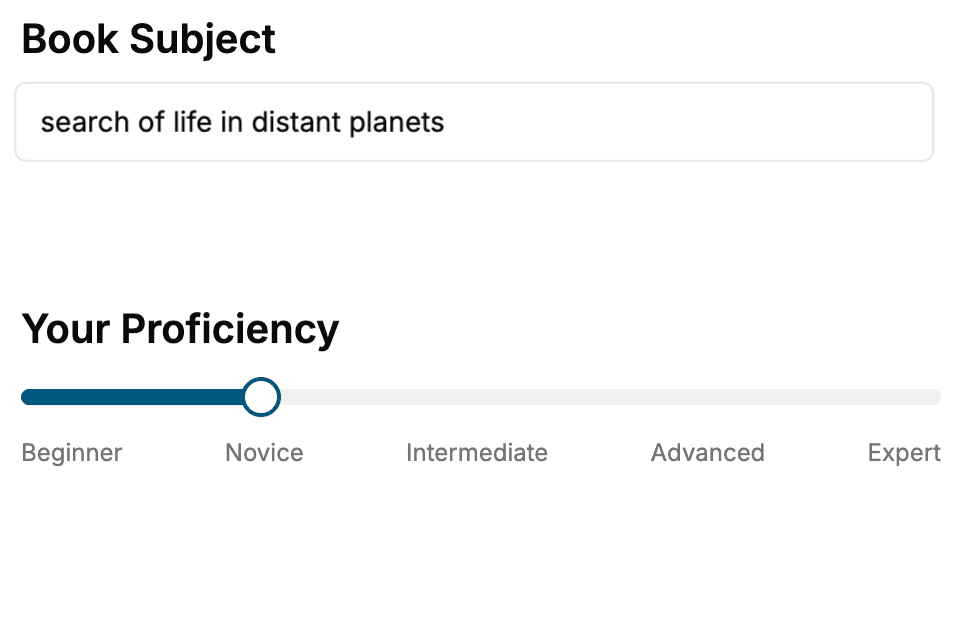
- 1. Select your focus
Select the focus of your Literary Translation book and share your background
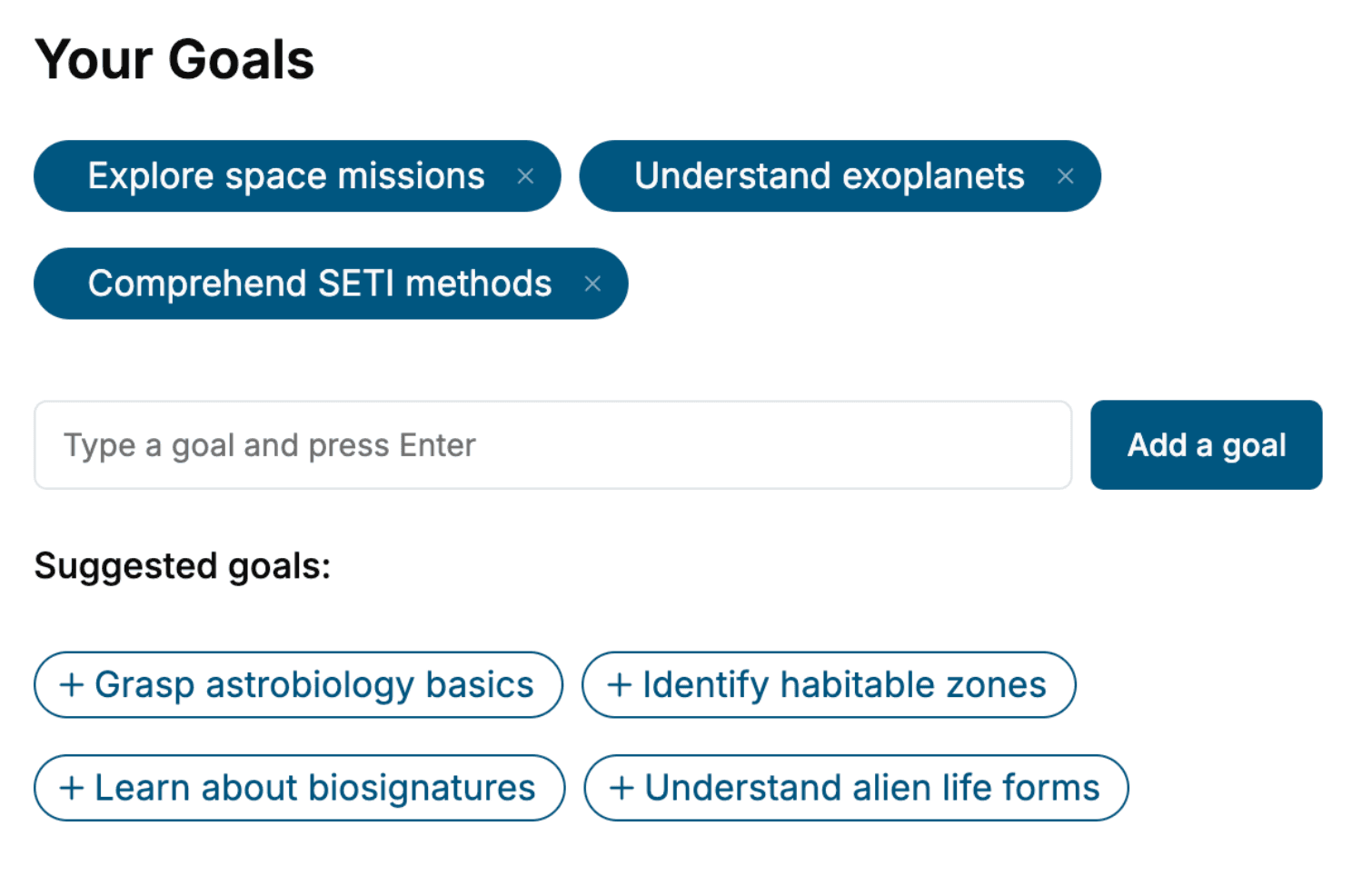
- 2. Personalize your book
Specify your goals and choose sub-topics to include
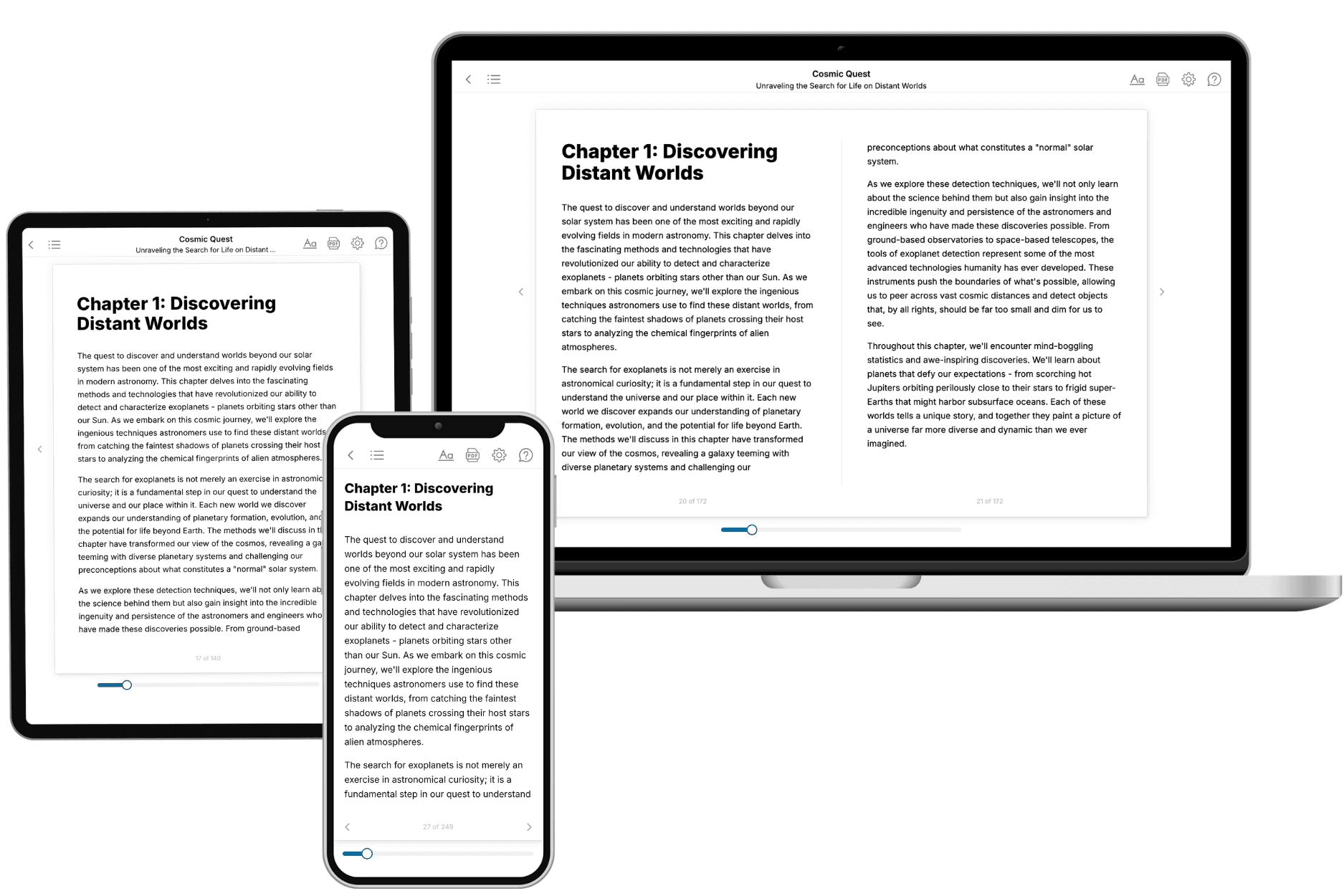
- 3. Get your tailored book
Your book is ready in 10 minutes. Read it online, download as EPUB or PDF, or send to Kindle.
Frequently asked questions
- What is TailoredRead?
TailoredRead creates complete, full-length nonfiction ebooks, written specifically for you. Tell us what you want to learn and why, and TailoredRead writes you a complete ebook on it, with charts, tables, and diagrams throughout. Read it online, on Kindle, or on any e-reader, or download it as a PDF or EPUB. Every book is written fresh the day you order it.
- How is the book tailored to me?
Before anything is written, you answer a few short questions about your goals, your background, and the topics you care about. Your book is then planned around your answers: written at your level, focused on your goals, and covering the topics you chose, instead of the one-size-fits-all book a store sells everyone.
- Will it read like generic AI content?
No. Your book isn't a chat transcript: it's planned chapter by chapter before a single word is written, told in a clear book voice, and explains ideas visually with charts, tables, and diagrams. After writing, every book goes through an editorial pass that polishes chapters so the book reads consistent from start to finish. Judge for yourself: browse thousands of sample books on our Explore Books page.
- How accurate is the content?
Our AI first checks whether your subject needs live research. Niche and fast-moving subjects are researched before writing, and the book plan and chapters are grounded in what it finds. After writing, every book goes through a quality pass that checks its facts and consistency, and researched books list their sources in a Notes section at the back.
- How long is the book?
You choose the length: Comprehensive (250-300 pages), Detailed (150-200 pages), Essential (70-100 pages), or Short (30-50 pages).
- Does the book include visuals?
Yes. Every book includes charts, tables, and diagrams: timelines, checklists, step-by-step guides, decision trees, comparison tables, matrices, and bar charts. A typical book includes dozens of these visual elements.
- Can I read it on Kindle? What formats can I download?
Yes. Every book can be read in our online reader or downloaded as a PDF or EPUB. The EPUB can be opened with Kindle, Apple Books, Kobo, and any e-reader. The Commercial and Author licenses also include an editable Word (DOCX) and Markdown download.
- How much does it cost?
About the price of a regular ebook. The exact price depends on your book's length and complexity, from $2 for the shortest books to $35 for the most comprehensive, and it's shown when you review your book, before you commit to anything. Each book is a one-time purchase, yours to keep, no subscription. Licenses that let you share, teach, or publish your book range from $35.99 to $49.99.
- Can I preview the book before purchasing?
Before you pay, you'll see what your book will cover: the title, a detailed description, the estimated length, and the complete chapter-by-chapter table of contents, so you know what you're getting before you decide. The full text itself is written after you purchase.
- How long does it take to create a book?
About 10 minutes. You can start reading the opening chapters while the rest is still being written.