Artful Mexico City
A Curator's Guide to the Capital's Cultural Treasures
Elevate your understanding of Mexican art and culture with "Artful Mexico City: A Curator's Guide to the Capital's Cultural Treasures." This comprehensive guide takes you on a visually stunning journey through the heart of Mexico's vibrant capital, revealing its artistic soul in ways you've never imagined.
83 pages4 chaptersDec 16, 2024ArtCreated by Terence
About this book
You'll discover hidden gems and iconic landmarks that showcase the city's rich artistic heritage, from ancient Aztec ruins to cutting-edge contemporary galleries. Explore the vivid world of Mexican muralism, delve into the lives of legendary artists like Frida Kahlo and Diego Rivera, and uncover the stories behind Mexico City's most captivating museums and cultural institutions. With insider tips on experiencing local markets, savoring authentic Mexican cuisine, and planning art-focused city tours, this guide equips you with the knowledge to navigate Mexico City like a seasoned curator. Whether you're drawn to colonial architecture, pre-Columbian artifacts, or the pulsating energy of street art in trendy neighborhoods, "Artful Mexico City" is your key to unlocking the capital's most inspiring cultural experiences.
Table of contents
- Chapter 1: Ancient Roots: Pre-Columbian Art and ArchitectureAztec Heritage: Templo Mayor and Teotihuacan, Decoding the Past: Aztec Codices and Artifacts, Tlatelolco: Where Ancient and Modern CollideRead below
- Chapter 2: The Revolution on Walls: Mexican MuralismDiego Rivera's Legacy: Palacio Nacional and Beyond, Bold Visions: Siqueiros and Orozco's Contributions, Contemporary Muralism: Continuing the Tradition
- Chapter 3: Museum Marvels: From Classic to ContemporaryPalacio de Bellas Artes: A Cultural Icon, Frida and Diego: Casa Azul and Museo Dolores Olmedo, Modern Marvels: Museo Soumaya and MUAC
- Chapter 4: Art in the Streets: Neighborhood ExplorationsCoyoacán's Artistic Charm, Street Art Safari: Roma and Condesa
- Conclusion
Chapter 1: Ancient Roots: Pre-Columbian Art and Architecture
As you embark on your journey through Mexico City's rich artistic landscape, it's essential to begin at the very foundations of this vibrant culture. The pre-Columbian era, spanning thousands of years before the arrival of European colonizers, laid the groundwork for the artistic traditions that continue to influence and inspire Mexican art today. This chapter delves into the ancient roots of Mexico City's art and architecture, exploring the magnificent remnants of Aztec civilization and the enduring impact of pre-Columbian artistic expression on contemporary Mexican culture.
Mexico City stands on the ruins of Tenochtitlan, the great Aztec capital, and the echoes of this ancient civilization resonate throughout the modern metropolis. As you explore the city, you'll encounter a fascinating juxtaposition of ancient and modern, where pre-Columbian artifacts and architectural marvels exist alongside contemporary skyscrapers and bustling urban life. This unique blend of old and new is not just a visual spectacle but a testament to the enduring legacy of Mexico's indigenous cultures and their profound influence on the nation's artistic identity.
In this chapter, you'll discover the awe-inspiring remnants of Aztec architecture, delve into the intricate world of codices and artifacts, and explore how these ancient artistic traditions continue to shape Mexico City's cultural landscape. By understanding the roots of Mexican art, you'll gain a deeper appreciation for the contemporary works you'll encounter throughout your exploration of the city, recognizing the threads of continuity that connect Mexico's artistic past with its vibrant present.
Aztec Heritage: Templo Mayor and Teotihuacan
At the heart of Mexico City's ancient artistic heritage lies the Templo Mayor, the great temple complex that once stood at the center of the Aztec capital, Tenochtitlan. Discovered in 1978 during routine construction work, the Templo Mayor site has since become one of the most significant archaeological discoveries in Mexico. As you approach the site, located just northeast of the Zócalo (Mexico City's main square), you'll be struck by the juxtaposition of ancient ruins against the backdrop of colonial and modern architecture – a visual representation of Mexico City's layered history.
The Templo Mayor was not just a religious center but also a symbol of Aztec cosmology and power. The temple's dual structure, dedicated to the gods Huitzilopochtli (god of war) and Tlaloc (god of rain and agriculture), reflects the Aztec worldview of duality and balance. As you explore the site, you'll notice the intricate stone carvings and sculptures that adorned the temple, each telling a story of Aztec mythology and ritual. The on-site museum houses an impressive collection of artifacts excavated from the temple, including elaborate offerings, ceremonial objects, and monumental sculptures. One of the most striking pieces is the massive stone disk depicting the dismembered goddess Coyolxauhqui, a masterpiece of Aztec sculpture that showcases the civilization's artistic prowess and complex mythology[1].
While the Templo Mayor offers a glimpse into the heart of Aztec Tenochtitlan, a visit to Teotihuacan, located about 50 kilometers northeast of Mexico City, provides an even more expansive view of pre-Columbian architecture and urban planning. Often referred to as the "City of the Gods," Teotihuacan predates the Aztecs but was later adopted and revered by them. As you approach the site, the sheer scale of the ancient city becomes apparent. The Avenue of the Dead, the main thoroughfare, stretches for over two kilometers, flanked by impressive pyramidal structures.
The Pyramid of the Sun, the largest structure at Teotihuacan, stands as a testament to the architectural and engineering skills of its builders. As you climb its 248 steps, you'll gain a new perspective on the layout of the ancient city and the surrounding landscape. The smaller but equally significant Pyramid of the Moon offers another vantage point, its design echoing the contours of the nearby mountains. These structures were not merely feats of engineering but also embodied complex astronomical and religious symbolism, aligning with celestial bodies and events[2].
The artistic legacy of Teotihuacan extends beyond its monumental architecture. The site is renowned for its colorful murals, which once adorned many of the city's buildings. Although much of the original paintwork has been lost to time, the remaining fragments offer tantalizing glimpses into the artistic sophistication of Teotihuacan's inhabitants. These murals depict a wide range of subjects, from religious and mythological scenes to representations of daily life, providing invaluable insights into the culture and beliefs of this ancient civilization.
As you explore Teotihuacan, pay close attention to the intricate stone carvings and sculptures scattered throughout the site. The famous "Feathered Serpent Pyramid" (also known as the Temple of Quetzalcoatl) is particularly noteworthy for its ornate façade, featuring alternating "Feathered Serpent" and "Tlaloc" heads. These carvings demonstrate the high level of artistic skill achieved by Teotihuacan's craftsmen and the complex iconography that underpinned their religious and cultural beliefs.
The influence of Teotihuacan extended far beyond its geographical boundaries, shaping the artistic and architectural traditions of many Mesoamerican cultures that followed. As you encounter later Aztec art and architecture in Mexico City, you'll be able to trace the lineage of certain motifs and design elements back to Teotihuacan, understanding how this ancient city's artistic legacy continued to resonate through the centuries.
Both the Templo Mayor and Teotihuacan offer more than just a glimpse into the past; they provide a foundation for understanding the continuity of artistic expression in Mexican culture. As you explore these sites, consider how the themes, techniques, and aesthetics of these ancient civilizations continue to influence contemporary Mexican art. From the use of vibrant colors and bold geometric patterns to the incorporation of pre-Columbian imagery in modern murals and sculptures, the artistic DNA of these ancient cultures remains very much alive in Mexico City's contemporary art scene.
To fully appreciate the artistic heritage of the Aztecs and their predecessors, it's recommended to visit these sites with a knowledgeable guide who can provide context and interpretation. Many tour operators in Mexico City offer expert-led excursions to both the Templo Mayor and Teotihuacan. Alternatively, audio guides are available at both sites, offering in-depth information about the history, architecture, and artistic elements you'll encounter. Remember to wear comfortable shoes, bring sun protection, and allow plenty of time to explore these vast complexes at a leisurely pace, allowing the ancient artistry to truly sink in.
As you conclude your exploration of these ancient sites, take a moment to reflect on the enduring power of art to connect us across millennia. The stones of Templo Mayor and the pyramids of Teotihuacan stand as a testament to the artistic vision and skill of ancient civilizations, their silent presence a bridge between past and present. This connection forms the bedrock of Mexico City's rich artistic tapestry, a foundation upon which centuries of creative expression have been built.
Decoding the Past: Aztec Codices and Artifacts
While the monumental architecture of the Aztecs and their predecessors provides a tangible link to the pre-Columbian past, a deeper understanding of these ancient cultures can be gleaned from their portable art forms, particularly codices and artifacts. These objects offer intimate insights into the daily lives, beliefs, and artistic practices of pre-Columbian peoples, serving as a visual language that continues to be deciphered and interpreted by scholars and artists alike. As you delve into this aspect of Mexico City's artistic heritage, you'll discover a rich world of symbolism, craftsmanship, and cultural expression that forms the bedrock of Mexican visual culture.
Aztec codices, or pictorial manuscripts, represent one of the most fascinating and complex art forms of pre-Columbian Mexico. These folding books, made from deer skin or bark paper, combined pictographs, ideograms, and occasionally phonetic elements to record historical events, religious rituals, genealogies, and even economic transactions. While many original codices were destroyed during the Spanish conquest, the surviving examples and later colonial-era copies provide invaluable insights into Aztec life and thought. The Codex Borbonicus, for instance, is a remarkable document that details the Aztec calendar and religious practices, its pages filled with vivid depictions of deities and ritual scenes[3].
To truly appreciate the artistry and significance of Aztec codices, a visit to the National Museum of Anthropology in Mexico City is essential. Here, you'll find several important codices on display, including facsimiles of rare documents housed in European collections. As you examine these intricate works, pay attention to the use of color, the stylized representations of figures and objects, and the complex arrangement of elements on the page. Each codex is a masterpiece of visual storytelling, combining artistic skill with deep cultural and religious knowledge.
The influence of codices on Mexican art extends far beyond their historical significance. Many contemporary Mexican artists draw inspiration from the visual language and storytelling techniques of these ancient manuscripts. As you explore Mexico City's galleries and street art scenes, keep an eye out for modern interpretations of codex-style imagery, where ancient symbols and narrative techniques are reimagined in new contexts.
Beyond codices, the Aztecs and other pre-Columbian cultures produced a vast array of artifacts that showcase their artistic prowess and cultural values. From intricately carved stone sculptures to delicate gold jewelry, these objects represent the height of craftsmanship in ancient Mexico. The National Museum of Anthropology houses an unparalleled collection of pre-Columbian artifacts, offering a comprehensive overview of artistic traditions from various regions and periods.
One of the most iconic Aztec artifacts is the Stone of the Sun, often mistakenly called the Aztec Calendar Stone. This massive monolith, measuring nearly 12 feet in diameter, is a masterpiece of stone carving that encapsulates Aztec cosmology and mythology. As you study its intricate reliefs, you'll notice the central face of the sun god surrounded by symbols representing the days of the Aztec calendar and the four previous world ages. The Stone of the Sun exemplifies the Aztec ability to imbue seemingly decorative elements with deep cosmological significance, a trait that continues to influence Mexican art to this day[4].
Smaller artifacts offer equally fascinating insights into Aztec artistry and daily life. Ceramic vessels, for instance, range from utilitarian objects to highly decorated ritual items. Pay attention to the variety of forms and decorative techniques, from incised patterns to vibrant polychrome designs. Many of these ceramic traditions continue in Mexican folk art, forming a direct link between ancient and contemporary artistic practices.
Metalwork was another area where Aztec artisans excelled, despite the relative scarcity of metal resources in central Mexico. Gold and silver objects, often adorned with precious stones, were reserved for the nobility and for religious purposes. The famous "Disc of Moctezuma," a gold pendant depicting the Aztec ruler, showcases the sophisticated techniques employed by Aztec goldsmiths. As you examine these precious objects, consider how they reflect the social structure and value systems of Aztec society.
Stone sculpture forms another significant category of Aztec artifacts. From monumental statues of deities to smaller household objects, stone carving was a highly developed art form. The famous statue of Coatlicue, the Aztec earth goddess, is a prime example of how Aztec sculptors could imbue stone with dynamic energy and complex symbolism. As you encounter these sculptures, take note of the recurring motifs and symbols, many of which continue to appear in contemporary Mexican art and design.
To fully appreciate the artistry of Aztec artifacts, it's important to understand their cultural context. Many objects that might appear purely decorative to modern eyes held deep religious or social significance for their creators. Jade, for instance, was highly prized not just for its beauty but for its association with water and fertility. Similarly, featherwork, an art form at which the Aztecs excelled, was not merely ornamental but closely tied to concepts of divinity and nobility.
As you explore Mexico City's museums and cultural institutions, you'll have the opportunity to see many of these artifacts up close. Take advantage of guided tours or audio guides to gain deeper insights into the symbolism and craftsmanship of these objects. Many museums also offer workshops or demonstrations that allow you to engage more directly with pre-Columbian artistic techniques, providing a hands-on understanding of these ancient traditions.
The legacy of Aztec codices and artifacts extends far beyond museum walls. Their influence can be seen in contemporary Mexican graphic design, fashion, and even street art. As you move through Mexico City, keep an eye out for modern interpretations of pre-Columbian motifs and symbols. From corporate logos inspired by Aztec glyphs to murals that incorporate codex-style imagery, the visual language of ancient Mexico continues to evolve and adapt in the modern urban landscape.
By immersing yourself in the world of Aztec codices and artifacts, you'll gain a deeper appreciation for the continuity of Mexican artistic traditions. These ancient objects are not mere relics of a distant past but living inspirations that continue to shape the visual culture of Mexico City and beyond. As you encounter contemporary art throughout your journey, you'll be able to trace the threads that connect modern expressions to their ancient roots, understanding how Mexico's rich artistic heritage continues to evolve while remaining deeply connected to its pre-Columbian foundations.
Tlatelolco: Where Ancient and Modern Collide
As you continue your exploration of Mexico City's ancient roots, the archaeological site of Tlatelolco offers a unique perspective on the intersection of pre-Columbian heritage and modern urban life. Located in the north of Mexico City, Tlatelolco stands as a powerful symbol of cultural continuity and resilience, where layers of history coexist in a single, compelling space. This site not only provides insights into Aztec urban planning and architecture but also serves as a poignant reminder of Mexico's complex history, from pre-Columbian times through the Spanish colonial period and into the modern era.
Tlatelolco was originally established as a sister city to Tenochtitlan, the Aztec capital, and was renowned for its great marketplace where goods from all corners of the Aztec empire were traded. The archaeological zone, known as the Plaza de las Tres Culturas (Plaza of Three Cultures), encapsulates the layered history of Mexico in a single vista. Here, you'll find the remains of Aztec pyramids and temples standing alongside a 17th-century Spanish church and modern 20th-century apartment buildings. This juxtaposition of architectural styles and historical periods creates a visually striking and thought-provoking landscape that embodies the cultural synthesis at the heart of Mexican identity[5].
As you approach the archaeological zone, the first structure to catch your eye will likely be the Pyramid of Tlatelolco. While smaller than its counterparts at Teotihuacan or the Templo Mayor, this pyramid offers a more intimate experience of Aztec architecture. Take the time to examine the different construction phases visible in the pyramid's layers, each representing a different period of expansion and renovation. This layering provides a tangible illustration of how Aztec cities grew and evolved over time, adapting to changing political and religious needs.
Adjacent to the pyramid, you'll find the remains of other important structures, including platforms, staircases, and the foundations of what were once impressive buildings. Pay particular attention to the intricate stone carvings and decorative elements that have survived. These details offer insights into Aztec artistic styles and religious symbolism. The site museum, located nearby, houses many of the artifacts discovered during excavations, providing context and deeper understanding of the objects you've seen in situ.
One of the most significant structures at Tlatelolco is the Colegio de Santa Cruz, established in the 16th century as one of the first European-style schools in the Americas. This institution played a crucial role in the preservation of indigenous knowledge and language, as it was here that Franciscan friars worked with indigenous scholars to record Aztec history and culture. The college building, with its blend of European and indigenous architectural elements, stands as a physical representation of the cultural exchange and synthesis that characterized early colonial Mexico.
The Church of Santiago, built in the 17th century using stones from demolished Aztec temples, provides another striking example of cultural layering. As you examine the church's façade and interior, look for pre-Columbian carved stones incorporated into the structure, a common practice that symbolically and literally built the new Spanish order upon indigenous foundations. This architectural palimpsest serves as a powerful metaphor for the complex process of cultural blending that shaped colonial and modern Mexico.
The modern apartment complexes that surround the archaeological zone, built in the mid-20th century, add yet another layer to Tlatelolco's historical narrative. These buildings, part of a massive urban renewal project, represent Mexico's post-revolutionary drive towards modernization. However, they also stand as a reminder of more recent history, as Tlatelolco was the site of a tragic massacre of student protesters in 1968, an event that profoundly impacted Mexican society and politics.
As you explore Tlatelolco, take note of how contemporary artists and activists have engaged with this layered history. Murals and public art installations throughout the area often reference both ancient and modern events, creating a dialogue between past and present. These artistic interventions demonstrate how pre-Columbian heritage continues to inform and inspire contemporary Mexican culture, even as it grapples with the complexities of modern urban life.
The Plaza de las Tres Culturas itself is a powerful symbol of Mexico's cultural synthesis. Standing in this space, you can visually trace the trajectory of Mexican history from pre-Columbian times through the colonial era and into the present day. This physical juxtaposition of different historical periods encourages reflection on the processes of conquest, resistance, adaptation, and cultural blending that have shaped Mexican identity.
To fully appreciate the significance of Tlatelolco, it's helpful to visit with a knowledgeable guide who can provide historical context and point out easily overlooked details. Many tour companies offer visits to Tlatelolco as part of broader explorations of Mexico City's archaeological sites. Alternatively, the on-site museum provides informative displays and often hosts temporary exhibitions that delve deeper into specific aspects of Tlatelolco's history and archaeology.
As you conclude your visit to Tlatelolco, take a moment to reflect on how this site encapsulates many of the themes you've encountered in your exploration of Mexico City's ancient roots. The continuity of occupation from pre-Columbian times to the present day, the layering of different cultural influences, and the ongoing dialogue between past and present are all vividly illustrated here. Tlatelolco serves as a reminder that Mexico City's ancient heritage is not confined to museums or isolated archaeological sites but remains an integral part of the living, breathing metropolis.
The lessons of Tlatelolco extend beyond archaeology and history, offering insights into the nature of cultural resilience and adaptation. As you continue your journey through Mexico City's art scene, keep in mind the example of Tlatelolco – a place where ancient traditions have been continuously reinterpreted and integrated into new cultural contexts. This process of cultural synthesis and reinterpretation is at the heart of Mexico's vibrant contemporary art scene, where artists draw inspiration from ancient roots while addressing the realities of modern life.
Tlatelolco, with its visible layers of history and culture, provides a fitting conclusion to your exploration of Mexico City's ancient roots. It serves as a bridge between the pre-Columbian world and the vibrant, complex metropolis that Mexico City has become. As you move forward in your artistic journey through the city, carry with you the lessons of Tlatelolco – the enduring power of cultural memory, the complexity of historical narratives, and the ongoing dialogue between past and present that characterizes Mexican art and culture.
Notes
Chapter 1: Ancient Roots: Pre-Columbian Art and Architecture
- 1. Matos Moctezuma and Eduardo, The Great Temple of the Aztecs: Treasures of Tenochtitlan, Thames and Hudson, 1988
- 2. George L. Cowgill, Ancient Teotihuacan, Cambridge University Press, 2015
- 3. Elizabeth Hill Boone, Cycles of Time and Meaning in the Mexican Books of Fate, University of Texas Press, 2007
- 4. Matos Moctezuma and Eduardo, Archaeology of the Aztec Empire, Oxford Handbooks Online, 2014
- 5. Matos Moctezuma and Eduardo, Excavaciones en la Catedral y el Sagrario Metropolitanos: Programa de Arqueología Urbana, INAH, 1999
This is the end of the free sample. The full book has 4 chapters.
Want this book written for you?
Tell us your goals and background, and get your own version of this book, tailored by AI to you.


Benefits of AI-tailored books
- Read one book, not ten:
- all the Art knowledge you need, gathered into a single book.
- Save days of learning:
- tell us your goals, choose your topics, and the whole book is built around them.
- Learn effortlessly:
- Art book written for your specific background and expertise.
- Understand at a glance:
- includes charts, tables, timelines, checklists, decision trees, and more.
- Stay current:
- written the day you order it, not years ago.
- Trust what you read:
- every book is checked for accuracy, with real research when your subject needs it.
Create your unique book in 3 steps
- 1. Select your focus
Select the focus of your Art book and share your background
- 2. Personalize your book
Specify your goals and choose sub-topics to include
- 3. Get your tailored book
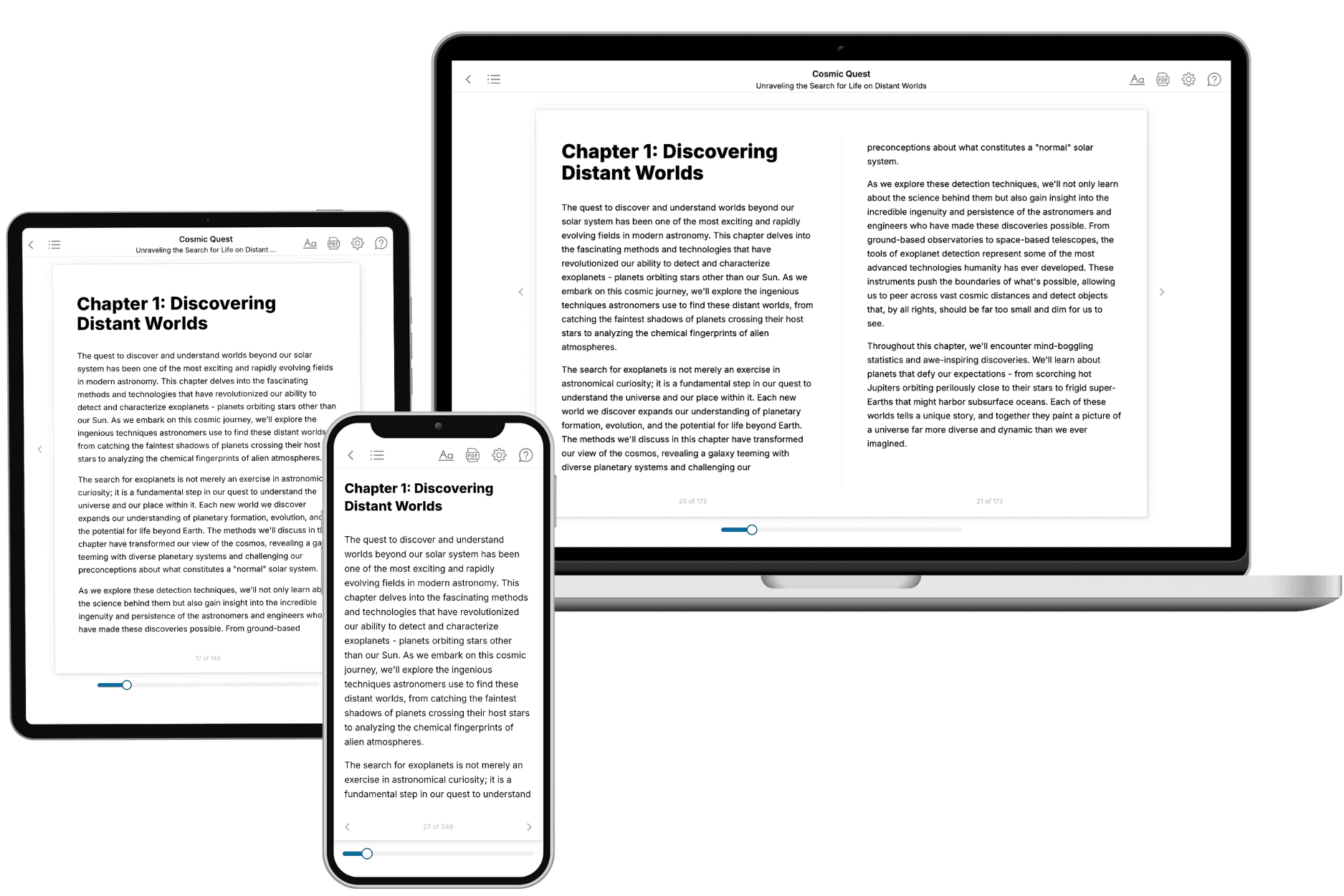
Your book is ready in 10 minutes. Read it online, download as EPUB or PDF, or send to Kindle.

Frequently asked questions
- What is TailoredRead?
TailoredRead creates complete, full-length nonfiction ebooks, written specifically for you. Tell us what you want to learn and why, and TailoredRead writes you a complete ebook on it, with charts, tables, and diagrams throughout. Read it online, on Kindle, or on any e-reader, or download it as a PDF or EPUB. Every book is written fresh the day you order it.
- How is the book tailored to me?
Before anything is written, you answer a few short questions about your goals, your background, and the topics you care about. Your book is then planned around your answers: written at your level, focused on your goals, and covering the topics you chose, instead of the one-size-fits-all book a store sells everyone.
- Will it read like generic AI content?
No. Your book isn't a chat transcript: it's planned chapter by chapter before a single word is written, told in a clear book voice, and explains ideas visually with charts, tables, and diagrams. After writing, every book goes through an editorial pass that polishes chapters so the book reads consistent from start to finish. Judge for yourself: browse thousands of sample books on our Explore Books page.
- How accurate is the content?
Our AI first checks whether your subject needs live research. Niche and fast-moving subjects are researched before writing, and the book plan and chapters are grounded in what it finds. After writing, every book goes through a quality pass that checks its facts and consistency, and researched books list their sources in a Notes section at the back.
- How long is the book?
You choose the length: Comprehensive (250-300 pages), Detailed (150-200 pages), Essential (70-100 pages), or Short (30-50 pages).
- Does the book include visuals?
Yes. Every book includes visual elements such as timelines, checklists, step-by-step guides, decision trees, comparison tables, and matrices, and many include bar charts. A typical book includes dozens of these visual elements.
- Can I read it on Kindle? What formats can I download?
Yes. Every book can be read in our online reader or downloaded as a PDF or EPUB. The EPUB can be opened with Kindle, Apple Books, Kobo, and any e-reader. The Commercial and Author licenses also include an editable Word (DOCX) and Markdown download.
- How much does it cost?
About the price of a regular ebook. The exact price depends on your book's length and complexity, from $2 for the shortest books to $35 for the most comprehensive, and it's shown when you review your book, before you commit to anything. Each book is a one-time purchase, yours to keep, no subscription. Licenses that let you share, teach, or publish your book range from $35.99 to $49.99.
- Can I preview the book before purchasing?
Before you pay, you'll see what your book will cover: the title, a detailed description, the estimated length, and the complete chapter-by-chapter table of contents, so you know what you're getting before you decide. The full text itself is written after you purchase.
- How long does it take to create a book?
About 10 minutes. You can start reading the opening chapters while the rest is still being written.