ASP.NET MVC Mastery
Build Scalable Web Applications with .NET Framework 4.5
Imagine building web applications that are not just functional, but elegant, maintainable, and scalable.
207 pages10 chaptersMay 13, 2026ASP.NET MVC
About this book
With ASP.NET MVC and .NET Framework 4.5, you have the tools to create professional-grade solutions that stand the test of time. This comprehensive guide takes you beyond the basics, diving deep into the architectural principles and practical techniques that separate good applications from great ones. You'll master the Model-View-Controller pattern, learn how to structure your code for maximum maintainability, and discover how to leverage Entity Framework for powerful data access. Whether you're building your first MVC application or refining your existing skills, you'll find practical examples, real-world patterns, and proven strategies that you can apply immediately. From routing and controllers to views and models, from security best practices to asynchronous programming, this book provides the knowledge and confidence you need to build applications that perform, scale, and evolve with your business needs.
Table of contents
- IntroductionWhy ASP.NET MVC Matters, .NET Framework 4.5 Capabilities, How to Use This BookRead below
- Chapter 1: Understanding the MVC ArchitectureThe Model-View-Controller Pattern Explained, Separation of Concerns and Code Organization, Benefits of MVC for Web Development
- Chapter 2: Mastering Routing and Request HandlingRouting Fundamentals and URL Patterns, Configuring Routes in Global.asax, Advanced Routing Techniques and Constraints, Attribute-Based Routing
- Chapter 3: Building Effective Controllers and ActionsController Structure and Responsibilities, Creating and Managing Action Methods, Understanding Action Results and Response Types, Using Filters for Cross-Cutting Concerns
- Chapter 4: Designing Models and Managing DataModel Design Principles and Best Practices, Data Annotations and Validation, Model Binding and Type Conversion, Working with Complex and Nested Models
- Chapter 5: Leveraging Entity Framework for Data AccessEntity Framework Fundamentals, Working with DbContext and Entity Sets, Querying Data with LINQ to Entities, Managing Entity Relationships and Navigation Properties
- Chapter 6: Creating Dynamic Views with RazorRazor Syntax and Template Basics, HTML Helpers and Form Generation, Using View Models for Presentation Logic, Master Layouts and Partial Views
- Chapter 7: Implementing Dependency Injection and IoCDependency Injection Principles and Benefits, IoC Containers and Configuration, Common Dependency Injection Patterns
- Chapter 8: Securing Your ASP.NET MVC ApplicationsAuthentication and User Identity, Authorization and Access Control, CSRF Protection and Anti-Forgery Tokens, Input Validation and Preventing Injection Attacks
- Chapter 9: Asynchronous Programming and PerformanceAsync/Await Fundamentals, Asynchronous Action Methods, Asynchronous Data Access with Entity Framework
- Chapter 10: Testing and Code QualityUnit Testing Controllers and Models, Mocking and Test Isolation, Integration Testing and Test-Driven Development
- ConclusionKey Takeaways and Next Steps, Continuing Your MVC Journey
- Appendix: Quick Reference GuideCommon MVC Patterns and Solutions, Troubleshooting Common Issues
Introduction
Web development has changed dramatically over the past two decades. Early web applications were often tangled messes of HTML, business logic, and database calls all crammed into the same files. Maintaining them was painful, testing them was nearly impossible, and scaling them was a nightmare. ASP.NET MVC arrived as a direct answer to those problems, offering a structured, disciplined approach to building web applications that are clean, testable, and built to last.
If you've spent any time with ASP.NET Web Forms, you already know the frustration of fighting against the page lifecycle, wrestling with ViewState, and trying to write unit tests for code that was never designed to be tested. ASP.NET MVC flips that model entirely. Instead of hiding HTTP behind an abstraction layer, it embraces the web's natural request-response cycle and gives you precise control over every URL, every response, and every piece of HTML your application produces.
This book is built around a single goal: helping you move from knowing the basics of ASP.NET to building professional-grade MVC applications with confidence. You'll work through the Model-View-Controller pattern from the ground up, explore the full power of .NET Framework 4.5, and pick up the practical techniques that experienced developers use every day. Every chapter is grounded in real-world scenarios, with concrete code examples and actionable guidance you can apply immediately to your own projects.
The journey ahead covers a lot of ground. You'll master routing, controllers, views, and models. You'll learn how Entity Framework makes database work feel natural, how dependency injection keeps your code flexible, and how async programming helps your application handle more users without breaking a sweat. You'll also tackle security and testing, two areas that separate applications that merely work from applications that are truly production-ready. By the time you reach the final chapter, you'll have a complete, coherent picture of what it takes to build scalable, maintainable web applications with ASP.NET MVC.
Why ASP.NET MVC Matters
The web development landscape is crowded with frameworks, and it's fair to ask why ASP.NET MVC deserves your attention. The answer comes down to one word: control. Unlike Web Forms, which abstracts away the HTTP layer and generates HTML on your behalf, ASP.NET MVC puts you in the driver's seat. You decide what URLs look like, what HTML gets rendered, and how your application responds to every request. That level of control is not just satisfying; it's essential for building modern, professional web applications.
Consider a real-world scenario. Imagine you're building an e-commerce platform where clean, readable URLs matter for both users and search engines. With Web Forms, getting a URL like /products/shoes/running requires significant configuration gymnastics. With ASP.NET MVC, that URL maps naturally to a ProductsController with a Category action, and the routing system handles the rest. Clean URLs become the default, not the exception.
Testability is another major reason MVC matters. When business logic lives inside controller actions and model classes rather than tangled up with page lifecycle events, writing unit tests becomes straightforward. You can instantiate a controller, call an action method, and assert on the result without spinning up a web server or a browser. Studies of software development practices consistently show that applications with strong test coverage have significantly fewer production bugs and are far cheaper to maintain over time.[1]
ASP.NET MVC also aligns naturally with how the web actually works. HTTP verbs like GET, POST, PUT, and DELETE map directly to controller actions. Request data flows cleanly through model binding. Responses are explicit and predictable. This alignment means less time fighting the framework and more time solving actual business problems.
The separation of concerns that MVC enforces also makes team collaboration much smoother. Front-end developers can work on Razor views without touching controller logic. Back-end developers can build and test business logic without worrying about presentation details. Database specialists can focus on data models and Entity Framework configurations. Each layer has a clear boundary, and crossing those boundaries requires a deliberate decision rather than an accidental one.
It's also worth noting that ASP.NET MVC has a proven track record at scale. Major platforms including Stack Overflow have been built on ASP.NET MVC, handling millions of requests per day with excellent performance.[2] The framework is not a toy or an academic exercise. It's a production-grade tool used by some of the most demanding applications on the internet.
Finally, the skills you build with ASP.NET MVC transfer directly to ASP.NET Core MVC, the modern cross-platform successor. The architectural patterns, the routing concepts, the controller and view model approaches are all consistent across both frameworks. Investing time in mastering ASP.NET MVC on .NET Framework 4.5 gives you a foundation that remains relevant and valuable as the ecosystem continues to evolve.
.NET Framework 4.5 Capabilities
.NET Framework 4.5 was a significant release that brought meaningful improvements to both the runtime and the class library. Released in 2012, it introduced features that directly benefit web developers, particularly around asynchronous programming, performance, and developer productivity. Understanding what the framework offers helps you make better architectural decisions and write code that takes full advantage of the platform.
The most impactful addition in .NET 4.5 for web developers is the async/await pattern. Before this feature, writing asynchronous code in .NET required working with callbacks, BeginInvoke/EndInvoke patterns, or the Task Parallel Library directly, all of which produced complex, hard-to-read code. With async/await, you can write asynchronous code that reads almost identically to synchronous code. For a web application that makes frequent database calls or external API requests, this translates directly into better throughput and responsiveness under load.
Here's a quick illustration of the difference. Before .NET 4.5, an asynchronous database call might involve registering callbacks and managing state manually. With .NET 4.5, the same operation looks like this:
public async Task<ActionResult> Index()
{
    var products = await db.Products.ToListAsync();
    return View(products);
}
That single await keyword tells the runtime to release the thread while waiting for the database, then resume execution when the data arrives. The result is a server that can handle far more concurrent requests without adding hardware. This capability is covered in depth in Chapter 9, but it's worth understanding from the start why it matters.
.NET 4.5 also brought improvements to the garbage collector, including background garbage collection for server applications. This reduces the pause times that can cause latency spikes in high-traffic web applications. For most applications, this improvement is invisible in day-to-day development, but it becomes very noticeable when you're handling thousands of concurrent users.
The framework also introduced improvements to the Task Parallel Library and added new collection types like IReadOnlyList<T> and IReadOnlyDictionary<K,V>. These additions make it easier to write code that communicates intent clearly. When a method returns an IReadOnlyList<T>, callers immediately understand that the collection should not be modified. That kind of expressiveness reduces bugs and makes code easier to reason about.
On the ASP.NET side specifically, .NET 4.5 shipped with ASP.NET MVC 4 and later supported ASP.NET MVC 5, which introduced features like attribute routing, authentication filters, and Bootstrap integration in project templates. These additions made it significantly easier to build clean, RESTful APIs alongside traditional web applications, and to apply security logic at a granular level without duplicating code across controllers.
Entity Framework 6, which runs on .NET 4.5, added robust support for asynchronous queries, improved migration tooling, and better performance for complex queries. The combination of EF6 and async/await is particularly powerful for data-heavy applications, allowing you to build data access layers that are both clean and highly scalable. Chapter 5 covers Entity Framework in detail, but knowing that the framework was designed with these capabilities in mind helps you appreciate why the patterns covered in this book work as well as they do.
It's also worth noting what .NET 4.5 does not include. It does not support cross-platform deployment; applications built on .NET Framework 4.5 run on Windows only. If cross-platform support is a requirement, ASP.NET Core is the appropriate choice. However, for enterprise environments running Windows Server, .NET 4.5 remains a stable, well-supported, and highly capable platform with a massive ecosystem of libraries and tooling.
The tooling story around .NET 4.5 is also excellent. Visual Studio provides first-class support with IntelliSense, debugging, profiling, and scaffolding tools that dramatically accelerate development. NuGet makes it easy to add third-party libraries. MSBuild handles compilation and deployment. The entire ecosystem is mature, well-documented, and battle-tested across thousands of production applications worldwide.
How to Use This Book
This book is designed to be read sequentially, but it's also structured so you can jump to specific topics when you need a reference. Each chapter builds on concepts introduced in earlier chapters, so if you're new to ASP.NET MVC, working through the chapters in order will give you the most coherent learning experience. If you already have some MVC experience and want to deepen your knowledge in a specific area, each chapter is self-contained enough to be useful on its own.
Here's a quick map of what each chapter covers and how they connect:
- Chapter 1 (MVC Architecture): Establishes the conceptual foundation. Read this first, even if you think you know MVC. The mental model it builds informs every chapter that follows.
- Chapter 2 (Routing): Covers how requests reach your application. Understanding routing is essential before working with controllers and actions.
- Chapter 3 (Controllers and Actions): Dives into the heart of request handling, including action results, filters, and controller design patterns.
- Chapter 4 (Models and Data): Explores model design, data annotations, validation, and model binding. This chapter pairs closely with Chapter 5.
- Chapter 5 (Entity Framework): Covers data access using EF6, including DbContext, LINQ queries, and relationship management.
- Chapter 6 (Views and Razor): Focuses on the presentation layer, including Razor syntax, HTML helpers, view models, and layouts.
- Chapter 7 (Dependency Injection): Introduces IoC containers and DI patterns that make your application more flexible and testable.
- Chapter 8 (Security): Covers authentication, authorization, CSRF protection, and input validation. Do not skip this chapter before deploying any application.
- Chapter 9 (Async Programming): Explains async/await in the context of MVC controllers and Entity Framework data access.
- Chapter 10 (Testing): Covers unit testing, mocking, integration testing, and test-driven development practices.
Each chapter follows a consistent structure. It opens with an explanation of the core concepts, moves into practical implementation with code examples, and closes with patterns and best practices drawn from real-world experience. Code examples are written to be clear and instructive rather than production-complete, which means some error handling and edge cases are simplified to keep the focus on the concept being taught.
Throughout the book, you'll encounter several recurring elements designed to make the content more useful:
- Code examples: Every major concept is illustrated with working C# code. Examples are kept focused and minimal so the relevant parts stand out clearly.
- Real-world scenarios: Concepts are grounded in practical situations you're likely to encounter in actual projects, not contrived toy examples.
- Common mistakes: Each chapter highlights the pitfalls that developers most frequently encounter, along with clear guidance on how to avoid them.
- Best practices: Recommendations are based on established patterns from the .NET community and real production experience, not just theoretical ideals.
To get the most out of this book, you should have a working development environment set up before you start. You'll need Visual Studio 2013 or later (Visual Studio 2015 is recommended for the best experience with the features covered here), .NET Framework 4.5, and SQL Server or SQL Server Express for the database examples. Most examples use a sample application built around a product catalog, which provides a consistent, relatable context for demonstrating different concepts across chapters.
A note on prerequisites: this book assumes you're comfortable with C# fundamentals including classes, interfaces, generics, and LINQ. It also assumes you have a basic understanding of HTML, CSS, and how HTTP works at a conceptual level. If you're fuzzy on any of those topics, spending a few hours reviewing them before diving in will pay dividends throughout the rest of the book. You don't need to be an expert in any of those areas, but familiarity will help you focus on the MVC-specific concepts rather than getting distracted by the surrounding technology.
One of the most effective ways to use this book is to type out the code examples rather than just reading them. There's a significant difference between understanding code intellectually and having the muscle memory of writing it. When you type an example, you notice details you'd miss by skimming, and those details often contain the most important lessons. Resist the temptation to copy and paste. The extra time it takes to type the examples is an investment that pays off quickly.
Finally, don't feel pressure to absorb everything in a single pass. Software development books reward re-reading. Concepts that seem abstract the first time through often click into place after you've spent a few days working with the related code. Many developers find it useful to read a chapter, spend time experimenting with the concepts in a small project, and then re-read the chapter before moving on. That cycle of read, practice, and review is one of the most reliable paths to genuine mastery.
The goal of this book is not just to teach you ASP.NET MVC syntax. It's to help you think like an MVC developer, making architectural decisions with confidence and building applications that are genuinely a pleasure to work with over the long term.
With that context in place, it's time to get started. Chapter 1 lays the groundwork by exploring the Model-View-Controller pattern in depth, examining why it was designed the way it was and what problems it solves. That foundation will make everything that follows clearer, more meaningful, and more immediately applicable to the work you do every day.
This is the end of the free sample. The full book has 10 chapters.
Want this book written for you?
Tell us your goals and background, and get your own version of this book, tailored by AI to you.


Benefits of AI-tailored books
- Read one book, not ten:
- all the ASP.NET MVC knowledge you need, gathered into a single book.
- Save days of learning:
- tell us your goals, choose your topics, and the whole book is built around them.
- Learn effortlessly:
- ASP.NET MVC book written for your specific background and expertise.
- Understand at a glance:
- includes charts, tables, timelines, checklists, decision trees, and more.
- Stay current:
- written the day you order it, not years ago.
- Trust what you read:
- every book is checked for accuracy, with real research when your subject needs it.
Create your unique book in 3 steps
- 1. Select your focus
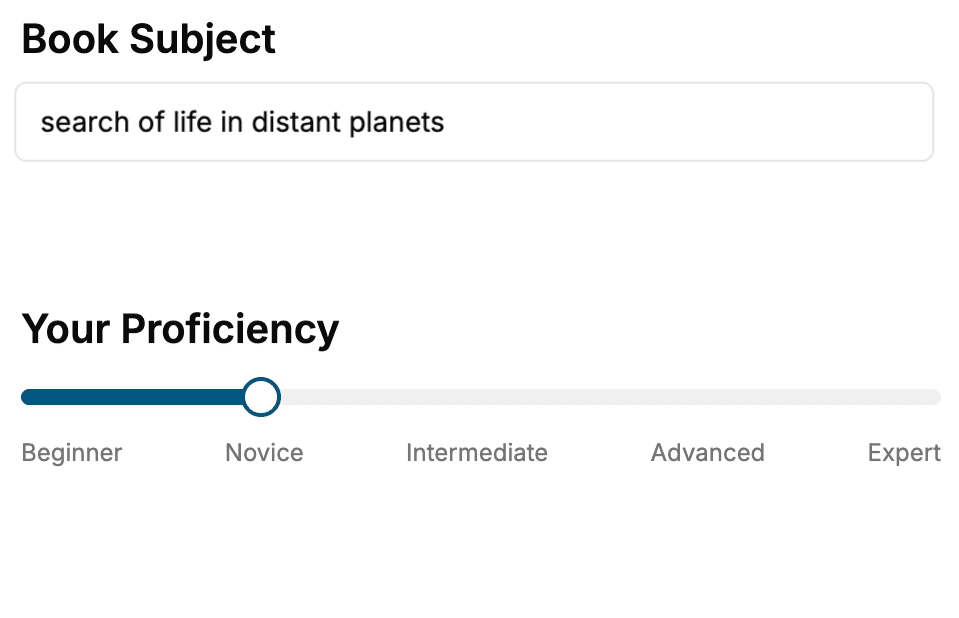
Select the focus of your ASP.NET MVC book and share your background
- 2. Personalize your book
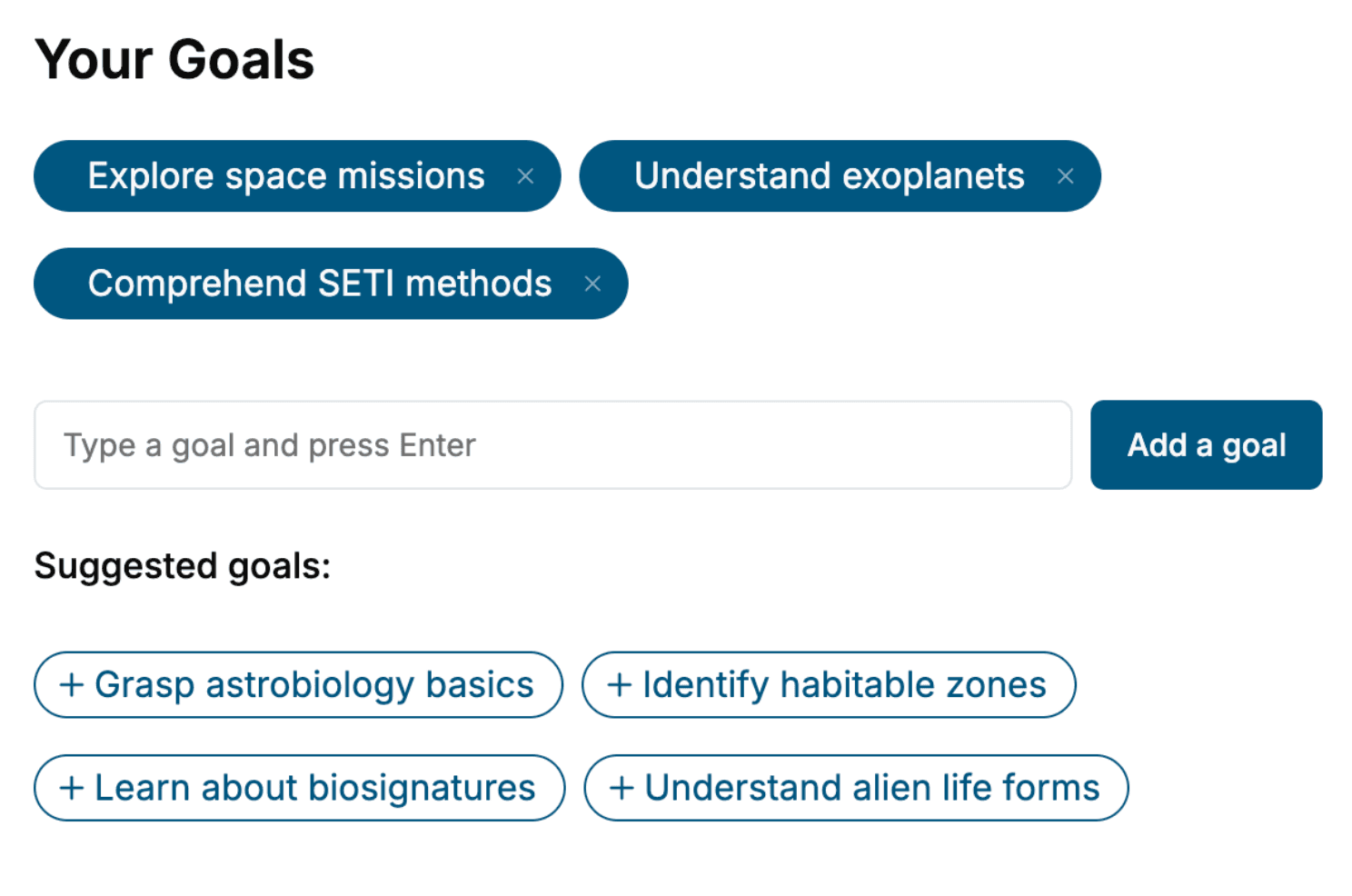
Specify your goals and choose sub-topics to include
- 3. Get your tailored book
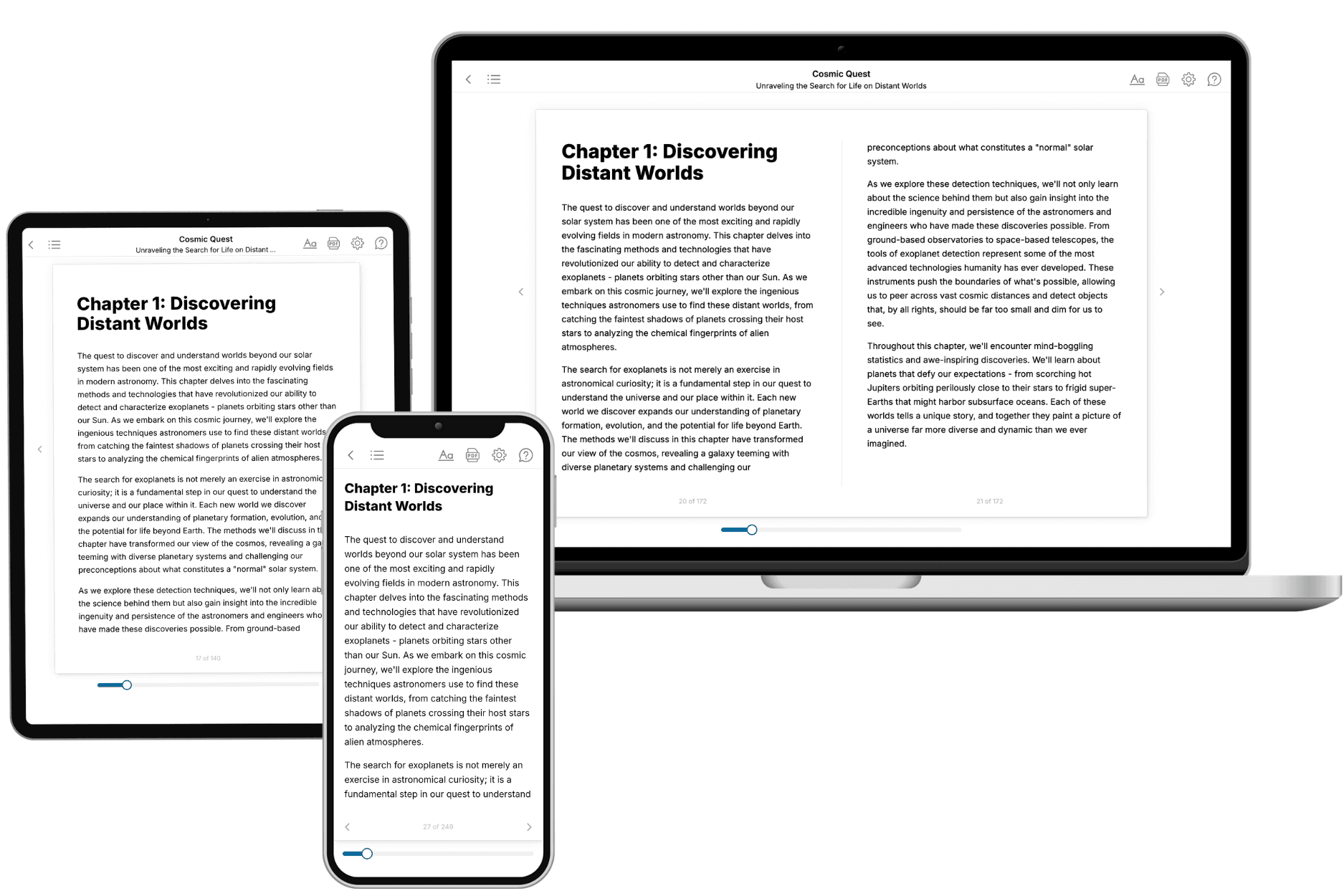
Your book is ready in 10 minutes. Read it online, download as EPUB or PDF, or send to Kindle.
Frequently asked questions
- What is TailoredRead?
TailoredRead creates complete, full-length nonfiction ebooks, written specifically for you. Tell us what you want to learn and why, and TailoredRead writes you a complete ebook on it, with charts, tables, and diagrams throughout. Read it online, on Kindle, or on any e-reader, or download it as a PDF or EPUB. Every book is written fresh the day you order it.
- How is the book tailored to me?
Before anything is written, you answer a few short questions about your goals, your background, and the topics you care about. Your book is then planned around your answers: written at your level, focused on your goals, and covering the topics you chose, instead of the one-size-fits-all book a store sells everyone.
- Will it read like generic AI content?
No. Your book isn't a chat transcript: it's planned chapter by chapter before a single word is written, told in a clear book voice, and explains ideas visually with charts, tables, and diagrams. After writing, every book goes through an editorial pass that polishes chapters so the book reads consistent from start to finish. Judge for yourself: browse thousands of sample books on our Explore Books page.
- How accurate is the content?
Our AI first checks whether your subject needs live research. Niche and fast-moving subjects are researched before writing, and the book plan and chapters are grounded in what it finds. After writing, every book goes through a quality pass that checks its facts and consistency, and researched books list their sources in a Notes section at the back.
- How long is the book?
You choose the length: Comprehensive (250-300 pages), Detailed (150-200 pages), Essential (70-100 pages), or Short (30-50 pages).
- Does the book include visuals?
Yes. Every book includes charts, tables, and diagrams: timelines, checklists, step-by-step guides, decision trees, comparison tables, matrices, and bar charts. A typical book includes dozens of these visual elements.
- Can I read it on Kindle? What formats can I download?
Yes. Every book can be read in our online reader or downloaded as a PDF or EPUB. The EPUB can be opened with Kindle, Apple Books, Kobo, and any e-reader. The Commercial and Author licenses also include an editable Word (DOCX) and Markdown download.
- How much does it cost?
About the price of a regular ebook. The exact price depends on your book's length and complexity, from $2 for the shortest books to $35 for the most comprehensive, and it's shown when you review your book, before you commit to anything. Each book is a one-time purchase, yours to keep, no subscription. Licenses that let you share, teach, or publish your book range from $35.99 to $49.99.
- Can I preview the book before purchasing?
Before you pay, you'll see what your book will cover: the title, a detailed description, the estimated length, and the complete chapter-by-chapter table of contents, so you know what you're getting before you decide. The full text itself is written after you purchase.
- How long does it take to create a book?
About 10 minutes. You can start reading the opening chapters while the rest is still being written.