The Athenian Experiment
Democracy's Dawn in Ancient Greece
Discover the revolutionary birth of democracy in Ancient Athens and its lasting impact on the world.
300 pages15 chaptersJan 10, 2025Ancient History
About this book
The Athenian Experiment: Democracy's Dawn in Ancient Greece takes you on a journey through time to the heart of classical Greece, where a radical new form of government was taking shape. You'll explore the social, political, and cultural factors that led to the emergence of this groundbreaking system, and witness its evolution through the ages. Immerse yourself in the vibrant streets of Athens, where passionate debates in the Agora shaped the course of history. You'll meet the key figures who championed democratic ideals and those who opposed them, gaining insight into the complex power dynamics of the ancient world. Through vivid storytelling and expert analysis, you'll uncover the strengths and weaknesses of Athenian democracy, its lasting legacy, and its relevance to modern political systems. Whether you're a history buff, a political science enthusiast, or simply curious about the roots of modern governance, this book offers a fresh perspective on one of the most significant developments in human civilization. Prepare to challenge your assumptions and gain a deeper appreciation for the democratic principles that continue to shape our world today.
Table of contents
- IntroductionThe Significance of Athenian Democracy, Overview of the Book's Journey, Setting the Historical ContextRead below
- Chapter 1: The Cradle of Democracy: Ancient AthensGeography and Natural Resources of Attica, Early Athenian Society and Governance, Myth and History in Athens' Founding, The Rise of the City-State
- Chapter 2: The Road to Democracy: Pre-Democratic AthensFrom Monarchy to Aristocracy, Social and Economic Tensions, The Age of Tyrants, The Growing Need for Reform
- Chapter 3: Solon: The Foundations of DemocracySolon's Background and Rise to Power, Economic Reforms and Debt Cancellation, Political and Legal Reforms, Solon's Legacy and Limitations
- Chapter 4: Cleisthenes and the Birth of DemocracyCleisthenes' Background and Political Climate, The Tribal Reform and Demes, The Council of 500, Introduction of Ostracism
- Chapter 5: The Golden Age of Athenian DemocracyThe Persian Wars and Athens' Rise, The Delian League and Athenian Empire, Pericles and the Radical Democracy, Cultural and Intellectual Flourishing
- Chapter 6: The Machinery of Athenian DemocracyThe Ecclesia: Assembly of the People, The Boule: Council of 500, The Courts and Jury System, Magistrates and Public Officials
- Chapter 7: Citizenship and Participation in AthensDefining Citizenship in Athens, Rights and Duties of Citizens, Women, Slaves, and Metics, Political Culture and Education
- Chapter 8: Democracy in Practice: Decision-Making in AthensAssembly Procedures and Voting, The Role of Orators and Demagogues, Policy Formation and Implementation, Case Studies of Athenian Decision-Making
- Chapter 9: The Economic Foundations of Athenian DemocracyAgriculture, Trade, and Naval Power, The Role of Slavery in the Athenian Economy, Public Finance and Taxation, Economic Inequality and Its Challenges
- Chapter 10: War and Democracy: The Military DimensionCitizen-Soldiers and the Hoplite Phalanx, Naval Power and the Trireme Fleet, Military Decision-Making in a Democracy, The Impact of War on Democratic Institutions
- Chapter 11: Cultural Achievements of Democratic AthensDrama and Festivals, Art and Architecture, Philosophy and the Sophists, The Birth of Historiography
- Chapter 12: Critics and Challenges to Athenian DemocracyOligarchic Opposition and Coups, Philosophical Critiques: Plato and Aristotle, The Problem of Demagoguery, Foreign Perceptions of Athenian Democracy
- Chapter 13: The Peloponnesian War and Its Impact on DemocracyCauses and Course of the War, Democratic Decision-Making During Wartime, The Sicilian Expedition: A Democratic Failure?, The Aftermath and Restoration of Democracy
- Chapter 14: The Decline and Fall of Athenian DemocracyDemocracy in the Fourth Century BCE, The Rise of Macedon and External Threats, Demosthenes and the Last Stand for Democracy, The End of Athenian Democracy
- Chapter 15: The Legacy of Athenian DemocracyInfluence on Hellenistic and Roman Political Thought, Rediscovery in the Renaissance and Enlightenment, Athenian Ideas in Modern Democracies, Continuing Debates and Relevance Today
- ConclusionKey Takeaways from Athenian Democracy, Reflections for Modern Democratic Societies
- Glossary
- Suggestions for Further Reading
Introduction
The birth of democracy in Ancient Athens stands as one of the most pivotal moments in human history, a revolutionary concept that would go on to shape the political landscape of the Western world for millennia to come. As you embark on this journey through time, you'll discover the intricate tapestry of events, ideas, and individuals that gave rise to this groundbreaking system of governance. The story of Athenian democracy is not merely a tale of political evolution; it is a narrative that encompasses the very essence of human society, touching upon aspects of culture, philosophy, economics, and the fundamental nature of power and citizenship.
In the pages that follow, you'll be transported to the bustling streets of ancient Athens, where the air was thick with the fervor of political discourse and the spirit of innovation. You'll witness the gradual transformation of a society from monarchy and aristocracy to a system where the voice of the common citizen held sway in matters of state. This journey will reveal that democracy in Athens was not born overnight, but rather emerged through a series of reforms, setbacks, and triumphs spanning generations.
As we delve deeper into the Athenian experiment, you'll encounter the visionaries who laid the groundwork for democratic governance, such as Solon and Cleisthenes, whose reforms were instrumental in shaping the political landscape of Athens. You'll explore the unique features of Athenian democracy, a system markedly different from modern representative democracies, where citizens participated directly in the decision-making process. This direct form of democracy, while revolutionary, also had its limitations and complexities, which we will examine in detail.
Throughout this exploration, we'll confront the paradoxes and contradictions inherent in Athenian democracy. You'll grapple with the concept of citizenship in Athens, which, while progressive for its time, was also exclusionary, denying rights to women, slaves, and foreign residents. This tension between the ideals of democracy and the realities of its implementation in Athens offers valuable insights into the ongoing challenges faced by democratic societies today.
As we progress, you'll witness how Athenian democracy influenced and was influenced by the broader cultural and intellectual milieu of the time. The flourishing of art, philosophy, and literature during this period was inextricably linked to the democratic ethos of the city-state. You'll see how the works of playwrights, philosophers, and historians both reflected and shaped the democratic ideals of Athens, creating a legacy that continues to resonate in modern thought and culture.
The Significance of Athenian Democracy
The emergence of democracy in Ancient Athens marks a watershed moment in the annals of human governance. Its significance extends far beyond the confines of its time and place, reverberating through the corridors of history to influence political thought and systems across the globe. To truly appreciate the magnitude of this development, it's crucial to understand the context in which it arose and the profound impact it had on the course of Western civilization.
In the 6th and 5th centuries BCE, when Athens was experimenting with democratic governance, the concept of rule by the people was radical and unprecedented. The prevailing forms of government in the ancient world were monarchies, oligarchies, and tyrannies, where power was concentrated in the hands of the few. The Athenian model challenged this status quo, proposing that citizens themselves should have a direct say in the decisions that affected their lives. This idea was revolutionary, fundamentally altering the relationship between the governed and the governing.
The significance of Athenian democracy lies not only in its novelty but also in its comprehensive nature. It wasn't merely a system of voting; it was a complete political framework that encompassed legislative, judicial, and executive functions. The Athenian model introduced concepts that are now considered fundamental to democratic governance, such as equality before the law (isonomia), the right to speak in the public assembly (isegoria), and the idea that public offices should be open to all citizens. These principles laid the groundwork for modern notions of civil liberties and political rights.
Moreover, Athenian democracy fostered an environment of intellectual and cultural flourishing that has few parallels in history. The freedom of speech and thought inherent in the democratic system encouraged robust debate and the exchange of ideas. This climate gave rise to some of the most influential philosophers, playwrights, and artists of all time, including Socrates, Plato, Aristotle, Sophocles, and Phidias. Their works, deeply influenced by and often critical of democracy, continue to shape our understanding of politics, ethics, and the human condition.
The Athenian democratic experiment also provides valuable lessons on the challenges and limitations of democratic governance. The exclusion of women, slaves, and foreigners from citizenship highlights the tension between democratic ideals and their practical implementation. The susceptibility of the Athenian system to demagoguery and the sometimes rash decisions made by the assembly serve as cautionary tales about the potential pitfalls of direct democracy. These aspects of Athenian democracy have fueled debates about the nature of citizenship, the balance between rights and responsibilities, and the best methods for making collective decisions that persist to this day.
Furthermore, the rise and fall of Athenian democracy offer insights into the fragility of democratic institutions. The Athenian system survived for nearly two centuries, weathering external threats and internal dissent, but ultimately succumbed to the pressures of war and the rise of Macedonian power. This trajectory prompts reflection on the conditions necessary for democracy to thrive and the factors that can lead to its decline, considerations that remain relevant in our contemporary world.
The legacy of Athenian democracy extends far beyond its immediate historical context. Its influence can be traced through Roman republicanism, Renaissance political thought, and the democratic revolutions of the 18th and 19th centuries. The Founding Fathers of the United States, for instance, drew heavily on Athenian ideas, albeit with modifications to address perceived flaws in the ancient model. Even today, as nations around the world grapple with questions of governance and representation, the Athenian experiment continues to serve as a point of reference and inspiration.
In studying Athenian democracy, you're not merely examining an historical curiosity, but engaging with ideas that have shaped the very fabric of modern political discourse. The questions raised by the Athenian experiment – about the nature of citizenship, the balance of power, the rights of individuals versus the needs of the community – remain at the heart of contemporary political debates. By understanding the successes and failures of Athenian democracy, you gain valuable perspectives on the challenges facing democratic societies today.
As you delve deeper into the intricacies of Athenian democracy in the chapters that follow, you'll discover that its significance lies not just in what it achieved, but in the questions it continues to provoke. It challenges us to think critically about the meaning of democracy, the responsibilities of citizenship, and the delicate balance between individual liberty and collective decision-making. In an era where democratic institutions face new challenges from globalization, technological change, and rising authoritarianism, the lessons of Ancient Athens remain as relevant as ever, offering both inspiration and caution as we navigate the complexities of modern governance.
Overview of the Book's Journey
As you embark on this exploration of Athenian democracy, it's important to have a clear roadmap of the journey ahead. This book is structured to provide a comprehensive understanding of the birth, evolution, and legacy of democracy in Ancient Athens. Each chapter is designed to build upon the previous, creating a narrative that weaves together historical events, key figures, and critical analysis to offer a nuanced view of this revolutionary political system.
The journey begins with an examination of the historical and geographical context that gave rise to Athens as a city-state. You'll explore the unique features of Attica, the region surrounding Athens, and how its natural resources and strategic location contributed to the city's rise to prominence. This background is crucial for understanding the social and economic conditions that set the stage for democratic reforms. The early chapters will also delve into the mythological foundations of Athens, illustrating how the city's origin stories and cultural identity played a role in shaping its political development.
From there, the narrative progresses to the pre-democratic period of Athenian history. You'll witness the transition from monarchy to aristocracy and the subsequent social tensions that arose as a result of economic inequality and political exclusion. This section will highlight the growing need for reform that paved the way for the emergence of democracy. The role of tyrants in this transitional period will be examined, offering insights into how their rule both hindered and, paradoxically, contributed to the eventual rise of democratic governance.
A significant portion of the book is dedicated to the key reforms that laid the foundation for Athenian democracy. You'll explore in depth the contributions of Solon, whose economic and political reforms in the early 6th century BCE addressed many of the social inequalities plaguing Athens. The limitations of Solon's reforms and the subsequent period of tyranny under Peisistratus and his sons will be analyzed, leading to the groundbreaking reforms of Cleisthenes. This section will provide a detailed look at how Cleisthenes' tribal reforms and the introduction of institutions like the Council of 500 and ostracism fundamentally reshaped Athenian political life.
The book then moves into what is often considered the golden age of Athenian democracy, coinciding with the city's rise to imperial power following the Persian Wars. You'll examine how the Delian League transformed into an Athenian empire and the impact this had on democratic institutions. The era of Pericles receives special attention, as it represents the height of Athenian power and the most radical form of democracy. This section will also explore the cultural and intellectual flourishing that accompanied political empowerment, linking the democratic ethos to achievements in art, architecture, drama, and philosophy.
A crucial aspect of the book is its detailed examination of the machinery of Athenian democracy. You'll gain a comprehensive understanding of key institutions such as the Ecclesia (Assembly), the Boule (Council), and the law courts. The roles of various officials, the process of decision-making, and the unique features of Athenian democracy, such as the use of sortition (selection by lot) for many offices, will be thoroughly explained. This section aims to give you a clear picture of how Athenian democracy functioned on a day-to-day basis.
The concept of citizenship in Athens is explored in depth, highlighting both its revolutionary aspects and its limitations. You'll examine the rights and duties of Athenian citizens, the exclusion of women, slaves, and metics (resident foreigners) from political participation, and the implications this had for Athenian society. This discussion will prompt reflection on the nature of citizenship and political participation in both ancient and modern contexts.
The book doesn't shy away from the challenges and criticisms faced by Athenian democracy. You'll encounter the views of contemporary critics like Plato and Aristotle, as well as the practical problems that arose from democratic decision-making, such as the risk of demagoguery and the sometimes volatile nature of the Assembly. The oligarchic opposition to democracy and the periods of democratic overthrow will be examined, providing a balanced view of the strengths and weaknesses of the Athenian system.
A significant portion of the narrative is devoted to the impact of war on Athenian democracy, particularly the Peloponnesian War. You'll see how the pressures of prolonged conflict strained democratic institutions and ultimately contributed to Athens' defeat. The aftermath of the war and the brief oligarchic interlude will be analyzed, along with the subsequent restoration and modification of democracy in the 4th century BCE.
The final chapters of the book trace the decline and fall of Athenian democracy in the face of Macedonian expansion. You'll explore how the rise of Philip II and Alexander the Great altered the political landscape of Greece and ultimately led to the end of Athenian democratic independence. This section will also examine the legacy of Athenian democracy, its influence on subsequent political thought, and its relevance to modern democratic systems.
Throughout the book, you'll find that the narrative is enriched with primary source material, including excerpts from ancient texts, archaeological evidence, and contemporary scholarly interpretations. Case studies and specific examples are used to illustrate key points, making the sometimes complex political concepts more accessible and relatable. The aim is to provide not just a chronological account of events, but a deep understanding of the social, economic, and cultural factors that shaped Athenian democracy.
By the end of this journey, you'll have gained a comprehensive understanding of Athenian democracy – its origins, its functioning, its achievements, and its limitations. More importantly, you'll be equipped to reflect on the lessons that this ancient experiment in self-governance offers to modern democratic societies. The book concludes by encouraging you to consider how the principles and challenges of Athenian democracy resonate in our contemporary world, inviting ongoing engagement with these timeless questions of governance and citizenship.
Setting the Historical Context
To fully appreciate the revolutionary nature of Athenian democracy, it's crucial to understand the historical context in which it emerged. The development of democracy in Athens didn't occur in isolation; it was the product of broader historical trends, geographical factors, and cultural dynamics that shaped the Greek world in the centuries leading up to and during the Classical period. This section aims to paint a vivid picture of the world that gave birth to this unprecedented system of governance.
The story of Athenian democracy begins in the aftermath of the Greek Dark Ages, a period of decline that followed the collapse of the Mycenaean civilization around 1100 BCE. During this time, much of the cultural and technological knowledge of the Bronze Age was lost, and Greece entered a period of relative isolation and decreased population. It was from these humble beginnings that the Greek city-states, including Athens, began to emerge and flourish. The period from roughly 800 to 500 BCE, known as the Archaic period, saw significant developments that set the stage for the Classical era and the birth of democracy.
One of the most significant developments of the Archaic period was the rise of the polis, or city-state, as the primary form of social and political organization in Greece. The polis was more than just a city; it was a community of citizens with shared religious, cultural, and political ties. Athens, like other poleis, developed its own unique identity, institutions, and traditions during this time. The concept of citizenship, crucial to the later development of democracy, began to take shape as Greek communities defined themselves in opposition to both internal non-citizens (slaves and foreigners) and external rivals (other city-states).
The 8th century BCE saw a period of economic growth and expansion in the Greek world, driven in part by advances in agriculture and the revival of long-distance trade. This period of prosperity led to population growth and social changes that would have profound implications for Athenian politics. The introduction of iron tools made agriculture more productive, while improvements in shipbuilding and navigation techniques facilitated trade and colonization. Athens, with its strategic location and access to the sea, was well-positioned to benefit from these developments.
Another crucial development of the Archaic period was the emergence of a new military tactics centered around the hoplite phalanx. The hoplite was a heavily armed infantryman, typically a citizen-soldier who provided his own equipment. The effectiveness of the phalanx formation depended on collective discipline and cohesion, fostering a sense of equality and shared responsibility among citizens. This military innovation had significant social and political implications, as it created a class of citizen-soldiers who could demand greater political rights in return for their service to the state.
The Archaic period also saw significant cultural and intellectual developments that would influence the political evolution of Athens. The emergence of alphabetic writing in the 8th century BCE facilitated the recording and transmission of ideas. The Homeric epics, the Iliad and the Odyssey, were written down during this period, providing a shared cultural heritage for the Greek world. These works, along with the poetry of Hesiod and others, grappled with questions of justice, governance, and the relationship between gods and mortals – themes that would resonate in later political discourse.
Religious practices and beliefs played a crucial role in shaping the identity and social structure of Athens. The cult of Athena, the city's patron goddess, was central to Athenian civic life. Religious festivals, such as the Panathenaea, brought citizens together and reinforced social bonds. The development of pan-Hellenic sanctuaries like Delphi and Olympia fostered a sense of shared Greek identity while also providing neutral ground for inter-state diplomacy and competition.
The 7th and 6th centuries BCE were marked by significant social and economic tensions in many Greek city-states, including Athens. The concentration of land ownership in the hands of a small aristocracy led to widespread debt slavery and social unrest. These conditions set the stage for the emergence of tyrants – charismatic leaders who seized power with popular support, often promising to address social grievances. While tyranny was generally viewed negatively by later Greeks, some tyrants implemented important reforms that paved the way for more inclusive forms of government.
In Athens, these tensions came to a head in the early 6th century BCE, leading to the reforms of Solon in 594 BCE. Solon's reforms, which included debt cancellation and the expansion of citizenship rights, were a crucial step towards democracy, though they fell short of establishing a truly democratic system. The subsequent period of tyranny under Peisistratus and his sons paradoxically contributed to the development of democracy by weakening traditional aristocratic power structures and fostering a sense of civic identity among Athenians.
The late 6th century BCE saw Athens emerge as a significant power in the Greek world. The reforms of Cleisthenes in 508 BCE, which laid the foundations for the democratic system, were implemented in the context of intense political rivalry and external threats. The Persian Wars of the early 5th century BCE were a pivotal moment, with Athens playing a leading role in the Greek victory. The aftermath of the wars saw Athens emerge as the leader of a powerful naval alliance, the Delian League, which would eventually transform into an Athenian empire.
It was in this context of growing power and influence that Athenian democracy reached its fullest development in the 5th century BCE. The system that emerged was shaped by centuries of social, economic, and cultural evolution, as well as by the immediate pressures of interstate rivalry and imperial ambition. Understanding this historical context is essential for appreciating both the revolutionary nature of Athenian democracy and the challenges it faced.
As you delve deeper into the specific institutions and practices of Athenian democracy in the following chapters, keep in mind this broader historical backdrop. The democratic experiment in Athens was not an isolated phenomenon, but the culmination of long-term trends and the product of a particular historical moment. By situating Athenian democracy within its proper context, we can better understand its significance, its achievements, and its limitations, drawing valuable lessons for our own reflections on governance and citizenship.
This is the end of the free sample. The full book has 15 chapters.
Want this book written for you?
Tell us your goals and background, and get your own version of this book, tailored by AI to you.


Benefits of AI-tailored books
- Read one book, not ten:
- all the Ancient History knowledge you need, gathered into a single book.
- Save days of learning:
- tell us your goals, choose your topics, and the whole book is built around them.
- Learn effortlessly:
- Ancient History book written for your specific background and expertise.
- Understand at a glance:
- includes charts, tables, timelines, checklists, decision trees, and more.
- Stay current:
- written the day you order it, not years ago.
- Trust what you read:
- every book is checked for accuracy, with real research when your subject needs it.
Create your unique book in 3 steps
- 1. Select your focus
Select the focus of your Ancient History book and share your background
- 2. Personalize your book
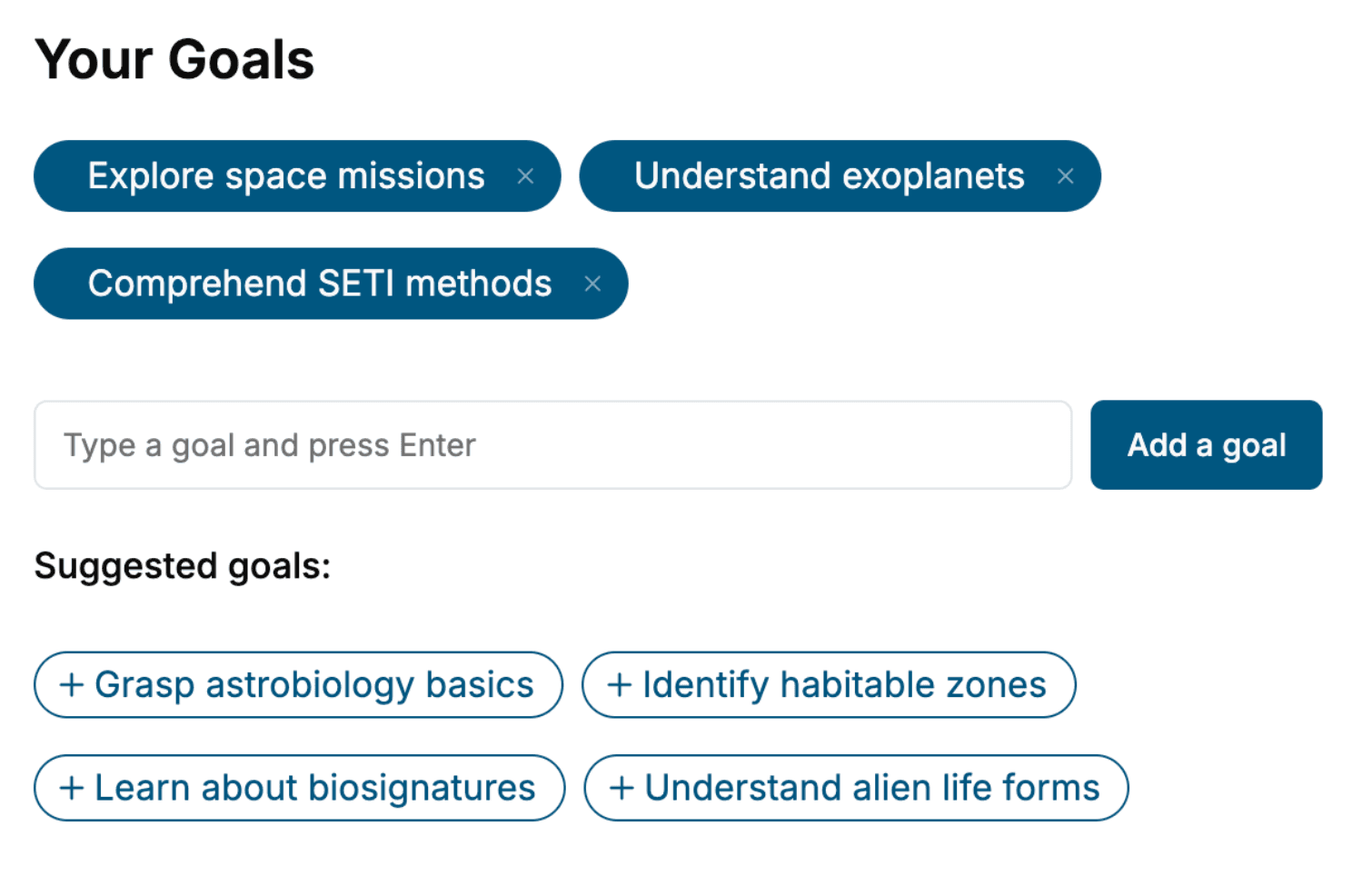
Specify your goals and choose sub-topics to include
- 3. Get your tailored book
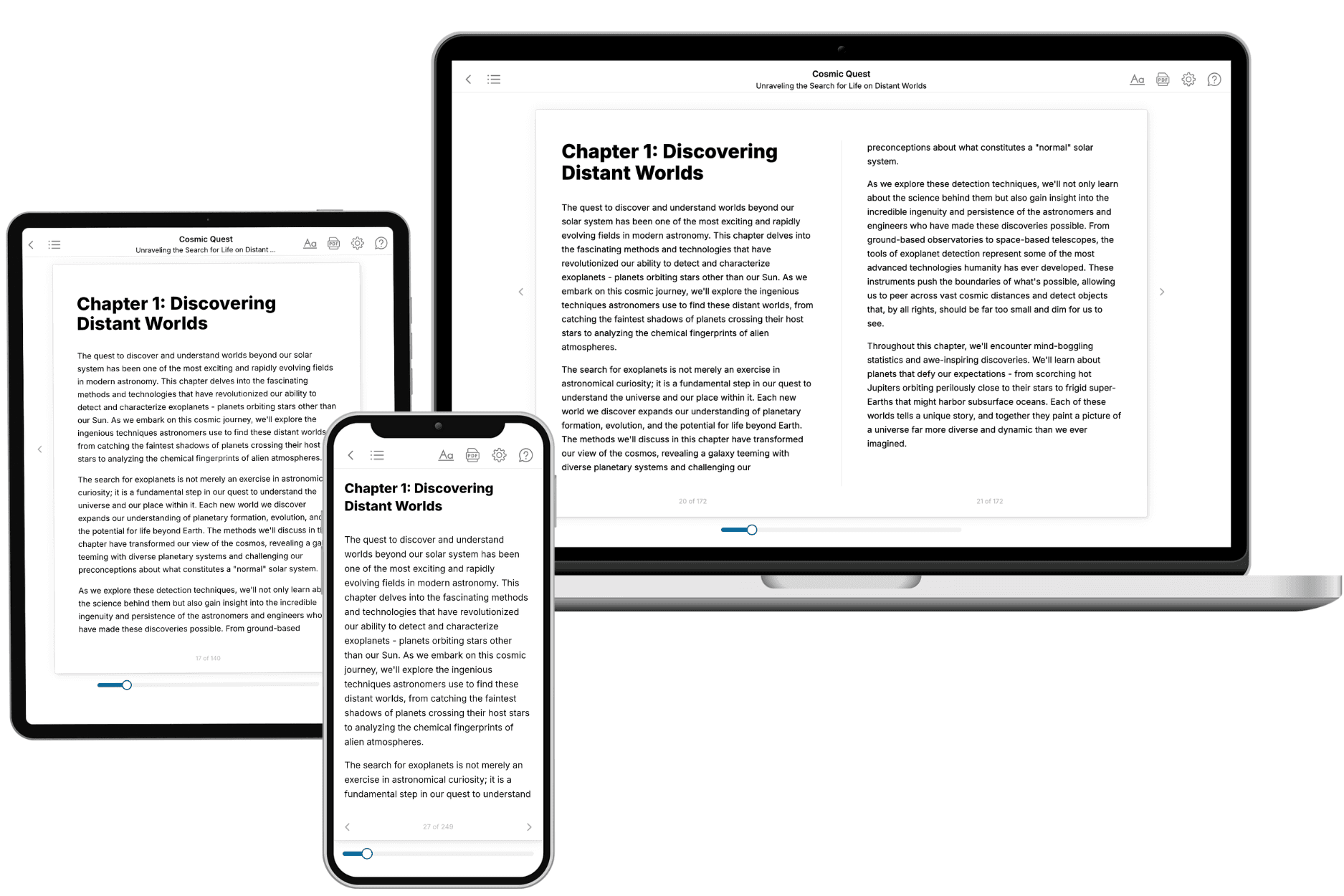
Your book is ready in 10 minutes. Read it online, download as EPUB or PDF, or send to Kindle.

Frequently asked questions
- What is TailoredRead?
TailoredRead creates complete, full-length nonfiction ebooks, written specifically for you. Tell us what you want to learn and why, and TailoredRead writes you a complete ebook on it, with charts, tables, and diagrams throughout. Read it online, on Kindle, or on any e-reader, or download it as a PDF or EPUB. Every book is written fresh the day you order it.
- How is the book tailored to me?
Before anything is written, you answer a few short questions about your goals, your background, and the topics you care about. Your book is then planned around your answers: written at your level, focused on your goals, and covering the topics you chose, instead of the one-size-fits-all book a store sells everyone.
- Will it read like generic AI content?
No. Your book isn't a chat transcript: it's planned chapter by chapter before a single word is written, told in a clear book voice, and explains ideas visually with charts, tables, and diagrams. After writing, every book goes through an editorial pass that polishes chapters so the book reads consistent from start to finish. Judge for yourself: browse thousands of sample books on our Explore Books page.
- How accurate is the content?
Our AI first checks whether your subject needs live research. Niche and fast-moving subjects are researched before writing, and the book plan and chapters are grounded in what it finds. After writing, every book goes through a quality pass that checks its facts and consistency, and researched books list their sources in a Notes section at the back.
- How long is the book?
You choose the length: Comprehensive (250-300 pages), Detailed (150-200 pages), Essential (70-100 pages), or Short (30-50 pages).
- Does the book include visuals?
Yes. Every book includes charts, tables, and diagrams: timelines, checklists, step-by-step guides, decision trees, comparison tables, matrices, and bar charts. A typical book includes dozens of these visual elements.
- Can I read it on Kindle? What formats can I download?
Yes. Every book can be read in our online reader or downloaded as a PDF or EPUB. The EPUB can be opened with Kindle, Apple Books, Kobo, and any e-reader. The Commercial and Author licenses also include an editable Word (DOCX) and Markdown download.
- How much does it cost?
About the price of a regular ebook. The exact price depends on your book's length and complexity, from $2 for the shortest books to $35 for the most comprehensive, and it's shown when you review your book, before you commit to anything. Each book is a one-time purchase, yours to keep, no subscription. Licenses that let you share, teach, or publish your book range from $35.99 to $49.99.
- Can I preview the book before purchasing?
Before you pay, you'll see what your book will cover: the title, a detailed description, the estimated length, and the complete chapter-by-chapter table of contents, so you know what you're getting before you decide. The full text itself is written after you purchase.
- How long does it take to create a book?
About 10 minutes. You can start reading the opening chapters while the rest is still being written.