The Athenian Experiment
Unveiling the Birth and Legacy of Ancient Greek Democracy
Step into the vibrant streets of ancient Athens, where the revolutionary idea of democracy first took root.
269 pages13 chaptersEnglishFeb 5, 2025Greece Ancient History
About this book
As you delve into "The Athenian Experiment," you'll witness the birth of a political system that would shape the course of human history. This book takes you on a captivating journey through time, from the tumultuous days of tyranny to the rise of citizen power in the Greek city-states. You'll explore the innovative concepts that formed the backbone of Athenian democracy, such as the ekklesia (assembly) and the practice of ostracism. Discover the visionaries who championed this radical form of governance, from Solon's reforms to Cleisthenes' groundbreaking restructuring of Athenian society. You'll gain insights into the daily lives of Athenian citizens, their rights, responsibilities, and the unique challenges they faced in maintaining their democratic ideals. As you progress through the pages, you'll uncover the complexities and contradictions of Ancient Greek democracy, including its limitations and criticisms. The book doesn't shy away from examining the system's flaws, such as the exclusion of women and slaves from the political process. By understanding both the strengths and weaknesses of this early democratic experiment, you'll gain a nuanced perspective on the evolution of political thought.
Table of contents
- IntroductionThe Origins of Democracy, Athens: The Cradle of Democracy, Overview of the BookRead below
- Chapter 1: The Pre-Democratic Greek WorldThe Mycenaean Era and Dark Ages, The Archaic Period, Tyranny and Oligarchy, Social Structure in Early Greece
- Chapter 2: Laying the Foundations of DemocracySolon's Reforms, The Tyranny of Peisistratos, Cleisthenes and the Birth of Democracy, The Reorganization of Athenian Tribes
- Chapter 3: The Structure of Athenian DemocracyThe Ekklesia (Assembly), The Boule (Council of 500), The Dikasteria (People's Courts), Magistrates and Officials
- Chapter 4: Citizenship and Political ParticipationRights and Duties of Citizens, Voting Procedures and Decision-making, Ostracism: Exiling the Powerful, The Importance of Public Speaking
- Chapter 5: The Golden Age of Athenian DemocracyThe Persian Wars and Democratic Unity, The Age of Pericles, The Athenian Empire and the Delian League, Cultural and Intellectual Achievements
- Chapter 6: Challenges and Criticisms of Athenian DemocracyExclusion of Women, Slaves, and Foreigners, The Threat of Demagoguery, The Trial of Socrates, Philosophical Critiques of Democracy
- Chapter 7: Democracy During the Peloponnesian WarCauses and Outbreak of the War, Democratic Decision-making in Wartime, The Sicilian Expedition, The Oligarchic Coup of 411 BCE
- Chapter 8: Democracy in the Fourth Century BCERestoration and Reforms, The Second Athenian League, The Rise of Philip of Macedon, Demosthenes and the Defense of Democracy
- Chapter 9: Democracy Beyond AthensDemocratic Experiments in Other Greek City-States, Democracy in Syracuse, Federal Systems and Representative Democracy, Democracy in the Hellenistic Period
- Chapter 10: The Legacy and Influence of Ancient Greek DemocracyInfluence on the Roman Republic, Rediscovery during the Renaissance and Enlightenment, Echoes in Modern Democratic Systems, Ongoing Debates and Relevance Today
- Chapter 11: Archaeological Evidence of Athenian DemocracyExcavations in the Athenian Agora, The Pnyx: Meeting Place of the Assembly, Ostraka and the Practice of Ostracism, Epigraphic Evidence: Decrees and Laws
- Chapter 12: Democracy in Art and LiteratureDemocracy in Theatrical Works, Representations in Visual Arts, Democracy in Historical Writings, Philosophical Texts on Democracy
- Chapter 13: Comparative Analysis: Ancient and Modern DemocracyDirect vs. Representative Democracy, Evolving Concepts of Citizenship, Institutional Differences and Similarities, The Role of Technology in Modern Democracy, Lessons from Ancient Athens for Today's World
- ConclusionThe Journey of Democracy, Enduring Principles and Evolving Practices, Future Challenges and Opportunities
- Glossary
- Further Reading
Introduction
The concept of democracy, a cornerstone of modern political systems, has its roots deeply embedded in the soil of ancient Greece. This revolutionary idea, which emerged over 2,500 years ago, has profoundly shaped the course of human history and continues to influence political thought and governance worldwide. As you embark on this journey through "The Athenian Experiment," you will uncover the fascinating story of how a small city-state in the Mediterranean gave birth to a political system that would eventually become a global ideal.
Democracy, derived from the Greek words "demos" (people) and "kratos" (rule), represents a form of government where power resides with the citizens. This seemingly simple concept was, in fact, a radical departure from the prevailing political structures of its time. To truly appreciate the significance of this innovation, it's crucial to understand the context in which it emerged, the key figures who shaped its development, and the lasting impact it has had on political philosophy and practice.
Throughout this book, you will explore the intricate details of Athenian democracy, from its nascent stages to its golden age and eventual decline. You'll gain insights into the daily lives of Athenian citizens, their rights and responsibilities, and the unique challenges they faced in maintaining their democratic ideals. By examining both the strengths and weaknesses of this early democratic experiment, you'll develop a nuanced understanding of the complexities inherent in participatory governance.
As we delve into the pages of history, it's important to approach the subject with both curiosity and critical thinking. While Ancient Greek democracy laid the groundwork for many modern democratic principles, it also had significant limitations and flaws. By understanding these aspects, you'll be better equipped to analyze contemporary political systems and the ongoing challenges faced by democracies around the world.
This introduction will provide you with a foundational overview of democracy's origins, the unique role of Athens in its development, and a roadmap for the journey that lies ahead in this book. Let's begin by exploring the origins of this transformative political concept.
The Origins of Democracy
The birth of democracy was not a sudden event but rather a gradual process that unfolded over centuries. Its roots can be traced back to the social and political changes that occurred in Greece during the Archaic period (800-480 BCE). This era was characterized by significant economic growth, increased trade, and the rise of the polis (city-state) as the primary form of political organization. These developments set the stage for new ideas about governance and the relationship between rulers and the ruled.
Prior to the emergence of democratic ideas, Greek city-states were typically governed by monarchies, oligarchies, or tyrannies. Monarchies were rule by a single hereditary ruler, oligarchies were controlled by a small group of wealthy elites, and tyrannies were led by individuals who seized power through force or popular support. However, as Greek society became more complex and prosperous, there was growing discontent with these traditional forms of government.
One of the key factors that contributed to the development of democratic thought was the concept of isonomia, or equality before the law. This idea, which began to take shape in the 7th and 6th centuries BCE, challenged the notion that some individuals were inherently superior to others and deserved special privileges. Isonomia laid the groundwork for the more comprehensive concept of demokratia that would later emerge[1].
Another crucial element in the origins of democracy was the Greek tradition of public debate and decision-making. In many city-states, citizens would gather in public spaces to discuss important matters and make collective decisions. This practice of open deliberation and participation in civic affairs was a precursor to the more formalized democratic institutions that would later develop in Athens.
The concept of citizenship also played a vital role in the emergence of democracy. As Greek city-states evolved, the idea of who qualified as a citizen and what rights and responsibilities came with citizenship became increasingly important. This focus on the role of citizens in governance was a fundamental shift from earlier political systems that viewed the populace primarily as subjects of a ruler.
It's important to note that the development of democratic ideas was not uniform across all Greek city-states. Different poleis experimented with various forms of government, and the path towards democracy was often marked by conflict and setbacks. Some city-states, like Sparta, maintained oligarchic systems, while others vacillated between different forms of government.
The intellectual climate of ancient Greece also contributed significantly to the development of democratic thought. Greek philosophers and thinkers began to question traditional sources of authority and explore new ideas about justice, equality, and the nature of good governance. This intellectual ferment created an environment where novel political concepts could take root and flourish.
One of the earliest known advocates for a form of popular government was the poet Hesiod, who lived around 700 BCE. In his works, Hesiod criticized the corrupt practices of aristocratic rulers and called for a system of justice that would protect the rights of ordinary people. While not explicitly advocating for democracy, Hesiod's ideas represented an early challenge to the established political order.
As trade and cultural exchange increased between Greek city-states and other Mediterranean civilizations, new ideas about governance began to circulate. Some scholars argue that exposure to the political systems of other cultures, particularly those of the Near East, may have influenced Greek political thought and contributed to the development of democratic ideas[2].
The origins of democracy were also closely tied to economic changes in Greek society. As a middle class of merchants and artisans emerged, there was increasing pressure for political representation that extended beyond the traditional aristocracy. This growing class of citizens had the resources and motivation to demand a greater say in the governance of their communities.
It's crucial to understand that the democracy that eventually emerged in Athens was not an overnight invention but the result of a long process of social, economic, and political evolution. This gradual development helps explain both the strengths and limitations of the Athenian democratic system, which we will explore in detail throughout this book.
Athens: The Cradle of Democracy
While democratic ideas were percolating throughout the Greek world, it was in Athens that these concepts found their most comprehensive and enduring expression. Athens, a city-state located in the region of Attica in central Greece, became the crucible in which the democratic experiment was forged and refined. The unique combination of social, economic, and cultural factors in Athens created an environment where democratic institutions could take root and flourish.
The journey towards democracy in Athens was neither smooth nor inevitable. The city-state experienced various forms of government, including monarchy, aristocracy, and tyranny, before eventually developing its democratic system. This evolution was marked by periods of conflict, reform, and experimentation, all of which contributed to the unique character of Athenian democracy.
One of the key figures in the early development of Athenian democracy was Solon, a statesman and poet who was appointed as archon (chief magistrate) in 594 BCE. Faced with growing social unrest due to economic inequality and political disenfranchisement, Solon implemented a series of reforms that laid the groundwork for future democratic developments. His measures included canceling debts, freeing those who had been enslaved due to debt, and expanding political participation to a broader segment of the population.
Solon's reforms, while not establishing democracy in its full form, were crucial in breaking the monopoly of power held by the aristocracy and creating a more inclusive political system. He introduced a system of governance based on four property classes, which allowed for greater participation in politics while still maintaining some degree of aristocratic influence. This compromise between competing interests helped to stabilize Athenian society and set the stage for further democratic reforms[3].
Following Solon's reforms, Athens experienced a period of tyranny under Peisistratos and his sons. While tyranny is often viewed negatively in the context of democratic development, the reign of Peisistratos paradoxically contributed to the eventual emergence of democracy. By weakening the power of the traditional aristocracy and implementing populist policies, Peisistratos inadvertently paved the way for broader political participation.
The pivotal moment in the birth of Athenian democracy came with the reforms of Cleisthenes in 508 BCE. Following the overthrow of the last tyrant, Cleisthenes introduced a series of radical changes that fundamentally restructured Athenian society and politics. His most significant innovation was the creation of a new system of citizen organization based on ten artificial tribes, which cut across traditional family and regional loyalties.
Cleisthenes' reforms effectively broke the power of the old aristocratic clans and created a more unified Athenian citizenry. He also introduced the Council of 500, a body chosen by lot from all citizens, which prepared business for the Assembly. These changes laid the foundation for what would become the world's first direct democracy, where citizens participated directly in the decision-making process of the state.
The development of democracy in Athens was not solely the result of political reforms. The city's economic and cultural vitality played a crucial role in fostering democratic ideals. Athens' position as a major trading center brought wealth and new ideas to the city, creating a dynamic and cosmopolitan atmosphere. The city's naval power, based on its fleet of triremes manned by ordinary citizens, also contributed to the democratic ethos by giving the common people a sense of their importance to the state.
Athens' cultural achievements, particularly in drama and philosophy, both reflected and reinforced democratic values. The tragic plays of Aeschylus, Sophocles, and Euripides often explored themes of justice, power, and the relationship between the individual and the state. Meanwhile, philosophers and sophists engaged in public debates about the nature of justice and the best form of government, contributing to a vibrant intellectual climate that supported democratic ideals.
It's important to note that Athenian democracy, despite its groundbreaking nature, had significant limitations by modern standards. Citizenship, and thus political participation, was restricted to adult male Athenians, excluding women, slaves, and foreign residents. These exclusions highlight the complex and sometimes contradictory nature of Athenian society, where radical political equality for citizens coexisted with stark inequalities for other groups.
The development of democracy in Athens was not a linear process, but rather one marked by setbacks and challenges. The city experienced periods of oligarchic rule, particularly during the Peloponnesian War, and faced ongoing tensions between democratic and anti-democratic factions. These struggles serve as a reminder that democracy is not an inevitable or irreversible achievement, but a system that requires ongoing commitment and defense.
Athens' role as the cradle of democracy extends far beyond its historical significance. The Athenian experiment has served as an inspiration and point of reference for democratic movements throughout history. From the Enlightenment thinkers who rediscovered classical texts to modern political theorists grappling with the challenges of contemporary democracy, Athens continues to be a touchstone for discussions about citizen participation, political equality, and the nature of good governance.
As we delve deeper into the specifics of Athenian democracy in the following chapters, it's crucial to keep in mind the unique context in which this system developed. The story of democracy in Athens is not just about political institutions, but about a society grappling with fundamental questions of power, justice, and the relationship between the individual and the community. By understanding Athens as the cradle of democracy, you'll gain valuable insights into both the potential and the challenges of democratic governance.
Overview of the Book
"The Athenian Experiment: Unveiling the Birth and Legacy of Ancient Greek Democracy" is designed to take you on a comprehensive journey through the fascinating world of Ancient Greek democracy. This book aims to provide you with a deep understanding of how this revolutionary political system emerged, functioned, and ultimately influenced the course of Western civilization. As you progress through the chapters, you'll gain insights into the complexities of Athenian society, the key figures who shaped its political landscape, and the enduring legacy of this remarkable experiment in self-governance.
The book is structured to provide a logical and engaging progression through the history and development of Athenian democracy. We begin by setting the stage with an exploration of the pre-democratic Greek world in Chapter 1. This chapter will give you a crucial understanding of the social, economic, and political conditions that preceded the emergence of democracy. You'll learn about the Mycenaean era, the Dark Ages, and the Archaic period, providing context for the revolutionary changes that were to come.
Chapter 2 delves into the foundations of democracy, focusing on the critical reforms that paved the way for this new system of governance. You'll explore the contributions of key figures such as Solon, whose reforms addressed economic inequalities and expanded political participation. The chapter also covers the period of tyranny under Peisistratos and culminates with the groundbreaking reforms of Cleisthenes, often considered the father of Athenian democracy.
In Chapter 3, we examine the structure of Athenian democracy in detail. You'll gain a comprehensive understanding of the key institutions that formed the backbone of this political system, including the Ekklesia (Assembly), the Boule (Council of 500), and the Dikasteria (People's Courts). This chapter will provide you with a clear picture of how Athenian democracy functioned on a day-to-day basis.
Chapter 4 focuses on the concept of citizenship and political participation in Athens. You'll explore the rights and duties of Athenian citizens, the voting procedures used in the Assembly, and the practice of ostracism. This chapter also highlights the crucial role of public speaking in Athenian political life, offering insights into how rhetoric and persuasion shaped democratic decision-making.
The golden age of Athenian democracy is the subject of Chapter 5. Here, you'll learn about the impact of the Persian Wars on Athenian unity and the subsequent rise of Athens as a dominant power in the Greek world. The chapter covers the Age of Pericles, a period of remarkable cultural and intellectual achievement, and examines the development of the Athenian Empire.
No examination of Athenian democracy would be complete without addressing its challenges and criticisms, which are the focus of Chapter 6. This chapter tackles the exclusion of women, slaves, and foreigners from political participation, the threat of demagoguery, and philosophical critiques of democracy. The trial of Socrates serves as a case study for exploring the tensions between individual freedom and collective decision-making in the Athenian system.
Chapters 7 and 8 trace the evolution of Athenian democracy through periods of crisis and change. You'll explore how democracy functioned during the Peloponnesian War, including the challenges of democratic decision-making in wartime and the oligarchic coup of 411 BCE. The book then examines the restoration and reforms of democracy in the fourth century BCE, culminating in the rise of Macedon and the impassioned defense of democracy by figures like Demosthenes.
To provide a broader perspective, Chapter 9 looks at democratic experiments beyond Athens. You'll learn about other Greek city-states that adopted democratic systems, the unique democracy of Syracuse, and the development of federal systems and representative democracy in the Greek world.
The legacy and influence of Ancient Greek democracy are explored in Chapter 10. This chapter traces the impact of Athenian ideas on the Roman Republic, their rediscovery during the Renaissance and Enlightenment, and their echoes in modern democratic systems. It also addresses ongoing debates about the relevance of Ancient Greek democracy to contemporary political challenges.
Chapters 11 and 12 offer unique perspectives on Athenian democracy through the lens of archaeology and cultural production. You'll explore the physical evidence of democratic institutions uncovered in excavations and examine how democracy was represented and debated in Greek art, literature, and philosophical texts.
The book concludes with a comparative analysis in Chapter 13, bridging the gap between ancient and modern democracy. This chapter examines the differences between direct and representative democracy, evolving concepts of citizenship, and the role of technology in modern democratic systems. It also reflects on the lessons that Ancient Athens might offer for addressing contemporary political challenges.
Throughout the book, you'll find that complex ideas are explained in clear, accessible language, supported by relevant examples and case studies. The narrative is enriched with quotes from ancient sources, archaeological evidence, and insights from modern scholarship, providing a multi-faceted view of Athenian democracy.
By the end of "The Athenian Experiment," you will have gained a comprehensive understanding of Ancient Greek democracy, its historical context, its functioning, and its lasting impact. This knowledge will not only deepen your appreciation of classical history but also provide valuable insights for thinking about democracy and citizenship in the modern world. Whether you're a history enthusiast, a political science student, or simply curious about the roots of democratic governance, this book offers a fascinating journey into one of the most influential political experiments in human history.
Notes
Introduction
This is the end of the free sample. The full book has 13 chapters.
Want this book written for you?
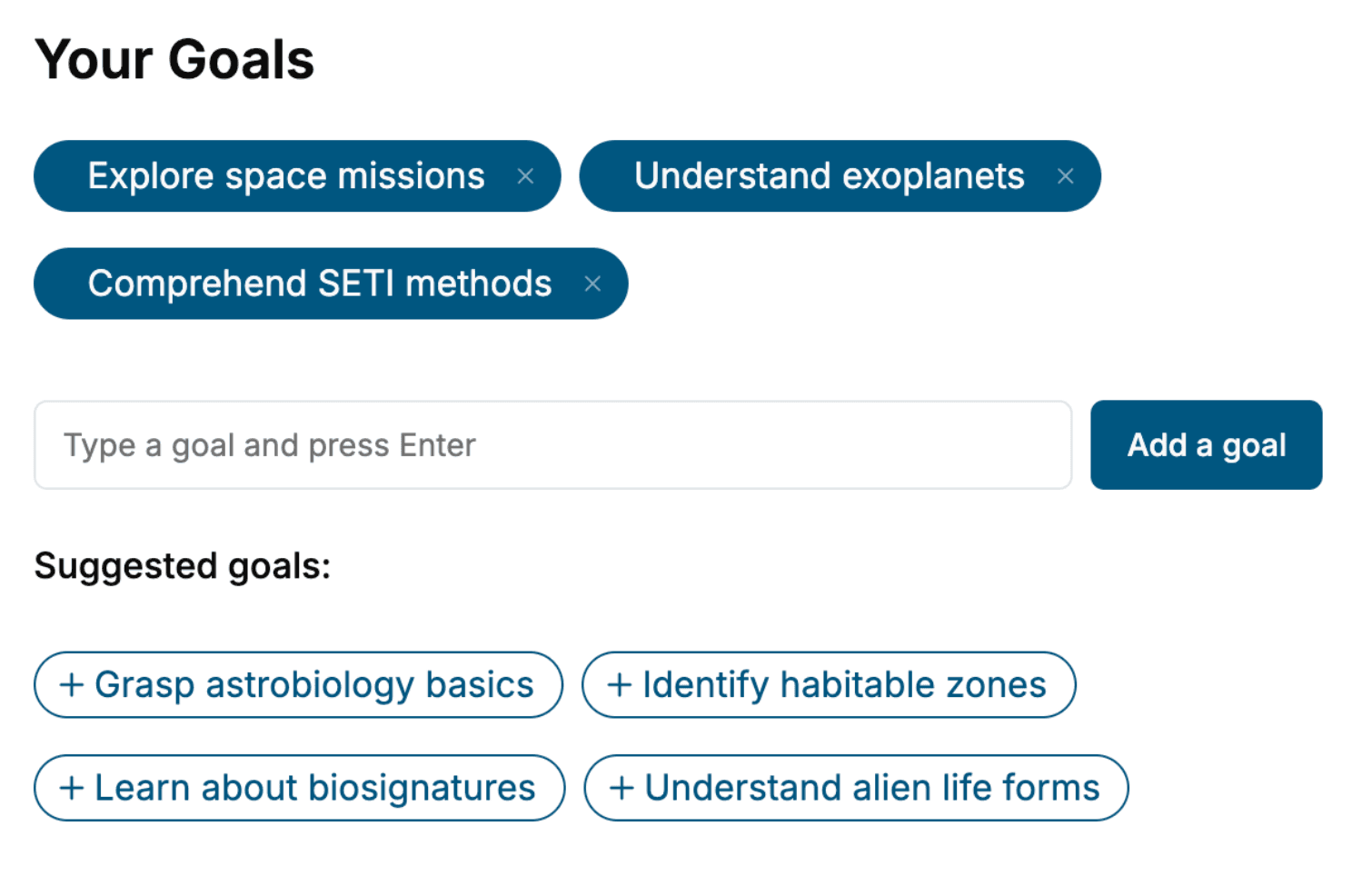
Tell us your goals and background, and get your own version of this book, tailored by AI to you.


Benefits of AI-tailored books
- Read one book, not ten:
- all the Greece Ancient History knowledge you need, gathered into a single book.
- Save days of learning:
- tell us your goals, choose your topics, and the whole book is built around them.
- Learn effortlessly:
- Greece Ancient History book written for your specific background and expertise.
- Understand at a glance:
- includes charts, tables, timelines, checklists, decision trees, and more.
- Stay current:
- written the day you order it, not years ago.
- Trust what you read:
- every book is checked for accuracy, with real research when your subject needs it.
Create your unique book in 3 steps
- 1. Select your focus
Select the focus of your Greece Ancient History book and share your background
- 2. Personalize your book
Specify your goals and choose sub-topics to include
- 3. Get your tailored book
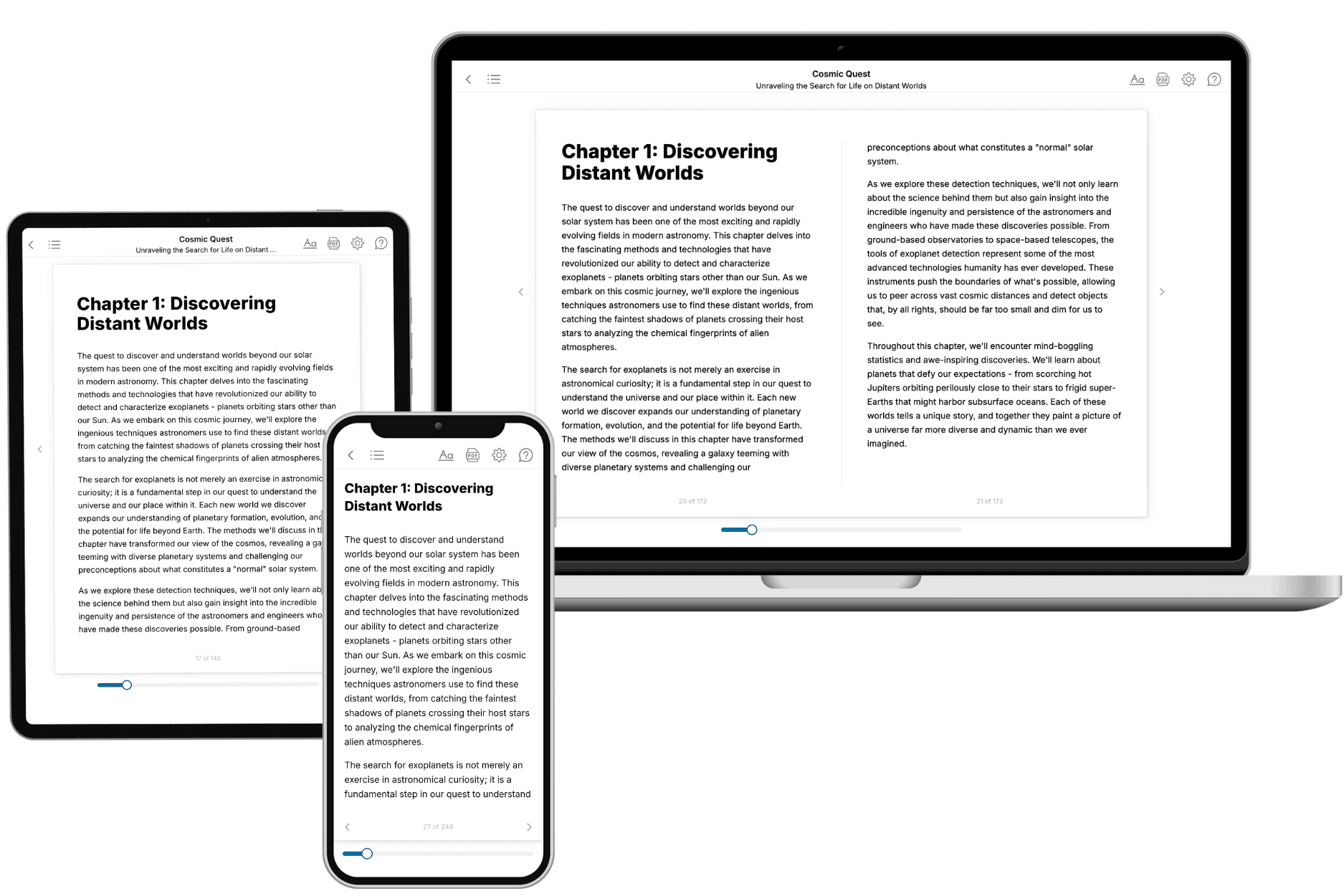
Your book is ready in 10 minutes. Read it online, download as EPUB or PDF, or send to Kindle.

Frequently asked questions
- What is TailoredRead?
TailoredRead creates complete, full-length nonfiction ebooks, written specifically for you. Tell us what you want to learn and why, and TailoredRead writes you a complete ebook on it, with charts, tables, and diagrams throughout. Read it online, on Kindle, or on any e-reader, or download it as a PDF or EPUB. Every book is written fresh the day you order it.
- How is the book tailored to me?
Before anything is written, you answer a few short questions about your goals, your background, and the topics you care about. Your book is then planned around your answers: written at your level, focused on your goals, and covering the topics you chose, instead of the one-size-fits-all book a store sells everyone.
- Will it read like generic AI content?
No. Your book isn't a chat transcript: it's planned chapter by chapter before a single word is written, told in a clear book voice, and explains ideas visually with charts, tables, and diagrams. After writing, every book goes through an editorial pass that polishes chapters so the book reads consistent from start to finish. Judge for yourself: browse thousands of sample books on our Explore Books page.
- How accurate is the content?
Our AI first checks whether your subject needs live research. Niche and fast-moving subjects are researched before writing, and the book plan and chapters are grounded in what it finds. After writing, every book goes through a quality pass that checks its facts and consistency, and researched books list their sources in a Notes section at the back.
- How long is the book?
You choose the length: Comprehensive (250-300 pages), Detailed (150-200 pages), Essential (70-100 pages), or Short (30-50 pages).
- Does the book include visuals?
Yes. Every book includes charts, tables, and diagrams: timelines, checklists, step-by-step guides, decision trees, comparison tables, matrices, and bar charts. A typical book includes dozens of these visual elements.
- Can I read it on Kindle? What formats can I download?
Yes. Every book can be read in our online reader or downloaded as a PDF or EPUB. The EPUB can be opened with Kindle, Apple Books, Kobo, and any e-reader. The Commercial and Author licenses also include an editable Word (DOCX) and Markdown download.
- How much does it cost?
About the price of a regular ebook. The exact price depends on your book's length and complexity, from $2 for the shortest books to $35 for the most comprehensive, and it's shown when you review your book, before you commit to anything. Each book is a one-time purchase, yours to keep, no subscription. Licenses that let you share, teach, or publish your book range from $35.99 to $49.99.
- Can I preview the book before purchasing?
Before you pay, you'll see what your book will cover: the title, a detailed description, the estimated length, and the complete chapter-by-chapter table of contents, so you know what you're getting before you decide. The full text itself is written after you purchase.
- How long does it take to create a book?
About 10 minutes. You can start reading the opening chapters while the rest is still being written.