The Bahamas Insider's Guide
2025 Travel Strategies for Authentic Experiences, Hidden Gems, and Sustainable Adventures
Planning a Bahamas vacation often feels overwhelming—too many islands, conflicting information about what's worth visiting, and uncertainty about how to travel responsibly while still having an authentic experience.
191 pages9 chaptersJan 25, 2026Caribbean HistoryCreated by Gary
About this book
This guide cuts through the noise with 2025's latest travel insights, proven strategies, and insider knowledge to help you craft a personalized island itinerary that aligns with your values and interests. Whether you're seeking hidden gems beyond the cruise ship crowds, wanting to immerse yourself in local culture, or committed to sustainable travel practices, you'll discover practical frameworks for planning, detailed destination profiles, and actionable tips for maximizing every moment. Learn how to navigate island accessibility, support local communities, engage with authentic cultural experiences, and stay ahead of emerging travel trends. This isn't a generic destination guide—it's your personal roadmap to experiencing the Bahamas on your terms, with confidence and purpose.
Table of contents
- IntroductionWhy the Bahamas Deserves Your Next Adventure, Beyond the Resort: What This Guide Offers, How to Use This Guide for Your Perfect TripRead below
- Chapter 1: Understanding the Bahamas in 2025The Archipelago: Geography and Island Diversity, 2025 Travel Trends Shaping Island Tourism, Building Your Personal Travel Framework
- Chapter 2: Discovering Hidden Gems and Lesser-Known IslandsBeyond Nassau: Underrated Island Destinations, Exploring Local Neighborhoods and Communities, Strategies for Uncovering Hidden Gems, Off-the-Beaten-Path Experiences and Activities
- Chapter 3: Immersing Yourself in Local CultureBahamian History and Cultural Heritage, Festivals, Celebrations, and Local Traditions, Respectful Engagement: Cultural Etiquette and Practices, Learning from Local Guides and Community Leaders
- Chapter 4: Sustainable and Eco-Friendly Travel PracticesUnderstanding the Islands' Environmental Challenges, Making Sustainable Accommodation and Transportation Choices, Engaging in Responsible Eco-Tourism Activities, Supporting Local Economies and Conservation Efforts
- Chapter 5: Island Activities and Adventure ExperiencesWater-Based Adventures: Snorkeling, Diving, and Boating, Land-Based Exploration: Hiking, Nature Walks, and Wildlife, Cultural and Culinary Experiences, Matching Activities to Your Personal Interests and Energy Levels
- Chapter 6: Accessible Island Destinations for All TravelersUnderstanding Accessibility Across the Islands, Navigating Mobility Challenges and Solutions, Accessible Island Destinations and Accommodations
- Chapter 7: Crafting Your Personalized ItineraryAssessing Your Travel Interests and Priorities, Step-by-Step Itinerary Building Process, Timing Your Visit: Seasons, Weather, and Events, Sample Itineraries for Different Travel Styles
- Chapter 8: Practical Planning and LogisticsGetting to the Bahamas: Transportation Options, Choosing Accommodations That Match Your Values, Budgeting and Managing Travel Costs, Digital Tools and Resources for Planning
- Chapter 9: Maximizing Your Experience: Tips and StrategiesSmart Packing and Pre-Trip Preparation, Navigating Islands Like a Local, Capturing Memories Respectfully and Authentically
- ConclusionYour Bahamas Story Awaits
- Resources and Further Reading
Introduction
The Bahamas sits just off the coast of Florida, yet it remains one of the most misunderstood destinations in the Caribbean. Most travelers experience only a fraction of what these islands offer—a quick cruise ship stop in Nassau, a few days at an all-inclusive resort, or a brief beach getaway that barely scratches the surface. This limited exposure creates a distorted picture of a destination that encompasses over 700 islands and cays, each with distinct character, culture, and natural beauty. The gap between what most visitors experience and what the Bahamas actually offers has never been wider, especially as 2025 brings new opportunities for authentic, sustainable travel.
You're reading this guide because you want something different. Perhaps you've traveled extensively and grown tired of cookie-cutter vacation experiences. Maybe you're committed to sustainable tourism and want to ensure your travel dollars support local communities rather than distant corporations. Or you might simply recognize that the most memorable travel experiences come from genuine cultural connections, not manufactured resort activities. Whatever brought you here, you share a common desire: to experience the Bahamas as it truly is, not as marketing brochures present it. This requires moving beyond the obvious destinations and engaging with islands, communities, and experiences that most visitors never discover.
This guide serves as your roadmap to that authentic experience. Unlike conventional travel books that list hotels and restaurants without context, this resource provides frameworks for making informed decisions aligned with your values and interests. You'll learn how to identify hidden gems, engage respectfully with local culture, minimize your environmental impact, and craft personalized itineraries that reflect your unique travel style. The strategies presented here draw from current travel trends, sustainable tourism principles, and practical insights about navigating the Bahamian archipelago in 2025. By the time you finish reading, you'll possess the knowledge and confidence to plan a trip that transforms your understanding of what Caribbean travel can be.
Why the Bahamas Deserves Your Next Adventure
The Bahamas occupies a unique position in Caribbean tourism, offering accessibility without sacrificing authenticity. Located just 50 miles from the Florida coast, the islands provide international travel convenience with minimal flight time for North American visitors. Yet this proximity doesn't diminish the destination's exotic appeal—the moment you step off the plane, you encounter a distinct culture shaped by African, British, and indigenous influences. The Bahamian dialect, local cuisine, and social customs reflect centuries of history that created something entirely unique. This combination of accessibility and genuine cultural difference makes the Bahamas ideal for travelers seeking meaningful experiences without the logistical challenges of more remote destinations.
The archipelago's geographic diversity creates opportunities for varied experiences within a single trip. The 700-plus islands span 100,000 square miles of ocean, ranging from developed tourism centers to uninhabited cays accessible only by boat. Some islands feature bustling markets and historic architecture, while others offer pristine beaches where you might be the only person for miles. This diversity extends to ecosystems as well—coral reefs teeming with marine life, blue holes that plunge hundreds of feet into limestone bedrock, mangrove forests that serve as nurseries for countless species, and pine forests found nowhere else in the Caribbean. Each island presents different landscapes, activities, and cultural expressions, allowing you to customize your experience based on your interests.
The Bahamas has reached a pivotal moment in its tourism evolution. For decades, the industry focused primarily on resort development and cruise ship traffic, concentrating visitors in Nassau and a handful of other locations. Recent years have brought growing recognition that this model doesn't serve the islands' long-term interests—environmentally, economically, or culturally. Community-based tourism initiatives have emerged across the archipelago, offering visitors chances to engage directly with local guides, artisans, and cultural practitioners. Sustainable tourism certifications have become more common among accommodations and tour operators. These developments create unprecedented opportunities for travelers who want their visits to benefit local communities while experiencing authentic island life.
Climate change and environmental pressures have made sustainable travel more urgent than ever. The Bahamas faces rising sea levels, coral bleaching, and ecosystem disruption that threaten both natural beauty and local livelihoods. Your travel choices directly impact these challenges—where you stay, how you move between islands, which activities you choose, and how you engage with natural environments all carry environmental consequences. The good news is that sustainable options have become increasingly available and affordable. Eco-lodges, solar-powered accommodations, and low-impact tour operators now exist across the islands, making it easier to minimize your footprint while maximizing your experience. Choosing these options supports businesses that prioritize environmental stewardship and demonstrates market demand for sustainable practices.
The cultural richness of the Bahamas extends far beyond what most visitors encounter. Junkanoo, the islands' signature festival, represents just one expression of a vibrant artistic tradition that includes rake-and-scrape music, straw weaving, storytelling, and culinary arts passed down through generations. Local communities maintain traditions while adapting to contemporary life, creating a dynamic culture that resists simple categorization. Engaging with this culture requires moving beyond tourist performances to attend community events, visit local markets, eat at neighborhood restaurants, and learn from residents about their daily lives. These interactions transform your understanding of the destination and create the meaningful connections that make travel truly rewarding.
Your demographic profile—retired professionals with advanced education—positions you perfectly for this type of travel. You possess the time flexibility to visit during off-peak seasons when islands are less crowded and locals have more capacity for genuine interaction. Your educational background provides context for understanding historical and cultural complexities. Your life experience helps you navigate unfamiliar situations with confidence and cultural sensitivity. Perhaps most importantly, you're at a life stage where meaningful experiences matter more than checking boxes on a tourist itinerary. The Bahamas rewards this approach, offering depth and authenticity to travelers willing to look beyond surface-level attractions.
The islands also provide practical advantages for extended travel. The Bahamas uses the Bahamian dollar, pegged one-to-one with the US dollar, eliminating currency exchange complications. English serves as the official language, though the local dialect adds colorful expressions you'll quickly learn to appreciate. Modern infrastructure exists in populated areas, with reliable internet, healthcare facilities, and services that make extended stays comfortable. Inter-island transportation has improved significantly, with expanded ferry services and affordable flights connecting major destinations. These practical considerations matter when planning trips lasting weeks rather than days, allowing you to focus on experiences rather than logistics.
Beyond the Resort: What This Guide Offers
This guide takes a fundamentally different approach from conventional travel books. Rather than providing exhaustive lists of hotels, restaurants, and attractions, it teaches you frameworks for making informed decisions based on your values and interests. You'll learn how to evaluate accommodations for sustainability practices, identify authentic cultural experiences versus tourist performances, and assess which islands match your travel style. This approach recognizes that your perfect Bahamas trip differs from everyone else's—your interests, energy levels, budget, and priorities are unique. The goal isn't to tell you exactly where to go, but to equip you with tools for creating your own personalized itinerary.
The emphasis on hidden gems and lesser-known destinations reflects a core philosophy: the best experiences often happen away from crowds. While Nassau and Paradise Island have their merits, they represent a tiny fraction of what the Bahamas offers. Islands like Andros, Cat Island, Long Island, and the Abacos provide dramatically different experiences with far fewer tourists. Even on more developed islands, local neighborhoods, community markets, and family-run establishments offer authenticity that resort areas can't match. This guide helps you identify these opportunities and provides strategies for discovering places that haven't yet appeared in mainstream travel media.
Sustainable travel practices form a central thread throughout every chapter. You'll find specific guidance on:
- Choosing eco-friendly accommodations that minimize environmental impact while supporting local ownership
- Selecting low-impact transportation options between and within islands
- Engaging in responsible wildlife encounters that prioritize animal welfare over entertainment value
- Supporting local economies through strategic spending that benefits communities rather than external corporations
- Minimizing waste, conserving resources, and respecting fragile ecosystems during your visit
Cultural immersion receives detailed attention because it transforms good trips into extraordinary ones. The guide explores Bahamian history from indigenous Lucayan peoples through colonial periods to independence and contemporary life. You'll learn about cultural practices, social customs, and etiquette that help you engage respectfully with local communities. Specific strategies show you how to move beyond tourist zones into neighborhoods where residents live and work, how to identify authentic cultural events versus staged performances, and how to build meaningful connections with locals. This cultural foundation helps you understand what you're seeing and experiencing, adding depth to every interaction.
Accessibility considerations appear throughout the guide, recognizing that mobility challenges shouldn't prevent anyone from experiencing the islands. You'll find detailed information about which destinations offer the best accessibility infrastructure, how to navigate common challenges, and which activities accommodate various mobility levels. This includes practical details about wheelchair-accessible beaches, accommodations with appropriate facilities, transportation options for travelers with limited mobility, and activities that don't require strenuous physical exertion. The goal is ensuring that everyone can find their perfect Bahamas experience, regardless of physical limitations.
The guide incorporates 2025-specific information that reflects current conditions and emerging trends. Travel patterns have shifted significantly in recent years, with growing emphasis on experiential tourism, off-season travel, and digital tools that enhance planning and navigation. New accommodations, updated transportation schedules, recently launched cultural initiatives, and current environmental conditions all factor into the recommendations provided. This contemporary focus ensures the information remains relevant and actionable, not based on outdated assumptions about how island tourism operates.
Practical planning receives thorough treatment because even the best intentions fail without solid logistics. You'll find step-by-step processes for:
- Assessing your travel priorities and interests to guide destination selection
- Building realistic itineraries that balance activity with relaxation
- Timing your visit to align with weather patterns, cultural events, and crowd levels
- Budgeting effectively while maximizing value and supporting local businesses
- Using digital tools for research, booking, and on-island navigation
- Preparing for common challenges and unexpected situations
The guide also addresses the psychological and emotional aspects of meaningful travel. Authentic experiences require openness to uncertainty, willingness to step outside comfort zones, and patience when things don't go as planned. You'll find strategies for maintaining this mindset, dealing with common frustrations, and staying present rather than constantly documenting experiences for social media. This holistic approach recognizes that successful travel depends as much on your mental framework as your itinerary. The most memorable moments often happen when you abandon rigid plans and embrace spontaneous opportunities—but this requires preparation and the right mindset.
How to Use This Guide for Your Perfect Trip
This guide works best when approached as a resource rather than a rulebook. Start by reading through completely to understand the full scope of possibilities, then return to specific chapters as you develop your itinerary. The early chapters provide essential context about the archipelago's geography, current travel trends, and planning frameworks. Middle chapters dive deep into specific aspects—hidden gems, cultural immersion, sustainability, activities, and accessibility. Later chapters offer practical planning tools and implementation strategies. This structure allows you to build knowledge progressively while having detailed references available when making specific decisions.
Begin your planning process by honestly assessing your travel priorities. Chapter 7 provides detailed frameworks for this assessment, but start thinking now about what matters most to you. Do you prioritize cultural experiences over beach time, or vice versa? How important is environmental sustainability in your accommodation and activity choices? What's your comfort level with uncertainty and spontaneity? How much social interaction energizes versus exhausts you? What physical activities interest you, and what are your realistic energy levels? These questions don't have right or wrong answers—they simply help you understand what will make your trip personally meaningful. Write down your thoughts as you read; they'll guide your decision-making throughout the planning process.
Use the destination profiles and activity descriptions to create a preliminary list of possibilities. Don't worry initially about logistics or feasibility—just note everything that sparks your interest. You might find yourself drawn to snorkeling in Andros's blue holes, attending a local church service, learning traditional straw weaving, exploring historic sites in Nassau, kayaking through mangrove forests, or simply spending quiet mornings on uncrowded beaches. This brainstorming phase helps you identify patterns in your interests and reveals what type of experience you're truly seeking. Some travelers discover they want adventure and constant activity; others realize they need restorative time in nature with minimal structure. Both approaches are valid—the key is understanding which resonates with you.
As you narrow your focus, pay attention to the practical considerations each chapter addresses. Budget constraints, time limitations, accessibility needs, and seasonal factors all influence what's realistic for your specific situation. A two-week trip allows for exploring multiple islands; a week might require focusing on one or two destinations. Limited mobility might steer you toward certain islands with better infrastructure. Budget considerations might influence whether you stay in eco-lodges or guesthouses, eat at restaurants or local food stands, book guided tours or explore independently. These constraints aren't limitations—they're parameters that help you make strategic choices aligned with your resources.
The sample itineraries in Chapter 7 provide templates you can adapt rather than follow exactly. They demonstrate how to balance different types of experiences, pace your days to avoid exhaustion, build in flexibility for spontaneous opportunities, and move logically between destinations. Notice how they incorporate cultural activities, natural experiences, rest time, and practical necessities like travel days and meal planning. Use these examples as starting points, then customize based on your specific interests and circumstances. Your final itinerary should feel personally meaningful, not like you're following someone else's vacation.
Throughout your planning, return frequently to the sustainability and cultural respect sections. These aren't separate concerns to address after planning your "real" itinerary—they should inform every decision you make. When choosing between two similar accommodations, sustainability practices might be the deciding factor. When selecting activities, cultural authenticity and environmental impact matter as much as entertainment value. When deciding where to eat, supporting local establishments versus chains affects community economics. These choices accumulate into either a trip that benefits the places you visit or one that extracts value while leaving little behind. The guide provides specific criteria for evaluating options through these lenses.
Make active use of the digital tools and resources discussed in Chapter 8. Modern technology dramatically improves travel planning and execution when used strategically. Mapping applications help you understand island geography and distances. Booking platforms let you compare options and read recent reviews. Social media connects you with local guides and cultural practitioners. Weather apps help you plan activities around conditions. Translation tools assist with dialect variations. However, don't let technology replace human interaction—use it to enhance rather than substitute for genuine connections. The goal is finding the right balance between digital efficiency and analog authenticity.
Finally, approach this guide with flexibility and openness to revision. Your perfect trip might look different after reading than it did initially. You might discover islands you'd never heard of, activities you hadn't considered, or approaches to travel that challenge your assumptions. Let this information reshape your thinking rather than simply confirming existing preferences. The most transformative travel experiences often come from unexpected directions—from destinations you initially overlooked, activities outside your comfort zone, or interactions you didn't plan. This guide provides structure and information, but your willingness to remain open and adaptable ultimately determines how meaningful your Bahamas adventure becomes.
Keep this guide accessible throughout your trip, not just during planning. The practical tips, cultural insights, and troubleshooting strategies become valuable references when you're actually on the islands. You might need to adjust your itinerary based on weather, discover new opportunities from local recommendations, or navigate unexpected challenges. Having this resource available helps you make informed decisions in the moment rather than second-guessing yourself. Think of it as a knowledgeable companion who's researched extensively but encourages you to trust your instincts and embrace the journey as it unfolds.
This is the end of the free sample. The full book has 9 chapters.
Want this book written for you?
Tell us your goals and background, and get your own version of this book, tailored by AI to you.


Benefits of AI-tailored books
- Read one book, not ten:
- all the Caribbean History knowledge you need, gathered into a single book.
- Save days of learning:
- tell us your goals, choose your topics, and the whole book is built around them.
- Learn effortlessly:
- Caribbean History book written for your specific background and expertise.
- Understand at a glance:
- includes charts, tables, timelines, checklists, decision trees, and more.
- Stay current:
- written the day you order it, not years ago.
- Trust what you read:
- every book is checked for accuracy, with real research when your subject needs it.
Create your unique book in 3 steps
- 1. Select your focus
Select the focus of your Caribbean History book and share your background
- 2. Personalize your book
Specify your goals and choose sub-topics to include
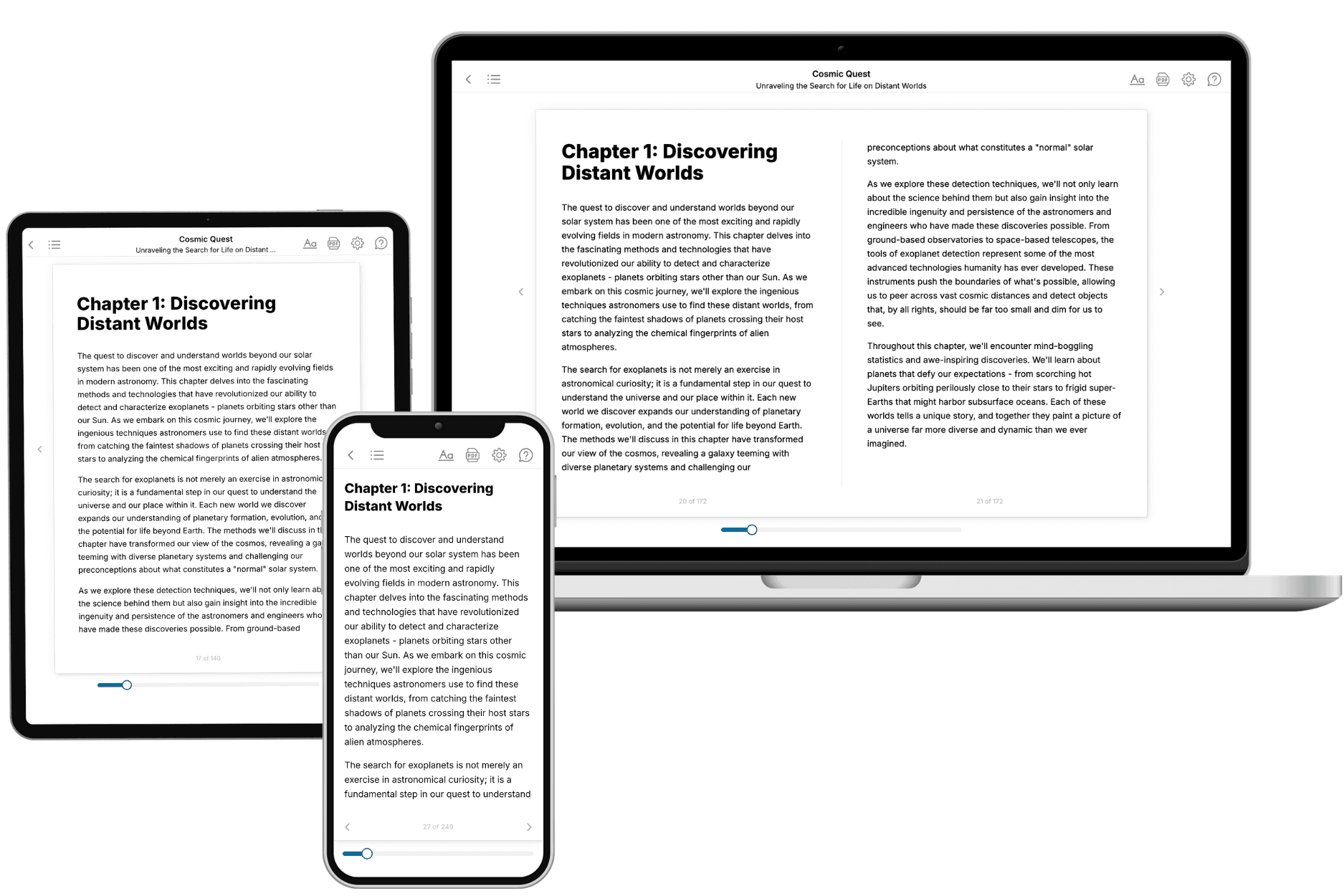
- 3. Get your tailored book
Your book is ready in 10 minutes. Read it online, download as EPUB or PDF, or send to Kindle.
Frequently asked questions
- What is TailoredRead?
TailoredRead creates complete, full-length nonfiction ebooks, written specifically for you. Tell us what you want to learn and why, and TailoredRead writes you a complete ebook on it, with charts, tables, and diagrams throughout. Read it online, on Kindle, or on any e-reader, or download it as a PDF or EPUB. Every book is written fresh the day you order it.
- How is the book tailored to me?
Before anything is written, you answer a few short questions about your goals, your background, and the topics you care about. Your book is then planned around your answers: written at your level, focused on your goals, and covering the topics you chose, instead of the one-size-fits-all book a store sells everyone.
- Will it read like generic AI content?
No. Your book isn't a chat transcript: it's planned chapter by chapter before a single word is written, told in a clear book voice, and explains ideas visually with charts, tables, and diagrams. After writing, every book goes through an editorial pass that polishes chapters so the book reads consistent from start to finish. Judge for yourself: browse thousands of sample books on our Explore Books page.
- How accurate is the content?
Our AI first checks whether your subject needs live research. Niche and fast-moving subjects are researched before writing, and the book plan and chapters are grounded in what it finds. After writing, every book goes through a quality pass that checks its facts and consistency, and researched books list their sources in a Notes section at the back.
- How long is the book?
You choose the length: Comprehensive (250-300 pages), Detailed (150-200 pages), Essential (70-100 pages), or Short (30-50 pages).
- Does the book include visuals?
Yes. Every book includes charts, tables, and diagrams: timelines, checklists, step-by-step guides, decision trees, comparison tables, matrices, and bar charts. A typical book includes dozens of these visual elements.
- Can I read it on Kindle? What formats can I download?
Yes. Every book can be read in our online reader or downloaded as a PDF or EPUB. The EPUB can be opened with Kindle, Apple Books, Kobo, and any e-reader. The Commercial and Author licenses also include an editable Word (DOCX) and Markdown download.
- How much does it cost?
About the price of a regular ebook. The exact price depends on your book's length and complexity, from $2 for the shortest books to $35 for the most comprehensive, and it's shown when you review your book, before you commit to anything. Each book is a one-time purchase, yours to keep, no subscription. Licenses that let you share, teach, or publish your book range from $35.99 to $49.99.
- Can I preview the book before purchasing?
Before you pay, you'll see what your book will cover: the title, a detailed description, the estimated length, and the complete chapter-by-chapter table of contents, so you know what you're getting before you decide. The full text itself is written after you purchase.
- How long does it take to create a book?
About 10 minutes. You can start reading the opening chapters while the rest is still being written.