Bayesian Thinking
How to Make Better Decisions with Probability and Evidence
What if the way you make decisions could be more systematic, more transparent, and more aligned with how evidence actually works?
191 pages9 chaptersDec 15, 2025Bayesian Statistics
About this book
Bayesian statistics offers a framework for doing exactly that—but most explanations make it seem far more complicated than it needs to be. This book strips away the jargon and shows you how Bayesian thinking applies to decisions you make every day, from evaluating medical test results to assessing business risks. You'll learn why your starting assumptions matter, how to interpret evidence correctly, and when to trust your conclusions. Through clear explanations, intuitive examples, and practical applications, you'll discover that Bayesian reasoning isn't just for statisticians—it's a powerful way to think about uncertainty that can improve how you learn, decide, and adapt in an uncertain world.
Table of contents
- IntroductionWhy Bayesian Thinking Matters, Common Misconceptions About Bayesian Statistics, How to Use This BookRead below
- Chapter 1: Probability FundamentalsWhat Is Probability Really?, Frequentist vs. Bayesian Perspectives, Essential Probability Rules and Notation
- Chapter 2: Prior Beliefs and AssumptionsUnderstanding Prior Distributions, How to Choose Appropriate Priors, Sensitivity Analysis and Prior Impact
- Chapter 3: Likelihood and EvidenceThe Likelihood Function Explained, How Data Informs Your Model, Common Mistakes in Likelihood Calculation
- Chapter 4: Bayes' Theorem in ActionThe Formula and What It Means, Understanding the Posterior Distribution, Real-World Applications of Bayes' Theorem
- Chapter 5: Bayesian Inference FundamentalsPoint Estimates and Credible Intervals, Bayesian Hypothesis Testing, Comparing Models with Bayes Factors
- Chapter 6: Computational MethodsWhy Computation Matters in Bayesian Analysis, Markov Chain Monte Carlo Fundamentals, Implementing Bayesian Analysis in Practice
- Chapter 7: Hierarchical Models and Complex ProblemsBuilding Hierarchical Models, Handling Multilevel and Grouped Data, Scaling to Complex Real-World Problems
- Chapter 8: Practical Applications Across DomainsMedical Testing and Diagnosis, Business Analytics and Risk Assessment, Scientific Research and Reproducibility, Personal Decision-Making Under Uncertainty
- Chapter 9: Evaluating and Validating Bayesian ModelsDiagnostic Tools and Convergence Checks, Posterior Predictive Checks, Validation and Out-of-Sample Performance
- ConclusionKey Takeaways and Next Steps, Continuing Your Bayesian Journey
- Further Reading and Resources
Introduction
Every day, you make decisions based on incomplete information. You evaluate whether a medical test result means you're actually sick. You assess whether a new business strategy will pay off. You judge whether a pattern you've noticed is real or just coincidence. These decisions all share something fundamental: they require you to update what you believe when you encounter new evidence. This process of belief updating is at the heart of Bayesian thinking, and it's far more intuitive than most statistics textbooks would have you believe.
Traditional statistics education often presents probability as a purely mathematical abstraction, disconnected from how people actually reason about uncertainty. You learn formulas, memorize distributions, and solve textbook problems that rarely resemble the messy decisions you face in real life. Bayesian statistics takes a different approach. It treats probability as a language for expressing uncertainty about anything you don't know for certain, and it provides a systematic framework for combining what you already believe with new evidence you observe. This isn't just theoretical elegance—it's a practical tool that can transform how you approach problems across every domain of your life.
The beauty of Bayesian thinking lies in its transparency. Unlike black-box statistical methods that produce results without explaining their reasoning, Bayesian analysis forces you to make your assumptions explicit. You start by stating what you believe before seeing the data. You specify how your observations relate to the underlying reality you're trying to understand. Then you use Bayes' theorem to calculate exactly how your beliefs should change given the evidence. This explicitness makes Bayesian reasoning both more honest and more powerful than approaches that hide their assumptions behind technical complexity.
This book is designed for readers who already have some foundation in statistics but want to understand how Bayesian methods work and when to apply them. You don't need advanced mathematics, but you should be comfortable with basic probability concepts and willing to engage with quantitative reasoning. The goal isn't to turn you into a theoretical statistician—it's to give you practical tools for thinking more clearly about uncertainty and making better decisions when the stakes matter. Whether you're analyzing data professionally or simply trying to navigate an uncertain world more effectively, Bayesian thinking offers a framework that's both rigorous and remarkably intuitive once you understand its core principles.
Why Bayesian Thinking Matters
The world doesn't present itself in neat experimental designs with clear control groups and perfectly randomized samples. Most of the time, you're working with messy data, limited observations, and prior knowledge that shouldn't be ignored. Bayesian methods excel precisely in these situations because they're designed to incorporate everything you know—not just the data you collected yesterday, but also the accumulated knowledge from previous studies, domain expertise, and even reasonable hunches about how the world works. This ability to combine multiple sources of information makes Bayesian analysis particularly valuable when data is scarce, expensive, or ethically difficult to collect.
Consider medical diagnosis, one of the most consequential applications of probabilistic reasoning. When a doctor interprets a test result, they don't treat it in isolation. They consider the patient's symptoms, medical history, and the base rate of the disease in the relevant population. A positive test result means something very different for a patient with obvious symptoms than for someone being screened routinely. This intuitive reasoning process is fundamentally Bayesian—it combines prior probability (how likely was the disease before testing?) with the likelihood of the evidence (how reliable is this test?) to produce a posterior probability (how likely is the disease now?). Formalizing this reasoning with Bayes' theorem doesn't replace clinical judgment; it sharpens it by making the logic explicit and quantifiable.
Business decisions provide another compelling domain for Bayesian thinking. Imagine you're launching a new product and need to estimate demand based on limited market testing. Traditional statistical methods might tell you the demand could be anywhere within a wide confidence interval, offering little guidance for action. A Bayesian approach lets you start with informed priors based on similar products, industry benchmarks, and expert opinions, then update those beliefs as you gather data from pilot programs and early sales. The result is a probability distribution that reflects both your prior knowledge and your new evidence, giving you a more nuanced picture of likely outcomes and associated risks.
The transparency of Bayesian methods matters just as much as their flexibility. When you build a Bayesian model, you're forced to articulate your assumptions explicitly:
- Prior beliefs: What did you think before seeing this data, and why?
- Likelihood function: How do you think the data-generating process works?
- Model structure: What relationships and dependencies are you assuming?
Bayesian thinking also aligns naturally with how learning actually works. When you encounter new information, you don't discard everything you knew before and start from scratch. You update your understanding incrementally, giving more weight to evidence that's reliable and less to evidence that's noisy or contradictory. This is exactly what Bayesian updating does mathematically. Each time you observe new data, your posterior distribution becomes the prior for the next analysis. This sequential learning process mirrors how scientific knowledge accumulates over time and how individuals refine their understanding through experience.
The practical advantages extend to handling uncertainty in a more honest way. Traditional null hypothesis testing forces you into binary decisions: reject or fail to reject. But most real decisions aren't binary—they involve degrees of confidence and trade-offs between different risks. Bayesian analysis gives you full probability distributions that capture the range of plausible values and their relative likelihoods. Instead of saying we reject the null hypothesis at p < 0.05,
you can say there's a 73% probability the effect size is between 0.2 and 0.5, with our best estimate at 0.35.
This richer information supports better decision-making because it acknowledges uncertainty rather than hiding it behind arbitrary significance thresholds.
Perhaps most importantly, Bayesian methods have become increasingly practical thanks to modern computational tools. Problems that were mathematically intractable thirty years ago can now be solved in minutes using Markov Chain Monte Carlo (MCMC) algorithms and accessible software packages. This computational revolution has democratized Bayesian analysis, making it available not just to theoretical statisticians but to practitioners across every field. You don't need to derive analytical solutions by hand—you can specify your model, let the computer do the heavy lifting, and focus on interpreting results and making decisions. This accessibility means Bayesian thinking is no longer an academic curiosity but a practical toolkit for anyone who works with data and uncertainty.
The shift toward Bayesian methods reflects a broader recognition that statistical analysis should serve decision-making, not just hypothesis testing. When you're trying to decide whether to approve a new drug, invest in a business opportunity, or change a policy, you need more than a p-value. You need a framework that incorporates prior knowledge, quantifies uncertainty honestly, and produces results you can actually use to weigh costs and benefits. Bayesian thinking provides that framework, bridging the gap between statistical theory and practical judgment in a way that makes both more powerful.
Common Misconceptions About Bayesian Statistics
One of the most persistent misconceptions about Bayesian statistics is that it's inherently subjective and therefore less rigorous than frequentist methods. Critics argue that because Bayesian analysis requires specifying prior beliefs, different analysts might reach different conclusions from the same data. This criticism misunderstands both the nature of subjectivity in statistics and the role of priors in Bayesian reasoning. All statistical analysis involves subjective choices—which variables to measure, which models to fit, which assumptions to make about data-generating processes. Bayesian methods simply make these choices explicit rather than hiding them in modeling decisions that seem objective but aren't. Moreover, when you have sufficient data, the likelihood dominates the prior, and different reasonable priors converge to similar posteriors. The subjectivity matters most when data is scarce, which is precisely when incorporating prior knowledge is most valuable.
Another common misunderstanding is that Bayesian analysis is too computationally intensive to be practical. This was true decades ago when analytical solutions were required and complex models were intractable. Today, it's simply false. Modern MCMC algorithms and software like Stan, PyMC, and JAGS make Bayesian analysis accessible for models of considerable complexity. A typical analysis that might have taken weeks of custom programming in the 1990s can now be implemented in an afternoon with a few dozen lines of code. The computational barrier has largely disappeared, replaced by a learning curve that's no steeper than mastering any other advanced statistical technique. The real challenge isn't computational power—it's conceptual understanding of what priors mean, how to interpret posterior distributions, and when Bayesian methods are the right tool for your problem.
Many people also believe that Bayesian methods are only useful for specialized applications and that frequentist methods are sufficient for most practical work. This misconception stems from the historical dominance of frequentist approaches in statistics education and scientific publishing. In reality, Bayesian methods often provide more natural solutions to common problems. Consider the question: What's the probability that this treatment is effective?
Frequentist methods can't answer this directly—they can only tell you the probability of observing your data if the treatment were ineffective. Bayesian methods give you exactly what you want: a probability distribution over the treatment effect itself. This directness makes Bayesian results easier to interpret and more aligned with how people naturally think about uncertainty.
Some practitioners worry that using informative priors amounts to cooking the books
or predetermining your conclusions. This concern confuses transparency with manipulation. When you specify an informative prior, you're making explicit what you believed before seeing the data, which allows others to evaluate whether that prior was reasonable. If your prior is too strong or poorly justified, critics can point this out and propose alternatives. This is far more honest than pretending you had no prior beliefs and then making equivalent assumptions implicitly through your choice of model structure, significance thresholds, or stopping rules. The Bayesian approach doesn't eliminate judgment—it makes judgment visible and accountable.
There's also a misconception that Bayesian analysis requires you to have strong prior beliefs about everything. In fact, Bayesian methods work perfectly well with weak or uninformative priors that express genuine uncertainty. When you don't have strong prior knowledge, you can use priors that are intentionally vague, letting the data drive your conclusions. The key insight is that even uninformative
priors involve choices—about the scale of plausible values, the shape of the distribution, and what counts as neutral. Making these choices explicit is a feature, not a bug. It forces you to think carefully about what you're assuming and makes your analysis more transparent to others.
Another myth is that Bayesian and frequentist methods always give different answers and that you must choose one philosophical camp or the other. In practice, the two approaches often yield similar results, especially with large datasets and reasonable priors. The real differences lie in interpretation and workflow:
- Interpretation: Bayesian credible intervals represent probability ranges for parameters; frequentist confidence intervals represent long-run coverage properties
- Workflow: Bayesian analysis naturally handles sequential updating; frequentist methods require corrections for multiple testing
- Flexibility: Bayesian hierarchical models handle complex dependencies more naturally than frequentist alternatives
Some people believe that Bayesian statistics is a new or trendy approach that hasn't stood the test of time. In fact, Bayes' theorem dates to the 18th century, and Bayesian reasoning has deep roots in probability theory and decision analysis. What's new is the computational power that makes Bayesian methods practical for complex problems. The recent surge in Bayesian applications reflects technological progress, not a passing fad. Fields from genomics to machine learning have embraced Bayesian methods because they work, not because they're fashionable. The approach has proven its value across decades and domains, earning its place as a fundamental tool in the statistical toolkit.
Finally, there's a misconception that you need to be a mathematical expert to use Bayesian methods effectively. While deep mathematical understanding certainly helps, you can apply Bayesian thinking productively with a solid grasp of probability fundamentals and willingness to engage with the concepts. Modern software handles the computational complexity, and the conceptual framework—prior beliefs, likelihood of evidence, posterior conclusions—is remarkably intuitive once you see it in action. The goal of this book is to make Bayesian thinking accessible to anyone with intermediate statistical knowledge and curiosity about how to reason more clearly about uncertainty. You don't need a PhD in mathematics; you need patience, practice, and a willingness to think carefully about what your assumptions mean.
How to Use This Book
This book is structured to build your understanding progressively, starting with foundational concepts and moving toward practical applications. Each chapter focuses on a specific aspect of Bayesian thinking, with clear explanations, concrete examples, and actionable guidance. You don't need to read the chapters in strict sequence, but the early chapters establish concepts that later chapters build upon. If you're already comfortable with probability fundamentals, you might skim Chapter 1 and focus more attention on later chapters about inference and computation. If you're newer to Bayesian thinking, working through the chapters in order will give you the most coherent learning experience.
The book is designed for active engagement, not passive reading. Each chapter includes examples that you should work through yourself, either with pencil and paper for simple cases or with computational tools for more complex problems. Understanding Bayesian thinking requires doing, not just reading about doing. When you encounter an example, pause and try to work through it before reading the solution. When you see a concept explained, think about how it applies to problems in your own domain. This active engagement will deepen your understanding far more than simply reading through the material once and moving on.
Here's what you'll find in each major section of the book:
- Chapters 1-2: Foundational concepts including probability fundamentals and the role of prior beliefs
- Chapters 3-4: Core mechanics of Bayesian inference, including likelihood functions and Bayes' theorem
- Chapters 5-6: Practical inference methods and computational approaches for real-world problems
- Chapters 7-8: Advanced topics and applications across multiple domains
- Chapter 9: Model evaluation and validation techniques to ensure your analyses are sound
Throughout the book, you'll encounter different types of content designed to support different aspects of learning. Conceptual explanations clarify what ideas mean and why they matter. Mathematical formulations show you the precise relationships between quantities, but always with intuitive explanations alongside the equations. Examples demonstrate concepts in action, showing you how abstract ideas apply to concrete situations. Practical guidance helps you implement Bayesian analyses yourself, with attention to common pitfalls and how to avoid them. This multi-layered approach ensures you develop both conceptual understanding and practical skills.
To get the most from this book, consider setting up a computational environment where you can experiment with Bayesian analyses. While you can learn a great deal from working through examples by hand, modern Bayesian practice relies heavily on computational tools. You don't need to become a programming expert, but familiarity with at least one Bayesian software package will dramatically enhance your learning. Popular options include:
- R with Stan or JAGS: Excellent for statistical analysis with extensive documentation and community support
- Python with PyMC: Great if you're already comfortable with Python for data analysis
- Spreadsheet-based tools: Useful for simple problems and building intuition before moving to more powerful tools
Pay special attention to the examples throughout the book, as they're carefully chosen to illustrate both typical applications and common challenges. Some examples are deliberately simple to make concepts clear without computational complexity. Others are more realistic, showing you how Bayesian methods handle the messiness of real data. When you encounter a simple example, resist the temptation to dismiss it as too basic—these examples often reveal conceptual insights that get obscured in more complex settings. When you encounter a complex example, don't get discouraged if you don't understand every detail immediately. Work through it step by step, and return to it after you've progressed further in the book.
The book includes footnotes with references to additional resources, research papers, and technical details that go beyond the main text. These footnotes serve two purposes: they provide evidence for claims made in the text, and they point you toward deeper explorations of topics that interest you. You don't need to follow every footnote to understand the main content, but they're there when you want to dig deeper or verify the basis for particular statements. Think of them as optional extensions that enrich your understanding without interrupting the main narrative flow.
As you progress through the book, you'll notice recurring themes that connect different chapters. The relationship between priors and posteriors appears throughout, as does the tension between model complexity and interpretability. The importance of making assumptions explicit comes up repeatedly in different contexts. These recurring themes aren't repetitive—they're fundamental principles that manifest differently depending on the specific problem you're addressing. Recognizing these patterns will help you transfer insights from one domain to another and develop a more integrated understanding of Bayesian thinking as a coherent framework rather than a collection of disconnected techniques.
Finally, remember that learning Bayesian statistics is a journey, not a destination. This book aims to give you a solid foundation and practical skills, but mastery comes from applying these methods to real problems in your own domain. After working through the book, you'll be equipped to read more advanced texts, implement Bayesian analyses for your own projects, and continue developing your expertise. The goal isn't to make you an expert by the final page—it's to give you the tools and understanding you need to become an expert through practice and continued learning. Approach the material with patience, curiosity, and a willingness to engage deeply with ideas that might initially seem challenging. The investment will pay dividends in clearer thinking and better decisions for years to come.
This is the end of the free sample. The full book has 9 chapters.
Want this book written for you?
Tell us your goals and background, and get your own version of this book, tailored by AI to you.


Benefits of AI-tailored books
- Read one book, not ten:
- all the Bayesian Statistics knowledge you need, gathered into a single book.
- Save days of learning:
- tell us your goals, choose your topics, and the whole book is built around them.
- Learn effortlessly:
- Bayesian Statistics book written for your specific background and expertise.
- Understand at a glance:
- includes charts, tables, timelines, checklists, decision trees, and more.
- Stay current:
- written the day you order it, not years ago.
- Trust what you read:
- every book is checked for accuracy, with real research when your subject needs it.
Create your unique book in 3 steps
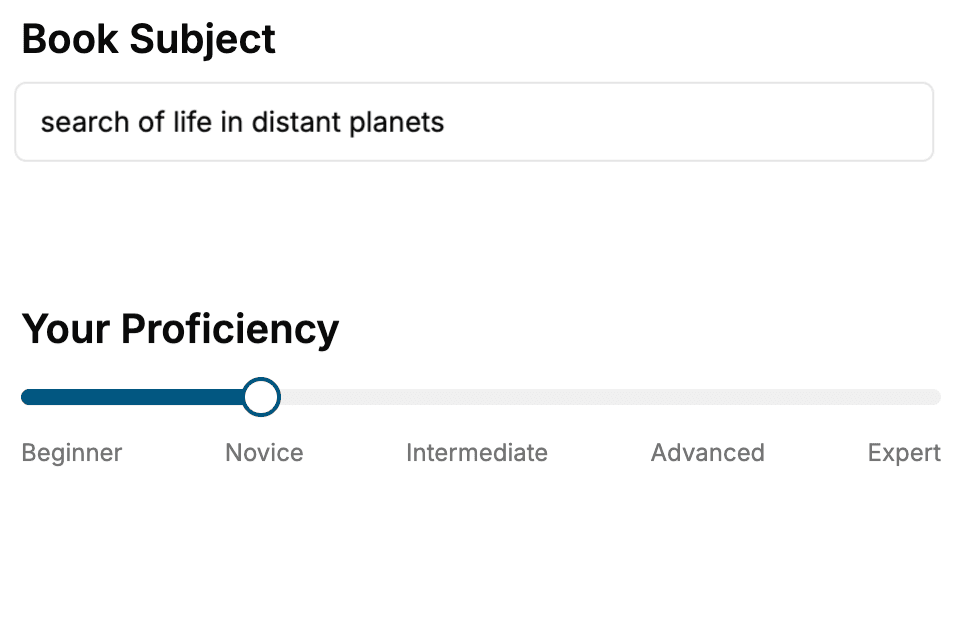
- 1. Select your focus
Select the focus of your Bayesian Statistics book and share your background
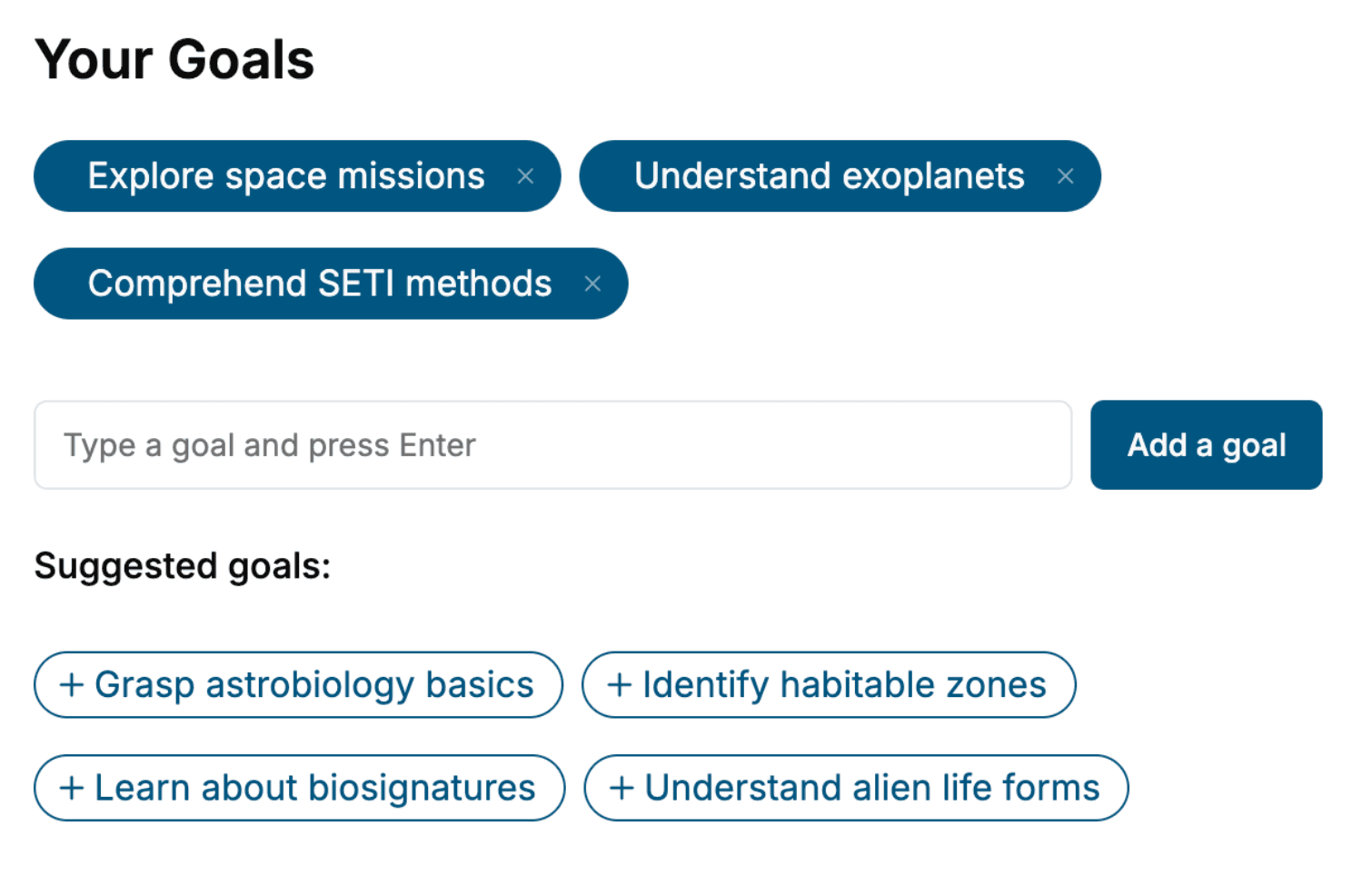
- 2. Personalize your book
Specify your goals and choose sub-topics to include
- 3. Get your tailored book
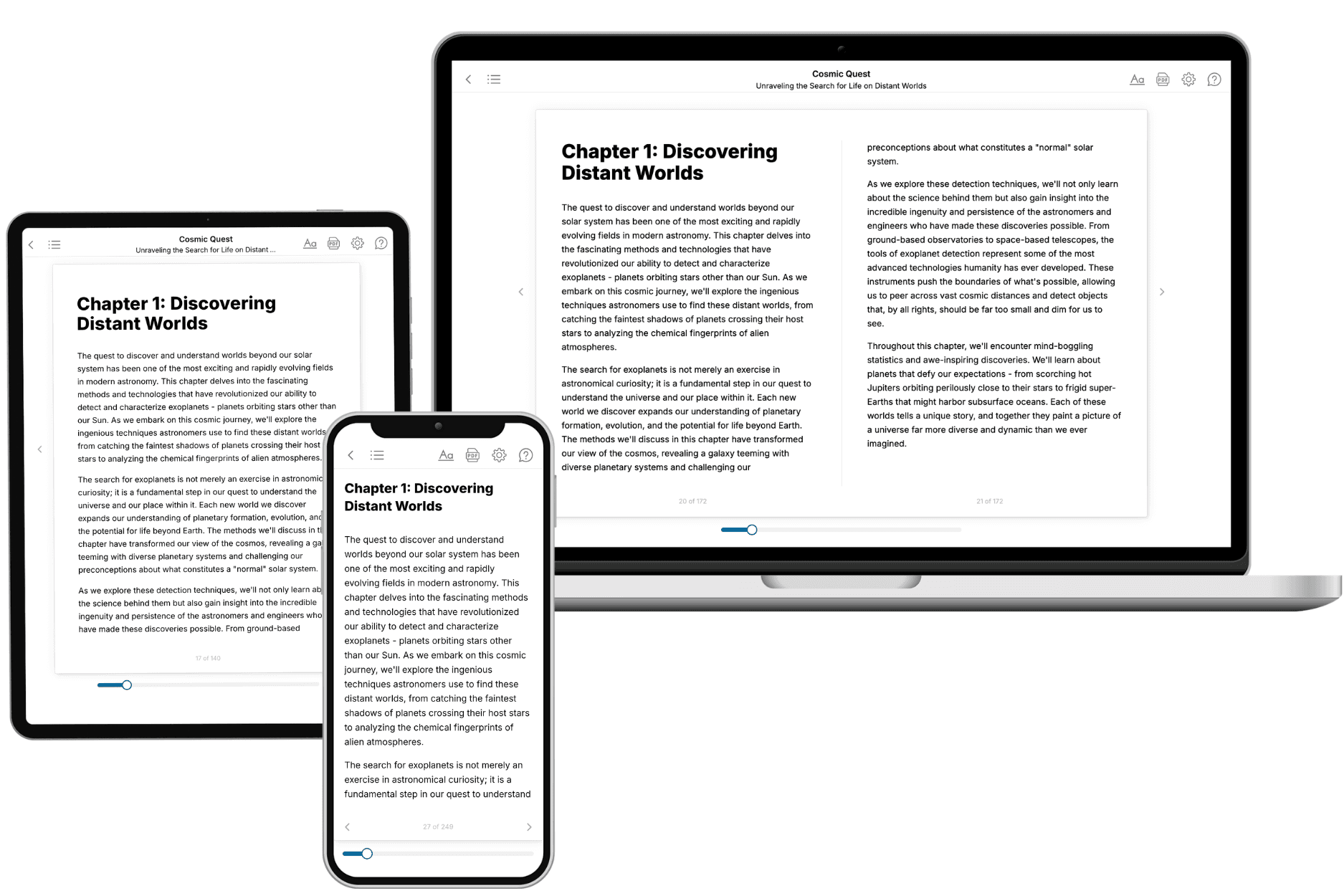
Your book is ready in 10 minutes. Read it online, download as EPUB or PDF, or send to Kindle.
Frequently asked questions
- What is TailoredRead?
TailoredRead creates complete, full-length nonfiction ebooks, written specifically for you. Tell us what you want to learn and why, and TailoredRead writes you a complete ebook on it, with charts, tables, and diagrams throughout. Read it online, on Kindle, or on any e-reader, or download it as a PDF or EPUB. Every book is written fresh the day you order it.
- How is the book tailored to me?
Before anything is written, you answer a few short questions about your goals, your background, and the topics you care about. Your book is then planned around your answers: written at your level, focused on your goals, and covering the topics you chose, instead of the one-size-fits-all book a store sells everyone.
- Will it read like generic AI content?
No. Your book isn't a chat transcript: it's planned chapter by chapter before a single word is written, told in a clear book voice, and explains ideas visually with charts, tables, and diagrams. After writing, every book goes through an editorial pass that polishes chapters so the book reads consistent from start to finish. Judge for yourself: browse thousands of sample books on our Explore Books page.
- How accurate is the content?
Our AI first checks whether your subject needs live research. Niche and fast-moving subjects are researched before writing, and the book plan and chapters are grounded in what it finds. After writing, every book goes through a quality pass that checks its facts and consistency, and researched books list their sources in a Notes section at the back.
- How long is the book?
You choose the length: Comprehensive (250-300 pages), Detailed (150-200 pages), Essential (70-100 pages), or Short (30-50 pages).
- Does the book include visuals?
Yes. Every book includes charts, tables, and diagrams: timelines, checklists, step-by-step guides, decision trees, comparison tables, matrices, and bar charts. A typical book includes dozens of these visual elements.
- Can I read it on Kindle? What formats can I download?
Yes. Every book can be read in our online reader or downloaded as a PDF or EPUB. The EPUB can be opened with Kindle, Apple Books, Kobo, and any e-reader. The Commercial and Author licenses also include an editable Word (DOCX) and Markdown download.
- How much does it cost?
About the price of a regular ebook. The exact price depends on your book's length and complexity, from $2 for the shortest books to $35 for the most comprehensive, and it's shown when you review your book, before you commit to anything. Each book is a one-time purchase, yours to keep, no subscription. Licenses that let you share, teach, or publish your book range from $35.99 to $49.99.
- Can I preview the book before purchasing?
Before you pay, you'll see what your book will cover: the title, a detailed description, the estimated length, and the complete chapter-by-chapter table of contents, so you know what you're getting before you decide. The full text itself is written after you purchase.
- How long does it take to create a book?
About 10 minutes. You can start reading the opening chapters while the rest is still being written.