Bending Reality
A Journey Through Einstein's Universe of General Relativity
Prepare to have your perception of reality fundamentally altered.
269 pages13 chaptersDec 20, 2024Physics
About this book
In "Bending Reality: A Journey Through Einstein's Universe of General Relativity," you'll dive deep into one of the most revolutionary theories in the history of physics. This book takes you on an exhilarating exploration of spacetime, gravity, and the fabric of the cosmos. From the comfort of your armchair, you'll traverse the curved landscapes of spacetime, witness the dance of massive objects as they warp the universe around them, and unravel the mysteries of black holes and gravitational waves. With each chapter, you'll build a robust understanding of the principles that govern our universe at its most fundamental level. Whether you're a physics enthusiast looking to expand your knowledge or simply curious about the nature of reality, this book offers a clear and engaging path through the complexities of General Relativity. By the time you finish, you'll see the universe with new eyes, appreciating the elegant simplicity and profound implications of Einstein's groundbreaking theory.
Table of contents
- IntroductionWhy General Relativity Matters, Overview of the Book, Prerequisites and How to Approach This BookRead below
- Chapter 1: Foundations of SpacetimeNewtonian Concepts of Space and Time, Special Relativity: A Brief Review, The Spacetime Continuum, The Principle of Equivalence
- Chapter 2: The Geometry of Curved SpacetimeFrom Euclidean to Non-Euclidean Geometry, Manifolds and Coordinate Systems, The Metric Tensor, Geodesics: The Paths of Least Resistance
- Chapter 3: Gravity as Spacetime CurvatureLimitations of Newtonian Gravity, Einstein's Field Equations, The Stress-Energy Tensor, The Schwarzschild Solution
- Chapter 4: Experimental Evidence for General RelativityThe Perihelion of Mercury, Bending of Light by the Sun, Gravitational Redshift, The Shapiro Time Delay
- Chapter 5: Black Holes: The Ultimate Warping of SpacetimeSchwarzschild Black Holes, The Event Horizon and Singularity, Rotating Black Holes: The Kerr Solution, Hawking Radiation and Black Hole Thermodynamics
- Chapter 6: Gravitational Waves: Ripples in SpacetimeEinstein's Prediction of Gravitational Waves, Properties of Gravitational Waves, Sources of Gravitational Waves, LIGO and the First Detection
- Chapter 7: Cosmological Implications of General RelativityThe Expanding Universe, The Friedmann Equations, The Big Bang Theory, Cosmic Inflation and the Early Universe
- Chapter 8: Time Dilation and Gravitational Time WarpingThe Relativity of Time, Gravitational Time Dilation, The Twin Paradox Revisited, GPS and Relativity in Everyday Life
- Chapter 9: Gravitational Lensing: Bending LightLight Paths in Curved Spacetime, Einstein Rings and Arcs, Microlensing and the Search for Exoplanets, Cosmic Magnifying Glasses: Observing the Early Universe
- Chapter 10: Advanced Concepts in General RelativityFrame Dragging and the Lense-Thirring Effect, Gravitomagnetism, Closed Timelike Curves and Time Travel, The Quest for Quantum Gravity
- Chapter 11: Numerical Relativity: Simulating SpacetimeComputational Challenges in General Relativity, Simulating Black Hole Mergers, Predicting Gravitational Waveforms, Future Directions in Numerical Relativity
- Chapter 12: Testing General Relativity: Present and FutureSolar System Tests of General Relativity, Strong-Field Tests with Compact Objects, Cosmological Tests of General Relativity, Future Experiments and Observations
- Chapter 13: General Relativity at the Frontiers of PhysicsDark Energy and the Cosmological Constant Problem, Modified Theories of Gravity, The Holographic Principle and AdS/CFT Correspondence, Future Directions in Gravitational Physics
- ConclusionThe Lasting Impact of General Relativity, Open Questions and Future Challenges
- Glossary
- Further Reading
Introduction
Welcome to a journey that will fundamentally alter your perception of reality. As you embark on this exploration of General Relativity, you are about to delve into one of the most profound and revolutionary theories in the history of physics. This introduction serves as your gateway to understanding the fabric of spacetime, the nature of gravity, and the intricate dance of matter and energy that shapes our universe.
General Relativity, first proposed by Albert Einstein in 1915, represents a paradigm shift in our understanding of the cosmos. It challenges our intuitive notions of space and time, presenting a universe far more complex and interconnected than we ever imagined. Through this theory, we come to see gravity not as a force acting across space, but as a consequence of the very geometry of spacetime itself. This elegant idea has far-reaching implications, from the behavior of planets and stars to the evolution of the entire universe.
As you progress through this book, you will encounter concepts that may seem abstract or counterintuitive at first. Rest assured, this is a natural part of the learning process when dealing with such a revolutionary theory. The ideas presented here have been rigorously tested and confirmed through numerous observations and experiments over the past century. From the precise orbital motion of Mercury to the detection of gravitational waves, General Relativity has consistently proven its validity and predictive power.
This introduction will lay the groundwork for your journey through Einstein's universe. We will discuss why General Relativity matters, provide an overview of what lies ahead in this book, and offer guidance on how to approach the material. By the end of this chapter, you will be well-equipped to dive into the fascinating world of curved spacetime, black holes, gravitational waves, and the cosmic implications of Einstein's groundbreaking theory.
Why General Relativity Matters
General Relativity is not merely an abstract mathematical theory confined to the realm of theoretical physics. It has profound implications for our understanding of the universe and has practical applications that touch our daily lives. To appreciate why General Relativity matters, we must first recognize its fundamental role in shaping our modern view of the cosmos and its impact on technology and scientific progress.
At its core, General Relativity provides a framework for understanding gravity that surpasses the limitations of Newtonian physics. While Newton's laws of motion and universal gravitation work remarkably well for most everyday situations, they break down when dealing with extreme gravitational fields or cosmic scales. General Relativity steps in to offer a more comprehensive and accurate description of gravity, revealing it to be a consequence of the curvature of spacetime rather than a force acting at a distance.
This shift in perspective has far-reaching consequences. It allows us to explain phenomena that were puzzling under the Newtonian framework, such as the precise orbit of Mercury around the Sun. The theory predicts the existence of black holes, regions of spacetime where gravity is so intense that not even light can escape. These cosmic objects, once considered purely theoretical, have now been observed and studied in detail, providing crucial insights into the extreme states of matter and the limits of physical laws[1].
General Relativity also forms the foundation of modern cosmology. It provides the mathematical tools necessary to describe the evolution and structure of the universe as a whole. The theory's equations led to the prediction of an expanding universe, laying the groundwork for the Big Bang theory and our current understanding of cosmic history. As we grapple with mysteries like dark energy and the accelerating expansion of the universe, General Relativity continues to be the starting point for new theories and investigations.
Beyond its role in theoretical physics and cosmology, General Relativity has practical implications that affect our everyday lives. Perhaps the most ubiquitous example is the Global Positioning System (GPS). For GPS satellites to provide accurate location data, they must account for both special and general relativistic effects. The satellites' high velocity and lower gravitational potential relative to Earth's surface cause their clocks to tick at a different rate than ground-based clocks. Without correcting for these relativistic effects, GPS systems would accumulate errors at a rate of about 10 kilometers per day, rendering them useless for navigation[2].
General Relativity also plays a crucial role in our exploration of the cosmos. Space agencies must account for relativistic effects when planning interplanetary missions or communicating with distant spacecraft. The bending of light predicted by the theory enables gravitational lensing, a phenomenon that astronomers use to study distant galaxies and even search for exoplanets. In the realm of fundamental physics, experiments testing General Relativity push the boundaries of our measurement capabilities, driving technological advancements in areas such as atomic clocks and gravitational wave detectors.
The theory's impact extends beyond physics and astronomy. Its philosophical implications challenge our notions of absolute space and time, influencing fields such as philosophy and even popular culture. The concept of warped spacetime has captured the public imagination, appearing in science fiction and inspiring new ways of thinking about reality and our place in the universe.
Furthermore, General Relativity serves as a testament to the power of human intellect and scientific inquiry. Einstein's development of the theory, driven by thought experiments and mathematical reasoning rather than direct experimental evidence, showcases the potential of theoretical physics to predict and explain natural phenomena. The subsequent confirmation of the theory's predictions, from the bending of starlight to the detection of gravitational waves, stands as one of the great triumphs of the scientific method.
As we continue to explore the universe and push the boundaries of our knowledge, General Relativity remains at the forefront of physics research. It is a key component in the quest for a theory of quantum gravity, which aims to reconcile General Relativity with quantum mechanics. This ongoing search for a more comprehensive theory of nature drives innovation in theoretical physics and may lead to new insights into the fundamental nature of space, time, and matter.
In conclusion, General Relativity matters because it fundamentally reshapes our understanding of the universe, has practical applications in modern technology, and continues to inspire scientific progress. As you delve deeper into the theory in the following chapters, keep in mind that you are engaging with ideas that not only explain the cosmos but also push the boundaries of human knowledge and capability. The journey through Einstein's universe is not just an academic exercise; it is an exploration of the very fabric of reality and our place within it.
Overview of the Book
This book is designed to take you on a comprehensive journey through the fascinating world of General Relativity. Each chapter builds upon the previous ones, gradually constructing a robust understanding of this revolutionary theory. As you progress through the book, you'll encounter increasingly complex concepts, but rest assured that each idea is carefully explained and contextualized to ensure a clear and engaging learning experience.
We begin our exploration in Chapter 1, "Foundations of Spacetime," where we lay the groundwork for understanding General Relativity. This chapter revisits Newtonian concepts of space and time, providing a historical context for Einstein's revolutionary ideas. We'll then review Special Relativity, a precursor to General Relativity that introduces the concept of spacetime as a unified entity. The chapter concludes by introducing the principle of equivalence, a cornerstone of General Relativity that equates the effects of gravity with acceleration.
Chapter 2, "The Geometry of Curved Spacetime," delves into the mathematical framework necessary to describe the curvature of spacetime. Here, you'll be introduced to concepts from differential geometry, including manifolds, coordinate systems, and the metric tensor. While the mathematics might seem challenging at first, we'll use intuitive examples and visualizations to make these abstract concepts more accessible. By the end of this chapter, you'll have a solid grasp of how to describe the shape of spacetime mathematically.
In Chapter 3, "Gravity as Spacetime Curvature," we arrive at the heart of General Relativity. You'll learn how Einstein's field equations describe the relationship between matter, energy, and the curvature of spacetime. We'll explore the limitations of Newtonian gravity and how General Relativity overcomes them. The chapter concludes with an examination of the Schwarzschild solution, which describes the spacetime around a spherically symmetric mass and provides our first glimpse into the nature of black holes.
Chapter 4, "Experimental Evidence for General Relativity," showcases the observational and experimental support for the theory. We'll discuss classic tests such as the perihelion precession of Mercury and the bending of light by the Sun, as well as more recent confirmations like the Shapiro time delay. This chapter demonstrates how General Relativity has consistently passed increasingly precise experimental tests over the past century.
The next two chapters focus on some of the most exotic predictions of General Relativity. Chapter 5, "Black Holes: The Ultimate Warping of Spacetime," explores these enigmatic objects in detail. You'll learn about event horizons, singularities, and the strange physics that occurs in the vicinity of black holes. We'll also touch on more recent developments, such as Hawking radiation and the thermodynamics of black holes.
Chapter 6, "Gravitational Waves: Ripples in Spacetime," introduces another key prediction of General Relativity that has only recently been directly observed. You'll learn about the nature of these spacetime ripples, their sources, and the incredible technology developed to detect them. We'll discuss the groundbreaking first detection by LIGO and the new era of gravitational wave astronomy it has ushered in.
In Chapter 7, "Cosmological Implications of General Relativity," we scale up to the largest possible canvas: the entire universe. Here, you'll see how General Relativity provides the framework for modern cosmology, explaining the expansion of the universe, the Big Bang theory, and cosmic inflation. We'll explore how the theory shapes our understanding of the universe's past, present, and future.
Chapter 8, "Time Dilation and Gravitational Time Warping," delves deeper into one of the most counterintuitive aspects of relativity: the malleability of time itself. You'll learn about gravitational time dilation and its practical implications, including its effects on GPS satellites. We'll revisit the famous twin paradox in the context of General Relativity, providing a more complete understanding of this thought experiment.
Chapter 9, "Gravitational Lensing: Bending Light," explores how massive objects can act as cosmic magnifying glasses. You'll learn about Einstein rings, gravitational arcs, and how astronomers use these phenomena to study distant galaxies and search for exoplanets. This chapter showcases how General Relativity not only explains the universe but also provides tools for its exploration.
In Chapter 10, "Advanced Concepts in General Relativity," we push further into the theoretical frontiers of the theory. Topics like frame dragging, gravitomagnetism, and the possibility of closed timelike curves (time travel) are introduced. We'll also touch on the ongoing quest to reconcile General Relativity with quantum mechanics, highlighting the challenges and potential paths forward in the search for a theory of quantum gravity.
Chapter 11, "Numerical Relativity: Simulating Spacetime," introduces you to the cutting-edge field of computational general relativity. You'll learn about the challenges of solving Einstein's equations numerically and how supercomputers are used to simulate extreme gravitational events like black hole mergers. This chapter provides insight into how theoretical predictions are made for complex systems in General Relativity.
Chapter 12, "Testing General Relativity: Present and Future," brings us to the current state of experimental tests of the theory. We'll explore ongoing experiments in solar system tests, strong-field tests using compact objects, and cosmological tests of General Relativity. The chapter concludes with a look at future experiments and observations that may push the theory to its limits or potentially reveal new physics.
The final chapter, "General Relativity at the Frontiers of Physics," explores how the theory intersects with some of the biggest open questions in physics. We'll discuss the mystery of dark energy and the cosmological constant problem, examine proposed modifications to General Relativity, and touch on more speculative ideas like the holographic principle. This chapter provides a glimpse into the exciting future of gravitational physics and theoretical cosmology.
Throughout the book, you'll find numerous diagrams, illustrations, and thought experiments designed to aid your understanding. Key equations are presented and explained, but the focus is always on building physical intuition rather than mathematical rigor. Each chapter concludes with a summary of key points and a set of thought-provoking questions to reinforce your learning.
By the time you reach the conclusion, you'll have gained a comprehensive understanding of General Relativity, its implications, and its ongoing importance in modern physics. You'll be well-equipped to appreciate news of the latest discoveries in astrophysics and cosmology, and you'll have a deeper appreciation for the elegant and sometimes counterintuitive nature of our universe.
Remember, the journey through Einstein's universe is as much about challenging your preconceptions as it is about acquiring new knowledge. As you progress through the book, don't hesitate to pause, reflect, and even question what you're learning. General Relativity often defies common sense, and grappling with its concepts is part of the intellectual adventure. Enjoy the journey, and prepare to see the universe in a whole new light!
Prerequisites and How to Approach This Book
Before embarking on your journey through the intricacies of General Relativity, it's important to understand the prerequisites and the best approach to tackling this complex subject. While this book is designed to be accessible to a wide audience, having a solid foundation in certain areas will greatly enhance your understanding and enjoyment of the material. Let's discuss the recommended background knowledge and provide strategies for making the most of your reading experience.
First and foremost, a basic understanding of physics at the high school or introductory college level is highly beneficial. Familiarity with concepts such as force, energy, momentum, and Newton's laws of motion will provide a crucial foundation for understanding how General Relativity builds upon and ultimately supersedes classical physics. If you feel rusty on these topics, a quick review of basic mechanics before starting this book would be worthwhile.
A working knowledge of mathematics is also important. While this book strives to minimize the use of complex mathematics, some equations and mathematical concepts are unavoidable when discussing General Relativity. Comfort with algebra, geometry, and basic calculus will be helpful. Don't worry if you're not an expert in these areas; the book will introduce and explain mathematical concepts as needed, focusing on building intuition rather than rigorous proofs.
Familiarity with Special Relativity is advantageous but not strictly necessary. Chapter 1 includes a brief review of Special Relativity, which will serve as a refresher for those who have encountered it before and as an introduction for those who haven't. If you find yourself struggling with these concepts, it might be helpful to pause and explore additional resources on Special Relativity before proceeding further.
Now, let's discuss how to approach this book effectively. First and foremost, patience is key. General Relativity is a complex and often counterintuitive theory. It challenges our everyday notions of space and time, and it may take time for the concepts to sink in. Don't be discouraged if you don't grasp everything immediately. Often, ideas that seem confusing at first will become clearer as you progress through the book and encounter them in different contexts.
Reading actively is crucial. As you go through each chapter, take notes, highlight key concepts, and write down questions that arise. Engage with the material by trying to explain concepts in your own words or discussing them with others. This active engagement will help solidify your understanding and make the learning process more enjoyable.
Make use of the various learning aids provided throughout the book. Pay close attention to diagrams and illustrations, as they often convey complex ideas more intuitively than words alone. Take time to ponder the thought experiments presented; these mental exercises are designed to challenge your understanding and help you develop physical intuition for relativistic concepts.
Don't shy away from the mathematics. While the book strives to build understanding through conceptual explanations, the mathematical formalism of General Relativity is an integral part of the theory. Even if you find the equations challenging, try to understand what they represent physically. Focus on grasping the relationships they describe rather than getting bogged down in the details of solving them.
Take breaks and allow time for reflection. General Relativity often requires a mental shift in how you think about space, time, and gravity. Sometimes, stepping away from the material and letting ideas percolate in your subconscious can lead to sudden moments of clarity when you return to your study.
Make use of additional resources. While this book aims to be comprehensive, you may find it helpful to supplement your reading with online lectures, educational videos, or interactive simulations. These can provide alternative explanations or visualizations that might resonate better with your learning style.
Don't hesitate to revisit earlier chapters as you progress. General Relativity builds upon itself, and concepts introduced early on will be expanded and applied in later chapters. If you find yourself struggling with a new idea, it can be helpful to go back and review the foundational concepts it builds upon.
Engage with the questions and thought experiments provided at the end of each chapter. These are designed not just to test your recall, but to encourage deeper thinking about the implications of the theory. Discussing these questions with others can lead to valuable insights and a more robust understanding.
Remember that understanding General Relativity is a journey, not a destination. Even professional physicists continue to gain new insights into the theory and its implications. Your goal should be to develop a working understanding of the key concepts and to appreciate the profound way in which General Relativity has reshaped our view of the universe.
Finally, maintain a sense of wonder and curiosity. General Relativity reveals a universe far stranger and more magnificent than we could have imagined. As you delve into concepts like the warping of spacetime, the nature of black holes, or the ripples of gravitational waves, take time to marvel at the elegance and profundity of Einstein's theory. This sense of awe can be a powerful motivator as you navigate the more challenging aspects of the subject.
With these approaches in mind, you're well-equipped to begin your exploration of General Relativity. Remember, every expert was once a beginner, and every journey begins with a single step. Embrace the challenges ahead, celebrate your progress, and prepare to see the universe in a whole new light. Welcome to the fascinating world of Einstein's General Relativity!
This is the end of the free sample. The full book has 13 chapters.
Want this book written for you?
Tell us your goals and background, and get your own version of this book, tailored by AI to you.


Benefits of AI-tailored books
- Read one book, not ten:
- all the Physics knowledge you need, gathered into a single book.
- Save days of learning:
- tell us your goals, choose your topics, and the whole book is built around them.
- Learn effortlessly:
- Physics book written for your specific background and expertise.
- Understand at a glance:
- includes charts, tables, timelines, checklists, decision trees, and more.
- Stay current:
- written the day you order it, not years ago.
- Trust what you read:
- every book is checked for accuracy, with real research when your subject needs it.
Create your unique book in 3 steps
- 1. Select your focus
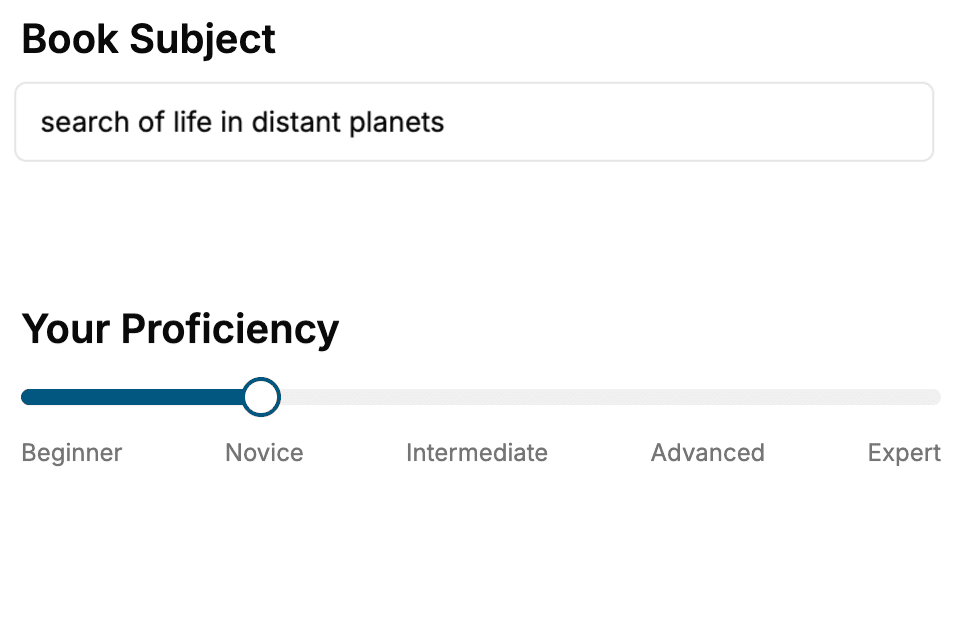
Select the focus of your Physics book and share your background
- 2. Personalize your book
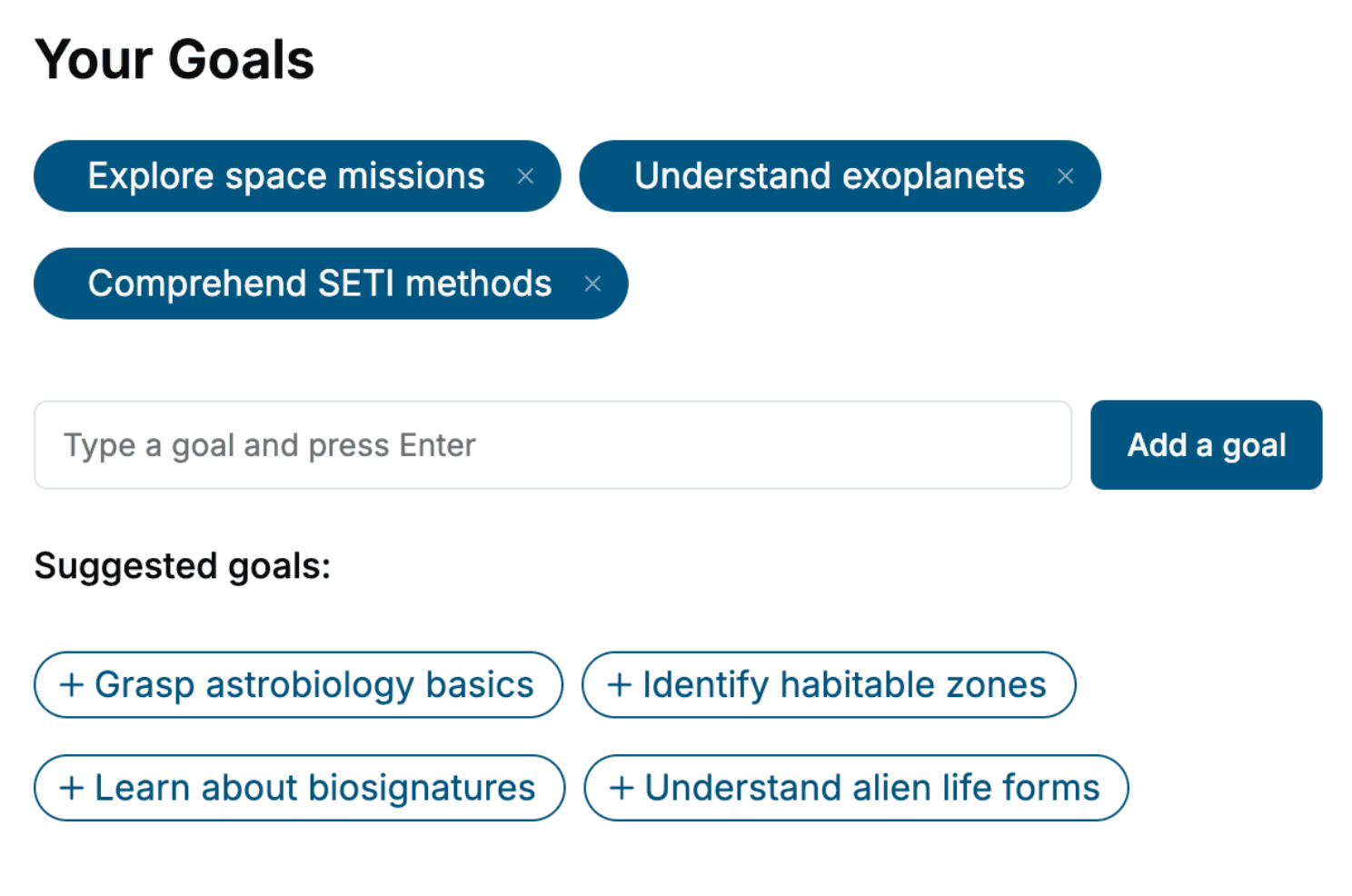
Specify your goals and choose sub-topics to include
- 3. Get your tailored book
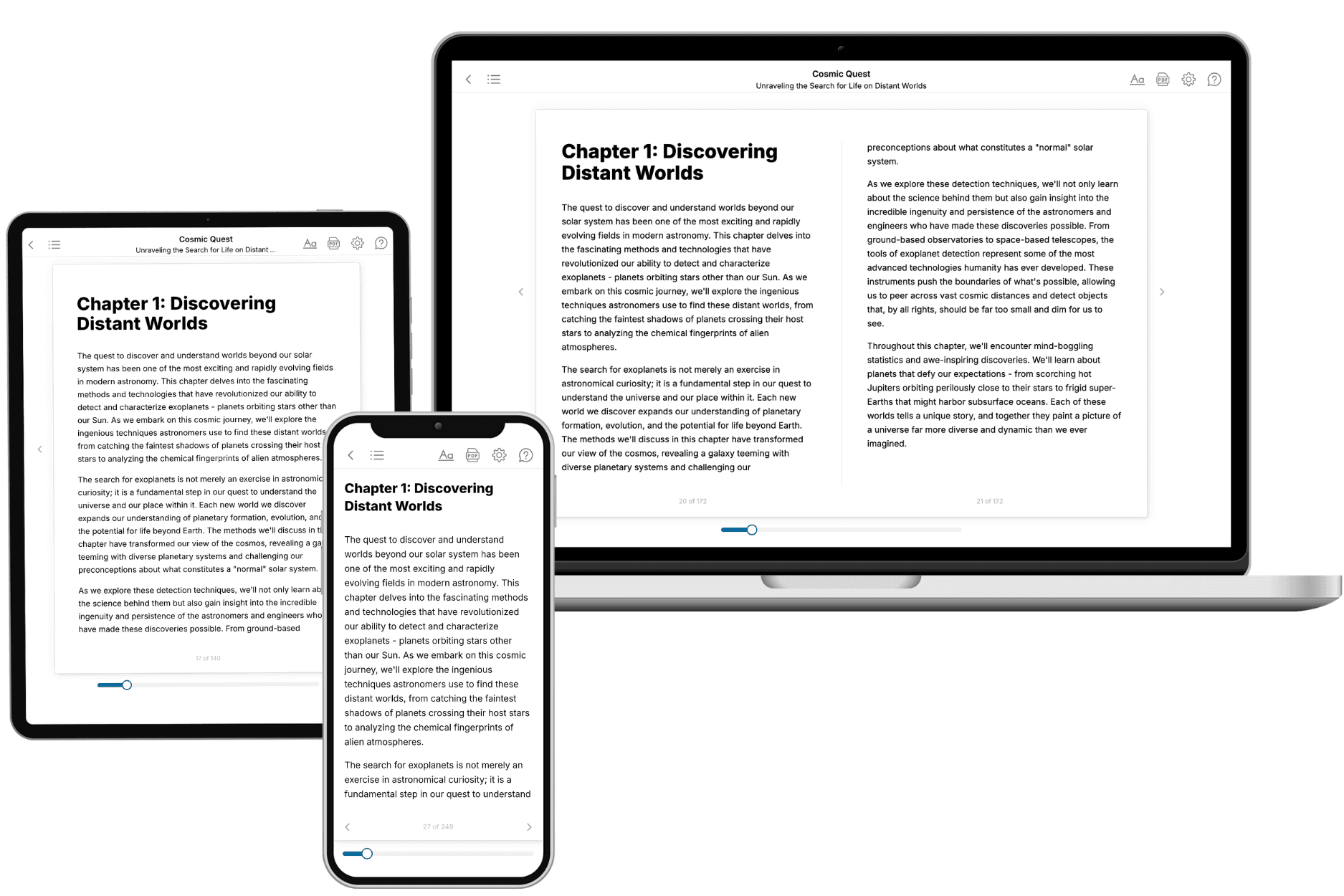
Your book is ready in 10 minutes. Read it online, download as EPUB or PDF, or send to Kindle.
Frequently asked questions
- What is TailoredRead?
TailoredRead creates complete, full-length nonfiction ebooks, written specifically for you. Tell us what you want to learn and why, and TailoredRead writes you a complete ebook on it, with charts, tables, and diagrams throughout. Read it online, on Kindle, or on any e-reader, or download it as a PDF or EPUB. Every book is written fresh the day you order it.
- How is the book tailored to me?
Before anything is written, you answer a few short questions about your goals, your background, and the topics you care about. Your book is then planned around your answers: written at your level, focused on your goals, and covering the topics you chose, instead of the one-size-fits-all book a store sells everyone.
- Will it read like generic AI content?
No. Your book isn't a chat transcript: it's planned chapter by chapter before a single word is written, told in a clear book voice, and explains ideas visually with charts, tables, and diagrams. After writing, every book goes through an editorial pass that polishes chapters so the book reads consistent from start to finish. Judge for yourself: browse thousands of sample books on our Explore Books page.
- How accurate is the content?
Our AI first checks whether your subject needs live research. Niche and fast-moving subjects are researched before writing, and the book plan and chapters are grounded in what it finds. After writing, every book goes through a quality pass that checks its facts and consistency, and researched books list their sources in a Notes section at the back.
- How long is the book?
You choose the length: Comprehensive (250-300 pages), Detailed (150-200 pages), Essential (70-100 pages), or Short (30-50 pages).
- Does the book include visuals?
Yes. Every book includes charts, tables, and diagrams: timelines, checklists, step-by-step guides, decision trees, comparison tables, matrices, and bar charts. A typical book includes dozens of these visual elements.
- Can I read it on Kindle? What formats can I download?
Yes. Every book can be read in our online reader or downloaded as a PDF or EPUB. The EPUB can be opened with Kindle, Apple Books, Kobo, and any e-reader. The Commercial and Author licenses also include an editable Word (DOCX) and Markdown download.
- How much does it cost?
About the price of a regular ebook. The exact price depends on your book's length and complexity, from $2 for the shortest books to $35 for the most comprehensive, and it's shown when you review your book, before you commit to anything. Each book is a one-time purchase, yours to keep, no subscription. Licenses that let you share, teach, or publish your book range from $35.99 to $49.99.
- Can I preview the book before purchasing?
Before you pay, you'll see what your book will cover: the title, a detailed description, the estimated length, and the complete chapter-by-chapter table of contents, so you know what you're getting before you decide. The full text itself is written after you purchase.
- How long does it take to create a book?
About 10 minutes. You can start reading the opening chapters while the rest is still being written.