The Biofeedback Revolution
How to Harness Your Body's Signals for Emotional Healing and Psychological Growth
Most people believe that emotional healing happens exclusively through talking and thinking differently.
222 pages10 chaptersFeb 22, 2026Psychology
About this book
But your body holds the key to psychological transformation that talk therapy alone cannot unlock. Biofeedback represents a paradigm shift in how we approach mental health—it makes the invisible visible by translating your physiological responses into real-time data you can see, understand, and control. This book reveals how your heart rate, muscle tension, breathing patterns, and brain waves directly reflect your emotional state and how learning to read these signals accelerates healing. Whether you're managing anxiety, trauma, depression, or simply seeking deeper self-awareness, biofeedback offers concrete, measurable progress where traditional therapy sometimes plateaus. You'll discover how integrating biofeedback into your therapeutic journey creates a powerful feedback loop: awareness leads to control, control leads to confidence, and confidence leads to lasting change. This practical guide demystifies the science, explains which biofeedback modalities work best for different conditions, and provides actionable strategies for harnessing your body's wisdom in partnership with professional therapy.
Table of contents
- IntroductionWhy Biofeedback Matters in Modern Therapy, What You'll Learn in This Book, How to Use This Guide for Maximum BenefitRead below
- Chapter 1: Understanding Biofeedback: The Mind-Body ConnectionWhat Is Biofeedback and How Does It Work?, The Science Behind Biofeedback: From Laboratory to Therapy Room, Why Traditional Therapy Needs Biofeedback
- Chapter 2: The Physiology of Emotion: Reading Your Body's SignalsYour Nervous System: The Foundation of Emotional Response, The Stress Response Cycle and How It Gets Stuck, Key Physiological Markers: What Your Body Is Telling You
- Chapter 3: Heart Rate Variability: The Gateway to Nervous System MasteryUnderstanding Heart Rate Variability and What It Reveals, HRV as a Window Into Emotional and Psychological Health, Practical HRV Training: Breathing and Coherence Techniques
- Chapter 4: Neurofeedback: Rewiring Your Brain for Better Mental HealthBrain Waves and What They Tell Us About Mental States, Neurofeedback Protocols for Anxiety, Depression, and ADHD, How Neurofeedback Leverages Neuroplasticity for Lasting Change
- Chapter 5: Muscle Tension and Electromyography: Releasing Trapped EmotionsThe Psychology of Muscle Tension: Where Emotions Live in Your Body, Electromyography Biofeedback: Seeing and Releasing Tension, Progressive Relaxation and Tension Release Strategies
- Chapter 6: Skin Conductance and Thermal Feedback: Understanding Arousal and CalmSkin Conductance: The Sweat Response and Emotional Arousal, Temperature Biofeedback and Autonomic Nervous System Control, Using Arousal Feedback for Anxiety and Panic Management
- Chapter 7: Integrating Biofeedback Into Your Therapeutic PracticeChoosing the Right Biofeedback Modality for Your Needs, Collaborating With Your Therapist: Making Biofeedback Work, Setting Up Your Home Biofeedback Practice for Success
- Chapter 8: Biofeedback for Specific Conditions: Anxiety, Depression, and TraumaTreating Anxiety Disorders With Targeted Biofeedback Approaches, Depression, Mood Regulation, and Biofeedback Interventions, Trauma Recovery: How Biofeedback Supports PTSD Healing
- Chapter 9: Building Self-Awareness: From Data to InsightLearning to Interpret Your Biofeedback Data Accurately, Recognizing Your Unique Stress Patterns and Triggers, Connecting Physical Signals to Emotional and Psychological Patterns
- Chapter 10: Developing Lasting Skills: From Feedback to MasteryThe Stages of Biofeedback Skill Development and Mastery, Transitioning From Device Feedback to Internal Awareness, Maintaining Your Gains and Preventing Relapse
- ConclusionYour Biofeedback Journey Begins Now, Next Steps: Taking Action
- Glossary of Key Terms
- Further Reading and Resources
Introduction
There is a conversation happening inside your body right now. Your heart is adjusting its rhythm in response to your thoughts. Your muscles are holding tension you may not even notice. Your skin is conducting tiny electrical signals that shift with every emotional flicker. This conversation has been going on your entire life, but for most people, it remains completely silent. Not because the signals aren't there, but because no one ever handed them a way to listen. Biofeedback changes that. It gives you the tools to tune in, understand what your body is saying, and use that information to heal.
For decades, the dominant model of psychological healing has centered on language. Talk therapy, cognitive restructuring, journaling, and verbal processing have helped millions of people. These approaches are genuinely valuable, and nothing in this book argues against them. But there is a growing body of evidence suggesting that emotional distress is not only a mental event. It is a physiological one. Anxiety lives in a racing heart and shallow breath. Trauma is stored in muscle tension and a hypervigilant nervous system. Depression shows up in flattened brain wave activity and disrupted autonomic rhythms. Treating only the cognitive layer of these conditions is like trying to fix a car by reprogramming the dashboard while ignoring the engine.[1]
Biofeedback is the bridge between those two worlds. It makes the invisible visible by translating your body's physiological signals into real-time data you can see on a screen, hear through a tone, or feel through a device. When you can see your heart rate variability drop during a stressful thought, or watch your muscle tension spike before you even consciously register anxiety, something powerful happens. You stop being a passive passenger in your own nervous system and start becoming an active participant. That shift, from observer to agent, is where psychological transformation begins. This book is your guide to making that shift, step by practical step.
You don't need to be a scientist or a clinician to benefit from what follows. You do need curiosity, a willingness to pay attention to your body, and an openness to the idea that healing can happen through channels beyond words alone. Whether you are working with a therapist, exploring self-directed wellness, or simply trying to understand why your body responds the way it does under stress, this book will give you a clear, evidence-based framework for using biofeedback as a tool for genuine psychological growth.
Why Biofeedback Matters in Modern Therapy
Mental health treatment has evolved dramatically over the past century, but one gap has persisted stubbornly: the disconnect between what people think and feel consciously and what their bodies are doing beneath the surface. Traditional psychotherapy excels at helping people reframe thoughts, process memories, and develop new behavioral patterns. What it has historically struggled with is reaching the subcortical, automatic processes that drive so much of emotional suffering. These are the processes that keep a trauma survivor's nervous system on high alert even when they are intellectually safe. Biofeedback reaches those processes directly.[2]
The clinical evidence for biofeedback has grown substantially over the past three decades. Research published in peer-reviewed journals has demonstrated meaningful outcomes for conditions including generalized anxiety disorder, post-traumatic stress disorder, attention deficit hyperactivity disorder, depression, chronic pain, and insomnia. A 2016 meta-analysis found that heart rate variability biofeedback produced significant reductions in self-reported stress and anxiety across diverse populations.[3] Neurofeedback has shown promising results for ADHD that rival medication outcomes in some studies. These are not fringe findings. They represent a maturing field with real clinical applications.
What makes biofeedback particularly relevant right now is the convergence of two trends. First, there is a growing cultural recognition that mental health is inseparable from physical health. The mind-body connection is no longer a New Age concept. It is a neuroscientific reality supported by decades of research in psychoneuroimmunology, polyvagal theory, and somatic psychology. Second, technology has made biofeedback more accessible than ever before. Devices that once cost tens of thousands of dollars and required clinical settings are now available as consumer wearables and smartphone-connected sensors. The barriers to entry have dropped significantly.
This accessibility matters because it means biofeedback is no longer limited to specialized clinics. People can now practice between therapy sessions, track their progress over time, and develop self-regulation skills in the environments where they actually need them, at work, at home, in social situations. This real-world application is one of biofeedback's most underappreciated advantages. Skills learned in a controlled clinical setting often fail to transfer to daily life. Biofeedback practiced in context, where the stressors actually exist, builds more robust and generalizable regulation abilities.
There is also something deeply empowering about biofeedback that deserves to be named directly. Many people who struggle with anxiety, trauma, or depression feel profoundly out of control. Their emotional responses seem to happen to them rather than being something they can influence. Biofeedback provides concrete, visible evidence that they can change their physiological state. Watching your heart rate variability improve in real time, or seeing your muscle tension decrease as you apply a relaxation technique, is not just informative. It is motivating. It builds what psychologists call self-efficacy, the belief that your actions can produce meaningful change.[4]
Consider a concrete example. A person managing generalized anxiety disorder might spend months in cognitive behavioral therapy learning to challenge catastrophic thoughts. That work is valuable. But if their baseline nervous system arousal remains chronically elevated, the cognitive tools will always be fighting an uphill battle. Adding heart rate variability biofeedback to their treatment gives them a way to directly lower that baseline arousal. The cognitive work becomes easier because the physiological ground has shifted. This is the synergy that makes biofeedback so compelling as a complement to traditional therapy, not a replacement for it, but a powerful addition to the toolkit.
Modern therapy is increasingly moving toward integrative, whole-person approaches. Somatic therapies, EMDR, mindfulness-based interventions, and body-centered practices are all gaining traction precisely because clinicians and clients alike are recognizing that the body is not just a vehicle for the mind. It is an active participant in psychological experience. Biofeedback fits naturally into this integrative landscape. It provides the measurement infrastructure that makes body-based interventions more precise, more trackable, and more scientifically grounded.
A note on what biofeedback is not: Biofeedback is not a magic cure, a replacement for professional mental health care, or a diagnostic tool for medical conditions. It is a learning technology. Like any skill, it requires practice, patience, and ideally, professional guidance. The goal is always to build your own internal regulation capacity, not to become dependent on a device.
What You'll Learn in This Book
This book is organized to take you from foundational understanding to practical application in a logical, progressive sequence. Each chapter builds on the previous one, so reading in order will give you the clearest picture. That said, if you have specific areas of interest or urgency, each chapter is also designed to stand on its own as a reference. Here is a clear map of what each section covers and why it matters.
Chapters 1 and 2 lay the scientific groundwork. Chapter 1 explains what biofeedback actually is, how it works mechanically and neurologically, and why it represents a meaningful evolution in therapeutic practice. Chapter 2 goes deeper into the physiology of emotion, explaining how your nervous system generates and maintains emotional states, what happens when the stress response gets stuck, and which physiological markers are most clinically relevant. If you have an intermediate background in psychology, some of this will be familiar territory. But the framing here is specifically designed to connect that knowledge to biofeedback practice in ways that may be new.
Chapters 3 through 6 cover the four major biofeedback modalities in depth. Each chapter focuses on a specific type of physiological signal, what it measures, what it reveals about your psychological state, and how training with that signal produces therapeutic change. The modalities covered are:
- Heart rate variability (HRV): The rhythm of your heartbeat as a window into autonomic nervous system balance and emotional regulation capacity
- Neurofeedback: Brain wave patterns and how training them can address anxiety, depression, ADHD, and trauma
- Electromyography (EMG): Muscle tension as a carrier of emotional experience and how releasing it supports psychological healing
- Skin conductance and thermal feedback: Arousal-level signals and their application in anxiety and panic management
Chapters 7 and 8 shift from understanding to application. Chapter 7 helps you navigate the practical decisions involved in integrating biofeedback into your life, including how to choose the right modality, how to work effectively with a therapist who uses biofeedback, and how to set up a home practice that actually produces results. Chapter 8 applies everything to specific clinical conditions, walking through targeted biofeedback approaches for anxiety disorders, depression, and trauma and PTSD. These chapters are particularly useful if you are dealing with a specific condition and want to understand which tools are most relevant to your situation.
Chapters 9 and 10 address the longer arc of biofeedback practice. Chapter 9 focuses on developing genuine self-awareness from your biofeedback data, moving beyond raw numbers to recognize your unique patterns, triggers, and healing rhythms. Chapter 10 covers the progression from device-dependent feedback to internalized self-regulation skills, including how to maintain your gains over time and prevent regression during stressful periods. These chapters are about turning biofeedback from a technique into a lasting capacity.
Throughout the book, you will find concrete examples, practical exercises, and specific frameworks you can apply immediately. The goal is never to overwhelm you with theory but to give you enough scientific grounding to understand why the techniques work, paired with enough practical detail to actually use them. Every major concept is illustrated with real-world scenarios that reflect the kinds of challenges people actually face in therapy and daily life.
You will also notice that this book consistently positions biofeedback as a complement to professional therapeutic care, not a substitute for it. Where relevant, guidance is provided on how to bring biofeedback into conversations with your therapist, how to share your data meaningfully, and how to integrate device-based practice with the relational and cognitive work of therapy. The most powerful outcomes happen when these approaches work together, and this book is designed to help you make that integration as effective as possible.
By the time you finish this book, you will have a clear understanding of how your body communicates emotional and psychological states, which biofeedback tools are most relevant to your specific needs, and how to build a sustainable practice that extends the benefits of therapy into your everyday life. You will also have something harder to quantify but equally important: a fundamentally different relationship with your own body, one based on curiosity and collaboration rather than frustration or disconnection.
How to Use This Guide for Maximum Benefit
Getting the most from this book requires a small shift in how you approach reading it. Most nonfiction books are consumed passively. You read, you absorb information, and you move on. This book is designed to be used actively. The concepts here are not just ideas to understand intellectually. They are frameworks to apply, skills to practice, and patterns to notice in your own experience. The more you engage with the material as a participant rather than an observer, the more value you will extract from it.
Here are some specific recommendations for how to engage with this material most effectively:
- Read with a journal nearby. Many of the concepts in this book will prompt personal reflection. When you notice a connection between something you read and your own experience, write it down. These personal observations are often the most clinically useful insights you will generate.
- Try the exercises before moving on. Each chapter includes practical techniques and exercises. Resist the temptation to read through them without trying them. Even a brief, imperfect attempt at a breathing exercise or a body scan will teach you more than reading about it three times.
- Return to chapters as your practice develops. Information that seems abstract on first reading often becomes much clearer after you have had some hands-on experience with biofeedback. Chapters 9 and 10 in particular will be more meaningful after you have worked through the earlier modality chapters.
- Share relevant sections with your therapist. If you are working with a mental health professional, this book can serve as a shared reference point. Bringing specific chapters or concepts into your sessions can help your therapist understand your interest in biofeedback and collaborate more effectively.
It is also worth being honest about what this book cannot do. It cannot replace a trained biofeedback practitioner, particularly for complex clinical conditions like severe PTSD, treatment-resistant depression, or neurological disorders. The Association for Applied Psychophysiology and Biofeedback (AAPB) and the Biofeedback Certification International Alliance (BCIA) maintain directories of certified practitioners if you are looking for professional guidance.[5] This book is most powerful when used alongside professional support, not instead of it.
One of the most common mistakes people make when starting with biofeedback is expecting rapid, dramatic results. Biofeedback is a learning process, and like all learning, it follows a curve. Early sessions often feel confusing or frustrating. The signals don't behave the way you expect. Your attempts to control your heart rate or relax your muscles seem to make things worse before they get better. This is completely normal. The nervous system is not a light switch. It is more like a garden. Consistent, patient tending produces results that are slow to appear but deeply rooted when they do.
A useful framework for approaching your biofeedback practice is what researchers call the observe, interpret, respond cycle. Rather than immediately trying to change a physiological signal, start by simply observing it without judgment. Notice what your heart rate variability looks like during a normal resting state. Notice how your skin conductance changes when you think about a stressful situation. This observational phase builds the baseline awareness that makes later intervention more precise and effective. Rushing past observation into control attempts is one of the most common reasons people plateau early in their biofeedback practice.
You will also benefit from tracking your progress over time. Biofeedback data is most meaningful when viewed as a trend rather than a snapshot. A single session's readings tell you relatively little. A month of consistent practice reveals patterns that are genuinely informative. Most biofeedback devices and apps include logging features. Use them. Review your data weekly and look for directional changes rather than fixating on individual numbers. Progress in biofeedback is rarely linear, but it is usually visible when you zoom out to the right time scale.
Finally, approach this material with self-compassion. Many people who are drawn to biofeedback are doing so because they are struggling. They are managing anxiety that feels out of control, processing trauma that has resisted other treatments, or dealing with depression that has not fully responded to medication or talk therapy. If that describes your situation, please know that the fact that you are seeking new tools is itself a meaningful act of self-care. Biofeedback is not a last resort. It is a sophisticated, evidence-based approach that works best when approached with curiosity and patience rather than desperation. Give yourself permission to learn at your own pace, to have sessions that don't go well, and to find the specific tools and techniques that fit your unique nervous system.
The body is not your enemy. It is not malfunctioning when it produces anxiety or holds tension or struggles to calm down. It is doing exactly what it was designed to do, responding to perceived threats with protective responses that made evolutionary sense. Biofeedback does not fight those responses. It teaches you to understand them, work with them, and gradually expand your window of tolerance so that the same triggers produce smaller, more manageable reactions. That is not a small thing. That is the foundation of lasting psychological change. And it begins with learning to listen to what your body has been trying to tell you all along.
A practical starting point: Before you read Chapter 1, take two minutes to sit quietly and simply notice your breathing. Don't try to change it. Just observe whether it is fast or slow, shallow or deep, smooth or irregular. Notice whether your shoulders are tense or relaxed. Notice whether your jaw is clenched. This simple act of body observation is the seed of everything that follows in this book. The more naturally it comes to you, the faster your biofeedback practice will develop.
What follows is not just information about biofeedback. It is an invitation to develop a fundamentally different relationship with your own physiology. Your body has been generating data about your emotional and psychological state every moment of your life. This book will teach you how to read it, interpret it, and use it as a compass for healing. The conversation your body has been having with itself is about to become a conversation you can join.
Notes
Introduction
- 1. Bessel van der Kolk, The Body Keeps the Score, Viking Press, 2014
- 2. Mark S. Schwartz and others, Biofeedback: A Practitioner's Guide (4th ed.), Guilford Press, 2017
- 3. V. C. Goessl and others, "The effect of heart rate variability biofeedback training on stress and anxiety," Psychological Medicine, 2017
- 4. Albert Bandura, Self-Efficacy: The Exercise of Control, W.H. Freeman and Company, 1997
- 5. Biofeedback Certification International Alliance (BCIA). Find a Practitioner
This is the end of the free sample. The full book has 10 chapters.
Want this book written for you?
Tell us your goals and background, and get your own version of this book, tailored by AI to you.


Benefits of AI-tailored books
- Read one book, not ten:
- all the Psychology knowledge you need, gathered into a single book.
- Save days of learning:
- tell us your goals, choose your topics, and the whole book is built around them.
- Learn effortlessly:
- Psychology book written for your specific background and expertise.
- Understand at a glance:
- includes charts, tables, timelines, checklists, decision trees, and more.
- Stay current:
- written the day you order it, not years ago.
- Trust what you read:
- every book is checked for accuracy, with real research when your subject needs it.
Create your unique book in 3 steps
- 1. Select your focus
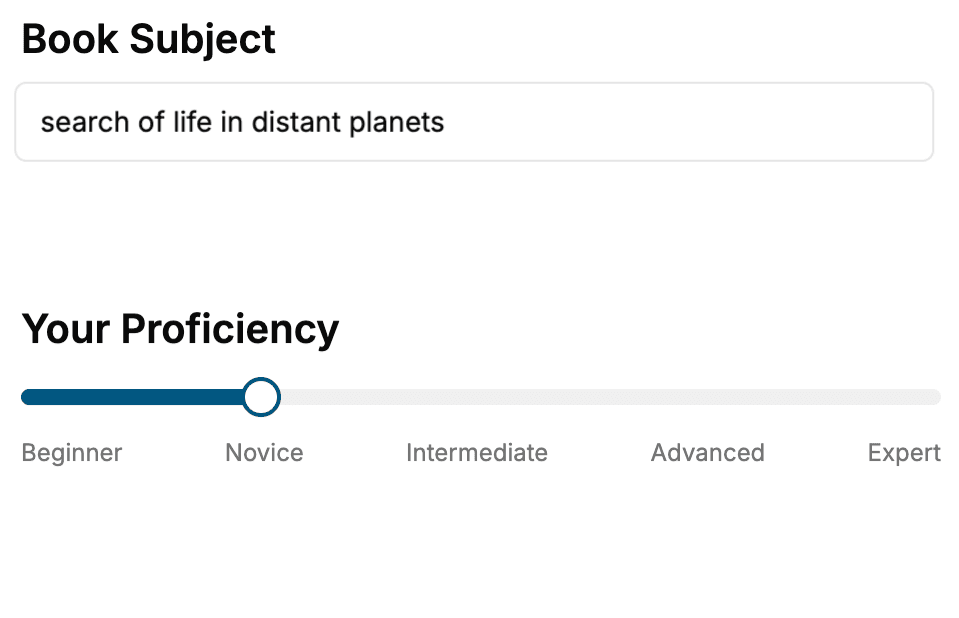
Select the focus of your Psychology book and share your background
- 2. Personalize your book
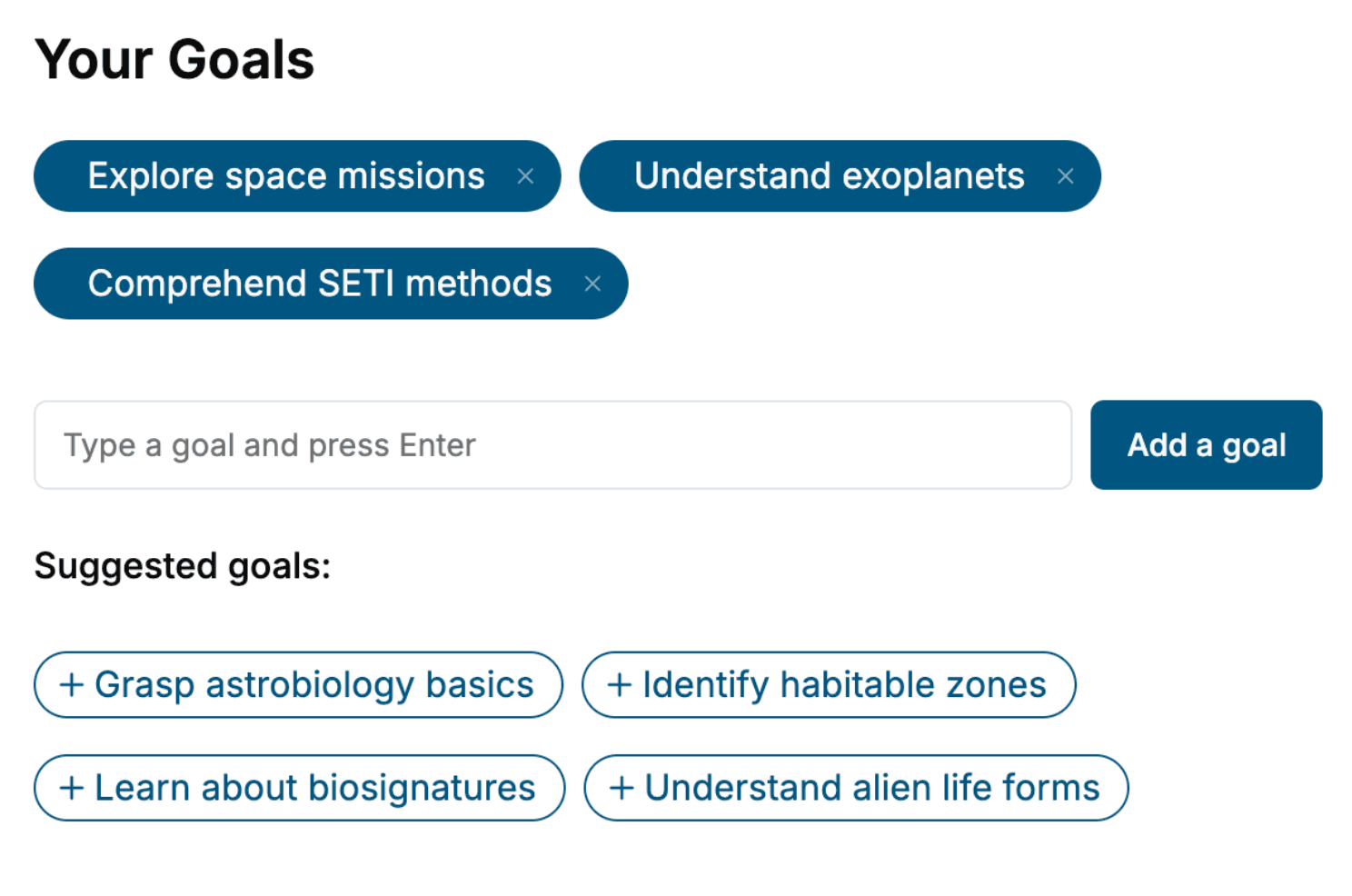
Specify your goals and choose sub-topics to include
- 3. Get your tailored book
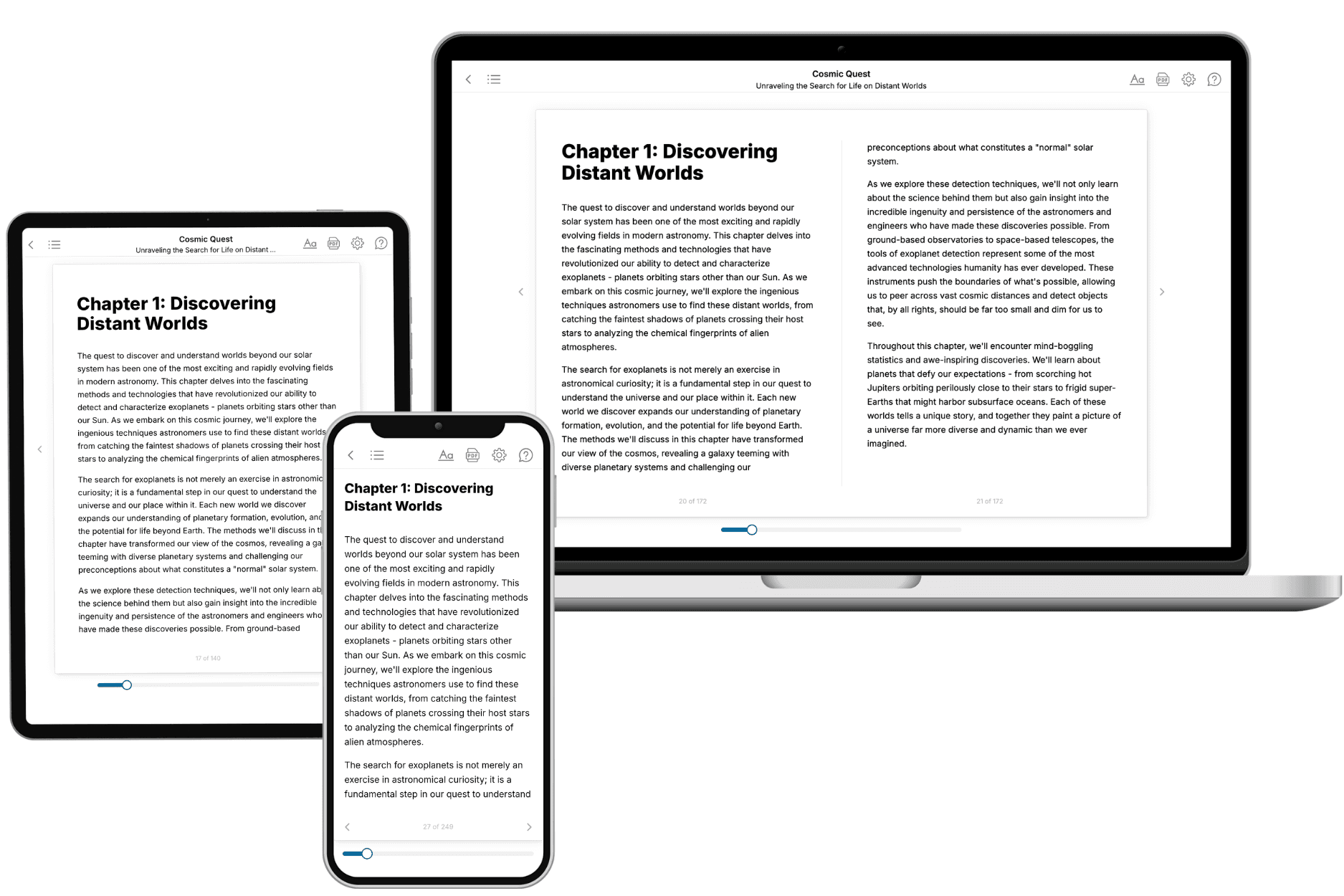
Your book is ready in 10 minutes. Read it online, download as EPUB or PDF, or send to Kindle.
Frequently asked questions
- What is TailoredRead?
TailoredRead creates complete, full-length nonfiction ebooks, written specifically for you. Tell us what you want to learn and why, and TailoredRead writes you a complete ebook on it, with charts, tables, and diagrams throughout. Read it online, on Kindle, or on any e-reader, or download it as a PDF or EPUB. Every book is written fresh the day you order it.
- How is the book tailored to me?
Before anything is written, you answer a few short questions about your goals, your background, and the topics you care about. Your book is then planned around your answers: written at your level, focused on your goals, and covering the topics you chose, instead of the one-size-fits-all book a store sells everyone.
- Will it read like generic AI content?
No. Your book isn't a chat transcript: it's planned chapter by chapter before a single word is written, told in a clear book voice, and explains ideas visually with charts, tables, and diagrams. After writing, every book goes through an editorial pass that polishes chapters so the book reads consistent from start to finish. Judge for yourself: browse thousands of sample books on our Explore Books page.
- How accurate is the content?
Our AI first checks whether your subject needs live research. Niche and fast-moving subjects are researched before writing, and the book plan and chapters are grounded in what it finds. After writing, every book goes through a quality pass that checks its facts and consistency, and researched books list their sources in a Notes section at the back.
- How long is the book?
You choose the length: Comprehensive (250-300 pages), Detailed (150-200 pages), Essential (70-100 pages), or Short (30-50 pages).
- Does the book include visuals?
Yes. Every book includes visual elements such as timelines, checklists, step-by-step guides, decision trees, comparison tables, and matrices, and many include bar charts. A typical book includes dozens of these visual elements.
- Can I read it on Kindle? What formats can I download?
Yes. Every book can be read in our online reader or downloaded as a PDF or EPUB. The EPUB can be opened with Kindle, Apple Books, Kobo, and any e-reader. The Commercial and Author licenses also include an editable Word (DOCX) and Markdown download.
- How much does it cost?
About the price of a regular ebook. The exact price depends on your book's length and complexity, from $2 for the shortest books to $35 for the most comprehensive, and it's shown when you review your book, before you commit to anything. Each book is a one-time purchase, yours to keep, no subscription. Licenses that let you share, teach, or publish your book range from $35.99 to $49.99.
- Can I preview the book before purchasing?
Before you pay, you'll see what your book will cover: the title, a detailed description, the estimated length, and the complete chapter-by-chapter table of contents, so you know what you're getting before you decide. The full text itself is written after you purchase.
- How long does it take to create a book?
About 10 minutes. You can start reading the opening chapters while the rest is still being written.