Blended with Love
Building Authentic Connections and Lasting Harmony in Your Blended Family
Imagine your blended family gathering around the dinner table, laughing together, each person feeling genuinely welcomed and secure.
253 pages11 chaptersNov 9, 2025Family Relationships
About this book
This isn't a fantasy—it's an achievable reality when you understand the unique dynamics at play. Blended families face distinct challenges that traditional family advice doesn't address: loyalty conflicts, identity questions, financial tensions, and the pressure to instantly bond. This book cuts through the myths and provides you with proven strategies for navigating these complexities with grace and authenticity. You'll discover how to build genuine connections without forcing closeness, establish boundaries that protect relationships, create meaningful traditions that unite your family, and communicate effectively through the inevitable conflicts. Whether you're a stepparent building trust with new children, a biological parent balancing multiple relationships, or a teenager adjusting to new family members, you'll find practical tools tailored to your specific situation. This comprehensive guide combines psychological insights with real-world strategies, helping you transform your blended family from a collection of separate units into a cohesive, loving household where everyone thrives.
Table of contents
- IntroductionWhy Blended Families Are Different, Myths About Instant Love and Bonding, How to Use This Book for Your Situation, Your Journey Toward HarmonyRead below
- Chapter 1: Understanding the Blended Family LandscapeDifferent Types of Blended Family Structures, The Emotional Terrain Everyone Faces, Recognizing Grief and Loss in Family Transitions
- Chapter 2: The Stepparent Role: Building Trust Without Forcing LoveDefining Your Role as a Stepparent, Earning Trust Through Consistency and Respect, Navigating Common Stepparent Challenges, Self-Care and Emotional Boundaries for Stepparents
- Chapter 3: Biological Parents: Balancing Love and PartnershipManaging Dual Loyalty to Children and New Partner, Co-Parenting With Your Ex-Partner, Supporting Your New Partner in the Parenting Role, Protecting Your Children's Emotional Security
- Chapter 4: Children and Teens: Processing Change and Finding BelongingHow Different Ages Process Family Changes, Understanding Loyalty Conflicts and Divided Hearts, Identity Questions and Sibling Dynamics, Practical Ways to Help Children Adjust
- Chapter 5: Communication: The Foundation of ConnectionHaving Honest Conversations About Expectations, Active Listening and Validating Different Perspectives, Navigating Difficult Discussions Without Blame, Structuring Effective Family Meetings
- Chapter 6: Conflict Resolution: Turning Tension Into ConnectionUnique Conflicts in Blended Families, Proven Conflict Resolution Strategies, Addressing Favoritism and Fairness Issues, When to Seek Professional Mediation
- Chapter 7: Creating New Family Traditions and IdentityWhy New Rituals Matter for Blended Families, Building Traditions That Honor Everyone's Past, Celebrating Milestones and Creating Shared Memories, Developing a Unique Family Identity
- Chapter 8: Financial Harmony: Money, Fairness, and PartnershipFinancial Transparency and Joint Decision-Making, Navigating Inheritance, Assets, and Estate Planning, Managing Spending Differences and Fairness Concerns, Setting Healthy Financial Boundaries
- Chapter 9: Boundaries: Protecting Relationships and Preventing ResentmentWhy Boundaries Are Essential in Blended Families, Setting Boundaries With Ex-Partners and Extended Family, Creating Personal Space and Privacy, Maintaining Boundaries With Love and Consistency
- Chapter 10: Intimacy and Partnership: Nurturing Your Couple RelationshipPrioritizing Couple Time and Connection, Addressing Intimacy Challenges in Blended Families, Presenting a United Front While Respecting Differences, Long-Term Relationship Maintenance and Growth
- Chapter 11: When Things Get Difficult: Challenges and SolutionsHandling Resistance and Rejection From Family Members, Recognizing Mental Health Concerns and Getting Support, Addressing Substance Abuse and Behavioral Issues, Crisis Management and Emergency Support
- Conclusion: Your Blended Family's Unique Love StoryReflecting on Your Progress and Growth, Moving Forward With Confidence and Compassion
- Glossary of Key Terms
- Further Reading and Resources
- Frequently Asked Questions
Introduction
Picture this: It's a Tuesday evening, and your newly blended family sits down for dinner together. The stepchildren eye their new stepparent with cautious curiosity. Your biological children wonder why this stranger gets to make rules in their home. Your partner tries too hard to connect, and you feel caught in the middle, desperately wanting everyone to just get along. The tension is thick enough to cut with a knife, and you wonder if you've made a terrible mistake. This scene plays out in countless homes every single day, and if you've experienced something similar, you're not alone. Blended families face unique challenges that traditional family structures simply don't encounter, and pretending otherwise sets everyone up for disappointment and frustration.
The good news is that blended families can absolutely thrive and create deep, meaningful connections that last a lifetime. However, this doesn't happen by accident or through wishful thinking. It requires intentional effort, realistic expectations, and specific strategies designed for the complex dynamics at play. You can't simply transplant traditional parenting advice onto a blended family situation and expect it to work. The emotional landscape is fundamentally different when children are processing loss, adults are navigating new partnerships while co-parenting with ex-partners, and everyone is trying to figure out where they belong in this reconfigured family unit. Understanding these differences is the first step toward building the harmonious home you envision.
This book exists to guide you through that journey with practical, actionable strategies grounded in both psychological research and real-world experience. Whether you're a stepparent wondering how to connect with children who didn't choose you, a biological parent torn between your kids and your new partner, or a child or teenager trying to make sense of your changing family, you'll find specific guidance tailored to your situation. We'll address the hard topics that other resources gloss over: loyalty conflicts, financial tensions, boundary issues, and what to do when family members actively resist bonding. Most importantly, we'll replace the harmful myth of instant love with a realistic roadmap for building authentic connections that develop naturally over time. Your blended family's success doesn't depend on everyone immediately loving each other—it depends on creating an environment where trust, respect, and genuine affection can gradually take root and flourish.
Throughout this book, you'll discover frameworks for communication that actually work in high-emotion situations, conflict resolution techniques specific to blended family dynamics, and ways to create new traditions that honor everyone's past while building a shared future. You'll learn how to set boundaries that protect relationships rather than damage them, how to navigate the financial complexities that often create hidden resentments, and how to support your couple relationship while meeting your children's needs. Each chapter builds on the previous one, creating a comprehensive approach to blended family life that addresses both the emotional and practical dimensions of your daily reality. By the time you finish this book, you'll have a personalized toolkit for transforming your blended family from a collection of separate units into a cohesive, loving household where every member feels valued and secure.
Why Blended Families Are Different
Blended families operate under fundamentally different conditions than first-time families, yet society often expects them to function identically. When two people marry for the first time and have children together, the family unit grows organically from a foundation of just the couple. They establish their parenting philosophy together, create their family culture from scratch, and their children know no other family structure. In contrast, blended families form through loss—whether through divorce, death, or separation—and every member brings established relationships, loyalties, histories, and expectations into the new configuration. This means you're not building a family from the ground up; you're attempting to merge existing family systems, each with its own rules, traditions, and emotional bonds that predate your new relationship.
The timeline of relationship development in blended families creates inherent tension that doesn't exist in traditional families. In a first-time family, the couple typically has years to solidify their partnership before children arrive. They date, fall in love, commit to each other, and then jointly decide to become parents. The children are born into an established parental unit. In blended families, this sequence is reversed and compressed. Your romantic relationship with your partner may be new and still developing, yet you're immediately thrust into a parenting partnership with someone else's children who have no emotional connection to you. Meanwhile, your biological children have had you to themselves for years and now must share you with both a new partner and potentially new stepsiblings. Everyone is expected to adjust simultaneously while navigating their own grief, confusion, and resistance.
Loyalty conflicts represent another distinctive challenge that sets blended families apart. Children in traditional families don't face competing allegiances—their parents are their parents, and loving both is natural and expected. In blended families, children often feel that accepting or loving a stepparent somehow betrays their biological parent who is no longer in the home. This creates an impossible emotional bind: if they're kind to their stepparent, they worry they're being disloyal to their mom or dad; if they reject their stepparent, they feel guilty about hurting someone who's trying to care for them and disappointing their biological parent who wants the new family to work. These loyalty conflicts can manifest as:
- Emotional withdrawal: Children may refuse to engage with stepparents to avoid feeling disloyal
- Testing behaviors: Acting out to see if the stepparent will leave like other adults in their life have
- Comparison and criticism: Constantly pointing out how the stepparent doesn't measure up to the biological parent
- Sabotaging family bonding: Resisting new traditions or family activities that feel like replacing the old family
- Reporting back: Telling the non-custodial parent everything that happens in the new household, creating tension
The presence of ex-partners adds another layer of complexity that traditional families never encounter. Your family system doesn't end at your household door—it extends to include your partner's ex, your own ex if you have one, and potentially their new partners as well. These individuals have legitimate ongoing roles in your children's lives, which means you must navigate co-parenting relationships with people you didn't choose and may not particularly like. Decisions about discipline, schedules, finances, and values must somehow be coordinated across multiple households with different rules and approaches. Holidays become logistical puzzles. Special events require careful negotiation about who attends and where everyone sits. The emotional residue from previous relationships—hurt, anger, resentment, or lingering attachment—can seep into your new family dynamics in ways that are difficult to control.
Financial complexity in blended families far exceeds what traditional families face. You're not just managing one household budget—you're balancing child support payments, potentially alimony, expenses for children who live in multiple homes, and the question of how to fairly allocate resources among children who are "yours," "mine," and "ours." One partner may be paying substantial support to an ex while the other receives support, creating income disparities that affect the household. Questions arise about whether stepparents should financially support stepchildren, how to handle inheritance and estate planning when there are children from previous relationships, and whether all children in the household should receive equal treatment regardless of biological connection. These financial tensions can quickly erode goodwill and create deep resentments if not addressed transparently and thoughtfully.
The absence of legal and social recognition for stepparent relationships creates practical and emotional challenges. Stepparents often function as de facto parents—providing daily care, attending school events, helping with homework, and offering emotional support—yet they have no legal rights or authority. They can't sign permission slips, make medical decisions, or even pick up their stepchildren from school without special authorization. Society doesn't have clear expectations for the stepparent role, leaving individuals to figure it out on their own. Should you be called "Mom" or "Dad," or by your first name? Do you have the authority to discipline? Should you attend parent-teacher conferences? The lack of clear guidelines means every blended family must negotiate these questions individually, often through trial and error.
Developmental disruption affects children in blended families in ways that children in stable, traditional families don't experience. Just when children need consistency and predictability to develop secure attachments and healthy identities, their world has been turned upside down. They may move between two homes with different rules, routines, and expectations. They're processing grief over their original family structure while being expected to adapt to new family members they didn't choose. Adolescents facing the already challenging task of identity formation must now incorporate "stepchild" or "stepsister" into their sense of self. Younger children may struggle with confusion about family roles and relationships. This developmental disruption doesn't mean children are damaged or doomed—many children in blended families thrive—but it does mean they need extra support, patience, and understanding as they navigate these transitions.
Understanding these fundamental differences isn't about dwelling on problems or feeling discouraged. Rather, it's about replacing unrealistic expectations with informed awareness so you can develop appropriate strategies. When you recognize that your blended family faces distinct challenges, you stop blaming yourself or your family members for not instantly functioning like a traditional family. You can let go of the pressure to force immediate closeness and instead focus on the gradual, intentional work of building authentic connections. You can anticipate common difficulties and address them proactively rather than being blindsided. Most importantly, you can give yourself and your family members permission to take the time needed to adjust, grieve, and slowly create something new together—not a replacement for what was lost, but a different kind of family with its own unique strengths and bonds.
Myths About Instant Love and Bonding
Perhaps the most damaging myth about blended families is the expectation of instant love—the belief that because the adults have fallen in love, everyone else should quickly follow suit and become one big happy family. This myth is perpetuated by movies, television shows, and well-meaning friends who don't understand blended family dynamics. It creates crushing pressure on both adults and children to feel emotions they simply don't feel yet, leading to guilt, shame, and the false conclusion that something is wrong with your family. The reality is that love develops over time through shared experiences, consistent presence, and earned trust. You can't force it, rush it, or manufacture it through sheer willpower. Accepting this truth is liberating—it allows you to focus on building the conditions where love can eventually grow rather than desperately trying to create feelings that aren't there yet.
The "Brady Bunch" fantasy represents another pervasive myth that sets blended families up for failure. This idealized vision suggests that blended families should quickly achieve the same harmony, closeness, and seamless functioning as traditional families, just with more people. In this fantasy, stepparents and stepchildren bond effortlessly, stepsiblings become best friends, ex-partners cooperate perfectly, and everyone embraces the new family structure with enthusiasm. Real life looks nothing like this. Stepchildren may actively resist their stepparent for months or even years. Stepsiblings may compete for resources and attention. Ex-partners may undermine your efforts. Progress happens in fits and starts, with setbacks mixed in with breakthroughs. Letting go of the Brady Bunch fantasy doesn't mean giving up on a happy blended family—it means embracing a more realistic vision where imperfection, ongoing adjustment, and gradual progress are normal and acceptable.
Many people believe that if the adults just try hard enough, children will quickly adjust and accept the new family structure. This myth places unrealistic expectations on both adults and children while ignoring the complex emotional processing that children must do. Children need time to grieve their original family, work through loyalty conflicts, and gradually build trust with new family members. No amount of effort from adults can eliminate this necessary adjustment period. In fact, trying too hard often backfires—when stepparents push for closeness before children are ready, it typically triggers more resistance and withdrawal. Children can sense when adults are desperate for their approval or affection, and this desperation creates pressure that makes genuine connection less likely. The healthier approach is to provide consistent, patient presence while allowing relationships to develop at their own pace.
The myth of equal treatment suggests that treating all children in the household exactly the same will prevent jealousy and create fairness. While equal treatment sounds good in theory, it ignores the reality that children have different needs, different relationships with the adults in the home, and different histories. A stepparent who has known a child for six months cannot and should not have the same relationship as a biological parent who has been there since birth. Forcing identical treatment can actually create more resentment because it feels artificial and dismisses the unique bond between biological parents and children. True fairness in blended families means recognizing and honoring different relationships while ensuring that all children feel valued and cared for. This might mean a biological parent has certain privileges and responsibilities with their own children that a stepparent doesn't have with stepchildren, and that's not only okay—it's healthy and appropriate, especially in the early years.
Another common myth is that love for a new partner should automatically translate into acceptance of their children, and vice versa. Many people enter blended families believing, I love my partner, so I'll naturally love their children too,
or My children will be happy for me and welcome my new partner.
The reality is far more complex. You can deeply love your partner while finding their children challenging, frustrating, or difficult to connect with. Your children can want you to be happy while simultaneously resenting your new partner for disrupting their life and taking your attention. These seemingly contradictory feelings are completely normal. Acknowledging them doesn't make you a bad person or mean your blended family is doomed—it makes you honest. The goal isn't to force feelings that aren't there but to build respectful, caring relationships even when intense love isn't present.
The myth of the "wicked stepparent" creates its own set of problems by casting stepparents as inherently problematic or threatening. This cultural narrative, reinforced by fairy tales and popular media, suggests that stepparents are selfish, cruel, or only interested in their biological children. This stereotype damages blended families by creating suspicion and defensiveness before stepparents even have a chance to establish themselves. Children may approach their stepparent with preconceived negative expectations. Biological parents may be hypervigilant for signs of favoritism or mistreatment. Stepparents themselves may internalize this narrative and feel like villains when they experience normal frustrations or struggle to connect. Rejecting this myth means recognizing that stepparents are simply people doing their best in a challenging role—capable of both mistakes and genuine care, deserving of patience and appreciation rather than automatic suspicion.
Many blended families operate under the myth that you should never speak negatively about the other biological parent, even when that parent is genuinely problematic. While it's true that children shouldn't be put in the middle of adult conflicts or used as messengers, the extreme version of this advice—pretending that a neglectful, abusive, or irresponsible parent is wonderful—creates its own damage. Children aren't fooled by false praise; they know when adults are lying to them. The healthier approach is to acknowledge reality in age-appropriate ways while maintaining boundaries. You can validate a child's experience (I know it's disappointing when your dad doesn't show up for visits
) without launching into character assassination. You can set boundaries around unacceptable behavior without requiring children to pretend everything is fine. Honest, boundaried communication builds trust; forced positivity breeds confusion and resentment.
Finally, there's the myth that blended families should function exactly like traditional families as quickly as possible, with stepparents taking on full parenting authority immediately. This approach typically backfires spectacularly. Children who are still processing loss and building trust with a stepparent will resist someone who suddenly tries to enforce rules and consequences. The biological parent's authority is established through years of relationship; the stepparent's authority must be earned gradually through consistency, fairness, and demonstrated care. In the early stages of blending, the biological parent should maintain primary discipline responsibility while the stepparent focuses on building relationship and supporting the biological parent's decisions. As trust develops over time—often taking two to four years—the stepparent can gradually take on more parental authority. Trying to skip this process and immediately function as a traditional two-parent household creates conflict and resentment that undermines the very family cohesion you're trying to build.
How to Use This Book for Your Situation
This book is designed to be both comprehensive and flexible, allowing you to engage with it in whatever way best serves your current needs and situation. You can certainly read it straight through from beginning to end, which will give you a complete understanding of blended family dynamics and a full toolkit of strategies. However, you can also use it as a reference guide, jumping directly to the chapters that address your most pressing challenges. If you're a stepparent struggling to connect with resistant stepchildren, you might start with Chapter 2. If financial tensions are creating conflict in your household, Chapter 8 will provide immediate, practical guidance. If you're a biological parent feeling torn between your children and your new partner, Chapter 3 speaks directly to your situation. The book is structured so that each chapter stands on its own while also building on concepts introduced earlier.
As you read, you'll notice that different sections address different family members' perspectives. This is intentional—blended family success requires understanding how each person experiences the situation. Even if you're primarily reading from your own role perspective, take time to read the sections addressing other family members' experiences. Stepparents benefit enormously from understanding what biological parents and children are processing. Biological parents need insight into both their partner's stepparent experience and their children's adjustment challenges. When you understand why family members behave the way they do, you can respond with empathy rather than defensiveness. Consider reading relevant sections aloud with your partner or even with older children and teens who might benefit from understanding different perspectives within your family.
Throughout the book, you'll find specific, actionable strategies rather than vague advice to "communicate better" or "be patient." When we discuss communication, you'll get actual conversation frameworks and specific phrases to use. When we address conflict resolution, you'll learn step-by-step processes for working through common blended family disputes. When we explore boundary-setting, you'll see concrete examples of healthy boundaries and how to enforce them. As you encounter these strategies, don't feel pressured to implement everything at once. Choose one or two approaches that resonate with your current situation and practice them until they become natural. Trying to overhaul your entire family dynamic overnight will overwhelm everyone. Sustainable change happens through consistent application of a few key strategies, gradually adding more as earlier changes become established habits.
Pay special attention to the examples and case studies throughout the book. These aren't generic scenarios—they're based on real situations that blended families commonly face, with specific details that help you see how concepts apply in practice. You might recognize your own family in some of these examples, which can be both validating and instructive. When you see how other families have navigated similar challenges, you gain both hope and practical ideas for your own situation. If an example doesn't quite match your circumstances, consider how you might adapt the approach to fit your specific family configuration, ages of children, or particular challenges. The principles remain consistent even when the details differ.
This book acknowledges that blended families come in many configurations, and your situation may differ from the "standard" model of two divorced parents with children forming a new household. You might be:
- A stepparent with no biological children of your own, partnering with someone who has kids
- Both partners bringing children from previous relationships into a new household
- A blended family that includes children from the current relationship as well as previous ones
- Co-parenting with an ex who has also formed a blended family
- Navigating blended family dynamics after the death of a spouse rather than divorce
- In a same-sex partnership creating a blended family
- Dealing with adult stepchildren rather than minors
- Living separately from your partner while blending families across two households
Consider using this book as a conversation starter with your partner. Many couples find it helpful to read the same chapter separately and then discuss how the concepts apply to their family. This creates a shared vocabulary for discussing challenges and a common framework for developing solutions. You might discover that you and your partner have different perspectives on what's working and what needs attention in your family. These differences aren't problems—they're opportunities for deeper understanding and more comprehensive solutions. When you discuss what you're reading, focus on curiosity rather than criticism. Instead of See, the book says you're doing it wrong,
try This section made me think about how we handle discipline. What's your take on it?
Keep a journal or notebook as you work through this book. Write down insights that resonate with you, strategies you want to try, and observations about your family dynamics. Track what you implement and how it goes—what works, what doesn't, and what you might need to adjust. This written record serves multiple purposes. It helps you process what you're learning and apply it to your specific situation. It allows you to see progress over time, which can be encouraging when you're in the midst of difficult periods. It also creates a reference you can return to when you encounter new challenges or need to remind yourself of strategies that worked in the past. Blended family development is a long-term process, and having a record of your journey helps you maintain perspective and momentum.
Finally, approach this book with realistic expectations about what it can and cannot do. This book provides knowledge, frameworks, and strategies that have helped countless blended families build stronger connections and navigate common challenges. It can help you understand what's happening in your family, why certain conflicts keep arising, and what you can do differently to create better outcomes. However, it cannot substitute for professional help when that's needed. If your family is dealing with serious mental health concerns, substance abuse, domestic violence, or conflicts that feel unmanageable despite your best efforts, please seek support from a therapist or counselor who specializes in blended families. This book can complement professional support, but it's not a replacement for it. There's no shame in needing additional help—in fact, seeking support when you need it is one of the most responsible and loving things you can do for your family.
Your Journey Toward Harmony
The journey toward a harmonious blended family is exactly that—a journey, not a destination you arrive at and then maintain effortlessly forever. Your family will continue to evolve as children grow, circumstances change, and relationships deepen. What works beautifully when your stepchildren are seven and nine may need adjustment when they're teenagers. The strategies that help you navigate the first year of blending may need refinement as your family matures. This ongoing evolution isn't a sign of failure; it's the natural progression of any living family system. Embracing this reality helps you stay flexible and responsive rather than rigidly clinging to approaches that no longer serve your family's current needs. The goal isn't to achieve perfection but to develop the skills and mindset that allow you to navigate whatever challenges arise with confidence and compassion.
Your journey will include setbacks, and that's not only normal but necessary for growth. There will be days when you feel like you're moving backward rather than forward—when a child who seemed to be warming up to their stepparent suddenly becomes hostile again, when a conflict you thought was resolved resurfaces, when you question whether blending your family was the right decision. These difficult moments don't mean you're failing. They're part of the process of integrating complex family systems and working through deep emotional issues. What matters is how you respond to setbacks. Do you use them as opportunities to understand your family better and adjust your approach? Or do you interpret them as evidence that your family is broken beyond repair? The families that ultimately thrive are not the ones that never struggle—they're the ones that persist through struggles with patience, self-compassion, and willingness to keep learning and adapting.
Progress in blended families often looks different than you might expect. It's not a steady upward trajectory but rather a pattern of small improvements, plateaus, occasional regressions, and then more improvements. You might not notice change day to day, but when you look back over six months or a year, you'll see significant shifts. The stepchild who wouldn't make eye contact now occasionally shares details about their day. The stepsiblings who fought constantly now sometimes play together without intervention. The family dinners that were tense and silent now include moments of genuine laughter. These incremental changes are the real markers of success. Celebrate them. Acknowledge them to your family members. I noticed that you and your stepbrother worked out that disagreement without anyone getting upset. That's real progress.
Recognizing small wins builds momentum and reminds everyone that their efforts are making a difference.
Your journey will require you to develop new skills and ways of thinking that may not come naturally at first. You'll need to practice patience when you feel frustrated, maintain boundaries when you want to give in, communicate clearly when emotions are running high, and hold space for others' feelings even when they're difficult to hear. These skills develop through practice, not perfection. You'll make mistakes—saying the wrong thing in a heated moment, overreacting to a child's behavior, failing to support your partner when they needed you. When this happens, model the behavior you want to see in your family: acknowledge the mistake, apologize genuinely, and commit to doing better. Children learn more from how adults handle mistakes than from watching adults be perfect. Your willingness to be accountable and keep trying teaches your family that growth is always possible and that mistakes don't define us.
Building a harmonious blended family requires balancing multiple, sometimes competing needs and priorities. You must nurture your couple relationship while meeting your children's needs. You must support your partner's relationship with your children while protecting your children's emotional security. You must honor your children's connection to their other biological parent while establishing your new family's identity. You must set boundaries with ex-partners while facilitating healthy co-parenting. You must address current challenges while being patient about long-term relationship development. This constant balancing act can feel exhausting, and there will be times when you can't meet everyone's needs simultaneously. Learning to make thoughtful choices about priorities in any given moment—and accepting that you can't always make everyone happy—is part of the journey. Perfection isn't possible, but "good enough" parenting and partnering, sustained over time, creates the foundation for family harmony.
Your journey will be uniquely yours, shaped by your specific family configuration, personalities, histories, and circumstances. Resist the temptation to compare your family's progress to others' or to some idealized standard. The blended family next door might seem to have it all figured out, but you don't see their private struggles and challenges. Your friend's blended family might have bonded more quickly, but they may face different issues down the road. Your family's timeline is your own. Some blended families see significant bonding within the first year; others take three to five years or longer to truly feel like a cohesive unit. Neither timeline is better or worse—they're just different. Focus on your family's unique journey, celebrating your specific victories and addressing your particular challenges without judgment or comparison.
As you move forward, remember that seeking support is a sign of strength, not weakness. Surround yourself with people who understand blended family dynamics—whether that's a therapist who specializes in blended families, a support group for stepparents or blended families, online communities where you can share experiences and get advice, or friends who are also navigating blended family life. These connections provide validation, practical suggestions, and the reassurance that you're not alone in your struggles. They also offer perspective when you're too close to a situation to see it clearly. Isolation makes everything harder; connection and support make challenges more manageable. Don't hesitate to reach out when you need help, encouragement, or simply someone who understands what you're going through.
Finally, hold onto hope while maintaining realistic expectations. Your blended family can absolutely become a source of joy, love, and deep connection for all its members. Children can develop genuine affection for stepparents and stepsiblings. Couples can build strong partnerships that weather the challenges of blending families. Ex-partners can learn to co-parent effectively. Family members can create new traditions and shared memories that bind them together. These positive outcomes are not only possible—they're common among blended families who approach the process with patience, intentionality, and the right strategies. At the same time, this positive future won't materialize instantly or without effort. It requires consistent work, difficult conversations, boundary-setting, conflict resolution, and the willingness to keep showing up even when progress feels slow. The journey toward harmony is challenging, but it's also deeply rewarding. Every step you take toward understanding, connection, and authentic relationship-building moves your family closer to the loving, secure household you envision. You're not just creating a blended family—you're creating your family's unique love story, and that story is worth the effort it takes to write it well.
This is the end of the free sample. The full book has 11 chapters.
Want this book written for you?
Tell us your goals and background, and get your own version of this book, tailored by AI to you.


Benefits of AI-tailored books
- Read one book, not ten:
- all the Family Relationships knowledge you need, gathered into a single book.
- Save days of learning:
- tell us your goals, choose your topics, and the whole book is built around them.
- Learn effortlessly:
- Family Relationships book written for your specific background and expertise.
- Understand at a glance:
- includes charts, tables, timelines, checklists, decision trees, and more.
- Stay current:
- written the day you order it, not years ago.
- Trust what you read:
- every book is checked for accuracy, with real research when your subject needs it.
Create your unique book in 3 steps
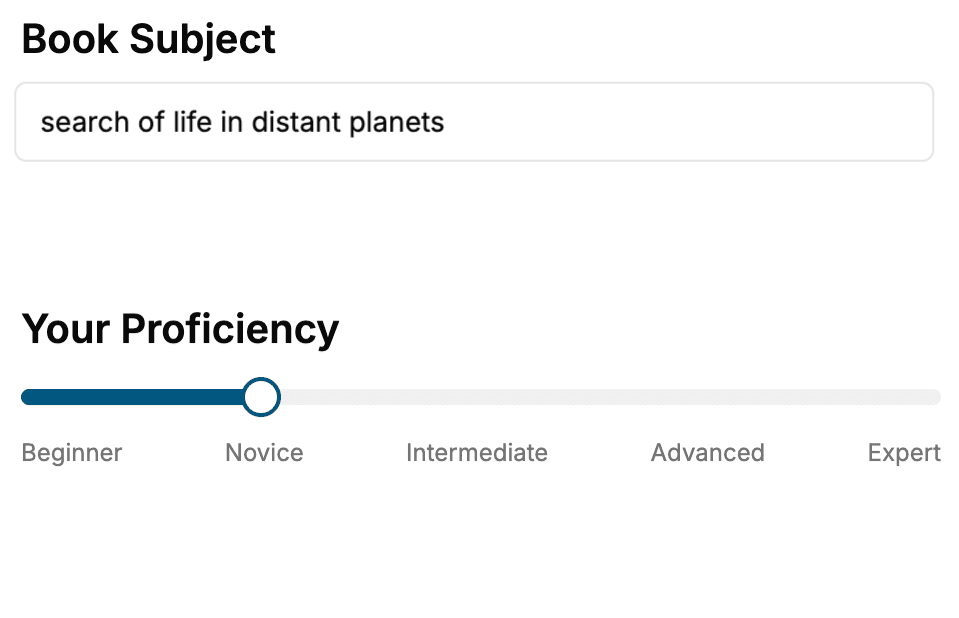
- 1. Select your focus
Select the focus of your Family Relationships book and share your background
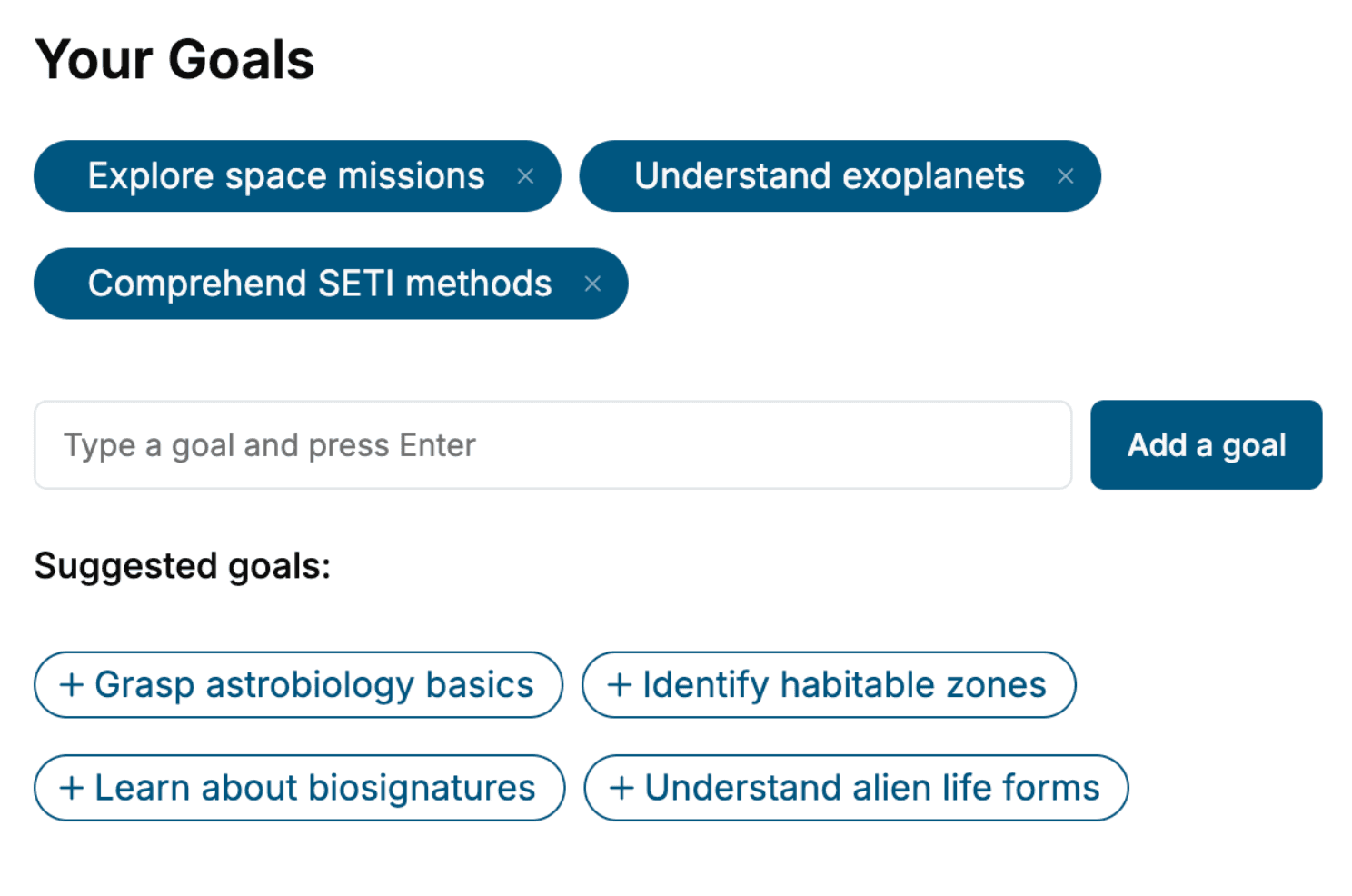
- 2. Personalize your book
Specify your goals and choose sub-topics to include
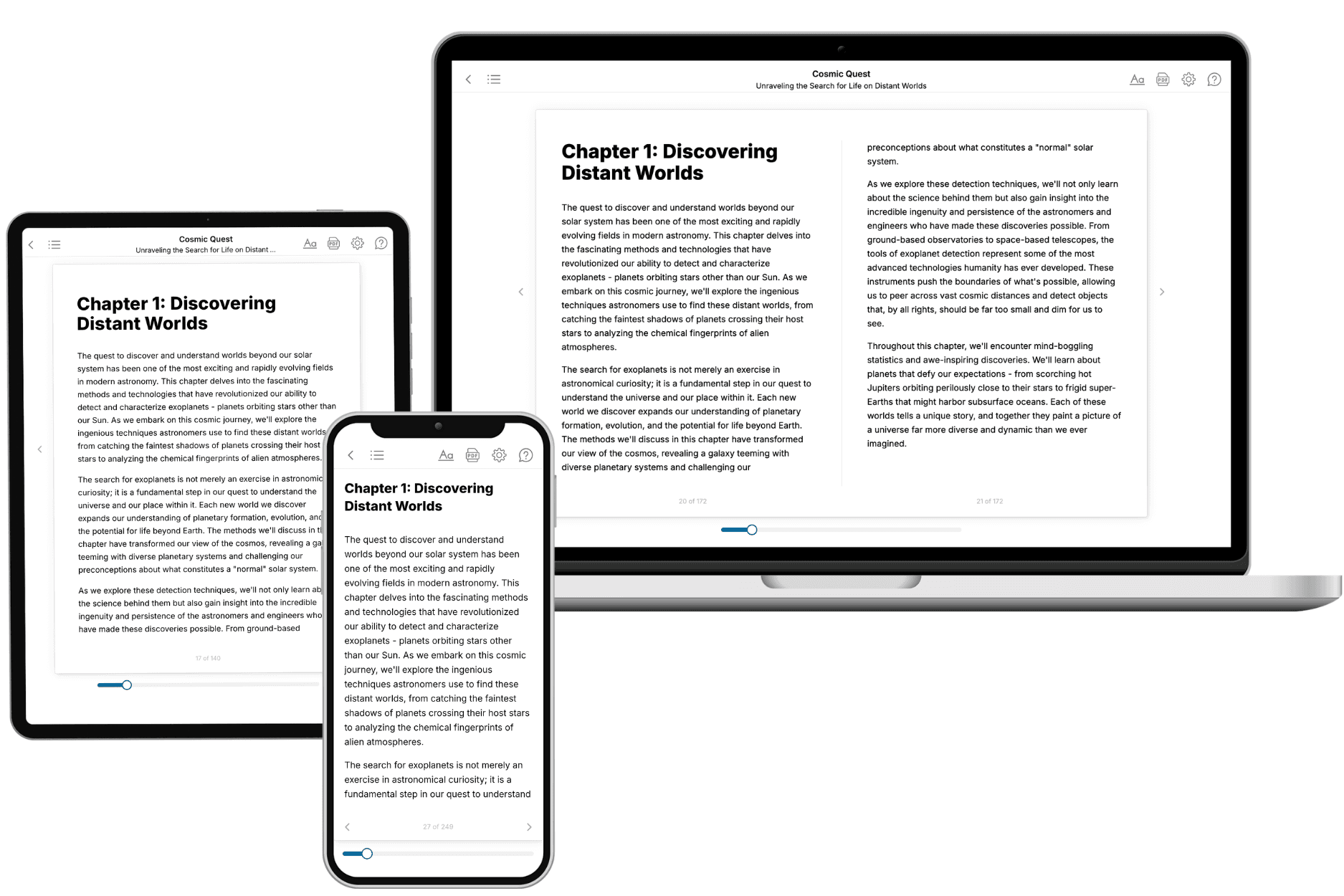
- 3. Get your tailored book
Your book is ready in 10 minutes. Read it online, download as EPUB or PDF, or send to Kindle.
Frequently asked questions
- What is TailoredRead?
TailoredRead creates complete, full-length nonfiction ebooks, written specifically for you. Tell us what you want to learn and why, and TailoredRead writes you a complete ebook on it, with charts, tables, and diagrams throughout. Read it online, on Kindle, or on any e-reader, or download it as a PDF or EPUB. Every book is written fresh the day you order it.
- How is the book tailored to me?
Before anything is written, you answer a few short questions about your goals, your background, and the topics you care about. Your book is then planned around your answers: written at your level, focused on your goals, and covering the topics you chose, instead of the one-size-fits-all book a store sells everyone.
- Will it read like generic AI content?
No. Your book isn't a chat transcript: it's planned chapter by chapter before a single word is written, told in a clear book voice, and explains ideas visually with charts, tables, and diagrams. After writing, every book goes through an editorial pass that polishes chapters so the book reads consistent from start to finish. Judge for yourself: browse thousands of sample books on our Explore Books page.
- How accurate is the content?
Our AI first checks whether your subject needs live research. Niche and fast-moving subjects are researched before writing, and the book plan and chapters are grounded in what it finds. After writing, every book goes through a quality pass that checks its facts and consistency, and researched books list their sources in a Notes section at the back.
- How long is the book?
You choose the length: Comprehensive (250-300 pages), Detailed (150-200 pages), Essential (70-100 pages), or Short (30-50 pages).
- Does the book include visuals?
Yes. Every book includes charts, tables, and diagrams: timelines, checklists, step-by-step guides, decision trees, comparison tables, matrices, and bar charts. A typical book includes dozens of these visual elements.
- Can I read it on Kindle? What formats can I download?
Yes. Every book can be read in our online reader or downloaded as a PDF or EPUB. The EPUB can be opened with Kindle, Apple Books, Kobo, and any e-reader. The Commercial and Author licenses also include an editable Word (DOCX) and Markdown download.
- How much does it cost?
About the price of a regular ebook. The exact price depends on your book's length and complexity, from $2 for the shortest books to $35 for the most comprehensive, and it's shown when you review your book, before you commit to anything. Each book is a one-time purchase, yours to keep, no subscription. Licenses that let you share, teach, or publish your book range from $35.99 to $49.99.
- Can I preview the book before purchasing?
Before you pay, you'll see what your book will cover: the title, a detailed description, the estimated length, and the complete chapter-by-chapter table of contents, so you know what you're getting before you decide. The full text itself is written after you purchase.
- How long does it take to create a book?
About 10 minutes. You can start reading the opening chapters while the rest is still being written.