Bodyweight Mastery
The Complete Guide to Building Strength, Muscle, and Athletic Performance Using Calisthenics
You want to build real strength and visible muscle, but you're overwhelmed by conflicting fitness advice and unsure if bodyweight training alone can deliver results.
238 pages11 chaptersDec 15, 2025Fitness
About this book
The truth is, calisthenics is one of the most effective ways to build functional strength and lean muscle—but only if you understand the fundamentals and follow a strategic progression. This book cuts through the confusion and gives you everything you need: the science behind bodyweight training, step-by-step progressions for every major exercise, proper form breakdowns to prevent injury, nutrition guidance tailored to calisthenics, and recovery strategies that actually work. Whether you're starting from zero or stuck at an intermediate plateau, you'll learn how to progress systematically, build core stability that multiplies your strength, master advanced skills like handstands and muscle-ups, and create a sustainable routine you can maintain for life. No equipment needed—just knowledge, consistency, and the right approach.
Table of contents
- IntroductionWhy Calisthenics Works: The Science Behind Bodyweight Training, How to Use This Book for Maximum Results, The Mindset and Discipline FoundationRead below
- Chapter 1: Calisthenics Fundamentals and Training PrinciplesBodyweight Exercise Fundamentals, Progressive Overload: The Key to Continuous Strength Gains, Understanding Sets, Reps, and Training Variables
- Chapter 2: Building Your Foundation: Core Stability and ControlCore Anatomy and Why Stability Matters, Core Stability Progressions from Beginner to Advanced, Integrating Core Work Into Every Exercise
- Chapter 3: Push-Up Mastery: Form, Progressions, and VariationsPush-Up Form Mastery: The Complete Breakdown, Push-Up Progressions for Every Fitness Level, Advanced Push-Up Variations and Specialization
- Chapter 4: Pull-Up Strength Building: From Assisted to AdvancedPull-Up Mechanics and Grip Variations, Pull-Up Strength Building Progressions, Advanced Pull-Up Variations and Weighted Training
- Chapter 5: Dips and Upper Body Pressing PowerDip Fundamentals and Proper Form, Dip Variations for Strength and Muscle Building, Progressive Dip Training for Intermediate Athletes
- Chapter 6: Lower Body Strength: Squats, Lunges, and Explosive MovementsBodyweight Squat Techniques and Form Corrections, Explosive Movement Training for Power Development, Lower Body Progression Strategies
- Chapter 7: Advanced Skills: Handstands, Muscle-Ups, and Isometric StrengthHandstand Balance Training: From Wall Holds to Free-Standing, Muscle-Up Skill Development and Progression, Isometric Strength Training for Plateau Breaking
- Chapter 8: Flexibility, Mobility, and Injury PreventionFlexibility and Mobility Work: Why It's Essential, Daily Mobility Routines and Stretching Protocols, Injury Prevention Strategies and Common Mistakes
- Chapter 9: Nutrition for Calisthenics: Fueling Your ProgressCalisthenics Nutrition Basics and Macronutrient Balance, Practical Meal Planning for Muscle Building, Supplementation Strategies and What Actually Works
- Chapter 10: Recovery, Rest, and Sustainable TrainingWorkout Recovery Methods and Sleep Optimization, Optimal Training Frequency and Deload Weeks, Building a Sustainable Routine for Lifelong Fitness
- Chapter 11: Beginner to Intermediate Progression: Your Complete RoadmapThe Beginner Phase: Building Solid Foundations, Transitioning to Intermediate Training, Creating Your Personalized Training Progressions
- Conclusion: Your Path ForwardRecapping the Key Principles, Your Next Steps and Long-Term Vision
- Frequently Asked Questions
- Glossary of Calisthenics Terms
Introduction
You've probably heard conflicting advice about bodyweight training. Some people claim you can't build real muscle without weights. Others insist calisthenics is superior to everything else. The truth lies somewhere in between, grounded in science and proven by countless athletes who've transformed their bodies using nothing but their own weight. This book exists to cut through the noise and give you a clear, evidence-based roadmap for building functional strength and lean muscle through calisthenics. Whether you're starting from zero or stuck at an intermediate plateau, you'll find the knowledge and progressions you need to move forward.
The beauty of bodyweight training isn't just its accessibility—it's the way it develops your body as an integrated system. When you perform a proper push-up, you're not just working your chest and triceps. You're engaging your core, stabilizing with your shoulders, and coordinating multiple muscle groups to move as one unit. This functional strength translates directly to real-world movement and athletic performance in ways that isolated machine exercises simply cannot match. Calisthenics builds bodies that are strong, mobile, and capable of controlling their own weight through space.
This introduction sets the foundation for everything that follows. You'll understand why bodyweight training works from a physiological perspective, how to approach this book strategically for maximum results, and the mindset shifts that separate those who make consistent progress from those who spin their wheels. The principles you learn here will guide every workout, every progression decision, and every moment when you're tempted to skip a session or compromise on form. Building a strong body starts with building the right mental framework, and that process begins right now.
Why Calisthenics Works: The Science Behind Bodyweight Training
Your muscles don't know the difference between a barbell and your bodyweight. They only understand tension, time under load, and progressive overload. When you perform a push-up, your chest, shoulders, and triceps experience mechanical tension just as they would during a bench press. The key difference is that bodyweight exercises require greater stabilization and coordination, recruiting more muscle fibers across your entire body. Research consistently shows that when matched for intensity and volume, bodyweight training produces comparable muscle growth and strength gains to traditional weight training[1]. The limitation isn't the method—it's understanding how to apply progressive overload without external weights.
Progressive overload is the fundamental principle that drives all strength and muscle gains. Your body adapts to the demands you place on it, but only when those demands gradually increase over time. With weights, you simply add more plates to the bar. With calisthenics, you manipulate leverage, range of motion, tempo, and exercise variations to increase difficulty. A beginner might start with wall push-ups, progress to knee push-ups, then standard push-ups, then decline push-ups, and eventually one-arm push-ups. Each progression increases the load on your muscles, forcing adaptation and growth. This approach requires more knowledge and creativity, but it's equally effective when applied correctly.
The neuromuscular benefits of bodyweight training extend beyond simple strength gains. Every calisthenics exercise is a closed kinetic chain movement, meaning your hands or feet are fixed against a surface while your body moves. This creates greater proprioceptive feedback and develops superior body awareness compared to open chain exercises like bicep curls. Your nervous system learns to coordinate complex movement patterns, improving balance, spatial awareness, and movement efficiency. Athletes who train with calisthenics often report better body control and coordination in their sports, precisely because their training demands integrated, full-body movement rather than isolated muscle contractions.
Core stability represents another significant advantage of bodyweight training. During a proper push-up, plank, or pull-up, your core muscles work constantly to maintain spinal alignment and transfer force between your upper and lower body. This isn't optional engagement you can choose to activate—it's a fundamental requirement of the movement. Research demonstrates that compound bodyweight exercises produce greater core activation than many isolation exercises specifically designed for core training[2]. Every push, pull, and squat becomes an opportunity to build the foundational strength that supports all other movements.
Metabolic conditioning and cardiovascular benefits emerge naturally from calisthenics training when structured appropriately. Circuit-style bodyweight workouts elevate your heart rate while building strength, creating a hybrid training effect that improves both muscular and cardiovascular fitness simultaneously. Studies show that high-intensity bodyweight training can produce similar cardiovascular adaptations to traditional cardio while also building muscle and strength. This efficiency makes calisthenics particularly valuable for people with limited training time who want comprehensive fitness development without splitting their focus between separate strength and cardio sessions.
The accessibility and sustainability of bodyweight training cannot be overstated. You can train anywhere, anytime, without equipment or gym memberships. This removes common barriers that derail fitness routines—closed gyms, travel, equipment costs, or intimidating gym environments. More importantly, the skills you develop through calisthenics remain useful throughout your entire life. The ability to control your own bodyweight, maintain balance, and move efficiently doesn't just build an impressive physique—it preserves functional independence and quality of life as you age. The strength to perform a pull-up or pistol squat in your twenties translates to the ability to climb stairs, carry groceries, and maintain mobility in your seventies.
Joint health and injury prevention represent often-overlooked benefits of properly executed bodyweight training. Unlike heavy barbell exercises that can place significant compressive forces on your spine and joints, calisthenics distributes load more naturally across your body's structure. The emphasis on controlled movement, full range of motion, and proper form develops balanced strength around your joints rather than creating muscular imbalances. However, this benefit only materializes when you prioritize technique over ego. Poor form in calisthenics can injure you just as easily as poor form with weights. The difference is that bodyweight training, when done correctly, tends to be more forgiving and sustainable for long-term joint health.
The scalability of calisthenics makes it suitable for virtually any fitness level. A complete beginner can start with the easiest progressions and gradually work toward advanced skills over months or years. An advanced athlete can continue finding challenges through increasingly difficult variations, isometric holds, and skill-based movements like planches and front levers. This scalability means you never outgrow bodyweight training—you simply progress to more demanding variations. The same fundamental movement patterns that serve a beginner learning push-ups will eventually support an advanced athlete working toward one-arm push-ups or planche push-ups. The principles remain constant even as the difficulty increases.
How to Use This Book for Maximum Results
This book is structured as a progressive learning system, not a random collection of exercises. Each chapter builds on the previous ones, creating a comprehensive understanding of how to train effectively with bodyweight exercises. Your first read-through should be sequential, from beginning to end, even if you're tempted to skip ahead to advanced skills. The foundational concepts in early chapters directly support the advanced techniques later. Skipping fundamentals is the primary reason people plateau or develop bad habits that limit their progress. Invest the time to understand the principles before rushing into complex movements.
The chapter organization follows a logical progression that mirrors how you should develop your training:
- Chapters 1-2 establish fundamental training principles and core stability—the foundation everything else builds upon
- Chapters 3-6 cover the major movement patterns (push, pull, dip, squat) with complete progressions from beginner to advanced
- Chapter 7 introduces advanced skills that require mastery of earlier progressions
- Chapters 8-10 address the supporting elements that determine long-term success: mobility, nutrition, and recovery
- Chapter 11 synthesizes everything into complete training programs for different experience levels
Each exercise chapter follows a consistent format designed to maximize your learning and application. You'll find detailed form breakdowns that explain not just what to do, but why each element matters. Common mistakes are highlighted with specific corrections, helping you avoid the errors that waste time and create injury risk. Progression pathways show you exactly how to advance from easier to harder variations, with clear criteria for when you're ready to move forward. This systematic approach removes guesswork and gives you confidence that you're training optimally for your current level.
The practical application sections throughout this book deserve special attention. These segments translate theory into actionable steps you can implement immediately. When you encounter a practical application section, don't just read it—actively engage with the material. Take notes on how the concepts apply to your current training. Identify which progressions match your current abilities. Plan how you'll incorporate new techniques into your next workout. The difference between reading for information and reading for transformation lies in this active engagement with the material.
Use the progression criteria as honest self-assessment tools, not aspirational goals. Each major exercise includes specific benchmarks that indicate readiness for the next level. For example, you shouldn't attempt standard push-ups until you can perform at least 15 knee push-ups with perfect form. These criteria exist to protect you from injury and ensure you build a solid foundation. Ego-driven progression—moving to harder variations before you're ready—is one of the fastest ways to develop bad habits, plateau, or get hurt. Trust the process and meet the criteria before advancing.
Create a training journal as you work through this book. Document your current abilities, track your workouts, and note how different exercises feel. Record which progressions you're working on and when you meet the criteria to advance. This journal serves multiple purposes: it keeps you accountable, provides motivation as you see progress over time, and helps you identify patterns in what works best for your body. Many people discover that their perceived progress differs significantly from their actual documented progress. The journal provides objective data that guides better training decisions.
The nutrition and recovery chapters (9-10) are not optional reading for people who "just want to exercise." Your training stimulus is only half the equation—adaptation happens during recovery, fueled by proper nutrition. You can follow the perfect workout program, but without adequate protein, calories, and sleep, your progress will stall. These chapters provide practical, evidence-based guidance without requiring you to become a nutrition expert. Even implementing 80% of the recommendations will dramatically improve your results compared to ignoring nutrition and recovery entirely.
Return to this book periodically as you progress. The intermediate-level content will make more sense after you've spent months working through beginner progressions. Advanced concepts that seem abstract now will become clear once you've developed the foundational strength and body awareness they require. This book is designed as a long-term resource, not a one-time read. As your training evolves, different sections will become relevant and valuable. The chapter on advanced skills might seem intimidating now, but in six months, it could be exactly what you need to break through a plateau.
Finally, approach this book with patience and realistic expectations. Building significant strength and muscle takes months and years, not weeks. The progressions outlined here work, but they require consistent application over time. You won't master handstands in a month or achieve one-arm pull-ups in six weeks. What you will do is make steady, measurable progress that compounds over time into impressive results. The people who succeed with calisthenics aren't necessarily the most talented—they're the most consistent and patient. This book gives you the roadmap; your discipline and persistence determine how far you travel.
The Mindset and Discipline Foundation
Your mindset determines your results more than any exercise program or nutrition plan. Two people can follow identical training protocols and achieve vastly different outcomes based solely on their mental approach. The person who views each workout as an opportunity to improve, who focuses on form over ego, and who maintains consistency through motivation fluctuations will always outperform the person who trains sporadically with perfect programming. This section addresses the psychological foundation that separates those who transform their bodies from those who perpetually restart their fitness journey.
Discipline, not motivation, drives long-term success. Motivation is an emotion—it fluctuates based on your mood, energy levels, and external circumstances. Relying on motivation means you'll train enthusiastically for a few weeks, then gradually skip workouts as the initial excitement fades. Discipline is a decision-making system that operates independently of how you feel. You train on scheduled days regardless of motivation levels, just as you brush your teeth regardless of whether you feel like it. Building this discipline requires starting small and creating systems that make training the path of least resistance.
The concept of identity-based habits provides a powerful framework for sustainable change. Instead of setting outcome goals like "I want to do 20 pull-ups," adopt the identity of someone who trains consistently: "I am someone who shows up for my workouts." This subtle shift changes your decision-making process. When faced with the choice to train or skip, you're not weighing short-term comfort against long-term goals—you're acting in alignment with your identity. People who successfully transform their fitness don't rely on willpower for each individual workout; they've internalized the identity of an athlete, making training a natural expression of who they are.
Progressive overload applies to your mental game just as it does to your physical training. You can't expect yourself to maintain perfect discipline immediately if you've spent years being inconsistent. Start with a manageable commitment—perhaps three 20-minute sessions per week—and build from there. Successfully maintaining this modest schedule for a month builds confidence and establishes the habit loop. Once consistency becomes automatic at this level, you can gradually increase duration, frequency, or intensity. This approach prevents the all-or-nothing thinking that leads people to start ambitious programs they can't sustain, then quit entirely when they inevitably miss workouts.
Reframe your relationship with discomfort and challenge. The burning sensation in your muscles during the final reps of a set isn't something to avoid—it's the signal that you're creating the stimulus for adaptation. The difficulty of learning a new movement pattern isn't a sign you're not cut out for calisthenics—it's evidence that you're expanding your capabilities. This reframing transforms obstacles from reasons to quit into indicators that you're on the right path. Elite athletes don't experience less discomfort than beginners; they've simply learned to interpret that discomfort as productive rather than threatening.
The comparison trap destroys more fitness journeys than any other mental obstacle. Social media shows you highlight reels of people performing impressive skills, creating the illusion that everyone progresses faster than you. This comparison is not only demotivating—it's fundamentally irrational. You're comparing your beginning to someone else's middle or end, your behind-the-scenes to their highlight reel. The only meaningful comparison is between your current self and your past self. Are you stronger than you were three months ago? Can you perform exercises that were impossible when you started? This internal benchmark provides accurate feedback and sustainable motivation.
Develop a growth mindset specifically around skill acquisition and strength building. When you attempt a new progression and fail, you have two interpretation options. A fixed mindset interprets failure as evidence of inherent limitation: "I can't do this." A growth mindset interprets the same failure as current inability that can change with practice: "I can't do this yet." That single word—yet—transforms failure from a permanent state into a temporary condition. Research consistently demonstrates that people with growth mindsets persist longer, learn faster, and ultimately achieve more than equally talented individuals with fixed mindsets[3].
Create environmental systems that support your training rather than relying solely on willpower. Willpower is a limited resource that depletes throughout the day as you make decisions and resist temptations. Successful long-term training depends on reducing the willpower required for each workout. Practical strategies include:
- Training at the same time each day to establish a routine that becomes automatic
- Preparing your workout space the night before so there's no friction when it's time to train
- Scheduling workouts in your calendar as non-negotiable appointments
- Removing obstacles that make skipping easier than training
- Building accountability through training partners or public commitments
Embrace the long-term perspective that calisthenics demands. Advanced skills like muscle-ups, handstands, and one-arm pull-ups require months or years of consistent training. This timeline frustrates people accustomed to instant gratification, but it also filters out those who aren't serious about the journey. The extended timeline is actually an advantage—it ensures that when you achieve these skills, you've built the comprehensive strength, mobility, and body awareness to perform them safely and progress beyond them. Quick fixes and shortcuts don't exist in legitimate strength training. The time will pass regardless; you can either spend it building real capabilities or cycling through programs that promise unrealistic results.
Finally, understand that perfection is not the goal—consistency is. You will miss workouts occasionally. You will have periods where progress stalls. You will experience setbacks and frustrations. These are normal parts of any long-term fitness journey, not signs of failure. What matters is your response to these inevitable challenges. Do you use a missed workout as permission to quit entirely, or do you simply resume your schedule at the next planned session? Do you interpret a plateau as evidence you've reached your limit, or as a signal to adjust your approach? The people who succeed long-term aren't those who never struggle—they're those who continue despite struggles, treating setbacks as temporary obstacles rather than permanent roadblocks.
Notes
Introduction
- 1. Brad J. Schoenfeld and others, "Strength and Hypertrophy Adaptations Between Low- vs. High-Load Resistance Training," Journal of Strength and Conditioning Research, 2017
- 2. Jinger S. Gottschall and others, "Integration Core Exercises Elicit Greater Muscle Activation Than Isolation Exercises," Journal of Strength and Conditioning Research, 2013
- 3. Carol S. Dweck, Mindset: The New Psychology of Success, Random House, 2006
This is the end of the free sample. The full book has 11 chapters.
Want this book written for you?
Tell us your goals and background, and get your own version of this book, tailored by AI to you.


Benefits of AI-tailored books
- Read one book, not ten:
- all the Fitness knowledge you need, gathered into a single book.
- Save days of learning:
- tell us your goals, choose your topics, and the whole book is built around them.
- Learn effortlessly:
- Fitness book written for your specific background and expertise.
- Understand at a glance:
- includes charts, tables, timelines, checklists, decision trees, and more.
- Stay current:
- written the day you order it, not years ago.
- Trust what you read:
- every book is checked for accuracy, with real research when your subject needs it.
Create your unique book in 3 steps
- 1. Select your focus
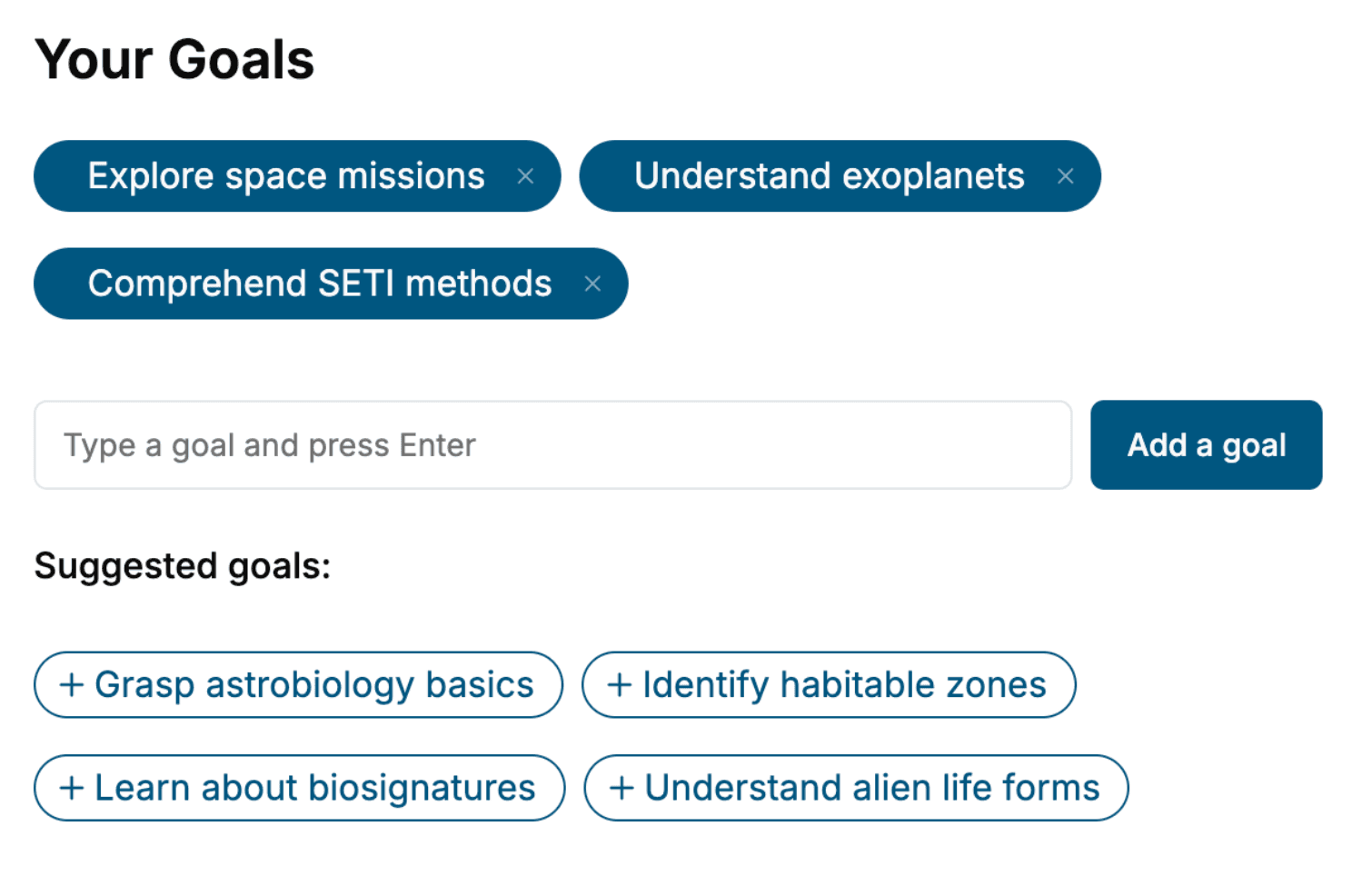
Select the focus of your Fitness book and share your background
- 2. Personalize your book
Specify your goals and choose sub-topics to include
- 3. Get your tailored book
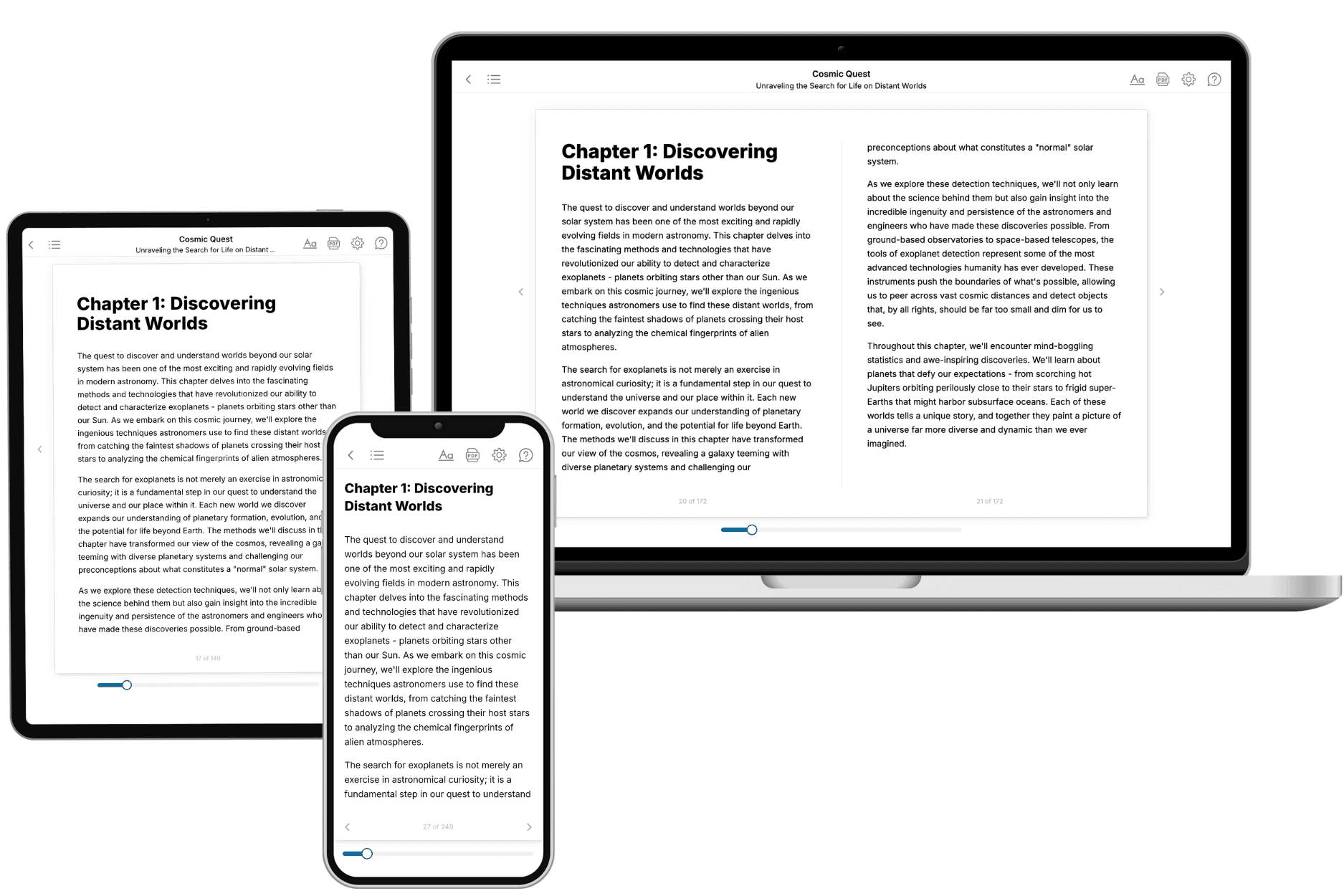
Your book is ready in 10 minutes. Read it online, download as EPUB or PDF, or send to Kindle.

Frequently asked questions
- What is TailoredRead?
TailoredRead creates complete, full-length nonfiction ebooks, written specifically for you. Tell us what you want to learn and why, and TailoredRead writes you a complete ebook on it, with charts, tables, and diagrams throughout. Read it online, on Kindle, or on any e-reader, or download it as a PDF or EPUB. Every book is written fresh the day you order it.
- How is the book tailored to me?
Before anything is written, you answer a few short questions about your goals, your background, and the topics you care about. Your book is then planned around your answers: written at your level, focused on your goals, and covering the topics you chose, instead of the one-size-fits-all book a store sells everyone.
- Will it read like generic AI content?
No. Your book isn't a chat transcript: it's planned chapter by chapter before a single word is written, told in a clear book voice, and explains ideas visually with charts, tables, and diagrams. After writing, every book goes through an editorial pass that polishes chapters so the book reads consistent from start to finish. Judge for yourself: browse thousands of sample books on our Explore Books page.
- How accurate is the content?
Our AI first checks whether your subject needs live research. Niche and fast-moving subjects are researched before writing, and the book plan and chapters are grounded in what it finds. After writing, every book goes through a quality pass that checks its facts and consistency, and researched books list their sources in a Notes section at the back.
- How long is the book?
You choose the length: Comprehensive (250-300 pages), Detailed (150-200 pages), Essential (70-100 pages), or Short (30-50 pages).
- Does the book include visuals?
Yes. Every book includes charts, tables, and diagrams: timelines, checklists, step-by-step guides, decision trees, comparison tables, matrices, and bar charts. A typical book includes dozens of these visual elements.
- Can I read it on Kindle? What formats can I download?
Yes. Every book can be read in our online reader or downloaded as a PDF or EPUB. The EPUB can be opened with Kindle, Apple Books, Kobo, and any e-reader. The Commercial and Author licenses also include an editable Word (DOCX) and Markdown download.
- How much does it cost?
About the price of a regular ebook. The exact price depends on your book's length and complexity, from $2 for the shortest books to $35 for the most comprehensive, and it's shown when you review your book, before you commit to anything. Each book is a one-time purchase, yours to keep, no subscription. Licenses that let you share, teach, or publish your book range from $35.99 to $49.99.
- Can I preview the book before purchasing?
Before you pay, you'll see what your book will cover: the title, a detailed description, the estimated length, and the complete chapter-by-chapter table of contents, so you know what you're getting before you decide. The full text itself is written after you purchase.
- How long does it take to create a book?
About 10 minutes. You can start reading the opening chapters while the rest is still being written.