The Brain's Eye
How Neuroscience Reveals Why We Find Beauty in Art, Nature, and Design
What happens in your brain when you stand before a painting that takes your breath away?
191 pages9 chaptersMay 5, 2026Neuroscience
About this book
Why do certain colors, shapes, and compositions feel inherently beautiful while others leave you cold? For centuries, philosophers debated whether beauty exists in the object itself or only in the eye of the beholder. Neuroaesthetics offers a revolutionary answer: beauty is neither purely objective nor entirely subjective—it's a product of how your brain is wired. This book explores the cutting-edge science of how your brain processes aesthetic experiences, from the moment light hits your retina to the complex emotional and reward responses that define beauty. You'll discover why symmetry captivates us, how contrast creates visual interest, and why certain artworks trigger profound emotional responses. Whether you're an artist seeking to understand your craft, a designer wanting to create more compelling work, or simply someone curious about the science of beauty, this exploration of neuroaesthetics will fundamentally change how you see the world.
Table of contents
- IntroductionThe Beauty Paradox: Why Science Matters, What Is Neuroaesthetics?, Why Understanding Your Brain's Response to Beauty MattersRead below
- Chapter 1: The Visual Brain: How We See BeautyFrom Light to Perception: The Visual Pathway, Feature Detection: How the Brain Recognizes Patterns, Visual Hierarchy and Attention: What Captures Your Eye
- Chapter 2: The Geometry of Beauty: Symmetry, Proportion, and FormWhy Symmetry Captivates: The Neural Basis of Balance, The Golden Ratio and Natural Proportions, How the Brain Recognizes and Appreciates Form
- Chapter 3: Color, Contrast, and Emotional ResponseHow the Brain Processes Color Information, Contrast and Visual Interest: Creating Tension and Harmony, The Emotional Impact of Color Choices
- Chapter 4: The Reward System: Why Beauty Feels GoodDopamine and the Pleasure of Beauty, Reward Prediction and Aesthetic Anticipation, Why We Crave Beautiful Experiences
- Chapter 5: Emotion, Memory, and Meaning-MakingHow Aesthetic Experiences Trigger Emotional Responses, The Role of Memory in Aesthetic Appreciation, How the Brain Constructs Meaning from Art
- Chapter 6: Individual Differences: Why Beauty Is PersonalBrain Structure and Aesthetic Preferences, Neurotransmitters and Personality: The Chemistry of Taste, How Experience and Culture Shape Aesthetic Preferences
- Chapter 7: Beyond Vision: Neuroaesthetics of Sound, Touch, and TasteThe Neuroscience of Musical Beauty, Touch, Texture, and Sensory Pleasure, How the Brain Integrates Multiple Senses in Aesthetic Experience
- Chapter 8: Art, Design, and the Brain: Practical ApplicationsHow Artists Can Use Neuroaesthetics to Create More Engaging Work, Design Principles Grounded in Neuroscience, How Brands and Marketers Leverage Aesthetic Principles
- Chapter 9: The Evolution of Aesthetic Taste: Why We Prefer What We PreferEvolutionary Roots of Aesthetic Preferences, How Culture Shapes and Reshapes Aesthetic Standards, The Development of Refined Taste Over Time
- ConclusionIntegrating Neuroscience and Aesthetics, The Future of Neuroaesthetics
- Glossary
Introduction
Imagine standing in front of a painting you've never seen before. Maybe it's a Vermeer, with its quiet light falling across a woman's face. Maybe it's a Rothko, nothing but vast fields of color pressing against each other. Within seconds, something happens. Your chest tightens, your breathing slows, and you feel a pull you can't quite name. You don't decide to find it beautiful. It just happens. That involuntary, almost physical response to beauty is one of the most fascinating puzzles in all of human experience, and for most of history, it belonged entirely to philosophers and poets.
That's changing. Over the past few decades, neuroscientists have begun turning their tools toward the question of beauty itself. Using brain imaging, behavioral experiments, and computational models, researchers are mapping what actually happens inside the brain when a person encounters something they find beautiful. The results are surprising, sometimes counterintuitive, and deeply illuminating. They reveal that aesthetic experience is not a single event but a cascade of neural processes involving vision, emotion, memory, and reward, all firing in concert within fractions of a second.
This book is about that cascade. It's about the science of why certain shapes, colors, sounds, and compositions move us, and why others leave us unmoved. It draws on the emerging field of neuroaesthetics, which sits at the intersection of neuroscience, psychology, and the philosophy of art. The goal is not to reduce beauty to a formula or to strip away its mystery. The goal is to understand it more deeply, because understanding how your brain responds to beauty can change how you create, how you design, how you look at the world, and ultimately, how you live in it.
Throughout these chapters, you'll encounter real research, concrete examples, and practical insights drawn from studies conducted in laboratories, museums, and design studios around the world. Whether you're an artist, a designer, a student of philosophy, or simply someone who has ever been stopped in their tracks by something beautiful, this exploration is for you. The science of beauty is not cold or clinical. It is, in its own way, as breathtaking as the experiences it seeks to explain.
The Beauty Paradox: Why Science Matters
Beauty has always been a paradox. On one hand, it feels intensely personal. You might find a particular landscape heartbreaking in its loveliness while the person standing next to you barely glances at it. On the other hand, certain things seem to be beautiful to almost everyone. Across cultures and centuries, people have consistently responded to symmetrical faces, harmonious music, and the golden light of late afternoon. So which is it? Is beauty in the eye of the beholder, or is it something more universal?
Philosophers have wrestled with this question for millennia. Plato argued that beauty was an objective property of the world, a form that existed independently of human perception. Kant, writing in the 18th century, took a more nuanced position, suggesting that aesthetic judgments feel universal even though they are rooted in subjective experience. His phrase purposiveness without purpose
tried to capture the strange way that beautiful things seem designed for our pleasure without actually being designed at all. These are brilliant ideas, but they remained largely untestable for centuries.
The paradox deepens when you look at the history of art. What one era considers beautiful, another dismisses as crude or excessive. The Impressionists were mocked when they first exhibited in Paris in 1874. Critics called their work unfinished and chaotic. Today, those same paintings sell for hundreds of millions of dollars and draw millions of visitors to museums worldwide. If beauty were purely objective, this kind of radical shift in taste would be impossible. But if it were purely subjective, we couldn't explain why some works endure across centuries while others are quickly forgotten.
Science matters here because it offers a way out of this deadlock. Rather than asking whether beauty is in the object or in the observer, neuroscience asks a more precise question: what happens in the brain when a person encounters something they find beautiful? This reframing is powerful. It doesn't dismiss the role of culture, history, or personal experience. Instead, it grounds the conversation in biology, giving us a framework that can accommodate both universal tendencies and individual variation.
Consider a concrete example. Research has consistently shown that humans across cultures prefer faces with a high degree of bilateral symmetry, meaning the left and right sides of the face are close to mirror images of each other.[1] This preference appears in children as young as a few months old, before they've had time to absorb cultural standards of attractiveness. That suggests the preference is rooted in neural architecture, not learned behavior. At the same time, what counts as beautiful in a face varies enormously across cultures and time periods. Science can explain both the universal baseline and the cultural variation, which philosophy alone struggles to do.
The beauty paradox, then, is not a problem to be solved by choosing one side. It's a tension to be understood. Neuroaesthetics doesn't flatten that tension. It maps it, showing where universal biology ends and individual experience begins. That map is what this book is built on.
Beauty is neither a property of objects nor a projection of minds. It is what happens at the meeting point between the two, shaped by evolution, experience, and the extraordinary complexity of the human brain.
Understanding this meeting point has real consequences. For artists, it means that craft is not arbitrary. Certain choices reliably produce stronger responses in viewers, not because of rigid rules, but because of how brains are built. For designers, it means that aesthetics is not decoration. It's a functional dimension of every product, interface, and space. For anyone who cares about the quality of human experience, it means that beauty is not a luxury. It's a fundamental part of how we process and make sense of the world.
What Is Neuroaesthetics?
Neuroaesthetics is the scientific study of how the brain generates aesthetic experiences. The term was coined by the neuroscientist Semir Zeki in the 1990s, though the questions it addresses are much older.[2] Zeki argued that the brain's visual system doesn't passively record the world. It actively constructs a representation of it, and that construction process is deeply tied to what we find beautiful. His work on the visual cortex helped establish that aesthetic response is not a mysterious add-on to perception. It's woven into the very fabric of how we see.
The field draws on several disciplines working in parallel. Cognitive neuroscience contributes brain imaging techniques like fMRI (functional magnetic resonance imaging) and EEG (electroencephalography), which allow researchers to observe neural activity in real time as people view art, listen to music, or evaluate designs. Evolutionary psychology contributes theories about why certain preferences might have been adaptive for our ancestors. Experimental psychology contributes rigorous methods for measuring subjective responses and identifying patterns across large groups of people.
One of the field's founding insights is that aesthetic experience is not localized to a single brain region. Early researchers hoped to find an "art center" in the brain, a specific area that lights up whenever we encounter something beautiful. That search came up empty. Instead, brain imaging studies consistently show that aesthetic experiences activate a distributed network of regions, including areas involved in visual processing, emotional regulation, memory retrieval, and reward signaling. Beauty, it turns out, is a whole-brain event.
Here's a simplified picture of the key brain systems involved in aesthetic experience:
- Visual cortex: Processes basic features like edges, colors, and motion, then builds increasingly complex representations of objects and scenes.
- Prefrontal cortex: Handles higher-level evaluation, judgment, and the conscious appreciation of aesthetic qualities.
- Amygdala: Generates emotional responses, including the sense of awe, pleasure, or unease that art can provoke.
- Hippocampus: Links current perceptions to memories and past experiences, giving aesthetic responses their personal depth.
- Nucleus accumbens and ventral striatum: Core components of the brain's reward system, activated when we experience something pleasurable, including beauty.
- Default mode network: A set of regions active during self-referential thinking and imagination, engaged when we interpret meaning in art.
Neuroaesthetics has produced some genuinely surprising findings. For example, studies have shown that people rate abstract paintings as more beautiful when they believe the work was created by a professional artist rather than a child or a computer, even when the images are identical.[3] This tells us that aesthetic judgment is not purely about visual properties. Context, belief, and narrative all shape what the brain registers as beautiful. The brain is not a passive camera. It's an active interpreter.
Another key finding involves what researchers call aesthetic chills, the goosebumps or shivers that some people experience in response to music, art, or natural beauty. Studies using fMRI have shown that these chills are associated with activity in the brain's reward circuitry, the same regions activated by food, sex, and other primary pleasures.[4] This finding has profound implications. It suggests that the capacity for aesthetic pleasure is not a cultural refinement layered on top of our animal nature. It is part of our animal nature, built into the same neural hardware that keeps us alive.
It's worth being clear about what neuroaesthetics is not. It is not a theory that reduces art to biology or claims that a painting's value can be measured in brain scans. The meaning of a work of art, its cultural significance, its historical context, its relationship to the artist's life, these things matter enormously and cannot be captured by neuroscience alone. What neuroaesthetics offers is a complementary lens, one that illuminates the biological substrate of aesthetic experience without replacing the humanistic frameworks that have always surrounded art.
The field is still young. Many of its findings are preliminary, and researchers are careful to note the limitations of current brain imaging technology. But the trajectory is clear. Each year brings new studies, new methods, and new insights into the neural basis of beauty. This book draws on the best of that research, translating it into accessible language and connecting it to the experiences you have every day when you encounter something that moves you.
Why Understanding Your Brain's Response to Beauty Matters
You might reasonably ask: does it matter why beauty works? Can't you just enjoy it? Of course you can. But understanding the mechanisms behind aesthetic experience opens up possibilities that pure enjoyment doesn't. It's a bit like understanding how music theory works. Knowing why a chord progression creates tension and release doesn't make the music less moving. It makes you a more informed listener, and if you're a musician, a more capable creator.
For artists and designers, neuroaesthetics offers a practical toolkit. When you understand that the brain is wired to respond to certain visual patterns, you can make more deliberate choices about composition, color, and form. This doesn't mean following a formula. Great art has always broken rules. But breaking rules effectively requires understanding what the rules are and why they exist. A designer who knows that high contrast draws the eye can use that knowledge to guide a viewer's attention. An artist who understands how the brain processes ambiguity can use that to create works that reward sustained looking.
Consider the work of graphic designer Paula Scher, whose bold typographic compositions exploit the brain's tendency to seek pattern and hierarchy in visual information. Or think about how architects like Tadao Ando use light, shadow, and geometric proportion to create spaces that feel simultaneously calm and alive. These practitioners may not have studied neuroscience formally, but their intuitions align remarkably well with what brain research reveals about visual preference. Neuroaesthetics gives those intuitions a scientific foundation.
For educators and students, understanding neuroaesthetics reframes the way we think about arts education. If aesthetic experience involves memory, emotion, and reward, then engaging students with beautiful, well-designed learning materials is not a luxury. It's a pedagogical strategy. Research on the aesthetic engagement effect suggests that people learn and retain information more effectively when it's presented in aesthetically pleasing formats.[5] Beauty, in this sense, is not decoration. It's a cognitive tool.
For marketers and brand strategists, the implications are significant and already being acted upon. Companies invest enormous resources in the visual identity of their products, from the curve of a smartphone's edge to the color palette of a logo. These decisions are not arbitrary. They're informed by research into how visual properties influence perception, preference, and purchasing behavior. Understanding the neuroscience behind these effects helps explain why some brands feel instantly trustworthy and others feel cheap, even when the underlying products are similar.
Beyond professional applications, there's a more personal reason to care about this science. Aesthetic experiences are among the most meaningful moments in human life. The memory of a piece of music that helped you through a difficult time, the way a particular landscape made you feel small and grateful, the painting you stood in front of for twenty minutes without knowing why: these experiences shape who you are. Understanding them more deeply is a form of self-knowledge.
There's also a wellbeing dimension worth taking seriously. Research consistently links regular exposure to beauty, whether in art, nature, or well-designed environments, to measurable improvements in mood, stress levels, and even physical health.[6] A landmark study by Roger Ulrich found that hospital patients whose rooms overlooked a natural landscape recovered faster from surgery than those whose windows faced a brick wall. The brain's response to beauty is not merely aesthetic. It's physiological. It affects cortisol levels, heart rate, and immune function. Beauty, in a very real sense, is good for you.
Here's a practical way to think about what this book offers. By the time you finish it, you should be able to:
- Explain why certain visual compositions feel balanced and others feel chaotic, in terms of how the brain processes visual information.
- Understand why symmetry, contrast, and proportion have such consistent appeal across cultures and time periods.
- Recognize how emotional memory shapes your personal aesthetic preferences.
- Apply basic principles of neuroaesthetics to your own creative or professional work.
- Think more critically about how environments, products, and media are designed to influence your responses.
- Appreciate the biological roots of aesthetic experience without losing your sense of wonder at it.
Each chapter builds on the last. The book begins with the mechanics of visual perception, tracing the path from light hitting your retina to the complex neural representations that form the basis of what you see. From there, it moves into the specific properties that the brain finds beautiful: symmetry, proportion, color, contrast. Then it explores the emotional and reward systems that give aesthetic experience its power. Later chapters address individual differences, the aesthetics of sound and touch, practical applications for artists and designers, and the evolutionary origins of aesthetic taste.
Throughout, the aim is to keep the science grounded in real experience. Abstract neural mechanisms are always connected to concrete examples: specific artworks, design decisions, natural phenomena, and everyday moments of beauty. The goal is not to turn you into a neuroscientist. The goal is to give you a richer, more informed relationship with the beautiful things in your world, and with the extraordinary brain that makes you capable of experiencing them.
The science of beauty is not a threat to wonder. It is an invitation to a deeper kind of wonder, one that includes not just the experience of beauty but the astonishing fact that we are built to have it.
One final note before you begin. Neuroaesthetics is a field in active development. Some findings discussed in this book are well-established and replicated across many studies. Others are more recent and should be understood as promising rather than definitive. Where the science is uncertain, that uncertainty is acknowledged. The goal is always to represent the state of knowledge honestly, including its limits. Science advances by questioning its own conclusions, and that spirit of inquiry is part of what makes it such a powerful tool for understanding something as rich and complex as beauty.
Notes
Introduction
- 1. A. C. Little and others, "Facial attractiveness," Philosophical Transactions of the Royal Society B, 2011
- 2. S. Zeki, Inner Vision, Oxford University Press, 1999
- 3. H. Leder and others, "A model of aesthetic appreciation and aesthetic judgments," British Journal of Psychology, 2004
- 4. A. J. Blood and R. J. Zatorre, "Intensely pleasurable responses to music correlate with activity in brain regions implicated in reward and emotion," Proceedings of the National Academy of Sciences, 2001
- 5. R. E. Mayer, Multimedia Learning (2nd ed.), Cambridge University Press, 2009
- 6. R. S. Ulrich, "View through a window may influence recovery from surgery," Science, 1984
This is the end of the free sample. The full book has 9 chapters.
Want this book written for you?
Tell us your goals and background, and get your own version of this book, tailored by AI to you.


Benefits of AI-tailored books
- Read one book, not ten:
- all the Neuroscience knowledge you need, gathered into a single book.
- Save days of learning:
- tell us your goals, choose your topics, and the whole book is built around them.
- Learn effortlessly:
- Neuroscience book written for your specific background and expertise.
- Understand at a glance:
- includes charts, tables, timelines, checklists, decision trees, and more.
- Stay current:
- written the day you order it, not years ago.
- Trust what you read:
- every book is checked for accuracy, with real research when your subject needs it.
Create your unique book in 3 steps
- 1. Select your focus
Select the focus of your Neuroscience book and share your background
- 2. Personalize your book
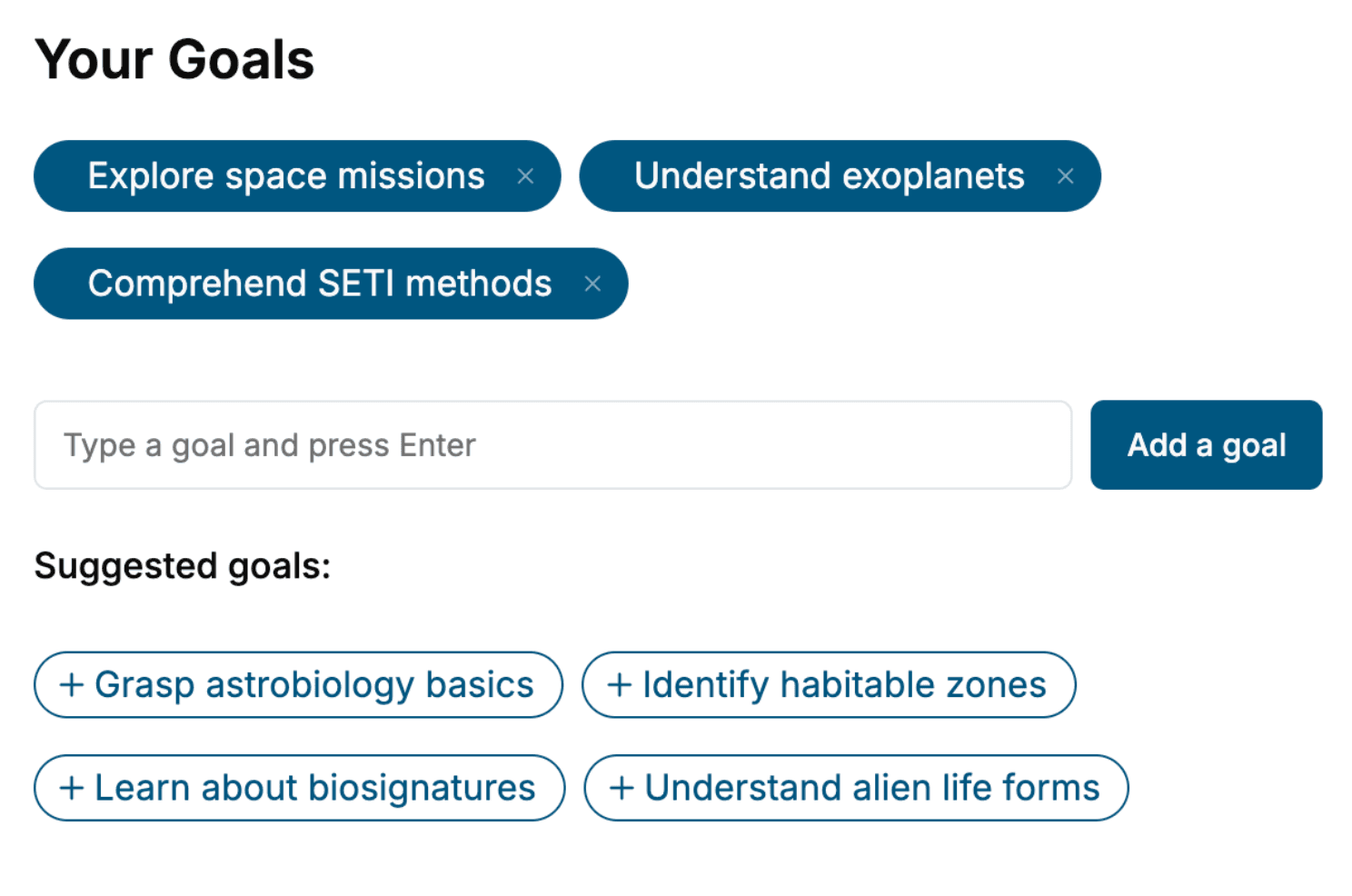
Specify your goals and choose sub-topics to include
- 3. Get your tailored book
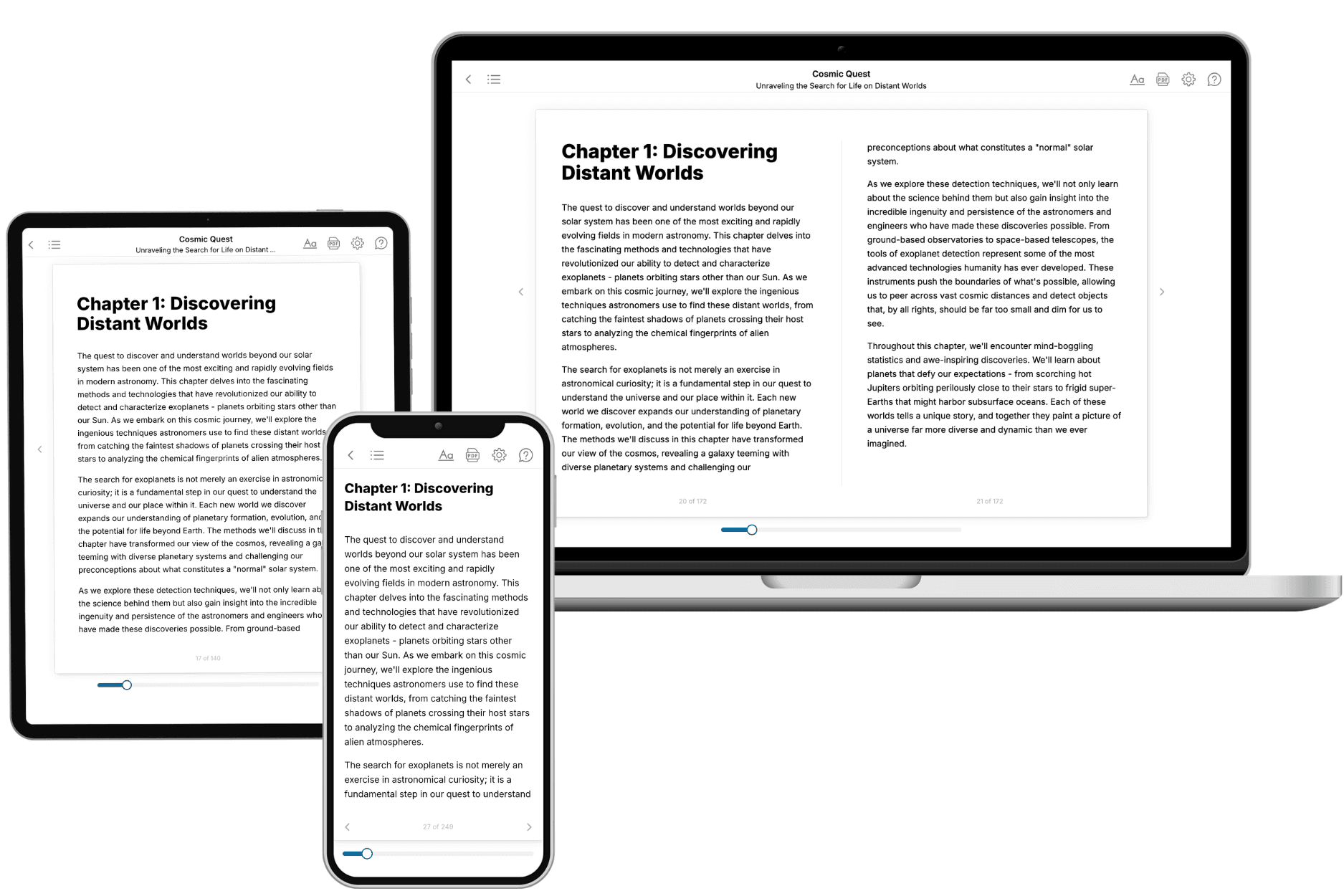
Your book is ready in 10 minutes. Read it online, download as EPUB or PDF, or send to Kindle.

Frequently asked questions
- What is TailoredRead?
TailoredRead creates complete, full-length nonfiction ebooks, written specifically for you. Tell us what you want to learn and why, and TailoredRead writes you a complete ebook on it, with charts, tables, and diagrams throughout. Read it online, on Kindle, or on any e-reader, or download it as a PDF or EPUB. Every book is written fresh the day you order it.
- How is the book tailored to me?
Before anything is written, you answer a few short questions about your goals, your background, and the topics you care about. Your book is then planned around your answers: written at your level, focused on your goals, and covering the topics you chose, instead of the one-size-fits-all book a store sells everyone.
- Will it read like generic AI content?
No. Your book isn't a chat transcript: it's planned chapter by chapter before a single word is written, told in a clear book voice, and explains ideas visually with charts, tables, and diagrams. After writing, every book goes through an editorial pass that polishes chapters so the book reads consistent from start to finish. Judge for yourself: browse thousands of sample books on our Explore Books page.
- How accurate is the content?
Our AI first checks whether your subject needs live research. Niche and fast-moving subjects are researched before writing, and the book plan and chapters are grounded in what it finds. After writing, every book goes through a quality pass that checks its facts and consistency, and researched books list their sources in a Notes section at the back.
- How long is the book?
You choose the length: Comprehensive (250-300 pages), Detailed (150-200 pages), Essential (70-100 pages), or Short (30-50 pages).
- Does the book include visuals?
Yes. Every book includes charts, tables, and diagrams: timelines, checklists, step-by-step guides, decision trees, comparison tables, matrices, and bar charts. A typical book includes dozens of these visual elements.
- Can I read it on Kindle? What formats can I download?
Yes. Every book can be read in our online reader or downloaded as a PDF or EPUB. The EPUB can be opened with Kindle, Apple Books, Kobo, and any e-reader. The Commercial and Author licenses also include an editable Word (DOCX) and Markdown download.
- How much does it cost?
About the price of a regular ebook. The exact price depends on your book's length and complexity, from $2 for the shortest books to $35 for the most comprehensive, and it's shown when you review your book, before you commit to anything. Each book is a one-time purchase, yours to keep, no subscription. Licenses that let you share, teach, or publish your book range from $35.99 to $49.99.
- Can I preview the book before purchasing?
Before you pay, you'll see what your book will cover: the title, a detailed description, the estimated length, and the complete chapter-by-chapter table of contents, so you know what you're getting before you decide. The full text itself is written after you purchase.
- How long does it take to create a book?
About 10 minutes. You can start reading the opening chapters while the rest is still being written.