Breaking the Winter Blues
A Practical Guide to Understanding and Managing Seasonal Affective Disorder
Many people dismiss winter sadness as normal seasonal blues, unaware that Seasonal Affective Disorder affects millions with genuine biological changes in mood, energy, and motivation.
207 pages10 chaptersDec 21, 2025Depression
About this book
This comprehensive guide moves beyond misconceptions to provide you with a clear understanding of what SAD actually is and why it happens. You'll discover how circadian rhythm disruption and neurotransmitter imbalances create predictable patterns of depression during darker months. More importantly, you'll learn evidence-based strategies that work: light therapy protocols, behavioral activation techniques, cognitive approaches, and lifestyle modifications that address the root causes rather than just masking symptoms. Whether you experience mild seasonal changes or severe depression, this book equips you with practical tools to recognize your personal SAD pattern, implement targeted interventions, and maintain emotional stability year-round. By combining scientific insight with actionable strategies, you'll move from struggling through winter to actively managing your seasonal mental health with confidence and clarity.
Table of contents
- IntroductionWhy This Book Matters, What You'll Learn in These Pages, How to Use This GuideRead below
- Chapter 1: Understanding Seasonal Affective DisorderWhat Is Seasonal Affective Disorder?, SAD vs. the Winter Blues: Key Differences, How Common Is SAD and Who Does It Affect?
- Chapter 2: The Biology Behind SADCircadian Rhythms and Light Sensitivity, Serotonin, Melatonin, and Mood Regulation, Genetic and Environmental Risk Factors
- Chapter 3: Recognizing Your SAD SymptomsMood and Emotional Symptoms, Physical and Behavioral Changes, Identifying Your Personal SAD Pattern
- Chapter 4: Light Therapy: The Gold Standard TreatmentHow Light Therapy Works, Choosing and Using Light Therapy Boxes, Creating Your Light Therapy Protocol, Troubleshooting Common Light Therapy Challenges
- Chapter 5: Behavioral Activation and MovementWhy Behavioral Activation Works for SAD, Exercise Strategies for Winter Months, Maximizing Outdoor Light Exposure
- Chapter 6: Cognitive Approaches to SADIdentifying Seasonal Thought Patterns, Cognitive Restructuring Techniques, Mindfulness and Acceptance Strategies
- Chapter 7: Building Lifestyle FoundationsSleep Hygiene and Circadian Alignment, Nutrition, Vitamin D, and Dietary Choices, Social Connection and Community
- Chapter 8: Professional Treatment OptionsTherapy Approaches for SAD, Medication and Pharmacological Treatments, Finding the Right Professional Support
- Chapter 9: Creating Your Personal SAD Management PlanAssessing Your Baseline and Needs, Building Your Multi-Faceted Strategy, Tracking Progress and Adjusting Your Plan
- Chapter 10: Prevention and Year-Round WellnessEarly Intervention Before Symptoms Worsen, Maintaining Wellness During Brighter Months, Building Long-Term Resilience
- ConclusionMoving Forward with Confidence
- Additional Resources and Support
Introduction
Every autumn, as daylight hours shrink and temperatures drop, millions of people experience a predictable shift in their mental and physical well-being. Energy levels plummet, motivation disappears, and what once felt manageable suddenly becomes overwhelming. Many dismiss these changes as normal winter sluggishness or attribute them to holiday stress, unaware that they're experiencing a legitimate medical condition with biological roots. Seasonal Affective Disorder affects approximately 5% of adults in the United States, with another 10-20% experiencing milder subsyndromal symptoms that still significantly impact quality of life[1]. The condition isn't about lacking willpower or needing to simply cheer up
—it's about measurable changes in brain chemistry, circadian rhythm disruption, and neurotransmitter imbalances that occur in response to reduced light exposure.
Despite decades of research demonstrating effective treatments, most people with SAD struggle unnecessarily through winter months without proper intervention. Some don't recognize their symptoms as a treatable condition. Others try random strategies without understanding which approaches have scientific backing. Still others feel overwhelmed by conflicting information about light therapy, vitamin D supplementation, medication options, and lifestyle modifications. The gap between what research shows works and what people actually implement remains frustratingly wide. This book bridges that gap by translating scientific evidence into practical, actionable strategies you can implement immediately. You'll learn not just what SAD is, but how to recognize your personal pattern, which treatments have the strongest evidence base, and how to combine multiple approaches into a comprehensive management plan tailored to your specific needs.
The approach in these pages differs from generic advice about getting more sunlight
or thinking positive thoughts.
Instead, you'll find specific protocols backed by research, including exact light therapy timing and intensity recommendations, behavioral activation techniques proven effective in clinical trials, and cognitive strategies specifically adapted for seasonal depression. You'll discover how to distinguish between SAD and other mood disorders, when self-management is sufficient versus when professional support becomes necessary, and how to prevent symptoms from worsening before they become severe. Whether you experience mild seasonal changes or debilitating winter depression, this guide provides the knowledge and tools to move from passively enduring winter to actively managing your seasonal mental health with confidence and clarity.
Why This Book Matters
Seasonal Affective Disorder represents one of the most treatable forms of depression, yet it remains widely misunderstood and undertreated. The consequences of this treatment gap extend far beyond temporary sadness. People with untreated SAD experience significant impairment in work performance, relationship quality, physical health, and overall life satisfaction during winter months. Students see their grades decline. Professionals struggle to meet deadlines. Parents find themselves irritable and disconnected from their families. The cumulative effect of losing four to five months of productivity and well-being each year adds up to substantial life impact over time. Research shows that people with SAD have higher rates of job loss, relationship difficulties, and reduced lifetime earnings compared to those without seasonal mood patterns[2]. These aren't inevitable outcomes—they're preventable consequences of inadequate treatment.
The stigma surrounding mental health conditions compounds the problem. Many people feel ashamed of their seasonal struggles, viewing them as personal weakness rather than biological reality. They push through exhaustion, force themselves to maintain normal schedules despite overwhelming fatigue, and blame themselves for lacking motivation. This self-criticism actually worsens symptoms by adding psychological distress to an already challenging biological condition. Understanding that SAD has measurable physiological causes—changes in melatonin production, serotonin regulation, and circadian timing—removes the burden of self-blame and opens the door to effective intervention. You wouldn't criticize yourself for needing glasses to correct vision problems caused by the shape of your eyeball. Similarly, you shouldn't criticize yourself for needing light therapy to correct mood problems caused by insufficient photoreceptor stimulation in your retinas.
This book matters because effective treatment exists, but most people never access it properly. Light therapy, when used correctly, produces response rates of 60-80% in clinical trials—comparable to antidepressant medication for non-seasonal depression[3]. Cognitive-behavioral therapy adapted for SAD shows sustained benefits that prevent relapse in subsequent winters. Behavioral activation techniques help break the cycle of withdrawal and inactivity that perpetuates depressive symptoms. Vitamin D supplementation, sleep hygiene improvements, and strategic exercise timing all contribute to symptom reduction. Yet most people with SAD either don't know these treatments exist or don't understand how to implement them effectively. They might buy a light box but use it at the wrong time of day or insufficient intensity. They might try exercising but give up when initial motivation fades. They might take vitamin D supplements without knowing the optimal dosing or timing.
The information in this book empowers you to become an informed participant in your own mental health care. You'll learn to recognize early warning signs before symptoms become severe, allowing for preventive intervention rather than crisis management. You'll understand which symptoms require professional evaluation versus which respond well to self-management strategies. You'll discover how to communicate effectively with healthcare providers about your seasonal patterns, ensuring you receive appropriate treatment recommendations. Most importantly, you'll develop a personalized toolkit of evidence-based strategies that address your specific symptom profile and life circumstances. This isn't about following a one-size-fits-all protocol—it's about understanding the underlying mechanisms well enough to make informed decisions about which interventions to prioritize and how to adjust your approach based on your response.
Beyond individual benefit, understanding SAD matters for families, workplaces, and communities. When you recognize seasonal patterns in yourself, you're better equipped to recognize them in others. Parents can identify SAD symptoms in their teenagers and seek appropriate support. Partners can understand that winter withdrawal isn't personal rejection but a biological response to environmental changes. Employers can implement workplace accommodations that support employees with SAD, such as flexible scheduling for morning light therapy or workspace modifications to maximize natural light exposure. The ripple effects of proper SAD management extend throughout your social network, creating environments where seasonal struggles are met with understanding and practical support rather than judgment and confusion.
This book also matters because climate and lifestyle changes are making SAD increasingly relevant. As more people work indoors under artificial lighting, even those in sunny climates experience insufficient light exposure during winter months. Remote work, while offering many benefits, often reduces incidental outdoor time during commutes and lunch breaks. Urban environments with tall buildings create urban canyons
that block natural light even on sunny days. Screen time before bed disrupts circadian rhythms, compounding the effects of reduced daytime light exposure. These modern lifestyle factors mean that SAD-like symptoms can affect people who wouldn't traditionally be considered at risk. Understanding the relationship between light exposure, circadian rhythms, and mood regulation becomes essential knowledge for navigating contemporary life, regardless of your geographic location or previous mental health history.
Finally, this book matters because hope and effective action are possible. SAD can feel overwhelming when you're in the depths of winter depression, but it's fundamentally different from chronic, year-round depression in one crucial way: it's predictable and preventable. You know when it's coming. You can prepare. You can intervene early. You can implement strategies before symptoms become severe. This predictability transforms SAD from an uncontrollable force into a manageable challenge. The strategies in these pages have helped thousands of people reclaim their winters, maintaining energy, motivation, and emotional stability throughout the darker months. You don't have to resign yourself to losing several months of each year to depression. With proper understanding and consistent implementation of evidence-based strategies, you can break the cycle of seasonal suffering and maintain well-being year-round.
What You'll Learn in These Pages
This book provides comprehensive coverage of SAD from biological mechanisms to practical implementation strategies. You'll begin by understanding exactly what SAD is and how it differs from general winter blues or other forms of depression. This foundation matters because accurate self-assessment determines appropriate treatment selection. You'll learn about the diagnostic criteria mental health professionals use, the spectrum from subsyndromal symptoms to severe seasonal depression, and the key features that distinguish SAD from other mood disorders. This knowledge helps you communicate effectively with healthcare providers and advocate for appropriate evaluation and treatment when needed. You'll also discover prevalence patterns, including why SAD affects women more frequently than men, why it's more common at higher latitudes, and why symptoms typically begin in young adulthood.
The biological mechanisms section demystifies why reduced light exposure triggers depression in susceptible individuals. You'll understand how light enters your eyes and travels to brain regions that regulate circadian rhythms, mood, and energy. You'll learn about the suprachiasmatic nucleus—your brain's master clock—and how it coordinates daily rhythms in hormone production, body temperature, and alertness. The relationship between light exposure, melatonin secretion, and serotonin production becomes clear, explaining why winter darkness creates the perfect biological storm for depression. You'll also explore genetic factors that increase SAD vulnerability, including variations in genes related to circadian rhythm regulation and neurotransmitter function. This scientific foundation isn't just academic—it directly informs treatment selection and helps you understand why specific interventions work.
Symptom recognition receives detailed attention because many people don't realize the full range of changes that constitute SAD. Beyond obvious mood symptoms like sadness and hopelessness, you'll learn to identify:
- Energy changes: profound fatigue, leaden feelings in limbs, difficulty getting out of bed
- Sleep alterations: increased sleep need, difficulty waking, non-restorative sleep
- Appetite shifts: carbohydrate cravings, increased appetite, weight gain
- Cognitive impacts: concentration difficulties, decision-making problems, mental fog
- Social withdrawal: reduced interest in activities, isolation, relationship strain
- Physical symptoms: headaches, body aches, immune system changes
Light therapy receives extensive coverage as the gold standard treatment with the strongest evidence base. You'll learn the specific mechanisms by which bright light exposure corrects circadian rhythm disruptions and improves mood. Practical guidance covers light box selection criteria, including the critical importance of 10,000 lux intensity, proper spectrum without UV radiation, and appropriate surface area for effective treatment. You'll discover optimal timing protocols—typically 20-30 minutes within the first hour after waking—and how to adjust timing based on your chronotype and symptom pattern. Troubleshooting guidance addresses common challenges like eye strain, headaches, or agitation, with specific solutions for each problem. You'll also learn about alternative light therapy approaches, including dawn simulation, light visors, and environmental light optimization strategies.
Behavioral activation strategies help you overcome the inertia and withdrawal that characterize SAD. You'll learn why waiting to feel motivated before taking action doesn't work with depression, and how reversing that sequence—taking action first, allowing motivation to follow—produces better results. Specific techniques include activity scheduling, breaking tasks into manageable steps, and identifying values-based activities that provide meaning even when you don't feel like doing them. Exercise recommendations go beyond generic advice to work out more,
providing specific guidance on:
- Optimal timing for exercise to support circadian rhythm regulation
- Intensity levels that improve mood without causing exhaustion
- Indoor versus outdoor exercise considerations during winter
- Strategies for maintaining consistency when motivation is low
- How to combine exercise with light exposure for maximum benefit
Cognitive strategies address the thought patterns that develop alongside SAD and often perpetuate symptoms. You'll learn to identify seasonal cognitive distortions—the specific ways your thinking becomes more negative, rigid, and hopeless during winter months. Common patterns include catastrophizing about winter duration, all-or-nothing thinking about productivity, and negative predictions about your ability to cope. Cognitive restructuring techniques help you evaluate these thoughts more objectively and develop more balanced perspectives. You'll also explore mindfulness and acceptance approaches that reduce struggle with uncomfortable experiences and help you maintain valued activities despite low mood. These cognitive strategies don't replace biological treatments like light therapy—they complement them by addressing the psychological layer that develops on top of the biological foundation.
Lifestyle foundations receive thorough attention because sleep, nutrition, and social connection significantly impact seasonal mood regulation. Sleep hygiene guidance goes beyond basic recommendations to address the specific challenges SAD creates, including difficulty waking in darkness, increased sleep need, and circadian rhythm delays. You'll learn about strategic light and darkness exposure to strengthen circadian rhythms, optimal sleep timing to balance adequate rest with avoiding excessive time in bed, and how to distinguish between genuine increased sleep need versus depression-related hypersomnia. Nutrition coverage addresses vitamin D supplementation with specific dosing recommendations, the role of omega-3 fatty acids in mood regulation, and strategies for managing carbohydrate cravings without rigid dietary restriction. Social connection strategies help you maintain relationships and community involvement even when withdrawal feels overwhelming.
Professional treatment options are explored for situations where self-management strategies prove insufficient. You'll learn about different therapy approaches, including cognitive-behavioral therapy specifically adapted for SAD, which shows excellent results in preventing relapse in subsequent winters. Medication options are discussed, including SSRIs, bupropion (which has specific FDA approval for SAD prevention), and the timing considerations for starting and discontinuing medication. You'll discover how to evaluate whether you need professional support, what to look for in a therapist or psychiatrist familiar with SAD, and how to communicate effectively about your seasonal patterns. This section also addresses the important distinction between SAD and bipolar disorder, which can present with seasonal patterns but requires different treatment approaches.
The final sections help you synthesize all this information into a personalized management plan. You'll work through a systematic assessment of your baseline symptoms, identify your highest-priority treatment targets, and select interventions based on evidence strength and practical feasibility for your life circumstances. You'll learn to track your progress using validated symptom measures, identify early warning signs that your plan needs adjustment, and make data-driven decisions about which strategies to continue, modify, or discontinue. Prevention and year-round wellness strategies help you maintain gains during brighter months and prepare proactively for the next winter, implementing early intervention before symptoms become severe. Throughout these chapters, the emphasis remains on practical implementation—not just knowing what works, but actually doing it consistently enough to see results.
How to Use This Guide
This book is designed for flexible use based on your current needs and knowledge level. If you're new to understanding SAD, reading sequentially from beginning to end provides a logical progression from foundational concepts to advanced implementation strategies. The early chapters build essential knowledge about what SAD is, why it happens, and how to recognize it in yourself. Middle chapters introduce specific treatment approaches with detailed implementation guidance. Later chapters help you synthesize information into a personalized plan and address long-term management. This sequential approach ensures you understand the rationale behind recommendations before attempting to implement them, increasing the likelihood of consistent follow-through.
Alternatively, if you're already familiar with SAD basics and need immediate practical guidance, you can jump directly to treatment chapters most relevant to your situation. Someone who already owns a light box but struggles with consistent use might start with the light therapy troubleshooting section. Someone experiencing severe symptoms might prioritize the professional treatment chapter to understand when self-management isn't sufficient. Someone preparing for winter might focus on the prevention and planning chapters. Each chapter is written to stand alone while also referencing related content in other sections. Cross-references guide you to additional relevant information without requiring you to read everything in order. This modular approach respects your time and allows you to prioritize the information most immediately useful for your circumstances.
As you read, pay particular attention to the practical implementation sections within each chapter. These sections translate research findings into specific actions you can take. Rather than simply reading and moving on, pause to consider how each strategy might apply to your life. Ask yourself:
- Does this symptom or pattern sound familiar from my experience?
- What barriers might prevent me from implementing this strategy?
- How could I modify this approach to fit my schedule and resources?
- What would be the first small step toward trying this intervention?
- How will I know if this strategy is working for me?
The book includes numerous examples and case scenarios to illustrate how concepts apply in real-world situations. These examples represent composite cases drawn from clinical experience and research literature, modified to protect privacy while maintaining instructional value. When you encounter an example that resonates with your experience, pay attention to the specific strategies that person used and the obstacles they overcame. Conversely, when an example doesn't match your situation, consider what differs and how you might need to adapt the approach. Not every strategy works for every person—part of effective SAD management involves experimenting systematically to discover which interventions produce the best results for your unique biology, psychology, and life circumstances.
Throughout the book, you'll find recommendations to track various aspects of your experience—symptoms, light exposure, activity levels, sleep patterns, and treatment responses. This tracking serves multiple purposes. First, it provides objective data about your seasonal pattern, which can be surprisingly different from your subjective impressions. Many people don't realize how early their symptoms begin or how much their functioning declines until they review tracked data. Second, tracking helps you evaluate treatment effectiveness. When you implement multiple strategies simultaneously, tracking reveals which interventions correlate with improvement and which make little difference. Third, tracking data facilitates communication with healthcare providers, giving them concrete information rather than vague descriptions. You don't need elaborate tracking systems—simple daily ratings on a few key symptoms often suffice.
Consider your current position in the seasonal cycle as you use this book. If you're reading during summer or early fall, you have the luxury of time to understand concepts thoroughly, gather necessary supplies, and practice strategies before symptoms begin. Use this preparation period wisely. Order a light therapy box and experiment with timing to find what works best for your schedule. Establish baseline activity and sleep patterns while you feel well, making it easier to notice when changes occur. Identify healthcare providers in case you need professional support later. If you're reading during winter while experiencing active symptoms, your priorities differ. Focus first on the highest-impact interventions—light therapy, behavioral activation, and professional evaluation if symptoms are severe. You can deepen your understanding of mechanisms and refine your approach once acute symptoms improve.
The book emphasizes evidence-based approaches, meaning strategies supported by research demonstrating effectiveness. However, evidence-based doesn't mean one-size-fits-all. Research identifies what works on average for groups of people, but individuals vary in their responses. Your task is to use research evidence as a starting point, then personalize based on your experience. For example, research shows that morning light therapy works best for most people with SAD, but some individuals with delayed sleep phase patterns respond better to evening light. Research supports 10,000 lux intensity for 20-30 minutes, but some people need longer duration or can use shorter sessions. The framework provided here gives you structure for systematic experimentation rather than random trial-and-error, increasing the likelihood of finding effective strategies efficiently.
Finally, approach this material with self-compassion and realistic expectations. SAD management isn't about achieving perfect adherence to an ideal protocol—it's about making consistent progress toward better functioning despite biological challenges. You'll have days when you skip light therapy, avoid exercise, or fall back into negative thinking patterns. These lapses don't erase previous progress or doom you to failure. They're normal parts of behavior change, especially when you're working against the biological current of depression. What matters is returning to helpful strategies after interruptions rather than giving up entirely. The goal isn't to eliminate all seasonal variation in mood and energy—that's probably unrealistic for most people with SAD. The goal is to reduce symptom severity enough that you can maintain important activities, relationships, and quality of life throughout winter. That achievable goal makes the effort worthwhile.
Keep this book accessible throughout the year, not just during winter months. Return to relevant sections as your needs change. Review prevention strategies each fall before symptoms typically begin. Revisit troubleshooting sections when established strategies stop working as well. Consult the professional treatment chapter if symptoms worsen despite self-management efforts. Use the resource section to find additional support, including SAD-specific therapists, online communities, and updated research findings. Think of this book as a reference guide you'll return to repeatedly rather than a one-time read. Your understanding will deepen with each review, and different sections will become relevant as you progress from initial symptom recognition through treatment implementation to long-term management and prevention. The investment you make in understanding and managing SAD pays dividends every winter for the rest of your life.
Notes
Introduction
- 1. N. E. Rosenthal, Winter Blues, Guilford Press, 2013
- 2. A. Magnusson and T. Partonen, "The diagnosis, symptomatology, and epidemiology of seasonal affective disorder," CNS Spectrums, 2005
- 3. R. N. Golden and others, "The efficacy of light therapy in the treatment of mood disorders," American Journal of Psychiatry, 2005
This is the end of the free sample. The full book has 10 chapters.
Want this book written for you?
Tell us your goals and background, and get your own version of this book, tailored by AI to you.


Benefits of AI-tailored books
- Read one book, not ten:
- all the Depression knowledge you need, gathered into a single book.
- Save days of learning:
- tell us your goals, choose your topics, and the whole book is built around them.
- Learn effortlessly:
- Depression book written for your specific background and expertise.
- Understand at a glance:
- includes charts, tables, timelines, checklists, decision trees, and more.
- Stay current:
- written the day you order it, not years ago.
- Trust what you read:
- every book is checked for accuracy, with real research when your subject needs it.
Create your unique book in 3 steps
- 1. Select your focus
Select the focus of your Depression book and share your background
- 2. Personalize your book
Specify your goals and choose sub-topics to include
- 3. Get your tailored book
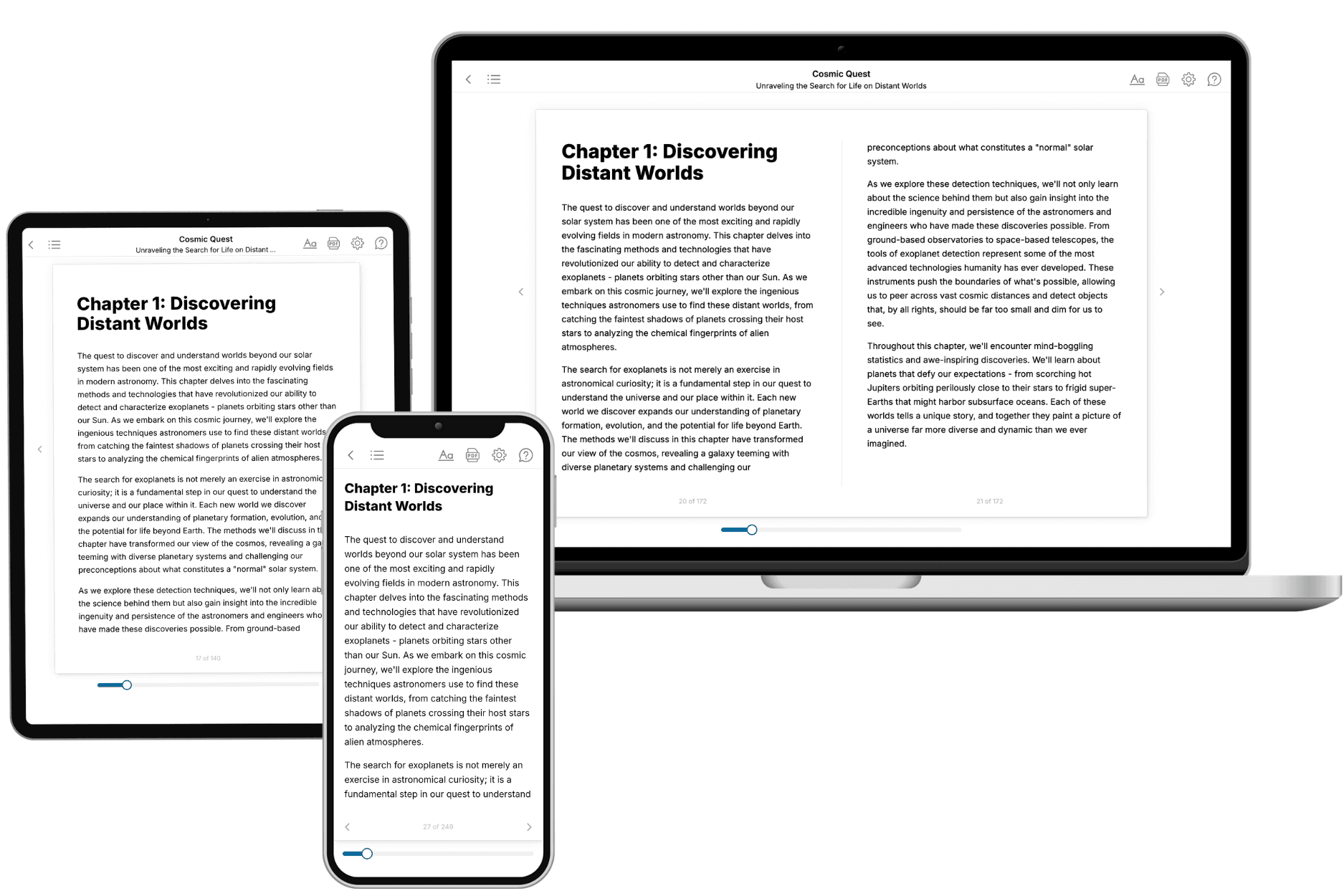
Your book is ready in 10 minutes. Read it online, download as EPUB or PDF, or send to Kindle.
Frequently asked questions
- What is TailoredRead?
TailoredRead creates complete, full-length nonfiction ebooks, written specifically for you. Tell us what you want to learn and why, and TailoredRead writes you a complete ebook on it, with charts, tables, and diagrams throughout. Read it online, on Kindle, or on any e-reader, or download it as a PDF or EPUB. Every book is written fresh the day you order it.
- How is the book tailored to me?
Before anything is written, you answer a few short questions about your goals, your background, and the topics you care about. Your book is then planned around your answers: written at your level, focused on your goals, and covering the topics you chose, instead of the one-size-fits-all book a store sells everyone.
- Will it read like generic AI content?
No. Your book isn't a chat transcript: it's planned chapter by chapter before a single word is written, told in a clear book voice, and explains ideas visually with charts, tables, and diagrams. After writing, every book goes through an editorial pass that polishes chapters so the book reads consistent from start to finish. Judge for yourself: browse thousands of sample books on our Explore Books page.
- How accurate is the content?
Our AI first checks whether your subject needs live research. Niche and fast-moving subjects are researched before writing, and the book plan and chapters are grounded in what it finds. After writing, every book goes through a quality pass that checks its facts and consistency, and researched books list their sources in a Notes section at the back.
- How long is the book?
You choose the length: Comprehensive (250-300 pages), Detailed (150-200 pages), Essential (70-100 pages), or Short (30-50 pages).
- Does the book include visuals?
Yes. Every book includes charts, tables, and diagrams: timelines, checklists, step-by-step guides, decision trees, comparison tables, matrices, and bar charts. A typical book includes dozens of these visual elements.
- Can I read it on Kindle? What formats can I download?
Yes. Every book can be read in our online reader or downloaded as a PDF or EPUB. The EPUB can be opened with Kindle, Apple Books, Kobo, and any e-reader. The Commercial and Author licenses also include an editable Word (DOCX) and Markdown download.
- How much does it cost?
About the price of a regular ebook. The exact price depends on your book's length and complexity, from $2 for the shortest books to $35 for the most comprehensive, and it's shown when you review your book, before you commit to anything. Each book is a one-time purchase, yours to keep, no subscription. Licenses that let you share, teach, or publish your book range from $35.99 to $49.99.
- Can I preview the book before purchasing?
Before you pay, you'll see what your book will cover: the title, a detailed description, the estimated length, and the complete chapter-by-chapter table of contents, so you know what you're getting before you decide. The full text itself is written after you purchase.
- How long does it take to create a book?
About 10 minutes. You can start reading the opening chapters while the rest is still being written.