Bridge Medicine
Integrating Traditional Chinese Medicine into Your Clinical Practice
This practical guide walks you through the systematic integration of Traditional Chinese Medicine into your clinical practice as a physician assistant.
253 pages12 chaptersJan 12, 2026Alternative MedicineCreated by Dawn
About this book
You'll move beyond theoretical concepts to develop concrete diagnostic skills—learning to read pulses, assess tongue presentations, and recognize constitutional patterns that reveal functional imbalances your patients experience. The book provides evidence-informed frameworks for addressing common clinical challenges: chronic stress and qi stagnation, digestive dysfunction and spleen qi deficiency, sleep disorders, immune compromise, and dermatological conditions. You'll discover how to create personalized treatment protocols that combine TCM principles with Western medicine, establish patient education strategies that build compliance, and measure outcomes that demonstrate clinical value. Each chapter includes practical assessment tools, protocol templates, and real-world integration strategies designed specifically for the modern clinical environment. Whether you're managing complex chronic disease, seeking preventive medicine approaches, or expanding your treatment modalities, this book provides the clinical framework to practice integrative medicine with confidence and measurable results.
Table of contents
- IntroductionWhy TCM Integration Matters in Modern Clinical Practice, How to Use This Book for Maximum Clinical Impact, The Evidence Foundation: Bridging Two Medical TraditionsRead below
- Chapter 1: Foundational Concepts: Qi, Blood, and Yin-Yang BalanceUnderstanding Qi as Functional Physiology, Blood and Essence: Beyond Hematology, Yin-Yang Balance Protocols for Clinical Assessment
- Chapter 2: Diagnostic Mastery: Pulse Reading and Tongue AssessmentPulse Reading Fundamentals and Clinical Application, Tongue Diagnosis Techniques for Pattern Recognition, Qi Flow Assessment Methods and Documentation
- Chapter 3: Constitutional Assessment and Pathogenic Factor RecognitionConstitutional Type Assessment and Clinical Implications, Pathogenic Factor Recognition: Wind, Cold, Heat, Damp, and Dryness, Organ System Correspondence and Functional Relationships
- Chapter 4: Pattern Recognition: Common Clinical PresentationsQi Deficiency Recognition and Tonification Protocols, Blood Stasis Patterns and Circulation Optimization, Damp-Heat Pattern Management in Chronic Conditions
- Chapter 5: Stress, Emotions, and Qi StagnationStress-Related Qi Stagnation: Recognition and Resolution, Liver Qi Stagnation Resolution Strategies, Emotional Patterns and Organ System Imbalance
- Chapter 6: Spleen and Digestive System HarmonySpleen Qi Deficiency Protocols and Recognition, Digestive System Harmony Through TCM Nutrition Counseling, Integrating TCM Nutrition with Western Dietary Guidance
- Chapter 7: Kidney Yang and Immune Function EnhancementKidney Yang Tonification and Constitutional Vitality, Immune Function Enhancement Through TCM Principles, Energy Tonification Methods for Chronic Fatigue
- Chapter 8: Sleep Quality and Restorative HealthSleep Quality Improvement: TCM Pattern Recognition, Heart-Spirit Connection and Sleep Disorders, Integrative Sleep Protocols and Lifestyle Modification
- Chapter 9: Dermatology and Skin Health IntegrationTCM in Dermatology: Pattern-Based Skin Assessment, Common Skin Patterns and Root Cause Identification, Integrative Dermatology Treatment Protocols
- Chapter 10: Seasonal Health Optimization and Preventive MedicineSeasonal Health Optimization Frameworks, Preventive Medicine Frameworks and Disease Prevention, Lifestyle Modification Counseling for Long-Term Health
- Chapter 11: Chronic Disease Management and IntegrationChronic Disease Management Integration Strategies, Creating Integrated Treatment Protocols, Patient Education Strategies for Treatment Compliance
- Chapter 12: Measurement, Documentation, and Clinical EvidencePatient Outcome Measurement and Clinical Tracking, Documentation Standards for Integrative Practice, Building Evidence for Your Integrative Practice
- ConclusionYour Integration Journey Forward
- Glossary of TCM Terms
- Further Reading and Resources
Introduction
You stand at the intersection of two powerful medical traditions. On one side, the precision and technological sophistication of Western medicine provides diagnostic clarity and evidence-based interventions. On the other, Traditional Chinese Medicine offers a comprehensive framework for understanding functional imbalances, constitutional variations, and the subtle patterns that precede structural disease. For physician assistants and advanced practitioners, this intersection represents not a conflict but an opportunity—a chance to expand your clinical toolkit and address patient needs that conventional approaches sometimes struggle to meet.
The patients walking into your clinic today present with challenges that demand more than single-system interventions. They arrive with chronic fatigue that lab work cannot explain, digestive dysfunction that persists despite standard treatments, sleep disorders resistant to pharmaceutical management, and stress-related conditions that cascade across multiple organ systems. These presentations often share a common thread: they represent functional imbalances that have not yet progressed to structural pathology detectable by conventional diagnostics. This is precisely where TCM diagnostic frameworks provide clinical value, identifying patterns of disharmony that allow earlier intervention and more personalized treatment selection.
This book provides a systematic approach to integrating TCM principles into your existing clinical practice. You will not be asked to abandon evidence-based medicine or adopt unfamiliar philosophical frameworks wholesale. Instead, you will learn to recognize how TCM concepts translate into functional physiological states, how diagnostic techniques like pulse and tongue assessment reveal clinically actionable information, and how treatment protocols can be constructed that respect both medical traditions. The goal is practical integration—expanding your diagnostic sensitivity and treatment options while maintaining the rigor and accountability that define modern clinical practice.
Throughout these chapters, you will encounter specific assessment techniques, pattern recognition frameworks, and treatment protocols designed for immediate clinical application. Each concept is presented with attention to evidence, practical implementation, and outcome measurement. You will learn not only what TCM principles mean but how to apply them systematically, document their effects, and communicate their value to patients and colleagues. This is bridge medicine—connecting two traditions to create more comprehensive, personalized, and effective patient care.
Why TCM Integration Matters in Modern Clinical Practice
The limitations of single-paradigm medicine become apparent when you encounter patients whose conditions defy straightforward diagnosis or treatment. Consider the patient presenting with chronic fatigue, brain fog, digestive irregularity, and mild anxiety—each symptom falling within normal ranges on standard laboratory tests, yet collectively representing significant functional impairment. Western medicine excels at identifying and treating discrete pathologies but often struggles with these multisystem functional presentations. TCM, by contrast, was developed specifically to recognize and address such patterns, viewing them not as separate complaints but as manifestations of underlying imbalances in qi flow, organ system harmony, and constitutional vitality.
Integrating TCM into your practice addresses several critical gaps in conventional care. First, it enhances diagnostic sensitivity by providing frameworks for recognizing functional imbalances before they progress to structural disease. A patient with spleen qi deficiency may present with fatigue, loose stools, and poor appetite years before developing diagnosable conditions like irritable bowel syndrome or chronic fatigue syndrome. Early recognition allows preventive intervention that may forestall disease progression entirely. Second, TCM offers personalized treatment selection based on constitutional type and pattern presentation. Two patients with the same Western diagnosis may require entirely different interventions based on their underlying TCM patterns—one presenting with heat and excess, another with cold and deficiency.
The clinical value of integration extends beyond diagnosis to treatment efficacy and patient engagement. Research demonstrates that integrative approaches combining TCM and Western medicine often produce superior outcomes compared to either tradition alone, particularly for chronic conditions like pain syndromes, digestive disorders, and stress-related illness[1]. Patients increasingly seek integrative care, with surveys indicating that over one-third of adults use complementary approaches, often paying out-of-pocket when conventional providers cannot offer them[2]. By developing competency in TCM integration, you position yourself to meet this demand while maintaining evidence-based standards and clinical accountability.
Integration also addresses the growing recognition that health extends beyond disease absence to encompass vitality, resilience, and functional optimization. TCM's emphasis on preventive medicine, seasonal health optimization, and lifestyle modification aligns perfectly with contemporary movements toward wellness medicine and chronic disease prevention. Rather than waiting for pathology to develop, you can guide patients toward practices that enhance constitutional strength, balance organ system function, and build long-term health resilience. This proactive approach reduces disease burden, improves quality of life, and often decreases healthcare utilization over time.
The practical advantages of TCM integration become evident in daily clinical encounters. Pulse and tongue assessment take mere minutes but provide information about autonomic balance, inflammatory states, and organ system function that complements standard vital signs. Pattern recognition frameworks help you understand why certain patients respond differently to the same treatments, allowing more precise intervention selection. Dietary and lifestyle counseling based on TCM principles gives patients concrete, actionable steps they can implement immediately, increasing engagement and compliance. These tools do not replace conventional diagnostics and treatments—they enhance them, providing additional perspectives that lead to more comprehensive and effective care.
Perhaps most importantly, TCM integration expands your capacity to address the root causes of chronic conditions rather than merely managing symptoms. A patient with recurrent urinary tract infections may benefit from antibiotics for acute episodes, but addressing underlying kidney yang deficiency and damp-heat accumulation may prevent recurrence entirely. A patient with insomnia may find temporary relief from sleep medications, but resolving heart-spirit disharmony and nourishing yin deficiency offers sustainable improvement without pharmaceutical dependence. This root-cause approach aligns with the fundamental goals of medicine: not just to treat disease but to restore and maintain health.
The integration of TCM into modern clinical practice represents an evolution in healthcare delivery—one that honors the strengths of both traditions while addressing their respective limitations. Western medicine provides unparalleled diagnostic precision, life-saving interventions, and rigorous evidence standards. TCM offers holistic pattern recognition, personalized treatment frameworks, and time-tested approaches to functional optimization. Together, they create a more complete medical system capable of addressing the full spectrum of patient needs, from acute pathology to chronic dysfunction to preventive wellness. Your role as a clinician is not to choose between these traditions but to master their integration, creating treatment approaches that are simultaneously evidence-based and individually tailored, technologically sophisticated and humanistically grounded.
How to Use This Book for Maximum Clinical Impact
This book is structured as a progressive learning system designed to build your integrative clinical skills systematically. Each chapter addresses a specific aspect of TCM integration, moving from foundational concepts through diagnostic mastery to condition-specific protocols and outcome measurement. The organization allows you to develop competency incrementally, mastering core principles before advancing to complex applications. However, the modular structure also permits targeted learning—if you face immediate clinical challenges with digestive disorders or sleep dysfunction, you can move directly to relevant chapters while returning to foundational material as needed.
Begin with the foundational chapters that establish your conceptual framework. Chapters on qi, blood, and yin-yang balance provide the theoretical foundation necessary for understanding all subsequent material. These concepts may initially seem abstract, but they are presented with direct connections to physiological processes you already understand. Qi corresponds to functional energy and metabolic activity. Blood encompasses not just hematological parameters but tissue nourishment and circulation. Yin-yang balance reflects the dynamic equilibrium between anabolic and catabolic processes, parasympathetic and sympathetic tone, rest and activity. By grounding TCM concepts in familiar physiological terms, you build bridges between traditions that facilitate practical application.
The diagnostic chapters provide hands-on skills you can begin implementing immediately. Pulse reading and tongue assessment are practical techniques that require practice but yield valuable clinical information once mastered. Approach these chapters with patience and commitment to skill development. Your initial pulse assessments may feel uncertain, your tongue observations tentative. This is normal and expected. Clinical competency develops through repeated practice with diverse patients, gradually refining your sensitivity to subtle variations. Consider these recommendations for skill development:
- Practice daily: Assess pulses and tongues on every patient, even when not clinically indicated, to build pattern recognition through repetition
- Document observations: Record your findings systematically, noting patterns that correlate with symptoms and conventional diagnostic results
- Seek feedback: If possible, compare your assessments with experienced TCM practitioners to calibrate your observations
- Study references: Keep visual references for tongue presentations and pulse qualities readily available during initial learning phases
- Track outcomes: Note how pulse and tongue findings change with treatment, building your understanding of their clinical significance
The pattern recognition and condition-specific chapters form the clinical core of this book. These sections translate TCM theory into actionable protocols for common presentations you encounter regularly. Each chapter follows a consistent structure: pattern identification, underlying mechanisms, assessment techniques, treatment protocols, and outcome measurement. This structure allows you to quickly locate relevant information during clinical encounters. When facing a patient with chronic fatigue, you can reference the qi deficiency chapter for assessment criteria and tonification protocols. When managing stress-related complaints, the liver qi stagnation section provides specific intervention strategies. Use these chapters as clinical references, returning to them repeatedly as you encounter relevant cases.
Throughout the book, you will find practical tools designed for immediate implementation. Assessment templates help you systematically document TCM findings in ways that integrate with electronic health records. Protocol frameworks provide step-by-step guidance for creating treatment plans that combine TCM and Western approaches. Patient education materials offer language for explaining integrative concepts in accessible terms that build understanding and compliance. These tools are not theoretical exercises—they are working documents you can adapt to your specific practice environment and patient population. Consider creating a clinical integration toolkit that includes:
- Laminated reference cards for pulse qualities and tongue presentations
- Assessment templates integrated into your documentation workflow
- Patient handouts explaining common TCM patterns in plain language
- Protocol checklists for frequently encountered conditions
- Outcome tracking forms that capture both conventional and TCM parameters
The book emphasizes evidence-informed practice throughout. While TCM has millennia of clinical experience supporting its frameworks, modern integration requires attention to contemporary research evidence and outcome measurement. Footnotes throughout the text reference relevant studies, systematic reviews, and clinical trials that support integrative approaches. The final chapters on measurement and documentation provide frameworks for building your own evidence base, tracking patient outcomes systematically, and demonstrating the clinical value of your integrative interventions. This evidence focus serves multiple purposes: it ensures your practice remains grounded in demonstrable efficacy, it provides data for quality improvement, and it builds credibility with colleagues and patients who value evidence-based care.
Approach this material with realistic expectations about the learning curve. Integrating TCM into your practice is not a weekend workshop endeavor—it requires sustained study, deliberate practice, and gradual skill development over months and years. Your initial integrations will likely be simple and tentative: adding pulse assessment to routine exams, incorporating dietary recommendations based on spleen qi concepts, recognizing obvious patterns like heat or cold presentations. As your competency grows, you will develop more sophisticated pattern recognition, create more nuanced treatment protocols, and handle increasingly complex cases with confidence. This progression is normal and appropriate. Master foundational skills before advancing to complex applications, and recognize that expertise develops through accumulated clinical experience rather than theoretical study alone.
Finally, use this book as a springboard for ongoing learning rather than a terminal resource. The further reading section provides references for deeper exploration of specific topics. Professional organizations offer continuing education in integrative medicine and TCM. Mentorship relationships with experienced integrative practitioners can accelerate your skill development and provide guidance for challenging cases. Consider this book your entry point into a broader community of practice—one that values both traditions, seeks evidence for clinical decisions, and remains committed to expanding treatment options for the patients who depend on your expertise. Your journey toward integrative competency begins here, but it extends far beyond these pages into a career-long commitment to comprehensive, personalized, and effective patient care.
The Evidence Foundation: Bridging Two Medical Traditions
The integration of TCM and Western medicine rests on a growing body of research evidence demonstrating both the efficacy of specific TCM interventions and the mechanisms by which they produce clinical effects. This evidence base has expanded dramatically over the past two decades as research methodologies have evolved to accommodate the complexities of traditional medicine systems. Understanding this evidence foundation is essential for practicing integrative medicine with intellectual honesty and clinical accountability. You need not accept TCM principles on faith or tradition alone—substantial research supports many core concepts and interventions, while also identifying areas requiring further investigation.
Research into TCM mechanisms has revealed that many traditional concepts correspond to measurable physiological processes. Qi, often dismissed as mystical or metaphysical, correlates with multiple biological systems including mitochondrial function, ATP production, autonomic nervous system activity, and bioelectrical signaling[3]. Studies using functional imaging demonstrate that acupuncture points and meridians correspond to areas of decreased electrical resistance and increased metabolic activity[4]. Blood stasis patterns show correlations with hemorheological parameters including increased blood viscosity, platelet aggregation, and impaired microcirculation[5]. These findings do not prove that ancient Chinese physicians understood modern physiology, but they demonstrate that TCM pattern recognition identifies real, measurable physiological states.
Clinical trials provide evidence for the efficacy of integrative approaches across multiple conditions. Systematic reviews and meta-analyses have demonstrated benefits for TCM interventions in conditions including:
- Chronic pain syndromes: Multiple high-quality trials show acupuncture and herbal medicine reduce pain intensity and improve function in osteoarthritis, low back pain, and headache disorders[6]
- Digestive disorders: Evidence supports TCM approaches for irritable bowel syndrome, functional dyspepsia, and inflammatory bowel disease, often with effect sizes comparable to conventional treatments[7]
- Mental health conditions: Studies demonstrate efficacy for anxiety, depression, and insomnia, particularly when TCM interventions are combined with conventional treatments[8]
- Women's health: Research supports TCM for menstrual disorders, menopausal symptoms, and fertility enhancement, with some interventions showing comparable efficacy to hormone therapy[9]
- Immune function: Evidence indicates certain TCM herbs and protocols enhance immune parameters and reduce infection frequency in susceptible populations[10]
The quality of TCM research has improved substantially in recent years, with more studies employing rigorous methodologies including randomization, appropriate controls, blinding where feasible, and validated outcome measures. However, significant methodological challenges remain. TCM's emphasis on individualized treatment based on pattern differentiation conflicts with the standardized protocols required for conventional clinical trials. Blinding is difficult when interventions include distinctive techniques like acupuncture or herbal formulas with characteristic tastes. Outcome measures developed for Western medicine may not capture the functional improvements TCM aims to achieve. These challenges do not invalidate TCM research, but they require thoughtful interpretation and recognition that evidence standards must sometimes be adapted to accommodate traditional medicine systems while maintaining scientific rigor.
Mechanistic research provides biological plausibility for TCM interventions, helping bridge the conceptual gap between traditions. Studies have identified multiple pathways through which TCM modalities produce effects. Acupuncture influences neurotransmitter release, modulates inflammatory cytokines, affects autonomic balance, and alters brain activity in regions associated with pain processing and emotional regulation[11]. Herbal medicines contain bioactive compounds with demonstrable pharmacological effects including anti-inflammatory, antioxidant, immunomodulatory, and metabolic actions. Dietary recommendations based on TCM principles often align with contemporary nutritional science regarding anti-inflammatory diets, gut microbiome optimization, and metabolic health. This mechanistic understanding allows you to explain TCM interventions to patients and colleagues in terms of biological processes rather than relying solely on traditional theoretical frameworks.
The evidence base also reveals important limitations and areas requiring caution. Not all traditional practices have demonstrated efficacy in rigorous trials. Some TCM interventions show benefits primarily through non-specific effects including placebo responses, therapeutic ritual, and enhanced patient-provider relationships. Certain herbal medicines carry risks of adverse effects, drug interactions, or contamination with heavy metals or pharmaceuticals. Quality control remains inconsistent across TCM product manufacturers. These limitations demand that integrative practitioners maintain critical evaluation skills, prioritize patient safety, monitor for adverse effects, and remain transparent about the strength of evidence supporting specific interventions. Integrative medicine does not mean uncritical acceptance of all traditional practices—it requires discernment, evidence evaluation, and commitment to first doing no harm.
Moving forward, the evidence foundation for TCM integration continues to expand through multiple research approaches. Pragmatic clinical trials evaluate integrative protocols in real-world settings, providing evidence for effectiveness rather than just efficacy. Comparative effectiveness research examines how TCM interventions perform relative to conventional treatments and whether combination approaches offer advantages over either tradition alone. Mechanistic studies continue elucidating the biological pathways through which TCM modalities produce effects. Patient-centered outcomes research captures the functional improvements and quality of life benefits that matter most to patients. This evolving evidence base provides increasingly solid ground for integrative practice while identifying areas requiring further investigation.
Your role as an evidence-informed integrative practitioner involves several key commitments. First, maintain familiarity with current research by regularly reviewing relevant journals, systematic reviews, and clinical practice guidelines. Second, apply appropriate critical appraisal skills to evaluate study quality and applicability to your patient population. Third, communicate evidence transparently to patients, acknowledging both the strengths and limitations of research supporting your recommendations. Fourth, contribute to the evidence base by systematically tracking outcomes in your own practice and, where possible, participating in clinical research. Fifth, remain intellectually humble, recognizing that absence of evidence is not evidence of absence, but also that tradition alone does not constitute sufficient justification for clinical interventions. These commitments ensure your integrative practice remains grounded in the best available evidence while remaining open to the clinical wisdom accumulated through centuries of traditional practice.
Notes
Introduction
- 1. Jiang M and others, "Traditional Chinese Medicine in the treatment of chronic diseases," Journal of Traditional Chinese Medicine, 2012
- 2. Clarke TC and others, Trends in the use of complementary health approaches among adults: United States, 2002-2012, National Health Statistics Reports, 2015
- 3. Hintz KJ and others, "Bioenergy definitions and research guidelines," Alternative Therapies in Health and MedicineA13-A30, 2003
- 4. Ahn AC and others, "Electrical properties of acupuncture points and meridians," Bioelectromagnetics, 2008
- 5. Cho WC and others, "Relationship between blood stasis syndrome and hemorheological disorders in traditional Chinese medicine," Journal of Alternative and Complementary Medicine, 2007
- 6. Vickers AJ and others, "Acupuncture for chronic pain," Archives of Internal Medicine, 2012
- 7. Chey WD and others, "Herbal medicine for treatment of irritable bowel syndrome," World Journal of Gastroenterology, 2015
- 8. Yeung WF and others, "Traditional needle acupuncture treatment for insomnia," Sleep Medicine, 2012
- 9. Smith CA and others, Acupuncture for primary dysmenorrhoea, Cochrane Database of Systematic Reviews, 1, CD007854, 2011
- 10. Wang CY and others, "Modulatory effects of Chinese herbal medicines on the immune system," Journal of Ethnopharmacology, 2012
- 11. Zhao ZQ, "Neural mechanism underlying acupuncture analgesia," Progress in Neurobiology, 2008
This is the end of the free sample. The full book has 12 chapters.
Want this book written for you?
Tell us your goals and background, and get your own version of this book, tailored by AI to you.


Benefits of AI-tailored books
- Read one book, not ten:
- all the Alternative Medicine knowledge you need, gathered into a single book.
- Save days of learning:
- tell us your goals, choose your topics, and the whole book is built around them.
- Learn effortlessly:
- Alternative Medicine book written for your specific background and expertise.
- Understand at a glance:
- includes charts, tables, timelines, checklists, decision trees, and more.
- Stay current:
- written the day you order it, not years ago.
- Trust what you read:
- every book is checked for accuracy, with real research when your subject needs it.
Create your unique book in 3 steps
- 1. Select your focus
Select the focus of your Alternative Medicine book and share your background
- 2. Personalize your book
Specify your goals and choose sub-topics to include
- 3. Get your tailored book
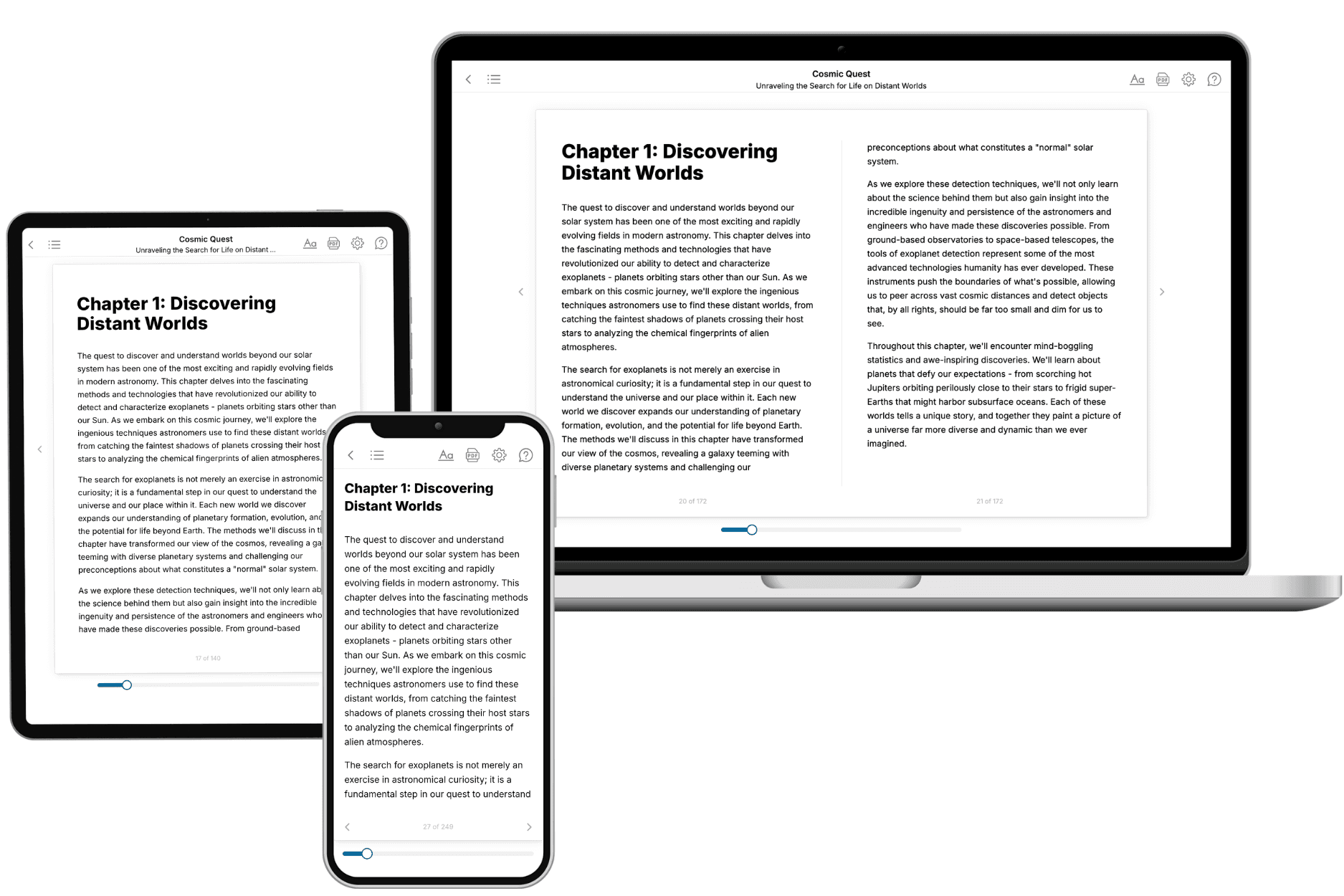
Your book is ready in 10 minutes. Read it online, download as EPUB or PDF, or send to Kindle.
Frequently asked questions
- What is TailoredRead?
TailoredRead creates complete, full-length nonfiction ebooks, written specifically for you. Tell us what you want to learn and why, and TailoredRead writes you a complete ebook on it, with charts, tables, and diagrams throughout. Read it online, on Kindle, or on any e-reader, or download it as a PDF or EPUB. Every book is written fresh the day you order it.
- How is the book tailored to me?
Before anything is written, you answer a few short questions about your goals, your background, and the topics you care about. Your book is then planned around your answers: written at your level, focused on your goals, and covering the topics you chose, instead of the one-size-fits-all book a store sells everyone.
- Will it read like generic AI content?
No. Your book isn't a chat transcript: it's planned chapter by chapter before a single word is written, told in a clear book voice, and explains ideas visually with charts, tables, and diagrams. After writing, every book goes through an editorial pass that polishes chapters so the book reads consistent from start to finish. Judge for yourself: browse thousands of sample books on our Explore Books page.
- How accurate is the content?
Our AI first checks whether your subject needs live research. Niche and fast-moving subjects are researched before writing, and the book plan and chapters are grounded in what it finds. After writing, every book goes through a quality pass that checks its facts and consistency, and researched books list their sources in a Notes section at the back.
- How long is the book?
You choose the length: Comprehensive (250-300 pages), Detailed (150-200 pages), Essential (70-100 pages), or Short (30-50 pages).
- Does the book include visuals?
Yes. Every book includes visual elements such as timelines, checklists, step-by-step guides, decision trees, comparison tables, and matrices, and many include bar charts. A typical book includes dozens of these visual elements.
- Can I read it on Kindle? What formats can I download?
Yes. Every book can be read in our online reader or downloaded as a PDF or EPUB. The EPUB can be opened with Kindle, Apple Books, Kobo, and any e-reader. The Commercial and Author licenses also include an editable Word (DOCX) and Markdown download.
- How much does it cost?
About the price of a regular ebook. The exact price depends on your book's length and complexity, from $2 for the shortest books to $35 for the most comprehensive, and it's shown when you review your book, before you commit to anything. Each book is a one-time purchase, yours to keep, no subscription. Licenses that let you share, teach, or publish your book range from $35.99 to $49.99.
- Can I preview the book before purchasing?
Before you pay, you'll see what your book will cover: the title, a detailed description, the estimated length, and the complete chapter-by-chapter table of contents, so you know what you're getting before you decide. The full text itself is written after you purchase.
- How long does it take to create a book?
About 10 minutes. You can start reading the opening chapters while the rest is still being written.